


Job 24:13
Bible text: King James Version (1769 Blayney text) · Public domain
Bible text: Berean Standard Bible · Public domain
Bible text: American Standard Version (1901) · Public domain
Bible text: World English Bible, Messianic edition · Public domain
Bible text: Geneva Bible (1599) · Public domain
Bible text: Young's Literal Translation · Public domain
- הֵמָּהHe·mahtheyH1992Pro-3mpPronoun Personal 3rd Plural Masculine
- הָיוּha·Yuthey areH1961V-Qal-Perf-3cpVerb Qal Perfect 3rd Plural common gender
- בְּמֹרְדֵיbe·mo·re·Deiamong [those who] rebel againstH4775Prep-b ¦ V-Qal-Prtcpl-mpVerb Qal Participle Plural Masculine Constructבְּamongמֹרְדֵי[those who] rebel against
- אוֹר'or<of> [the] lightH216N-fsNoun Singular Feminine Absolute
- לֹאlo'notH3808NegParticle Negative
- הִכִּירוּhi·Ki·ruthey pay regard toH5234V-Hiphil-Perf-3cpVerb Hiphil Perfect 3rd Plural common gender
- דְרָכָיוde·ra·Khavits waysH1870N-mpc ¦ 3msNoun Plural Masculine Constructדְרָכָיwaysוits
- וְלֹאve·Lo'and notH3808Conj-w ¦ NegParticle Negativeוְandלֹאnot
- יָשְׁבוּya·she·Vuthey dwellH3427V-Qal-Perf-3cpVerb Qal Perfect 3rd Plural common gender
- בִּנְתִיבֹתָיוbin·ti·vo·Tavin its pathsH5410Prep-b ¦ N-fpc ¦ 3msNoun Plural Feminine Constructבִּinנְתִיבֹתָיpathsוits
English is a literal word-by-word gloss of the Hebrew, not the KJV's wording. Why?
This is the original text the KJV's translators worked from — each Hebrew word with its own literal English meaning in this verse, prepared by scholars at Tyndale House, Cambridge. The KJV translates whole sentences, not word by word, so its wording differs: one Hebrew word can become several English words, and the KJV may choose “the LORD” where the gloss reads “Yahweh”. Both are faithful — they answer different questions. For the KJV's own rendering, switch to the KJV text.
Details
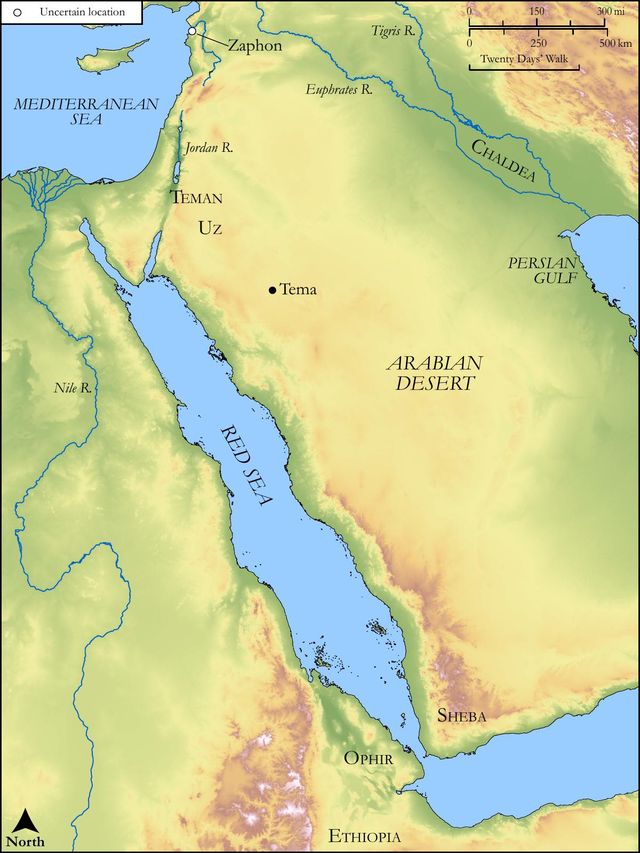
See on the biblical-era map
Study this verse
Public-domain commentary
Matthew Henry
From his Commentary on the Whole Bible. Henry comments on passages, not single verses — this entry covers Job 24:13–17. His two-level outline is real structure in the source text, so it is rendered as structure.
These verses describe another sort of sinners who therefore go unpunished, because they go undiscovered. They rebel against the light, Job 24:13. Some understand it figuratively: they sin against the light of nature, the light of God's law, and that of their own consciences; they profess to know God, but they rebel against the knowledge they have of him, and will not be guided and governed, commanded and controlled, by it. Others understand it literally: they have the day-light and choose the night as the most advantageous season for their wickedness. Sinful works are therefore called works of darkness, because he that does evil hates the light (Joh 3:20), knows not the ways thereof, that is, keeps out of the way of it, or, if he happen to be seen, abides not where he thinks he is known. So that he here describes the worst of sinners, - those that sin wilfully, and against the convictions of their own consciences, whereby they add rebellion to their sin, - those that sin deliberately, and with a great deal of plot and contrivance, using a thousand arts to conceal their villanies, fondly imagining that, if they can but hide them from the eye of men, they are safe, but forgetting that there is no darkness or shadow of death in which the workers of iniquity can hide themselves from God's eye, Job 34:22. In this paragraph Job specifies three sorts of sinners that shun the light: - 1. Murderers, Job 24:14. They rise with the light, as soon as ever the day breaks, to kill the poor travellers that are up early and abroad about their business, going to market with a little money or goods; and though it is so little that they are really to be called poor and needy, who with much ado get a sorry livelihood by their marketings, yet, to get it, the murderer will both take his neighbour's life and venture his own, will rather play at such small game than not play at all; nay, he kills for killing sake, thirsting more for blood than for booty. See what care and pains wicked men take to compass their wicked designs, and let the sight shame us out of our negligence and slothfulness in doing good.
Ut jugulent homines, surgunt de nocte latrones,
Tuque ut te serves non expergisceris? -
Rogues nightly rise to murder men for pelf;
Will you not rouse you to preserve yourself?
2.Adulterers. The eyes that are full of adultery (Pe2 2:14), the unclean and wanton eyes, wait for the twilight, Job 24:15. The eye of the adulteress did so, Pro 7:9. Adultery hides its head for shame. The sinners themselves, even the most impudent, do what they can to hide their sin: si non caste, tamen caute - if not chastely, yet cautiously; and after all the wretched endeavours of the factors for hell to take away the reproach of it, it is and ever will be a shame even to speak of those things which are done of them in secret, Eph 5:12. It hides its head also for fear, knowing that jealousy is the rage of a husband, who will not spare in the day of vengeance, Pro 6:24, Pro 6:25. See what pains those take that make provision for the flesh to fulfil the lusts of it, pains to compass, and then to conceal, that provision which, after all, will be death and hell at last. Less pains would serve to mortify and crucify the flesh, which would be life and heaven at last. Let the sinner change his heart, and then he needs not disguise his face, but may lift it up without spot.
3.House-breakers, Job 24:16. These mark houses in the day-time, mark the avenues of a house, and on which side they can most easily force their entrance, and then, in the night, dig through them, either to kill, or steal, or commit adultery. The night favours the assault, and makes the defence the more difficult; for the good man of the house knows not what hour the thief will come and therefore is asleep (Luk 12:39) and he and his lie exposed. For this reason our law makes burglary, which is the breaking and entering of a dwelling-house in the night time with a felonious intent, to be felony without benefit of clergy.
And, lastly, Job observes (and perhaps observes it as part of the present, though secret, punishment of such sinners as these) that they are in a continual terror for fear of being discovered (Job 24:17): The morning is to them even as the shadow of death. The light of the day, which is welcome to honest people, is a terror to bad people. They curse the sun, not as the Moors, because it scorches them, but because it discovers them. If one know them, their consciences fly in their faces, and they are ready to become their own accusers; for they are in the terrors of the shadow of death. Shame came in with sin, and everlasting shame is at the end of it. See the misery of sinners - they are exposed to continual frights; and yet see their folly - they are afraid of coming under the eye of men, but have no dread of God's eye, which is always upon them: they are not afraid of doing that which yet they are so terribly afraid of being known to do.
Historical interpretation
Historical reception
2 surviving comments on this verse. Each one is dated, so this reads as a timeline rather than a list.
Select a marker to jump to its quote. Markers stagger vertically where authors wrote within a few decades of each other.
He says this again to his friends with a bit of hesitation, If afflictions entirely derive from sins, why did he who observes all that happens on earth allow them to go without being visited by him? “And they took no notice,” that is, the iniquitous took no notice of the fact that they were not visited. Indeed it is believed and taught about divine visitation, “The Lord reproves the one he loves, as a father checks a well-loved son.”
70. Very often wicked people at once know the right things that they ought to follow, and yet neglect to follow what they know; and so they are ‘rebellious against the light,’ in that following their desires, they contemn the good that they know. They then that do wrong not from ignorance, but pride, present the shield of their exaltation against the darts of truth, that they may not be stricken in heart to their good. By which same pride of theirs it is brought to pass, that whereas they will not do the things that they know, neither do they now know the good they should do, but that their own blindness should utterly exclude them from the light of truth. And hence it is fitly subjoined,
They know not the ways thereof, nor have returned by the paths thereof.
71. For they that are first rebels knowing it, are afterwards blinded so as not to know; as it is said of certain, Because that when they knew God they glorified Him not as God, neither were thankful. [Rom 1, 21] Of whom it is added a little while afterwards, God gave them over to a reprobate mind, to do those things which are not convenient. [v. 28] For because they would not glorify Him Whom they knew, being given over to a reprobate sense, they were left to this fate, that they should not any longer know how to estimate the evil things they did. And it is well said, They know not the ways thereof, neither have returned by the paths thereof. For a ‘path’ is narrower than a ‘way.’ Now those that care not to do the plainer good works, never attain to the understanding of the more refined. But Almighty God waited that they might go ‘by the paths thereof.’ And would that they had been minded even to have ‘returned’ by them, that the paths of life which they would not keep by innocency they might at least keep by repentance. Wherein of what great mercifulness are the bowels of God is shown, in that those whom He sees departing from Him, He seeks that they may return. Hence after the sins; of those doing wrong having been enumerated, He calls back the Synagogue by the voice of Prophecy, saying; Therefore at least from this time cry unto Me, My Father, Thou art the guide of my youth. [Jer. 3, 4]
Continue studying Job 24:13 across the web’s major study libraries — every link below opens this exact verse, chapter, or book on the destination site.
Read & Compare
 BibleGatewayThis verse in more than 200 translations and 70 languages.
 Bible.comThe YouVersion reader — hundreds of translations, reading plans, and highlights.
 ESV.orgCrossway's official English Standard Version reader.
 NET BibleThe NET translation with 60,000+ translators' notes on every rendering decision.
 STEP BibleTyndale House's free study tool — original text, vocabulary, and scholarly resources.
 BibliaLogos Bible Software's free web reader.
 USCCBThe New American Bible (Revised Edition) with the U.S. bishops' study notes.
Commentaries
 BibleHub CommentariesDozens of classic commentaries on this verse, gathered on one page.
 StudyLightMore than 100 commentary sets — the largest collection on the web.
 BibleRefPlain-English commentary on what this verse means, verse by verse.
 Enduring WordDavid Guzik's free commentary on this chapter, widely used by Bible teachers.
 Bible Study ToolsVerse commentary alongside Greek and Hebrew study aids.
Original Language & Research
- BibleHub InterlinearThe verse word by word — original language, transliteration, and English.
- BibleHub LexiconEvery word's original-language definition and Strong's entry.
 Blue Letter BibleDeep-study tools — Strong's numbers, concordance, and word studies.
 SefariaThe Hebrew text with Rashi and centuries of Jewish commentary.
Sermons, Hymns & Audio


TrulyRandomVerse is not affiliated with these sites and doesn’t control their content. They’re linked because they’re genuinely useful.
Summary
Job 24:13 powerfully encapsulates Job's lament over the pervasive injustice in the world, specifically condemning those who commit evil deeds under the cover of darkness. This verse identifies the core issue of such individuals as a deliberate and active rebellion against "the light," which symbolizes divine truth, moral clarity, and God's righteous standards. It asserts that their subsequent ignorance of and refusal to walk in God's ways are not accidental but are direct consequences of their willful opposition to spiritual illumination, highlighting a profound moral and spiritual blindness.
Context
ShowHideLiterary Context
Job 24 is the final speech of Job in the third cycle of dialogues, following a brief and somewhat truncated exchange with Bildad in Job 25. Throughout this chapter, Job continues his profound lament, grappling with the perplexing reality that the wicked often prosper and commit heinous acts with apparent impunity, while the righteous suffer. He vividly describes various forms of injustice—the oppression of the poor, the exploitation of the vulnerable, and acts of violence—all frequently perpetrated under the cover of darkness. Job 24:13 serves as a pivotal theological statement within this lament, shifting from a mere description of wicked deeds to a diagnosis of their underlying spiritual malady: a deliberate and active rejection of divine truth and moral clarity. It posits that their corrupt actions are not accidental but are direct consequences of a rebellious heart.
Historical & Cultural Context
In Scripture, light and darkness are potent symbols with profound moral and spiritual connotations. Light was universally associated with truth, knowledge, order, life, and divine presence (e.g., Psalm 27:1). Conversely, darkness represented chaos, ignorance, evil, death, and concealment. Deeds committed in darkness were often those that society condemned and that perpetrators wished to hide from both human and divine scrutiny. The cultural norms of the time emphasized justice, especially for the vulnerable—the poor, the widow, and the orphan. To exploit these groups, as described throughout Job 24, was a grave offense against both communal ethics and the perceived divine order. Job's complaint resonates with the widespread human struggle to reconcile a just God with the observable injustices of the world.
Key Themes
ShowHideJob 24:13 contributes significantly to several overarching themes within the book of Job and biblical theology. The primary theme is the rebellion against divine light, emphasizing that the wicked are not merely ignorant but actively oppose moral truth and God's standards. This highlights the theme of moral responsibility and deliberate choice in the face of revealed truth. It also touches upon the problem of evil and theodicy, as Job grapples with why God permits such wickedness to persist. The verse contrasts the "ways" and "paths" of the wicked with the righteous path, aligning with the wisdom tradition's emphasis on choosing between the way of life and the way of death (e.g., Proverbs 4:18-19). Ultimately, it underscores the profound spiritual dimension of human actions, revealing that outward deeds often stem from an inward disposition towards or against God's illuminating truth.
Exposition and Analysis
ShowHideKey Word Analysis
ShowHideFrom the root H4775, this word signifies an active, defiant opposition and direct disobedience against an authority, standard, or truth. It implies a conscious, intentional turning away from what is known to be right, representing not passive ignorance but a deliberate and strong resistance to moral or divine illumination.
Derived from H216, "light" here transcends mere physical illumination. It functions as a profound symbol for divine truth, moral clarity, God's revelation, and the righteous standards for living. It represents the spiritual and ethical guidance that God provides, making clear the path of righteousness and exposing evil.
This root primarily means to scrutinize or look intently at, but in this context, especially with the negative "not," it implies a willful refusal to acknowledge, recognize, or understand. It denotes a deliberate choice to disregard, ignore, or be strange toward the "ways" of the light, even when such knowledge is accessible and evident.
Verse Breakdown
ShowHide"They are of those that rebel against the light"
This clause identifies a specific class of individuals whose defining characteristic is an active, deliberate, and defiant opposition to moral and divine truth. Their actions are not merely a result of ignorance but stem from a conscious choice to stand against what is good and true, preferring spiritual darkness.
"they know not the ways thereof"
This is not an excuse for their behavior but a consequence of their rebellion. Their "not knowing" is a willful refusal to acknowledge or recognize God's righteous paths and moral standards. Having rejected the "light," they consequently refuse to learn or understand the proper course of conduct that the light reveals.
"nor abide in the paths thereof"
This final phrase reinforces the comprehensive nature of their rejection. Not only do they refuse to acknowledge the "ways" (principles, understanding) of the light, but they also refuse to consistently walk in or adhere to the "paths" (practical application, lifestyle) illuminated by that light. Their rebellion leads to a persistent failure to live righteously.
Literary Devices
ShowHideJob 24:13 employs several potent literary devices to convey its message. The central device is metaphor, where "light" serves as a powerful symbol for divine truth, moral standards, and God's revealed will. The wicked's actions are not merely committed in darkness but are actively against the light, emphasizing their spiritual opposition. The verse also utilizes negative parallelism in the phrase "they know not the ways thereof, nor abide in the paths thereof." This structure reinforces the deliberate and comprehensive nature of their rejection: it is not just a lack of intellectual understanding, but a refusal to dwell in or consistently walk according to the truth. Furthermore, the "light" is almost personified as something that can be rebelled against, implying an active, conscious opposition to an ethical or divine force, making their defiance more stark and morally culpable.
Theological and Thematic Connections
ShowHideJob 24:13 profoundly connects to broader biblical themes concerning the nature of God's truth, human responsibility, and the stark contrast between righteousness and wickedness. It echoes the consistent biblical teaching that God is the source of all light and truth, and that humanity is called to walk in that light. The wicked described here choose to suppress this truth, preferring the darkness where their evil deeds can be hidden, a theme powerfully articulated in the New Testament. This willful turning away from divine illumination is depicted as the root cause of their corrupt actions, underscoring that moral failure often stems from a rebellious heart rather than mere ignorance.
Reflection and Application
ShowHideJob 24:13 serves as a profound warning about the dangers of spiritual rebellion and willful ignorance. It challenges us to examine our own hearts and motivations, asking whether we are truly embracing God's truth or if there are areas where we are actively resisting His light. For believers, it underscores the vital importance of not only knowing God's ways but also consistently abiding in His paths, allowing His word to be a lamp to our feet and a light to our path. This verse reminds us that true righteousness is not merely the absence of evil deeds, but a proactive and consistent choice to walk in the light of God's revealed will. It compels us to consider the spiritual roots of our actions and to ensure that our lives are characterized by a genuine desire for and submission to divine illumination, rather than a preference for hiddenness or self-serving darkness.
Questions for Reflection
ShowHideFAQ
ShowHideWhat does "rebel against the light" mean in a practical sense?
ShowHideIn a practical sense, "rebel against the light" means a deliberate and active choice to ignore, defy, or suppress moral truth and divine principles, even when they are clearly revealed or intuitively understood. It's not accidental ignorance but an intentional turning away from what is known to be good, right, or true. This can manifest as choosing to act dishonestly when honesty is expected, preferring secrecy to transparency, or knowingly engaging in exploitation or injustice when a righteous path is available. It implies a preference for operating in the shadows, where one's deeds are not exposed to the scrutiny of truth or divine judgment, as highlighted in John 3:19-20.
Is this verse implying that all who suffer are rebelling against the light?
ShowHideAbsolutely not. The entire book of Job stands as a powerful refutation of such a simplistic theology. Job himself is a righteous man who suffers immensely, directly challenging the notion that suffering is always a direct consequence of personal sin or rebellion against God. Job 24:13 specifically describes a type of wicked person—those who actively choose to exploit and oppress—and diagnoses their actions as stemming from a deliberate rejection of moral and divine truth. It speaks to the character and motivation of the oppressor, not the condition of the oppressed. The book of Job ultimately teaches that God's ways are complex and beyond human comprehension, and that suffering is not always punitive.
Christ-Centered Fulfillment
ShowHideJob 24:13, with its stark portrayal of those who "rebel against the light," finds its ultimate and profound fulfillment in the person and work of Jesus Christ. Jesus repeatedly declared Himself to be the "Light of the World" (John 8:12), the true light that illuminates every person (John 1:9). His coming into the world exposed the darkness of sin and offered humanity the opportunity to walk in genuine truth and life. The rebellion against the light, as described in Job, culminates in the world's rejection of Jesus Himself, as "men loved darkness rather than light because their deeds were evil" (John 3:19). To "know not the ways thereof, nor abide in the paths thereof" in the New Covenant era is to refuse to acknowledge Christ as the Way, the Truth, and the Life (John 14:6) and to reject His call to follow Him. Conversely, those who believe in Him are called to "walk as children of light" (Ephesians 5:8), reflecting His truth and righteousness in a world still prone to rebellion against the divine illumination He provides.