


Job 24:16
Bible text: King James Version (1769 Blayney text) · Public domain
Bible text: Berean Standard Bible · Public domain
Bible text: American Standard Version (1901) · Public domain
Bible text: World English Bible, Messianic edition · Public domain
Bible text: Geneva Bible (1599) · Public domain
Bible text: Young's Literal Translation · Public domain
- חָתַרcha·Tarhe digs intoH2864V-Qal-Perf-3msVerb Qal Perfect 3rd Singular Masculine
- בַּחֹשֶׁךְba·Cho·shekhin <the> darknessH2822Prep-b ¦ N-msNoun Singular Masculine Absoluteבַּin <the>חֹשֶׁךְdarkness
- בָּתִּיםba·TimhousesH1004N-mpNoun Plural Masculine Absolute
- יוֹמָםyo·Mamby dayH3119AdvAdverb
- חִתְּמוּchi·te·muthey seal upH2856V-Piel-Perf-3cpVerb Piel Perfect 3rd Plural common gender
- לָמוֹla·mofor themselvesPrep-l ¦ 3mpSuffix Personal 3rd Plural Masculineלָforמוֹthemselves
- לֹאlo'notH3808NegParticle Negative
- יָדְעוּYa·de·'uthey knowH3045V-Qal-Perf-3cpVerb Qal Perfect 3rd Plural common gender
- אוֹר'orlightH216N-fsNoun Singular Feminine Absolute
English is a literal word-by-word gloss of the Hebrew, not the KJV's wording. Why?
This is the original text the KJV's translators worked from — each Hebrew word with its own literal English meaning in this verse, prepared by scholars at Tyndale House, Cambridge. The KJV translates whole sentences, not word by word, so its wording differs: one Hebrew word can become several English words, and the KJV may choose “the LORD” where the gloss reads “Yahweh”. Both are faithful — they answer different questions. For the KJV's own rendering, switch to the KJV text.
Details
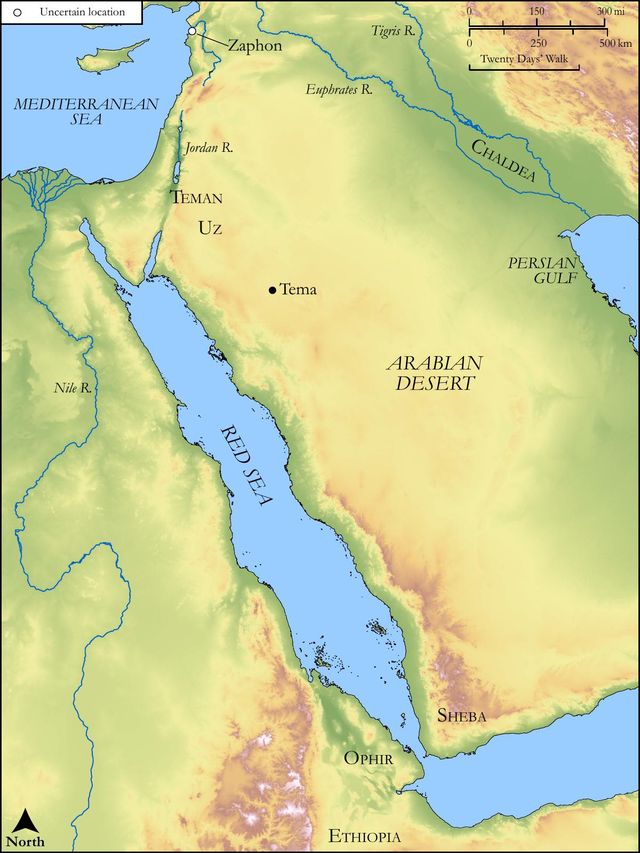
See on the biblical-era map
Study this verse
Public-domain commentary
Matthew Henry
From his Commentary on the Whole Bible. Henry comments on passages, not single verses — this entry covers Job 24:13–17. His two-level outline is real structure in the source text, so it is rendered as structure.
These verses describe another sort of sinners who therefore go unpunished, because they go undiscovered. They rebel against the light, Job 24:13. Some understand it figuratively: they sin against the light of nature, the light of God's law, and that of their own consciences; they profess to know God, but they rebel against the knowledge they have of him, and will not be guided and governed, commanded and controlled, by it. Others understand it literally: they have the day-light and choose the night as the most advantageous season for their wickedness. Sinful works are therefore called works of darkness, because he that does evil hates the light (Joh 3:20), knows not the ways thereof, that is, keeps out of the way of it, or, if he happen to be seen, abides not where he thinks he is known. So that he here describes the worst of sinners, - those that sin wilfully, and against the convictions of their own consciences, whereby they add rebellion to their sin, - those that sin deliberately, and with a great deal of plot and contrivance, using a thousand arts to conceal their villanies, fondly imagining that, if they can but hide them from the eye of men, they are safe, but forgetting that there is no darkness or shadow of death in which the workers of iniquity can hide themselves from God's eye, Job 34:22. In this paragraph Job specifies three sorts of sinners that shun the light: - 1. Murderers, Job 24:14. They rise with the light, as soon as ever the day breaks, to kill the poor travellers that are up early and abroad about their business, going to market with a little money or goods; and though it is so little that they are really to be called poor and needy, who with much ado get a sorry livelihood by their marketings, yet, to get it, the murderer will both take his neighbour's life and venture his own, will rather play at such small game than not play at all; nay, he kills for killing sake, thirsting more for blood than for booty. See what care and pains wicked men take to compass their wicked designs, and let the sight shame us out of our negligence and slothfulness in doing good.
Ut jugulent homines, surgunt de nocte latrones,
Tuque ut te serves non expergisceris? -
Rogues nightly rise to murder men for pelf;
Will you not rouse you to preserve yourself?
2.Adulterers. The eyes that are full of adultery (Pe2 2:14), the unclean and wanton eyes, wait for the twilight, Job 24:15. The eye of the adulteress did so, Pro 7:9. Adultery hides its head for shame. The sinners themselves, even the most impudent, do what they can to hide their sin: si non caste, tamen caute - if not chastely, yet cautiously; and after all the wretched endeavours of the factors for hell to take away the reproach of it, it is and ever will be a shame even to speak of those things which are done of them in secret, Eph 5:12. It hides its head also for fear, knowing that jealousy is the rage of a husband, who will not spare in the day of vengeance, Pro 6:24, Pro 6:25. See what pains those take that make provision for the flesh to fulfil the lusts of it, pains to compass, and then to conceal, that provision which, after all, will be death and hell at last. Less pains would serve to mortify and crucify the flesh, which would be life and heaven at last. Let the sinner change his heart, and then he needs not disguise his face, but may lift it up without spot.
3.House-breakers, Job 24:16. These mark houses in the day-time, mark the avenues of a house, and on which side they can most easily force their entrance, and then, in the night, dig through them, either to kill, or steal, or commit adultery. The night favours the assault, and makes the defence the more difficult; for the good man of the house knows not what hour the thief will come and therefore is asleep (Luk 12:39) and he and his lie exposed. For this reason our law makes burglary, which is the breaking and entering of a dwelling-house in the night time with a felonious intent, to be felony without benefit of clergy.
And, lastly, Job observes (and perhaps observes it as part of the present, though secret, punishment of such sinners as these) that they are in a continual terror for fear of being discovered (Job 24:17): The morning is to them even as the shadow of death. The light of the day, which is welcome to honest people, is a terror to bad people. They curse the sun, not as the Moors, because it scorches them, but because it discovers them. If one know them, their consciences fly in their faces, and they are ready to become their own accusers; for they are in the terrors of the shadow of death. Shame came in with sin, and everlasting shame is at the end of it. See the misery of sinners - they are exposed to continual frights; and yet see their folly - they are afraid of coming under the eye of men, but have no dread of God's eye, which is always upon them: they are not afraid of doing that which yet they are so terribly afraid of being known to do.
Historical interpretation
Historical reception
2 surviving comments on this verse. Each one is dated, so this reads as a timeline rather than a list.
And so it is well said, “If the morning suddenly appears, it is to them even as the shadow of death.” For “the morning” is the mind of the righteous, which, leaving behind the darkness of sin, now breaks out into the light of eternity. As it is also said of the holy church, “Who is she that looks forth as the morning?” Therefore, in the same measure that every righteous person shining with the light of righteousness in this present life is reared to a height with honors, so the same measure of the darkness of death comes before the eyes of the wicked, in that they who remember that they have done bad things are in fear of being corrected. They always desire to be free in their iniquities, to live free from correction and to delight from sin. Its fatal mirth is itself appropriately described in the words that are directly introduced: “And they walk so in darkness, as in the light.” For with an evil mind they delight in deeds of wickedness. Through their sin they are day by day being dragged to punishment and are full of assurance. Hence it is said by Solomon that “there are wicked people who are as secure as if they had done the deeds of righteous.” Concerning them it is written that they “rejoice to do evil and delight in the most wicked doings.” Thus “they walk in darkness as in the light,” in that they delight in the night of sin as if the light of righteousness were spread around them.…“He is light on the face of the water.” From the plural number he returns to the singular, because most frequently one person begins what is bad, and numbers follow after by imitating him, but the fault is primarily his, whom the bad people follow after being furnished examples of wickedness; and hence the sentence frequently returns to him who was the leader in sin. Now the surface of water is carried here and there by the breath of air. Not being steadied with any stability it is put in motion everywhere. And so the mind of the wicked is “lighter than the surface of water,” in that every breath of temptation that touches it, draws it in without any retarding resistance. For if we imagine the unstable heart of any bad person, what do we discover but a surface of water set in the wind?
76. For what is there here denoted by the title of ‘houses’ but consciences, wherein we dwell, when we do any thing, busying ourselves with it? Whence it is said to one on being healed, Return to thine own house, and show how great things God hath done unto thee [Luke 8, 39]; i.e. henceforth, secure from the evil habit of sin, turn back to thy conscience, and be thou roused into the voice of preaching.’ And so when in the present world the righteous are brightened by the day of prosperity, to those persons the leaders of false tenets are afraid to recommend what is wrong. But they search out counsels, with all care they await the abasement of their prosperity, that in the darkness of adversity they may by their persuading dig through the minds of those, to whom whilst living prosperously they never presumed to speak wrong things, whom as soon as they see under adversity they rise up and maintain, that no otherwise saving in desert of their sins those suffer such things; because loving the glory of the present life alone, the stroke they take for condemnation. So ‘in the dark they dig through houses,’ in that the minds of the good by their mere misfortune alone to corrupt is their endeavour. Now it is well said, which they had marked in the day time, in that when they saw the righteous to have been made to shine with the light of prosperity, because they were prevented speaking, they were only at liberty for concocting malevolent designs against them. But whether it be heretics or any bad persons, they rejoice when they see the righteous in a depressed condition, whereas when they see those break forth to the height of power for ruling, they are confounded, they are filled with fears, they are consumed with misery.
Continue studying Job 24:16 across the web’s major study libraries — every link below opens this exact verse, chapter, or book on the destination site.
Read & Compare
 BibleGatewayThis verse in more than 200 translations and 70 languages.
 Bible.comThe YouVersion reader — hundreds of translations, reading plans, and highlights.
 ESV.orgCrossway's official English Standard Version reader.
 NET BibleThe NET translation with 60,000+ translators' notes on every rendering decision.
 STEP BibleTyndale House's free study tool — original text, vocabulary, and scholarly resources.
 BibliaLogos Bible Software's free web reader.
 USCCBThe New American Bible (Revised Edition) with the U.S. bishops' study notes.
Commentaries
 BibleHub CommentariesDozens of classic commentaries on this verse, gathered on one page.
 StudyLightMore than 100 commentary sets — the largest collection on the web.
 BibleRefPlain-English commentary on what this verse means, verse by verse.
 Enduring WordDavid Guzik's free commentary on this chapter, widely used by Bible teachers.
 Bible Study ToolsVerse commentary alongside Greek and Hebrew study aids.
Original Language & Research
- BibleHub InterlinearThe verse word by word — original language, transliteration, and English.
- BibleHub LexiconEvery word's original-language definition and Strong's entry.
 Blue Letter BibleDeep-study tools — Strong's numbers, concordance, and word studies.
 SefariaThe Hebrew text with Rashi and centuries of Jewish commentary.
Sermons, Hymns & Audio


TrulyRandomVerse is not affiliated with these sites and doesn’t control their content. They’re linked because they’re genuinely useful.
Summary
Job 24:16 offers a stark and unsettling portrayal of the wicked, depicting their calculated methodology: they meticulously plan their nefarious deeds under the cover of day, then execute them stealthily in the deep obscurity of night, actively shunning and rejecting the revealing light. This verse is a poignant component of Job's profound lament, where he grapples with the perplexing reality of pervasive injustice in the world, wrestling with the apparent delay of divine judgment against those who commit egregious sins and seem to prosper in their wickedness. It underscores a fundamental moral aversion to truth and accountability, highlighting the inherent preference for secrecy in the perpetration of evil.
Context
ShowHideLiterary Context
Job 24:16 is situated within Job's third and final discourse (chapters 23-24), serving as his culminating response to the arguments of his friends, particularly Bildad. Having previously articulated abstract truths about God's omnipotence and justice, Job now confronts the stark, observable reality of rampant injustice in the world. He expresses profound bewilderment and frustration that God's judgment often appears delayed or unseen, allowing the wicked to thrive while the righteous endure suffering. This specific verse contributes to a detailed catalog of various evildoers—including land-grabbers, oppressors, murderers, and thieves—whose actions Job describes with vivid precision. By presenting such concrete examples of unpunished wickedness, Job implicitly intensifies his theological struggle with the nature of divine providence and the timing of God's intervention.
Historical & Cultural Context
The imagery of "digging through houses" (Hebrew: ḥātar ba'battim) is deeply rooted in the historical and cultural realities of Job's day. Many homes, especially those of ordinary people, were constructed from sun-dried mud bricks, rendering their walls vulnerable to literal digging or tunneling by determined thieves. This method of entry was a common and recognized form of burglary, emphasizing the deliberate, invasive, and destructive nature of the crime. The reference to marking houses "in the daytime" suggests a premeditated, calculated approach to illicit activity, highlighting the cunning and foresight of the perpetrators. Furthermore, the preference for darkness was not merely for concealment from human eyes but also, in a pre-electric age, for practical evasion of detection, as night offered genuine obscurity and significantly reduced visibility, making it the ideal time for clandestine operations.
Key Themes
ShowHideThis verse powerfully contributes to several overarching themes prominent in the book of Job and broader biblical theology. It highlights The Pervasiveness of Wickedness, illustrating how evil is not merely impulsive but often calculated, systematic, and thrives in secrecy. The phrase "they know not the light" speaks to a profound Rejection of Truth and Accountability, implying not just a lack of information but a deliberate moral blindness and an active aversion to what is good, honest, or righteous. This resonates deeply with the New Testament teaching that men loved darkness rather than light because their deeds were evil, as seen in John 3:19. Furthermore, while Job questions its timing, the verse implicitly raises the theme of Divine Justice. The very description of these actions as "wicked" presupposes an ultimate standard of right and wrong, hinting at a future reckoning when all hidden deeds will be exposed, a concept echoed in Luke 12:3.
Exposition and Analysis
ShowHideKey Word Analysis
ShowHideThis term (H2822) denotes literal darkness, but more profoundly, it carries rich figurative meanings. It represents misery, destruction, death, ignorance, sorrow, and wickedness. In Job 24:16, "in the dark" signifies not merely the absence of light but the moral and spiritual condition in which the wicked operate—a realm of depravity, secrecy, and active opposition to truth and righteousness. Their actions are shrouded in this spiritual obscurity.
This primitive root (H2864) specifically means "to force a passage," often by breaking through a wall, as in burglary. It implies a forceful, invasive, and determined effort to breach a secure space. The use of this verb emphasizes the audacious and premeditated nature of the criminals' actions, distinguishing their method from a simple entry and highlighting their violent and destructive intent.
The Hebrew word yâdaʻ (H3045) for "know" is far more profound than mere intellectual acquaintance. It signifies an intimate, experiential knowledge, a deep relationship, or even an affinity for something. When the text states "they know not the light," it implies more than a simple lack of information about light; it suggests a fundamental estrangement from, a lack of affection for, and an active rejection of light, truth, and righteousness. Their "ignorance" is not passive but an active moral and spiritual disengagement, a deliberate preference for the moral obscurity that allows their wicked actions to flourish.
Verse Breakdown
ShowHide"In the dark they dig through houses"
This initial clause immediately establishes the setting and the nature of the crime. The phrase "in the dark" emphasizes the cover of night as the chosen environment for their illicit activities, highlighting their desire for concealment. The act of "digging through houses" vividly portrays the invasive, destructive, and forceful nature of their crime, signifying a violent entry into private dwellings, likely for theft or other malicious purposes. It paints a picture of stealth and determination under the cloak of obscurity.
"[which] they had marked for themselves in the daytime"
This parenthetical clause reveals the chilling premeditation and calculated nature of their wickedness. The criminals do not act impulsively but rather scout out their targets and plan their operations during the day, when they can observe without suspicion. This crucial detail underscores their cunning, foresight, and the deliberate intent behind their actions, demonstrating that their evil is not accidental but a chosen and meticulously organized path.
"they know not the light"
This concluding phrase serves as a profound theological and moral commentary on the character of the wicked. It suggests a fundamental alienation from "light," which biblically symbolizes truth, righteousness, divine presence, and public accountability. Their "not knowing" implies not merely ignorance, but an active aversion, a complete lack of affinity for, and a deliberate turning away from such principles. They prefer the moral and literal darkness because their deeds are inherently evil and cannot withstand the scrutiny of truth, exposing their deep spiritual blindness.
Literary Devices
ShowHideJob 24:16 masterfully employs several literary devices to convey its stark and morally charged message. Imagery is central, presenting a vivid and unsettling picture of criminals tunneling through walls under the cover of night, a scene easily visualized by an ancient audience familiar with mud-brick architecture. This concrete image grounds the abstract concept of wickedness in tangible, reprehensible actions. Symbolism is also profoundly utilized, with "darkness" representing not just the absence of physical illumination but also moral depravity, secrecy, and the concealment of sin, while "light" symbolizes truth, righteousness, exposure, and divine judgment. The sharp contrast between the "daytime" planning and "dark" execution creates a powerful Antithesis, highlighting the deliberate choice of the wicked to operate outside the realm of transparency and accountability. Furthermore, the phrase "they know not the light" employs Metonymy, where "light" stands for the moral and spiritual principles associated with it, powerfully underscoring the deep spiritual blindness and active moral aversion of the perpetrators.
Theological and Thematic Connections
ShowHideJob 24:16 powerfully articulates the consistent biblical theme of the inherent connection between sin and darkness, and truth and light. It reveals that wickedness instinctively seeks concealment, not merely from human eyes but from the divine gaze and the exposing power of truth. The preference for darkness is depicted as a profound spiritual condition, reflecting a heart fundamentally alienated from God's righteous standards. While Job wrestles with the apparent delay of justice, the verse implicitly affirms that God sees all, and that ultimately, all hidden deeds will be brought to light. This foreshadows a consistent biblical teaching that God is light, and in Him is no darkness at all, and that those who practice evil instinctively shun the light because their deeds are evil.
Reflection and Application
ShowHideJob 24:16 serves as a timeless mirror, reflecting the enduring nature of sin's preference for secrecy and the human tendency to hide from accountability. For believers, this verse is a profound call to live lives of radical transparency and integrity, embracing the light of truth in every area, just as 1 John 1:7 encourages us to walk in the light as He is in the light. It challenges us to examine our own hearts for any areas where we might be tempted to "dig through houses" in the dark, whether literally or metaphorically, by engaging in hidden sins, deceptive practices, or unconfessed faults. Rather than enabling the darkness, we are called to be agents of light in a world that often seeks to obscure evil, exposing unfruitful works of darkness through our words and deeds, as exhorted in Ephesians 5:11. While Job wrestled with the seeming delay of divine justice, this verse implicitly reminds us that God's eyes see everything, and ultimately, every hidden thing will be revealed, urging us to live in constant awareness of His holy presence and coming judgment. It also prompts us to pray for and reach out to those who, like the figures in the verse, "know not the light," offering them the transforming truth of the Gospel of Jesus Christ.
Questions for Reflection
ShowHideFAQ
ShowHideDoes Job 24:16 suggest that God is indifferent to injustice, or merely slow to act?
ShowHideJob 24:16, within the broader context of Job's discourse, reflects Job's perception of God's apparent inaction, not necessarily a definitive theological statement about God's indifference. Job is deeply perplexed by the prosperity of the wicked and the suffering of the righteous, which seems to contradict his understanding of divine justice. The verse vividly describes the crimes of the wicked, highlighting their premeditation and their preference for darkness, which further exasperates Job's struggle. It underscores the human experience of witnessing pervasive evil that seems to go unpunished. However, the book of Job ultimately affirms God's sovereignty and justice, even if His ways are inscrutable to humanity. The verse serves to illustrate the problem of evil that Job grapples with, setting the stage for God's eventual response, which transcends human comprehension of justice and timing, as seen in Job 38.
Christ-Centered Fulfillment
ShowHideJob 24:16, with its stark portrayal of those who "know not the light" and prefer the darkness for their wicked deeds, finds profound Christ-centered fulfillment in the person and work of Jesus Christ. Jesus Himself declared, "I am the light of the world. Whoever follows me will not walk in darkness, but will have the light of life" (John 8:12). The "light" that the wicked in Job 24:16 reject is fully embodied in Christ, who came to expose the works of darkness and bring truth into the world. His very presence illuminates the hidden motives and actions of humanity, revealing that "everyone who does evil hates the light and does not come to the light, lest his deeds should be exposed" (John 3:20). Furthermore, the ultimate justice that Job longed for, the revelation of all hidden things, is perfectly realized in Christ's final judgment, where "nothing is covered that will not be revealed, or hidden that will not be known" (Luke 12:2). Through His atoning sacrifice, Christ not only exposes darkness but offers redemption, transforming those who once "knew not the light" into children of light, called to "walk as children of light" (Ephesians 5:8) and to be "the light of the world" (Matthew 5:14) themselves, actively dispelling the very darkness that Job lamented.