


Job 18:5
Bible text: King James Version (1769 Blayney text) · Public domain
Bible text: Berean Standard Bible · Public domain
Bible text: American Standard Version (1901) · Public domain
Bible text: World English Bible, Messianic edition · Public domain
Bible text: Geneva Bible (1599) · Public domain
Bible text: Young's Literal Translation · Public domain
- גַּםgamalsoH1571AdvAdverb
- אוֹר'or[the] light ofH216N-fscNoun Singular Feminine Construct
- רְשָׁעִיםre·sha·'Imwicked [people]H7563N-mpNoun Plural Masculine Absolute
- יִדְעָךְyid·'Akhit is extinguishedH1846V-Qal-Imperf-3msVerb Qal Imperfect 3rd Singular Masculine
- וְלֹאve·lo'and notH3808Conj-w ¦ NegParticle Negativeוְandלֹאnot
- יִגַּהּyi·Gahit shinesH5050V-Qal-Imperf-3msVerb Qal Imperfect 3rd Singular Masculine
- שְׁבִיבshe·Viv[the] flame ofH7632N-mscNoun Singular Masculine Construct
- אִשּׁוֹ'i·Shohis fireH784N-csc ¦ 3msNoun Singular common gender Constructאִשּׁfireוֹhis
English is a literal word-by-word gloss of the Hebrew, not the KJV's wording. Why?
This is the original text the KJV's translators worked from — each Hebrew word with its own literal English meaning in this verse, prepared by scholars at Tyndale House, Cambridge. The KJV translates whole sentences, not word by word, so its wording differs: one Hebrew word can become several English words, and the KJV may choose “the LORD” where the gloss reads “Yahweh”. Both are faithful — they answer different questions. For the KJV's own rendering, switch to the KJV text.
Details
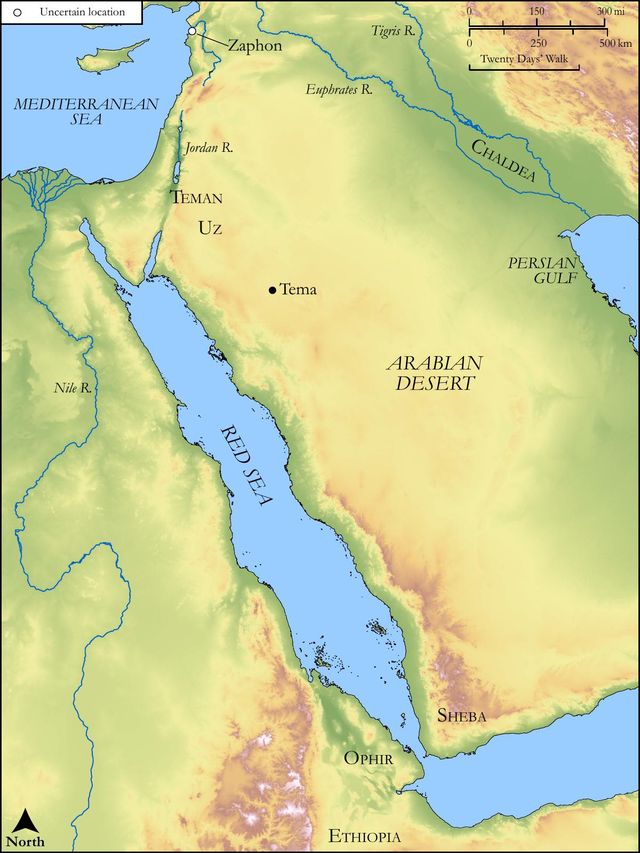
See on the biblical-era map
Study this verse
Public-domain commentary
Matthew Henry
From his Commentary on the Whole Bible. Henry comments on passages, not single verses — this entry covers Job 18:5–10. His three-level outline is real structure in the source text, so it is rendered as structure.
The rest of Bildad's discourse is entirely taken up in an elegant description of the miserable condition of a wicked man, in which there is a great deal of certain truth, and which will be of excellent use if duly considered - that a sinful condition is a sad condition, and that iniquity will be men's ruin if they do not repent of it. But it is not true that all wicked people are visibly and openly made thus miserable in this world; nor is it true that all who are brought into great distress and trouble in this world are therefore to be deemed and adjudged wicked men, when no other proof appears against them; and therefore, though Bildad thought the application of it to Job was easy, yet it was not safe nor just. In these verses we have,
I.The destruction of the wicked foreseen and foretold, under the similitude of darkness (Job 18:5, Job 18:6):
Yea, the light of the wicked shall be put out. Even his light, the best and brightest part of him, shall be put out; even that which he rejoiced in shall fail him. Or the yea may refer to Job's complaints of the great distress he was in and the darkness he should shortly make his bed in. "Yea," says Bildad, "So it is; thou art clouded, and straitened, and made miserable, and no better could be expected; for the light of the wicked shall be put out, and therefore thine shall." Observe here,
1.The wicked may have some light for a while, some pleasure, some joy, some hope within, as well as wealth, and honour, and power without. But his light is but a spark (Job 18:5), a little thing and soon extinguished. It is but a candle (Job 18:6), wasting, and burning down, and easily blown out. It is not the light of the Lord (that is sun-light), but the light of his own fire and sparks of his own kindling, Isa 50:11.
2.His light will certainly be put out at length, quite put out, so that not the least spark of it shall remain with which to kindle another fire. Even while he is in his tabernacle, while he is in the body, which is the tabernacle of the soul (Co2 5:1), the light shall be dark; he shall have no true solid comfort, no joy that is satisfying, no hope that is supporting. Even the light that is in him is darkness; and how great is that darkness! But, when he is put out of this tabernacle by death, his candle shall be put out with him. The period of his life will be the final period of all his days and will turn all his hopes into endless despair. When a wicked man dies his expectation shall perish, Pro 11:7. He shall lie down in sorrow.
II.The preparatives for that destruction represented under the similitude of a beast or bird caught in a snare, or a malefactor arrested and taken into custody in order to his punishment, Job 18:7-10.
1.Satan is preparing for his destruction. He is the robber that shall prevail against him (Job 18:9); for, as he was a murderer, so he was a robber, from the beginning. He, as the tempter, lays snares for sinners in the way, wherever they go, and he shall prevail. If he make them sinful like himself, he will make them miserable like himself. He hunts for the precious life.
2.He is himself preparing for his own destruction by going on in sin, and so treasuring up wrath against the day of wrath. God gives him up, as he deserves and desires, to his own counsels, and then his own counsels cast him down, Job 18:7. His sinful projects and pursuits bring him into mischief. He is cast into a net by his own feet (Job 18:8), runs upon his own destruction, is snared in the work of his own hands (Psa 9:16); his own tongue falls upon him, Psa 64:8. In the transgression of an evil man there is a snare.
3.God is preparing for his destruction. The sinner by his sin is preparing the fuel and then God by his wrath is preparing the fire. See here,
(1.)How the sinner is infatuated, to run himself into the snare; and whom God will destroy he infatuates.
(2.)How he is embarrassed: The steps of his strength, his mighty designs and efforts, shall be straitened, so that he shall not compass what he intended; and the more he strives to extricate himself the more will he be entangled. Evil men wax worse and worse.
(3.)How he is secured and kept from escaping the judgments of God that are in pursuit of him. The gin shall take him by the heel. He can no more escape the divine wrath that is in pursuit of him than a man, so held, can flee from the pursuer. God knows how to reserve the wicked for the day of judgment, Pe2 2:9.
Historical interpretation
Historical reception
2 surviving comments on this verse. Each one is dated, so this reads as a timeline rather than a list.
8. If he says this in describing the present life, he is mistaken; in that very often both the light of prosperity is seen in the ungodly, and the darkness of ignominy and poverty envelopes the godly. But if his discourse points to this, viz. to show what the ungodly meet with in their end, it is said with truth, Shall not the light of the wicked be put out, and the flame of his fire cease to shine? Which if it might have been rightly spoken in regard to an ungodly man, ought never to have been delivered against a holy man set fast in the midst of scourges. But let us, considering well the powers of his arm in delivering sentences, reflect how strongly be hurls the darts, and let us cease to look at him whom, while so hurling them, he aims to hit, knowing surely that he strikes a stone with foiled blows. So let him say; Shall not the light of the wicked be put out? For even the ungodly have their ‘light,’ i.e. the good fortune of the present life. But ‘the light of the wicked shall be put out,’ in that this present life’s good fortune is speedily terminated along with life itself. Whence it is fitly added; and the flame of his fire shall not shine.
9. For every ungodly man has a ‘flame of his own fire,’ which he kindles in his heart from the heat of temporal desires, whilst he burns now with these now with those lusts, and fans his thoughts into a bigger flame by the diverse flatteries of the world. But if a fire has no flame, it does not shine by shedding any light. And so the flame of the fire is his outward beauty or power, which comes from his burning within. For what he anxiously desires to get, he very often wins, to the heaping up of his own ruin; and whether in the power of the loftiest pitch, or in the wealth of multiplied increase, he as it were shines in external glory. But ‘the flame of his fire shall not shine,’ in that, in the day of his departure hence, all the fair show without is removed, and he is consumed by his own burning within alone. And ‘so the flame’ is removed from the ‘fire,’ when his exterior glory is separated from his interior burning. Even the righteous too have a flame of their fire, but one doubtless to shine bright, in this respect, that their desires give light in good works. But the light of the wicked does not shine in the least, in that hereby, viz. that they aim at what is evil, they are forced to darkness.
For every ungodly person has “a flame of his own fire” that he kindles in his heart from the heat of temporal desires, while he burns now with these, now with those lusts and fans his thoughts into a bigger flame by the diverse flatteries of the world. But if a fire has no flame, it does not shine by shedding any light. And so the flame of the fire is his outward beauty or power that comes from his burning within. What he anxiously desires to get, he very often wins, to the heaping up of his own ruin; and whether in the power of the loftiest pitch or in the wealth of multiplied increase, he, as it were, shines in external glory. But “the flame of his fire shall not shine,” in that in the day of his departure, all the fair outward show is removed, and he is consumed by his own burning within. And “so the flame” is removed from “the fire” when his exterior glory is separated from his interior burning.… Now it is well that it is not said of this lamp, “which is by him” but “which is above him,” in that earthly enjoyments possess the mind of the bad and so swallow it up in delight, that they are “above” it and not “by it.” But the righteous, even when they have the good fortune of the present life, are taught to force it to bow beneath them. That is, when they are made glad in themselves with good things, they may get above it by the counsel of a steadied mind and surmount it by the control of virtue. And so “the lamp” of the wicked person, “which is above him, is put out,” in that his joy is quickly brought to an end, a joy that possessed him wholly in this life; and the person who now wickedly lets himself out at large in pleasures is punished hereafter being closely encompassed round about in woe.
Continue studying Job 18:5 across the web’s major study libraries — every link below opens this exact verse, chapter, or book on the destination site.
Read & Compare
 BibleGatewayThis verse in more than 200 translations and 70 languages.
 Bible.comThe YouVersion reader — hundreds of translations, reading plans, and highlights.
 ESV.orgCrossway's official English Standard Version reader.
 NET BibleThe NET translation with 60,000+ translators' notes on every rendering decision.
 STEP BibleTyndale House's free study tool — original text, vocabulary, and scholarly resources.
 BibliaLogos Bible Software's free web reader.
 USCCBThe New American Bible (Revised Edition) with the U.S. bishops' study notes.
Commentaries
 BibleHub CommentariesDozens of classic commentaries on this verse, gathered on one page.
 StudyLightMore than 100 commentary sets — the largest collection on the web.
 BibleRefPlain-English commentary on what this verse means, verse by verse.
 Enduring WordDavid Guzik's free commentary on this chapter, widely used by Bible teachers.
 Bible Study ToolsVerse commentary alongside Greek and Hebrew study aids.
Original Language & Research
- BibleHub InterlinearThe verse word by word — original language, transliteration, and English.
- BibleHub LexiconEvery word's original-language definition and Strong's entry.
 Blue Letter BibleDeep-study tools — Strong's numbers, concordance, and word studies.
 SefariaThe Hebrew text with Rashi and centuries of Jewish commentary.
Sermons, Hymns & Audio


TrulyRandomVerse is not affiliated with these sites and doesn’t control their content. They’re linked because they’re genuinely useful.
Summary
Job 18:5 delivers a stark and definitive declaration from Bildad the Shuhite, one of Job's friends, concerning the inevitable and complete downfall of the wicked. Through the potent imagery of light and fire, the verse asserts that the prosperity, influence, and very existence of the ungodly are inherently fleeting and will ultimately be extinguished, leaving no lasting trace, hope, or legacy. It functions as a pronouncement of divine judgment, reflecting a rigid interpretation of the retribution principle prevalent in ancient wisdom traditions.
Context
ShowHideLiterary Context
This verse is deeply embedded within Bildad's second speech to Job, forming a critical part of the ongoing dialogue in the Book of Job, specifically in Job chapter 18. Bildad's address is a direct and forceful rebuttal to Job's lamentations and assertions of innocence found in Job chapter 17. Throughout their exchanges, Job's friends consistently operate under the traditional wisdom theology of their era, which posited a direct, unyielding correlation between righteousness and prosperity, and wickedness and suffering. Bildad, like Eliphaz and Zophar, firmly believes that Job's unprecedented suffering must be a direct consequence of hidden sin. In this chapter, Bildad systematically and relentlessly outlines the various calamities and misfortunes that he insists inevitably befall the wicked, using Job's dire situation as circumstantial evidence to buttress his argument. He paints a grim, detailed picture of the wicked's end, contrasting it with his perceived justice of God and subtly, yet powerfully, implying Job's guilt.
Historical & Cultural Context
The cultural backdrop for the Book of Job is the land of Uz, where the men of the east often emphasized a clear retribution principle: good deeds are rewarded, and evil deeds are punished. This theological framework, while having roots in biblical truth, was frequently applied simplistically and rigidly by Job's friends, failing to account for the complexities of suffering, the mystery of God's sovereignty, or the reality of righteous suffering. The imagery of "light" and "fire" carries profound symbolic weight throughout Scripture. Light commonly represented life, prosperity, joy, divine favor, and knowledge, while darkness symbolized death, judgment, chaos, and ignorance. The extinguishing of light or fire, therefore, was a powerful and universally understood metaphor for utter destruction, the cessation of life or influence, and the loss of all hope and legacy, making Bildad's pronouncement particularly impactful.
Key Themes
ShowHideJob 18:5 contributes to several pivotal themes within the Book of Job and broader biblical theology, even as Bildad misapplies them to Job's specific situation. One central theme is The Transience of Wicked Prosperity: The verse emphatically declares that any "light" or "fire" (symbolizing success, joy, influence, or even life itself) enjoyed by the wicked is temporary and will be extinguished. Their seemingly bright existence is ultimately fleeting and without lasting foundation, a concept powerfully echoed in Psalm 73 where the psalmist grapples with the same apparent injustice. Another theme is Divine Justice (as perceived by Bildad): While Job's friends misapply this principle to Job, the underlying conviction is that God's justice will ultimately prevail, and the unrighteous will face consequences. This aligns with broader biblical teachings about the ultimate fate of the wicked, as seen in Psalm 1:6, which contrasts the blessed with the perishing wicked. Finally, the verse highlights the Consequences of Ungodliness: The vivid imagery serves as a stark warning about the ultimate outcome of a life lived apart from God's ways. The "spark of his fire" represents even the smallest glimmer of hope, a potential legacy, or future influence, emphasizing that nothing of the wicked's impact or memory will endure.
Exposition and Analysis
ShowHideKey Word Analysis
ShowHideThis term (אֹור) frequently signifies illumination, life, prosperity, joy, understanding, divine favor, or success in biblical contexts. It stands in direct opposition to darkness, which often symbolizes judgment, death, confusion, or evil. Here, "the light of the wicked" refers to their apparent success, influence, or period of prosperity, which Bildad asserts will be definitively extinguished by divine decree.
This primitive root (דָּעַךְ) means "to be extinguished," "to expire," or "to be dried up." It implies a definitive and irreversible cessation, often by an external force. In this context, it suggests a divine act of judgment or intervention that brings an abrupt and final end to the wicked's flourishing, leaving no possibility of rekindling.
This word (שָׁבִיב) refers to a flame, a flicker, or a spark, often implying something small, transient, or easily extinguished. Its use here emphasizes the absolute totality of the wicked's destruction and the complete cessation of their influence. Not even the smallest, most insignificant remnant of their "fire" or hope will remain; it will entirely cease to shine, signifying a total and irrecoverable demise of their legacy and prosperity.
Verse Breakdown
ShowHide"Yea, the light of the wicked shall be put out,"
This opening clause declares with unwavering certainty that the prosperity, joy, influence, or even the very life of the ungodly will inevitably come to an end. The powerful imagery of "light" being "put out" conveys a definitive and irreversible cessation of their flourishing, implying a divine judgment that extinguishes their temporary success and brings their season of apparent triumph to an abrupt close.
"and the spark of his fire shall not shine."
This second clause amplifies and reinforces the meaning of the first, employing a strong sense of synonymous parallelism. It emphasizes the absolute totality of the wicked's downfall. "The spark of his fire" represents even the smallest glimmer of hope, a potential legacy, or the last vestige of their influence or memory. The declaration that it "shall not shine" signifies that absolutely nothing of their former glory, presence, or impact will remain; their existence will be utterly obliterated, leaving no lasting mark or enduring memory.
Literary Devices
ShowHideJob 18:5 is profoundly rich in Imagery, primarily employing the powerful and contrasting symbols of light and darkness, and fire and its absence. "Light" and "fire" vividly represent the prosperity, life, influence, and joy of the wicked, while their extinguishing symbolizes judgment, ruin, death, and the complete loss of legacy. The verse also utilizes Parallelism, specifically Synonymous Parallelism, where the second clause ("and the spark of his fire shall not shine") reiterates and intensifies the meaning of the first clause ("the light of the wicked shall be put out"). This repetition serves to emphasize the certainty, totality, and finality of the wicked's downfall. Furthermore, the verse employs Metaphor and Symbolism, where "light" and "spark of fire" are not literal but stand in for the transient and ultimately doomed success and existence of those who live apart from God's ways. The masterful use of these devices creates a stark, memorable, and impactful statement about divine retribution.
Theological and Thematic Connections
ShowHideWhile Bildad's application of the retribution principle to Job was profoundly flawed and insensitive, the underlying truth that wickedness ultimately leads to ruin is a consistent and foundational theme throughout Scripture. Job 18:5 articulates a profound theological reality: worldly success or temporary freedom from immediate consequences does not equate to divine approval or lasting security. The "light" of the wicked is inherently temporary because it is self-generated or derived from fleeting earthly sources, rather than from the eternal source of all light, God Himself. This verse reminds us that true and lasting prosperity, joy, and influence emanate from a righteous relationship with God, contrasting sharply with the ephemeral nature of ungodly gain. It points to a future where God's justice will be fully manifest, and every unrighteous path will ultimately lead to darkness and oblivion, affirming God's ultimate sovereignty over all human endeavors.
Reflection and Application
ShowHideJob 18:5, though spoken by a flawed human instrument, carries a timeless and potent truth that challenges our perceptions of success, justice, and lasting legacy. In a world often captivated by outward appearances, fleeting achievements, and the allure of instant gratification, this verse serves as a potent reminder that true and lasting light does not come from worldly accumulation, self-serving ambition, or unrighteous gain. It compels us to critically examine the source of our own "light" and "fire"—is it from God, the eternal source of all goodness and truth, or is it merely a temporary spark generated by human effort, fleeting circumstances, or even unrighteous compromise? For believers, it calls for a steadfast focus on eternal values, a life lived in unwavering righteousness, and a deep, abiding trust in God's ultimate justice, even when its manifestation seems delayed or inscrutable in the present. It warns against the seductive allure of temporary prosperity that compromises spiritual integrity, urging us instead to pursue a path whose light shines ever brighter, rooted in God's eternal truth and grace, a light that will never be extinguished.
Questions for Reflection
ShowHideFAQ
ShowHideIs Bildad's statement in Job 18:5 entirely wrong, given his flawed theology?
ShowHideBildad's application of the retribution principle to Job was indeed profoundly flawed and insensitive, as he wrongly assumed Job's suffering was direct proof of his wickedness. However, the principle itself—that wickedness ultimately leads to ruin and that the prosperity of the ungodly is temporary—is a consistent and foundational theme throughout Scripture. Verses like Psalm 73:17-20 affirm that the wicked's success is fleeting and their end is destruction. Similarly, Proverbs 10:25 declares that "when the whirlwind passes, the wicked is no more." Bildad's error was not in the truth of the principle, but in his rigid, simplistic, and uncharitable diagnosis of Job's specific situation, failing to acknowledge the complexity of God's ways, the reality of righteous suffering, and the mysterious nature of divine providence.
What does "light" symbolize in this context, and why is its extinguishing so significant?
ShowHideIn Hebrew thought, "light" often symbolizes prosperity, success, joy, life, influence, divine favor, and wisdom. For the wicked, this "light" represents their temporary flourishing and apparent triumph in the world, their fleeting moments of glory and power. Its extinguishing is profoundly significant because it signifies the complete and utter cessation of all that they valued and pursued apart from God. It means the loss of their influence, their joy, their very life, and any potential legacy or lasting impact. The "spark of his fire" not shining further emphasizes that not even a remnant or a faint memory of their ungodly achievements will endure, highlighting their ultimate desolation, oblivion, and the futility of a life lived without God (Isaiah 50:11).
Christ-Centered Fulfillment
ShowHideJob 18:5, while a stark pronouncement of judgment on the wicked from an Old Testament perspective, finds its ultimate Christ-centered fulfillment in the profound contrast between the fleeting "light" of human sin and the eternal, unquenchable light of Jesus Christ. The "light" of the wicked is destined to be "put out" because it is a false light, a self-generated glow that cannot withstand the true, penetrating light of God's holiness and justice. In stark contrast, Jesus declares, "I am the light of the world. Whoever follows me will not walk in darkness, but will have the light of life" (John 8:12). He is the true light that "shines in the darkness, and the darkness has not overcome it" (John 1:4-5), demonstrating His eternal triumph over all forms of spiritual darkness. The "spark of his fire" that "shall not shine" for the wicked speaks to their ultimate lack of an enduring inheritance or legacy, their complete spiritual bankruptcy. However, those who are "in Christ" are called "out of darkness into his marvelous light" (1 Peter 2:9), receiving an imperishable inheritance secured by His perfect life, atoning sacrifice, and glorious resurrection. Christ's kingdom is an eternal kingdom, and His light will shine forever, illuminating the New Jerusalem where "the Lamb is its lamp" (Revelation 21:23-24), utterly eclipsing the transient glow of human wickedness and establishing a reign of eternal light and righteousness.