


Genesis 13:2
Bible text: King James Version (1769 Blayney text) · Public domain
Bible text: Berean Standard Bible · Public domain
Bible text: American Standard Version (1901) · Public domain
Bible text: World English Bible, Messianic edition · Public domain
Bible text: Geneva Bible (1599) · Public domain
Bible text: Young's Literal Translation · Public domain
- וְאַבְרָםve·'av·Ramand AbramH87Conj-w ¦ N-proper-mNoun Proper MasculineוְandאַבְרָםAbram
- כָּבֵדka·Ved[was] wealthyH3515Adj-msAdjective Singular Masculine Absolute
- מְאֹדme·'OdveryH3966Adj-msAdjective Numerical Singular Masculine Absolute
- בַּמִּקְנֶהba·mik·Nehin <the> livestockH4735Prep-b ¦ N-msNoun Singular Masculine Absoluteבַּin <the>מִּקְנֶהlivestock
- בַּכֶּסֶףba·Ke·sefin <the> silverH3701Prep-b ¦ N-msNoun Singular Masculine Absoluteבַּin <the>כֶּסֶףsilver
- וּבַזָּהָבu·va·za·Havand in <the> goldH2091Conj-w ¦ Prep-b ¦ N-msNoun Singular Masculine Absoluteוּandבַin <the>זָּהָבgold
English is a literal word-by-word gloss of the Hebrew, not the KJV's wording. Why?
This is the original text the KJV's translators worked from — each Hebrew word with its own literal English meaning in this verse, prepared by scholars at Tyndale House, Cambridge. The KJV translates whole sentences, not word by word, so its wording differs: one Hebrew word can become several English words, and the KJV may choose “the LORD” where the gloss reads “Yahweh”. Both are faithful — they answer different questions. For the KJV's own rendering, switch to the KJV text.
Details
See on the biblical-era maps


Study this verse
Public-domain commentary
Matthew Henry
From his Commentary on the Whole Bible. Henry comments on passages, not single verses — this entry covers Genesis 13:1–4. His two-level outline is real structure in the source text, so it is rendered as structure.
I.Here is Abram's return out of Egypt, Gen 13:1.
He came himself and brought all his with him back again to Canaan. Note, Though there may be occasion to go sometimes into places of temptation, yet we must hasten out of them as soon as possible. See Rut 1:6.
II.His wealth:
He was very rich, Rut 1:2. He was very heavy, so the Hebrew word signifies; for riches are a burden, and those that will be rich do but load themselves with thick clay, Hab 2:6. There is a burden of care in getting them, fear in keeping them, temptation in using them, guilt in abusing them, sorrow in losing them, and a burden of account, at last, to be given up concerning them. Great possessions do but make men heavy and unwieldy. Abram was not only rich in faith and good works, and in the promises, but he was rich in cattle, and in silver and gold. Note,
1.God, in his providence, sometimes makes good men rich men, and teaches them how to abound, as well as how to suffer want.
2.The riches of good men are the fruits of God's blessing. God has said to Abram, I will bless thee; and that blessing made him rich without sorrow, Pro 10:22.
3.True piety will very well consist with great prosperity. Though it is hard for a rich man to get to heaven, yet it is not impossible, Mar 10:23, Mar 10:24. Abram was very rich and yet very religious. Nay, as piety is a friend to outward prosperity (Ti1 4:8), so outward prosperity, if well-managed, is an ornament to piety, and furnishes an opportunity of doing so much the more good.
III.His removal to Beth-el, Gen 13:3, Gen 13:4.
Thither he went, not only because there he had formerly had his tent, and he was willing to go among his old acquaintance, but because there he had formerly had his altar: and, though the altar was gone (probably he himself having taken it down, when he left the place, lest it should be polluted by the idolatrous Canaanites), yet he came to the place of the altar, either to revive the remembrance of the sweet communion he had had with God in that place, or perhaps to pay the vows he had there made to God when he undertook his journey into Egypt. Long afterwards God sent Jacob to this same place on that errand (Gen 35:1), Go up to Bethel, where thou vowedst the vow. We have need to be reminded, and should take all occasions to remind ourselves, of our solemn vows; and perhaps the place where they were made may help to bring them afresh to mind, and it may therefore do us good to visit it.
IV.His devotion there.
His altar was gone, so that he could not offer sacrifice; but he called on the name of the Lord, as he had done, Gen 12:8. Note,
1.All God's people are praying people. You may as soon find a living man without breath as a living Christian without prayer.
2.Those that would approve themselves upright with their God must be constant and persevering in the services of religion. Abram did not leave his religion behind him in Egypt, as many do in their travels.
3.When we cannot do what we would we must make conscience of doing what we can in the acts of devotion. When we want an altar, let us not be wanting in prayer, but, wherever we are, call on the name of the Lord.
Historical interpretation
Historical reception
2 surviving comments on this verse. Each one is dated, so this reads as a timeline rather than a list.
Select a marker to jump to its quote. Markers stagger vertically where authors wrote within a few decades of each other.
“He was very rich,” as is natural for one who was not lacking in any good thing, who did not covet the goods of others, because he lacked nothing of what he would have wished to regard as his own. For this is what it means to be rich: to have what is sufficient to satisfy one’s own desires. Frugality has a measure. Richness does not. Its measure is in the will of the seeker. He was rich in cattle, in silver and gold. What does this mean? I do not think that the intention is to praise the riches of this world but the righteousness of this man. Thus I understand cattle to be the bodily senses, because they are irrational. Silver represents the word and gold the mind. Abraham was indeed rich, because he was in control of his irrational senses. Indeed, he tamed them and made them docile, so that they might participate in rationality. His word was radiant with the brightness of faith, purified by the grace of spiritual discipline. His mind was full of prudence. And this is why the good mind is compared with gold, because just as gold is more precious than other metals, so the good mind is the best part among those that make up the human substance. So the richness of the wise man consists in these three things: in sensation, in word and in mind. Their order establishes a gradation, as we read also in the apostle: “So faith, hope, love abide, these three; but the greatest of these is love.” The mind too, then, is the greatest, because it is the mind that grinds the spiritual grain to purify the senses and the word. The character of the wise man is preserved at every point.So it is that through the simple facts of Abraham’s life great doctrines are expounded and illustrated. Rich indeed is the one who enriches even the arguments of the philosophers, who would formulate their precepts on the basis of his conduct. It was his riches, then, that Scripture had brought to light.
Let us not rush idly by this reading but rather recognize clearly the precision of sacred Scripture in recounting nothing to us as of no importance. “Now Abram was very rich,” the text says. Consider first of all this very fact that its habit had been to convey nothing idly or to no purpose. In this case is it not without reason that [the text] calls him rich. Nowhere else had it made mention of his being rich—this was the first time. Why, and to what purpose? For you to learn the inventiveness of God’s wisdom and providence displayed in favor of the great man, as well as his boundless and extraordinary power. The man who had gone into exile in Egypt under the pressure of famine, unable to sustain the privations of Canaan, suddenly became rich—and not just rich but very rich, not only in cattle but also in silver and gold. Do you not see the extent of God’s providence? Abraham left to find relief from famine and came back not simply enjoying relief from famine but invested with great wealth and untold reputation, his identity well known to everyone. Now the inhabitants of Canaan gained a more precise idea of the good man’s virtue by seeing this sudden transformation that had taken place—the stranger who had gone down into Egypt as a refugee and vagabond now flush with so much wealth.
Continue studying Genesis 13:2 across the web’s major study libraries — every link below opens this exact verse, chapter, or book on the destination site.
Read & Compare
 BibleGatewayThis verse in more than 200 translations and 70 languages.
 Bible.comThe YouVersion reader — hundreds of translations, reading plans, and highlights.
 ESV.orgCrossway's official English Standard Version reader.
 NET BibleThe NET translation with 60,000+ translators' notes on every rendering decision.
 STEP BibleTyndale House's free study tool — original text, vocabulary, and scholarly resources.
 BibliaLogos Bible Software's free web reader.
 USCCBThe New American Bible (Revised Edition) with the U.S. bishops' study notes.
Commentaries
 BibleHub CommentariesDozens of classic commentaries on this verse, gathered on one page.
 StudyLightMore than 100 commentary sets — the largest collection on the web.
 BibleRefPlain-English commentary on what this verse means, verse by verse.
 Enduring WordDavid Guzik's free commentary on this chapter, widely used by Bible teachers.
 Bible Study ToolsVerse commentary alongside Greek and Hebrew study aids.
Original Language & Research
- BibleHub InterlinearThe verse word by word — original language, transliteration, and English.
- BibleHub LexiconEvery word's original-language definition and Strong's entry.
 Blue Letter BibleDeep-study tools — Strong's numbers, concordance, and word studies.
 SefariaThe Hebrew text with Rashi and centuries of Jewish commentary.
Sermons, Hymns & Audio


TrulyRandomVerse is not affiliated with these sites and doesn’t control their content. They’re linked because they’re genuinely useful.
Summary
Upon his return from Egypt, Abram is described as possessing immense wealth in livestock, silver, and gold. This verse succinctly highlights God's providential blessing and faithfulness to His covenant promises, even in the wake of Abram's human failings. This significant material abundance not only underscores Abram's elevated status but also sets the stage for the practical challenges of shared resources that will soon necessitate his separation from Lot.
Context
ShowHideLiterary Context
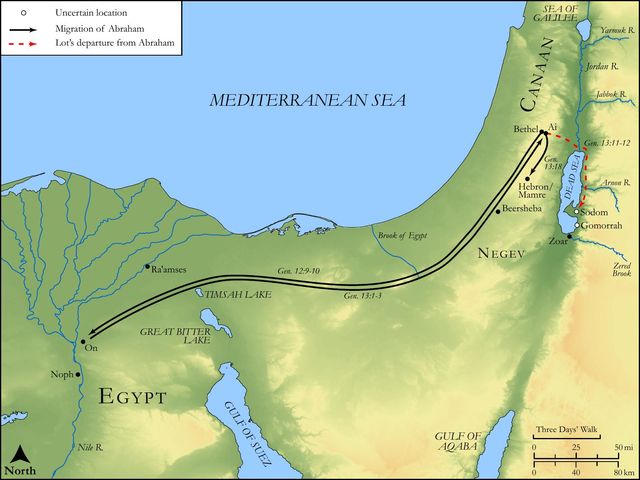
Genesis 13:2 immediately follows Abram's departure from Egypt and his return to the Negev, then to Bethel, where he had previously built an altar and called upon the name of the Lord (Genesis 12:9 and Genesis 12:8). The preceding chapter details Abram's sojourn in Egypt due to a famine, where he deceptively presented Sarai as his sister, leading to Pharaoh taking her into his household. Despite this moral lapse, Pharaoh bestowed significant gifts upon Abram (Genesis 12:16), which directly accounts for the wealth described in this verse. This immediate literary flow emphasizes God's unwavering faithfulness to His covenant, demonstrating His ability to bless His chosen even amidst their imperfections, and sets the stage for the impending conflict with Lot over land and resources.
Historical & Cultural Context
In the lands of the patriarchs, wealth was primarily measured in terms of livestock (cattle, sheep, goats), precious metals (silver and gold), and servants. Livestock represented mobile capital, a source of food, clothing, and trade, while silver and gold served as currency, a store of value, and indicators of high social status and influence. The mention of "cattle, silver, and gold" in Genesis 13:2 is a standard way of describing comprehensive prosperity for a nomadic patriarch. Such immense wealth would have conferred significant power and respect, allowing Abram to sustain a large household and retinue, and to command authority in the region. The geographical setting, with its limited pasturelands, would soon make the co-existence of two large, prosperous households (Abram's and Lot's) unsustainable, leading to the narrative's next crucial development.
Key Themes
ShowHideThis verse contributes significantly to several overarching themes in Genesis and the broader biblical narrative. Firstly, it powerfully illustrates Divine Providence and Blessing, showing God's active involvement in Abram's life and His commitment to fulfilling His promises, even when human actions are flawed. Secondly, it highlights the theme of Covenant Faithfulness, as Abram's prosperity is a tangible sign of God's initial outworking of the promise to "make your name great" and "bless you" from Genesis 12:2. Thirdly, it introduces the practical challenges of Wealth and Stewardship, demonstrating how abundance can lead to relational friction and necessitate wise decision-making, as will be seen in the separation of Abram and Lot in Genesis 13:5-12.
Exposition and Analysis
ShowHideKey Word Analysis
ShowHideThis root means "to be heavy" or "weighty." In a good sense, it implies being numerous, rich, or honorable. When applied to possessions, it conveys not just a large quantity but substantial, weighty, and significant wealth. Abram's wealth was not merely abundant but possessed immense substance and influence.
This word denotes vehemence or intensity. It functions as an intensive or superlative, meaning "exceedingly," "greatly," or "mightily." When combined with "rich" (kâbad), it emphasizes the extraordinary, overwhelming extent of Abram's wealth, signifying that he was not just rich, but exceedingly or extremely rich.
This refers to the precious metal, gold. In that day, gold was a primary indicator of immense wealth, status, and a store of value, often used for significant transactions, ornaments, and royal treasuries. Its inclusion alongside cattle and silver completes the picture of Abram's comprehensive and substantial material prosperity.
Verse Breakdown
ShowHide"And Abram [was] very rich"
This opening clause immediately establishes the central point of the verse: Abram's extraordinary prosperity. The Hebrew phrase kaved me'od (כבד מאד) literally means "very heavy" or "very weighty," conveying a sense of immense substance and significance. This is not merely a statement of quantity but an emphatic declaration of Abram's elevated status and the substantial nature of his possessions, a direct result of God's blessing and providence, even through his time in Egypt.
"in cattle"
Livestock, particularly cattle, were the primary form of wealth in the nomadic, pastoral society of the patriarchs. They represented mobile capital, a source of food (milk, meat), clothing (hides, wool from sheep/goats), and a means of exchange. Possessing large herds indicated not only material wealth but also the ability to sustain a large household, servants, and retainers, signifying power and influence within the region.
"in silver, and in gold"
These precious metals served as the most concentrated forms of wealth, used for trade, large transactions, and as a stable store of value. Unlike livestock, they were not perishable and were easily transportable, making them ideal for long-term savings and significant purchases. The mention of both silver and gold indicates a comprehensive and diversified portfolio of wealth, solidifying Abram's standing as an exceptionally prosperous individual in his time.
Literary Devices
ShowHideThe verse employs several literary devices to convey Abram's immense wealth. The use of Hyperbole or Intensification is evident in the phrase "very rich" (Hebrew kaved me'od), which literally means "very heavy" or "very weighty." This emphasizes the extraordinary, almost overwhelming, nature of Abram's possessions, beyond mere abundance. Furthermore, the listing of "cattle, silver, and gold" functions as a Merism, representing the totality of Abram's assets by naming its most significant components. This comprehensive enumeration paints a complete picture of his diverse and substantial prosperity, encompassing all major forms of ancient wealth. Finally, the description of Abram's wealth carries Symbolism, serving as a tangible manifestation of God's covenant blessing and faithfulness to His promise to make Abram great (Genesis 12:2), even amidst the complexities of human imperfection.
Theological and Thematic Connections
ShowHideThis verse profoundly illustrates God's sovereign providence and unwavering faithfulness to His covenant, demonstrating His ability to bless and provide for His chosen people even when their actions are flawed. Abram's immense wealth, acquired partly through Pharaoh's gifts despite Abram's deception in Egypt, underscores that God's plans are not thwarted by human weakness; rather, He orchestrates circumstances to fulfill His purposes and promises. This material abundance is a tangible sign of God's blessing, yet it also introduces the complexities of stewardship and the potential for conflict that wealth can bring, setting the stage for the necessary separation between Abram and Lot.
Reflection and Application
ShowHideGenesis 13:2 serves as a powerful reminder of God's abundant provision and unwavering faithfulness, even in the face of human imperfection. Abram's wealth was not merely a result of his own efforts or Pharaoh's generosity, but ultimately a manifestation of God's blessing, fulfilling His promise to make Abram great. For us, this verse challenges us to recognize that all our resources, talents, and opportunities are gifts from God, intended not solely for personal comfort but for His glory and purposes. It prompts us to consider how our own blessings, whether material or otherwise, might create new responsibilities or present tests of character, particularly in our relationships and stewardship. Like Abram, who would soon demonstrate wisdom and generosity in resolving conflict over resources, we are called to manage our possessions with humility, integrity, and a willingness to prioritize peace and relationships over personal gain, always seeking to honor God in our handling of His provisions.
Questions for Reflection
ShowHideFAQ
ShowHideHow did Abram acquire such immense wealth?
ShowHideAbram's significant wealth was largely acquired during his sojourn in Egypt, where Pharaoh bestowed upon him numerous gifts, including livestock, silver, and gold, despite Abram's deceptive act concerning Sarai (Genesis 12:16). This demonstrates God's providential care and ability to bless His covenant people even through challenging circumstances and human weakness, orchestrating events to fulfill His promises even amidst human imperfection.
Does Abram's wealth signify God's approval of material prosperity?
ShowHideAbram's wealth is presented as a tangible manifestation of God's blessing and faithfulness to His covenant promise to bless Abram and make him great (Genesis 12:2). While the Bible does not inherently condemn wealth, it consistently emphasizes that material prosperity is a gift from God that comes with responsibilities of stewardship, generosity, and reliance on God rather than riches. Abram's wealth, therefore, signifies God's provision and the initial fulfillment of His promises, but it also serves as a test of character, as seen in the subsequent conflict with Lot and Abram's generous resolution.
Christ-Centered Fulfillment
ShowHideAbram's material wealth, a tangible sign of God's covenant blessing and faithfulness, foreshadows the far greater spiritual riches and eternal inheritance found in Christ Jesus. While Abram received earthly prosperity as a patriarch, Christ Himself is the ultimate fulfillment of God's promise to bless all the families of the earth through Abram's seed (Genesis 12:3). In Christ, believers are "blessed with every spiritual blessing in the heavenly places" (Ephesians 1:3), receiving an inheritance that is imperishable, undefiled, and unfading, kept in heaven (1 Peter 1:4). This spiritual wealth, secured by Christ's atoning work and sealed by the indwelling Holy Spirit (Ephesians 1:13-14), transcends any earthly possession, providing eternal security, peace, and an unimaginable abundance in God's presence, far surpassing the temporary riches of Abram.