


Genesis 12:9
Bible text: King James Version (1769 Blayney text) · Public domain
Bible text: Berean Standard Bible · Public domain
Bible text: American Standard Version (1901) · Public domain
Bible text: World English Bible, Messianic edition · Public domain
Bible text: Geneva Bible (1599) · Public domain
Bible text: Young's Literal Translation · Public domain
- וַיִּסַּעvai·yi·Sa'and he journeyedH5265Conj-w ¦ V-Qal-ConsecImperf-3msVerb Qal Consecutive Imperfect 3rd Singular Masculineוַandיִּסַּעhe journeyed
- אַבְרָם'av·RamAbramH87N-proper-mNoun Proper Masculine
- הָלוֹךְha·LokhgoingH1980V-Qal-InfAbsVerb Qal Infinitive Absolute
- וְנָסוֹעַve·na·So·a'and journeyingH5265Conj-w ¦ V-Qal-InfAbsVerb Qal Infinitive Absoluteוְandנָסוֹעַjourneying
- הַנֶּגְבָּהha·Neg·bahthe south towardsH5045Art ¦ N-proper ¦ SfxNoun Proper Locationהַtheנֶּגְבָּsouthהtowards
English is a literal word-by-word gloss of the Hebrew, not the KJV's wording. Why?
This is the original text the KJV's translators worked from — each Hebrew word with its own literal English meaning in this verse, prepared by scholars at Tyndale House, Cambridge. The KJV translates whole sentences, not word by word, so its wording differs: one Hebrew word can become several English words, and the KJV may choose “the LORD” where the gloss reads “Yahweh”. Both are faithful — they answer different questions. For the KJV's own rendering, switch to the KJV text.
Details
See on the biblical-era maps


Study this verse
Public-domain commentary
Matthew Henry
From his Commentary on the Whole Bible. Henry comments on passages, not single verses — this entry covers Genesis 12:6–9. His three-level outline is real structure in the source text, so it is rendered as structure.
One would have expected that Abram having had such an extraordinary call to Canaan some great event should have followed upon his arrival there, that he would have been introduced with all possible marks of honour and respect, and that the kings of Canaan should immediately have surrendered their crowns to him, and done him homage. But no; he comes not with observation, little notice is taken of him, for still God will have him to live by faith, and to look upon Canaan, even when he was in it, as a land of promise; therefore observe here,
I.How little comfort he had in the land he came to; for,
1.He had it not to himself: The Canaanite was then in the land. He found the country peopled and possessed by Canaanites, who were likely to be but bad neighbours and worse landlords; and, for aught that appears, he could not have ground to pitch his tent on but by their permission. Thus the accursed Canaanites seemed to be in better circumstances than blessed Abram. Note, The children of this world have commonly more of it than God's children.
2.He had not a settlement in it. He passed through the land, Gen 12:6. He removed to a mountain, Gen 12:8. He journeyed, going on still, Gen 12:9. Observe here,
(1.)Sometimes it is the lot of good men to be unsettled, and obliged often to remove their habitation. Holy David had his wanderings, his flittings, Psa 56:8.
(2.)Our removes in this world are often into various conditions. Abram sojourned, first in a plain (Gen 12:6), then in a mountain, Gen 12:8. God has set the one over-against the other.
(3.)All good people must look upon themselves as strangers and sojourners in this world, and by faith sit loose to it as a strange country. So Abram did, Heb 11:8-14.
(4.)While we are here in this present state, we must be journeying, and going on still from strength to strength, as having not yet attained.
II.How much comfort he had in the God he followed; when he could have little satisfaction in converse with the Canaanites whom he found there, he had abundance of pleasure in communion with that God who brought him thither, and did not leave him. Communion with God is kept up by the word and by prayer, and by these, according to the methods of that dispensation, Abram's communion with God was kept up in the land of his pilgrimage.
1.God appeared to Abram, probably in a vision, and spoke to him good words and comfortable words: Unto thy seed will I give this land. Note,
(1.)No place nor condition of life can shut us out from the comfort of God's gracious visits. Abram is a sojourner, unsettled among Canaanites; and yet here also he meets with him that lives and sees him. Enemies may part us and our tents, us and our altars, but not us and our God. Nay,
(2.)With respect to those that faithfully follow God in a way of duty, though he lead them from their friends, he will himself make up that loss by his gracious appearances to them.
(3.)God's promises are sure and satisfying to all those who conscientiously observe and obey his precepts; and those who, in compliance with God's call, leave or lose any thing that is dear to them, shall be sure of something else abundantly better in lieu of it. Abram had left the land of his nativity: "Well," says God, "I will give thee this land," Mat 19:29.
(4.)God reveals himself and his favours to his people by degrees; before he had promised to show him this land, now to give it to him: as grace is growing, so is comfort.
(5.)It is comfortable to have land of God's giving, not by providence only, but by promise.
(6.)Mercies to the children are mercies to the parents. "I will give it, not to thee, but to thy seed;" it is a grant in reversion to his seed, which yet, it should seem, Abram understood also as a grant to himself of a better land in reversion, of which this was a type; for he looked for a heavenly country, Heb 11:16.
2.Abram attended on God in his instituted ordinances. He built an altar unto the Lord who appeared to him, and called on the name of the Lord, Gen 12:7, Gen 12:8. Now consider this,
(1.)As done upon a special occasion. When God appeared to him, then and there he built an altar, with an eye to the God who appeared to him. Thus he returned God's visit, and kept up his correspondence with heaven, as one that resolved it should not fail on his side; thus he acknowledged, with thankfulness, God's kindness to him in making him that gracious visit and promise; and thus he testified his confidence in and dependence upon the word which God had spoken. Note, An active believer can heartily bless God for a promise the performance of which he does not yet see, and build an altar to the honour of God who appears to him, though he does not yet appear for him.
(2.)As his constant practice, whithersoever he removed. As soon as Abram had got to Canaan, though he was but a stranger and sojourner there, yet he set up, and kept up, the worship of God in his family; and wherever he had a tent God had an altar, and that an altar sanctified by prayer. For he not only minded the ceremonial part of religion, the offering of sacrifice, but made conscience of the natural duty of seeking to his God, and calling on his name, that spiritual sacrifice with which God is well pleased. He preached concerning the name of the Lord, that is, he instructed his family and neighbours in the knowledge of the true God and his holy religion. The souls he had gotten in Haran, being discipled, must be further taught. Note, Those that would approve themselves the children of faithful Abram, and would inherit the blessing of Abram, must make conscience of keeping up the solemn worship of God, particularly in their families, according to the example of Abram. The way of family worship is a good old way, is no novel invention, but the ancient usage of all the saints. Abram was very rich and had a numerous family, was now unsettled and in the midst of enemies, and yet, wherever he pitched his tent, he built an altar. Wherever we go, let us not fail to take our religion along with us.
Historical interpretation
Three Centuries of Reception
2 surviving comments on this verse. Each one is dated, so this reads as a timeline rather than a list.
Select a marker to jump to its quote. Markers stagger vertically where authors wrote within a few decades of each other.
(Verse 9) And Abram, setting out, went into the desert; and famine came upon the land. And in the present and in many other places, for desert, it is written in Hebrew. Therefore, we should take note of this.
And Abram journeyed, going and still progressing towards the south. The southern region, from where the sun is accustomed to shine more ardently upon the world, mystically demonstrates the fervor of love by which the hearts of the elect, lest they become sluggish in the appetite and desires for lowly things, are always inflamed by the Sun of righteousness shining from above, namely Christ. Thus Abraham, desiring to see and know the land he was to receive as a possession, indeed proceeded in human curiosity, going and still progressing towards the south: but in mystical significance, he showed that he, ascending from strength to strength, and like all the elect, always made progress in divine love until he is granted to see the God of gods in Zion.
Continue studying Genesis 12:9 across the web’s major study libraries — every link below opens this exact verse, chapter, or book on the destination site.
Read & Compare
 BibleGatewayThis verse in more than 200 translations and 70 languages.
 Bible.comThe YouVersion reader — hundreds of translations, reading plans, and highlights.
 ESV.orgCrossway's official English Standard Version reader.
 NET BibleThe NET translation with 60,000+ translators' notes on every rendering decision.
 STEP BibleTyndale House's free study tool — original text, vocabulary, and scholarly resources.
 BibliaLogos Bible Software's free web reader.
 USCCBThe New American Bible (Revised Edition) with the U.S. bishops' study notes.
Commentaries
 BibleHub CommentariesDozens of classic commentaries on this verse, gathered on one page.
 StudyLightMore than 100 commentary sets — the largest collection on the web.
 BibleRefPlain-English commentary on what this verse means, verse by verse.
 Enduring WordDavid Guzik's free commentary on this chapter, widely used by Bible teachers.
 Bible Study ToolsVerse commentary alongside Greek and Hebrew study aids.
Original Language & Research
- BibleHub InterlinearThe verse word by word — original language, transliteration, and English.
- BibleHub LexiconEvery word's original-language definition and Strong's entry.
 Blue Letter BibleDeep-study tools — Strong's numbers, concordance, and word studies.
 SefariaThe Hebrew text with Rashi and centuries of Jewish commentary.
Sermons, Hymns & Audio


TrulyRandomVerse is not affiliated with these sites and doesn’t control their content. They’re linked because they’re genuinely useful.
Summary
Genesis 12:9 meticulously records Abram's continued nomadic progression deeper into the land of Canaan, specifically "toward the south." This verse underscores his unwavering obedience to God's call, characterizing his faith as a dynamic, persistent journey marked by continuous movement and reliance on divine direction, even as the ultimate destination and trials ahead remained veiled.
Context
ShowHideLiterary Context
This verse is situated immediately after Abram's initial entry into Canaan and his acts of worship. In Genesis 12:1-3, God issues a foundational call to Abram, commanding him to leave his homeland and journey to an unspecified land that God would show him, promising to make him a great nation and bless those who bless him. Following his arrival in Canaan, Abram builds altars to the Lord in Shechem (Genesis 12:7) and Bethel (Genesis 12:8), signifying his dedication and claiming the land through worship. Genesis 12:9 then demonstrates that these acts of worship did not lead to permanent settlement but rather to continued, directed movement, highlighting the ongoing nature of his faith-walk as a sojourner. This continuous journey sets the stage for the subsequent narrative, including the famine that forces Abram into Egypt (Genesis 12:10), further testing his faith and reliance on God.
Historical & Cultural Context
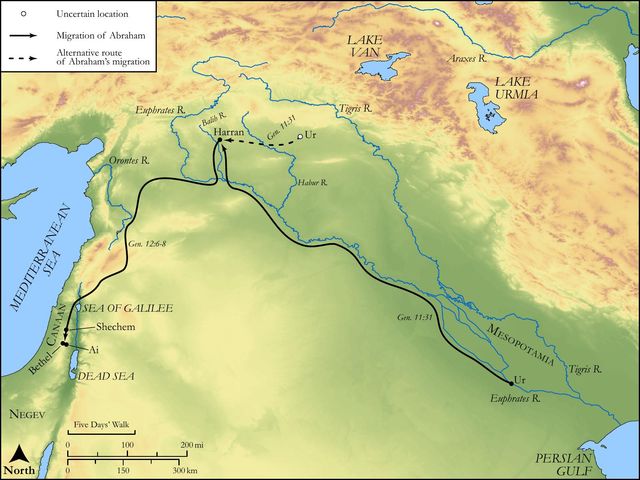
In the lands of the patriarchs, nomadic pastoralism was a common way of life, particularly for those with large flocks and herds who needed to move regularly to find pasture and water. Abram's lifestyle as described in Genesis aligns with this reality. His movement "toward the south" specifically refers to the Negeb (or Negev), a semi-arid region in southern Canaan, characterized by its challenging climate and limited resources. This region was a transitional zone between the more fertile central highlands and the desert to the south. Moving into the Negeb often implied a greater reliance on wells and seasonal rains, making it a more difficult environment for sustaining large communities or herds. This geographical progression was not arbitrary; it reflects the practicalities of a pastoralist's life while also subtly foreshadowing the impending famine that would compel Abram to seek refuge in Egypt, a common recourse for those facing drought in Canaan.
Key Themes
ShowHideGenesis 12:9 significantly contributes to several overarching themes within the book of Genesis and the broader biblical narrative. The primary theme is God's Sovereignty and Guidance, as Abram's journey is not aimless but directed by divine command, even if the specific itinerary is not fully revealed. This underscores the idea that God initiates and orchestrates the paths of His chosen servants, as seen throughout the patriarchal narratives. Another key theme is Faith as a Journey, portraying belief not as a static declaration but as an active, ongoing pilgrimage of trust and obedience. Abram's continuous movement, described by the phrase "going on still," exemplifies a dynamic and progressive faith that adapts to God's leading through various terrains and challenges. This verse also subtly introduces the theme of Preparation through Adversity, as the move into the drier Negeb region can be seen as a prelude to the famine, suggesting that God often leads His people through difficult circumstances to refine their character and deepen their dependence on Him, a pattern observed in the lives of many biblical figures, including Joseph in Genesis 37, Genesis 38, Genesis 39, Genesis 40, Genesis 41, Genesis 42, Genesis 43, Genesis 44, Genesis 45, Genesis 46, Genesis 47, Genesis 48, Genesis 49, Genesis 50.
Exposition and Analysis
ShowHideKey Word Analysis
ShowHideThis primitive root (H5265) primarily means "to pull up," specifically referring to the pulling up of tent-pins, which signifies the act of "starting on a journey" or "moving camp." Its inclusion here emphasizes the nomadic nature of Abram's existence and the deliberate, active decision to break camp and move forward. It implies a readiness to leave behind what is established for what lies ahead, in obedience to God's call.
Akin to the more common word for "to walk" (H1980), this root signifies continuous movement, progression, or a habitual way of life. When combined with nâçaʻ (as in the Hebrew idiom haloch venasoa for "going on still"), it denotes a persistent, unceasing, and progressive journey. It highlights that Abram's obedience was not a one-time event but an ongoing, dynamic process of following God's leading, a "walking" with God in a literal and metaphorical sense.
Derived from an unused root meaning "to be parched" (H5045), negeb refers to the southern region of Palestine, often associated with its dry, arid conditions. It can also refer more broadly to "the south" as a cardinal direction. In this context, it specifies Abram's geographical orientation, moving deeper into the less fertile, more challenging parts of Canaan. This directional movement is significant, as it positions Abram for the subsequent events, particularly the famine that drives him further south into Egypt.
Verse Breakdown
ShowHide"And Abram journeyed,"
This opening clause establishes Abram's primary action: continuous movement. The Hebrew verb implies the act of pulling up tent pegs and setting out, underscoring his nomadic lifestyle and his active response to God's call to be a sojourner. It signifies a deliberate, conscious decision to maintain his transient state rather than settling permanently, reflecting his faith in a future, promised inheritance.
"going on still"
This phrase, a translation of the Hebrew idiom haloch venasoa (literally "going and journeying"), profoundly emphasizes the continuous, persistent, and progressive nature of Abram's movement. It's not merely a single act of travel but an ongoing, sustained journey. This repetition highlights the dynamic quality of his faith—it was a journey of endurance, marked by unwavering obedience and constant progression under divine guidance, rather than a static arrival.
"toward the south."
This specifies the direction of Abram's continued journey. The "south" (Hebrew: negeb) refers to the semi-arid region of southern Canaan. This geographical detail is crucial, as it indicates a movement into a drier, more challenging environment, subtly foreshadowing the impending famine and the subsequent journey to Egypt. It suggests that God's leading may sometimes direct His people through difficult terrains, preparing them for future trials and deepening their reliance on Him.
Literary Devices
ShowHideThe verse primarily employs Repetition and Symbolism. The Hebrew idiom haloch venasoa, translated as "going on still," utilizes a form of verbal repetition to emphasize the continuous and persistent nature of Abram's journey. This linguistic device underscores the idea that Abram's obedience was not a singular event but an ongoing process, a sustained act of faith. Furthermore, the entire narrative of Abram's journey serves as profound Symbolism. His physical movement across the land symbolizes the spiritual journey of faith, where believers are called to walk in obedience and trust, even when the path ahead is not fully clear. The direction "toward the south" (the Negeb) can be seen as Foreshadowing, subtly hinting at the challenging circumstances (famine) that lie ahead, suggesting that God's guidance may lead through difficult terrains to test and refine faith. The nomadic lifestyle itself is a Metaphor for the transient nature of life on earth for those whose ultimate hope and inheritance lie in God's promises.
Theological and Thematic Connections
ShowHideAbram's journey in Genesis 12:9 profoundly illustrates the nature of faith as an active, continuous pilgrimage rather than a static destination. His persistent movement, "going on still," embodies the biblical concept of a "walk of faith," where trust in God's unseen guidance propels believers forward. This highlights that obedience to God's call is not a one-time decision but a sustained, day-by-day commitment, requiring endurance and reliance on divine sovereignty even when circumstances are uncertain or challenging. The direction "toward the south" into a potentially difficult region further emphasizes that God's path for His people may include adversity, serving to refine their faith and deepen their dependence on Him.
Reflection and Application
ShowHideAbram's journey in Genesis 12:9 offers a powerful and enduring metaphor for the Christian life. We are called to be spiritual sojourners, always "going on still" in our faith, never settling into complacency but continually progressing in our understanding of God, our obedience to His Word, and our reliance on His guidance. Just as Abram moved into the challenging Negeb, our spiritual walk often leads us through "southern" territories—periods of uncertainty, difficulty, or discomfort—where our faith is tested and refined. This verse encourages us to embrace the dynamic nature of our relationship with God, recognizing that growth often occurs in the midst of movement and change, not in stagnation. It reminds us that true spiritual maturity is characterized by persistent trust, active obedience, and a willingness to follow God's lead, even when the path ahead is not fully illuminated. Our task is not to see the entire map, but to take the next step in faith, confident that the One who calls us also directs our steps.
Questions for Reflection
ShowHideFAQ
ShowHideWhy did Abram keep moving "toward the south" instead of settling?
ShowHideAbram's continued movement, particularly "toward the south" (the Negeb), was an integral part of his ongoing obedience to God's initial call to journey to a land that God would show him (Genesis 12:1). He was a sojourner, a pilgrim in the land of promise, not yet an inheritor with a permanent dwelling. His nomadic lifestyle underscored his faith that the ultimate fulfillment of God's promise was yet to come, and that his present reality was one of dependence on God's provision and direction. Furthermore, his movement into the Negeb positioned him for the challenges of the upcoming famine (Genesis 12:10), which would further test his faith and reliance on God.
What is the significance of the phrase "going on still"?
ShowHideThe phrase "going on still" translates the Hebrew idiom haloch venasoa, which emphasizes the continuous, progressive, and persistent nature of Abram's journey. It highlights that his obedience to God's call was not a one-time act but an ongoing, dynamic process of following God's leading. This signifies endurance, sustained commitment, and a relentless pursuit of God's will, even without a clear, immediate destination. It portrays faith as an active, living journey rather than a static state.
Does Abram's journey imply that believers should always be physically moving?
ShowHideNot necessarily in a literal, physical sense. While Abram's journey was indeed geographical, the profound spiritual lesson is about the nature of persistent obedience and active trust in God's leading in all aspects of life. It signifies a dynamic, active faith that is always progressing in understanding, character, and service, rather than becoming stagnant or complacent. It's a call to spiritual movement and growth, to continually walk with God and follow His direction, wherever He may lead, be it physically, relationally, or vocationally.
Christ-Centered Fulfillment
ShowHideAbram's obedient journey, "going on still toward the south," serves as a profound foreshadowing of the ultimate journey of Christ, who perfectly fulfilled the Father's will through His earthly pilgrimage. While Abram journeyed in faith toward a promised land he did not yet fully possess, Jesus, the true Son of Abraham and the ultimate pilgrim, embarked on a journey of perfect obedience from the glory of heaven to the humility of earth. His entire life—from His incarnation to His ministry, His suffering, death, and resurrection—was a continuous "going on still" in submission to God's plan, culminating in the securing of an eternal inheritance for all who believe (Hebrews 9:15). Christ is the pioneer and perfecter of our faith (Hebrews 12:2), who perfectly walked the path of God's will, establishing the way for all humanity to enter into God's eternal promises and find true rest in Him (Hebrews 4:9-10). Abram's faithful movement points to the One who embodies perfect trust and submission, leading His people not merely to a land, but to an eternal dwelling place in the presence of God Himself.