


Exodus 8:20
- וַיֹּאמֶרvai·Yo·merand he saidH559Conj-w ¦ V-Qal-ConsecImperf-3msVerb Qal Consecutive Imperfect 3rd Singular Masculineוַandיֹּאמֶרhe said
- יְהוָהYah·wehYahwehH3068N-properNoun Proper Title
- אֶל'eltoH413PrepPreposition
- מֹשֶׁהmo·ShehMosesH4872N-proper-mNoun Proper Masculine
- הַשְׁכֵּםhash·Kemrise earlyH7925V-Hiphil-Imp-2msVerb Hiphil Imperative 2nd Singular Masculine
- בַּבֹּקֶרba·Bo·kerin the morningH1242Prep-b ¦ N-msNoun Singular Masculine Absoluteבַּin theבֹּקֶרmorning
- וְהִתְיַצֵּבve·hit·ya·Tzevand present yourselfH3320Conj-w ¦ V-Hithpael-Imp-2msVerb Hithpael Imperative 2nd Singular Masculineוְandהִתְיַצֵּבpresent yourself
- לִפְנֵיlif·Nei<to> beforeH6440Prep-l ¦ N-mpcNoun Plural Masculine Constructלִ<to>פְנֵיbefore
- פַרְעֹהfar·'OhPharaohH6547N-msNoun Title Singular Masculine Absolute
- הִנֵּהhi·Nehthere!H2009PrtParticle Interjection
- יוֹצֵאyo·Tze'[he is] going outH3318V-Qal-Prtcpl-msVerb Qal Participle Singular Masculine Absolute
- הַמָּיְמָהha·Ma·ye·mahthe water towardsH4325Art ¦ N-mp ¦ SfxNoun Plural Masculine Absoluteהַtheמָּיְמָwaterהtowards
- וְאָמַרְתָּve·'a·mar·Taand you will sayH559Conj-w ¦ V-Qal-ConsecPerf-2msVerb Qal Consecutive Perfect 2nd Singular Masculineוְandאָמַרְתָּyou will say
- אֵלָיו'e·Lavto himH413Prep ¦ 3msPreposition Definiteאֵלָיtoוhim
- כֹּהkohthusH3541AdvAdverb
- אָמַר'a·Marhe saysH559V-Qal-Perf-3msVerb Qal Perfect 3rd Singular Masculine
- יְהוָהYah·wehYahwehH3068N-properNoun Proper Title
- שַׁלַּחsha·Lachlet goH7971V-Piel-Imp-2msVerb Piel Imperative 2nd Singular Masculine
- עַמִּי'a·Mimy peopleH5971N-msc ¦ 1csNoun Singular Masculine Constructעַמִּpeopleיmy
- וְיַעַבְדֻנִיve·Ya·'av·Du·niso they may serve meH5647Conj-w ¦ V-Qal-ConjImperf-3mp ¦ 1csVerb Qal Conjunction+Imperfect 3rd Plural Masculineוְsoיַעַבְדֻthey may serveנִיme
English is a literal word-by-word gloss of the Hebrew, not the KJV's wording. Why?
This is the original text the KJV's translators worked from — each Hebrew word with its own literal English meaning in this verse, prepared by scholars at Tyndale House, Cambridge. The KJV translates whole sentences, not word by word, so its wording differs: one Hebrew word can become several English words, and the KJV may choose “the LORD” where the gloss reads “Yahweh”. Both are faithful — they answer different questions. For the KJV's own rendering, switch to the KJV text.
Details
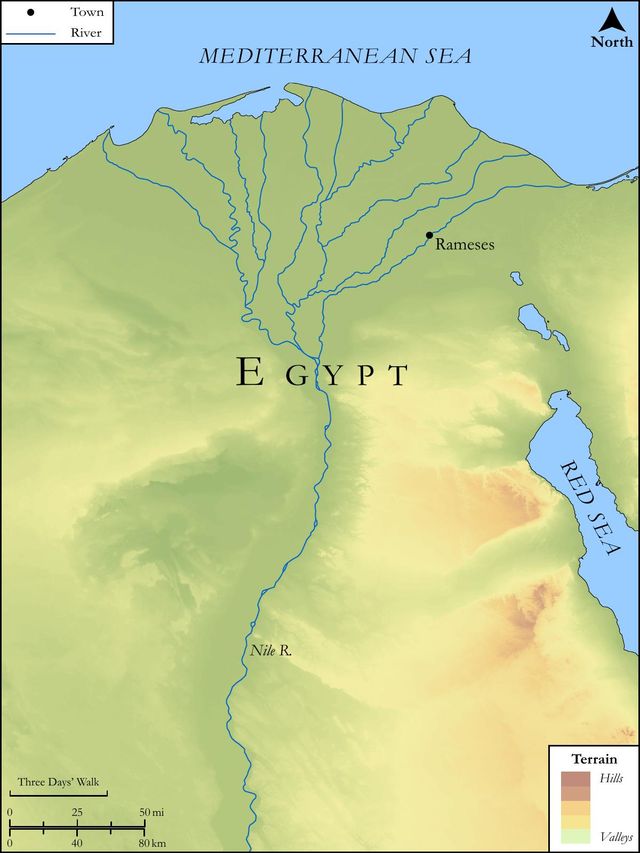
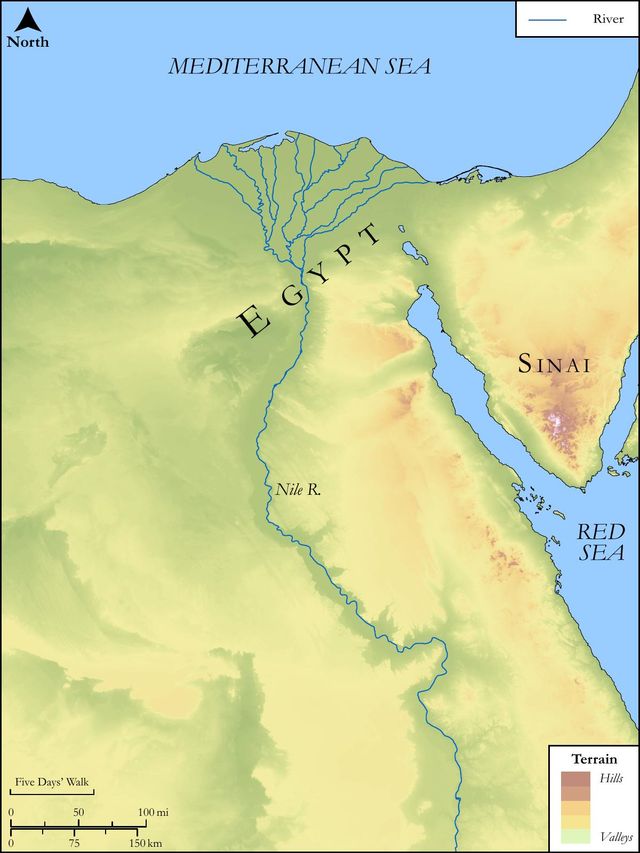
See on the biblical-era maps

Study this verse
Public-domain commentary
Matthew Henry
From his Commentary on the Whole Bible. Henry comments on passages, not single verses — this entry covers Exodus 8:20–32. His three-level outline is real structure in the source text, so it is rendered as structure.
Here is the story of the plague of flies, in which we are told,
I.How it was threatened, like that of frogs, before it was inflicted.
Moses is directed (Exo 8:20) to rise early in the morning, to meet Pharaoh when he came forth to the water, and there to repeat his demands. Note,
1.Those that would bring great things to pass for God and their generation must rise early, and redeem time in the morning. Pharaoh was early up at his superstitious devotions to the river; and shall we be for more sleep and more slumber when any service is to be done which would pass well in our account in the great day?
2.Those that would approve themselves God's faithful servants must not be afraid of the face of man. Moses must stand before Pharaoh, proud as he was, and tell him that which was in the highest degree humbling, must challenge him (if he refused to release his captives) to engage with any army of flies, which would obey God's orders of Pharaoh would not. See a similar threatening, Isa 7:18, The Lord will hiss (or whistle) for the fly and the bee, to come and serve his purposes.
II.How the Egyptians and the Hebrews were to be remarkably distinguished in this plague, Exo 8:22, Exo 8:23.
It is probable that this distinction had not been so manifest and observable in any of the foregoing plagues as it was to be in this. Thus, as the plague of lice was made more convincing than any before it, by its running the magicians aground, so was this, by the distinction made between the Egyptians and the Hebrews. Pharaoh must be made to know that God is the Lord in the midst of the earth; and by this it will be known beyond dispute.
1.Swarms of flies, which seem to us to fly at random, shall be manifestly under the conduct of an intelligent mind, while they are above the direction of any man. "Hither they shall go," says Moses, "and thither they shall not come;" and the performance is punctually according to this appointment, and both, compared, amount to a demonstration that he that said it and he that did it was the same, even a Being of infinite power and wisdom.
2.The servants and worshippers of the great Jehovah shall be preserved from sharing in the common calamities of the place they live in, so that the plague which annoys all their neighbours shall not approach them; and this shall be an incontestable proof that God is the Lord in the midst of the earth. Put both these together, and it appears that the eyes of the Lord run to and fro through the earth, and through the air too, to direct that which to us seems most casual, to serve some great designed end, that he may show himself strong on the behalf of those whose hearts are upright with him, Ch2 16:9. Observe how it is repeated: I will put a division between my people and thy people Exo 8:23. Note, The Lord knows those that are his, and will make it appear, perhaps in this world, certainly in the other, that he has set them apart for himself. A day will come when you shall return and discern between the righteous and the wicked (Mal 3:18), the sheep and the goats (Mat 25:32; Eze 34:17), though now intermixed.
III.How it was inflicted, the day after it was threatened:
There came a grievous swarm of flies (Exo 8:24), flies of divers sorts, and such as devoured them, Psa 78:45. The prince of the power of the air has gloried in being Beelzebub - the god of flies; but here it is proved that even in that he is a pretender and a usurper, for even with swarms of flies God fights against his kingdom and prevails.
IV.How Pharaoh, upon this attack, sounded a parley, and entered into a treaty with Moses and Aaron about a surrender of his captives: but observe with what reluctance he yields.
1.He is content they should sacrifice to their God, provided they would do it in the land of Egypt, Exo 8:25. Note, God can extort a toleration of his worship, even from those that are really enemies to it. Pharaoh, under the smart of the rod, is content they should do sacrifice, and will allow liberty of conscience to God's Israel, even in his own land. But Moses will not accept his concession; he cannot do it, Exo 8:26. It would be an abomination to God should they offer the Egyptian sacrifices, and an abomination to the Egyptians should they offer to God their own sacrifices, as they ought; so that they could not sacrifice in the land without incurring the displeasure either of their God or of their task-masters; therefore he insists: We will go three days' journey into the wilderness, Exo 8:27. Note, Those that would offer an acceptable sacrifice to God must,
(1.)Separate themselves from the wicked and profane; for we cannot have fellowship both with the Father of lights and with the works of darkness, both with Christ and with Belial, Co2 6:14, etc.; Psa 26:4, Psa 26:6.
(2.)They must retire from the distractions of the world, and get as far as may be from the noise of it. Israel cannot keep the feast of the Lord either among the brick-kilns or among the flesh-pots of Egypt; no, We will go into the wilderness, Hos 2:14; Sol 7:11.
(3.)They must observe the divine appointment: "We will sacrifice as God shall command us, and not otherwise." Though they were in the utmost degree of slavery to Pharaoh, yet in the worship of God, they must observe his commands and not Pharaoh's.
2.When this proposal is rejected, he consents for them to go into the wilderness, provided they do not go very far away, not so far but that he might fetch them back again, Exo 8:28. It is probable he had heard of their design upon Canaan, and suspected that if once they left Egypt they would never come back again; and therefore, when he is forced to consent that they shall go (the swarms of flies buzzing the necessity in his ears), yet he is not willing that they should go out of his reach. Thus some sinners who, in a pang of conviction, part with their sins, yet are loth they should go very far away; for, when the fright is over, they will return to them again. We observe here a struggle between Pharaoh's convictions and his corruptions; his convictions said, "Let them go;" his corruptions said, "Yet not very far away:" but he sided with his corruptions against his convictions, and this was his ruin. This proposal Moses so far accepted as that he promised the removal of this plague upon it, Exo 8:29 See here,
(1.)How ready God is to accept sinners' submissions. Pharaoh does but say, Entreat for me (though it is with regret that he humbles so far), and Moses promises immediately, I will entreat the Lord for thee, that Pharaoh might see what the design of the plague was, not to bring him to ruin, but to bring him to repentance. With what pleasure did God say (Kg1 21:29), Seest thou how Ahab humbles himself?
(2.)What need we have to be admonished that we be sincere in our submission: But let not Pharaoh deal deceitfully any more. Those that deal deceitfully are justly suspected, and must be cautioned not to return again to folly, after God has once more spoken peace. Be not deceived, God is not mocked; if we think to put a cheat upon God by a counterfeit repentance, and a fraudulent surrender of ourselves to him, we shall prove, in the end, to have put a fatal cheat upon our own souls.
Lastly, The issue of all was that God graciously removed the plague (Exo 8:30, Exo 8:31), but Pharaoh perfidiously returned to his hardness, and would not let the people go, Exo 8:32. His pride would not let him part with such a flower of his crown as his dominion over Israel was, nor his covetousness with such a branch of his revenue as their labours were. Note, Reigning lusts break through the strongest bounds, and make men impudently presumptuous and scandalously perfidious. Let not sin therefore reign; for, if it do, it will betray and hurry us to the grossest absurdities.
Continue studying Exodus 8:20 across the web’s major study libraries — every link below opens this exact verse, chapter, or book on the destination site.
Read & Compare
 BibleGatewayThis verse in more than 200 translations and 70 languages.
 Bible.comThe YouVersion reader — hundreds of translations, reading plans, and highlights.
 ESV.orgCrossway's official English Standard Version reader.
 NET BibleThe NET translation with 60,000+ translators' notes on every rendering decision.
 STEP BibleTyndale House's free study tool — original text, vocabulary, and scholarly resources.
 BibliaLogos Bible Software's free web reader.
 USCCBThe New American Bible (Revised Edition) with the U.S. bishops' study notes.
Commentaries
 BibleHub CommentariesDozens of classic commentaries on this verse, gathered on one page.
 StudyLightMore than 100 commentary sets — the largest collection on the web.
 BibleRefPlain-English commentary on what this verse means, verse by verse.
 Enduring WordDavid Guzik's free commentary on this chapter, widely used by Bible teachers.
 Bible Study ToolsVerse commentary alongside Greek and Hebrew study aids.
Original Language & Research
- BibleHub InterlinearThe verse word by word — original language, transliteration, and English.
- BibleHub LexiconEvery word's original-language definition and Strong's entry.
 Blue Letter BibleDeep-study tools — Strong's numbers, concordance, and word studies.
 SefariaThe Hebrew text with Rashi and centuries of Jewish commentary.
Sermons, Hymns & Audio


TrulyRandomVerse is not affiliated with these sites and doesn’t control their content. They’re linked because they’re genuinely useful.
Summary
Exodus 8:20 presents a pivotal divine directive to Moses, instructing him to confront Pharaoh at the break of day by the Nile. This command reiterates the non-negotiable demand for Israel's release from Egyptian bondage, explicitly stating the divine purpose: "Let my people go, that they may serve me." This verse sets the immediate stage for the fourth plague, underscoring God's unwavering resolve, His proprietary claim over Israel, and the ultimate spiritual aim of their liberation.
Context
ShowHideLiterary Context
This verse is strategically placed within the escalating narrative of the plagues, specifically initiating the warning for the fourth plague—that of swarms of flies. It follows the first three plagues (blood, frogs, and lice/gnats), which Pharaoh has stubbornly resisted despite their increasing severity and the clear demonstration of Yahweh's power. The repetition of the demand "Let my people go, that they may serve me" (first introduced in Exodus 7:16) highlights God's consistent purpose and Pharaoh's persistent defiance, building narrative tension towards the climactic judgments. The detailed instructions regarding time and place emphasize God's direct control over the confrontation, moving beyond mere warnings to a direct challenge to Pharaoh's routine and perceived divine authority.
Historical & Cultural Context
Pharaoh, as the living embodiment of a god (often identified with Horus or Ra), would have a predictable daily routine, which likely included a morning ritual or walk by the Nile River. The Nile was not merely a water source but the lifeblood of Egypt, revered as a deity itself (e.g., Hapi, the god of the Nile's annual flood). By commanding Moses to meet Pharaoh at this specific time and location, God directly challenged Pharaoh's perceived divinity and the power of Egypt's gods. This public confrontation, at a place central to Egyptian life and worship, served to demonstrate Yahweh's absolute sovereignty over all creation and rulers, including the very source of Egypt's prosperity and its divine king. The demand for Israel to "serve" God also contrasts sharply with their forced servitude to Pharaoh, highlighting the theological conflict between true worship and idolatrous oppression.
Key Themes
ShowHideExodus 8:20 powerfully contributes to several overarching themes in the book of Exodus. Primarily, it reinforces the Sovereignty of God over all earthly powers and deities, as Yahweh dictates the terms of engagement with the most powerful ruler of the ancient world. It further develops the theme of Divine Purpose in Redemption, clarifying that Israel's liberation is not an end in itself but a means to a higher calling: devoted service and worship of their deliverer. This is a foundational principle established early in God's call to Moses at the burning bush, where He promised, "When thou hast brought forth the people out of Egypt, ye shall serve God upon this mountain" (Exodus 3:12). The verse also highlights the ongoing Spiritual Warfare between Yahweh and the gods of Egypt, with each plague serving as a judgment against a specific Egyptian deity or aspect of their worldview, culminating in the ultimate defeat of Pharaoh and his pantheon.
Exposition and Analysis
ShowHideIn Exodus 8:20, the Lord issues a precise and strategic directive to Moses, detailing the time, place, and message for his next confrontation with Pharaoh. This encounter is not a negotiation but a divine mandate, setting the stage for the escalating conflict between God's will and Pharaoh's defiance.
Key Word Analysis
ShowHideThis is the covenant name of God, frequently translated as "the LORD" in English Bibles. It signifies God as "the self-Existent or Eternal," emphasizing His unchanging, sovereign nature and His active presence in the affairs of His people and the world. The repeated use of this name throughout the Exodus narrative underscores that the conflict with Pharaoh is not merely a political struggle but a demonstration of Yahweh's unique and supreme authority over all creation and other gods.
Derived from a root meaning "to break forth" or "dawn," this word refers to the early part of the day. The instruction to "Rise up early in the morning" (using the verb shâkam and noun bôqer) indicates a deliberate choice of time, likely coinciding with Pharaoh's predictable routine. This timing ensures a public and direct confrontation, highlighting God's meticulous planning and His ability to orchestrate events to achieve His purposes.
This primitive root carries a broad semantic range, encompassing "to work," "to serve," "to till," and "to worship." In the context of Israel's liberation, it signifies a transition from forced servitude to Pharaoh to voluntary, devoted service and worship of God. This dual meaning is crucial: Israel's freedom from physical oppression was not an end in itself, but a means to enable their spiritual devotion and covenant faithfulness to Yahweh, which was impossible under the oppressive Egyptian system.
Verse Breakdown
ShowHide"And the LORD said unto Moses, Rise up early in the morning, and stand before Pharaoh;"
This opening clause establishes the divine initiative and Moses' role as God's obedient messenger. The command to "rise up early" and "stand before Pharaoh" indicates a pre-planned, intentional confrontation. It highlights God's strategic precision, directing Moses to intercept Pharaoh at a predictable moment, ensuring a direct and unavoidable encounter. This is not a casual meeting but a divinely ordained summons.
"lo, he cometh forth to the water;"
This parenthetical observation reveals God's intimate knowledge of Pharaoh's habits and movements. The "water" almost certainly refers to the Nile River, which held immense religious and cultural significance for the Egyptians. Meeting Pharaoh at this location, where he might perform daily rituals or simply take a walk, transforms a mundane routine into a stage for divine confrontation, symbolically challenging the very source of Egypt's life and its deified status.
"and say unto him, Thus saith the LORD, Let my people go, that they may serve me."
This is the core of the divine message, delivered with absolute authority. "Thus saith the LORD" is a powerful declaration, signaling that Moses is merely the mouthpiece of an unchallengeable decree from the Almighty God. The phrase "Let my people go" asserts God's proprietary claim over Israel, directly challenging Pharaoh's dominion. The ultimate purpose, "that they may serve me," clarifies that freedom from physical oppression is not an end in itself but a means to a higher spiritual calling: devoted service, worship, and obedience to the one true God, a service that was impossible under the oppressive Egyptian regime.
Literary Devices
ShowHideExodus 8:20 employs several significant literary devices. The most prominent is Repetition, specifically of the divine command, "Let my people go, that they may serve me." This phrase serves as a Leitmotif throughout the early chapters of Exodus, emphasizing God's unwavering purpose and Pharaoh's persistent defiance. Its recurrence underscores the central conflict and the divine rationale for the plagues. Symbolism is also evident in the setting: meeting Pharaoh "by the water" (the Nile) is highly symbolic. The Nile was a deified source of life for Egypt, and God's intervention at this location directly challenges the power of Egyptian deities and Pharaoh's own perceived divine authority. This strategic meeting place also serves as Foreshadowing, hinting at the ultimate judgment upon Egypt's gods and the defeat of Pharaoh's power, just as the Nile itself had previously been turned to blood. The precise instructions given to Moses also demonstrate Divine Foresight and meticulous planning on God's part, contrasting with human shortsightedness and stubbornness.
Theological and Thematic Connections
ShowHideThis verse profoundly illustrates God's absolute sovereignty, demonstrating His control over human rulers and historical events. Even the most powerful earthly king is subject to His divine will, and God orchestrates confrontations to reveal His glory and achieve His purposes. The liberation of Israel is consistently presented not merely as freedom from bondage but as freedom for a purpose: to serve and worship God. This establishes a foundational theological principle that true freedom is found in devoted service to the Creator, not in autonomy from Him. God's repeated designation of Israel as "my people" unequivocally asserts His enduring covenant relationship and proprietary claim over them, a relationship that predates and supersedes any human claim or oppression. The ongoing confrontation between God and Pharaoh, culminating in the plagues, represents a cosmic struggle between divine truth and human rebellion, highlighting the spiritual dimension of the Exodus narrative as God judges the gods of Egypt.
Reflection and Application
ShowHideExodus 8:20 serves as a timeless reminder that God liberates us from various forms of spiritual and worldly bondage—whether it be the chains of sin, the grip of fear, destructive habits, or oppressive practices—not for aimless self-indulgence, but for the profound purpose of serving and worshiping Him. Our freedom in Christ is not a license for autonomy but a freedom for devotion and obedience, enabling us to live out the divine purpose for which we were created. Just as God commanded Pharaoh to release His people for service, He calls us today to surrender anything that hinders our full devotion to Him. This might involve letting go of idols, unhealthy attachments, or even good things that have taken God's rightful place. Only when we are truly free from these hindrances can we experience the liberating truth of John 8:36: "If the Son therefore shall make you free, ye shall be free indeed." Our ultimate purpose, like Israel's, is to serve the living God with our whole being.
Questions for Reflection
ShowHideFAQ
ShowHideWhy did God command Moses to meet Pharaoh "early in the morning" and "by the water"?
ShowHideGod's specific instructions to meet Pharaoh "early in the morning" and "by the water" (likely the Nile River) were highly strategic and symbolic. Early morning was a common time for Pharaoh to perform rituals, consult with his priests, or take a walk by the river, making it a predictable and public opportunity for confrontation. The Nile itself was not just a vital resource but was deeply intertwined with Egyptian religion, often revered as a deity (Hapi). Meeting Pharaoh there underscored God's power over their perceived gods and their very life source. It emphasized that even their most sacred elements and their divine king were subject to the Lord's command, directly challenging the foundations of Egyptian power and belief. This public setting also ensured that the confrontation was witnessed, further demonstrating Yahweh's supremacy.
What does "that they may serve me" truly mean in this context?
ShowHideThe phrase "that they may serve me" uses the Hebrew word 'abad (עָבַד), which carries a rich and dual meaning encompassing both physical labor/service and spiritual worship/devotion. In the context of Israel's liberation, it means far more than just freedom from brick-making or physical toil. It signifies their release from oppressive Egyptian servitude so they could fulfill their divinely appointed purpose: to worship, obey, and devote themselves entirely to the Lord. This spiritual devotion and covenant faithfulness were impossible while enslaved to Pharaoh and his gods. Thus, God's demand highlights that true freedom is not merely the absence of external constraints, but the ability to live in alignment with one's divine purpose—to serve and worship the Creator. This concept is foundational to understanding God's redemptive plan throughout Scripture, as seen in passages like Deuteronomy 6:13.
Christ-Centered Fulfillment
ShowHideThe divine demand in Exodus 8:20, "Let my people go, that they may serve me," finds its ultimate and profound fulfillment in the redemptive work of Jesus Christ. Just as God delivered Israel from the physical bondage of Egypt to bring them into a covenant relationship of service, Christ delivers humanity from the spiritual bondage of sin, death, and the dominion of darkness. His liberation is not for self-autonomy or a return to spiritual slavery, but to bring us into a new covenant where we are truly free to serve the living God. Through His atoning sacrifice, Jesus paid the price for our freedom, rescuing us "from the power of darkness, and hath translated us into the kingdom of his dear Son" (Colossians 1:13-14). This liberation enables us to become "servants of righteousness" (Romans 6:18), cleansed from "dead works to serve the living God" (Hebrews 9:14). Our service to God in Christ is not burdensome but a joyful response to His grace, fulfilling the divine purpose of our redemption and allowing us to offer our lives as "a living sacrifice, holy and acceptable unto God, which is your reasonable service" (Romans 12:1).