


Exodus 8:28
Bible text: King James Version (1769 Blayney text) · Public domain
Bible text: King James Version with Strong's numbers · Public domain
Bible text: Berean Standard Bible · Public domain
Bible text: American Standard Version (1901) · Public domain
Bible text: World English Bible, Messianic edition · Public domain
Bible text: Geneva Bible (1599) · Public domain
Bible text: Young's Literal Translation · Public domain
- וַיֹּאמֶרvai·Yo·merand he saidH559Conj-w ¦ V-Qal-ConsecImperf-3msVerb Qal Consecutive Imperfect 3rd Singular Masculineוַandיֹּאמֶרhe said
- פַּרְעֹהpar·'OhPharaohH6547N-msNoun Title Singular Masculine Absolute
- אָנֹכִי'a·no·KhiIH595Pro-1csPronoun Personal 1st Singular common gender
- אֲשַׁלַּח'a·sha·LachI will let goH7971V-Piel-Imperf-1csVerb Piel Imperfect 1st Singular common gender
- אֶתְכֶם'et·Khem<obj.> youH853DirObjM ¦ 2mpParticle Object Indicatorאֶתְ<obj.>כֶםyou
- וּזְבַחְתֶּםu·ze·vach·Temand you will sacrificeH2076Conj-w ¦ V-Qal-ConsecPerf-2mpVerb Qal Consecutive Perfect 2nd Plural Masculineוּandזְבַחְתֶּםyou will sacrifice
- לַיהוָהla·Yah·wehto YahwehH3068Prep-l ¦ N-properNoun Proper TitleלַtoיהוָהYahweh
- אֱלֹהֵיכֶם'e·lo·hei·Khemyour GodH430N-mpc ¦ 2mpNoun Plural Masculine ConstructאֱלֹהֵיGodכֶםyour
- בַּמִּדְבָּרba·mid·Barin the wildernessH4057Prep-b ¦ N-msNoun Singular Masculine Absoluteבַּin theמִּדְבָּרwilderness
- רַקrakonlyH7535AdvAdverb
- הַרְחֵקhar·Chekcertainly <to be far away>H7368V-Hiphil-InfAbsVerb Hiphil Infinitive Absolute
- לֹאlo'notH3808NegParticle Negative
- תַרְחִיקוּtar·Chi·kuyou must be far awayH7368V-Hiphil-Imperf-2mpVerb Hiphil Imperfect 2nd Plural Masculine
- לָלֶכֶתla·Le·khetto goH1980Prep-l ¦ V-Qal-InfVerb Qal Infinitive Constructלָtoלֶכֶתgo
- הַעְתִּירוּha'·Ti·ruprayH6279V-Hiphil-Imp-2mpVerb Hiphil Imperative 2nd Plural Masculine
- בַּעֲדִיba·'a·Difor meH1157Adj-csc ¦ 1csAdjective Numerical Singular common gender Constructבַּעֲדִforיme
English is a literal word-by-word gloss of the Hebrew, not the KJV's wording. Why?
This is the original text the KJV's translators worked from — each Hebrew word with its own literal English meaning in this verse, prepared by scholars at Tyndale House, Cambridge. The KJV translates whole sentences, not word by word, so its wording differs: one Hebrew word can become several English words, and the KJV may choose “the LORD” where the gloss reads “Yahweh”. Both are faithful — they answer different questions. For the KJV's own rendering, switch to the KJV text.
Details
See on the biblical-era maps

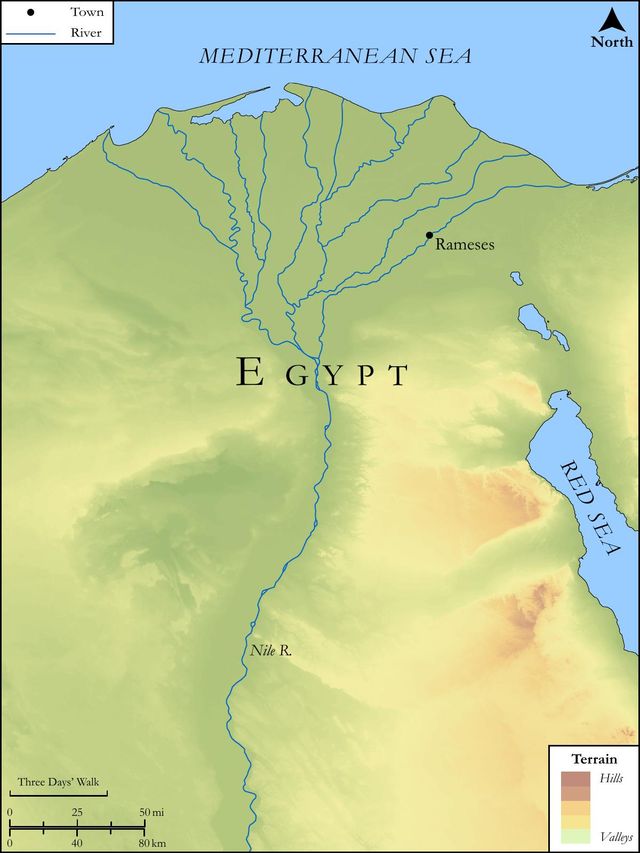
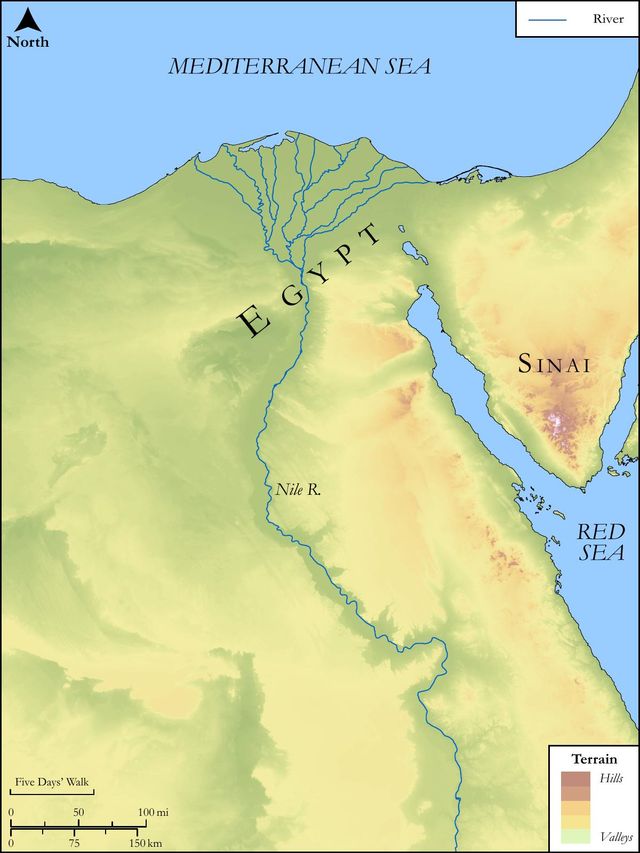
Study this verse
Public-domain commentary
Matthew Henry
From his Commentary on the Whole Bible. Henry comments on passages, not single verses — this entry covers Exodus 8:20–32. His three-level outline is real structure in the source text, so it is rendered as structure.
Here is the story of the plague of flies, in which we are told,
I.How it was threatened, like that of frogs, before it was inflicted.
Moses is directed (Exo 8:20) to rise early in the morning, to meet Pharaoh when he came forth to the water, and there to repeat his demands. Note,
1.Those that would bring great things to pass for God and their generation must rise early, and redeem time in the morning. Pharaoh was early up at his superstitious devotions to the river; and shall we be for more sleep and more slumber when any service is to be done which would pass well in our account in the great day?
2.Those that would approve themselves God's faithful servants must not be afraid of the face of man. Moses must stand before Pharaoh, proud as he was, and tell him that which was in the highest degree humbling, must challenge him (if he refused to release his captives) to engage with any army of flies, which would obey God's orders of Pharaoh would not. See a similar threatening, Isa 7:18, The Lord will hiss (or whistle) for the fly and the bee, to come and serve his purposes.
II.How the Egyptians and the Hebrews were to be remarkably distinguished in this plague, Exo 8:22, Exo 8:23.
It is probable that this distinction had not been so manifest and observable in any of the foregoing plagues as it was to be in this. Thus, as the plague of lice was made more convincing than any before it, by its running the magicians aground, so was this, by the distinction made between the Egyptians and the Hebrews. Pharaoh must be made to know that God is the Lord in the midst of the earth; and by this it will be known beyond dispute.
1.Swarms of flies, which seem to us to fly at random, shall be manifestly under the conduct of an intelligent mind, while they are above the direction of any man. "Hither they shall go," says Moses, "and thither they shall not come;" and the performance is punctually according to this appointment, and both, compared, amount to a demonstration that he that said it and he that did it was the same, even a Being of infinite power and wisdom.
2.The servants and worshippers of the great Jehovah shall be preserved from sharing in the common calamities of the place they live in, so that the plague which annoys all their neighbours shall not approach them; and this shall be an incontestable proof that God is the Lord in the midst of the earth. Put both these together, and it appears that the eyes of the Lord run to and fro through the earth, and through the air too, to direct that which to us seems most casual, to serve some great designed end, that he may show himself strong on the behalf of those whose hearts are upright with him, Ch2 16:9. Observe how it is repeated: I will put a division between my people and thy people Exo 8:23. Note, The Lord knows those that are his, and will make it appear, perhaps in this world, certainly in the other, that he has set them apart for himself. A day will come when you shall return and discern between the righteous and the wicked (Mal 3:18), the sheep and the goats (Mat 25:32; Eze 34:17), though now intermixed.
III.How it was inflicted, the day after it was threatened:
There came a grievous swarm of flies (Exo 8:24), flies of divers sorts, and such as devoured them, Psa 78:45. The prince of the power of the air has gloried in being Beelzebub - the god of flies; but here it is proved that even in that he is a pretender and a usurper, for even with swarms of flies God fights against his kingdom and prevails.
IV.How Pharaoh, upon this attack, sounded a parley, and entered into a treaty with Moses and Aaron about a surrender of his captives: but observe with what reluctance he yields.
1.He is content they should sacrifice to their God, provided they would do it in the land of Egypt, Exo 8:25. Note, God can extort a toleration of his worship, even from those that are really enemies to it. Pharaoh, under the smart of the rod, is content they should do sacrifice, and will allow liberty of conscience to God's Israel, even in his own land. But Moses will not accept his concession; he cannot do it, Exo 8:26. It would be an abomination to God should they offer the Egyptian sacrifices, and an abomination to the Egyptians should they offer to God their own sacrifices, as they ought; so that they could not sacrifice in the land without incurring the displeasure either of their God or of their task-masters; therefore he insists: We will go three days' journey into the wilderness, Exo 8:27. Note, Those that would offer an acceptable sacrifice to God must,
(1.)Separate themselves from the wicked and profane; for we cannot have fellowship both with the Father of lights and with the works of darkness, both with Christ and with Belial, Co2 6:14, etc.; Psa 26:4, Psa 26:6.
(2.)They must retire from the distractions of the world, and get as far as may be from the noise of it. Israel cannot keep the feast of the Lord either among the brick-kilns or among the flesh-pots of Egypt; no, We will go into the wilderness, Hos 2:14; Sol 7:11.
(3.)They must observe the divine appointment: "We will sacrifice as God shall command us, and not otherwise." Though they were in the utmost degree of slavery to Pharaoh, yet in the worship of God, they must observe his commands and not Pharaoh's.
2.When this proposal is rejected, he consents for them to go into the wilderness, provided they do not go very far away, not so far but that he might fetch them back again, Exo 8:28. It is probable he had heard of their design upon Canaan, and suspected that if once they left Egypt they would never come back again; and therefore, when he is forced to consent that they shall go (the swarms of flies buzzing the necessity in his ears), yet he is not willing that they should go out of his reach. Thus some sinners who, in a pang of conviction, part with their sins, yet are loth they should go very far away; for, when the fright is over, they will return to them again. We observe here a struggle between Pharaoh's convictions and his corruptions; his convictions said, "Let them go;" his corruptions said, "Yet not very far away:" but he sided with his corruptions against his convictions, and this was his ruin. This proposal Moses so far accepted as that he promised the removal of this plague upon it, Exo 8:29 See here,
(1.)How ready God is to accept sinners' submissions. Pharaoh does but say, Entreat for me (though it is with regret that he humbles so far), and Moses promises immediately, I will entreat the Lord for thee, that Pharaoh might see what the design of the plague was, not to bring him to ruin, but to bring him to repentance. With what pleasure did God say (Kg1 21:29), Seest thou how Ahab humbles himself?
(2.)What need we have to be admonished that we be sincere in our submission: But let not Pharaoh deal deceitfully any more. Those that deal deceitfully are justly suspected, and must be cautioned not to return again to folly, after God has once more spoken peace. Be not deceived, God is not mocked; if we think to put a cheat upon God by a counterfeit repentance, and a fraudulent surrender of ourselves to him, we shall prove, in the end, to have put a fatal cheat upon our own souls.
Lastly, The issue of all was that God graciously removed the plague (Exo 8:30, Exo 8:31), but Pharaoh perfidiously returned to his hardness, and would not let the people go, Exo 8:32. His pride would not let him part with such a flower of his crown as his dominion over Israel was, nor his covetousness with such a branch of his revenue as their labours were. Note, Reigning lusts break through the strongest bounds, and make men impudently presumptuous and scandalously perfidious. Let not sin therefore reign; for, if it do, it will betray and hurry us to the grossest absurdities.
Continue studying Exodus 8:28 across the web’s major study libraries — every link below opens this exact verse, chapter, or book on the destination site.
Read & Compare
 BibleGatewayThis verse in more than 200 translations and 70 languages.
 Bible.comThe YouVersion reader — hundreds of translations, reading plans, and highlights.
 ESV.orgCrossway's official English Standard Version reader.
 NET BibleThe NET translation with 60,000+ translators' notes on every rendering decision.
 STEP BibleTyndale House's free study tool — original text, vocabulary, and scholarly resources.
 BibliaLogos Bible Software's free web reader.
 USCCBThe New American Bible (Revised Edition) with the U.S. bishops' study notes.
Commentaries
 BibleHub CommentariesDozens of classic commentaries on this verse, gathered on one page.
 StudyLightMore than 100 commentary sets — the largest collection on the web.
 BibleRefPlain-English commentary on what this verse means, verse by verse.
 Enduring WordDavid Guzik's free commentary on this chapter, widely used by Bible teachers.
 Bible Study ToolsVerse commentary alongside Greek and Hebrew study aids.
Original Language & Research
- BibleHub InterlinearThe verse word by word — original language, transliteration, and English.
- BibleHub LexiconEvery word's original-language definition and Strong's entry.
 Blue Letter BibleDeep-study tools — Strong's numbers, concordance, and word studies.
 SefariaThe Hebrew text with Rashi and centuries of Jewish commentary.
Sermons, Hymns & Audio


TrulyRandomVerse is not affiliated with these sites and doesn’t control their content. They’re linked because they’re genuinely useful.
Summary
Exodus 8:28 captures a pivotal moment in the escalating conflict between God and Pharaoh, where the Egyptian king, under the severe pressure of the fourth plague (flies), offers a conditional and ultimately insincere concession. He permits the Israelites to sacrifice to the LORD their God in the wilderness, but immediately attempts to restrict their freedom by stipulating, "only ye shall not go very far away." This verse powerfully reveals Pharaoh's persistent desire to maintain control over God's people, even as he implicitly acknowledges Moses's unique intercessory power by pleading, "intreat for me." It underscores the fundamental tension between God's demand for complete liberation and human stubbornness and manipulation.
Context
ShowHideLiterary Context
Exodus 8:28 is situated immediately following the devastating plague of flies, the fourth of the ten judgments God unleashes upon Egypt. Prior to this, Pharaoh had experienced the plagues of blood, frogs, and lice, each progressively intensifying the divine pressure. The plague of flies, however, introduced a new dimension: a clear distinction between the Egyptians and the Israelites, with the land of Goshen, where the Israelites resided, being spared from the swarms (Exodus 8:22-24). This distinction served as undeniable proof of the LORD's unique power and His covenantal relationship with Israel. Pharaoh's previous responses had been marked by outright refusal or fleeting, unfulfilled promises. This verse marks a shift, as he now offers a seemingly significant concession, albeit one immediately undermined by his restrictive clause, setting the stage for Moses's continued confrontation and the subsequent plagues.
Historical & Cultural Context
Ancient Egypt was a polytheistic society, with Pharaoh considered a divine figure, the son of Ra, and the embodiment of national power and prosperity. The plagues directly challenged the authority of Pharaoh and the efficacy of the Egyptian pantheon, demonstrating the supremacy of the LORD. The concept of "sacrifice in the wilderness" was not merely a religious rite but an act of national identity and allegiance. For the Israelites, it was a command from their God, signifying their separation from Egyptian bondage and their devotion to Him. Pharaoh's insistence that they "not go very far away" reflects the economic reality of Egypt's reliance on slave labor. The Israelites constituted a significant workforce, and their permanent departure would have had catastrophic economic consequences. Pharaoh's offer was a desperate attempt to retain control over this valuable resource while appeasing the God of Israel just enough to alleviate the immediate suffering, without truly relinquishing his authority or his hold on the people.
Key Themes
ShowHideThis verse contributes significantly to several overarching themes in Exodus. It highlights the theme of Divine Sovereignty as God systematically dismantles Pharaoh's power and the Egyptian religious system through the plagues, demonstrating His absolute control over creation and human affairs. It further develops the theme of Pharaoh's Hardened Heart, illustrating his cyclical pattern of temporary concessions followed by renewed defiance, despite overwhelming evidence of God's power. The demand for Israel to "sacrifice to the LORD your God in the wilderness" reinforces the theme of Worship and Liberation, emphasizing that true freedom from bondage is intrinsically linked to the ability to worship God without hindrance. Pharaoh's "not very far away" directly opposes God's demand for complete separation and uncompromised devotion, a theme that resonates throughout the wilderness journey and beyond, as seen in passages like Deuteronomy 6:4-5 which calls for total devotion. Finally, the plea "intreat for me" underscores the theme of Intercession, showcasing Moses's unique role as mediator between God and Pharaoh, a role that foreshadows a greater mediator to come.
Exposition and Analysis
ShowHideKey Word Analysis
ShowHideThis primitive root means "to slaughter an animal (usually in sacrifice); kill, offer, (do) sacrifice, slay." In the context of Exodus 8:28, Pharaoh's concession to allow Israel to "sacrifice" is significant. It acknowledges the religious nature of Israel's request, but his subsequent restriction reveals his misunderstanding or deliberate manipulation of the true meaning of worship, which for Israel, demanded complete separation and freedom to serve their God in the manner He commanded, far from Egyptian defilement.
Derived from a root meaning "to drive," this word refers to "a pasture (i.e. open field, whither cattle are driven); by implication, a desert." The "wilderness" here is not just a geographical location but a symbolic space of separation and encounter with God. God's command was to go "three days' journey into the wilderness" (Exodus 8:27), implying a distance that would prevent Egyptian interference and allow for pure worship. Pharaoh's restriction of "not very far away" directly attacks the spiritual significance of this designated space.
This primitive root, possibly denominative from a word meaning "incense," signifies "to burn incense in worship, i.e. intercede (reciprocally, listen to prayer); intreat, (make) pray(-er)." Pharaoh's plea for Moses to "intreat for me" is a desperate cry for relief from the plague. It reveals his recognition of Moses's unique spiritual power and connection to the LORD, even though Pharaoh himself remains defiant and unwilling to truly submit to the God whose servant he implores. This highlights the efficacy of intercessory prayer, even on behalf of an oppressor.
Verse Breakdown
ShowHide"And Pharaoh said, I will let you go,"
This opening clause marks a significant, albeit temporary, shift in Pharaoh's stance. After repeated refusals and hardening his heart through multiple plagues, he finally utters words of apparent concession. This "letting go" is presented as a direct response to the unbearable pressure of the plague of flies, not a genuine change of heart or recognition of the LORD's supremacy. It's a pragmatic decision to alleviate immediate suffering.
"that ye may sacrifice to the LORD your God in the wilderness;"
This part of Pharaoh's statement acknowledges the stated purpose of Israel's departure—to worship their God. He grants permission for the specific act of "sacrifice" and even identifies the location as "the wilderness," seemingly aligning with Moses's earlier demands. However, this concession is immediately suspect, as Pharaoh has consistently resisted this very request, indicating his words are more a tactical maneuver than a sincere act of compliance.
"only ye shall not go very far away:"
This crucial caveat reveals Pharaoh's true intentions and the manipulative nature of his "concession." The phrase "not go very far away" directly contradicts God's demand for a "three days' journey" into the wilderness, a distance necessary for unhindered worship and to prevent Egyptians from observing (and being offended by) Israel's sacrifices (Exodus 8:26). Pharaoh's condition is an attempt to maintain control over the Israelites, ensuring their quick return to servitude and preventing a true, permanent exodus. It exposes his desire to bargain with God and dictate the terms of Israel's liberation.
"intreat for me."
This final, desperate plea from Pharaoh is highly significant. Despite his defiance and hardened heart, he recognizes Moses's unique ability to intercede with the LORD and bring an end to the plague. He appeals to Moses's spiritual power, not out of repentance, but out of self-preservation. This request underscores the growing awareness, even among the Egyptians, of the LORD's power and Moses's direct access to Him, setting a pattern for Pharaoh's future pleas during subsequent plagues.
Literary Devices
ShowHideThe verse employs several literary devices to convey its profound meaning. Irony is prominent, as the oppressive Pharaoh, who has defiantly resisted God's commands, is now reduced to pleading with Moses, the representative of the very God he opposes, to intercede on his behalf. This highlights the ultimate futility of human resistance against divine power. There is also a strong Contrast between God's demand for complete liberation and Pharaoh's conditional, manipulative offer. God desires full freedom for His people to worship Him, while Pharaoh seeks to grant only a partial, controlled release, keeping them tethered to Egyptian influence. This contrast underscores the nature of true obedience versus superficial compliance. Furthermore, the phrase "not go very far away" functions as Foreshadowing, signaling Pharaoh's continued hardening of heart and his unwillingness to truly let Israel go, setting the stage for the remaining plagues and the ultimate, dramatic exodus.
Theological and Thematic Connections
ShowHideExodus 8:28 serves as a powerful theological statement about the nature of God's demands for His people and the persistent resistance of the human heart. It illustrates that God calls for complete and unreserved obedience, not partial compliance or compromise. Pharaoh's attempt to dictate the terms of Israel's worship—allowing them to sacrifice but not "go very far away"—is a timeless representation of humanity's inclination to bargain with God, seeking to fulfill divine commands only on our own terms or to a limited degree. This verse highlights the danger of such compromise, emphasizing that true freedom and genuine worship require a full separation from the entanglements of the world and a wholehearted devotion to God. Even in his defiance, Pharaoh's plea for Moses to "intreat for me" underscores the universal recognition of a power beyond human control and the efficacy of intercessory prayer, even from those who oppose God.
Reflection and Application
ShowHideExodus 8:28 offers profound lessons for contemporary believers, serving as a stark warning against the temptation of partial obedience and compromise with the world's demands. Just as Pharaoh sought to keep Israel "not very far away," the world often attempts to keep believers tethered to its systems, values, and habits, hindering our full freedom to worship and serve God without reservation. This verse challenges us to examine our own lives: where might we be holding back from God, offering only a conditional surrender rather than complete devotion? True spiritual liberation means breaking free from all forms of bondage, whether overt sin or subtle worldly entanglements, to wholeheartedly pursue God's will. Furthermore, Pharaoh's desperate plea for Moses's intercession reminds us of the power of prayer, not only for our own needs but also for those who oppose God or are trapped in their own spiritual blindness. Our prayers can be a conduit for God's grace and intervention, even in the most hardened of hearts.
Questions for Reflection
ShowHideFAQ
ShowHideWhy did Pharaoh insist that the Israelites "not go very far away"?
ShowHidePharaoh's insistence on keeping the Israelites "not very far away" was a calculated and manipulative move designed to maintain control over them. He viewed them as invaluable slave labor, and their permanent departure would have crippled Egypt's economy. By keeping them close, he could easily recall them after their "sacrifice," effectively denying them true freedom and ensuring their continued servitude. This condition revealed his underlying desire to bargain with God and dictate the terms of their release, rather than genuinely submitting to the LORD's demand for complete liberation, as seen in Exodus 5:1.
Does Pharaoh's request "intreat for me" indicate genuine repentance?
ShowHidePharaoh's request to "intreat for me" does not indicate genuine repentance. While he clearly recognized Moses's unique relationship with God and the efficacy of his prayers in alleviating the plagues, his plea was primarily motivated by a desire for immediate relief from suffering and the destructive consequences of the plague, not a change of heart towards God or a willingness to truly obey His commands. He sought an end to the judgment, but consistently refused to genuinely "let my people go," demonstrating a self-serving motive rather than a God-honoring one. His pattern of hardening his heart after the plagues subsided, as recorded throughout Exodus 7-10 and beyond, confirms his lack of true repentance.
Christ-Centered Fulfillment
ShowHideExodus 8:28, with its themes of liberation from bondage, the conflict between divine will and human stubbornness, and the power of intercession, finds its ultimate and perfect fulfillment in the person and work of Jesus Christ. Pharaoh's oppressive reign and the Israelites' slavery to him powerfully foreshadow humanity's universal bondage to sin and death, from which no human effort can deliver us. Just as God demanded Israel's complete freedom from Pharaoh's grasp, Christ offers complete and unconditional liberation from the dominion of sin, not a partial release that keeps us "not very far away" from our former chains (John 8:36). Furthermore, Moses's role as the intercessor, pleading with God on behalf of both Israel and even Pharaoh, points directly to Jesus, our ultimate High Priest and Mediator, who continually intercedes for His people before the Father's throne (Hebrews 7:25 and Romans 8:34). Through His perfect sacrifice on the cross and His glorious resurrection, Christ has secured our full freedom to worship and serve God without compromise, leading us out of the wilderness of sin into the promised land of spiritual liberty and eternal life in Him (Galatians 5:1).