


Exodus 8:25
Bible text: King James Version (1769 Blayney text) · Public domain
Bible text: Berean Standard Bible · Public domain
Bible text: American Standard Version (1901) · Public domain
Bible text: World English Bible, Messianic edition · Public domain
Bible text: Geneva Bible (1599) · Public domain
Bible text: Young's Literal Translation · Public domain
- וַיִּקְרָאvai·yik·Ra'and he summonedH7121Conj-w ¦ V-Qal-ConsecImperf-3msVerb Qal Consecutive Imperfect 3rd Singular Masculineוַandיִּקְרָאhe summoned
- פַרְעֹהfar·'OhPharaohH6547N-msNoun Title Singular Masculine Absolute
- אֶל'el<to>H413PrepPreposition
- מֹשֶׁהmo·ShehMosesH4872N-proper-mNoun Proper Masculine
- וּלְאַהֲרֹןu·le·'a·ha·Ronand <to> AaronH175Conj-w ¦ Prep-l ¦ N-proper-mNoun Proper Masculineוּandלְ<to>אַהֲרֹןAaron
- וַיֹּאמֶרvai·Yo·merand he saidH559Conj-w ¦ V-Qal-ConsecImperf-3msVerb Qal Consecutive Imperfect 3rd Singular Masculineוַandיֹּאמֶרhe said
- לְכוּle·KhugoH1980V-Qal-Imp-2mpVerb Qal Imperative 2nd Plural Masculine
- זִבְחוּziv·ChusacrificeH2076V-Qal-Imp-2mpVerb Qal Imperative 2nd Plural Masculine
- לֵאלֹהֵיכֶםle·lo·hei·Khemto your GodH430Prep-l ¦ N-mpc ¦ 2mpNoun Plural Masculine ConstructלֵtoאלֹהֵיGodכֶםyour
- בָּאָרֶץba·'A·retzin the landH776Prep-b ¦ N-fsNoun Singular Feminine Absoluteבָּin theאָרֶץland
English is a literal word-by-word gloss of the Hebrew, not the KJV's wording. Why?
This is the original text the KJV's translators worked from — each Hebrew word with its own literal English meaning in this verse, prepared by scholars at Tyndale House, Cambridge. The KJV translates whole sentences, not word by word, so its wording differs: one Hebrew word can become several English words, and the KJV may choose “the LORD” where the gloss reads “Yahweh”. Both are faithful — they answer different questions. For the KJV's own rendering, switch to the KJV text.
Details
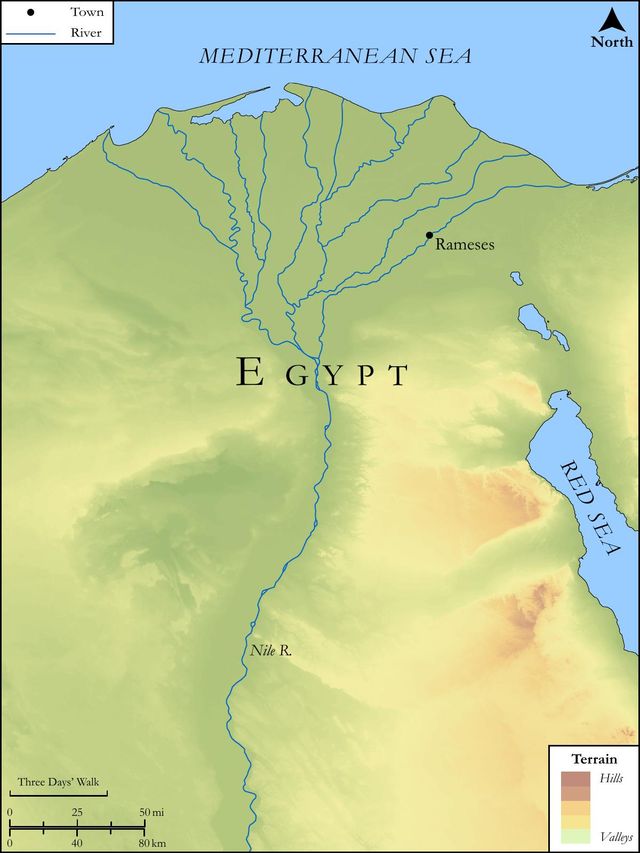
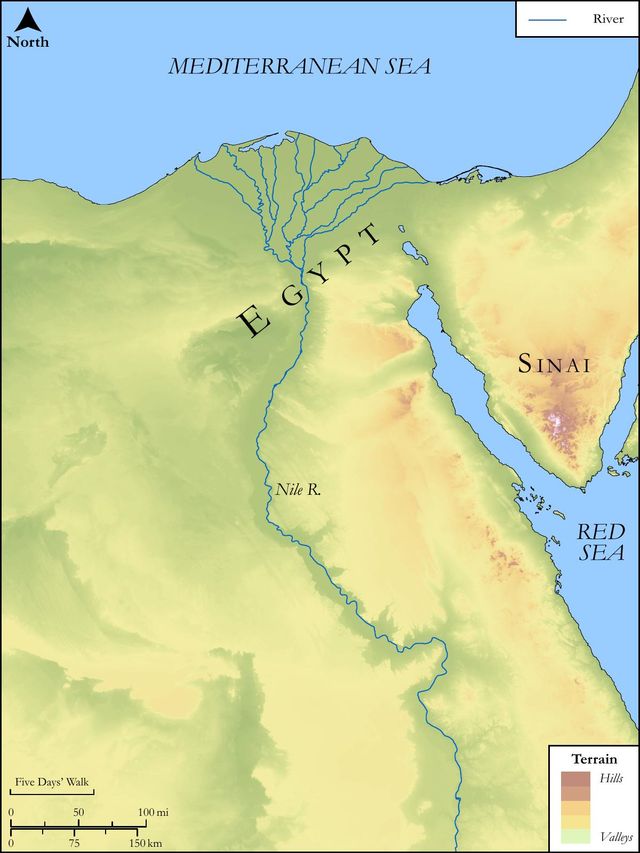
See on the biblical-era maps

Study this verse
Public-domain commentary
Matthew Henry
From his Commentary on the Whole Bible. Henry comments on passages, not single verses — this entry covers Exodus 8:20–32. His three-level outline is real structure in the source text, so it is rendered as structure.
Here is the story of the plague of flies, in which we are told,
I.How it was threatened, like that of frogs, before it was inflicted.
Moses is directed (Exo 8:20) to rise early in the morning, to meet Pharaoh when he came forth to the water, and there to repeat his demands. Note,
1.Those that would bring great things to pass for God and their generation must rise early, and redeem time in the morning. Pharaoh was early up at his superstitious devotions to the river; and shall we be for more sleep and more slumber when any service is to be done which would pass well in our account in the great day?
2.Those that would approve themselves God's faithful servants must not be afraid of the face of man. Moses must stand before Pharaoh, proud as he was, and tell him that which was in the highest degree humbling, must challenge him (if he refused to release his captives) to engage with any army of flies, which would obey God's orders of Pharaoh would not. See a similar threatening, Isa 7:18, The Lord will hiss (or whistle) for the fly and the bee, to come and serve his purposes.
II.How the Egyptians and the Hebrews were to be remarkably distinguished in this plague, Exo 8:22, Exo 8:23.
It is probable that this distinction had not been so manifest and observable in any of the foregoing plagues as it was to be in this. Thus, as the plague of lice was made more convincing than any before it, by its running the magicians aground, so was this, by the distinction made between the Egyptians and the Hebrews. Pharaoh must be made to know that God is the Lord in the midst of the earth; and by this it will be known beyond dispute.
1.Swarms of flies, which seem to us to fly at random, shall be manifestly under the conduct of an intelligent mind, while they are above the direction of any man. "Hither they shall go," says Moses, "and thither they shall not come;" and the performance is punctually according to this appointment, and both, compared, amount to a demonstration that he that said it and he that did it was the same, even a Being of infinite power and wisdom.
2.The servants and worshippers of the great Jehovah shall be preserved from sharing in the common calamities of the place they live in, so that the plague which annoys all their neighbours shall not approach them; and this shall be an incontestable proof that God is the Lord in the midst of the earth. Put both these together, and it appears that the eyes of the Lord run to and fro through the earth, and through the air too, to direct that which to us seems most casual, to serve some great designed end, that he may show himself strong on the behalf of those whose hearts are upright with him, Ch2 16:9. Observe how it is repeated: I will put a division between my people and thy people Exo 8:23. Note, The Lord knows those that are his, and will make it appear, perhaps in this world, certainly in the other, that he has set them apart for himself. A day will come when you shall return and discern between the righteous and the wicked (Mal 3:18), the sheep and the goats (Mat 25:32; Eze 34:17), though now intermixed.
III.How it was inflicted, the day after it was threatened:
There came a grievous swarm of flies (Exo 8:24), flies of divers sorts, and such as devoured them, Psa 78:45. The prince of the power of the air has gloried in being Beelzebub - the god of flies; but here it is proved that even in that he is a pretender and a usurper, for even with swarms of flies God fights against his kingdom and prevails.
IV.How Pharaoh, upon this attack, sounded a parley, and entered into a treaty with Moses and Aaron about a surrender of his captives: but observe with what reluctance he yields.
1.He is content they should sacrifice to their God, provided they would do it in the land of Egypt, Exo 8:25. Note, God can extort a toleration of his worship, even from those that are really enemies to it. Pharaoh, under the smart of the rod, is content they should do sacrifice, and will allow liberty of conscience to God's Israel, even in his own land. But Moses will not accept his concession; he cannot do it, Exo 8:26. It would be an abomination to God should they offer the Egyptian sacrifices, and an abomination to the Egyptians should they offer to God their own sacrifices, as they ought; so that they could not sacrifice in the land without incurring the displeasure either of their God or of their task-masters; therefore he insists: We will go three days' journey into the wilderness, Exo 8:27. Note, Those that would offer an acceptable sacrifice to God must,
(1.)Separate themselves from the wicked and profane; for we cannot have fellowship both with the Father of lights and with the works of darkness, both with Christ and with Belial, Co2 6:14, etc.; Psa 26:4, Psa 26:6.
(2.)They must retire from the distractions of the world, and get as far as may be from the noise of it. Israel cannot keep the feast of the Lord either among the brick-kilns or among the flesh-pots of Egypt; no, We will go into the wilderness, Hos 2:14; Sol 7:11.
(3.)They must observe the divine appointment: "We will sacrifice as God shall command us, and not otherwise." Though they were in the utmost degree of slavery to Pharaoh, yet in the worship of God, they must observe his commands and not Pharaoh's.
2.When this proposal is rejected, he consents for them to go into the wilderness, provided they do not go very far away, not so far but that he might fetch them back again, Exo 8:28. It is probable he had heard of their design upon Canaan, and suspected that if once they left Egypt they would never come back again; and therefore, when he is forced to consent that they shall go (the swarms of flies buzzing the necessity in his ears), yet he is not willing that they should go out of his reach. Thus some sinners who, in a pang of conviction, part with their sins, yet are loth they should go very far away; for, when the fright is over, they will return to them again. We observe here a struggle between Pharaoh's convictions and his corruptions; his convictions said, "Let them go;" his corruptions said, "Yet not very far away:" but he sided with his corruptions against his convictions, and this was his ruin. This proposal Moses so far accepted as that he promised the removal of this plague upon it, Exo 8:29 See here,
(1.)How ready God is to accept sinners' submissions. Pharaoh does but say, Entreat for me (though it is with regret that he humbles so far), and Moses promises immediately, I will entreat the Lord for thee, that Pharaoh might see what the design of the plague was, not to bring him to ruin, but to bring him to repentance. With what pleasure did God say (Kg1 21:29), Seest thou how Ahab humbles himself?
(2.)What need we have to be admonished that we be sincere in our submission: But let not Pharaoh deal deceitfully any more. Those that deal deceitfully are justly suspected, and must be cautioned not to return again to folly, after God has once more spoken peace. Be not deceived, God is not mocked; if we think to put a cheat upon God by a counterfeit repentance, and a fraudulent surrender of ourselves to him, we shall prove, in the end, to have put a fatal cheat upon our own souls.
Lastly, The issue of all was that God graciously removed the plague (Exo 8:30, Exo 8:31), but Pharaoh perfidiously returned to his hardness, and would not let the people go, Exo 8:32. His pride would not let him part with such a flower of his crown as his dominion over Israel was, nor his covetousness with such a branch of his revenue as their labours were. Note, Reigning lusts break through the strongest bounds, and make men impudently presumptuous and scandalously perfidious. Let not sin therefore reign; for, if it do, it will betray and hurry us to the grossest absurdities.
Continue studying Exodus 8:25 across the web’s major study libraries — every link below opens this exact verse, chapter, or book on the destination site.
Read & Compare
 BibleGatewayThis verse in more than 200 translations and 70 languages.
 Bible.comThe YouVersion reader — hundreds of translations, reading plans, and highlights.
 ESV.orgCrossway's official English Standard Version reader.
 NET BibleThe NET translation with 60,000+ translators' notes on every rendering decision.
 STEP BibleTyndale House's free study tool — original text, vocabulary, and scholarly resources.
 BibliaLogos Bible Software's free web reader.
 USCCBThe New American Bible (Revised Edition) with the U.S. bishops' study notes.
Commentaries
 BibleHub CommentariesDozens of classic commentaries on this verse, gathered on one page.
 StudyLightMore than 100 commentary sets — the largest collection on the web.
 BibleRefPlain-English commentary on what this verse means, verse by verse.
 Enduring WordDavid Guzik's free commentary on this chapter, widely used by Bible teachers.
 Bible Study ToolsVerse commentary alongside Greek and Hebrew study aids.
Original Language & Research
- BibleHub InterlinearThe verse word by word — original language, transliteration, and English.
- BibleHub LexiconEvery word's original-language definition and Strong's entry.
 Blue Letter BibleDeep-study tools — Strong's numbers, concordance, and word studies.
 SefariaThe Hebrew text with Rashi and centuries of Jewish commentary.
Sermons, Hymns & Audio


TrulyRandomVerse is not affiliated with these sites and doesn’t control their content. They’re linked because they’re genuinely useful.
Summary
Exodus 8:25 records Pharaoh's initial, conditional concession to Moses and Aaron following the devastating plague of flies. Under immense divine pressure, Pharaoh offers to allow the Israelites to sacrifice to their God within the land of Egypt, marking his first attempt to negotiate with the Lord's demand for Israel's release while still maintaining control over them. This proposal reveals Pharaoh's strategic effort to alleviate the divine judgments without fully relinquishing his authority or the economic benefits derived from Israelite servitude.
Context
ShowHideLiterary Context
This verse immediately follows the fourth plague, the plague of flies, detailed in Exodus 8:20-24. This plague was particularly significant because, unlike the previous ones (blood, frogs, lice), it specifically targeted the Egyptians while miraculously sparing the land of Goshen where the Israelites resided. This distinction served to highlight the Lord's power and His unique relationship with Israel, compelling Pharaoh to acknowledge the severity of the divine judgment. The narrative has been building through escalating plagues, each designed to demonstrate the Lord's supremacy over the gods of Egypt and Pharaoh's stubborn resistance, as prophesied by God in Exodus 7:3. Pharaoh's summons and offer in this verse represent the first direct attempt at a compromise from the Egyptian king, indicating a crack in his hardened resolve.
Historical & Cultural Context
Ancient Egypt was a polytheistic society where Pharaoh was considered a divine king, a living embodiment of the gods. This belief system profoundly influenced his perception of power and his resistance to the God of Israel. The act of sacrifice was central to Israelite worship, often involving animals considered sacred or revered by the Egyptians (e.g., cattle, sheep, goats). Performing such sacrifices "in the land" of Egypt would be an "abomination to the Egyptians," as Moses later explains in Exodus 8:26, potentially leading to violent conflict. Pharaoh's offer to allow sacrifice within Egypt was thus a calculated move to retain control over the Israelite labor force, which was vital to the Egyptian economy, while appearing to appease their God and alleviate the plagues.
Key Themes
ShowHideThis verse contributes to several overarching themes within the book of Exodus. It underscores the theme of God's escalating power and judgment against Pharaoh and Egypt, demonstrating His absolute sovereignty over all creation and false gods. It highlights Pharaoh's hardening heart and persistent resistance to God's explicit commands, even in the face of overwhelming evidence of divine power. Crucially, it introduces the theme of spiritual compromise and the nature of true worship, emphasizing that God demands uncompromised obedience and a clear separation from worldly influences. This is contrasted with Pharaoh's desire to keep Israel enslaved, which foreshadows the ongoing struggle between God's people and the world's attempts to hinder their freedom and full devotion, a theme echoed later in the call for Israel to be a "kingdom of priests and a holy nation" in Exodus 19:6.
Exposition and Analysis
ShowHidePharaoh's summons to Moses and Aaron, instructing them to "Go ye, sacrifice to your God in the land," represents a critical turning point in the narrative of the plagues. It is his first direct acknowledgment of the God of Israel's power and his first offer of concession, albeit a partial one. This initial offer reveals Pharaoh's strategic attempt to mitigate the plagues while preserving his authority and the Israelites' forced labor.
Key Word Analysis
ShowHideMeaning "to call out to (i.e. properly, address by name, but used in a wide variety of applications); bewray (self), that are bidden, call (for, forth, self, upon), cry (unto), (be) famous, guest, invite, mention, (give) name, preach, (make) proclaim(-ation), pronounce, publish, read, renowned, say." Pharaoh's act of calling for Moses and Aaron signifies a shift from his earlier dismissive attitude. The plagues have forced him to initiate contact and acknowledge the intermediaries of the Israelite God, demonstrating the divine pressure he is now under.
Meaning "a primitive root; to slaughter an animal (usually in sacrifice); kill, offer, (do) sacrifice, slay." This word is central to the command. Pharaoh acknowledges the Israelites' religious requirement to offer sacrifices, a core act of worship in their covenant relationship with God. However, his stipulation regarding the location of this sacrifice reveals his attempt to control the terms of their worship, highlighting the tension between true worship and worldly compromise.
Meaning "from an unused root probably meaning to be firm; the earth (at large, or partitively a land); [idiom] common, country, earth, field, ground, land, [idiom] natins, way, [phrase] wilderness, world." In this context, "the land" specifically refers to the territory of Egypt. Pharaoh's insistence that the sacrifices be performed within Egypt is the crux of his attempted compromise. It directly contradicts God's command for the Israelites to go "three days' journey into the wilderness" (Exodus 8:27), underscoring his desire to maintain control and prevent a complete separation.
Verse Breakdown
ShowHide"And Pharaoh called for Moses and for Aaron,"
This clause highlights Pharaoh's initiative, a direct consequence of the severe plague of flies. It signifies that the divine pressure is now so intense that the king himself, who initially dismissed Moses and Aaron with contempt, is compelled to summon them. This act demonstrates a grudging acknowledgment of their unique role and the power behind their demands.
"and said,"
This simple transitional phrase introduces Pharaoh's direct communication, emphasizing the authority with which he speaks, even as his authority is being undermined by God's judgments. It sets the stage for his proposed compromise.
"Go ye, sacrifice to your God in the land."
This is the core of Pharaoh's offer. The phrase "Go ye" grants permission, acknowledging the necessity of their religious observance. "Sacrifice to your God" recognizes the deity of Israel and the act of worship. However, the critical qualifier "in the land" reveals his strategic limitation. He permits worship but within the confines of his dominion, aiming to keep the Israelites under his control and prevent their full departure, thereby preserving his economic interests and authority.
Literary Devices
ShowHideThe verse effectively employs several literary devices. Irony is prominent, as Pharaoh, who once declared "Who is the LORD, that I should obey his voice?" (Exodus 5:2), is now forced by that very Lord to acknowledge "your God" and permit sacrifice. This highlights the futility of human defiance against divine power. There is also a clear conflict established between God's demand for complete liberation and Pharaoh's desire for partial concession, setting up a recurring pattern throughout the plague narrative. Furthermore, the verse serves as a subtle foreshadowing of the ongoing spiritual struggle. Pharaoh's offer of a compromised worship "in the land" foreshadows later temptations for Israel (and believers) to mix divine commands with worldly convenience, rather than embracing the radical separation God demands for true devotion.
Theological and Thematic Connections
ShowHidePharaoh's offer in Exodus 8:25 encapsulates a profound theological truth about the nature of God's demands versus human resistance. It underscores the unyielding tension between God's absolute sovereignty and humanity's stubborn will to control and dictate terms, even in the face of overwhelming divine power. This partial concession reveals Pharaoh's deep-seated desire to maintain authority over the Israelites, reflecting a universal human tendency to negotiate with God, offering partial obedience or a diluted form of worship, rather than full surrender to His explicit commands. The narrative here emphasizes that authentic worship is not merely an outward act but requires obedience to God's specific commands, including separation from anything that would defile or hinder it. It cannot be compromised or performed on terms dictated by the world, for God demands wholehearted devotion and a distinct separation for His people.
Reflection and Application
ShowHideExodus 8:25 serves as a timeless reminder about the insidious dangers of spiritual compromise. Just as Pharaoh tried to keep the Israelites tethered to Egypt, the world often tempts believers to worship God "in the land"—that is, within the confines of worldly values, systems, or convenience, rather than wholeheartedly and set apart. Authentic worship and obedience to God often necessitate a clear separation from anything that would hinder or defile our relationship with Him. This verse encourages believers to examine areas where they might be tempted to offer God a partial commitment instead of the full devotion He deserves. It challenges us to identify the "Egypt" in our own lives—those influences, habits, or relationships that seek to keep us in bondage or hinder our complete devotion to Christ. True freedom and worship require a willingness to "go out" from what is comfortable or worldly, embracing God's specific instructions even when they seem inconvenient or counter-cultural.
Questions for Reflection
ShowHideFAQ
ShowHideWhy did Pharaoh want the Israelites to sacrifice in Egypt?
ShowHidePharaoh's offer was a strategic and self-serving compromise. He sought to alleviate the devastating plagues and appease the God of Israel without fully releasing the Israelites from his control. By allowing them to sacrifice "in the land," he could maintain their forced labor, continue to benefit from their economic contribution, and preserve his authority over them, rather than granting them the complete freedom God demanded. It was an attempt to control the terms of their worship and prevent their full departure.
What was the significance of Moses' demand for a "three days' journey" into the wilderness?
ShowHideMoses' demand for a "three days' journey" into the wilderness, as stated in Exodus 8:27, was profoundly significant for several reasons. Firstly, it ensured a clear and necessary separation from Egyptian territory and its defiling influences. Performing Israelite animal sacrifices, which involved animals sacred to Egyptians, within Egypt would have been an "abomination" (Exodus 8:26), potentially leading to violent conflict and preventing true worship. Secondly, it underscored God's demand for uncompromised and exclusive worship, requiring a distinct physical and spiritual separation from worldly influence. Thirdly, it served as a crucial test of Pharaoh's obedience, demanding full compliance with God's command rather than partial concession or negotiation.
Christ-Centered Fulfillment
ShowHidePharaoh's offer in Exodus 8:25 prefigures the world's ongoing attempts to keep God's people in spiritual bondage, offering a compromised form of "worship" that remains entangled with its systems and values. Just as Israel needed to be called out of Egypt to truly worship God, so too does Christ call His followers out of the bondage of sin and the world's pervasive influence. Jesus, our ultimate Deliverer, liberates us from the dominion of darkness and the power of sin, calling us to worship the Father "in spirit and truth" (John 4:23-24), a worship that often requires a radical separation from the "camp" of worldly conformity and its defilements (Hebrews 13:13). His perfect sacrifice on the cross makes true, uncompromised worship possible, fulfilling the need for purification and establishing a new covenant relationship where believers are truly free to serve God without the constraints of sin or the world's demands. Through Christ, we are empowered to offer ourselves as "living sacrifices, holy and pleasing to God," which is our "true and proper worship," refusing to conform to the pattern of this world (Romans 12:1-2).