


Deuteronomy 3:1
Bible text: King James Version (1769 Blayney text) · Public domain
Bible text: Berean Standard Bible · Public domain
Bible text: American Standard Version (1901) · Public domain
Bible text: World English Bible, Messianic edition · Public domain
Bible text: Geneva Bible (1599) · Public domain
Bible text: Young's Literal Translation · Public domain
- וַנֵּפֶןva·Ne·fenand we turnedH6437Conj-w ¦ V-Qal-ConsecImperf-1cpVerb Qal Consecutive Imperfect 1st Plural common genderוַandנֵּפֶןwe turned
- וַנַּעַלva·Na·'aland we went upH5927Conj-w ¦ V-Qal-ConsecImperf-1cpVerb Qal Consecutive Imperfect 1st Plural common genderוַandנַּעַלwe went up
- דֶּרֶךְDe·rekh[the] way ofH1870N-cscNoun Singular common gender Construct
- הַבָּשָׁןha·ba·Shan<the> BashanH1316Art ¦ N-properNoun Proper Locationהַ<the>בָּשָׁןBashan
- וַיֵּצֵאvai·ye·Tze'and he came forthH3318Conj-w ¦ V-Qal-ConsecImperf-3msVerb Qal Consecutive Imperfect 3rd Singular Masculineוַandיֵּצֵאhe came forth
- עוֹג'OgOgH5747N-proper-mNoun Proper Masculine
- מֶלֶךְMe·lekh[the] king ofH4428N-mscNoun Singular Masculine Construct
- הַבָּשָׁןha·ba·Shan<the> BashanH1316Art ¦ N-properNoun Proper Locationהַ<the>בָּשָׁןBashan
- לִקְרָאתֵנוּlik·ra·Te·nuto meet usH7122Prep-l ¦ V-Qal-Inf ¦ 1cpVerb Qal Infinitive Constructלִtoקְרָאתֵmeetנוּus
- הוּאhu'heH1931Pro-3msPronoun Personal 3rd Singular Masculine
- וְכָלve·kholand allH3605Conj-w ¦ N-mscNoun Singular Masculine Constructוְandכָלall
- עַמּוֹa·Mohis peopleH5971N-msc ¦ 3msNoun Singular Masculine Constructעַמּpeopleוֹhis
- לַמִּלְחָמָהla·mil·cha·Mahfor <the> battleH4421Prep-l ¦ N-fsNoun Singular Feminine Absoluteלַfor <the>מִּלְחָמָהbattle
- אֶדְרֶעִי'ed·Re·'iEdreiH154N-properNoun Proper Location
English is a literal word-by-word gloss of the Hebrew, not the KJV's wording. Why?
This is the original text the KJV's translators worked from — each Hebrew word with its own literal English meaning in this verse, prepared by scholars at Tyndale House, Cambridge. The KJV translates whole sentences, not word by word, so its wording differs: one Hebrew word can become several English words, and the KJV may choose “the LORD” where the gloss reads “Yahweh”. Both are faithful — they answer different questions. For the KJV's own rendering, switch to the KJV text.
Details
See on the biblical-era maps
Study this verse
Public-domain commentary
Matthew Henry
From his Commentary on the Whole Bible. Henry comments on passages, not single verses — this entry covers Deuteronomy 3:1–11. His two-level outline is real structure in the source text, so it is rendered as structure.
We have here another brave country delivered into the hand of Israel, that of Bashan; the conquest of Sihon is often mentioned together with that of Og, to the praise of God, the rather because in these Israel's triumphs began, Psa 135:11; Psa 136:19, Psa 136:20. See,
I.How they got the mastery of Og, a very formidable prince,
1.Very strong, for he was of the remnant of the giants (Deu 3:11); his personal strength was extraordinary, a monument of which was preserved by the Ammonites in his bedstead, which was shown as a rarity in their chief city. You might guess at his weight by the materials of his bedstead; it was iron, as if a bedstead of wood were too weak for him to trust to: and you might guess at his stature by the dimensions of it; it was nine cubits long and four cubits broad, which, supposing a cubit to be but half a yard (and some learned men have made it appear to be somewhat more), was four yards and a half long, and two yards broad; and if we allow his bedstead to be two cubits longer than himself, and that is as much as we need allow, he was three yards and a half high, double the stature of an ordinary man, and every way proportionable, yet they smote him, Deu 3:3. Note, when God pleads his people's cause he can deal with giants as with grasshoppers. No man's might can secure him against the Almighty. The army of Og was very powerful, for he had the command of sixty fortified cities, besides the unwalled towns, Deu 3:5. Yet all this was nothing before God's Israel, when they came with commission to destroy him.
2.He was very bold and daring: He came out against Israel to battle, Deu 3:1. It was wonderful that he did not take warning by the ruin of Sihon, and send to desire conditions of peace; but he trusted to his own strength, and so was hardened to his destruction. Note, Those that are not awakened by the judgments of God upon others, but persist in their defiance of heaven, are ripening apace for the like judgments upon themselves, Jer 3:8. God bade Moses not fear him, Deu 3:2. If Moses himself was so strong in faith as not to need the caution, yet it is probable that the people needed it, and for them these fresh assurances are designed; "I will deliver him into thy hand; not only deliver thee out of his hand, that he shall not be thy ruin, but deliver him into thy hand, that thou shalt be his ruin, and make him pay dearly for his attempt." He adds, Thou shalt do to him as thou didst to Sihon, intimating that they ought to be encouraged by their former victory to trust in God for another victory, for he is God, and changeth not.
II.How they got possession of Bashan, a very desirable country.
They took all the cities (Deu 3:4), and all the spoil of them, Deu 3:7. They made them all their own, Deu 3:10. So that now they had in their hands all that fruitful country which lay east of Jordan, from the river Arnon unto Hermon, Deu 3:8. Their conquering and possessing these countries was intended, not only for the encouragement of Israel in the wars of Canaan, but for the satisfaction of Moses before his death. Since he must not live to see the completing of their victory and settlement, God thus gives him a specimen of it. Thus the Spirit is given to those that believe as the earnest of their inheritance, until the redemption of the purchased possession.
Continue studying Deuteronomy 3:1 across the web’s major study libraries — every link below opens this exact verse, chapter, or book on the destination site.
Read & Compare
 BibleGatewayThis verse in more than 200 translations and 70 languages.
 Bible.comThe YouVersion reader — hundreds of translations, reading plans, and highlights.
 ESV.orgCrossway's official English Standard Version reader.
 NET BibleThe NET translation with 60,000+ translators' notes on every rendering decision.
 STEP BibleTyndale House's free study tool — original text, vocabulary, and scholarly resources.
 BibliaLogos Bible Software's free web reader.
 USCCBThe New American Bible (Revised Edition) with the U.S. bishops' study notes.
Commentaries
 BibleHub CommentariesDozens of classic commentaries on this verse, gathered on one page.
 StudyLightMore than 100 commentary sets — the largest collection on the web.
 BibleRefPlain-English commentary on what this verse means, verse by verse.
 Enduring WordDavid Guzik's free commentary on this chapter, widely used by Bible teachers.
 Bible Study ToolsVerse commentary alongside Greek and Hebrew study aids.
Original Language & Research
- BibleHub InterlinearThe verse word by word — original language, transliteration, and English.
- BibleHub LexiconEvery word's original-language definition and Strong's entry.
 Blue Letter BibleDeep-study tools — Strong's numbers, concordance, and word studies.
 SefariaThe Hebrew text with Rashi and centuries of Jewish commentary.
Sermons, Hymns & Audio


TrulyRandomVerse is not affiliated with these sites and doesn’t control their content. They’re linked because they’re genuinely useful.
Summary
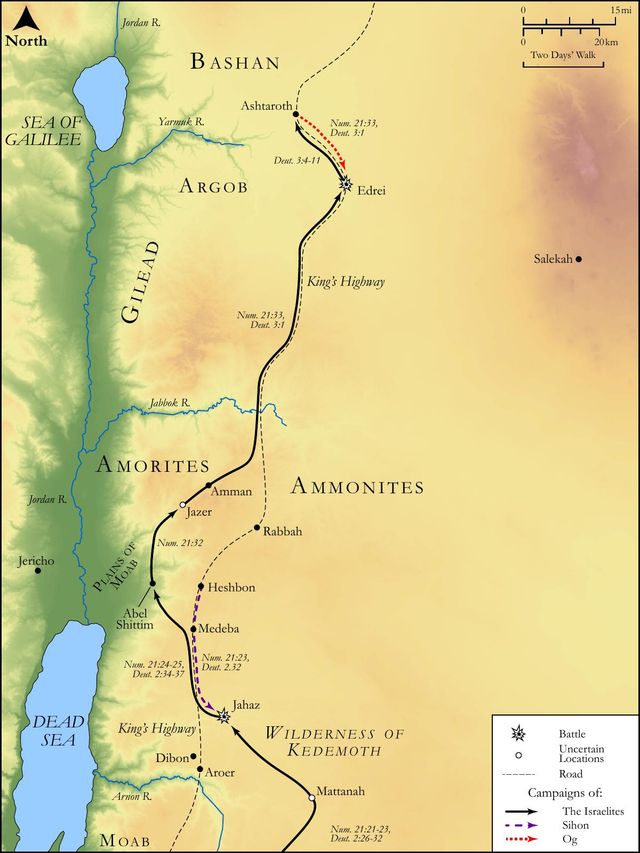
Deuteronomy 3:1 marks a decisive turning point in Israel's wilderness journey, detailing their God-directed movement northward into the fertile and formidable territory of Bashan, immediately following their victory over King Sihon. This verse sets the stage for a critical confrontation with Og, the powerful king of Bashan, who boldly came out with all his people to engage Israel in battle at Edrei, underscoring the ongoing fulfillment of God's promise to deliver the land into their hands through conquest.
Context
ShowHideLiterary Context
This verse is situated within Moses' second major discourse to the Israelites on the plains of Moab, just before they are to enter the Promised Land. Moses is recounting the significant events of their forty-year wilderness wanderings, particularly focusing on the victories God granted them in the Transjordan region. Deuteronomy 3:1 directly follows the detailed account of the defeat of King Sihon of Heshbon in Deuteronomy 2:26-37. The narrative flow emphasizes a continuous, divinely orchestrated advance. Moses is not merely recounting history but is using these past events to instruct, encourage, and remind the new generation of God's faithfulness and power, preparing them for the greater challenges and conquests that lie ahead in Canaan. The transition from Sihon to Og highlights the systematic nature of God's plan for dispossessing the inhabitants of the land.
Historical & Cultural Context
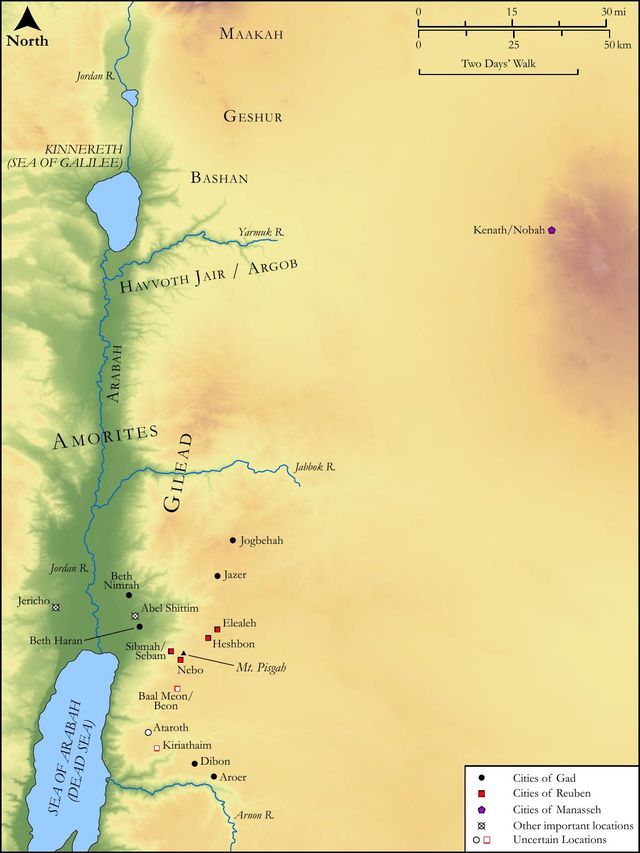
Bashan was a highly fertile region east of the Jordan River, renowned for its rich pastures, strong oak trees, and robust cattle. It was a strategically important area, controlling routes to Damascus and the north. King Og was a formidable ruler, notably described later in Deuteronomy 3:11 as the last of the Rephaim, a race of giants. This detail underscores the immense physical and military challenge he presented to the Israelites, making their victory even more miraculous and indicative of divine intervention. Edrei, the specific battle location mentioned, was a fortified city in Bashan, suggesting a planned, defensive stand by Og. The encounter with Og and his people reflects the typical military engagements of that day, where kings led their armies into battle, often at strategic strongholds.
Key Themes
ShowHideThe encounter with Og in Deuteronomy 3 contributes significantly to several overarching themes in Deuteronomy. Firstly, it powerfully reinforces the theme of Divine Faithfulness and Promise Fulfillment. Despite the formidable nature of their enemies, God consistently delivers on His promise to give Israel the land, as seen when He declares in Deuteronomy 2:25 that He would make all nations fear Israel. Secondly, it highlights God's Sovereignty over Nations and Kings, demonstrating that no human power, regardless of its might or stature, can thwart His purposes. The defeat of Og, like Sihon, serves as a testament to God's unparalleled power. Thirdly, the ongoing military conquests underscore the theme of Obedience and Trust, as Israel's progress is directly linked to their willingness to follow God's commands and trust in His leadership, even when facing seemingly insurmountable obstacles.
Exposition and Analysis
ShowHideKey Word Analysis
ShowHideThis verb signifies a deliberate reorientation or change of direction. It implies a purposeful shift in Israel's journey, guided by divine command, actively facing the next phase of their conquest. This "turning" indicates God's ongoing direction for their movement and mission.
This geographical name refers to a region east of the Jordan, known for its fertility and strategic importance. Its mention here immediately signals a new and challenging phase of the conquest, highlighting the formidable nature of the land and its inhabitants.
The name of the formidable king of Bashan. While its root may suggest "round," in this context, it refers to a specific historical figure whose defeat, particularly as the last of the Rephaim (as noted in Deuteronomy 3:11), would serve as a profound demonstration of God's power over seemingly invincible foes.
Verse Breakdown
ShowHide"¶ Then we turned, and went up the way to Bashan:"
This clause signifies a deliberate and divinely guided strategic movement. Following their victory over Sihon, Israel did not settle but continued their advance according to God's plan. The phrase "went up the way" suggests a journey into higher ground or a more significant, perhaps more challenging, region, indicating progress towards their ultimate destination.
"and Og the king of Bashan came out against us, he and all his people, to battle at Edrei."
This part of the verse describes the direct and confrontational response of King Og. His proactive decision to "come out against us" with "all his people" indicates his resolve to defend his territory and his confidence in his military might. The specification of "Edrei" as the battle location points to a significant, fortified city, suggesting a major engagement rather than a skirmish. This immediate confrontation sets the stage for a decisive battle that would further demonstrate God's power and Israel's destiny.
Literary Devices
ShowHideDeuteronomy 3:1 employs several literary devices to enhance its narrative impact. Narrative Progression is evident as the verse seamlessly transitions from the previous victory over Sihon to the next major confrontation with Og, maintaining a continuous forward momentum in Israel's journey of conquest. The mention of "Og the king of Bashan" immediately creates Foreshadowing, hinting at the formidable nature of this opponent, a detail that is elaborated upon in Deuteronomy 3:11 with the description of his giant stature. There is also a subtle Contrast at play between the seemingly overwhelming power of Og and his army and the implied divine power that guides Israel, setting up the expectation of God's intervention. Finally, the Geographical Specificity of "Bashan" and "Edrei" grounds the narrative in a tangible reality, making the historical account more vivid and verifiable for the original audience.
Theological and Thematic Connections
ShowHideDeuteronomy 3:1 is not merely a historical record of a military maneuver; it is a profound theological statement about God's active involvement in the history of His people. It underscores God's sovereignty over all earthly powers, demonstrating that no king, no matter how formidable or mighty, can stand against His divine decree. The defeat of Og, like that of Sihon, serves as a powerful testament to God's faithfulness in fulfilling His covenant promises to Abraham, Isaac, and Jacob, which included the giving of the land. This battle is an act of divine judgment against the wicked inhabitants of Canaan and a demonstration of God's power to clear the way for His chosen people, reinforcing the truth that Israel's victories were not due to their own strength but to God fighting on their behalf.
Reflection and Application
ShowHideDeuteronomy 3:1 offers timeless lessons for believers navigating their own spiritual journeys. Just as Israel was called to "turn and go up" into new, challenging territories, we are often called by God to step out of our comfort zones and confront obstacles that seem insurmountable. King Og represents the formidable "giants" or overwhelming challenges we face in life—whether they are personal struggles, spiritual battles, or external opposition to God's will. This verse reminds us that our progress in faith is not dependent on our own strength or the weakness of our adversaries, but on the unwavering faithfulness and power of God, who goes before us. It encourages us to embrace God's divine guidance, to trust His timing, and to move forward in obedience, knowing that He equips us for every battle and ensures victory for those who walk in His ways. Our past experiences of God's faithfulness should fuel our courage for future challenges, reinforcing the truth that no foe is too great for the God who leads His people to the fulfillment of His promises.
Questions for Reflection
ShowHideFAQ
ShowHideWho was King Og, and why was he significant?
ShowHideKing Og was the Amorite king of Bashan, a powerful and formidable ruler. His significance is highlighted by the fact that he was described as the last of the Rephaim, a race of giants (Deuteronomy 3:11). His defeat by the Israelites, immediately following their victory over King Sihon, was a major military and theological triumph. It demonstrated God's power to overcome even the most physically imposing and militarily strong enemies, fulfilling His promise to give Israel the land of Canaan. His iron bedstead, also mentioned in Deuteronomy 3:11, was a testament to his immense size and strength, making his defeat all the more miraculous.
Why was the region of Bashan important for the Israelites to conquer?
ShowHideBashan was a highly fertile and strategically vital region located east of the Jordan River. Its rich pastures and strong cities made it a valuable possession. Conquering Bashan, along with the territory of Sihon, secured the entire Transjordan region for the tribes of Reuben, Gad, and the half-tribe of Manasseh, as later detailed in Deuteronomy 3:12-17. This conquest was not just about acquiring land; it was a critical step in fulfilling God's covenant promise to give Israel the land, demonstrating His power to dispossess the existing inhabitants and establish His people.
Christ-Centered Fulfillment
ShowHideThe conquest of King Og and the land of Bashan, as described in Deuteronomy 3:1, finds its ultimate Christ-centered fulfillment in the person and work of Jesus Christ. Just as Israel, led by God, confronted and overcame a physically imposing and seemingly invincible foe to inherit a promised land, so too does Christ, the true and greater Joshua, confront and decisively defeat the ultimate enemies of humanity: sin, death, and the powers of darkness. The formidable King Og, a "giant" in his day, foreshadows the spiritual "giants" that hold humanity captive. Jesus, through His crucifixion and resurrection, triumphed over these spiritual principalities and powers, leading captivity captive (Ephesians 4:8). His victory was not merely a military one, but a triumph over every enemy that secured for His people an eternal inheritance, a heavenly "promised land" far greater than any earthly territory (Hebrews 9:15). The Israelites' journey into Bashan, guided by God, prefigures the believer's journey of faith, led by Christ, into spiritual victory and the eternal rest found in Him (Hebrews 4:9-10). Thus, Deuteronomy 3:1 points forward to the Lamb of God who conquers all foes, not with physical weaponry, but with His atoning sacrifice and resurrection power, opening the way for us to inherit eternal life and fellowship with God (Revelation 5:5).