


2 Kings 10:32
- בַּיָּמִיםbai·ya·Mimin the daysH3117Prep-b ¦ N-mpNoun Plural Masculine Absoluteבַּin theיָּמִיםdays
- הָהֵםha·Hem<the> thoseH1992Art ¦ Pro-3mpPronoun Personal 3rd Plural Masculineהָ<the>הֵםthose
- הֵחֵלhe·Chelhe beganH2490V-Hiphil-Perf-3msVerb Hiphil Perfect 3rd Singular Masculine
- יְהוָהYah·wehYahwehH3068N-properNoun Proper Title
- לְקַצּוֹתle·ka·Tzotto cut offH7096Prep-l ¦ V-Piel-InfVerb Piel Infinitive Constructלְtoקַצּוֹתcut off
- בְּיִשְׂרָאֵלbe·Yis·ra·'Elin IsraelH3478Prep-b ¦ N-properNoun Proper LocationבְּinיִשְׂרָאֵלIsrael
- וַיַּכֵּםvai·ya·Kemand he struck down themH5221Conj-w ¦ V-Hiphil-ConsecImperf-3ms ¦ 3mpVerb Hiphil Consecutive Imperfect 3rd Singular Masculineוַandיַּכֵּhe struck downםthem
- חֲזָאֵלcha·za·'ElHazaelH2371N-proper-mNoun Proper Masculine
- בְּכָלbe·kholin allH3605Prep-b ¦ N-mscNoun Singular Masculine Constructבְּinכָלall
- גְּבוּלge·Vul[the] territory ofH1366N-mscNoun Singular Masculine Construct
- יִשְׂרָאֵלYis·ra·'ElIsraelH3478N-properNoun Proper Location
English is a literal word-by-word gloss of the Hebrew, not the KJV's wording. Why?
This is the original text the KJV's translators worked from — each Hebrew word with its own literal English meaning in this verse, prepared by scholars at Tyndale House, Cambridge. The KJV translates whole sentences, not word by word, so its wording differs: one Hebrew word can become several English words, and the KJV may choose “the LORD” where the gloss reads “Yahweh”. Both are faithful — they answer different questions. For the KJV's own rendering, switch to the KJV text.
Details
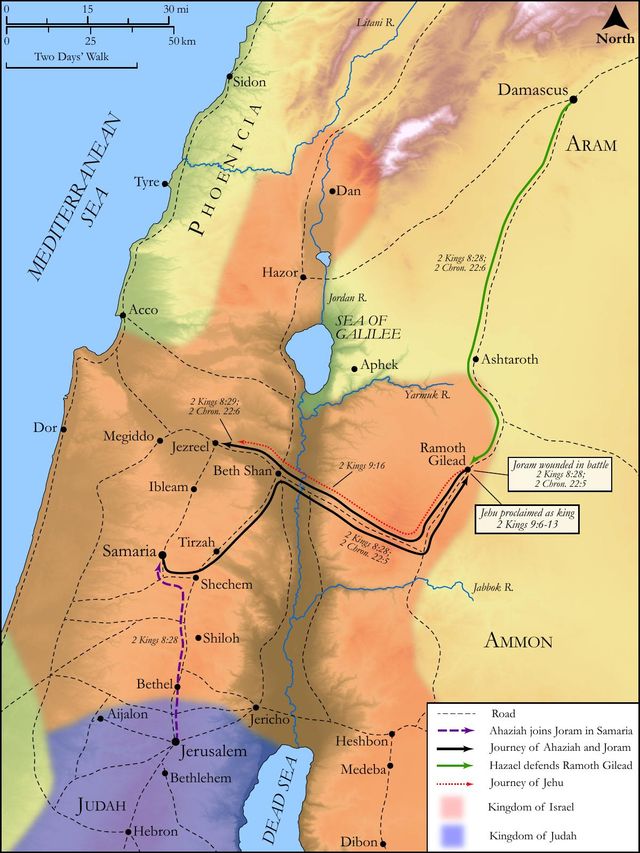
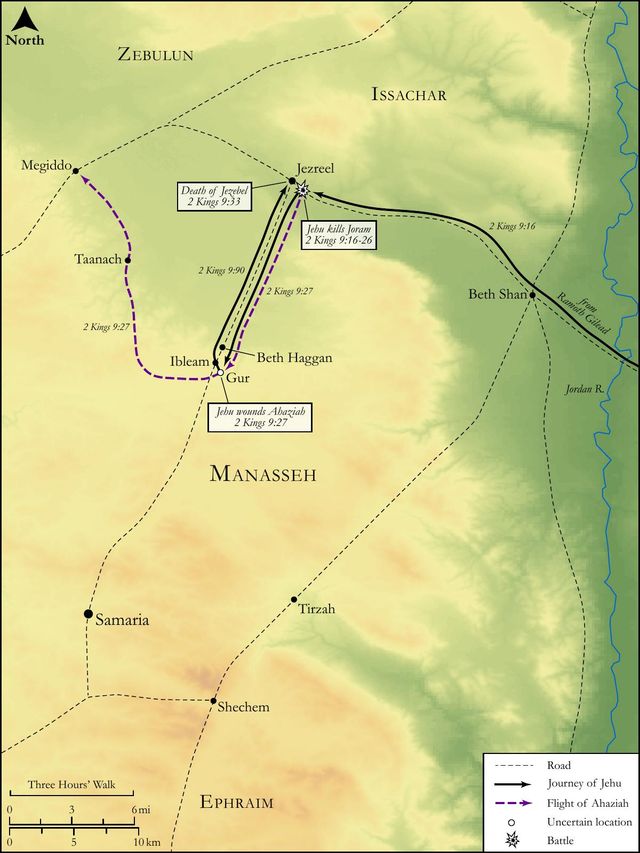
See on the biblical-era map
Study this verse
Public-domain commentary
Matthew Henry
From his Commentary on the Whole Bible. Henry comments on passages, not single verses — this entry covers 2 Kings 10:29–36. His three-level outline is real structure in the source text, so it is rendered as structure.
Here is all the account of the reign of Jehu, though it continued twenty-eight years. The progress of it answered not to the glory of its beginning. We have here,
I.God's approbation of what Jehu had done.
Many, it is probable, censured him as treacherous and barbarous - called him a rebel, a usurper, a murderer, and prognosticated ill concerning him, that a family thus raised would soon be ruined; but God said, Well done (Kg2 10:30), and then it signified little who said otherwise.
1.God pronounced that to be right which he had done. It is justly questionable whether he did it from a good principle and whether he did not take some false steps in the doing of it; and yet (says God), Thou hast done well in executing that which is right in my eyes. The extirpating of idolaters and idolatry was a thing right in God's eyes, for it is an iniquity he visits as surely and severely as any: it was according to all that was in his heart, all he desired, all he designed. Jehu went through with his work.
2.God promised him a reward, that his children of the fourth generation from him should sit upon the throne of Israel. This was more than what took place in any of the dignities or royal families of that kingdom; of the house of Ahab there were indeed four kings, Omri, Ahab, Ahaziah, and Joram, but the last two were brothers, so that it reached but to the third generation, and that whole family continued but about forty-five years in all, whereas Jehu's continued in four, besides himself, and in all about 120 years. Note, No services done for God shall go unrewarded.
II.Jehu's carelessness in what he was further to do.
By this it appeared that his heart was not right with God, that he was partial in his reformation.
1.He did not put away all the evil. He departed from the sins of Ahab, but not from the sins of Jeroboam - discarded Baal, but adhered to the calves. The worship of Baal was indeed the greater evil, and more heinous in the sight of God, but the worship of the calves was a great evil, and true conversion is not only from gross sin, but from all sin - not only from false gods, but from false worships. The worship of Baal weakened and diminished Israel, and made them beholden to the Sidonians, and therefore he could easily part with that; but the worship of the calves was a politic idolatry, was begun and kept up for reasons of state, to prevent the return of the ten tribes to the house of David, and therefore Jehu clave to that. True conversion is not only from wasteful sins, but from gainful sins - not only from those sins that are destructive to the secular interest, but from those that support and befriend it, in forsaking which is the great trial whether we can deny ourselves and trust God.
2.He put away evil, but he did not mind that which was good (Kg2 10:31): He took no heed to walk in the law of the Lord God of Israel. He abolished the worship of Baal, but did not keep up the worship of God, nor walk in his law. He had shown great care and zeal for the rooting out of a false religion; but in the true religion,
(1.)He showed no care, took no heed, lived at large, was not at all solicitous to please God and to do his duty, took no heed to the scriptures, to the prophets, to his own conscience, but walked at all adventures. Those that are heedless, it is to be feared, are graceless; for, where there is a good principle in the heart, it will make men cautious and circumspect, desirous to please God and jealous of doing any thing to offend him.
(2.)He showed no zeal; what he did in religion he did not do with his heart, with all his heart, but did it as if he did it not, without any liveliness or concern. It seems, he was a man that had little religion himself, and yet God made use of him as an instrument of reformation in Israel. It is a pity but that those that do good to others should always be good themselves.
III.The judgment that came upon Israel in his reign.
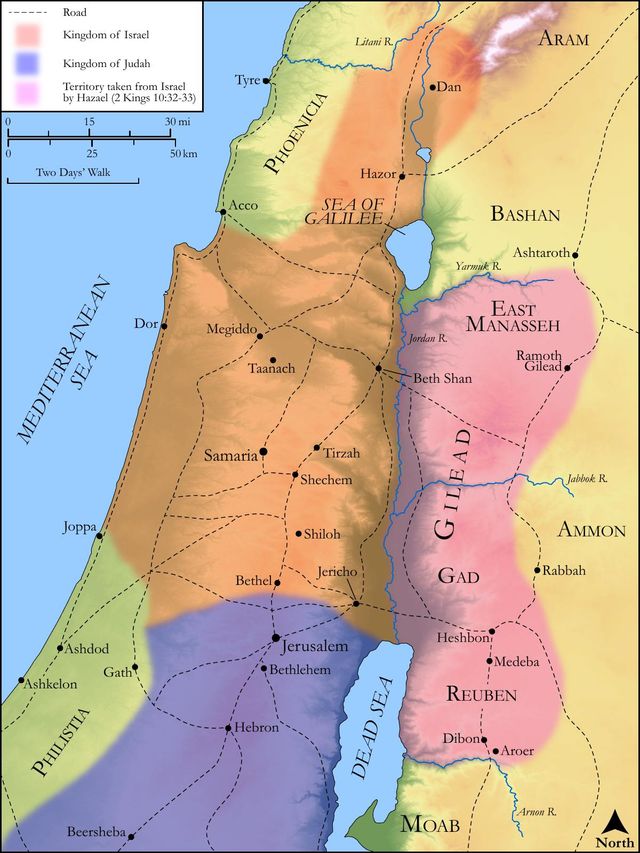
We have reason to fear that when Jehu took no heed himself to walk in God's law the people were generally as careless as he, both in their devotions and in their conversations. There was a general decay of piety and increase of profaneness; and therefore it is not strange that the next news we hear is, In those days the Lord began to cut Israel short, Kg2 10:32. Their neighbours encroached upon them on every side; they were short in their duty to God, and therefore God cut them short in their extent, wealth, and power. Hazael king of Syria was, above any other, vexatious and mischievous to them, smote them in all the coasts of Israel, particularly the countries on the other side Jordan, which lay next him, and most exposed; on these he made continual inroads, and laid them waste. Now the Reubenites and Gadites smarted for the choice which their ancestors made of an inheritance on that side Jordan, which Moses reproved them for, Num. 32. Now Hazael did what Elisha foresaw and foretold he would do. Yet, for doing it, God had a quarrel with him and with his kingdom, as we may find, Amo 1:3, Amo 1:4. Because those of Damascus have threshed Gilead with threshing instruments of iron, therefore (says God) I will send a fire into the house of Hazael, which shall devour the palaces of Benhadad.
Lastly, The conclusion of Jehu's reign, Kg2 10:34-36. Notice is taken, in general, of his might; but, because he took no heed to serve God, the memorials of his mighty enterprises and achievements are justly buried in oblivion.
Continue studying 2 Kings 10:32 across the web’s major study libraries — every link below opens this exact verse, chapter, or book on the destination site.
Read & Compare
 BibleGatewayThis verse in more than 200 translations and 70 languages.
 Bible.comThe YouVersion reader — hundreds of translations, reading plans, and highlights.
 ESV.orgCrossway's official English Standard Version reader.
 NET BibleThe NET translation with 60,000+ translators' notes on every rendering decision.
 STEP BibleTyndale House's free study tool — original text, vocabulary, and scholarly resources.
 BibliaLogos Bible Software's free web reader.
 USCCBThe New American Bible (Revised Edition) with the U.S. bishops' study notes.
Commentaries
 BibleHub CommentariesDozens of classic commentaries on this verse, gathered on one page.
 StudyLightMore than 100 commentary sets — the largest collection on the web.
 BibleRefPlain-English commentary on what this verse means, verse by verse.
 Enduring WordDavid Guzik's free commentary on this chapter, widely used by Bible teachers.
 Bible Study ToolsVerse commentary alongside Greek and Hebrew study aids.
Original Language & Research
- BibleHub InterlinearThe verse word by word — original language, transliteration, and English.
- BibleHub LexiconEvery word's original-language definition and Strong's entry.
 Blue Letter BibleDeep-study tools — Strong's numbers, concordance, and word studies.
 SefariaThe Hebrew text with Rashi and centuries of Jewish commentary.
Sermons, Hymns & Audio


TrulyRandomVerse is not affiliated with these sites and doesn’t control their content. They’re linked because they’re genuinely useful.
Summary
Second Kings 10:32 marks a pivotal and somber turning point in the history of the Northern Kingdom of Israel, signaling the commencement of its protracted decline and eventual downfall. This verse attributes the territorial losses and military defeats suffered by Israel not merely to geopolitical misfortune, but to the direct, sovereign hand of the LORD, who initiated a process of diminishing Israel's strength and territory. This divine judgment was executed through Hazael, the formidable King of Aram (Syria), illustrating God's use of foreign powers as instruments of His righteous discipline against His unfaithful people.
Context
ShowHideLiterary Context
This verse is situated within the narrative of King Jehu's reign, a period marked by both zealous reform and significant spiritual compromise. Jehu was anointed by the prophet Elisha with the specific divine commission to eradicate the house of Ahab and purge Baal worship from Israel, a task he executed with ruthless efficiency, as detailed in 2 Kings 9:7-10:28. However, immediately preceding this verse, the text delivers a crucial theological indictment: "But Jehu took no heed to walk in the law of the LORD God of Israel with all his heart: for he departed not from the sins of Jeroboam, which made Israel to sin, namely, the golden calves that were in Bethel, and that were in Dan" (2 Kings 10:29). Thus, 2 Kings 10:32 serves as the immediate consequence of Jehu's partial obedience and Israel's continued foundational idolatry, demonstrating that despite the purge of Baalism, God's judgment for persistent sin had begun. It sets the stage for the subsequent weakening and ultimate demise of the Northern Kingdom.
Historical & Cultural Context
The period of Jehu's reign (c. 841-814 BC) was one of significant geopolitical flux in the ancient Near East. Israel and Aram (Syria), with its capital Damascus, were frequently at odds, vying for regional dominance. Hazael, the King of Aram, was a particularly brutal and effective military leader whose rise to power was itself a fulfillment of prophecy, as Elisha had foretold his future atrocities against Israel (2 Kings 8:12-13). The phrase "in all the coasts of Israel" signifies that Hazael's attacks were not isolated skirmishes but widespread territorial encroachments, targeting Israel's borders and regions. This systematic weakening by Aram was a direct manifestation of God's covenant curses for disobedience, as outlined in the Mosaic Law, where foreign oppression was a promised consequence of abandoning God.
Key Themes
ShowHideSecond Kings 10:32 powerfully contributes to several overarching themes within the book of Kings and the broader Old Testament narrative. Foremost is the theme of Divine Judgment, clearly articulated by the phrase "the LORD began to cut Israel short." This emphasizes God's active, sovereign involvement in history, orchestrating even geopolitical conflicts as instruments of His justice against His unfaithful people. It underscores the principle that national prosperity and security are contingent upon covenant faithfulness, aligning with the warnings found throughout Deuteronomy 28. Closely related is the theme of Consequences of Persistent Idolatry and Partial Obedience. Despite Jehu's decisive action against Baal worship, his failure to dismantle the golden calves at Bethel and Dan represented a fundamental breach of the covenant, demonstrating that outward reform without a complete turning of the heart to God is insufficient to avert divine discipline. Finally, this verse inaugurates the Decline of the Northern Kingdom, marking the beginning of a prolonged period of military weakness, territorial loss, and political instability that would ultimately culminate in its destruction and exile by the Assyrians.
Exposition and Analysis
ShowHideKey Word Analysis
ShowHideThe verb חָלַל (châlal) is a primitive root with a range of meanings, including "to bore," "to wound," "to profane," and significantly, "to begin." In this context, it denotes the initiation of a process, as if by an "opening wedge." Here, it emphasizes that the LORD actively commenced the process of Israel's diminishment, indicating a deliberate and sovereign act rather than a coincidental turn of events.
The verb קָצָה (qâtsâh) literally means "to cut off," "to cut down," or "to curtail." In this context, it conveys the idea of God beginning to diminish, reduce, or prune Israel's power, territory, and perhaps even its population. It implies a gradual but decisive process of weakening, a severe pruning rather than a sudden, complete annihilation, indicating a strategic and deliberate act of divine judgment that would unfold over time.
The noun גְּבוּל (gᵉbûwl), primarily meaning "a cord (as twisted)," extends to signify "a boundary" or "the territory enclosed." The plural form used here, "in all the coasts of Israel," therefore indicates that Hazael's attacks were comprehensive and widespread, affecting all regions and peripheral areas of the Northern Kingdom. This emphasizes the thoroughness of the territorial losses and the pervasive nature of the judgment.
Verse Breakdown
ShowHide"In those days"
This phrase serves as a temporal marker, situating the events within the historical period of Jehu's reign, specifically after his initial zealous reforms and the subsequent revelation of his partial obedience. It connects the unfolding judgment directly to the preceding narrative of Israel's spiritual state.
"the LORD began to cut Israel short"
This is the theological heart of the verse, unequivocally attributing the subsequent national decline to divine initiative. It signifies that the military setbacks were not mere coincidences or solely the result of Hazael's prowess, but a deliberate act of God's sovereign will. The use of "began" suggests the initiation of a prolonged period of weakening and judgment, a process that would continue through subsequent reigns.
"and Hazael smote them"
This clause identifies the human agent through whom God's judgment was executed. Hazael, the King of Aram, is presented as the instrument in God's hand, fulfilling a prophetic word and demonstrating God's capacity to use even foreign, hostile powers to accomplish His purposes of discipline against His own people.
"in all the coasts of Israel"
This specifies the scope and severity of Hazael's attacks. It indicates that the territorial losses and military defeats were comprehensive, affecting the entire breadth of the Northern Kingdom's borders and regions, underscoring the widespread nature of the judgment and the diminishing of Israel's power.
Literary Devices
ShowHideThe verse employs several significant literary devices. Divine Agency/Causation is paramount, with "the LORD began to cut Israel short" clearly establishing God as the primary cause behind the nation's decline, even while Hazael is the visible instrument. This highlights God's active involvement in human history and His sovereign control over nations. There is also a strong element of Fulfillment of Prophecy, as Hazael's destructive actions against Israel were explicitly foretold by Elisha to Hazael himself in 2 Kings 8:12-13, underscoring the reliability of God's word. Furthermore, the narrative contains a subtle Irony: Jehu, who was raised up by God to purge Israel of Baal worship, paradoxically presides over the beginning of Israel's decline due to his own failure to eradicate the foundational idolatry of the golden calves. This serves as a powerful Foreshadowing, as the "cutting short" initiated here will continue relentlessly, leading ultimately to the complete destruction and exile of the Northern Kingdom, a trajectory that began with this divine act of judgment.
Theological and Thematic Connections
ShowHideSecond Kings 10:32 serves as a stark reminder of God's unwavering justice and His covenant faithfulness, even when it manifests as judgment. It underscores the profound theological truth that God holds nations accountable for their obedience or disobedience to His revealed will. Israel, as God's chosen people, was bound by a covenant that promised blessing for obedience and curses for rebellion. This verse demonstrates that God does not merely observe; He actively intervenes in history to enforce His covenant, using even foreign adversaries as instruments of His righteous discipline. The "cutting short" of Israel was not arbitrary but a direct consequence of their persistent idolatry, particularly the entrenched sin of the golden calves, which Jehu failed to remove. This highlights the insufficiency of partial obedience and the absolute necessity of wholehearted devotion to God for true national and spiritual well-being.
Reflection and Application
ShowHideSecond Kings 10:32 offers profound lessons for contemporary believers and communities, serving as a sober reminder of God's active involvement in the affairs of humanity and the serious consequences of spiritual compromise. It challenges us to consider that even seemingly "natural" geopolitical or personal struggles can, at times, be instruments in God's sovereign hand, designed to bring about repentance, discipline, or the fulfillment of His purposes. The narrative of Jehu's partial obedience—his zeal against Baalism contrasted with his failure to remove the golden calves—is particularly poignant. It teaches us that outward religious performance or selective obedience, no matter how impressive, cannot compensate for a lack of wholehearted devotion to God's complete truth. True faithfulness requires a radical commitment to dismantle all forms of idolatry, both overt and subtle, in our lives and in our communities. This verse calls us to examine our own hearts and the spiritual health of our churches and nations, asking if there are "golden calves" we cling to, which, if left unaddressed, could lead to a "cutting short" of spiritual vitality, influence, or blessing.
Questions for Reflection
ShowHideFAQ
ShowHideWhy did God begin to "cut Israel short" during Jehu's reign, especially after he purged Baal worship?
ShowHideWhile Jehu did indeed carry out God's specific command to eradicate the house of Ahab and Baal worship from Israel, his obedience was incomplete and ultimately compromised. Second Kings 10:29 explicitly states that Jehu "departed not from the sins of Jeroboam, which made Israel to sin, namely, the golden calves that were in Bethel, and that were in Dan." These golden calves represented a foundational idolatry established at the very inception of the Northern Kingdom, a rival worship system to that ordained by God in Jerusalem. This persistent, institutionalized idolatry demonstrated a lack of wholehearted devotion to the LORD and a fundamental breach of the covenant. God's judgment, therefore, was not a reaction to Jehu's zeal against Baal but a consequence of Israel's deeper, unaddressed spiritual rebellion. The "cutting short" was a divine response to a nation that, despite outward reform, remained fundamentally unfaithful to its covenant Lord.
Who was Hazael, and why was he chosen as God's instrument?
ShowHideHazael was a high-ranking official in the court of Ben-Hadad II, King of Aram (Syria), who violently seized the throne after Elisha prophesied to him that he would become king and inflict great harm upon Israel (2 Kings 8:12-15). Hazael became a formidable and ruthless adversary to Israel, fulfilling Elisha's prophecy by oppressing them severely. He was chosen as God's instrument not because of his righteousness, but because God sovereignly uses even wicked nations and individuals to accomplish His purposes, particularly His judgments against unfaithful people. Just as God used Assyria and Babylon later, Hazael served as a divinely appointed agent of discipline, demonstrating God's control over all nations and His determination to hold His people accountable for their covenant violations (see Isaiah 10:5-6).
Christ-Centered Fulfillment
ShowHideThe "cutting short" of Israel in 2 Kings 10:32, a consequence of their persistent sin and partial obedience, powerfully foreshadows the ultimate need for a perfect King and a new covenant. Israel's repeated failures, culminating in such divine judgments, underscore humanity's inability to perfectly uphold God's law and live in full covenant faithfulness. This narrative points to Jesus Christ, who alone fulfills the law and the prophets, not abrogating them but bringing them to their intended purpose (Matthew 5:17). Where Israel's kingdom was "cut short" due to unfaithfulness, Christ establishes an eternal kingdom that will never be diminished or destroyed (Daniel 7:13-14, Luke 1:32-33). Moreover, the judgment that fell upon Israel for its sin finds its ultimate and redemptive fulfillment in Christ, who, as the spotless Lamb of God, took upon Himself the full weight of divine wrath for the sins of humanity. He was "cut off" not for His own transgressions but for ours, bearing the judgment we deserved, so that through faith in Him, we might receive righteousness and eternal life (2 Corinthians 5:21, Romans 3:23-26). Thus, the cycles of judgment and decline in the Old Testament ultimately direct our gaze to the cross, where God's justice and mercy perfectly converge, offering a way out of the cycle of sin and its consequences into the freedom and fullness found only in Christ (Galatians 5:1). His triumph over sin and death ensures that His spiritual kingdom will never be "cut short," but will expand to encompass all the earth (Colossians 2:15, Revelation 19:11-16).