


2 Kings 10:31
Bible text: King James Version (1769 Blayney text) · Public domain
Bible text: King James Version with Strong's numbers · Public domain
Bible text: Berean Standard Bible · Public domain
Bible text: American Standard Version (1901) · Public domain
Bible text: World English Bible, Messianic edition · Public domain
Bible text: Geneva Bible (1599) · Public domain
Bible text: Young's Literal Translation · Public domain
- וְיֵהוּאve·ye·Hu'and JehuH3058Conj-w ¦ N-proper-mNoun Proper MasculineוְandיֵהוּאJehu
- לֹאlo'notH3808NegParticle Negative
- שָׁמַרsha·Marhe took careH8104V-Qal-Perf-3msVerb Qal Perfect 3rd Singular Masculine
- לָלֶכֶתla·Le·khetto walkH1980Prep-l ¦ V-Qal-InfVerb Qal Infinitive Constructלָtoלֶכֶתwalk
- בְּתוֹרַתbe·to·ratin [the] law ofH8451Prep-b ¦ N-fscNoun Singular Feminine Constructבְּinתוֹרַת[the] law of
- יְהוָהYah·wehYahwehH3068N-properNoun Proper Title
- אֱלֹהֵי'e·lo·hei[the] God ofH430N-mpcNoun Plural Masculine Construct
- יִשְׂרָאֵלYis·ra·'ElIsraelH3478N-properNoun Proper Location
- בְּכָלbe·kholwith allH3605Prep-b ¦ N-mscNoun Singular Masculine Constructבְּwithכָלall
- לְבָבוֹle·va·Vohis heartH3824N-msc ¦ 3msNoun Singular Masculine Constructלְבָבheartוֹhis
- לֹאlo'notH3808NegParticle Negative
- סָרSarhe turned asideH5493V-Qal-Perf-3msVerb Qal Perfect 3rd Singular Masculine
- מֵעַלme·'Alfrom onH5921Prep-m ¦ PrepPrepositionמֵfromעַלon
- חַטֹּאותcha·Tot[the] sins ofH2403N-fpcNoun Plural Feminine Construct
- יָרָבְעָםya·ra·ve·'AmJeroboamH3379N-proper-mNoun Proper Masculine
- אֲשֶׁר'a·SherwhichH834RelParticle Relative
- הֶחֱטִיאhe·che·Ti'he caused to sinH2398V-Hiphil-Perf-3msVerb Hiphil Perfect 3rd Singular Masculine
- אֶת'et<obj.>H853DirObjMParticle Object Indicator
- יִשְׂרָאֵלYis·ra·'ElIsraelH3478N-properNoun Proper Location
English is a literal word-by-word gloss of the Hebrew, not the KJV's wording. Why?
This is the original text the KJV's translators worked from — each Hebrew word with its own literal English meaning in this verse, prepared by scholars at Tyndale House, Cambridge. The KJV translates whole sentences, not word by word, so its wording differs: one Hebrew word can become several English words, and the KJV may choose “the LORD” where the gloss reads “Yahweh”. Both are faithful — they answer different questions. For the KJV's own rendering, switch to the KJV text.
Details
See on the biblical-era maps
Study this verse
Public-domain commentary
Matthew Henry
From his Commentary on the Whole Bible. Henry comments on passages, not single verses — this entry covers 2 Kings 10:29–36. His three-level outline is real structure in the source text, so it is rendered as structure.
Here is all the account of the reign of Jehu, though it continued twenty-eight years. The progress of it answered not to the glory of its beginning. We have here,
I.God's approbation of what Jehu had done.
Many, it is probable, censured him as treacherous and barbarous - called him a rebel, a usurper, a murderer, and prognosticated ill concerning him, that a family thus raised would soon be ruined; but God said, Well done (Kg2 10:30), and then it signified little who said otherwise.
1.God pronounced that to be right which he had done. It is justly questionable whether he did it from a good principle and whether he did not take some false steps in the doing of it; and yet (says God), Thou hast done well in executing that which is right in my eyes. The extirpating of idolaters and idolatry was a thing right in God's eyes, for it is an iniquity he visits as surely and severely as any: it was according to all that was in his heart, all he desired, all he designed. Jehu went through with his work.
2.God promised him a reward, that his children of the fourth generation from him should sit upon the throne of Israel. This was more than what took place in any of the dignities or royal families of that kingdom; of the house of Ahab there were indeed four kings, Omri, Ahab, Ahaziah, and Joram, but the last two were brothers, so that it reached but to the third generation, and that whole family continued but about forty-five years in all, whereas Jehu's continued in four, besides himself, and in all about 120 years. Note, No services done for God shall go unrewarded.
II.Jehu's carelessness in what he was further to do.
By this it appeared that his heart was not right with God, that he was partial in his reformation.
1.He did not put away all the evil. He departed from the sins of Ahab, but not from the sins of Jeroboam - discarded Baal, but adhered to the calves. The worship of Baal was indeed the greater evil, and more heinous in the sight of God, but the worship of the calves was a great evil, and true conversion is not only from gross sin, but from all sin - not only from false gods, but from false worships. The worship of Baal weakened and diminished Israel, and made them beholden to the Sidonians, and therefore he could easily part with that; but the worship of the calves was a politic idolatry, was begun and kept up for reasons of state, to prevent the return of the ten tribes to the house of David, and therefore Jehu clave to that. True conversion is not only from wasteful sins, but from gainful sins - not only from those sins that are destructive to the secular interest, but from those that support and befriend it, in forsaking which is the great trial whether we can deny ourselves and trust God.
2.He put away evil, but he did not mind that which was good (Kg2 10:31): He took no heed to walk in the law of the Lord God of Israel. He abolished the worship of Baal, but did not keep up the worship of God, nor walk in his law. He had shown great care and zeal for the rooting out of a false religion; but in the true religion,
(1.)He showed no care, took no heed, lived at large, was not at all solicitous to please God and to do his duty, took no heed to the scriptures, to the prophets, to his own conscience, but walked at all adventures. Those that are heedless, it is to be feared, are graceless; for, where there is a good principle in the heart, it will make men cautious and circumspect, desirous to please God and jealous of doing any thing to offend him.
(2.)He showed no zeal; what he did in religion he did not do with his heart, with all his heart, but did it as if he did it not, without any liveliness or concern. It seems, he was a man that had little religion himself, and yet God made use of him as an instrument of reformation in Israel. It is a pity but that those that do good to others should always be good themselves.
III.The judgment that came upon Israel in his reign.
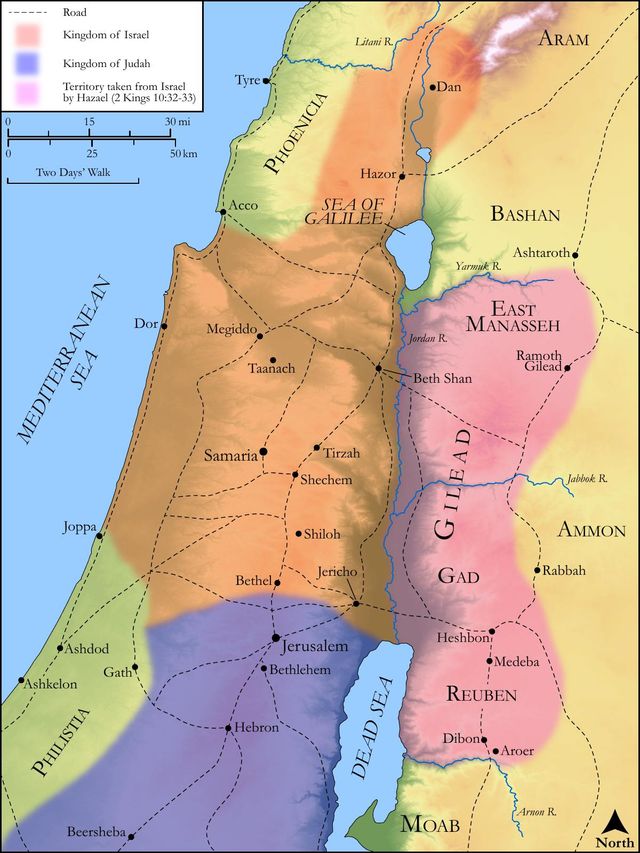
We have reason to fear that when Jehu took no heed himself to walk in God's law the people were generally as careless as he, both in their devotions and in their conversations. There was a general decay of piety and increase of profaneness; and therefore it is not strange that the next news we hear is, In those days the Lord began to cut Israel short, Kg2 10:32. Their neighbours encroached upon them on every side; they were short in their duty to God, and therefore God cut them short in their extent, wealth, and power. Hazael king of Syria was, above any other, vexatious and mischievous to them, smote them in all the coasts of Israel, particularly the countries on the other side Jordan, which lay next him, and most exposed; on these he made continual inroads, and laid them waste. Now the Reubenites and Gadites smarted for the choice which their ancestors made of an inheritance on that side Jordan, which Moses reproved them for, Num. 32. Now Hazael did what Elisha foresaw and foretold he would do. Yet, for doing it, God had a quarrel with him and with his kingdom, as we may find, Amo 1:3, Amo 1:4. Because those of Damascus have threshed Gilead with threshing instruments of iron, therefore (says God) I will send a fire into the house of Hazael, which shall devour the palaces of Benhadad.
Lastly, The conclusion of Jehu's reign, Kg2 10:34-36. Notice is taken, in general, of his might; but, because he took no heed to serve God, the memorials of his mighty enterprises and achievements are justly buried in oblivion.
Continue studying 2 Kings 10:31 across the web’s major study libraries — every link below opens this exact verse, chapter, or book on the destination site.
Read & Compare
 BibleGatewayThis verse in more than 200 translations and 70 languages.
 Bible.comThe YouVersion reader — hundreds of translations, reading plans, and highlights.
 ESV.orgCrossway's official English Standard Version reader.
 NET BibleThe NET translation with 60,000+ translators' notes on every rendering decision.
 STEP BibleTyndale House's free study tool — original text, vocabulary, and scholarly resources.
 BibliaLogos Bible Software's free web reader.
 USCCBThe New American Bible (Revised Edition) with the U.S. bishops' study notes.
Commentaries
 BibleHub CommentariesDozens of classic commentaries on this verse, gathered on one page.
 StudyLightMore than 100 commentary sets — the largest collection on the web.
 BibleRefPlain-English commentary on what this verse means, verse by verse.
 Enduring WordDavid Guzik's free commentary on this chapter, widely used by Bible teachers.
 Bible Study ToolsVerse commentary alongside Greek and Hebrew study aids.
Original Language & Research
- BibleHub InterlinearThe verse word by word — original language, transliteration, and English.
- BibleHub LexiconEvery word's original-language definition and Strong's entry.
 Blue Letter BibleDeep-study tools — Strong's numbers, concordance, and word studies.
 SefariaThe Hebrew text with Rashi and centuries of Jewish commentary.
Sermons, Hymns & Audio


TrulyRandomVerse is not affiliated with these sites and doesn’t control their content. They’re linked because they’re genuinely useful.
Summary
Second Kings 10:31 delivers a stark and sobering assessment of King Jehu's reign, revealing a profound spiritual failure despite his zealous and divinely commissioned actions to eradicate the house of Ahab and the pervasive worship of Baal. While Jehu acted decisively as an instrument of God's judgment, his obedience proved to be partial and instrumental rather than stemming from a wholehearted devotion to the Lord. He conspicuously failed to abandon the politically expedient, yet idolatrous, practices established by Jeroboam, thereby perpetuating a foundational sin that had led the Northern Kingdom of Israel astray for generations.
Context
ShowHideLiterary Context
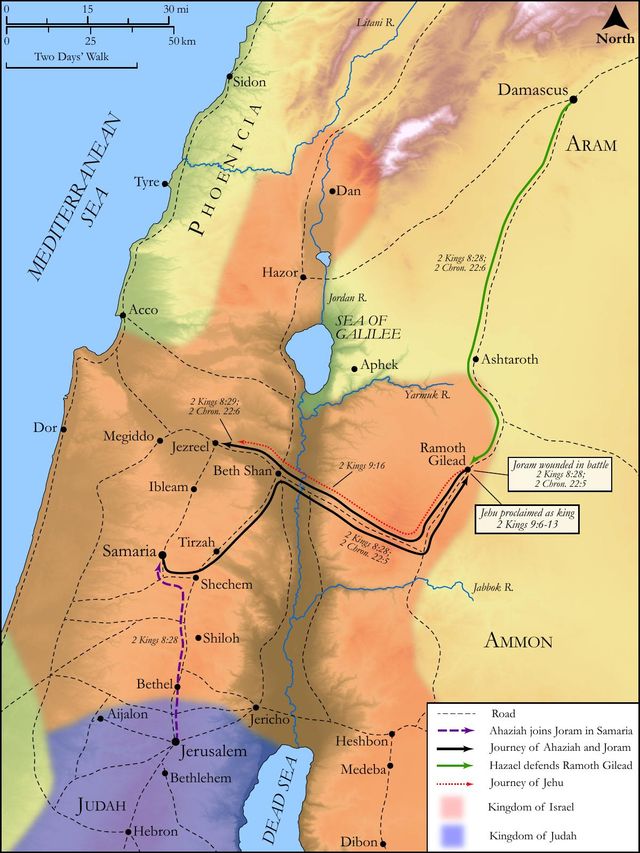
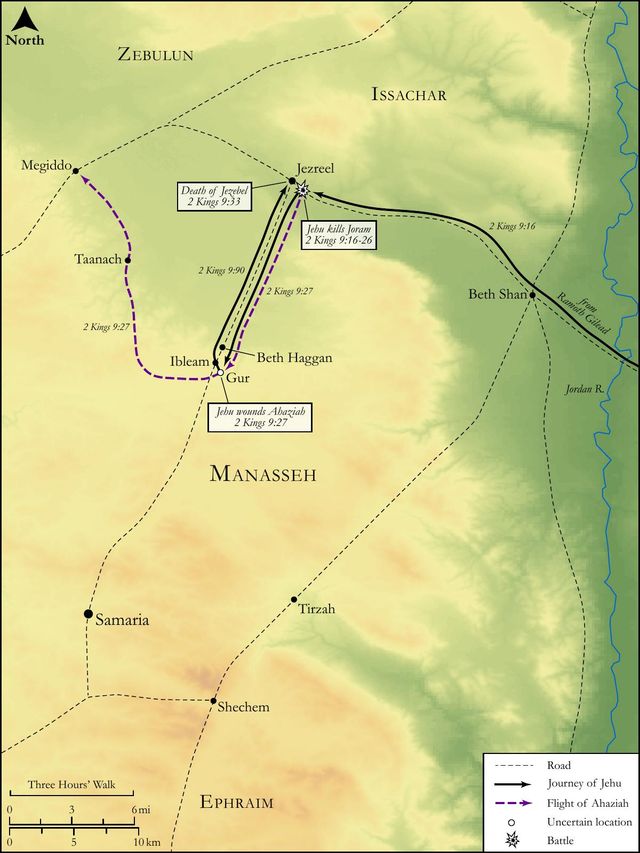
This verse serves as a crucial concluding evaluation of Jehu's reign, immediately following a detailed and dramatic account of his divinely mandated purge. Chapters 9 and 10 of 2 Kings meticulously describe Jehu's anointing by a prophet of Elisha, his swift and brutal overthrow of King Joram, the gruesome execution of Jezebel, and the systematic annihilation of Ahab's descendants and all Baal worshippers in Samaria. These acts, particularly the destruction of Baal worship, were explicitly presented as direct obedience to the Lord's command, fulfilling prophecies against Ahab's wicked house (e.g., 2 Kings 9:7-10). The narrative initially highlights Jehu's apparent zeal, even depicting him inviting others to "come and see my zeal for the LORD" (2 Kings 10:16). However, 2 Kings 10:31 introduces a sobering counterpoint, revealing that this outward zeal did not translate into comprehensive fidelity. This verse stands as a pivotal moment, shifting the reader's perception from Jehu as a righteous instrument of God's wrath to a flawed, partially obedient king, thereby setting the stage for the continued spiritual decline of the Northern Kingdom.
Historical & Cultural Context
Jehu's reign (c. 841-814 BC) occurred during a tumultuous period for the Northern Kingdom of Israel. The preceding Omride dynasty, particularly under King Ahab and Queen Jezebel, had aggressively promoted the worship of Baal, introducing foreign idolatry on an unprecedented scale and actively persecuting prophets of Yahweh. This represented a direct and severe assault on Israel's covenant relationship with the Lord. However, even prior to the Omrides, the Northern Kingdom had been plagued by the "sins of Jeroboam I." Upon the division of the united monarchy, Jeroboam I established golden calves in Bethel and Dan as alternative worship centers to Jerusalem (1 Kings 12:28-30). This politically motivated move, designed to prevent his subjects from returning to Judah for worship, constituted a grave violation of the first two commandments. It led Israel into a syncretistic form of worship where Yahweh was ostensibly worshipped through idolatrous means. Jehu, while effectively eradicating the more egregious Baal worship, failed to dismantle these long-standing, institutionally sanctioned forms of idolatry, indicating a pragmatic compromise with prevailing religious-political norms rather than a full and pure return to the worship of Yahweh alone.
Key Themes
ShowHideThe assessment of Jehu's reign in this verse underscores several critical themes central to the narrative of Kings. First is the profound distinction between Partial Obedience and Wholehearted Devotion. While Jehu performed specific acts commanded by God, his failure to "walk in the law of the LORD... with all his heart" demonstrates that outward actions, even divinely ordained ones, are insufficient without an internal, comprehensive commitment to God. This highlights God's unwavering desire for sincere and complete devotion, not merely instrumental compliance. Second, the verse emphasizes The Enduring Sin of Jeroboam. This refers to the state-sponsored idolatry of the golden calves, which became a deeply entrenched religious practice that continually led Israel astray. Jehu's perpetuation of these sins illustrates how deeply rooted and politically convenient idolatry could become, even for a king who had just purged another, more overt form of idolatry. It reveals that the heart of the problem was not just which idol was worshipped, but the very act of deviating from God's prescribed worship. Finally, the passage speaks to The Pervasive Nature of Idolatry. Jehu's actions show that idolatry is not limited to the worship of foreign gods like Baal but includes any human-made religious system or practice that deviates from God's revealed will, even if it claims to honor the Lord. This subtle yet pervasive form of idolatry, often rooted in political expediency and a lack of full trust in God, proved to be a more persistent spiritual cancer in Israel than the more overt Baal worship.
Exposition and Analysis
ShowHideKey Word Analysis
ShowHideThe Hebrew verb shâmar (H8104) properly means "to hedge about," "to guard," "to observe," or "to pay attention to." In this context, used with the negative ("took no heed"), it signifies Jehu's deliberate failure to observe or diligently guard the law of the LORD. This implies a conscious neglect or choice not to adhere fully, rather than a mere oversight. Jehu was aware of God's law but chose not to diligently follow it in its entirety, particularly concerning the established idolatry.
The Hebrew verb yâlak (H3212) means "to walk" literally or figuratively, often denoting one's habitual way of life, conduct, or moral journey. When paired with "in the law," as here, it forms a common biblical idiom (e.g., Deuteronomy 5:33) for living in accordance with God's revealed will and commandments. Jehu's failure was not just in specific acts, but in his overall direction and commitment to God's prescribed ways.
The Hebrew noun lêbâb (H3824) refers to the heart, encompassing the totality of a person's inner being—their intellect, emotions, will, and conscience. The phrase "with all his heart" is deeply significant in the Old Testament, particularly in the Deuteronomic tradition (e.g., Deuteronomy 6:5), signifying complete, unreserved, and sincere devotion and commitment. Jehu's failure was fundamentally an internal one, a lack of wholehearted dedication that resulted in divided loyalty and partial obedience.
Verse Breakdown
ShowHide"But Jehu took no heed to walk in the law of the LORD God of Israel with all his heart:"
The introductory "But" (וְאַךְ, ve'akh) signals a sharp contrast to the preceding narrative, which highlighted Jehu's successful purge of Baal worship and the Lord's commendation for his obedience in that specific task (2 Kings 10:30). Despite this initial zeal and divine approval, Jehu failed to maintain a consistent, comprehensive obedience to God's entire law. The phrase "took no heed" underscores his negligence or deliberate choice not to fully embrace God's commands. The emphasis on "the LORD God of Israel" highlights the specific covenant relationship that Jehu, as king, was obligated to uphold. The critical qualifier "with all his heart" reveals the depth of his failure: his obedience was not rooted in a sincere, complete devotion but was rather selective and instrumental, serving his own purposes or political expediency alongside God's.
"for he departed not from the sins of Jeroboam, which made Israel to sin."
This clause provides the specific evidence and explanation for Jehu's lack of wholeheartedness. The "sins of Jeroboam" refer to the establishment of golden calves in Bethel and Dan as alternative worship sites to Jerusalem, a political move that led to idolatry and syncretism (1 Kings 12:28-30). Jehu, despite his zeal against Baal, maintained these long-standing, institutionally sanctioned idolatries. This demonstrates a pragmatic compromise rather than a pure commitment to Yahweh alone. The phrase "which made Israel to sin" emphasizes the devastating, generational impact of Jeroboam's initial transgression, as it became a stumbling block for successive kings and the entire nation, perpetuating a cycle of disobedience and divine judgment. Jehu's failure to dismantle these idols meant he continued to lead Israel astray, even as he purged other forms of idolatry.
Literary Devices
ShowHideThe verse employs several potent literary devices to convey its profound message. There is a strong Contrast between Jehu's initial, divinely commended zeal for eradicating Baal worship and his subsequent failure to maintain wholehearted obedience to the Lord's law. This creates a striking sense of Irony, as the king who was God's instrument to cleanse Israel of one major idolatry—the overt worship of Baal—perpetuated another, more subtle but equally damning, form of idolatry—the institutionalized calf worship. The phrase "departed not from the sins of Jeroboam" functions as a Recurring Motif or Thematic Link throughout the books of Kings, serving as a consistent indictment against the Northern Kingdom's kings and foreshadowing their eventual downfall. This repetition emphasizes the deep-seated nature of Israel's spiritual compromise and the persistent challenge of true covenant fidelity. Furthermore, the verse acts as a Judgment Formula, a common literary device in Kings used to provide a concise, divinely informed assessment of each king's reign, often concluding with a statement about their adherence to or departure from the law of the Lord.
Theological and Thematic Connections
ShowHideThe assessment of Jehu in 2 Kings 10:31 offers profound theological insights into the nature of true obedience and the pervasive danger of partial commitment. It reveals that God desires not merely outward compliance or instrumental acts, but a complete, unreserved devotion of the heart. Jehu's failure highlights that one can be used by God for specific purposes, even significant ones, yet still fall short of the full standard of covenant faithfulness. His retention of Jeroboam's sins underscores that idolatry is not limited to overt worship of foreign gods; it can also manifest in politically convenient or traditional forms of worship that deviate from God's prescribed ways, ultimately placing something other than God's pure command at the center of one's allegiance. This partiality ultimately undermines the very foundation of the covenant and leads to continued spiritual decay, demonstrating that God requires an undivided heart.
Reflection and Application
ShowHideJehu's story serves as a powerful and sobering mirror for believers today, challenging us to examine the depth and sincerity of our own obedience to God. It vividly illustrates that it is entirely possible to be zealous in certain areas of faith—perhaps in evangelism, justice, or church service—while simultaneously harboring areas of compromise or unaddressed sin in our hearts. We might be quick to condemn obvious societal evils or the "Baals" of our culture, yet subtly cling to "sins of Jeroboam"—those convenient, culturally accepted, or traditional compromises that prevent us from walking "with all our heart" in God's law. This verse calls us to a radical self-examination: are there areas where we prioritize comfort, reputation, or convenience over God's uncompromising truth? True devotion requires a willingness to dismantle all idols, both overt and subtle, and to surrender every aspect of our lives to the Lordship of Christ, ensuring that our obedience is not merely external or partial, but flows from a completely devoted heart that seeks to honor God in every sphere.
Questions for Reflection
ShowHideFAQ
ShowHideWhy did God still bless Jehu with a dynasty despite his partial obedience?
ShowHideWhile 2 Kings 10:31 highlights Jehu's spiritual failure, 2 Kings 10:30 states, "Because you have done well in executing what is right in my eyes, and have done to the house of Ahab all that was in my heart, your sons shall sit on the throne of Israel to the fourth generation." This demonstrates God's faithfulness to His word and His willingness to reward even partial obedience when it aligns with His specific, declared purposes. Jehu did perform the divinely mandated purge of Ahab's house and Baal worship with zeal and thoroughness, a task God had determined was "right in my eyes." God honored this specific obedience with a dynastic promise, which was fulfilled. However, this reward for a specific act does not negate the overall assessment of Jehu's character or his failure to achieve wholehearted devotion, nor does it excuse his perpetuation of Jeroboam's sins. It profoundly illustrates that God can use flawed individuals to accomplish His sovereign will, and He is just in both rewarding specific obedience and judging overall unfaithfulness.
What exactly were "the sins of Jeroboam"?
ShowHideThe "sins of Jeroboam" refer primarily to the establishment of two golden calves as alternative worship centers in Bethel (in the south of the Northern Kingdom) and Dan (in the north) by Jeroboam I, the first king of the Northern Kingdom of Israel, after the division of the united monarchy (1 Kings 12:28-30). His motivation was primarily political: he feared that if his people continued to go to Jerusalem to worship at the Temple, their loyalty would shift back to the Davidic dynasty in Judah. To prevent this, he declared, "It is too much for you to go up to Jerusalem. Behold your gods, O Israel, who brought you up from the land of Egypt!" This act was a direct violation of the first two commandments against idolatry and making graven images (Exodus 20:3-5). While Jeroboam likely intended these calves to represent Yahweh, they constituted an unauthorized, syncretistic form of worship that fundamentally corrupted Israel's covenant relationship with God and became a recurring indictment against nearly every subsequent king of Israel. These practices led the nation into spiritual apostasy and were a constant source of divine judgment.
Christ-Centered Fulfillment
ShowHideJehu's story, marked by zealous but ultimately partial obedience, profoundly underscores humanity's inherent inability to render the wholehearted devotion God truly requires, thereby pointing to the absolute necessity of Christ. Jehu's failure to depart from the "sins of Jeroboam" reveals the deep-seated nature of sin and compromise that even a divinely appointed agent cannot fully overcome. Unlike Jehu, Jesus Christ perfectly fulfilled the law and walked in the will of God "with all His heart," without any deviation or compromise (Hebrews 10:7). He did not merely perform specific acts of obedience, but His entire life was an embodiment of perfect love and submission to the Father (John 8:29). Where Jehu purged one form of idolatry only to retain another, Christ, through His atoning sacrifice on the cross, completely eradicates the power of sin and idolatry from the hearts of His people, enabling true, wholehearted worship (Colossians 2:13-15). Furthermore, through the New Covenant, Christ provides the Holy Spirit, who writes God's law on our hearts, empowering us to genuinely desire and "walk in His statutes" with a transformed heart, something impossible under the Old Covenant's external demands (Jeremiah 31:33; Ezekiel 36:26-27). Thus, Jehu's partiality highlights our desperate need for a Savior who not only perfectly obeys on our behalf but also transforms us from within, enabling us to offer the wholehearted devotion that God has always desired.