


2 Kings 10:30
- וַיֹּאמֶרvai·Yo·merand he saidH559Conj-w ¦ V-Qal-ConsecImperf-3msVerb Qal Consecutive Imperfect 3rd Singular Masculineוַandיֹּאמֶרhe said
- יְהוָהYah·wehYahwehH3068N-properNoun Proper Title
- אֶל'eltoH413PrepPreposition
- יֵהוּאye·Hu'JehuH3058N-proper-mNoun Proper Masculine
- יַעַןYa·'anbecauseH3282ConjConjunction
- אֲשֶׁר'a·SherthatH834RelParticle Relative
- הֱטִיבֹתָhe·ti·Vo·tayou have done wellH2895V-Hiphil-Perf-2msVerb Hiphil Perfect 2nd Singular Masculine
- לַעֲשׂוֹתla·'a·Sotby doingH6213Prep-l ¦ V-Qal-InfVerb Qal Infinitive Constructלַbyעֲשׂוֹתdoing
- הַיָּשָׁרhai·ya·Sharthe rightH3477Art ¦ Adj-msAdjective Singular Masculine Absoluteהַtheיָּשָׁרright
- בְּעֵינַיbe·'ei·Naiin my viewH5869Prep-b ¦ N-fdc ¦ 1csNoun Dual Feminine Constructבְּinעֵינַviewיmy
- כְּכֹלke·Kholaccording to allH3605Prep-k ¦ N-msNoun Singular Masculine Absoluteכְּaccording toכֹלall
- אֲשֶׁר'a·SherthatH834RelParticle Relative
- בִּלְבָבִיbil·va·Vi[was] in my heartH3824Prep-b ¦ N-msc ¦ 1csNoun Singular Masculine Constructבִּ[was] inלְבָבִheartיmy
- עָשִׂיתָ'a·Si·tayou have doneH6213V-Qal-Perf-2msVerb Qal Perfect 2nd Singular Masculine
- לְבֵיתle·Veitto [the] house ofH1004Prep-l ¦ N-mscNoun Singular Masculine Constructלְtoבֵית[the] house of
- אַחְאָב'ach·'AvAhabH256N-proper-mNoun Proper Masculine
- בְּנֵיbe·Neidescendants ofH1121N-mpcNoun Plural Masculine Construct
- רְבִעִיםre·vi·'Im[the] fourth [generation]H7243Adj-mpAdjective Numerical Position Plural Masculine Absolute
- יֵשְׁבוּye·she·Vuthey will sitH3427V-Qal-Imperf-3mpVerb Qal Imperfect 3rd Plural Masculine
- לְךָle·Khaof youPrep-l ¦ 2msSuffix Personal 2nd Singular Masculineלְofךָyou
- עַל'alonH5921PrepPreposition
- כִּסֵּאki·Se'[the] throne ofH3678N-mscNoun Singular Masculine Construct
- יִשְׂרָאֵלYis·ra·'ElIsraelH3478N-properNoun Proper Location
English is a literal word-by-word gloss of the Hebrew, not the KJV's wording. Why?
This is the original text the KJV's translators worked from — each Hebrew word with its own literal English meaning in this verse, prepared by scholars at Tyndale House, Cambridge. The KJV translates whole sentences, not word by word, so its wording differs: one Hebrew word can become several English words, and the KJV may choose “the LORD” where the gloss reads “Yahweh”. Both are faithful — they answer different questions. For the KJV's own rendering, switch to the KJV text.
Details
See on the biblical-era map
Study this verse
Public-domain commentary
Matthew Henry
From his Commentary on the Whole Bible. Henry comments on passages, not single verses — this entry covers 2 Kings 10:29–36. His three-level outline is real structure in the source text, so it is rendered as structure.
Here is all the account of the reign of Jehu, though it continued twenty-eight years. The progress of it answered not to the glory of its beginning. We have here,
I.God's approbation of what Jehu had done.
Many, it is probable, censured him as treacherous and barbarous - called him a rebel, a usurper, a murderer, and prognosticated ill concerning him, that a family thus raised would soon be ruined; but God said, Well done (Kg2 10:30), and then it signified little who said otherwise.
1.God pronounced that to be right which he had done. It is justly questionable whether he did it from a good principle and whether he did not take some false steps in the doing of it; and yet (says God), Thou hast done well in executing that which is right in my eyes. The extirpating of idolaters and idolatry was a thing right in God's eyes, for it is an iniquity he visits as surely and severely as any: it was according to all that was in his heart, all he desired, all he designed. Jehu went through with his work.
2.God promised him a reward, that his children of the fourth generation from him should sit upon the throne of Israel. This was more than what took place in any of the dignities or royal families of that kingdom; of the house of Ahab there were indeed four kings, Omri, Ahab, Ahaziah, and Joram, but the last two were brothers, so that it reached but to the third generation, and that whole family continued but about forty-five years in all, whereas Jehu's continued in four, besides himself, and in all about 120 years. Note, No services done for God shall go unrewarded.
II.Jehu's carelessness in what he was further to do.
By this it appeared that his heart was not right with God, that he was partial in his reformation.
1.He did not put away all the evil. He departed from the sins of Ahab, but not from the sins of Jeroboam - discarded Baal, but adhered to the calves. The worship of Baal was indeed the greater evil, and more heinous in the sight of God, but the worship of the calves was a great evil, and true conversion is not only from gross sin, but from all sin - not only from false gods, but from false worships. The worship of Baal weakened and diminished Israel, and made them beholden to the Sidonians, and therefore he could easily part with that; but the worship of the calves was a politic idolatry, was begun and kept up for reasons of state, to prevent the return of the ten tribes to the house of David, and therefore Jehu clave to that. True conversion is not only from wasteful sins, but from gainful sins - not only from those sins that are destructive to the secular interest, but from those that support and befriend it, in forsaking which is the great trial whether we can deny ourselves and trust God.
2.He put away evil, but he did not mind that which was good (Kg2 10:31): He took no heed to walk in the law of the Lord God of Israel. He abolished the worship of Baal, but did not keep up the worship of God, nor walk in his law. He had shown great care and zeal for the rooting out of a false religion; but in the true religion,
(1.)He showed no care, took no heed, lived at large, was not at all solicitous to please God and to do his duty, took no heed to the scriptures, to the prophets, to his own conscience, but walked at all adventures. Those that are heedless, it is to be feared, are graceless; for, where there is a good principle in the heart, it will make men cautious and circumspect, desirous to please God and jealous of doing any thing to offend him.
(2.)He showed no zeal; what he did in religion he did not do with his heart, with all his heart, but did it as if he did it not, without any liveliness or concern. It seems, he was a man that had little religion himself, and yet God made use of him as an instrument of reformation in Israel. It is a pity but that those that do good to others should always be good themselves.
III.The judgment that came upon Israel in his reign.
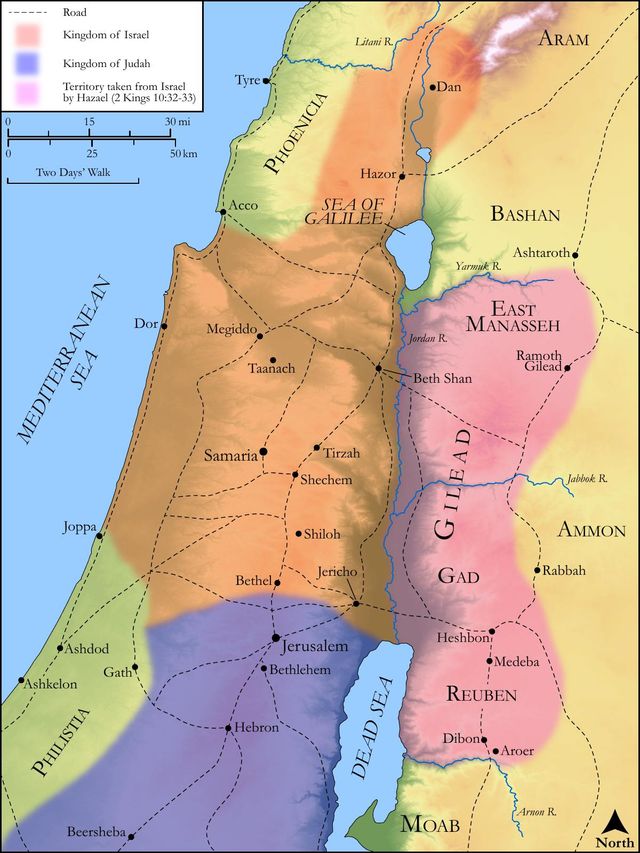
We have reason to fear that when Jehu took no heed himself to walk in God's law the people were generally as careless as he, both in their devotions and in their conversations. There was a general decay of piety and increase of profaneness; and therefore it is not strange that the next news we hear is, In those days the Lord began to cut Israel short, Kg2 10:32. Their neighbours encroached upon them on every side; they were short in their duty to God, and therefore God cut them short in their extent, wealth, and power. Hazael king of Syria was, above any other, vexatious and mischievous to them, smote them in all the coasts of Israel, particularly the countries on the other side Jordan, which lay next him, and most exposed; on these he made continual inroads, and laid them waste. Now the Reubenites and Gadites smarted for the choice which their ancestors made of an inheritance on that side Jordan, which Moses reproved them for, Num. 32. Now Hazael did what Elisha foresaw and foretold he would do. Yet, for doing it, God had a quarrel with him and with his kingdom, as we may find, Amo 1:3, Amo 1:4. Because those of Damascus have threshed Gilead with threshing instruments of iron, therefore (says God) I will send a fire into the house of Hazael, which shall devour the palaces of Benhadad.
Lastly, The conclusion of Jehu's reign, Kg2 10:34-36. Notice is taken, in general, of his might; but, because he took no heed to serve God, the memorials of his mighty enterprises and achievements are justly buried in oblivion.
Continue studying 2 Kings 10:30 across the web’s major study libraries — every link below opens this exact verse, chapter, or book on the destination site.
Read & Compare
 BibleGatewayThis verse in more than 200 translations and 70 languages.
 Bible.comThe YouVersion reader — hundreds of translations, reading plans, and highlights.
 ESV.orgCrossway's official English Standard Version reader.
 NET BibleThe NET translation with 60,000+ translators' notes on every rendering decision.
 STEP BibleTyndale House's free study tool — original text, vocabulary, and scholarly resources.
 BibliaLogos Bible Software's free web reader.
 USCCBThe New American Bible (Revised Edition) with the U.S. bishops' study notes.
Commentaries
 BibleHub CommentariesDozens of classic commentaries on this verse, gathered on one page.
 StudyLightMore than 100 commentary sets — the largest collection on the web.
 BibleRefPlain-English commentary on what this verse means, verse by verse.
 Enduring WordDavid Guzik's free commentary on this chapter, widely used by Bible teachers.
 Bible Study ToolsVerse commentary alongside Greek and Hebrew study aids.
Original Language & Research
- BibleHub InterlinearThe verse word by word — original language, transliteration, and English.
- BibleHub LexiconEvery word's original-language definition and Strong's entry.
 Blue Letter BibleDeep-study tools — Strong's numbers, concordance, and word studies.
 SefariaThe Hebrew text with Rashi and centuries of Jewish commentary.
Sermons, Hymns & Audio


TrulyRandomVerse is not affiliated with these sites and doesn’t control their content. They’re linked because they’re genuinely useful.
Summary
The Lord's commendation of Jehu in 2 Kings 10:30 marks a pivotal moment after his zealous, divinely sanctioned purge of the wicked house of Ahab and the eradication of Baal worship from Israel. God explicitly declares that Jehu's actions were "right in mine eyes" and "according to all that was in mine heart," affirming his role as an instrument of divine judgment. In recognition of this specific obedience, God promises a dynastic blessing, ensuring that Jehu's descendants would occupy the throne of Israel for four generations, a limited yet significant reward for fulfilling God's long-standing purposes against a deeply corrupt dynasty.
Context
ShowHideLiterary Context
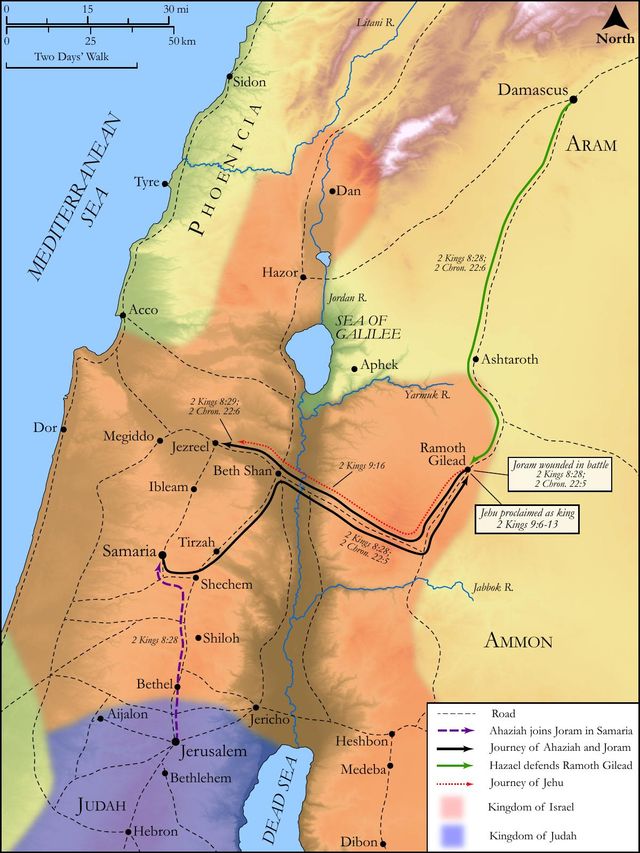
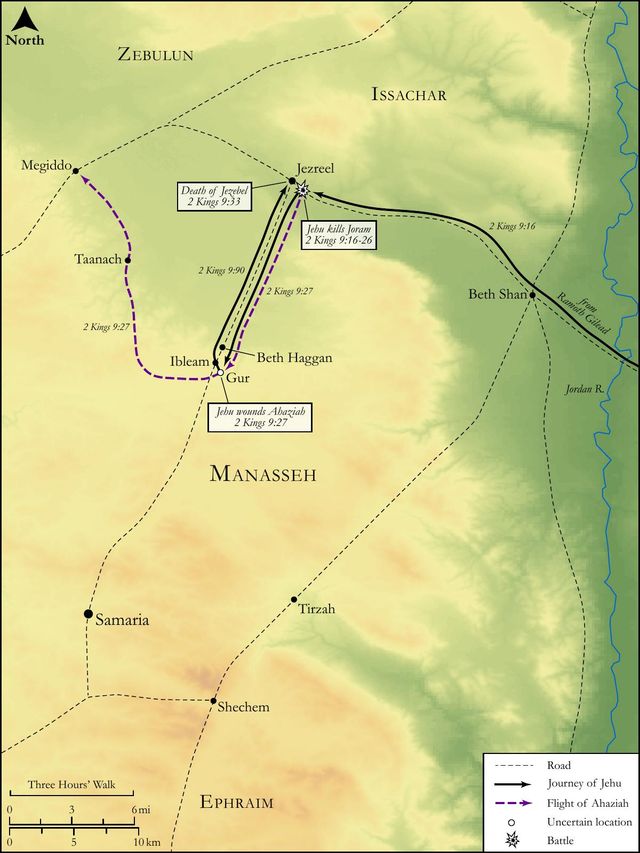
This verse immediately follows Jehu's brutal and comprehensive purge of the Omride dynasty and the worshippers of Baal. Having been anointed by a prophet sent by Elisha with the specific mandate to destroy Ahab's house (2 Kings 9:1-10), Jehu swiftly executed King Joram of Israel and King Ahaziah of Judah, then orchestrated the gruesome death of Jezebel (2 Kings 9:22-37). His zeal continued with the slaughter of Ahab's seventy sons in Samaria (2 Kings 10:1-11) and the complete eradication of Baal worship, including the destruction of its temple and priests (2 Kings 10:18-28). The Lord's words in 2 Kings 10:30 serve as a divine affirmation and reward for Jehu's fulfillment of this specific, albeit violent, commission, concluding the narrative of the Omride dynasty's demise and the establishment of Jehu's own reign.
Historical & Cultural Context
The period leading up to Jehu's coup was marked by extreme religious apostasy and political instability in the Northern Kingdom of Israel. The Omride dynasty, particularly under King Ahab and Queen Jezebel, had aggressively promoted the worship of Baal, leading Israel into deep idolatry and persecuting the prophets of Yahweh (1 Kings 16:30-33). This spiritual rebellion, coupled with the shedding of innocent blood (e.g., Naboth's vineyard in 1 Kings 21:1-16), provoked God's severe judgment, repeatedly pronounced by prophets like Elijah (e.g., 1 Kings 21:20-24). Jehu's actions, therefore, were not merely a political power grab but a divinely ordained act of justice to cleanse the land of its pervasive wickedness and reassert the sovereignty of Yahweh. The concept of a dynastic promise, though conditional and limited here, was a common feature of ancient Near Eastern kingship, often reflecting divine favor or disfavor.
Key Themes
ShowHideThis verse powerfully underscores several key themes pervasive in the Books of Kings. Firstly, it highlights Divine Sovereignty and Judgment, demonstrating God's active involvement in human history to bring justice against sin, particularly idolatry and injustice. The destruction of Ahab's house was a direct fulfillment of prophetic pronouncements, emphasizing God's unwavering commitment to His covenant and His righteous standards, as seen in Elijah's earlier prophecy against the house of Ahab in 1 Kings 21:20-24. Secondly, it touches upon the theme of Obedience and its Rewards, even when that obedience is partial or imperfect. While Jehu's zeal for Yahweh was commended for this specific task, the subsequent verse, 2 Kings 10:31, immediately qualifies his overall faithfulness, showing that God can use imperfect instruments for His purposes. Finally, the Conditional Nature of Dynastic Promises is evident, contrasting with the unconditional and eternal Davidic covenant (e.g., 2 Samuel 7:12-16). Jehu's limited four-generation dynasty underscores that while God rewards specific acts of obedience, His ultimate covenant faithfulness rests not on human performance but on His own unchangeable character and promises.
Exposition and Analysis
ShowHideKey Word Analysis
ShowHideThis term signifies straightness, uprightness, or being correct in God's judgment. When God declares Jehu's actions were "right in mine eyes," it indicates divine approval of the righteousness and appropriateness of Jehu's purge from God's perspective. It emphasizes that Jehu's actions, though violent, were not arbitrary but aligned with God's moral and judicial standards for dealing with the deep-seated evil of the Omride dynasty.
In biblical thought, the "heart" (lêbâb) is not merely the seat of emotions but the center of one's will, intellect, and moral character. When God says Jehu acted "according to all that was in mine heart," it means Jehu's actions precisely fulfilled God's deep-seated intentions, desires, and judgments concerning the house of Ahab. It highlights the divine origin and purpose behind the purge, demonstrating that Jehu was an instrument of God's sovereign will.
This word, meaning "son" or "child," refers to Jehu's descendants who would inherit the throne. Coupled with "fourth generation," it specifies the duration of the dynastic promise. While a significant reward for Jehu, it is a limited one, contrasting sharply with the eternal nature of the Davidic covenant. This limitation suggests that God's commendation was for the specific task of judgment against Ahab's house, not an endorsement of Jehu's entire reign or a blanket promise of perpetual favor, especially given his subsequent failure to fully follow the Lord (2 Kings 10:31).
Verse Breakdown
ShowHide"And the LORD said unto Jehu"
This opening phrase immediately establishes the divine origin and authority of the commendation. It is a direct word from Yahweh, emphasizing that Jehu's actions were not merely political maneuvers but divinely observed and judged. This direct speech underscores God's active involvement in the unfolding history of Israel, affirming His sovereignty over human affairs and the rise and fall of dynasties.
"Because thou hast done well in executing [that which is] right in mine eyes"
This clause provides the primary reason for God's commendation. Jehu's actions are explicitly affirmed as "well done" and "right" in God's perspective. This refers specifically to the thoroughness and zeal with which Jehu carried out the purge of Ahab's house and Baal worship, fulfilling the divine mandate given through the prophet. It highlights that Jehu's actions, though severe, were in perfect alignment with God's righteous judgment.
"[and] hast done unto the house of Ahab according to all that [was] in mine heart"
This further clarifies the nature of Jehu's obedience. His actions were not just "right" in a general sense, but they precisely matched God's long-standing intention and deep-seated judgment concerning the wicked Omride dynasty. This demonstrates the fulfillment of earlier prophecies against Ahab and Jezebel, showcasing God's faithfulness to His word and His unwavering commitment to justice against pervasive idolatry and wickedness.
"thy children of the fourth [generation] shall sit on the throne of Israel"
This final clause states the specific reward for Jehu's obedience. It is a dynastic promise, ensuring that his lineage would rule Israel for four generations. This promise, though limited in duration, signifies divine approval of Jehu's role in cleansing the land and provides a measure of stability for the new dynasty, even as it foreshadows its eventual end, distinguishing it from an unconditional, perpetual covenant.
Literary Devices
ShowHideThe verse employs several significant literary devices. Divine Speech is central, as the Lord directly addresses Jehu, lending immense authority and weight to the commendation and promise. This direct address underscores God's active presence and immediate involvement in the political and spiritual landscape of Israel. There is an element of Covenant Language, as God's promise to Jehu's dynasty, though conditional and limited, functions as a form of divine covenant or agreement in response to specific obedience. The verse also serves as a powerful instance of Fulfillment of Prophecy, as Jehu's actions and God's subsequent reward directly fulfill the pronouncements made by Elijah and Elisha concerning the fate of the house of Ahab. Finally, there is a subtle Irony present; while Jehu is commended for his zeal in executing God's will against Ahab, the very next verse (2 Kings 10:31) immediately reveals his own failure to fully follow the Lord, highlighting the nuanced nature of divine approval and the complexities of human obedience.
Theological and Thematic Connections
ShowHideThis passage profoundly illustrates God's sovereign control over human history and His unwavering commitment to justice. Even when using imperfect human instruments like Jehu, God orchestrates events to fulfill His righteous judgments against sin and idolatry. The commendation of Jehu for his specific obedience underscores that God values and rewards adherence to His revealed will, even when the means are severe. This passage reminds us that God's purposes will ultimately prevail, and no human wickedness, however entrenched, can thwart His divine plan. It also highlights the conditional nature of some of God's promises, contrasting with the eternal and unconditional covenant made with David, thereby revealing different facets of God's dealings with humanity.
Reflection and Application
ShowHideWhile Jehu's actions were specific to a unique historical context of divine judgment against extreme apostasy, this verse offers enduring principles for believers today. It challenges us to consider the depth of God's abhorrence for sin, especially idolatry and injustice, and His unwavering commitment to righteousness. We are reminded that God is sovereign and actively works in the world, often using unexpected means and imperfect people to accomplish His purposes. Our call is not to mimic Jehu's methods, but to cultivate a heart that is zealous for God's glory and obedient to His revealed will, particularly in matters of justice and purity within His church and in our own lives. We should strive to discern what is "right in God's eyes" in our contemporary context and respond with faithful obedience, trusting that God sees and rewards our efforts to align with His heart, even as we acknowledge our own imperfections and dependence on His grace.
Questions for Reflection
ShowHideFAQ
ShowHideWhy did God commend Jehu for such violent acts?
ShowHideGod commended Jehu not for violence in general, but for his specific obedience in executing a divinely mandated judgment against the house of Ahab and the widespread Baal worship they had promoted. The Omride dynasty, particularly under Ahab and Jezebel, had led Israel into deep idolatry and committed severe injustices, including the murder of prophets and innocent people (e.g., Naboth in 1 Kings 21:1-16). This was a period of intense spiritual warfare where God was actively intervening to cleanse His people and uphold His covenant. Jehu acted as God's instrument for this specific, severe judgment, fulfilling prophecies previously delivered by Elijah (e.g., 1 Kings 21:20-24). God's commendation was for the righteousness of the purpose and the fulfillment of His will, not an endorsement of indiscriminate violence.
What does the "fourth generation" promise signify?
ShowHideThe promise that Jehu's "children of the fourth generation shall sit on the throne of Israel" signifies a limited, conditional dynastic blessing. It was a tangible reward for Jehu's specific obedience in eradicating the house of Ahab and Baal worship. While significant, it contrasts sharply with the eternal and unconditional nature of the Davidic covenant (e.g., 2 Samuel 7:12-16), which promised an everlasting dynasty. This limitation suggests that God's commendation was for this particular task, not for Jehu's entire life or a blanket endorsement of his reign, especially considering his subsequent failure to fully follow the Lord (as noted in 2 Kings 10:31). It highlights that God's rewards are often precisely tailored to the specific acts of obedience.
Was Jehu a righteous king overall, given God's commendation?
ShowHideWhile God commended Jehu for his specific actions against Ahab's house and Baal worship, the biblical narrative indicates that Jehu was not a fully righteous king overall. 2 Kings 10:31 immediately follows this verse, stating, "But Jehu took no heed to walk in the law of the LORD God of Israel with all his heart: for he departed not from the sins of Jeroboam, which made Israel to sin." This refers to the golden calves set up in Bethel and Dan, which constituted idolatry. So, while Jehu was zealous for Yahweh in purging Baal, he did not fully commit to Yahweh alone, maintaining the established state idolatry. This demonstrates that God can use imperfect individuals to accomplish specific parts of His will, and a commendation for one act does not necessarily imply approval of a person's entire life or subsequent choices.
Christ-Centered Fulfillment
ShowHideThe limited and conditional dynastic promise to Jehu, though a divine reward for his specific obedience, ultimately points to the superior and eternal reign of Jesus Christ. Jehu was an imperfect instrument, chosen by God to execute a necessary but violent judgment, cleansing Israel of a specific evil. His zeal, though commendable in its immediate context, was incomplete, as he failed to fully depart from the sins of Jeroboam, demonstrating the inherent limitations of human kingship and obedience (2 Kings 10:31). In stark contrast, Jesus Christ is the perfectly obedient Son of God, who fulfilled all of God's will, not through violent purge, but through perfect self-sacrifice on the cross (Philippians 2:8). He is the true King who cleanses humanity from the root of all evil—sin itself—not just its outward manifestations. His kingdom is not a temporary dynasty of four generations, but an everlasting kingdom of righteousness, peace, and joy in the Holy Spirit (Romans 14:17; Daniel 7:14). The judgment Jehu executed foreshadows the ultimate judgment Christ will bring, but more profoundly, it anticipates the spiritual cleansing and new covenant established through His blood, where He, as the Lamb of God, takes away the sin of the world. Thus, Jehu's temporary rule and partial obedience serve as a shadow, highlighting the glorious and complete fulfillment found in the eternal reign of our Lord Jesus Christ, the King of kings and Lord of lords.