


2 Kings 10:35
Bible text: King James Version (1769 Blayney text) · Public domain
Bible text: Berean Standard Bible · Public domain
Bible text: American Standard Version (1901) · Public domain
Bible text: World English Bible, Messianic edition · Public domain
Bible text: Geneva Bible (1599) · Public domain
Bible text: Young's Literal Translation · Public domain
- וַיִּשְׁכַּבvai·yish·Kavand he lay downH7901Conj-w ¦ V-Qal-ConsecImperf-3msVerb Qal Consecutive Imperfect 3rd Singular Masculineוַandיִּשְׁכַּבhe lay down
- יֵהוּאye·Hu'JehuH3058N-proper-mNoun Proper Masculine
- עִם'imwithH5973PrepPreposition
- אֲבֹתָיו'a·vo·Tavhis ancestorsH1N-fpc ¦ 3msNoun Plural Feminine Constructאֲבֹתָיancestorsוhis
- וַיִּקְבְּרוּvai·yik·be·Ruand people buriedH6912Conj-w ¦ V-Qal-ConsecImperf-3mpVerb Qal Consecutive Imperfect 3rd Plural Masculineוַandיִּקְבְּרוּpeople buried
- אֹתוֹ'o·To<obj.> himH853DirObjM ¦ 3msParticle Object Indicatorאֹת<obj.>וֹhim
- בְּשֹׁמְרוֹןbe·sho·me·Ronin SamariaH8111Prep-b ¦ N-properNoun Proper LocationבְּinשֹׁמְרוֹןSamaria
- וַיִּמְלֹךְvai·yim·Lokhand he became kingH4427Conj-w ¦ V-Qal-ConsecImperf-3msVerb Qal Consecutive Imperfect 3rd Singular Masculineוַandיִּמְלֹךְhe became king
- יְהוֹאָחָזye·ho·'a·ChazJehoahazH3059N-proper-mNoun Proper Masculine
- בְּנוֹbe·Nohis sonH1121N-msc ¦ 3msNoun Singular Masculine Constructבְּנsonוֹhis
- תַּחְתָּיוtach·Tavin place of himH8478N-mpc ¦ 3msNoun Plural Masculine Constructתַּחְתָּיin place ofוhim
English is a literal word-by-word gloss of the Hebrew, not the KJV's wording. Why?
This is the original text the KJV's translators worked from — each Hebrew word with its own literal English meaning in this verse, prepared by scholars at Tyndale House, Cambridge. The KJV translates whole sentences, not word by word, so its wording differs: one Hebrew word can become several English words, and the KJV may choose “the LORD” where the gloss reads “Yahweh”. Both are faithful — they answer different questions. For the KJV's own rendering, switch to the KJV text.
Details
See on the biblical-era maps
Study this verse
Public-domain commentary
Matthew Henry
From his Commentary on the Whole Bible. Henry comments on passages, not single verses — this entry covers 2 Kings 10:29–36. His three-level outline is real structure in the source text, so it is rendered as structure.
Here is all the account of the reign of Jehu, though it continued twenty-eight years. The progress of it answered not to the glory of its beginning. We have here,
I.God's approbation of what Jehu had done.
Many, it is probable, censured him as treacherous and barbarous - called him a rebel, a usurper, a murderer, and prognosticated ill concerning him, that a family thus raised would soon be ruined; but God said, Well done (Kg2 10:30), and then it signified little who said otherwise.
1.God pronounced that to be right which he had done. It is justly questionable whether he did it from a good principle and whether he did not take some false steps in the doing of it; and yet (says God), Thou hast done well in executing that which is right in my eyes. The extirpating of idolaters and idolatry was a thing right in God's eyes, for it is an iniquity he visits as surely and severely as any: it was according to all that was in his heart, all he desired, all he designed. Jehu went through with his work.
2.God promised him a reward, that his children of the fourth generation from him should sit upon the throne of Israel. This was more than what took place in any of the dignities or royal families of that kingdom; of the house of Ahab there were indeed four kings, Omri, Ahab, Ahaziah, and Joram, but the last two were brothers, so that it reached but to the third generation, and that whole family continued but about forty-five years in all, whereas Jehu's continued in four, besides himself, and in all about 120 years. Note, No services done for God shall go unrewarded.
II.Jehu's carelessness in what he was further to do.
By this it appeared that his heart was not right with God, that he was partial in his reformation.
1.He did not put away all the evil. He departed from the sins of Ahab, but not from the sins of Jeroboam - discarded Baal, but adhered to the calves. The worship of Baal was indeed the greater evil, and more heinous in the sight of God, but the worship of the calves was a great evil, and true conversion is not only from gross sin, but from all sin - not only from false gods, but from false worships. The worship of Baal weakened and diminished Israel, and made them beholden to the Sidonians, and therefore he could easily part with that; but the worship of the calves was a politic idolatry, was begun and kept up for reasons of state, to prevent the return of the ten tribes to the house of David, and therefore Jehu clave to that. True conversion is not only from wasteful sins, but from gainful sins - not only from those sins that are destructive to the secular interest, but from those that support and befriend it, in forsaking which is the great trial whether we can deny ourselves and trust God.
2.He put away evil, but he did not mind that which was good (Kg2 10:31): He took no heed to walk in the law of the Lord God of Israel. He abolished the worship of Baal, but did not keep up the worship of God, nor walk in his law. He had shown great care and zeal for the rooting out of a false religion; but in the true religion,
(1.)He showed no care, took no heed, lived at large, was not at all solicitous to please God and to do his duty, took no heed to the scriptures, to the prophets, to his own conscience, but walked at all adventures. Those that are heedless, it is to be feared, are graceless; for, where there is a good principle in the heart, it will make men cautious and circumspect, desirous to please God and jealous of doing any thing to offend him.
(2.)He showed no zeal; what he did in religion he did not do with his heart, with all his heart, but did it as if he did it not, without any liveliness or concern. It seems, he was a man that had little religion himself, and yet God made use of him as an instrument of reformation in Israel. It is a pity but that those that do good to others should always be good themselves.
III.The judgment that came upon Israel in his reign.
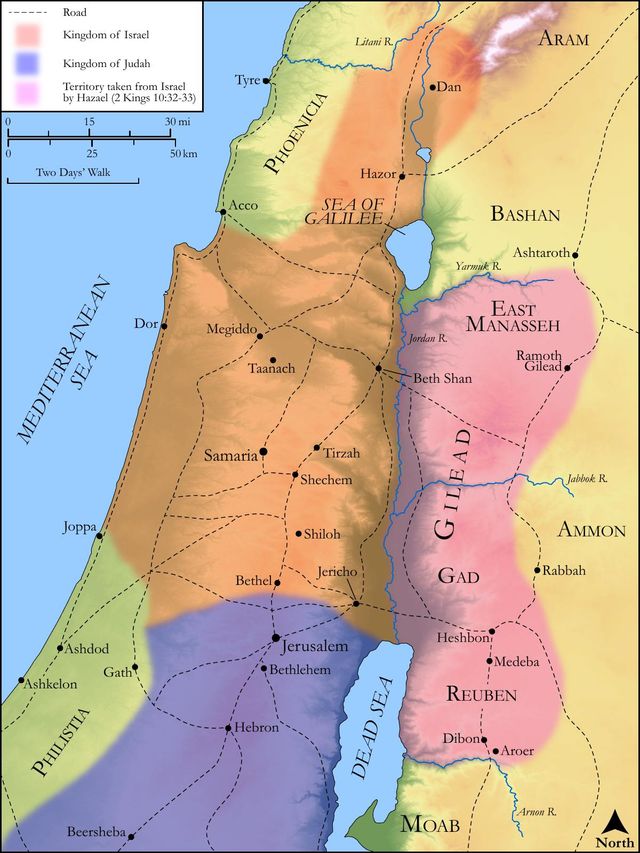
We have reason to fear that when Jehu took no heed himself to walk in God's law the people were generally as careless as he, both in their devotions and in their conversations. There was a general decay of piety and increase of profaneness; and therefore it is not strange that the next news we hear is, In those days the Lord began to cut Israel short, Kg2 10:32. Their neighbours encroached upon them on every side; they were short in their duty to God, and therefore God cut them short in their extent, wealth, and power. Hazael king of Syria was, above any other, vexatious and mischievous to them, smote them in all the coasts of Israel, particularly the countries on the other side Jordan, which lay next him, and most exposed; on these he made continual inroads, and laid them waste. Now the Reubenites and Gadites smarted for the choice which their ancestors made of an inheritance on that side Jordan, which Moses reproved them for, Num. 32. Now Hazael did what Elisha foresaw and foretold he would do. Yet, for doing it, God had a quarrel with him and with his kingdom, as we may find, Amo 1:3, Amo 1:4. Because those of Damascus have threshed Gilead with threshing instruments of iron, therefore (says God) I will send a fire into the house of Hazael, which shall devour the palaces of Benhadad.
Lastly, The conclusion of Jehu's reign, Kg2 10:34-36. Notice is taken, in general, of his might; but, because he took no heed to serve God, the memorials of his mighty enterprises and achievements are justly buried in oblivion.
Continue studying 2 Kings 10:35 across the web’s major study libraries — every link below opens this exact verse, chapter, or book on the destination site.
Read & Compare
 BibleGatewayThis verse in more than 200 translations and 70 languages.
 Bible.comThe YouVersion reader — hundreds of translations, reading plans, and highlights.
 ESV.orgCrossway's official English Standard Version reader.
 NET BibleThe NET translation with 60,000+ translators' notes on every rendering decision.
 STEP BibleTyndale House's free study tool — original text, vocabulary, and scholarly resources.
 BibliaLogos Bible Software's free web reader.
 USCCBThe New American Bible (Revised Edition) with the U.S. bishops' study notes.
Commentaries
 BibleHub CommentariesDozens of classic commentaries on this verse, gathered on one page.
 StudyLightMore than 100 commentary sets — the largest collection on the web.
 BibleRefPlain-English commentary on what this verse means, verse by verse.
 Enduring WordDavid Guzik's free commentary on this chapter, widely used by Bible teachers.
 Bible Study ToolsVerse commentary alongside Greek and Hebrew study aids.
Original Language & Research
- BibleHub InterlinearThe verse word by word — original language, transliteration, and English.
- BibleHub LexiconEvery word's original-language definition and Strong's entry.
 Blue Letter BibleDeep-study tools — Strong's numbers, concordance, and word studies.
 SefariaThe Hebrew text with Rashi and centuries of Jewish commentary.
Sermons, Hymns & Audio


TrulyRandomVerse is not affiliated with these sites and doesn’t control their content. They’re linked because they’re genuinely useful.
Summary
2 Kings 10:35 provides the formal conclusion to the reign of King Jehu, who ruled over the Northern Kingdom of Israel for twenty-eight years. This verse, employing the standard closing formula of the book of Kings, records his death, his burial in Samaria (the capital city), and the peaceful succession of his son, Jehoahaz, to the throne. It marks the transition from Jehu's divinely ordained, yet often brutal, mission to eradicate the Omride dynasty and Baal worship, initiating the next phase in the fulfillment of God's unique promise concerning Jehu's lineage.
Context
ShowHideLiterary Context
This verse serves as the concluding summary of Jehu's reign, following an extensive and dramatic narrative that began with his anointing by a prophet of Elisha in 2 Kings 9. The preceding chapters detail Jehu's swift and violent execution of God's judgment against the house of Ahab, including King Joram, King Ahaziah of Judah, and the notorious Queen Jezebel. His zealous purge continued with the slaughter of Ahab's seventy sons and the complete eradication of Baal worship from Israel, as described in 2 Kings 10. The immediate preceding verse, 2 Kings 10:34, concisely summarizes "the rest of the acts of Jehu, and all that he did, and all his might," setting the stage for the definitive end of his personal story. Verse 35 then delivers the standard obituary formula, signaling the transfer of power and preparing the reader for the subsequent reigns in the Northern Kingdom.
Historical & Cultural Context
Jehu's reign occurred during a tumultuous period in Israel's history, characterized by political instability and the pervasive influence of foreign idolatry, particularly Baal worship, largely introduced and promoted by Queen Jezebel and the Omride dynasty. Samaria, founded by Omri, served as the fortified capital of the Northern Kingdom, functioning as its administrative, political, and religious center. The phrase "slept with his fathers" is a widespread biblical euphemism for death, signifying a peaceful passing and being "gathered" to one's ancestors, often implying burial in a family tomb or ancestral burial ground. While Jehu was buried in Samaria, this still denotes a proper royal burial befitting a king. The emphasis on succession ("his son reigned in his stead") was crucial in ancient monarchies, as it underscored dynastic continuity, legitimacy, and the stability of the kingdom, especially in the often-unstable Northern Kingdom.
Key Themes
ShowHideThis verse contributes to several overarching themes prominent throughout the Books of Kings. Firstly, it powerfully highlights the mortality and transience of earthly power. Even divinely appointed kings like Jehu, who wielded immense authority and executed God's will, are ultimately subject to the universal human fate of death, contrasting sharply with God's eternal sovereignty, as beautifully articulated in Psalm 146:3-4. Secondly, the verse underscores divine faithfulness and dynastic succession. God had specifically promised Jehu that his descendants would sit on the throne of Israel for four generations because of his obedience in executing judgment against the house of Ahab (2 Kings 10:30). The succession of Jehoahaz marks the beginning of the fulfillment of this unique promise for the Northern Kingdom, which was otherwise plagued by frequent, short-lived, and often violent dynastic changes. Finally, Jehu's death signifies the conclusion of a significant era characterized by a decisive break from the direct influence of Baalism, even though the pervasive sin of Jeroboam's golden calves remained a persistent problem throughout his reign and beyond (2 Kings 10:29).
Exposition and Analysis
ShowHideKey Word Analysis
ShowHideThis primitive root means "to lie down," often used for rest, but here employed as a gentle euphemism for death, especially when paired with "with his fathers." It conveys a peaceful, natural end to life, rather than a violent or sudden demise, which is noteworthy given Jehu's own violent ascent to power. This idiom is a common formula throughout the historical books of the Old Testament for the deaths of kings, regardless of their moral standing or manner of death.
This word refers to ancestors or predecessors. In the phrase "slept with his fathers," it signifies being gathered to one's departed kin, implying a shared destiny in death and often burial in an ancestral tomb or burial ground. It connects the individual's death to the broader lineage and historical continuity of the family or dynasty, even if the specific burial location was the capital city rather than a private family plot.
Derived from a word meaning "watch-station," Samaria was the capital city of the Northern Kingdom of Israel, established by Omri. Its mention as Jehu's burial place signifies his status as a legitimate king of Israel, receiving a royal burial within the seat of power. This contrasts sharply with the often unceremonious and dishonorable deaths and burials of those he overthrew, such as Jezebel.
Verse Breakdown
ShowHide"And Jehu slept with his fathers"
This clause serves as the standard biblical euphemism for the death of a king, marking the peaceful, natural end of Jehu's life and reign. It underscores his mortality, despite his powerful and divinely sanctioned mission, reminding readers that all human authority and life are finite and ultimately subject to God's sovereign will over life and death.
"and they buried him in Samaria"
This detail confirms Jehu's royal status and the legitimacy of his reign. Samaria, as the capital, was the customary burial place for the kings of the Northern Kingdom of Israel. It indicates a proper, public burial, solidifying the end of his rule and the public acknowledgment of his passing within the kingdom's center of power.
"And Jehoahaz his son reigned in his stead"
This final clause announces the immediate and orderly succession of Jehu's son, Jehoahaz. This is a crucial element of the formulaic account of a king's death, ensuring the continuity of the monarchy. For Jehu, this succession was particularly significant as it marked the beginning of the fulfillment of God's unique promise in 2 Kings 10:30 that his sons would sit on the throne of Israel for four generations.
Literary Devices
ShowHideThe verse employs several key literary devices that enrich its meaning and narrative function. Euphemism is prominently featured in the phrase "slept with his fathers," which gently conveys the reality of death without explicit mention, softening the harshness of mortality and suggesting a peaceful end. This is a common example of Formulaic Language used consistently throughout the Books of Kings and Chronicles to mark the end of a king's reign and the transition of power, providing a predictable and structured rhythm to the historical narrative. The entire verse functions as a crucial Transition, marking the definitive conclusion of Jehu's tumultuous and impactful rule and the commencement of the next phase of Israel's history under his successor. While brief, it also carries a subtle sense of Foreshadowing, as the very act of succession, though fulfilling God's promise, implicitly points to the eventual end of even this divinely sanctioned dynasty, highlighting the ephemeral nature of all earthly kingdoms compared to God's eternal reign.
Theological and Thematic Connections
ShowHideThe death and succession of Jehu, as recorded in this verse, powerfully illustrate the overarching biblical theme of God's sovereignty over human history and the transience of all earthly power. Even a king chosen by God for a specific, monumental task like Jehu's is ultimately subject to the universal decree of mortality. His reign, though divinely appointed and successful in its primary mission, had a finite end, reminding us that no human leader, however mighty, reigns eternally. Yet, within this mortality, God's faithfulness is strikingly evident, as the succession of Jehoahaz begins the fulfillment of the specific promise made to Jehu regarding his dynasty. This tension between human finitude and divine constancy is a recurring motif throughout the Old Testament, continually pointing to a greater, eternal King whose reign is without end.
Reflection and Application
ShowHideThe brief account of Jehu's passing and his son's succession offers profound lessons for contemporary believers. It serves as a stark reminder of the transience of all earthly power and life. No matter how influential, how divinely appointed, or how successful one might be in their earthly endeavors, the day will come when they, too, "sleep with their fathers." This truth should cultivate a deep sense of humility in leadership and in all aspects of life, shifting our focus from accumulating temporal power or recognition to living in light of eternity. It calls us to consider the legacy we are building—not merely in terms of worldly accomplishments, but in terms of faithfulness to God's call and the eternal impact we have on His kingdom. Ultimately, our hope and trust must rest not in human leaders, institutions, or our own achievements, but in the eternal, unchanging sovereignty of God. We are encouraged to live lives of purpose, knowing that our time is finite, and to steward our influence for God's glory, recognizing that true legacy is found in obedience and in pointing others to the King who reigns forever.
Questions for Reflection
ShowHideFAQ
ShowHideWhat does "slept with his fathers" mean in the Bible?
ShowHide"Slept with his fathers" is a common euphemism used throughout the Old Testament, particularly in the Books of Kings and Chronicles, to describe the death of a king or patriarch. It implies a peaceful, natural passing and being gathered to one's ancestors in death. It does not necessarily refer to a specific burial place alongside literal fathers, but rather to the general concept of joining the deceased generations. It is a respectful and gentle way to denote the end of a life and reign, often used regardless of the actual manner of death.
Was Jehu a "good" king in God's eyes?
ShowHideJehu's reign is presented with a mixed assessment in the biblical narrative, highlighting the complexities of divine judgment and human obedience. He was divinely appointed by God through a prophet of Elisha (2 Kings 9:6) to execute judgment against the wicked house of Ahab and to eradicate Baal worship from Israel. In this specific mission, he was zealous and successful, for which God commended him and promised his dynasty would reign for four generations (2 Kings 10:30). However, Jehu failed to depart from the sins of Jeroboam, particularly the worship of the golden calves at Bethel and Dan (2 Kings 10:29), indicating a lack of full obedience and a failure to completely reform Israel's religious life. Later, the prophet Hosea even pronounces judgment on Jehu's house for the violent nature of the "blood of Jezreel" (Hosea 1:4), suggesting that while his actions fulfilled God's decree, his methods or motives were not entirely pure.
How long did Jehu's dynasty last, and why?
ShowHideJehu's dynasty lasted for precisely four generations, as explicitly promised by God in 2 Kings 10:30: "Because thou hast done well in executing that which is right in mine eyes, and hast done unto the house of Ahab according to all that was in mine heart, thy children of the fourth generation shall sit on the throne of Israel." This was a unique promise of dynastic stability for the Northern Kingdom, which was otherwise characterized by frequent coups and short-lived ruling houses. The four kings in Jehu's line were Jehu, Jehoahaz, Joash, and Jeroboam II. After Jeroboam II, his son Zechariah reigned for only six months before being assassinated, ending the promised four-generation dynasty (2 Kings 15:8-12). The reason for the longevity of Jehu's dynasty, despite his partial obedience, was God's faithfulness to His specific promise given in response to Jehu's zeal against Baal worship.
Christ-Centered Fulfillment
ShowHideThe account of King Jehu's death and the succession of his son, Jehoahaz, while a historical record of an earthly king, powerfully points forward to the ultimate, eternal King, Jesus Christ. Jehu, despite being divinely anointed and successful in his mission to purge Israel of Baal worship, was a mortal man whose reign was finite and whose obedience was imperfect (2 Kings 10:29). He "slept with his fathers," succumbing to the universal reality of death. In stark contrast, Jesus Christ, the true Son of God, did not merely "sleep with His fathers" in the sense of succumbing to death's finality. Though He truly died and was buried, He conquered death, rising triumphantly from the grave (1 Corinthians 15:26). His anointing is not by a prophet, but by the Holy Spirit, and His mission is not merely to purge a nation of idolatry, but to take away the sin of the world as the Lamb of God. Unlike Jehu, whose dynasty was limited to four generations, Christ's reign is eternal, His throne is forever, and His kingdom will have no end (Hebrews 1:8; Revelation 11:15). He is the perfect King, whose obedience was complete, and in whom all promises of a righteous and everlasting kingdom find their ultimate fulfillment.