


1 Thessalonians 4:5
Bible text: King James Version (1769 Blayney text) · Public domain
Bible text: Berean Standard Bible · Public domain
Bible text: American Standard Version (1901) · Public domain
Bible text: World English Bible, Messianic edition · Public domain
Bible text: Geneva Bible (1599) · Public domain
Bible text: Young's Literal Translation · Public domain
- μὴmēnotG3361PRT-NNegative Particle Negative
- ἐνeninG1722PREPPreposition
- πάθειpathei[the] passionG3806N-DSNNoun Dative Singular Neuter
- ἐπιθυμίαςepithumiasof lustG1939N-GSFNoun Genitive Singular Feminine
- καθάπερkathaperasG2509CONJConjunction
- καὶkaialsoG2532CONJConjunction
- τὰtatheG3588T-NPNDefinite article Nominative Plural Neuter
- ἔθνηethnēGentilesG1484N-NPNNoun Nominative Plural Neuter
- τὰta<the>G3588T-NPNDefinite article Nominative Plural Neuter
- μὴmēnotG3361PRT-NNegative Particle Negative
- εἰδόταeidotaknowingG1492V-RAP-NPNVerb Perfect Active Participle Nominative Plural Neuter
- τὸνton<the>G3588T-ASMDefinite article Accusative Singular Masculine
- θεόν·theonGodG2316N-ASM-TNoun Accusative Singular Masculine Title
English is a literal word-by-word gloss of the Greek, not the KJV's wording. Why?
This is the original text the KJV's translators worked from — each Greek word with its own literal English meaning in this verse, prepared by scholars at Tyndale House, Cambridge. The KJV translates whole sentences, not word by word, so its wording differs: one Greek word can become several English words, and the KJV may choose “charity” where the gloss reads “love”. Both are faithful — they answer different questions. For the KJV's own rendering, switch to the KJV text.
Details
See on the biblical-era maps

Study this verse
Public-domain commentary
Matthew Henry
From his Commentary on the Whole Bible. Henry comments on passages, not single verses — this entry covers 1 Thessalonians 4:1–8. His three-level outline is real structure in the source text, so it is rendered as structure.
Here we have,
I.An exhortation to abound in holiness, to abound more and more in that which is good, Th1 4:1, Th1 4:2. We may observe,
1.The manner in which the exhortation is given - very affectionately. The apostle entreats them as brethren; he calls them so, and loved them as such. Because his love to them was very great, he exhorts them very earnestly: We beseech and exhort you. The apostle was unwilling to take any denial, and therefore repeats his exhortation again and again.
2.The matter of his exhortation - that they would abound more and more in holy walking, or excel in those things that are good, in good works. Their faith was justly famed abroad, and they were already examples to other churches: yet the apostle would have them yet further to excel others, and to make further progress in holiness. Note,
(1.)Those who most excel others fall short of perfection. The very best of us should forget those things which are behind, and reach forth unto those things which are before.
(2.)It is not enough that we abide in the faith of the gospel, but we must abound in the work of faith. We must not only persevere to the end, but we should grow better, and walk more evenly and closely with God.
3.The arguments with which the apostle enforces his exhortation.
(1.)They had been informed of their duty. They knew their Master's will, and could not plead ignorance as an excuse. Now as faith, so knowledge, is dead without practice. They had received of those who had converted them to Christianity, or been taught of them, how they ought to walk. Observe, The design of the gospel is to teach men not only what they should believe, but also how they ought to live; not so much to fill men's minds with notions as to regulate their temper and behaviour. The apostle taught them how to walk, not how to talk. To talk well without living well will never bring us to heaven: for the character of those who are in Christ Jesus is this: They walk not after the flesh, but after the Spirit.
(2.)Another argument is that the apostle taught and exhorted them in the name, or by the authority, of the Lord Jesus Christ. He was Christ's minster and ambassador, declaring to them what was the will and command of the Lord Jesus.
(3.)Another argument is this. Herein they would please God. Holy walking is most pleasing to the holy God, who is glorious in holiness. This ought to be the aim and ambition of every Christian, to please God and to be accepted of him. We should not be men-pleasers, nor flesh-pleasers, but should walk so as to please God.
(4.)The rule according to which they ought to walk and act - the commandments they had given them by the Lord Jesus Christ, which were the commandments of the Lord Jesus Christ himself, because given by authority and direction from him and such as were agreeable to his will. The apostles of our Lord Jesus Christ were only commissioned by him to teach men to observe all things whatsoever he had commanded them, Mat 28:20. Though they had great authority from Christ, yet that was to teach men what Christ had commanded, not to give forth commandments of their own. They did not act as lords over God's heritage (Pe1 5:3), nor should any do so that pretend to be their successors. The apostle could appeal to the Thessalonians, who knew what commandments he gave them, that they were no other than what he had received from the Lord Jesus.
II.A caution against uncleanness, this being a sin directly contrary to sanctification, or that holy walking to which he so earnestly exhorts them. This caution is expressed, and also enforced by many arguments,
1.It is expressed in these words: That you should abstain from fornication (Th1 4:3), by which we are to understand all uncleanness whatsoever, either in a married or unmarried state. Adultery is of course included, though fornication is particularly mentioned. And other sorts of uncleanness are also forbidden, of which it is a shame even to speak, though they are done by too many in secret. All that is contrary to chastity in heart, speech, and behaviour, is contrary to the command of God in the decalogue, and contrary to that holiness which the gospel requires.
2.There are several arguments to enforce this caution. As,
(1.)This branch of sanctification in particular is the will of God, Th1 4:3. It is the will of God in general that we should be holy, because he that called us is holy, and because we are chosen unto salvation through the sanctification of the Spirit; and not only does God require holiness in the heart, but also purity in our bodies, and that we should cleanse ourselves from all filthiness both of flesh and spirit, Co2 7:1. Whenever the body is, as it ought to be, devoted to God, and dedicated and set apart for him, it should be kept clean and pure for his service; and, as chastity is one branch of our sanctification, so this is one thing which God commands in his law, and what his grace effects in all true believers.
(2.)This will be greatly for our honour: so much is plainly implied, Th1 4:4. Whereas the contrary will be a great dishonour. And his reproach shall not be wiped away, Pro 6:33. The body is here called the vessel of the soul, which dwells therein (so Sa1 21:5), and it must be kept pure from defiling lusts. Every one should be careful in this matter, as he values his own honour and will not be contemptible on this account, that his inferior appetites and passions gain not the ascendant, tyrannizing over his reason and conscience, and enslaving the superior faculties of his soul. What can be more dishonourable than for a rational soul to be enslaved by bodily affections and brutal appetites?
(3.)To indulge the lust of concupiscence is to live and act like heathens? Even as the Gentiles who know not God, Th1 4:5. The Gentiles, and especially the Grecians, were commonly guilty of some sins of uncleanness which were not so evidently forbidden by the light of nature. But they did not know God, nor his mind and will, so well as Christians know, and should know, this his will, namely our sanctification in this branch of it. It is not so much to be wondered at, therefore, if the Gentiles indulge their fleshly appetites and lusts; but Christians should not walk as unconverted Gentiles, in lasciviousness, lusts, excess of wine, revellings, banquetings, etc. (Pe1 4:3), because those who are in Christ have crucified the flesh with its affections and lusts.
(4.)The sin of uncleanness, especially adultery, is a great piece of injustice that God will be the avenger of; so we may understand those words, That no man go beyond or defraud his brother (Th1 4:6), in any matter - en tō pragmati, in this matter of which the apostle is speaking in the preceding and following verses, namely, the sin of uncleanness. Some understand these words as a further warning and caution against injustice and oppression, all fraud and deceit in our dealings with men, which are certainly criminal, and contrary to the gospel. And Christians should not impose upon the ignorance and necessity of those they deal with, and so go beyond them, nor should they by equivocations or lying arts defraud them; and although this may be practised by some and lie long undiscovered, and so go unpunished among men, yet the righteous God will render a recompence. But the meaning may rather be to show the injustice and wrong that in many cases are done by the sin of uncleanness. Not only are fornication and other acts of uncleanness sins against his own body who commits them (Co1 6:18), not only are they very injurious to the sinner himself both in soul and body, but sometimes they are very injurious, and no less than defrauding, acts of injustice to others, particularly to those who are joined together in the marriage covenant and to their posterity. And, as this sin is of such a heinous nature, so it follows that God will be the avenger of it. Whoremongers and adulterers God will judge, Heb 13:4. This the apostle had forewarned and testified by his gospel, which, as it contained exceedingly great and precious promises, so also it revealed from heaven the wrath of God against all ungodliness and unrighteousness among men, Rom 1:18.
(5.)The sin of uncleanness is contrary to the nature and design of our Christian calling: For God hath called us not unto uncleanness, but unto holiness, Th1 4:7. The law of God forbids all impurity, and the gospel requires the greatest purity; it calls us from uncleanness unto holiness.
(6.)The contempt therefore of God's law and gospel is the contempt of God himself: He that despises despises God, not man only. Some might possibly make light of the precepts of purity and holiness, because they heard them from men like themselves; but the apostle lets them know that they were God's commands, and to violate them was no less than to despise God. He adds, God hath given Christians his Spirit, intimating that all sorts of uncleanness do in an especial manner grieve the Holy Spirit, and will provoke him to withdraw from us; and also the Holy Spirit is given unto us to arm us against these sins, and to help us to mortify these deeds of the body, that we may live, Rom 8:13.
Historical interpretation
Three Centuries of Reception
3 surviving comments on this verse. Each one is dated, so this reads as a timeline rather than a list.
Select a marker to jump to its quote. Markers stagger vertically where authors wrote within a few decades of each other.
You ought therefore to "hate those that hate God, and to waste away [with grief] on account of His enemies." I do not mean that you should beat them or persecute them, as do the Gentiles "that know not the Lord and God; " but that you should regard them as your enemies, and separate yourselves from them, while yet you admonish them, and exhort them to repentance, if it may be they will hear, if it may be they will submit themselves. For our God is a lover of mankind, and "will have all men to be saved, and to come to the knowledge of the truth."
In what way? "Not in the lust of concupiscence, even as the Gentiles." Concupiscence, however, is not ascribed to marriage even among the Gentiles, but to extravagant, unnatural, and enormous sins.
"That each one of you know how to possess himself of his own vessel in sanctification and honor, not in the passion of lust, even as the Gentiles which know not God."
He says, "That each one of you know how to possess himself of his own vessel." It is, then, a matter to be learnt, and that diligently, not to be wanton. But we possess our vessel, when it is pure; when it is impure, sin possesses it. And reasonably. For it does not do the things which we wish, but what sin commands. "Not in the passion of lust," he says. Here he shows also the manner, according to which one ought to be temperate; that we should cut off the passions of lust. For luxury, and wealth, and idleness, and sloth, and ease, and all such things, lead us on to irregular lust. "Even as the Gentiles," he says, "which know not God." For such are they who do not expect that they shall suffer punishment.
Continue studying 1 Thessalonians 4:5 across the web’s major study libraries — every link below opens this exact verse, chapter, or book on the destination site.
Read & Compare
 BibleGatewayThis verse in more than 200 translations and 70 languages.
 Bible.comThe YouVersion reader — hundreds of translations, reading plans, and highlights.
 ESV.orgCrossway's official English Standard Version reader.
 NET BibleThe NET translation with 60,000+ translators' notes on every rendering decision.
 STEP BibleTyndale House's free study tool — original text, vocabulary, and scholarly resources.
 BibliaLogos Bible Software's free web reader.
 USCCBThe New American Bible (Revised Edition) with the U.S. bishops' study notes.
Commentaries
 BibleHub CommentariesDozens of classic commentaries on this verse, gathered on one page.
 StudyLightMore than 100 commentary sets — the largest collection on the web.
 BibleRefPlain-English commentary on what this verse means, verse by verse.
 Enduring WordDavid Guzik's free commentary on this chapter, widely used by Bible teachers.
 Bible Study ToolsVerse commentary alongside Greek and Hebrew study aids.
Original Language & Research
- BibleHub InterlinearThe verse word by word — original language, transliteration, and English.
- BibleHub LexiconEvery word's original-language definition and Strong's entry.
 Blue Letter BibleDeep-study tools — Strong's numbers, concordance, and word studies.
 CNTR CollationThe earliest Greek manuscripts of this verse, collated letter by letter.
Sermons, Hymns & Audio


TrulyRandomVerse is not affiliated with these sites and doesn’t control their content. They’re linked because they’re genuinely useful.
Summary
First Thessalonians 4:5 serves as a powerful exhortation to believers, urging them to live a life of sexual purity and self-control, fundamentally distinct from the unrestrained desires and moral degradation characteristic of those who do not possess a true knowledge of God. This verse underscores the transformative power of the Gospel, calling Christians to embody holiness as a direct reflection of their relationship with the living God, thereby setting them apart from the pagan Gentiles.
Context
ShowHideLiterary Context
This verse is embedded within Paul's practical instructions to the Thessalonian church concerning Christian living, following his commendation of their faith and love in the preceding chapters. In 1 Thessalonians 4:1-2, Paul transitions from theological exposition to ethical exhortation, urging them to "walk and to please God." The immediate context, 1 Thessalonians 4:3-8, specifically addresses sexual purity and sanctification, making it clear that abstaining from sexual immorality is "the will of God." Verse 5, therefore, provides a crucial negative contrast, illustrating how not to live, by comparing Christian conduct to the unbridled passions of the Gentiles. This section culminates in a warning against defrauding one's brother and emphasizes that God has called believers to holiness, not impurity.
Historical & Cultural Context
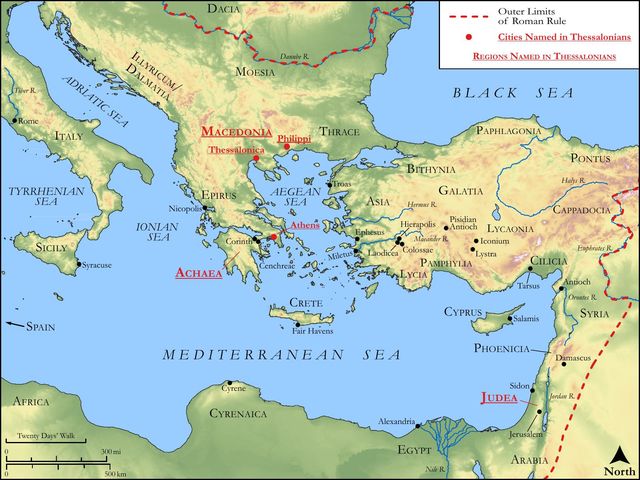
The city of Thessalonica was a bustling port city in Macedonia, under Rome, where sexual morality differed significantly from biblical standards. Pagan religions often incorporated sexual acts into their worship, and prostitution was common and widely accepted. The prevailing philosophy of the day, particularly Epicureanism, often promoted the pursuit of pleasure, including sensual indulgence, as the highest good. Against this backdrop, Paul's call for sexual purity was radical and counter-cultural. The term "Gentiles" (Greek: ethne) referred to the non-Jewish nations, who, from a Jewish and early Christian perspective, were characterized by idolatry, spiritual ignorance, and often, moral depravity, as vividly described in Romans 1:24-32. Therefore, for the Thessalonian believers, distinguishing themselves from Gentile practices was not merely a moral guideline but a fundamental aspect of their new identity in Christ and their witness to the surrounding world.
Key Themes
ShowHideFirst Thessalonians 4:5 contributes significantly to several key themes within the letter and broader Pauline theology. Firstly, Sanctification and Holiness are paramount, as Paul explicitly states in 1 Thessalonians 4:3 that God's will is their sanctification, which includes sexual purity. Secondly, the theme of Christian Distinction is highlighted; believers are called to live a life that visibly sets them apart from the world, reflecting their new nature in Christ. This distinction is not merely external but stems from an internal transformation rooted in the knowledge of God. Thirdly, the verse underscores the importance of Knowledge of God as the foundation for ethical living. The contrast drawn with "Gentiles which know not God" implies that true knowledge of God leads to self-control and moral uprightness, whereas spiritual ignorance often results in unchecked desires and moral decay. This theme resonates with the broader biblical principle that knowing God transforms one's character and conduct, enabling believers to walk by the Spirit rather than fulfilling the desires of the flesh.
Exposition and Analysis
ShowHideKey Word Analysis
ShowHideFrom the alternate of πάσχω; properly, suffering ("pathos"), i.e. (subjectively) a passion (especially concupiscence). In this context, páthos refers to strong, often overwhelming, and uncontrolled desires or passions, particularly those that lead to sin. It signifies a state of being driven by internal urges rather than by reason or divine will, often resulting in suffering or moral degradation.
From ἐπιθυμέω; a longing (especially for what is forbidden). While epithymía can denote a neutral or even positive desire, when paired with páthos and contrasted with knowing God, it specifically refers to illicit or inordinate cravings, particularly those of a sexual nature. It describes a strong, often sinful, yearning that goes against God's design for human sexuality and relationships.
Probably from ἔθω; a race (as of the same habit), i.e. a tribe; specially, a foreign (non-Jewish) one (usually, by implication, pagan). In this verse, éthnos refers to the non-Jewish peoples, who, from a biblical perspective, were generally outside the covenant relationship with God and were characterized by idolatry and a lack of divine revelation. Their moral practices, including sexual immorality, were often seen as a direct consequence of their spiritual ignorance.
A primary verb; used only in certain past tenses, the others being borrowed from the equivalent ὀπτάνομαι and ὁράω; properly, to see (literally or figuratively); by implication, (in the perfect tense only) to know. Here, eídō signifies a deep, experiential, and transformative knowledge, not merely intellectual awareness. The Gentiles "know not God" in the sense that they do not have a saving, relational knowledge of Him that would inform and constrain their desires and actions.
Verse Breakdown
ShowHide"Not in the lust of concupiscence"
This phrase serves as a direct prohibition against living under the dominion of uncontrolled and illicit desires. The combination of "lust" (páthos) and "concupiscence" (epithymía) emphasizes the intensity and sinful nature of these desires, particularly those related to sexual immorality. Believers are called to exercise self-control and discipline over their passions, rather than being enslaved by them, recognizing that such desires are contrary to God's holy character and His will for their lives.
"even as the Gentiles"
This clause provides a stark point of comparison and contrast. The lifestyle of the Gentiles, characterized by their unrestrained passions, is presented as the antithesis of how believers should live. It implies that the prevailing cultural norms and practices of the pagan world, particularly in matters of sexual ethics, are not to be emulated or adopted by those who follow Christ. This highlights the call to a distinctive, counter-cultural way of life for Christians.
"which know not God"
This final clause explains the root cause of the Gentiles' moral degradation. Their indulgence in "the lust of concupiscence" is directly attributed to their lack of true, saving knowledge of God. Without a relationship with the Creator, and without His moral law revealed to them, humanity is prone to follow its own fallen desires. Conversely, for believers, knowing God provides the ultimate basis, motivation, and empowerment for living a life of holiness and self-control, demonstrating that true knowledge of God is inextricably linked to righteous conduct.
Literary Devices
ShowHideThe primary literary device employed in 1 Thessalonians 4:5 is Contrast. Paul explicitly juxtaposes the expected conduct of believers ("not in the lust of concupiscence") with the typical behavior of "the Gentiles which know not God." This sharp distinction serves to highlight the radical transformation that occurs in a person's life upon coming to faith in Christ. The phrase also contains an implicit Metonymy, where "the Gentiles" stands for the entire pagan worldview and its associated moral standards, which are diametrically opposed to Christian ethics. By presenting this contrast, Paul not only issues a negative command but also positively reinforces the unique identity and calling of the Thessalonian believers as God's sanctified people.
Theological and Thematic Connections
ShowHideFirst Thessalonians 4:5 is deeply rooted in the biblical theology of holiness and the distinctiveness of God's people. It affirms that a true relationship with God necessarily transforms one's desires and conduct, particularly in areas of sexuality. The verse underscores the fundamental difference between those who are spiritually enlightened by God and those who remain in spiritual darkness, implying that genuine knowledge of God leads to a life of self-control and purity, while ignorance of Him results in moral degradation. This aligns with the broader biblical narrative where God calls His people to be set apart, reflecting His character to a world that does not know Him. The pursuit of holiness is not merely a set of rules but an outflow of a transformed heart, enabled by the Holy Spirit, demonstrating the reality of God's presence and power in the believer's life.
Reflection and Application
ShowHideIn a contemporary world increasingly characterized by the normalization of sexual promiscuity and the pervasive influence of media that glorifies unrestrained desires, 1 Thessalonians 4:5 remains profoundly relevant. It challenges believers to cultivate a radical counter-cultural lifestyle, one that is not conformed to the patterns of this world but is transformed by the renewing of their minds. This verse calls for intentional self-control and a conscious commitment to purity, recognizing that our bodies are temples of the Holy Spirit and are to be used for God's glory, not for selfish indulgence. Living "not in the lust of concupiscence" means actively pursuing holiness in thought, word, and deed, understanding that our conduct serves as a powerful witness to a world that desperately needs to see the difference that knowing God makes. It compels us to examine our desires, our media consumption, and our relationships, ensuring that they align with God's holy standards, thereby reflecting His light in a darkened world.
Questions for Reflection
ShowHideFAQ
ShowHideWhat does "lust of concupiscence" specifically refer to in this verse?
ShowHideThe phrase "lust of concupiscence" (Greek: páthos epithymías) refers to strong, often illicit or inordinate desires, particularly those of a sexual nature. "Lust" (páthos) denotes uncontrolled passion or suffering, while "concupiscence" (epithymía) signifies a longing or craving, which, in this context, is for what is forbidden or contrary to God's will. Together, they describe intense, sinful passions that lead to sexual immorality. Paul is urging believers to avoid being driven by these unholy desires, contrasting their conduct with the unrestrained indulgence common among those who do not know God. This call to purity is foundational to Christian living, as detailed in 1 Thessalonians 4:3-4.
Why does Paul contrast believers with "the Gentiles which know not God"?
ShowHidePaul uses "the Gentiles which know not God" as a stark contrast to highlight the transformative impact of knowing God. In that day, the Gentiles (non-Jews) were often characterized by idolatry, spiritual ignorance, and moral depravity, particularly in sexual matters, as their worldview lacked the moral constraints and divine revelation found in the Judeo-Christian tradition. By drawing this comparison, Paul emphasizes that believers, having come to know the true God, are called to a radically different lifestyle—one of holiness, self-control, and honor—that sets them apart from the prevailing cultural norms. This distinction serves as a powerful witness to the world, demonstrating the life-changing power of the Gospel and the moral implications of a genuine relationship with God. The contrast underscores that a lack of true knowledge of God often leads to moral degradation, as seen in passages like Romans 1:28-32.
Christ-Centered Fulfillment
ShowHideFirst Thessalonians 4:5, while a direct command to believers, finds its ultimate fulfillment and empowerment in Christ. The call to live "not in the lust of concupiscence, even as the Gentiles which know not God" is made possible because of Christ's redemptive work, which delivers us from the dominion of sin and empowers us through the Holy Spirit. Jesus Himself lived a life of perfect purity and self-control, serving as the ultimate example for believers. His sacrifice on the cross not only atoned for our past sins, including those stemming from unholy desires, but also broke the power of sin in our lives, enabling us to walk in newness of life (Romans 6:4). Furthermore, the Holy Spirit, whom Christ sent, indwells believers, providing the divine power necessary to mortify the deeds of the flesh and cultivate self-control, a fruit of the Spirit (Galatians 5:22-23). Therefore, our ability to live distinctly from the world, particularly in matters of sexual purity, is not by our own strength but by the grace and power of Christ working within us, transforming us into His likeness and enabling us to live as children of light (Ephesians 5:3-5). This call to holiness is a reflection of our union with Christ, who makes us holy and blameless before God (Colossians 1:22).