


1 Thessalonians 4:4
Bible text: King James Version (1769 Blayney text) · Public domain
Bible text: Berean Standard Bible · Public domain
Bible text: American Standard Version (1901) · Public domain
Bible text: World English Bible, Messianic edition · Public domain
Bible text: Geneva Bible (1599) · Public domain
Bible text: Young's Literal Translation · Public domain
- εἰδέναιeidenaito knowG1492V-RANVerb Perfect Active Infinitive
- ἕκαστονhekastoneachG1538A-ASMAdjective Accusative Singular Masculine
- ὑμῶνhumōnof you [how]G4771P-2GPPersonal pronoun Genitive 2nd Plural
- τὸtotheG3588T-ASNDefinite article Accusative Singular Neuter
- ἑαυτοῦhe'autouhis ownG1438F-3GSMReflexive pronoun Genitive 3rd Singular Masculine
- σκεῦοςskeuosvesselG4632N-ASNNoun Accusative Singular Neuter
- κτᾶσθαιktasthaito controlG2932V-PNNVerb Present Middle Or Passive Deponent Infinitive
- ἐνeninG1722PREPPreposition
- ἁγιασμῷhagiasmōholinessG38N-DSMNoun Dative Singular Masculine
- καὶkaiandG2532CONJConjunction
- τιμῇtimēahonorG5092N-DSFNoun Dative Singular Feminine
English is a literal word-by-word gloss of the Greek, not the KJV's wording. Why?
This is the original text the KJV's translators worked from — each Greek word with its own literal English meaning in this verse, prepared by scholars at Tyndale House, Cambridge. The KJV translates whole sentences, not word by word, so its wording differs: one Greek word can become several English words, and the KJV may choose “charity” where the gloss reads “love”. Both are faithful — they answer different questions. For the KJV's own rendering, switch to the KJV text.
Details
See on the biblical-era maps

Study this verse
Public-domain commentary
Matthew Henry
From his Commentary on the Whole Bible. Henry comments on passages, not single verses — this entry covers 1 Thessalonians 4:1–8. His three-level outline is real structure in the source text, so it is rendered as structure.
Here we have,
I.An exhortation to abound in holiness, to abound more and more in that which is good, Th1 4:1, Th1 4:2. We may observe,
1.The manner in which the exhortation is given - very affectionately. The apostle entreats them as brethren; he calls them so, and loved them as such. Because his love to them was very great, he exhorts them very earnestly: We beseech and exhort you. The apostle was unwilling to take any denial, and therefore repeats his exhortation again and again.
2.The matter of his exhortation - that they would abound more and more in holy walking, or excel in those things that are good, in good works. Their faith was justly famed abroad, and they were already examples to other churches: yet the apostle would have them yet further to excel others, and to make further progress in holiness. Note,
(1.)Those who most excel others fall short of perfection. The very best of us should forget those things which are behind, and reach forth unto those things which are before.
(2.)It is not enough that we abide in the faith of the gospel, but we must abound in the work of faith. We must not only persevere to the end, but we should grow better, and walk more evenly and closely with God.
3.The arguments with which the apostle enforces his exhortation.
(1.)They had been informed of their duty. They knew their Master's will, and could not plead ignorance as an excuse. Now as faith, so knowledge, is dead without practice. They had received of those who had converted them to Christianity, or been taught of them, how they ought to walk. Observe, The design of the gospel is to teach men not only what they should believe, but also how they ought to live; not so much to fill men's minds with notions as to regulate their temper and behaviour. The apostle taught them how to walk, not how to talk. To talk well without living well will never bring us to heaven: for the character of those who are in Christ Jesus is this: They walk not after the flesh, but after the Spirit.
(2.)Another argument is that the apostle taught and exhorted them in the name, or by the authority, of the Lord Jesus Christ. He was Christ's minster and ambassador, declaring to them what was the will and command of the Lord Jesus.
(3.)Another argument is this. Herein they would please God. Holy walking is most pleasing to the holy God, who is glorious in holiness. This ought to be the aim and ambition of every Christian, to please God and to be accepted of him. We should not be men-pleasers, nor flesh-pleasers, but should walk so as to please God.
(4.)The rule according to which they ought to walk and act - the commandments they had given them by the Lord Jesus Christ, which were the commandments of the Lord Jesus Christ himself, because given by authority and direction from him and such as were agreeable to his will. The apostles of our Lord Jesus Christ were only commissioned by him to teach men to observe all things whatsoever he had commanded them, Mat 28:20. Though they had great authority from Christ, yet that was to teach men what Christ had commanded, not to give forth commandments of their own. They did not act as lords over God's heritage (Pe1 5:3), nor should any do so that pretend to be their successors. The apostle could appeal to the Thessalonians, who knew what commandments he gave them, that they were no other than what he had received from the Lord Jesus.
II.A caution against uncleanness, this being a sin directly contrary to sanctification, or that holy walking to which he so earnestly exhorts them. This caution is expressed, and also enforced by many arguments,
1.It is expressed in these words: That you should abstain from fornication (Th1 4:3), by which we are to understand all uncleanness whatsoever, either in a married or unmarried state. Adultery is of course included, though fornication is particularly mentioned. And other sorts of uncleanness are also forbidden, of which it is a shame even to speak, though they are done by too many in secret. All that is contrary to chastity in heart, speech, and behaviour, is contrary to the command of God in the decalogue, and contrary to that holiness which the gospel requires.
2.There are several arguments to enforce this caution. As,
(1.)This branch of sanctification in particular is the will of God, Th1 4:3. It is the will of God in general that we should be holy, because he that called us is holy, and because we are chosen unto salvation through the sanctification of the Spirit; and not only does God require holiness in the heart, but also purity in our bodies, and that we should cleanse ourselves from all filthiness both of flesh and spirit, Co2 7:1. Whenever the body is, as it ought to be, devoted to God, and dedicated and set apart for him, it should be kept clean and pure for his service; and, as chastity is one branch of our sanctification, so this is one thing which God commands in his law, and what his grace effects in all true believers.
(2.)This will be greatly for our honour: so much is plainly implied, Th1 4:4. Whereas the contrary will be a great dishonour. And his reproach shall not be wiped away, Pro 6:33. The body is here called the vessel of the soul, which dwells therein (so Sa1 21:5), and it must be kept pure from defiling lusts. Every one should be careful in this matter, as he values his own honour and will not be contemptible on this account, that his inferior appetites and passions gain not the ascendant, tyrannizing over his reason and conscience, and enslaving the superior faculties of his soul. What can be more dishonourable than for a rational soul to be enslaved by bodily affections and brutal appetites?
(3.)To indulge the lust of concupiscence is to live and act like heathens? Even as the Gentiles who know not God, Th1 4:5. The Gentiles, and especially the Grecians, were commonly guilty of some sins of uncleanness which were not so evidently forbidden by the light of nature. But they did not know God, nor his mind and will, so well as Christians know, and should know, this his will, namely our sanctification in this branch of it. It is not so much to be wondered at, therefore, if the Gentiles indulge their fleshly appetites and lusts; but Christians should not walk as unconverted Gentiles, in lasciviousness, lusts, excess of wine, revellings, banquetings, etc. (Pe1 4:3), because those who are in Christ have crucified the flesh with its affections and lusts.
(4.)The sin of uncleanness, especially adultery, is a great piece of injustice that God will be the avenger of; so we may understand those words, That no man go beyond or defraud his brother (Th1 4:6), in any matter - en tō pragmati, in this matter of which the apostle is speaking in the preceding and following verses, namely, the sin of uncleanness. Some understand these words as a further warning and caution against injustice and oppression, all fraud and deceit in our dealings with men, which are certainly criminal, and contrary to the gospel. And Christians should not impose upon the ignorance and necessity of those they deal with, and so go beyond them, nor should they by equivocations or lying arts defraud them; and although this may be practised by some and lie long undiscovered, and so go unpunished among men, yet the righteous God will render a recompence. But the meaning may rather be to show the injustice and wrong that in many cases are done by the sin of uncleanness. Not only are fornication and other acts of uncleanness sins against his own body who commits them (Co1 6:18), not only are they very injurious to the sinner himself both in soul and body, but sometimes they are very injurious, and no less than defrauding, acts of injustice to others, particularly to those who are joined together in the marriage covenant and to their posterity. And, as this sin is of such a heinous nature, so it follows that God will be the avenger of it. Whoremongers and adulterers God will judge, Heb 13:4. This the apostle had forewarned and testified by his gospel, which, as it contained exceedingly great and precious promises, so also it revealed from heaven the wrath of God against all ungodliness and unrighteousness among men, Rom 1:18.
(5.)The sin of uncleanness is contrary to the nature and design of our Christian calling: For God hath called us not unto uncleanness, but unto holiness, Th1 4:7. The law of God forbids all impurity, and the gospel requires the greatest purity; it calls us from uncleanness unto holiness.
(6.)The contempt therefore of God's law and gospel is the contempt of God himself: He that despises despises God, not man only. Some might possibly make light of the precepts of purity and holiness, because they heard them from men like themselves; but the apostle lets them know that they were God's commands, and to violate them was no less than to despise God. He adds, God hath given Christians his Spirit, intimating that all sorts of uncleanness do in an especial manner grieve the Holy Spirit, and will provoke him to withdraw from us; and also the Holy Spirit is given unto us to arm us against these sins, and to help us to mortify these deeds of the body, that we may live, Rom 8:13.
Historical interpretation
Three Centuries of Reception
5 surviving comments on this verse. Each one is dated, so this reads as a timeline rather than a list.
Select a marker to jump to its quote. Markers stagger vertically where authors wrote within a few decades of each other.
It is quite possible to pass decisive sentences on vessels and on instruments, to the extent that they participate in the merits of their proprietors and employers.… For every vessel or every instrument becomes useful by external manipulation, consisting as it does of material which is quite extraneous to the substance of the human owner or employer. However, the flesh, being conceived, formed and generated along with the soul from its earliest existence in the womb, is mixed up with the soul likewise in all of its operations. For, although it is called “a vessel” by the apostle, such as he commands to be treated “with honor,” yet it is designated by the same apostle as “the outward man.” This is the clay, of course, which at first was inscribed with the title of a man, not of a cup, or a sword or any common vessel.
Warn the Lord’s people, therefore, and beg them to abound in good works, to renounce vice, not to enkindle the fires of passion—I shall not say on the sabbath, but in every season. Let them not destroy their bodies. Let there be no immorality and uncleanness in the servants of God, because we are the servants of the unblemished Son of God. Let each one know himself and possess his vessel, and when the soil of the body has been ploughed, let him wait for the fruit in due season. Let his hand not cultivate thorns and thistles. Rather let him, too, say, “Our earth has yielded her fruit,” and in the bodily passions that might once have been seen as being like thick and wild woods let there be seen the calm order of virtues that have been grafted onto each tree.
"That each one of you know how to possess himself of his own vessel in sanctification and honor, not in the passion of lust, even as the Gentiles which know not God."
He says, "That each one of you know how to possess himself of his own vessel." It is, then, a matter to be learnt, and that diligently, not to be wanton. But we possess our vessel, when it is pure; when it is impure, sin possesses it. And reasonably. For it does not do the things which we wish, but what sin commands. "Not in the passion of lust," he says. Here he shows also the manner, according to which one ought to be temperate; that we should cut off the passions of lust. For luxury, and wealth, and idleness, and sloth, and ease, and all such things, lead us on to irregular lust. "Even as the Gentiles," he says, "which know not God." For such are they who do not expect that they shall suffer punishment.
There are, then, many kinds of lusts for this or that, but when the word is used by itself without specification it suggests to most people the lust for sexual excitement. Such lust does not merely invade the whole body and outward members. It takes such complete and passionate possession of the whole man, both physically and emotionally, that what results is the keenest of all pleasures on the level of sensation. And at the crisis of excitement, it practically paralyzes all power of deliberate thought.This is so true that it creates a problem for every lover of wisdom and holy joys, who is both committed to a married life and also conscious of the apostolic ideal, that every one should “learn how to possess his vessel in holiness and honor, not in the passion of lust like the Gentiles who do not know God.” Any such person would prefer, if this were possible, to beget his children without suffering disordered passion. He could wish that, just as all his other members obey his reason in the performance of their appointed tasks, so the genital organs, too, might function in obedience to the orders of will and not be inordinately excited by the ardors of lust.
Gregory said, ‘God asks three things of anyone who is baptized: to keep the true faith with all his soul and all his might; to control his tongue; to be chaste in his body.’
Continue studying 1 Thessalonians 4:4 across the web’s major study libraries — every link below opens this exact verse, chapter, or book on the destination site.
Read & Compare
 BibleGatewayThis verse in more than 200 translations and 70 languages.
 Bible.comThe YouVersion reader — hundreds of translations, reading plans, and highlights.
 ESV.orgCrossway's official English Standard Version reader.
 NET BibleThe NET translation with 60,000+ translators' notes on every rendering decision.
 STEP BibleTyndale House's free study tool — original text, vocabulary, and scholarly resources.
 BibliaLogos Bible Software's free web reader.
 USCCBThe New American Bible (Revised Edition) with the U.S. bishops' study notes.
Commentaries
 BibleHub CommentariesDozens of classic commentaries on this verse, gathered on one page.
 StudyLightMore than 100 commentary sets — the largest collection on the web.
 BibleRefPlain-English commentary on what this verse means, verse by verse.
 Enduring WordDavid Guzik's free commentary on this chapter, widely used by Bible teachers.
 Bible Study ToolsVerse commentary alongside Greek and Hebrew study aids.
Original Language & Research
- BibleHub InterlinearThe verse word by word — original language, transliteration, and English.
- BibleHub LexiconEvery word's original-language definition and Strong's entry.
 Blue Letter BibleDeep-study tools — Strong's numbers, concordance, and word studies.
 CNTR CollationThe earliest Greek manuscripts of this verse, collated letter by letter.
Sermons, Hymns & Audio


TrulyRandomVerse is not affiliated with these sites and doesn’t control their content. They’re linked because they’re genuinely useful.
Summary
In 1 Thessalonians 4:4, the Apostle Paul issues a direct and practical exhortation to believers, urging each individual to understand and actively manage their own body—referred to as a "vessel"—with intentional purity and respect. This instruction serves as a foundational call to personal holiness, particularly in the realm of sexual conduct, emphasizing a conscious and dignified approach to one's physical being in alignment with God's will.
Context
ShowHideLiterary Context
This verse is embedded within a significant section of Paul's first letter to the Thessalonians, specifically 1 Thessalonians 4:1-8, where he transitions from theological instruction to practical Christian living. Having commended the Thessalonians for their faith and love in earlier chapters, Paul now provides specific moral directives. The immediate preceding verse, 1 Thessalonians 4:3, explicitly states that "this is the will of God, even your sanctification, that ye should abstain from fornication." Verse 4 then elaborates on how this sanctification, particularly in sexual matters, is to be achieved: by knowing how to possess one's vessel in holiness and honor. The subsequent verses, 1 Thessalonians 4:5-8, reinforce this by contrasting Christian conduct with the lustful practices of Gentiles who "know not God" and warning against defrauding a brother in this regard, reminding them that God is an avenger of such things and has called them to holiness.
Historical & Cultural Context
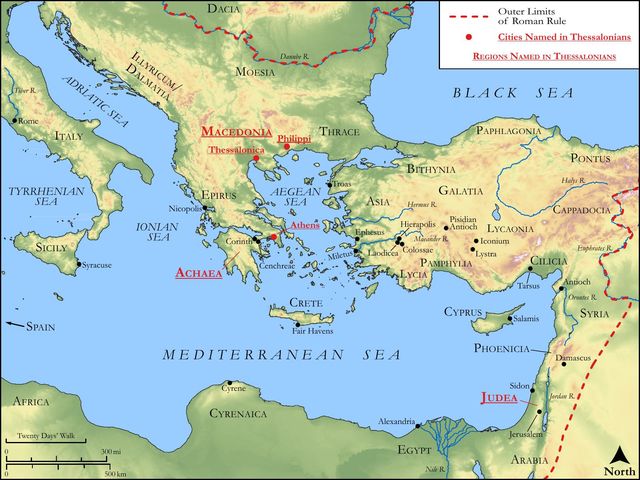
The city of Thessalonica was a bustling port city in the Roman province of Macedonia, characterized by a diverse population and prevalent Greek and Roman paganism. Sexual immorality, including fornication, prostitution, and various forms of idolatrous sexual practices, was not only common but often intertwined with religious rituals and social norms. Unlike Jewish monotheism or Christian ethics, the pagan world generally lacked a concept of sexual purity rooted in a holy God. Paul's converts, many of whom came from this pagan background, would have been accustomed to a culture where sexual restraint was not widely valued. Therefore, Paul's emphatic instruction on sexual purity was a radical counter-cultural call, distinguishing the Christian community from the Gentiles around them. It underscored the transformative power of the Gospel, which not only saved individuals but also reshaped their moral conduct and worldview.
Key Themes
ShowHide1 Thessalonians 4 contributes significantly to several major themes within the broader epistle and Pauline theology. The most prominent theme is Sanctification, which is explicitly stated as God's will in 1 Thessalonians 4:3 and further developed here as an ongoing, practical process of living set apart for God. This includes Sexual Purity, a specific application of sanctification that demands believers abstain from illicit sexual activity and treat their bodies with reverence. The concept of Self-Control is central, as "possessing one's vessel" implies a conscious mastery over one's desires and impulses, rather than being enslaved by them, a theme echoed in Galatians 5:23. Finally, the instruction to act "in honour" highlights the theme of Dignity of the Body, emphasizing that the human body, created by God and indwelt by the Holy Spirit (as Paul teaches in 1 Corinthians 6:19-20), is not a mere instrument for pleasure but a sacred vessel to be treated with respect and used for God's glory.
Exposition and Analysis
ShowHideKey Word Analysis
ShowHideThis word, derived from a primary verb meaning "to see" (literally or figuratively), implies a deep understanding or awareness, not merely intellectual knowledge but a practical, experiential knowing. In the perfect tense, as used here, it signifies a settled knowledge or comprehension. Paul is not just suggesting a theoretical understanding but a profound grasp of how to practically live out this truth.
This verb means "to get," "acquire," or "own." In this context, it refers to the active mastery or control over something. It implies taking hold of, acquiring, and maintaining command over one's "vessel." It is an active, ongoing effort, indicating that self-control is not passive but requires intentional acquisition and maintenance.
While this term can refer to any instrument, implement, or container, in this specific context, especially given the surrounding discussion of sexual purity, scholarly consensus strongly supports its interpretation as referring to one's own body. The body is seen as a "vessel" or instrument through which an individual lives, acts, and relates, capable of being used for honor or dishonor.
Verse Breakdown
ShowHide"That every one of you should know"
This opening clause underscores individual responsibility and the necessity of conscious awareness. Paul addresses each believer personally ("every one of you"), indicating that this is not a general principle for the community but a specific, personal mandate. The emphasis on "knowing" implies a deliberate understanding and practical wisdom in how to conduct oneself.
"how to possess his vessel"
This is the core instruction, detailing the "what" of the knowing. "Possess" (or "master") signifies active control and ownership over one's physical self. The "vessel" refers to one's body. The phrase calls believers to exercise self-control and discipline over their physical appetites and desires, particularly sexual ones, rather than being controlled by them.
"in sanctification and honour"
This specifies the manner in which the "vessel" is to be possessed. "Sanctification" (holiness) means being set apart for God's purposes, distinct from worldly defilement. "Honour" implies treating the body with dignity, respect, and value, recognizing its sacredness as God's creation and potential dwelling place of the Holy Spirit. This stands in stark contrast to the dishonorable use of bodies in pagan immorality.
Literary Devices
ShowHideThe most prominent literary device in this verse is Metaphor. Paul uses the term "vessel" (skeûos) as a metaphorical representation of the human body. This metaphor effectively conveys the idea of the body as an instrument or container that can be used for noble or ignoble purposes, emphasizing the need for careful stewardship and control. The choice of "vessel" also subtly suggests fragility and the potential for defilement if not properly handled. Additionally, the verse functions as an Exhortation, a strong urging or appeal to moral conduct. Paul's language is direct and prescriptive, guiding the Thessalonians towards a specific way of living that aligns with God's will. The pairing of "sanctification and honour" also employs Hendiatris, where two words joined by "and" express a single complex idea, emphasizing a dignified holiness in conduct.
Theological and Thematic Connections
ShowHideThe call to possess one's vessel in sanctification and honor is deeply rooted in biblical theology concerning the nature of humanity, the purpose of the body, and God's overarching demand for holiness from His people. It reflects the truth that salvation is not merely spiritual but encompasses the whole person, body and soul. Our bodies are not our own, but have been bought with a price, and are therefore to be used as instruments of righteousness, reflecting God's character in every sphere of life. This command elevates the human body from a mere biological entity to a sacred trust, a temple for the Holy Spirit, demanding a lifestyle of purity that distinguishes believers from the world's pervasive immorality.
Reflection and Application
ShowHideIn a world saturated with sexualized content and often promoting a casual approach to physical intimacy, 1 Thessalonians 4:4 stands as a timeless and counter-cultural call to intentional purity and self-mastery for believers. It challenges us to view our bodies not as mere instruments for personal gratification or worldly pleasure, but as sacred vessels entrusted to us by God, to be stewarded with dignity and used for His glory. This requires a conscious effort to cultivate self-control, to align our desires with God's holy will, and to actively resist the pervasive pressures of a culture that often devalues purity. Embracing this command means making deliberate choices daily to honor God with our physical beings, recognizing that our bodies are integral to our worship and witness, and that true freedom is found not in unrestrained indulgence but in disciplined devotion to Christ.
Questions for Reflection
ShowHideFAQ
ShowHideWhat does "possess his vessel" specifically mean in this context?
ShowHideIn 1 Thessalonians 4:4, "possess his vessel" refers to exercising intentional self-control and mastery over one's own body, particularly in matters of sexual morality. The "vessel" (Greek: skeûos) is a metaphor for the human body. Paul is instructing believers to actively manage their physical desires and impulses, ensuring that their bodies are used in a way that is holy and honorable, rather than being controlled by lust or worldly passions. This is a call to personal responsibility and disciplined living, aligning one's physical conduct with God's will for sanctification as outlined in 1 Thessalonians 4:3.
Christ-Centered Fulfillment
ShowHideWhile 1 Thessalonians 4:4 is a direct command for believers, its fulfillment and enablement are profoundly rooted in Christ. The ability to "possess one's vessel in sanctification and honour" is not achieved through mere human willpower but through the transformative power of the indwelling Holy Spirit, who is given to us by Christ. Jesus Himself lived a life of perfect purity and self-control, offering the ultimate example of a body consecrated to God's will, even unto death on the cross (Philippians 2:8). His sacrifice not only redeems us from sin but also empowers us to live lives of holiness, as He sanctifies His Church to be "holy and blameless" (Ephesians 5:25-27). Furthermore, the Holy Spirit, whom Christ sends, enables believers to "put to death the deeds of the body" (Romans 8:13) and to "walk by the Spirit, and you will not gratify the desires of the flesh" (Galatians 5:16). Thus, our pursuit of sanctification and honor for our bodies is a response to Christ's redemptive work, empowered by His Spirit, and a reflection of our union with Him, who is our sanctification (1 Corinthians 1:30).