


1 Samuel 28:16
Bible text: King James Version (1769 Blayney text) · Public domain
Bible text: Berean Standard Bible · Public domain
Bible text: American Standard Version (1901) · Public domain
Bible text: World English Bible, Messianic edition · Public domain
Bible text: Geneva Bible (1599) · Public domain
Bible text: Young's Literal Translation · Public domain
- וַיֹּאמֶרvai·Yo·merand he saidH559Conj-w ¦ V-Qal-ConsecImperf-3msVerb Qal Consecutive Imperfect 3rd Singular Masculineוַandיֹּאמֶרhe said
- שְׁמוּאֵלshe·mu·'ElSamuelH8050N-proper-mNoun Proper Masculine
- וְלָמָּהve·La·mahand <to> why?H4100Conj-w ¦ Prep-l ¦ InterrogPronoun Interrogativeוְandלָ<to>מָּהwhy?
- תִּשְׁאָלֵנִיtish·'a·Le·nido you ask meH7592V-Qal-Imperf-2ms ¦ 1csVerb Qal Imperfect 2nd Singular Masculineתִּשְׁאָלֵdo you askנִיme
- וַיהוָהva·Yah·wehand YahwehH3068Conj-w ¦ N-properNoun Proper TitleוַandיהוָהYahweh
- סָרsarhe has turned asideH5493V-Qal-Perf-3msVerb Qal Perfect 3rd Singular Masculine
- מֵעָלֶיךָme·'a·Lei·khafrom with <the> youH5921Prep-m ¦ Prep ¦ 2msPreposition Definiteמֵfromעָלֶיwith <the>ךָyou
- וַיְהִיvay·Hiand he has becomeH1961Conj-w ¦ V-Qal-ConsecImperf-3msVerb Qal Consecutive Imperfect 3rd Singular Masculineוַandיְהִיhe has become
- עָרֶךָ'a·Re·khayour enemyH6145N-msc ¦ 2msNoun Singular Masculine Constructעָרֶenemyךָyour
English is a literal word-by-word gloss of the Hebrew, not the KJV's wording. Why?
This is the original text the KJV's translators worked from — each Hebrew word with its own literal English meaning in this verse, prepared by scholars at Tyndale House, Cambridge. The KJV translates whole sentences, not word by word, so its wording differs: one Hebrew word can become several English words, and the KJV may choose “the LORD” where the gloss reads “Yahweh”. Both are faithful — they answer different questions. For the KJV's own rendering, switch to the KJV text.
Details
See on the biblical-era map
Study this verse
Public-domain commentary
Matthew Henry
From his Commentary on the Whole Bible. Henry comments on passages, not single verses — this entry covers 1 Samuel 28:15–19.
We have here the conference between Saul and Satan. Saul came in disguise (Sa1 28:8), but Satan soon discovered him, Sa1 28:12. Satan comes in disguise, in the disguise of Samuel's mantle, and Saul cannot discover him. Such is the disadvantage we labour under, in wrestling with the rulers of the darkness of this world, that they know us, while we are ignorant of their wiles and devices.
I.The spectre, or apparition, personating Samuel, asks why he is sent for (Sa1 28:15):
Why hast thou disquieted me to bring me up? To us this discovers that it was an evil spirit that personated Samuel; for (as bishop Patrick observes) it is not in the power of witches to disturb the rest of good men and to bring them back into the world when they please; nor would the true Samuel have acknowledged such a power in magical arts: but to Saul this was a proper device of Satan's, to draw veneration from him, to possess him with an opinion of the power of divination, and so to rivet him in the devil's interests.
II.Saul makes his complaint to this counterfeit Samuel, mistaking him for the true; and a most doleful complaint it is:
"I am sorely distressed, and know not what to do, for the Philistines make war against me; yet I should do well enough with them if I had but the tokens of God's presence with me; but, alas! God has departed from me." He complained not of God's withdrawings till he fell into trouble, till the Philistines made war against him, and then he began to lament God's departure. He that in his prosperity enquired not after God in his adversity thought it hard that God answered him not, nor took any notice of his enquiries, either by dreams or prophets, neither gave answers immediately himself nor sent them by any of his messengers. He does not, like a penitent, own the righteousness of God in this; but, like a man enraged, flies out against God as unkind and flies off from him: Therefore I have called thee; as if Samuel, a servant of God, would favour those whom God frowned upon, or as if a dead prophet could do him more service than the living ones. One would think, from this, that he really desired to meet with the devil, and expected no other (though under the covert of Samuel's name), for he desires advice otherwise than from God, therefore from the devil, who is a rival with God. "God denies me, therefore I come to thee. Flectere si nequeo superos, Acheronta movebo." - If I fail with heaven, I will move hell.
III.It is cold comfort which this evil spirit in Samuel's mantle gives to Saul, and is manifestly intended to drive him to despair and self-murder. Had it been the true Samuel, when Saul desired to be told what he should do he would have told him to repent and make his peace with God, and recall David from his banishment, and would then have told him that he might hope in this way to find mercy with God; but, instead of that, he represents his case as helpless and hopeless, serving him as he did Judas, to whom he was first a tempter and then a tormentor, persuading him first to sell his master and then to hang himself. 1. He upbraids him with his present distress (Sa1 28:16), tells him, not only that God had departed from him, but that he had become his enemy, and therefore he must expect no comfortable answer from him: "Wherefore dost thou ask me? How can I be thy friend when God is thy enemy, or thy counsellor when he has left thee?" 2. He upbraids him with the anointing of David to the kingdom, Sa1 28:17. He could not have touched upon a string that sounded more unpleasant in the ear of Saul than this. Nothing is said to reconcile him to David, but all tends rather to exasperate him against David and widen the breach. Yet, to make him believe that he was Samuel, the apparition affirmed that it was God who spoke by him. The devil knows how to speak with an air of religion, and can teach false apostles to transform themselves into the apostles of Christ and imitate their language. Those who use spells and charms, and plead, in defence of them, that they find nothing in them but what is good, may remember what good words the devil here spoke, and yet with what a malicious design. 3. He upbraids him with his disobedience to the command of God in not destroying the Amalekites, Sa1 28:18. Satan had helped him to palliate and excuse that sin when Samuel was dealing with him to bring him to repentance, but now he aggravates it, to make him despair of God's mercy. See what those get that hearken to Satan's temptations. He himself will be their accuser, and insult over them. And see whom those resemble that allure others to that which is evil and reproach them for it when they have done. 4. He foretels his approaching ruin, Sa1 28:19. (1.) That his army should be routed by the Philistines. This is twice mentioned: The Lord shall deliver Israel into the hand of the Philistines. This he might foresee, by considering the superior strength and number of the Philistines, the weakness of the armies of Israel, Saul's terror, and especially God's departure from them. Yet, to personate a prophet, he very gravely ascribes it once and again to God: The Lord shall do it. (2.) That he and his sons should be slain in the battle: Tomorrow, that is, in a little time (and, supposing that it was now after midnight, I see not but it may be taken strictly for the very next day after that which had now begun), thou and thy sons shall be with me, that is, in the state of the dead, separate from the body. Had this been the true Samuel, he could not have foretold the event unless God had revealed it to him; and, though it were an evil spirit, God might by him foretel it; as we read of an evil spirit that foresaw Ahab's fall at Ramoth-Gilead and was instrumental in it (Kg1 22:20, etc.), as perhaps this evil spirit was, by the divine permission, in Saul's destruction. That evil spirit flattered Ahab, this frightened Saul, and both that they might fall; so miserable are those that are under the power of Satan; for, whether he rage or laugh, there is no rest, Pro 29:9.
Continue studying 1 Samuel 28:16 across the web’s major study libraries — every link below opens this exact verse, chapter, or book on the destination site.
Read & Compare
 BibleGatewayThis verse in more than 200 translations and 70 languages.
 Bible.comThe YouVersion reader — hundreds of translations, reading plans, and highlights.
 ESV.orgCrossway's official English Standard Version reader.
 NET BibleThe NET translation with 60,000+ translators' notes on every rendering decision.
 STEP BibleTyndale House's free study tool — original text, vocabulary, and scholarly resources.
 BibliaLogos Bible Software's free web reader.
 USCCBThe New American Bible (Revised Edition) with the U.S. bishops' study notes.
Commentaries
 BibleHub CommentariesDozens of classic commentaries on this verse, gathered on one page.
 StudyLightMore than 100 commentary sets — the largest collection on the web.
 BibleRefPlain-English commentary on what this verse means, verse by verse.
 Enduring WordDavid Guzik's free commentary on this chapter, widely used by Bible teachers.
 Bible Study ToolsVerse commentary alongside Greek and Hebrew study aids.
Original Language & Research
- BibleHub InterlinearThe verse word by word — original language, transliteration, and English.
- BibleHub LexiconEvery word's original-language definition and Strong's entry.
 Blue Letter BibleDeep-study tools — Strong's numbers, concordance, and word studies.
 SefariaThe Hebrew text with Rashi and centuries of Jewish commentary.
Sermons, Hymns & Audio


TrulyRandomVerse is not affiliated with these sites and doesn’t control their content. They’re linked because they’re genuinely useful.
Summary
1 Samuel 28:16 presents a chilling and definitive pronouncement from the prophet Samuel to King Saul, articulating the tragic culmination of Saul's persistent disobedience: the LORD has irrevocably withdrawn His presence and favor from Saul and has now actively positioned Himself as Saul's adversary. This verse powerfully underscores the irreversible consequences of rebellion against divine will, revealing a king stripped of divine support and facing imminent judgment, a direct result of his desperate and forbidden attempt to consult the dead.
Context
ShowHideLiterary Context
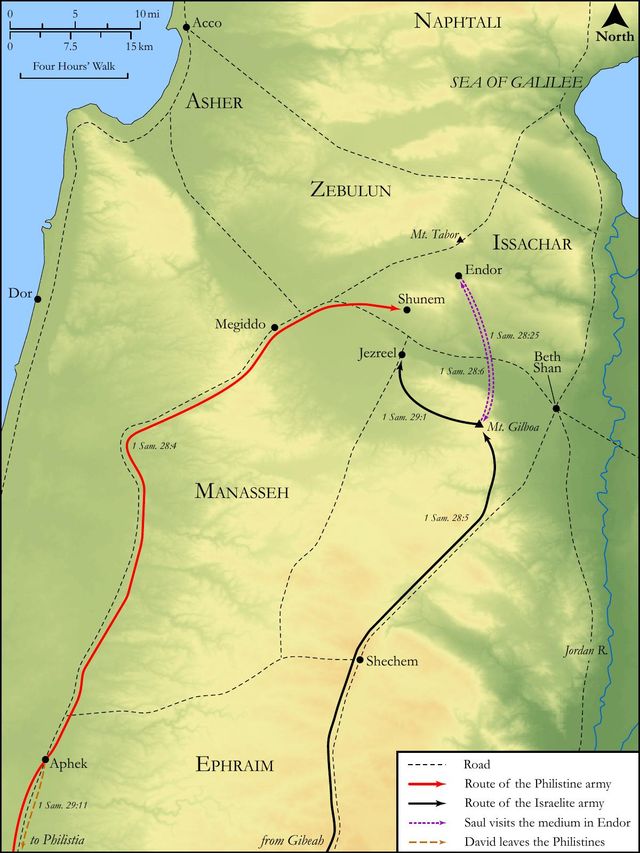
This verse serves as the climactic and devastating response from the prophet Samuel, whose appearance Saul desperately sought through the medium of Endor. Immediately preceding this, Saul faced an overwhelming Philistine army and experienced profound divine silence; God refused to answer him through traditional, legitimate means such as dreams, Urim, or prophets, as noted in 1 Samuel 28:6. Despite his earlier efforts to purge the land of mediums and spiritists, a direct violation of God's law, Saul resorted to this forbidden practice. The appearance of Samuel, or a divinely permitted manifestation perceived as such, is shocking and dire, serving not to offer comfort or new counsel, but to confirm Saul's doom and the transfer of his kingdom to David. This encounter immediately precedes the fatal Battle of Gilboa, setting the stage for Saul's demise and the fulfillment of God's earlier judgment.
Historical & Cultural Context
In ancient Israel, the king was expected to be God's anointed representative, ruling according to divine law and seeking counsel from legitimate prophetic channels. The practice of necromancy, or consulting the dead, was strictly forbidden under the Mosaic Law, as explicitly stated in Deuteronomy 18:10-12, being associated with pagan practices and a direct affront to God's sovereignty as the sole source of true revelation. Saul's desperate act was not merely a lapse in judgment but a profound act of rebellion against the very God who had established him as king. This context highlights the gravity of Saul's sin, demonstrating his utter spiritual bankruptcy and his willingness to transgress even his own past decrees in his desperation, a stark contrast to the expected conduct of God's chosen leader.
Key Themes
ShowHideThe primary theme is Divine Abandonment and the Consequences of Disobedience. Samuel's words confirm that God has irrevocably withdrawn His Spirit and favor from Saul, a process that began earlier in Saul's reign, as recorded in 1 Samuel 16:14. This withdrawal is a direct, just consequence of Saul's repeated and profound disobedience, particularly his failure to fully obey God's command regarding the Amalekites, detailed in 1 Samuel 15:23. Another key theme is God's Unwavering Justice and Sovereignty. Samuel's declaration underscores that God's character demands justice; persistent rebellion, even from an anointed king, will incur divine opposition. God remains sovereign, even over the consequences of human sin and the unfolding of judgment. Finally, the verse highlights Saul's Tragic Spiritual Decline, depicting the culmination of his descent from a humble, chosen king to a desperate, fear-ridden man who ultimately rebels against God's explicit commands, sealing his own fate.
Exposition and Analysis
ShowHideKey Word Analysis
ShowHideThe verb "ask" (שָׁאֵל, shâʼal) is ironically the very root of Saul's own name (שָׁאוּל, Sha'ul), which means "asked" or "desired." Here, Samuel's rhetorical question, "Wherefore then dost thou ask of me," highlights the futility and hypocrisy of Saul's inquiry. Saul had previously "asked" of the LORD through legitimate means, but God had ceased to answer. Now, in his desperation, Saul asks of a forbidden source, yet the answer he receives is not new revelation but a confirmation of the judgment already pronounced, emphasizing the pointlessness of seeking counsel from the dead when the living God has turned away.
The word "departed" (סוּר, çûyr) signifies a deliberate turning away, removal, or withdrawal. It is not a passive absence but an active, decisive act of God. This emphasizes the intentionality of God's abandonment of Saul, a direct consequence of Saul's actions. It implies a severing of the divine-human relationship that once characterized Saul's kingship, signifying the removal of God's favor, empowering Spirit, and protective presence.
The term for "enemy" (עָר, ʻâr) denotes an adversary, oppressor, or one in a hostile relationship, specifically one who is "watchful for mischief." This is a profoundly terrifying and shocking declaration: the God who chose, anointed, and empowered Saul has now actively positioned Himself as Saul's antagonist. This is not merely a withdrawal of blessing but an active opposition, signifying that God is now working against Saul's interests, aligning with the Philistines to bring about his downfall. It underscores the ultimate consequence of unrepentant rebellion: turning the very source of life and blessing into an active opponent.
Verse Breakdown
ShowHide"Then said Samuel,"
This opening phrase immediately establishes the authority and gravity of the speaker. The appearance of Samuel himself, whether truly his spirit or a divinely permitted manifestation, lends immense weight to the ensuing words, confirming their divine origin and unchangeable nature. It is a direct, personal confrontation from the prophet who first anointed Saul and delivered God's initial judgments.
"Wherefore then dost thou ask of me,"
This is a powerful rhetorical question, full of irony and condemnation. Samuel's question highlights the absurdity and futility of Saul's desperate act. It implies, "Why are you asking me, as if I have new information or a different message, when the truth has already been made clear by the LORD Himself?" It underscores Saul's spiritual blindness and his refusal to accept the divine verdict, seeking answers from the dead when the living God had already spoken and withdrawn.
"seeing the LORD is departed from thee,"
This clause confirms the foundational reason for Saul's predicament. God's departure is the root cause of Saul's desperation and his inability to receive divine guidance. It signifies the removal of God's empowering Spirit, His favor, and His protective hand. This is not a temporary withdrawal but a decisive and final separation, a direct consequence of Saul's persistent disobedience and rebellion against God's commands.
"and is become thine enemy?"
This is the most chilling and devastating part of the pronouncement. It elevates God's withdrawal to active opposition. The LORD is not merely absent; He is now actively working against Saul. This signifies that Saul's fate is sealed; his rebellion has led to a state where the Almighty God, who once blessed and guided him, is now his adversary, ensuring his downfall. This declaration foreshadows Saul's imminent defeat and death, emphasizing the severity of divine judgment.
Literary Devices
ShowHideThe verse is rich with Irony, particularly Dramatic Irony. Saul, who once purged mediums from the land, now desperately seeks one out, only to receive a message of doom from the very prophet he sought to avoid in his disobedience. The rhetorical question, "Wherefore then dost thou ask of me," serves as a powerful Rhetorical Question, not seeking an answer but emphasizing the futility and self-condemnation of Saul's actions. There is also profound Foreshadowing in Samuel's words, as the declaration that "the LORD is departed from thee, and is become thine enemy" directly precedes and explains Saul's impending defeat and death at the Battle of Gilboa. The description of God as "thine enemy" employs a form of Anthropomorphism, attributing a human-like adversarial role to God to convey the intensity and directness of divine judgment against Saul's persistent rebellion.
Theological and Thematic Connections
ShowHide1 Samuel 28:16 stands as a stark testament to the gravity of unrepentant sin and the unchanging nature of God's justice. It reveals that while God is merciful and long-suffering, there is a point where persistent rebellion leads to the withdrawal of divine favor and even active opposition. This is not an arbitrary act but a righteous response to a king who repeatedly defied God's commands and rejected His authority. The verse underscores God's sovereignty over all creation, including the consequences of human choices, demonstrating that He remains in control even when His chosen instruments fail. It serves as a profound warning against spiritual compromise and the dangers of seeking counsel outside of God's revealed will, emphasizing that true wisdom and guidance come only from the LORD.
Reflection and Application
ShowHideThis chilling encounter between Samuel and Saul forces us to confront the profound consequences of persistent disobedience and spiritual compromise. Saul's desperation, born from a life of self-will and rebellion, led him to forbidden practices, ultimately sealing his doom. For us, this passage serves as a potent reminder that our relationship with God is predicated on obedience and trust. When we repeatedly ignore God's voice, neglect His commands, or seek answers outside of His revealed will, we risk experiencing a withdrawal of His manifest presence and blessing. This doesn't mean God ceases to exist or love us, but that our fellowship with Him can be severely hindered, leading to spiritual barrenness and a sense of abandonment. True guidance and peace come only from seeking God through legitimate means—His Word, prayer, and the community of believers—and cultivating a heart of repentance and submission. It challenges us to examine our own lives: are there areas where we are stubbornly resisting God's will? Are we seeking Him genuinely, or resorting to our own desperate measures when faced with trials, rather than trusting in His sovereign plan and provision?
Questions for Reflection
ShowHideFAQ
ShowHideWas the spirit Samuel, or a demon impersonating him?
ShowHideThe biblical text states, "Then said Samuel," and the narrative treats the appearance as genuinely Samuel. While the act of necromancy was strictly forbidden by God's law, the Bible often records instances where God directly intervenes in extraordinary ways, even through unconventional means, to accomplish His sovereign purposes. In this case, God allowed Samuel to appear, not to endorse necromancy, but to deliver a final, authoritative judgment to Saul. It was a divine intervention, not a successful human manipulation of the spiritual realm. The message delivered is consistent with God's previous pronouncements through Samuel, confirming its divine origin and the unchangeable nature of God's verdict on Saul.
How can God, who is love, become "thine enemy"?
ShowHideThe phrase "become thine enemy" should be understood within the context of a covenant relationship and divine justice, rather than implying a change in God's essential character. God's nature is indeed love, as stated in 1 John 4:8, but He is also perfectly holy and just. When an individual, especially one in a covenant relationship with Him like Saul, persistently and unrepentantly rebels against His commands and rejects His authority, God's righteous judgment is enacted. His "enmity" here signifies His active opposition to Saul's rebellion and His determination to uphold His righteous standards and promises. It is a consequence of Saul's choices and unrepentant sin, not a change in God's character. God's opposition to Saul was an expression of His justice, upholding the integrity of His covenant and demonstrating the serious consequences of persistent disobedience.
Christ-Centered Fulfillment
ShowHideThe tragic narrative of Saul, culminating in God becoming his "enemy" due to persistent disobedience, powerfully foreshadows the need for a perfect King who would never deviate from God's will. Saul's failure highlights the inability of humanity, even an anointed king, to maintain a righteous standing before God through self-effort. In stark contrast, Jesus Christ is the perfectly obedient Son, the true King of Israel, who never sought His own will but always did the will of the Father, as He declares in John 6:38. Where Saul's rebellion led to divine abandonment and enmity, Christ's perfect obedience, even unto death on the cross, reconciled humanity to God. He bore the divine enmity against sin, becoming sin for us, as described in 2 Corinthians 5:21, so that we might become the righteousness of God in Him. Through faith in Christ, God is no longer an enemy but a loving Father, and His Spirit, which departed from Saul, is poured out freely upon all believers, empowering them to live in obedience and fellowship, as promised in Romans 8:9-11. Christ's reign establishes a new covenant where God's presence is guaranteed, and His relationship with His people is one of enduring grace and peace, never again marked by the kind of abandonment experienced by Saul.