


1 Chronicles 12:39
- וַיִּהְיוּvai·yih·yuand they wereH1961Conj-w ¦ V-Qal-ConsecImperf-3mpVerb Qal Consecutive Imperfect 3rd Plural Masculineוַandיִּהְיוּthey were
- שָׁםshamthereH8033AdvAdverb
- עִם'imwithH5973PrepPreposition
- דָּוִידda·VidDavidH1732N-proper-mNoun Proper Masculine
- יָמִיםya·MimdaysH3117N-mpNoun Plural Masculine Absolute
- שְׁלוֹשָׁהshe·lo·ShahthreeH7969N-csNoun Singular common gender Absolute
- אֹכְלִים'o·khe·LimeatingH398V-Qal-Prtcpl-mpVerb Qal Participle Plural Masculine Absolute
- וְשׁוֹתִיםve·sho·Timand drinkingH8354Conj-w ¦ V-Qal-Prtcpl-mpVerb Qal Participle Plural Masculine Absoluteוְandשׁוֹתִיםdrinking
- כִּיkiforH3588PrtParticle Conditional
- הֵכִינוּhe·Khi·nuthey had preparedH3559V-Hiphil-Perf-3cpVerb Hiphil Perfect 3rd Plural common gender
- לָהֶםla·Hemfor themPrep-l ¦ 3mpSuffix Personal 3rd Plural Masculineלָforהֶםthem
- אֲחֵיהֶם'a·chei·Hemtheir relativesH251N-mpc ¦ 3mpNoun Plural Masculine Constructאֲחֵיrelativesהֶםtheir
English is a literal word-by-word gloss of the Hebrew, not the KJV's wording. Why?
This is the original text the KJV's translators worked from — each Hebrew word with its own literal English meaning in this verse, prepared by scholars at Tyndale House, Cambridge. The KJV translates whole sentences, not word by word, so its wording differs: one Hebrew word can become several English words, and the KJV may choose “the LORD” where the gloss reads “Yahweh”. Both are faithful — they answer different questions. For the KJV's own rendering, switch to the KJV text.
Details
See on the biblical-era maps
Study this verse
Public-domain commentary
Matthew Henry
From his Commentary on the Whole Bible. Henry comments on passages, not single verses — this entry covers 1 Chronicles 12:23–40.
We have here an account of those who were active in perfecting the settlement of David upon the throne, after the death of Ishbosheth. We read (Ch1 11:1, and before Sa2 5:1) that all the tribes of Israel came, either themselves or by their representatives, to Hebron, to make David king; now here we have an account of the quota which every tribe brought in ready armed to the war, in case there should be any opposition, Ch1 12:23. We may observe here,
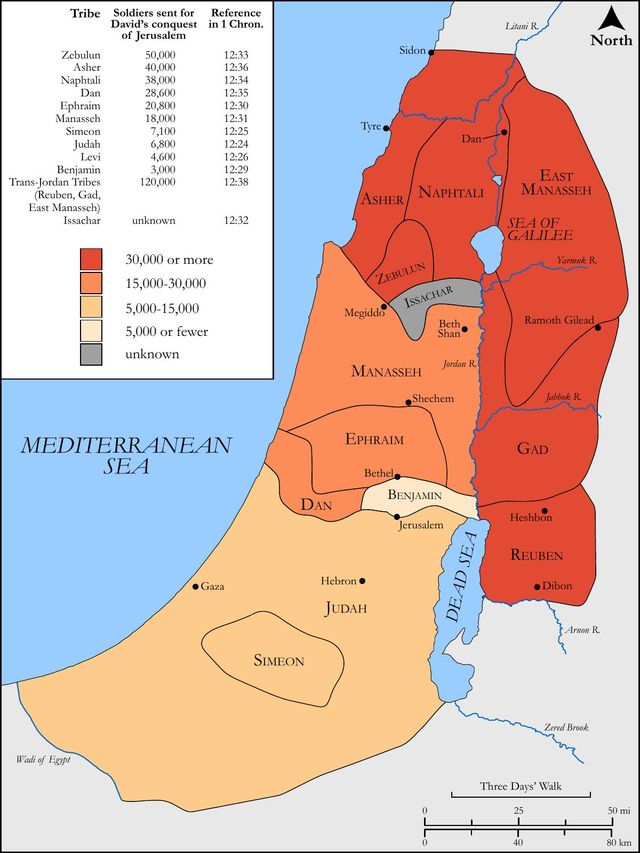
I.That those tribes that lived nearest brought the fewest - Judah but 6800 (Ch1 12:24), Simeon but 7100 (Ch1 12:25); whereas Zebulun, that lay remote, brought 50,000, Asher 40,000, and the two tribes and a half on the other side Jordan 120,000. Not as if the next adjacent tribes were cold in the cause; but they showed as much of their prudence in bringing few, since all the rest lay so near within call, as the others did of their zeal in bringing so many. The men of Judah had enough to do to entertain those that came from afar.
II.The Levites themselves, and the priests (called here the Aaronites), appeared very hearty in this cause, and were ready, if there were occasion, to fight for David, as well as pray for him, because they knew he was called of God to the government, Ch1 12:26-28.
III.Even some of the kindred of Saul came over to David (Ch1 12:29), not so many as of the other tribes, because a foolish affection for their own tribe, and a jealousy for the honour of it, kept many of them long in the sinking interest of Saul's family. Kindred should never over-rule conscience. Call no man Father to this extent, but God only.
IV.It is said of most of these that they were mighty men of valour (Ch1 12:25, Ch1 12:28, Ch1 12:30), of others that they were expert in war (Ch1 12:35, Ch1 12:36), and of them all that they could keep rank, Ch1 12:38. They had a great deal of martial fire, and yet were governable and subject to the rules of order - warm hearts but cool heads.
V.Some were so considerate as to bring with them arms, and all instruments for war (Ch1 12:24, Ch1 12:33, Ch1 12:37), for how could they think that David should be able to furnish them?
VI.The men of Issachar were the fewest af all, only 200, and yet as serviceable to David's interest as those that brought in the greatest numbers, these few being in effect the whole tribe. For, 1. They were men of great skill above any of their neighbours, men that had understanding of the times, to know what Israel ought to do. They understood the natural times, could discern the face of the sky, were weather-wise, could advise their neighbours in the proper times for ploughing, sowing reaping, etc. Or the ceremonial times, the times appointed for the solemn feasts; therefore they are said to call the people to the mountain (Deu 33:19), for almanacs were not then so common as now. Or, rather, the political times; they understood public affairs, the temper of the nation, and the tendencies of the present events. It is the periphrasis of statesmen that they know the times, Esth. 1. 13. Those of that tribe were greatly intent on public affairs, had good intelligence from abroad and made a good use of it. They knew what Israel ought to do: from their observation and experience they learned both their own and others' duty and interest. In this critical juncture they knew Israel ought to make David king. It was not only expedient, but necessary; the present posture of affairs called for it. The men of Issachar dealt mostly in country business, and did not much intermeddle in public affairs, which gave them an opportunity of observing others and conversing with themselves. A stander-by sees sometimes more than a gamester. 2. They were men of great interests; for all their brethren were at their commandment. The commonality of that tribe having bowed their shoulder to bear (Gen 49:15), the great men had them at their beck. Hence we read of the princes of Issachar, Jdg 5:15. They knew how to rule, and the rest knew how to obey. It is happy indeed when those that should lead are intelligent and judicious, and those who are to follow are modest and obsequious.
VII.It is said of them all that they engaged in this enterprise with a perfect heart (Ch1 12:38), and particularly of the men of Zebulun that they were not of double heart, Ch1 12:33. They were, in this matter, Israelites indeed, in whom was no guile. And this was their perfection, that they were of one heart, Ch1 12:38. None had any separate interests, but all for the public good.
VIII.The men of Judah, and others of the adjacent tribes, prepared for the victualling of their respective camps when they came to Hebron, Ch1 12:39, Ch1 12:40. Those that were at the least pains in travelling to this convention, or congress of states, thought themselves obliged to be at so much the more charge in entertaining the rest, that there might be something of an equality. A noble feast was made (was made for laughter, Ecc 10:19) upon this occasion, for there was joy in Israel, Ch1 12:40. And good reason; for when the righteous bear rule the city rejoices. Thus, when the throne of Christ is set up in a soul, there is, or ought to be, great joy in that soul: and provision is made for the feasting of it, not as here for two or three days, but for the whole life, nay, for eternity.
Continue studying 1 Chronicles 12:39 across the web’s major study libraries — every link below opens this exact verse, chapter, or book on the destination site.
Read & Compare
 BibleGatewayThis verse in more than 200 translations and 70 languages.
 Bible.comThe YouVersion reader — hundreds of translations, reading plans, and highlights.
 ESV.orgCrossway's official English Standard Version reader.
 NET BibleThe NET translation with 60,000+ translators' notes on every rendering decision.
 STEP BibleTyndale House's free study tool — original text, vocabulary, and scholarly resources.
 BibliaLogos Bible Software's free web reader.
 USCCBThe New American Bible (Revised Edition) with the U.S. bishops' study notes.
Commentaries
 BibleHub CommentariesDozens of classic commentaries on this verse, gathered on one page.
 StudyLightMore than 100 commentary sets — the largest collection on the web.
 BibleRefPlain-English commentary on what this verse means, verse by verse.
 Enduring WordDavid Guzik's free commentary on this chapter, widely used by Bible teachers.
 Bible Study ToolsVerse commentary alongside Greek and Hebrew study aids.
Original Language & Research
- BibleHub InterlinearThe verse word by word — original language, transliteration, and English.
- BibleHub LexiconEvery word's original-language definition and Strong's entry.
 Blue Letter BibleDeep-study tools — Strong's numbers, concordance, and word studies.
 SefariaThe Hebrew text with Rashi and centuries of Jewish commentary.
Sermons, Hymns & Audio


TrulyRandomVerse is not affiliated with these sites and doesn’t control their content. They’re linked because they’re genuinely useful.
Summary
1 Chronicles 12:39 masterfully concludes the account of Israel's unification under King David, depicting a profound three-day celebration in Hebron. This verse encapsulates the joyous culmination of years of division and the formal establishment of David's kingship over all Israel. It highlights not only the political and military consolidation but also the deep communal fellowship, hospitality, and shared purpose that marked this pivotal moment, underscoring the practical outworking of national cohesion and divine blessing.
Context
ShowHideLiterary Context
This verse serves as the grand finale to a meticulously detailed enumeration in 1 Chronicles 12 of the vast and diverse contingents who rallied to David's side at Hebron. The Chronicler, with a clear theological agenda, emphasizes the overwhelming and unanimous support for David, portraying him as God's divinely appointed king. Following Saul's death, David had reigned over Judah for seven and a half years (2 Samuel 5:5). The preceding verses (1 Chronicles 12:23-38) meticulously list thousands of skilled warriors and leaders from every Israelite tribe, all described as coming "with a perfect heart to Hebron, to make David king over all Israel" (1 Chronicles 12:38). Verse 39, therefore, shifts from the impressive display of military strength and unified intent to the celebratory outcome of this national covenant, solidifying the bonds through shared feasting and fellowship, demonstrating the immediate and tangible fruit of their collective decision.
Historical & Cultural Context
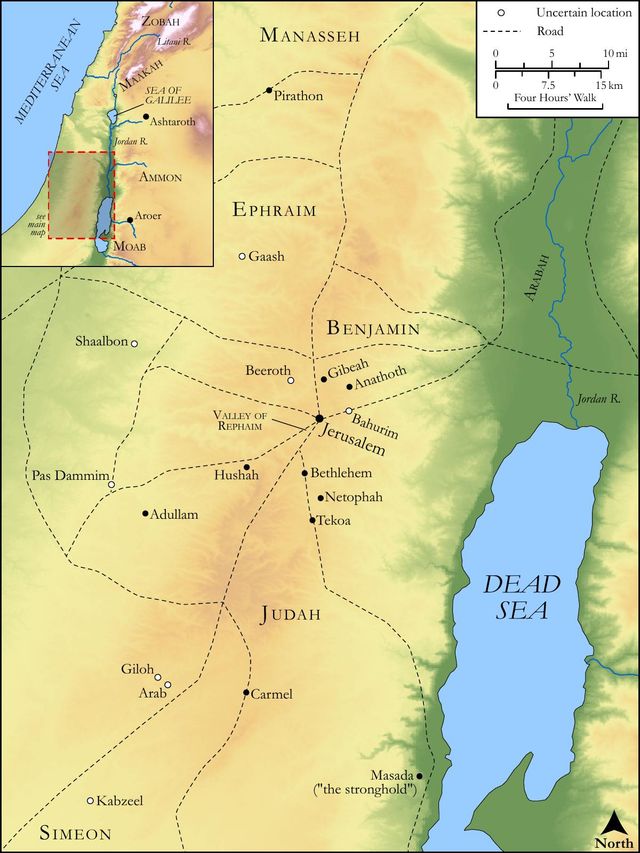
The setting, Hebron, held significant historical and religious importance as an ancient city in Judah and David's initial capital. The gathering of representatives from all twelve tribes was far more than a mere political assembly; it was a profound act of national covenant and allegiance. In the ancient Near East, communal meals, especially extended feasts, were indispensable for sealing agreements, ratifying covenants, and expressing deep fellowship, loyalty, and peace. Such celebrations frequently followed major political or religious transitions, symbolizing a new era of unity and mutual commitment. The detail that "their brethren had prepared for them" speaks volumes about the robust tribal and familial bonds within Israel. Hospitality was a sacred duty, a tangible expression of kinship and solidarity, ensuring that all participants in this momentous event were not only welcomed but also well-provided for, thereby fostering a deep sense of belonging and collective identity crucial for the nascent unified kingdom.
Key Themes
ShowHideThis verse powerfully contributes to several overarching theological and narrative themes within the book of 1 Chronicles.
Unity of Israel
After years of fragmentation under Saul and David's initial reign over Judah only, this grand assembly signifies the long-awaited national unity under God's chosen monarch. The convergence of all tribes, culminating in shared feasting, is a vivid and tangible expression of this restored cohesion, echoing the divine ideal of a unified people of God, as celebrated in Psalm 133:1.
Divine Legitimacy of David's Kingship
The enthusiastic and unanimous support from "all Israel" powerfully confirms God's anointing of David (1 Samuel 16:12-13). The celebration is not merely for a human king but for the king whom God Himself had appointed, reflecting God's unwavering faithfulness to His covenant promises.
Covenant and Fellowship
The "eating and drinking" for "three days" symbolizes the ratification of a covenant, not only between David and the people but also among the tribes themselves. It underscores the vital importance of communal fellowship and mutual support as foundational elements for a thriving kingdom, mirroring the communal meals that marked significant moments in Israel's history, such as those associated with worship and covenant renewal (Deuteronomy 12:7).
Hospitality and Provision
The specific mention that "their brethren had prepared for them" highlights the practical outworking of unity and love within the community. This detail demonstrates the profound generosity and mutual care essential for sustaining collective life and purpose, showcasing a community that actively supports its members.
Exposition and Analysis
ShowHideKey Word Analysis
ShowHideThis primitive root means "to eat" literally or figuratively. In the context of a feast, it signifies more than mere physical sustenance; it denotes participation in a communal act of celebration, fellowship, and often, covenant ratification. The act of eating together in ancient Israel was a profound expression of peace, trust, and shared identity, binding participants in a common experience.
This primitive root means "to imbibe" or "to drink." Paired with "eating," it forms the common Hebrew idiom for feasting. Like eating, drinking in this context points to a celebratory atmosphere, signifying joy, abundance, and the sealing of agreements. The shared consumption of food and drink underscored the deep sense of relief, unity, and communal bond that accompanied David's anointing as king over all Israel.
This primitive word denotes a "brother" in the widest sense, encompassing literal relationship and metaphorical affinity or resemblance. Here, "their brethren" (אֲחֵיהֶם, ʼaḥehem) emphasizes the deep familial and kinship bonds among the Israelite tribes. It highlights their shared ancestry, identity, and divine heritage as the people of God. The use of this term reinforces that the support and provision offered were not merely political acts but expressions of profound familial care and solidarity, demonstrating the practical outworking of their unity as one nation under one king and underscoring the internal support system vital for the new kingdom's stability.
Verse Breakdown
ShowHide"And there they were with David three days"
This opening clause establishes the setting and duration of the pivotal event. The phrase "there they were with David" highlights the direct presence and allegiance of the assembled contingents to their newly recognized king. The "three days" signifies a substantial and significant period, suggesting that this was no fleeting gathering but a thorough and intentional celebration, allowing ample time for all participants to arrive, engage, and solidify their commitment to David and the new national order. It underscores the profound importance and solemnity of this moment.
"eating and drinking"
This phrase describes the primary activity of the three-day period: a grand feast. As discussed in the key word analysis, this is more than just sustenance; it is a powerful symbol of joy, fellowship, and the ratification of a covenant. The communal sharing of food and drink served to cement the bonds between David and his people, and among the various tribal representatives themselves, transforming a political gathering into a deeply personal and communal celebration of unity and peace.
"for their brethren had prepared for them"
This crucial final clause reveals the underlying act of hospitality and provision that made the extended celebration possible. It indicates that the local population, likely the tribe of Judah and those already settled in the Hebron region, generously hosted the thousands of arriving warriors and leaders. This act of preparation and provision underscores the practical manifestation of their unity and kinship, demonstrating a willingness to serve and support one another in this momentous national undertaking, embodying the ideal of communal care within the newly unified kingdom.
Literary Devices
ShowHideThe verse employs several effective literary devices to convey its profound message. Symbolism is prominently featured, as the act of "eating and drinking" for "three days" powerfully symbolizes the deep unity, overwhelming joy, and the covenantal bond being forged between King David and all the tribes of Israel. This extended feast represents a new era of peace, reconciliation, and shared purpose after years of division. The feast itself functions as a metonymy for the entire celebratory event and the formal ratification of David's kingship over a unified Israel. Furthermore, the phrase "their brethren" utilizes synecdoche to represent the broader community of Israel, emphasizing the inherent familial connection and mutual care that existed and was expressed among the various tribes. The verse's concise nature, despite its rich implications, also demonstrates brevity combined with profound meaning, a characteristic often found in historical narratives that aim to convey significant events succinctly yet powerfully.
Theological and Thematic Connections
ShowHideThis verse, though brief, resonates with profound theological and thematic connections throughout the broader biblical narrative. It powerfully highlights God's faithfulness in establishing His chosen king and the paramount importance of unity among His people. The joyous feasting in Hebron foreshadows the ultimate celebration of God's redemptive work, where His people gather in perfect fellowship and abundance. It underscores the biblical principle that genuine unity is not merely an abstract concept but is tangibly manifested through practical acts of hospitality, shared life, and communal celebration, reflecting the very nature of God as a community of persons (Father, Son, and Holy Spirit). The establishment of David's kingdom, marked by such profound unity and celebration, serves as an earthly type and shadow of God's eternal kingdom, where perfect peace, joy, and fellowship will reign supreme under the ultimate, divine King.
Reflection and Application
ShowHide1 Chronicles 12:39 offers timeless and profound lessons for contemporary communities, particularly the church, which is called to embody the unity and fellowship of God's people. Just as the Israelite tribes gathered with a "perfect heart" to affirm their king and celebrate their newfound cohesion, believers today are called to gather in joyful fellowship, supporting their spiritual leaders and one another. This verse serves as a powerful reminder that true unity is not merely an abstract theological concept but is demonstrated through tangible acts of hospitality, the generous sharing of resources, and communal celebration. When God's people come together with genuine sincerity, providing for one another and delighting in their shared purpose under the sovereign reign of Christ, they powerfully reflect the very heart of God and strengthen the spiritual bonds of the body of Christ. It encourages us to actively prioritize fellowship, to be both generous hosts and grateful guests, and to intentionally participate in building a community marked by mutual care, sacrificial provision, and shared joy in the Lord, thereby becoming a compelling witness to the world.
Questions for Reflection
ShowHideFAQ
ShowHideWhy did they stay for "three days" of eating and drinking?
ShowHideThe duration of "three days" signifies the profound importance and thoroughness of the event. In ancient Near Eastern cultures, significant feasts, covenant-making ceremonies, and celebrations of new leadership were often extended affairs, not just brief meals. A three-day period allowed ample time for all the contingents from various tribes to arrive, for formal declarations of allegiance to be made, for deep fellowship and trust to be fostered among disparate groups, and for the covenant of kingship to be fully celebrated and ratified. It underscores the immense joy, solemn commitment, and national significance involved in establishing David's unified reign over all Israel, ensuring that every participant felt fully integrated into this momentous national undertaking.
Who were "their brethren" who prepared for them?
ShowHide"Their brethren" refers to the Israelite tribes and families who were already settled in the region of Hebron, primarily the tribe of Judah, where David had been king for seven and a half years. These were the hosts who took on the significant responsibility of providing food, drink, and lodging for the thousands of warriors and representatives who had traveled from all over Israel to make David king. This act of generous hospitality underscored the deep sense of kinship, solidarity, and mutual responsibility among the tribes, demonstrating the practical outworking of their newfound unity and shared identity as the people of God. It highlights the foundational importance of communal support for the stability and flourishing of the new kingdom.
What is the deeper significance of "eating and drinking" in this context?
ShowHideIn the ancient Near East, "eating and drinking" together, especially in a prolonged feast, was far more than just sustenance; it was a powerful social, political, and spiritual act. It profoundly symbolized the ratification of covenants, the establishment of peace, the expression of deep fellowship, and shared joy. For Israel, communal meals often carried a covenantal dimension, signifying reconciliation, unity, and a shared future under God's blessing. In this verse, the feasting solidifies the agreement to make David king, expresses the overwhelming joy of national unity after years of division, and binds the tribes together in a shared commitment under their new, divinely appointed leader. It was a visible manifestation of their collective "perfect heart" in uniting under David.
Christ-Centered Fulfillment
ShowHide1 Chronicles 12:39, with its vivid depiction of a joyous and unifying feast under King David, finds its ultimate and glorious fulfillment in Jesus Christ, the true and eternal King of kings. David's earthly reign, established through the willing assembly of all Israel and sealed with communal celebration, profoundly foreshadows the spiritual kingdom of God, where believers from every tribe, tongue, people, and nation are gathered under the sovereign, loving rule of Christ. The profound unity and fellowship experienced at Hebron point to the even deeper, spiritual unity of the Church, the body of Christ, where all believers are made "one in Christ Jesus" (Galatians 3:28). Just as the "brethren" prepared abundant provision for the arriving contingents, Christ Himself is the ultimate Host and Provider, inviting us to the spiritual feast of salvation. He offers Himself as the "bread of life" (John 6:35) and the living water (John 4:10), satisfying our deepest spiritual hunger and thirst. The celebratory feasting in Hebron anticipates the glorious Marriage Supper of the Lamb (Revelation 19:9), where God's redeemed people will gather in perfect, eternal fellowship with their King and with one another. In Christ, the ideal of unity, boundless hospitality, and joyful communion, imperfectly realized in David's kingdom, is perfectly and eternally fulfilled, binding us together in love, which is the "bond of perfection" (Colossians 3:14).