


1 Chronicles 12:40
- וְגַםve·Gamand alsoH1571Conj-w ¦ AdvAdverbוְandגַםalso
- הַקְּרוֹבִיםha·ke·roimthe [people] nearH7138Art ¦ Adj-mpAdjective Plural Masculine Absoluteהַtheקְּרוֹבִים[people] near
- אֲלֵיהֶם'A·lei·hemto themH413Prep ¦ 3mpPrepositionאֲלֵיtoהֶםthem
- עַד'adtoH5704PrepPreposition
- יִשָׂשכָרyi·so·sh·KharIssacharH3485N-proper-mNoun Proper Masculine
- וּזְבֻלוּןu·ze·vu·Lunand ZebulunH2074Conj-w ¦ N-proper-mNoun Proper MasculineוּandזְבֻלוּןZebulun
- וְנַפְתָּלִיve·naf·ta·Liand NaphtaliH5321Conj-w ¦ N-proper-mNoun Proper MasculineוְandנַפְתָּלִיNaphtali
- מְבִיאִיםme·vi·'Im[were] bringingH935V-Hiphil-Prtcpl-mpVerb Hiphil Participle Plural Masculine Absolute
- לֶחֶםLe·chemfoodH3899N-msNoun Singular Masculine Absolute
- בַּחֲמוֹרִיםba·cha·mo·Rimon <the> donkeysH2543Prep-b ¦ N-cpNoun Plural common gender Absoluteבַּon <the>חֲמוֹרִיםdonkeys
- וּבַגְּמַלִּיםu·vag·ge·ma·Limand on <the> camelsH1581Conj-w ¦ Prep-b ¦ N-cpNoun Plural common gender Absoluteוּandבַon <the>גְּמַלִּיםcamels
- וּבַפְּרָדִיםu·va·pe·ra·Dimand on <the> mulesH6505Conj-w ¦ Prep-b ¦ N-mpNoun Plural Masculine Absoluteוּandבַon <the>פְּרָדִיםmules
- וּבַבָּקָרu·va·ba·Karand on <the> ox[en]H1241Conj-w ¦ Prep-b ¦ N-csNoun Singular common gender Absoluteוּandבַon <the>בָּקָרox[en]
- מַאֲכָלma·'a·KhalfoodH3978N-msNoun Singular Masculine Absolute
- קֶמַחKe·machflourH7058N-msNoun Singular Masculine Absolute
- דְּבֵלִיםde·ve·Limfig cakesH1690N-mpNoun Plural Masculine Absolute
- וְצִמּוּקִיםve·tzi·mu·Kimand bunches of raisinsH6778Conj-w ¦ N-mpNoun Plural Masculine Absoluteוְandצִמּוּקִיםbunches of raisins
- וְיַיִןve·ya·yinand wineH3196Conj-w ¦ N-msNoun Singular Masculine Absoluteוְandיַיִןwine
- וְשֶׁמֶןve·She·menand oilH8081Conj-w ¦ N-msNoun Singular Masculine Absoluteוְandשֶׁמֶןoil
- וּבָקָרu·va·Karand ox[en]H1241Conj-w ¦ N-csNoun Singular common gender Absoluteוּandבָקָרox[en]
- וְצֹאןve·Tzonand sheepH6629Conj-w ¦ N-csNoun Singular common gender Absoluteוְandצֹאןsheep
- לָרֹבla·Roto abundanceH7230Prep-l ¦ N-msNoun Singular Masculine Absoluteלָtoרֹבabundance
- כִּיkiforH3588PrtParticle Conditional
- שִׂמְחָהsim·ChahjoyH8057N-fsNoun Singular Feminine Absolute
- בְּיִשְׂרָאֵלbe·Yis·ra·'El[was] in IsraelH3478Prep-b ¦ N-properNoun Proper Locationבְּ[was] inיִשְׂרָאֵלIsrael
English is a literal word-by-word gloss of the Hebrew, not the KJV's wording. Why?
This is the original text the KJV's translators worked from — each Hebrew word with its own literal English meaning in this verse, prepared by scholars at Tyndale House, Cambridge. The KJV translates whole sentences, not word by word, so its wording differs: one Hebrew word can become several English words, and the KJV may choose “the LORD” where the gloss reads “Yahweh”. Both are faithful — they answer different questions. For the KJV's own rendering, switch to the KJV text.
Details
See on the biblical-era map
Study this verse
Public-domain commentary
Matthew Henry
From his Commentary on the Whole Bible. Henry comments on passages, not single verses — this entry covers 1 Chronicles 12:23–40.
We have here an account of those who were active in perfecting the settlement of David upon the throne, after the death of Ishbosheth. We read (Ch1 11:1, and before Sa2 5:1) that all the tribes of Israel came, either themselves or by their representatives, to Hebron, to make David king; now here we have an account of the quota which every tribe brought in ready armed to the war, in case there should be any opposition, Ch1 12:23. We may observe here,
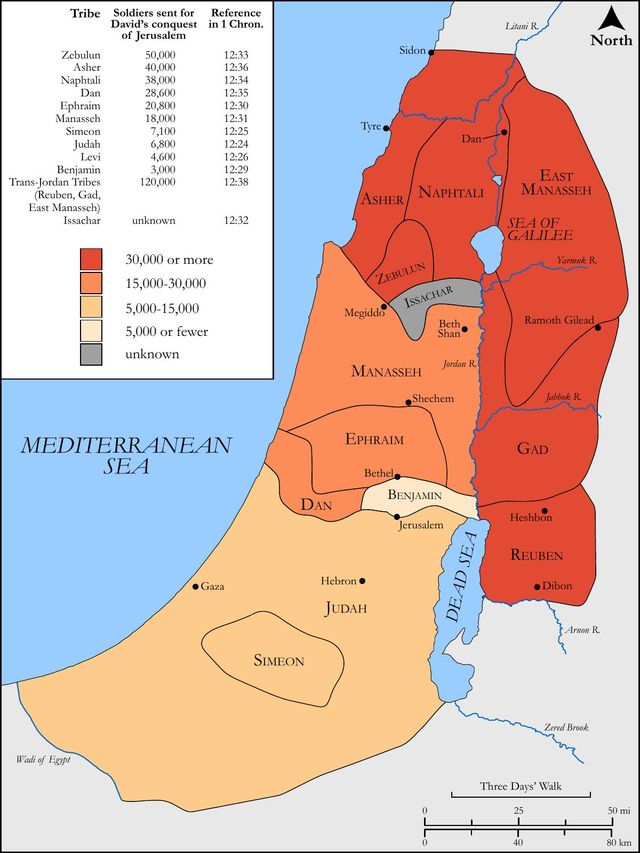
I.That those tribes that lived nearest brought the fewest - Judah but 6800 (Ch1 12:24), Simeon but 7100 (Ch1 12:25); whereas Zebulun, that lay remote, brought 50,000, Asher 40,000, and the two tribes and a half on the other side Jordan 120,000. Not as if the next adjacent tribes were cold in the cause; but they showed as much of their prudence in bringing few, since all the rest lay so near within call, as the others did of their zeal in bringing so many. The men of Judah had enough to do to entertain those that came from afar.
II.The Levites themselves, and the priests (called here the Aaronites), appeared very hearty in this cause, and were ready, if there were occasion, to fight for David, as well as pray for him, because they knew he was called of God to the government, Ch1 12:26-28.
III.Even some of the kindred of Saul came over to David (Ch1 12:29), not so many as of the other tribes, because a foolish affection for their own tribe, and a jealousy for the honour of it, kept many of them long in the sinking interest of Saul's family. Kindred should never over-rule conscience. Call no man Father to this extent, but God only.
IV.It is said of most of these that they were mighty men of valour (Ch1 12:25, Ch1 12:28, Ch1 12:30), of others that they were expert in war (Ch1 12:35, Ch1 12:36), and of them all that they could keep rank, Ch1 12:38. They had a great deal of martial fire, and yet were governable and subject to the rules of order - warm hearts but cool heads.
V.Some were so considerate as to bring with them arms, and all instruments for war (Ch1 12:24, Ch1 12:33, Ch1 12:37), for how could they think that David should be able to furnish them?
VI.The men of Issachar were the fewest af all, only 200, and yet as serviceable to David's interest as those that brought in the greatest numbers, these few being in effect the whole tribe. For, 1. They were men of great skill above any of their neighbours, men that had understanding of the times, to know what Israel ought to do. They understood the natural times, could discern the face of the sky, were weather-wise, could advise their neighbours in the proper times for ploughing, sowing reaping, etc. Or the ceremonial times, the times appointed for the solemn feasts; therefore they are said to call the people to the mountain (Deu 33:19), for almanacs were not then so common as now. Or, rather, the political times; they understood public affairs, the temper of the nation, and the tendencies of the present events. It is the periphrasis of statesmen that they know the times, Esth. 1. 13. Those of that tribe were greatly intent on public affairs, had good intelligence from abroad and made a good use of it. They knew what Israel ought to do: from their observation and experience they learned both their own and others' duty and interest. In this critical juncture they knew Israel ought to make David king. It was not only expedient, but necessary; the present posture of affairs called for it. The men of Issachar dealt mostly in country business, and did not much intermeddle in public affairs, which gave them an opportunity of observing others and conversing with themselves. A stander-by sees sometimes more than a gamester. 2. They were men of great interests; for all their brethren were at their commandment. The commonality of that tribe having bowed their shoulder to bear (Gen 49:15), the great men had them at their beck. Hence we read of the princes of Issachar, Jdg 5:15. They knew how to rule, and the rest knew how to obey. It is happy indeed when those that should lead are intelligent and judicious, and those who are to follow are modest and obsequious.
VII.It is said of them all that they engaged in this enterprise with a perfect heart (Ch1 12:38), and particularly of the men of Zebulun that they were not of double heart, Ch1 12:33. They were, in this matter, Israelites indeed, in whom was no guile. And this was their perfection, that they were of one heart, Ch1 12:38. None had any separate interests, but all for the public good.
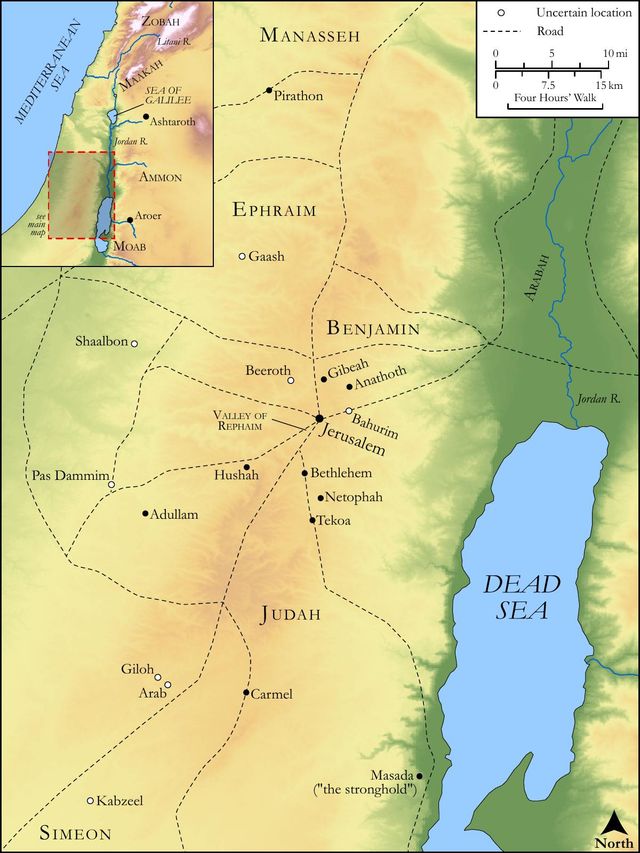
VIII.The men of Judah, and others of the adjacent tribes, prepared for the victualling of their respective camps when they came to Hebron, Ch1 12:39, Ch1 12:40. Those that were at the least pains in travelling to this convention, or congress of states, thought themselves obliged to be at so much the more charge in entertaining the rest, that there might be something of an equality. A noble feast was made (was made for laughter, Ecc 10:19) upon this occasion, for there was joy in Israel, Ch1 12:40. And good reason; for when the righteous bear rule the city rejoices. Thus, when the throne of Christ is set up in a soul, there is, or ought to be, great joy in that soul: and provision is made for the feasting of it, not as here for two or three days, but for the whole life, nay, for eternity.
Continue studying 1 Chronicles 12:40 across the web’s major study libraries — every link below opens this exact verse, chapter, or book on the destination site.
Read & Compare
 BibleGatewayThis verse in more than 200 translations and 70 languages.
 Bible.comThe YouVersion reader — hundreds of translations, reading plans, and highlights.
 ESV.orgCrossway's official English Standard Version reader.
 NET BibleThe NET translation with 60,000+ translators' notes on every rendering decision.
 STEP BibleTyndale House's free study tool — original text, vocabulary, and scholarly resources.
 BibliaLogos Bible Software's free web reader.
 USCCBThe New American Bible (Revised Edition) with the U.S. bishops' study notes.
Commentaries
 BibleHub CommentariesDozens of classic commentaries on this verse, gathered on one page.
 StudyLightMore than 100 commentary sets — the largest collection on the web.
 BibleRefPlain-English commentary on what this verse means, verse by verse.
 Enduring WordDavid Guzik's free commentary on this chapter, widely used by Bible teachers.
 Bible Study ToolsVerse commentary alongside Greek and Hebrew study aids.
Original Language & Research
- BibleHub InterlinearThe verse word by word — original language, transliteration, and English.
- BibleHub LexiconEvery word's original-language definition and Strong's entry.
 Blue Letter BibleDeep-study tools — Strong's numbers, concordance, and word studies.
 SefariaThe Hebrew text with Rashi and centuries of Jewish commentary.
Sermons, Hymns & Audio


TrulyRandomVerse is not affiliated with these sites and doesn’t control their content. They’re linked because they’re genuinely useful.
Summary
1 Chronicles 12:40 provides a vivid and triumphant conclusion to the account of David's coronation at Hebron, detailing the overwhelming national support he received. It describes the vast quantities of provisions, including food, wine, oil, and livestock, brought by various tribes, even those from distant northern regions like Issachar, Zebulun, and Naphtali. This abundant generosity, transported on various pack animals, was a tangible expression of the profound unity and pervasive joy that permeated all Israel, signifying a pivotal moment of peace, stability, and divine blessing as God's chosen king was finally established over the united nation.
Context
ShowHideLiterary Context
This verse serves as the grand finale to a detailed enumeration of the warriors and leaders from all twelve tribes who assembled at Hebron to make David king (1 Chronicles 12:1-39). Following the meticulous listing of military contingents, their armaments, and their unwavering loyalty to David, verse 40 shifts the narrative focus from the martial strength to the communal celebration and logistical outpouring of support. It highlights the practical manifestation of the national consensus for David's kingship, demonstrating that the support extended beyond mere military allegiance to include widespread, joyful provision from even the most distant territories. The preceding verses establish the who and why of this monumental gathering, while this verse beautifully encapsulates the how and the prevailing atmosphere of unity, generosity, and celebration that marked the dawn of David's reign.
Historical & Cultural Context
The historical setting for this event is immediately after the death of Ish-bosheth, Saul's son, which paved the way for David to be recognized as king over all Israel, having already reigned seven years over Judah in Hebron. The act of bringing abundant provisions was a deeply ingrained cultural practice in the ancient Near East, signifying allegiance, tribute, and participation in communal feasting, particularly during significant national or religious events. The specific mention of tribes like Issachar, Zebulun, and Naphtali, situated in the northernmost parts of Israel, underscores the truly national scope of this unification, transcending previous regional divisions and loyalties. The diverse array of pack animals (asses, camels, mules, oxen) mentioned points to the immense scale of the journey and the substantial wealth of goods transported, reflecting the agricultural prosperity of these regions and the extraordinary effort expended to support the newly established king. This period marked a crucial transition from civil strife to national unity, a moment of profound significance for the nascent kingdom of Israel.
Key Themes
ShowHide1 Chronicles 12:40 powerfully encapsulates several overarching themes central to the Chronicler's theological agenda. Firstly, it emphatically underscores the theme of national unity under God's chosen king, a paramount concern for the Chronicler who sought to present a unified Israel under the Davidic covenant. The widespread participation and generous provisioning from diverse tribes vividly illustrate this cohesion, emphasizing that David's kingship was a divinely ordained reality embraced by all. Secondly, the verse highlights divine blessing and abundance, as the sheer volume and variety of provisions suggest God's favor upon this pivotal moment of establishing the monarchy. This echoes themes of God's faithful provision seen throughout Israel's history, such as the manna in the wilderness, or the prosperity experienced under righteous leadership, as promised in Deuteronomy 28. Finally, the concluding phrase, "for there was joy in Israel," emphasizes celebration and spiritual rejoicing. This joy is not merely political but deeply rooted in the fulfillment of God's plan for His people, bringing stability and hope after years of turmoil, much like the fullness of joy found in God's presence as described in Psalm 16:11.
Exposition and Analysis
ShowHideKey Word Analysis
ShowHideThis noun signifies "abundance (in any respect)." Its placement at the conclusion of the long list of provisions emphatically underscores the sheer overwhelming generosity and the vast scale of the supplies brought. It denotes not merely sufficiency, but an overflowing, lavish provision, highlighting the wealth of the contributing tribes and the fervent enthusiasm with which they supported David's coronation. It paints a vivid picture of overflowing blessing and communal generosity.
This noun denotes "blithesomeness or glee, (religious or festival)." It represents a deep, communal sense of happiness, often associated with religious festivals, celebrations of victory, or the establishment of a king. Here, it signifies the profound emotional and spiritual atmosphere of the event. This was not a reluctant political transition but a moment of national jubilation, stemming from the long-awaited unification of the tribes under God's anointed king, bringing an end to civil strife and promising a new era of peace and stability. It speaks to a profound sense of well-being and divine favor.
Verse Breakdown
ShowHide"Moreover they that were nigh them, [even] unto Issachar and Zebulun and Naphtali, brought bread on asses, and on camels, and on mules, and on oxen,"
This opening clause specifies the widespread origin of the provisions, extending beyond the immediate vicinity to include distant northern tribes. This detail powerfully underscores the truly national scope of support for David's kingship. The mention of various pack animals highlights the immense logistical effort involved and the vast quantity of goods transported, indicating both the wealth and the profound dedication of the people to their new king.
"[and] meat, meal, cakes of figs, and bunches of raisins, and wine, and oil, and oxen, and sheep abundantly:"
This extensive catalogue of provisions showcases the incredible generosity, forethought, and agricultural prosperity of the people. It includes essential staples (bread, meal), rich and celebratory foods (meat, cakes of figs, bunches of raisins), and vital liquids (wine, oil), alongside valuable livestock (oxen, sheep). The sheer variety and the concluding "abundantly" emphasize the overflowing nature of the supply, indicating a communal feast of immense proportions and a time of great prosperity and shared resources.
"for [there was] joy in Israel."
This concluding phrase provides the theological and emotional rationale for the preceding actions. The lavish provisions and widespread support were not merely practical necessities but spontaneous and heartfelt expressions of a deep, pervasive joy that permeated the entire nation. This joy was rooted in the establishment of God's chosen king, the long-awaited unification of the tribes, and the promise of peace and stability after years of division. It signifies a profound spiritual and national celebration, recognizing God's sovereign hand in David's ascension.
Literary Devices
ShowHideThe Chronicler masterfully employs several literary devices in 1 Chronicles 12:40 to convey the profound significance of David's coronation. The most prominent is Enumeration, evident in the detailed list of provisions ("bread... meat, meal, cakes of figs, and bunches of raisins, and wine, and oil, and oxen, and sheep"). This extensive catalogue not only provides vivid imagery but also emphasizes the sheer abundance and variety of the supplies, underscoring the generosity of the people and the immense scale of the gathering. The use of Hyperbole or Exaggeration is strongly implied by the term "abundantly" (Hebrew, rôb'), suggesting an overflowing, almost limitless supply, which amplifies the sense of divine blessing and national enthusiasm. Finally, the verse concludes with a powerful statement of Cause and Effect, where the lavish provisions and widespread support are directly attributed to the prevailing "joy in Israel." This establishes a direct and profound link between the physical manifestation of unity and generosity and the underlying emotional and spiritual state of the nation, highlighting the deep significance of David's kingship as a source of national rejoicing.
Theological and Thematic Connections
ShowHideThis verse profoundly illustrates the theological principle that when God's people unite under His appointed leadership and purpose, there is not only abundant provision but also overwhelming joy. The lavish outpouring of resources from across the nation for David's coronation signifies a willing and joyful submission to God's plan for His kingdom. This communal generosity and celebration foreshadow the ideal state of God's people, where unity, provision, and spiritual gladness coalesce. It reminds us that true joy often accompanies obedience and participation in God's redemptive work, reflecting a heart aligned with divine purposes.
Reflection and Application
ShowHideThe scene at Hebron, culminating in 1 Chronicles 12:40, offers a powerful blueprint for community and faith, resonating deeply with believers today. It speaks to the transformative power of unity, where diverse individuals and groups set aside differences to rally around a common, God-ordained purpose. The overwhelming generosity displayed by the tribes, bringing forth their best and most abundant resources, challenges us to consider our own stewardship and willingness to contribute to the greater good of God's kingdom. This is not merely about financial giving, but about dedicating our time, talents, and energy to support the work of the church and advance the Gospel. Ultimately, the pervasive "joy in Israel" serves as a profound reminder that true and lasting joy is found not in personal accumulation, but in participating in God's unfolding plan, witnessing His purposes fulfilled, and experiencing the blessing of communal fellowship. When we align our hearts with God's will and generously serve His purposes, we too can experience a profound, overflowing joy that transcends circumstances, reflecting the very heart of God.
Questions for Reflection
ShowHideFAQ
ShowHideWhy were these specific tribes (Issachar, Zebulun, Naphtali) mentioned as bringing provisions?
ShowHideThese tribes were located in the northern regions of Israel, relatively distant from Hebron in Judah, where David was being crowned. Their specific mention emphasizes the truly national scope of the support for David's kingship. It demonstrates that the unification under David was not just a regional affair but encompassed the entire land, from north to south, signifying a comprehensive and enthusiastic consensus for his reign. It highlights the widespread loyalty and dedication that stretched across all geographical boundaries within Israel, showing that David's authority was recognized and celebrated by all. This broad participation underscored the legitimacy and divine favor upon David's rule over a united Israel, fulfilling God's promises for His people.
What is the significance of the "abundance" of provisions mentioned in the verse?
ShowHideThe "abundance" (Hebrew, rôb') of provisions signifies several important aspects. Firstly, it indicates the immense scale of the gathering at Hebron; a vast number of people required a vast amount of food and supplies for an extended period of celebration. Secondly, it speaks to the extraordinary generosity and dedication of the people. They were not merely meeting a need but giving lavishly out of a spirit of celebration and fervent support for God's chosen king. Thirdly, and most significantly in the Chronicler's theology, it can be seen as a sign of divine blessing and prosperity. Such overflowing provision often reflects God's favor upon a righteous endeavor or a unified people, much like the blessings promised for obedience in Deuteronomy 28. This abundance underscored the joy and the sense of a new, prosperous era dawning under David's reign, marking a time of peace and divine favor.
How does the "joy in Israel" relate to the act of bringing provisions?
ShowHideThe phrase "for there was joy in Israel" serves as the ultimate explanation and motivation for the preceding actions. The bringing of abundant provisions was not a reluctant duty or a mere logistical necessity, but a spontaneous and joyful expression of national unity and celebration. The people were genuinely thrilled to see David, God's anointed, finally established as king over all Israel, bringing an end to years of civil strife and promising peace and stability. This deep, pervasive joy fueled their generosity and willingness to share their resources, transforming a practical necessity into a heartfelt offering. It highlights that true service and giving often flow from a heart filled with gladness and a profound recognition of God's hand at work, echoing the sentiment that the "joy of the Lord is your strength" found in Nehemiah 8:10.
Christ-Centered Fulfillment
ShowHideWhile 1 Chronicles 12:40 describes the earthly coronation of David, a king after God's own heart, it profoundly foreshadows the ultimate reign of Jesus Christ, the Son of David and the true King of kings. The widespread unity and overwhelming joy in Israel at David's enthronement point to the greater spiritual reality of the Church, the body of Christ, gathering under its true and eternal King. Just as diverse tribes brought their abundance to support David, believers from every tribe, tongue, people, and nation are called to bring their gifts, resources, and lives in joyful submission to Christ, who is "head over everything for the church" (Ephesians 1:22). The "joy in Israel" at the establishment of an earthly kingdom, though profound, pales in comparison to the eternal, unshakeable joy that permeates the new creation, inaugurated by Christ's redemptive work. His kingdom is not merely one of political stability but of spiritual peace and righteousness, where "the kingdom of God is righteousness and peace and joy in the Holy Spirit" (Romans 14:17). The abundant provisions brought to David prefigure the spiritual nourishment and overflowing grace found in Christ, who is the "bread of life" (John 6:35) and the source of living water, providing all that is needed for eternal life and spiritual sustenance. Ultimately, the scene at Hebron is a beautiful, albeit incomplete, picture of the universal allegiance and profound rejoicing that will characterize the full establishment of Christ's eternal kingdom, where every knee will bow and every tongue confess that Jesus Christ is Lord, to the glory of God the Father (Philippians 2:10-11).