


Revelation 6:1
Bible text: King James Version (1769 Blayney text) · Public domain
Bible text: King James Version with Strong's numbers · Public domain
Bible text: Berean Standard Bible · Public domain
Bible text: American Standard Version (1901) · Public domain
Bible text: World English Bible, Messianic edition · Public domain
Bible text: Geneva Bible (1599) · Public domain
Bible text: Young's Literal Translation · Public domain
- ΚαὶKaiAndG2532CONJConjunction
- εἶδονeidonI watchedG1492V-2AAI-1SVerb 2nd Aorist Active Indicative 1st Singular
- ὅτεhotewhenG3753CONJConjunction
- ἤνοιξενēnoixenopenedG455V-2AAI-3SVerb 2nd Aorist Active Indicative 3rd Singular
- τὸtotheG3588T-NSNDefinite article Nominative Singular Neuter
- ἀρνίονarnionLambG721N-NSNNoun Nominative Singular Neuter
- μίανmianoneG1520A-ASFAdjective Accusative Singular Feminine
- ἐκekofG1537PREPPreposition
- τῶνtōntheG3588T-GPFDefinite article Genitive Plural Feminine
- σφραγίδωνsphragidōnsealsG4973N-GPFNoun Genitive Plural Feminine
- καὶkaiandG2532CONJConjunction
- ἤκουσαēkousaI heardG191V-AAI-1SVerb Aorist Active Indicative 1st Singular
- ἑνὸςhenosoneG1520A-GSNAdjective Genitive Singular Neuter
- ἐκekofG1537PREPPreposition
- τῶνtōntheG3588T-GPNDefinite article Genitive Plural Neuter
- τεσσάρωνtessarōnfourG5064A-GPNAdjective Genitive Plural Neuter
- ζῴωνzōōnliving creaturesG2226N-GPNNoun Genitive Plural Neuter
- λέγοντοςlegontossayingG3004V-PAP-GSNVerb Present Active Participle Genitive Singular Neuter
- ὡςhōslikeG5613PRTParticle or Disjunctive
- φωνὴphōnēa voiceG5456N-DSFNoun Dative Singular Feminine
- βροντῆς·brontēsof thunderG1027N-GSFNoun Genitive Singular Feminine
- ἔρχουerchouComeG2064V-PNM-2SVerb Present Middle Or Passive Deponent Imperative 2nd Singular
- καὶkaiandG2532CONJConjunction
- βλέπεblepedo heedG991V-PAM-2SVerb Present Active Imperative 2nd Singular
English is a literal word-by-word gloss of the Greek, not the KJV's wording. Why?
This is the original text the KJV's translators worked from — each Greek word with its own literal English meaning in this verse, prepared by scholars at Tyndale House, Cambridge. The KJV translates whole sentences, not word by word, so its wording differs: one Greek word can become several English words, and the KJV may choose “charity” where the gloss reads “love”. Both are faithful — they answer different questions. For the KJV's own rendering, switch to the KJV text.
Details
See on the biblical-era maps

Study this verse
Public-domain commentary
Matthew Henry
From his Commentary on the Whole Bible. Henry comments on passages, not single verses — this entry covers Revelation 6:1–2.
Here, 1. Christ, the Lamb, opens the first seal; he now enters upon the great work of opening and accomplishing the purposes of God towards the church and the world. 2. One of the ministers of the church calls upon the apostle, with a voice like thunder, to come near, and observe what then appeared. 3. We have the vision itself, Rev 6:2. (1.) The Lord Jesus appears riding on a white horse. White horses are generally refused in war, because they make the rider a mark for the enemy; but our Lord Redeemer was sure of the victory and a glorious triumph, and he rides on the white horse of a pure but despised gospel, with great swiftness through the world. (2.) He had a bow in his hand. The convictions impressed by the word of God are sharp arrows, they reach at a distance; and, though the ministers of the word draw the bow at a venture, God can and will direct it to the joints of the harness. This bow, in the hand of Christ, abides in strength, and, like that of Jonathan, never returns empty. (3.) A crown was given him, importing that all who receive the gospel must receive Christ as a king, and must be his loyal and obedient subjects; he will be glorified in the success of the gospel. When Christ was going to war, one would think a helmet had been more proper than a crown; but a crown is given him as the earnest and emblem of victory. (4.) He went forth conquering, and to conquer. As long as the church continues militant Christ will be conquering; when he has conquered his enemies in one age he meets with new ones in another age; men go on opposing, and Christ goes on conquering, and his former victories are pledges of future victories. He conquers his enemies in his people; their sins are their enemies and his enemies; when Christ comes with power into their soul he begins to conquer these enemies, and he goes on conquering, in the progressive work of sanctification, till he has gained us a complete victory. And he conquers his enemies in the world, wicked men, some by bringing them to his foot, others by making them his footstool. Observe, From this seal opened, [1.] The successful progress of the gospel of Christ in the world is a glorious sight, worth beholding, the most pleasant and welcome sight that a good man can see in this world. [2.] Whatever convulsions and revolutions happen in the states and kingdoms of the world, the kingdom of Christ shall be established and enlarged in spite of all opposition. [3.] A morning of opportunity usually goes before a night of calamity; the gospel is preached before the plagues are poured forth. [4.] Christ's work is not all done at once. We are ready to think, when the gospel goes forth, it should carry all the world before it, but it often meets with opposition, and moves slowly; however, Christ will do his own work effectually, in his own time and way.
Historical interpretation
Seven Centuries of Reception
8 surviving comments on this verse. Each one is dated, so this reads as a timeline rather than a list.
Select a marker to jump to its quote. Markers stagger vertically where authors wrote within a few decades of each other.
"And when the Lamb had opened one of the seven seals, I saw, and heard one of the four living creatures saying, Come and see. And, lo, a white horse, and He who sate upon him had a bow." The first seal being opened, he says that he saw a white horse, and a crowned horseman having a bow. For this was at first done by Himself. For after the Lord ascended into heaven and opened all things, He sent the Holy Spirit, whose words the preachers sent forth as arrows reaching to the human heart, that they might overcome unbelief. And the crown on the head is promised to the preachers by the Holy Spirit. The other three horses very plainly signify the wars, famines, and pestilences announced by our Lord in the Gospel. And thus he says that one of the four living creatures said (because all four are one), "Come and see." "Come" is said to him that is invited to faith; "see" is said to him who saw not. Therefore the white horse is the word of preaching with the Holy Spirit sent into the world. For the Lord says, "This Gospel shall be preached throughout the whole world for a testimony to all nations, and then shall come the end."
He said, “I heard one of the four animals say, ‘Come and see.’ ” This one animal is the whole church preaching with a great voice and inviting the church to greater faith, “Come and see!” “If anyone thirsts, let him come and drink.” “Approach him and you will be illuminated.” “Arise, you who sleep, arise from the dead, and Christ will illuminate you.”
Indeed, here is indicated the good order of those in heaven, which descends from the first ranks to the second. And therefore from one figure of the four-formed living creatures, namely, from the lion, he heard the first voice that gave the command, “Come!” to the angel who mystically symbolizes the vision. The first living creature, the lion, seems to me to signify the royal intention of the apostles against the demons. Concerning them it is said, “Behold, the kings of the earth have gathered together.” And again: “You will establish them as rulers over all the earth.”
And I heard one of the four living creatures saying: Come and see. We too are admonished with great voices of the Gospel to behold the glory of the Church.
And I saw when the Lamb had opened one of the seals. Since the signs are first loosened and then the book is opened, He wisely reversed the usual order. For the Lord, by suffering and rising again, taught that He is the end of the law. And ascending into heaven, sending the Holy Spirit, He strengthened the Church with the gift of a more secret mystery. Therefore, He opened the book then, and now He loosens its seals. In the first seal, the glory of the primitive Church; in the following three, the threefold war against her; in the fifth, the glory of those who triumphed in this war; in the sixth, those things that will come in the time of the Antichrist, with a brief recapitulation of the previous ones; in the seventh, he sees the beginning of eternal rest.
And when the Lamb had opened one of the seven seals, I heard one of the four living creatures, as it were the voice of a great thunder, saying: Come, and see. The opening of a seal is the revelation of a mystery. Now since there is not one, but many mysteries, and it would be long to speak about every one of them individually, all of them can be encompassed in three kinds, namely one kind pertaining to speech, one pertaining to cognition, and one pertaining to action. Speech includes in itself all commandments. Cognition, when applied according to the rules, teaches us the forms of understanding. As for action, it is in harmony with both. After one of the seven seals has been opened, one of the four living creatures invites John, in the manner of a great thunder, to come and see, because, after the truth has been manifested, the Church that precedes, consisting of the apostles, calls to faith the one that follows.
QUESTION: And I saw that the Lamb had opened one of the seals. ANSWER: Since you first loose the seals before opening a book, he has reversed the normal order for a certain reason. When the Lord suffered and was resurrected, he informed us that he was the end of the law, and when he went up to heaven and sent the Holy Spirit, he strengthened the Church with the gift of a more secret mystery. Therefore he opened the book then, and now he is loosing its seals. So, in the first seal, John sees the honor of the primitive Church; in the following three, the threefold war against the Church; in the fifth, the glory of the winners in this war; in the sixth, the things that are to come in the time of the Antichrist; and, after recapitulating previous events a bit, in the seventh, he sees the beginning of eternal rest.
The closing and sealing of the little scroll, which contains the names of the people written in it, signifies that it is unalterable, and that their mouths are shut from any justification before God, according to what has been previously stated (Rev. 5:1). Therefore, the gradual removal of the seals signifies the gradual repetition of the boldness and intimacy toward God, which the only begotten One, having become incarnate, has made possible for us by correcting our shortcomings through His own deeds. It must be understood that the breaking of each seal signifies one of the acts performed by the Lord for our salvation, and also those carried out by Him against the spiritual enemies of our souls. For the Lord's providence toward us involves the overthrow of those powers.
Let no one be amazed at those things that will happen, that the Only Begotten existed before becoming incarnate; for the works and deeds before His coming to us are shown to the divine evangelist through vision. Yet, He appears as a Lamb in the revelation, as if slain.
For it is customary that what is seen by the prophets serves as a pre-announcement of things to come. Therefore, a man long ago contended with Jacob (Gen. 32:24), a type of Christ; thus, Isaiah saw the prophetess conceiving in her womb and bearing a son, whose name is also called, "Despoil Quickly, Plunder Rapidly." (Isa. 8:3) Thus Daniel saw the Son of Man, still without flesh, God, the Word coming to the Ancient of Days. (Dan. 7:13)
Therefore, the first blessing, which pertains to our race through our Savior Christ, is the one that opened the first seal of the little scroll and established the beginning of leading us back to where we came from, out of the transgression in Adam, and to recover for us the lost relationship with God and to transfer our previously forbidden access into boldness. This is the bodily birth established by the Lord, which sanctified our birth so that we are no longer conceived in lawlessness and carried in sins by our mothers, but we have a holy birth of Christ through our own birth, by which the human birth is blessed. And a witness to such a noble ambition toward humanity is the divine apostle, who writes: "since your children are unclean, but now they are holy." (1 Cor. 7:14)
When the first seal was opened, he said he saw a white horse coming forth from those spiritual holy beings, holding a bow; and a crown was given to him, and he went out conquering so that he might conquer. A white horse serves as a symbol of the Gospel, representing the good will to be bestowed upon humanity. The crown, on the other hand, signifies power and victory. It came forth bearing the crown with Christ, as the one who began to conquer the Devil who had enslaved our race. It is said that He came forth so that the one who conquers may be victorious. Christ was the one who conquers, so that he may conquer completely, and the symbol of victory he bore was the crown. This is the first seal.
Continue studying Revelation 6:1 across the web’s major study libraries — every link below opens this exact verse, chapter, or book on the destination site.
Read & Compare
 BibleGatewayThis verse in more than 200 translations and 70 languages.
 Bible.comThe YouVersion reader — hundreds of translations, reading plans, and highlights.
 ESV.orgCrossway's official English Standard Version reader.
 NET BibleThe NET translation with 60,000+ translators' notes on every rendering decision.
 STEP BibleTyndale House's free study tool — original text, vocabulary, and scholarly resources.
 BibliaLogos Bible Software's free web reader.
 USCCBThe New American Bible (Revised Edition) with the U.S. bishops' study notes.
Commentaries
 BibleHub CommentariesDozens of classic commentaries on this verse, gathered on one page.
 StudyLightMore than 100 commentary sets — the largest collection on the web.
 BibleRefPlain-English commentary on what this verse means, verse by verse.
 Enduring WordDavid Guzik's free commentary on this chapter, widely used by Bible teachers.
 Bible Study ToolsVerse commentary alongside Greek and Hebrew study aids.
Original Language & Research
- BibleHub InterlinearThe verse word by word — original language, transliteration, and English.
- BibleHub LexiconEvery word's original-language definition and Strong's entry.
 Blue Letter BibleDeep-study tools — Strong's numbers, concordance, and word studies.
 CNTR CollationThe earliest Greek manuscripts of this verse, collated letter by letter.
Sermons, Hymns & Audio


TrulyRandomVerse is not affiliated with these sites and doesn’t control their content. They’re linked because they’re genuinely useful.
Summary
Revelation 6:1 initiates the dramatic unveiling of God's final judgments, shifting the focus from the heavenly throne room's worship to the unfolding of divine wrath on earth. This pivotal verse describes the Lamb, Jesus Christ, commencing the opening of a scroll sealed with seven seals, an act accompanied by a thunderous pronouncement from one of the four living creatures, inviting the Apostle John to witness the ensuing events. It marks the beginning of the apocalyptic sequence that reveals God's sovereign control over history and His ultimate plan for redemption and judgment.
Context
ShowHideLiterary Context
This verse serves as the immediate sequel to the profound worship scenes in Revelation 4 and Revelation 5. In Revelation 4, John is granted a vision of God's majestic throne, surrounded by twenty-four elders and four living creatures, all engaged in ceaseless worship, establishing God's absolute sovereignty. Revelation 5 then introduces a scroll sealed with seven seals, which no one in heaven or on earth is found worthy to open. The tension builds until the "Lion of the tribe of Judah, the Root of David" is declared worthy, who is then revealed as a "Lamb as it had been slain" (Revelation 5:5-6). Thus, Revelation 6:1 is the climactic moment where the worthy Lamb begins to execute the divine plan contained within the scroll, transitioning the narrative from heavenly praise to earthly judgment.
Historical & Cultural Context
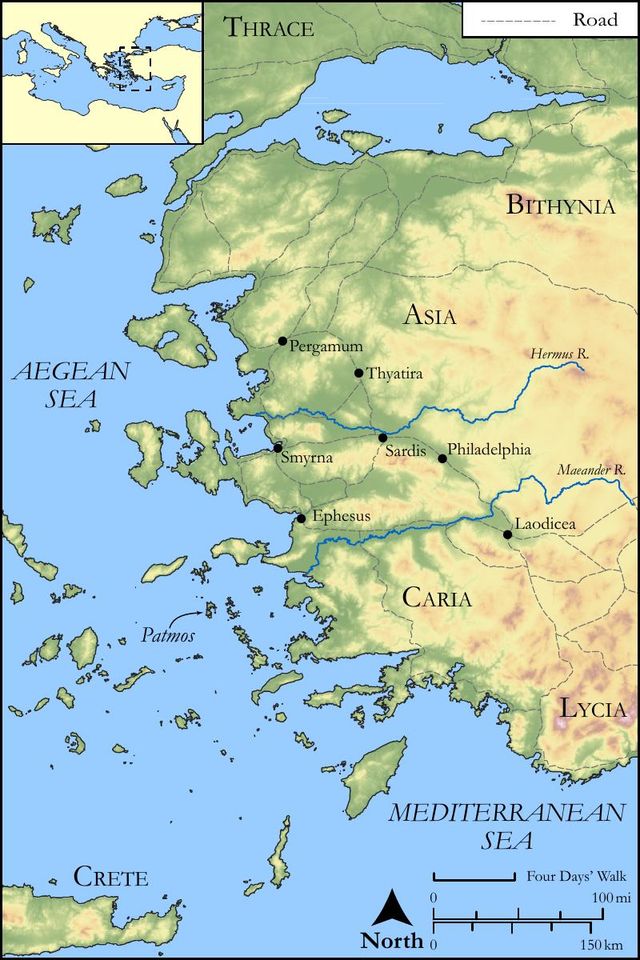
The Book of Revelation was written during a period of intense persecution for early Christians, likely under the Roman Emperor Domitian (c. AD 95). John, exiled on the island of Patmos, received these visions as a message of hope, warning, and encouragement to the seven churches in Asia Minor (Revelation 1:4). The imagery used, such as seals, scrolls, and apocalyptic beasts, would have resonated with Jewish prophetic traditions (e.g., Daniel, Ezekiel) and Hellenistic literary conventions, though reinterpreted through a Christ-centered lens. Seals on a scroll often indicated legal documents, wills, or prophecies that were to remain closed until a specific time or by a specific authority. The act of opening the seals signifies the divine decree being put into action, revealing God's preordained plan for history, which includes both judgment on evil and ultimate vindication for His people.
Key Themes
ShowHideRevelation 6:1 powerfully contributes to several overarching themes in Revelation. Foremost is the Sovereignty of God and the Lamb's Authority. The fact that only the Lamb is worthy to open the seals (Revelation 5:2-5) underscores Jesus Christ's unique authority, earned through His sacrificial death and resurrection, to execute God's eschatological plan. This verse also introduces the theme of Divine Judgment, as the opening of each subsequent seal unleashes a new wave of tribulation upon the earth. The "noise of thunder" itself is a recurring motif in biblical literature, often associated with the Manifestation of God's Presence and Power, particularly in contexts of judgment or covenant establishment, as seen at Mount Sinai. Finally, the command "Come and see" highlights the Revelatory Nature of the entire book, inviting John (and by extension, the reader) to bear witness to these profound and often terrifying truths about God's unfolding plan.
Exposition and Analysis
ShowHideKey Word Analysis
ShowHideRefers to Jesus Christ, consistently portrayed in Revelation as the sacrificial yet triumphant Lamb (Revelation 5:6). The diminutive form "lambkin" emphasizes His tender nature, yet He is simultaneously the powerful executor of divine judgment, highlighting the paradox of His character.
This word signifies a loud, rumbling noise, often associated with divine power, presence, and judgment in biblical contexts (Exodus 19:16). Its presence here signals the gravity and awe-inspiring nature of the events about to unfold, indicating a direct divine intervention.
This verb means "to look at (literally or figuratively)," "to perceive," or "to regard." In this context, it is an imperative, "see!", inviting John to observe closely and comprehend the vision that is being revealed. It underscores the visual and revelatory nature of the apocalyptic experience.
Verse Breakdown
ShowHide"¶ And I saw when the Lamb opened one of the seals,"
John, the visionary, witnesses the pivotal moment. The "Lamb," identified as Jesus Christ in Revelation 5, takes action, opening the first of seven seals on the scroll. This act signifies the commencement of God's preordained plan for the end times, demonstrating the Lamb's unique authority and worthiness to initiate these events.
"and I heard, as it were the noise of thunder,"
Immediately following the opening of the seal, John hears a sound described as "the noise of thunder." This powerful auditory imagery emphasizes the solemnity, majesty, and divine power behind the unfolding judgments. Thunder often accompanies theophany (manifestations of God) and divine pronouncements in Scripture, signaling the awesome presence and action of God.
"one of the four beasts saying, Come and see."
One of the four living creatures, described in Revelation 4:6-8 as guardians of God's throne, issues a command. The phrase "Come and see" (or "Come!" in some manuscripts) is an invitation to John to witness the events that are about to be revealed as a direct consequence of the seal's opening. It highlights the revelatory nature of the vision and draws the reader into the unfolding drama.
Literary Devices
ShowHideRevelation 6:1 is rich with Symbolism. The "Lamb" is a profound symbol for Jesus Christ, representing both His sacrificial atonement and His ultimate power and authority. The "seals" symbolize divine decrees or judgments that are hidden until the appointed time and opened by the only worthy one. The "noise of thunder" serves as Auditory Imagery, evoking a sense of awe, power, and divine presence, often signaling the onset of judgment. The "four beasts" (more accurately, "living creatures") are symbolic guardians of God's throne, and their command, "Come and see," functions as a dramatic Invitation, drawing the reader into the unfolding apocalyptic narrative and emphasizing the revelatory nature of John's vision. The entire scene is imbued with Dramatic Irony, as the Lamb, once slain, is now the one initiating the judgments that will bring about the consummation of history.
Theological and Thematic Connections
ShowHideRevelation 6:1 powerfully establishes the Lamb's ultimate authority and central role in God's eschatological plan. It underscores that the unfolding of history, including periods of tribulation and judgment, is not random but is under the sovereign control of the resurrected Christ. The Lamb, who triumphed through self-sacrifice, is now revealed as the active agent of divine justice, demonstrating that His redemptive work is inextricably linked to His role as judge and executor of God's will. This verse reassures believers that even in the midst of terrifying events, God's purposes are being meticulously fulfilled, leading to the ultimate establishment of His kingdom.
Reflection and Application
ShowHideRevelation 6:1 calls us to a profound trust in the sovereignty of Jesus Christ, the Lamb. In a world often characterized by chaos, injustice, and seemingly random events, this verse reminds us that there is a divine hand orchestrating all of history according to an ultimate purpose. The fact that the Lamb—our Savior—is the one opening the seals should bring both comfort and a sober realization of the gravity of God's plan. It means that even the most terrifying judgments are not arbitrary but are part of a righteous and holy design, executed by the one who loves us most. This should inspire us to live with a sense of urgency, recognizing the temporary nature of this world and the eternal significance of our choices. It compels us to align our lives with God's will, to participate in His redemptive mission, and to anticipate His glorious return with both reverence and hope.
Questions for Reflection
ShowHideFAQ
ShowHideWhy is the Lamb the only one worthy to open the seals?
ShowHideThe Lamb, Jesus Christ, is declared worthy in Revelation 5:2-5 because He triumphed through His sacrificial death and resurrection. He is the "Lion of the tribe of Judah, the Root of David" who has conquered, making Him uniquely qualified to execute God's plan of redemption and judgment. His worthiness stems from His divine nature, His perfect obedience, and His atoning work on the cross, which alone satisfied divine justice and secured victory over sin and death.
What do the "seals" represent in Revelation?
ShowHideThe seven seals on the scroll represent a series of divine decrees or judgments that are progressively revealed and executed as each seal is broken. They contain God's predetermined plan for the end times, leading to the consummation of history and the establishment of His eternal kingdom. The opening of the seals initiates a sequence of events that bring about tribulation, war, famine, death, and ultimately, God's righteous wrath upon the earth, culminating in the final judgment.
Christ-Centered Fulfillment
ShowHideRevelation 6:1 is profoundly Christ-centered, as it is the Lamb, Jesus Christ, who initiates the unfolding of God's eschatological plan. This scene fulfills the prophetic trajectory of the Old Testament, where the Messiah is depicted not only as a suffering servant (Isaiah 53:7) but also as a powerful king and judge (Psalm 2:9). The Lamb's worthiness to open the scroll, established in Revelation 5, directly links His atoning sacrifice on the cross to His authority as the sovereign Lord of history. It is through His finished work that He gains the right to execute God's judgments and bring about the ultimate triumph of righteousness. This verse foreshadows His return as the conquering King (Revelation 19:11-16), who will fully establish His kingdom and bring all things to their divinely appointed end, demonstrating that all authority in heaven and on earth has been given to Him (Matthew 28:18).