


Revelation 2:4
Bible text: King James Version (1769 Blayney text) · Public domain
Bible text: Berean Standard Bible · Public domain
Bible text: American Standard Version (1901) · Public domain
Bible text: World English Bible, Messianic edition · Public domain
Bible text: Geneva Bible (1599) · Public domain
Bible text: Young's Literal Translation · Public domain
- ἀλλ᾽all᾽ButG235CONJConjunction
- ἔχωechōI haveG2192V-PAI-1SVerb Present Active Indicative 1st Singular
- κατὰkataagainstG2596PREPPreposition
- σοῦsouyouG4771P-2GSPersonal pronoun Genitive 2nd Singular
- ὅτιhotithatG3754CONJConjunction
- τὴνtēntheG3588T-ASFDefinite article Accusative Singular Feminine
- ἀγάπηνagapēnloveG26N-ASFNoun Accusative Singular Feminine
- σουsouof youG4771P-2GSPersonal pronoun Genitive 2nd Singular
- τὴνtēn<the>G3588T-ASFDefinite article Accusative Singular Feminine
- πρώτηνprōtēnfirstG4413A-ASFAdjective Accusative Singular Feminine
- ἀφῆκεςaphēkesyou have abandonedG863V-AAI-2SVerb Aorist Active Indicative 2nd Singular
English is a literal word-by-word gloss of the Greek, not the KJV's wording. Why?
This is the original text the KJV's translators worked from — each Greek word with its own literal English meaning in this verse, prepared by scholars at Tyndale House, Cambridge. The KJV translates whole sentences, not word by word, so its wording differs: one Greek word can become several English words, and the KJV may choose “charity” where the gloss reads “love”. Both are faithful — they answer different questions. For the KJV's own rendering, switch to the KJV text.
Details
See on the biblical-era maps

Study this verse
Public-domain commentary
Matthew Henry
From his Commentary on the Whole Bible. Henry comments on passages, not single verses — this entry covers Revelation 2:1–7. His three-level outline is real structure in the source text, so it is rendered as structure.
We have here,
I.The inscription, where observe,
1.To whom the first of these epistles is directed: To the church of Ephesus, a famous church planted by the apostle Paul (Acts 19), and afterwards watered and governed by John, who had his residence very much there. We can hardly think that Timothy was the angel, or sole pastor and bishop, of this church at this time, - that he who was of a very excellent spirit, and naturally cared for the good state of the souls of the people, should become so remiss as to deserve the rebukes given to the ministry of this church. Observe,
2.From whom this epistle to Ephesus was sent; and here we have one of those titles that were given to Christ in his appearance to John in the chapter foregoing: He that holds the seven stars in his right hand, and walks in the midst of the seven golden candlesticks, Rev 1:13, Rev 1:16. This title consists of two parts: - (1.) He that holds the stars in his right hand. The ministers of Christ are under his special care and protection. It is the honour of God that he knows the number of the stars, calls them by their names, binds the sweet influences of Pleiades and looses the bands of Orion; and it is the honour of the Lord Jesus Christ that the ministers of the gospel, who are greater blessings to the church than the stars are to the world, are in his hand. He directs all their motions; he disposes of them into their several orbs; he fills them with light and influence; he supports them, or else they would soon be falling stars; they are instruments in his hand, and all the good they do is done by his hand with them. (2.) He walks in the midst of the golden candlesticks. This intimates his relation to his churches, as the other his relation to his ministers. Christ is in an intimate manner present and conversant with his churches; he knows and observes their state; he takes pleasure in them, as a man does to walk in his garden. Though Christ is in heaven, he walks in the midst of his churches on earth, observing what is amiss in them and what it is that they want. This is a great encouragement to those who have the care of the churches, that the Lord Jesus has graven them upon the palms of his hands.
II.The contents of the epistle, in which, as in most of those that follow, we have,
1.The commendation Christ gave this church, ministers and members, which he always brings in by declaring that he knows their works, and therefore both his commendation and reprehension are to be strictly regarded; for he does not in either speak at a venture: he knows what he says. Now the church of Ephesus is commended,
(1.)For their diligence in duty: I know thy works, and thy labour, Rev 2:2. This may more immediately relate to the ministry of this church, which had been laborious and diligent. Dignity calls for duty. Those that are stars in Christ's hand had need to be always in motion, dispensing light to all about them. For my name's sake thou hast laboured, and hast not fainted, Rev 2:3. Christ keeps an account of every day's work, and every hour's work, his servants do for him, and their labour shall not be in vain in the Lord.
(2.)For their patience in suffering: Thy labour and thy patience, Rev 2:2. It is not enough that we be diligent, but we must be patient, and endure hardness as good soldiers of Christ. Ministers must have and exercise great patience, and no Christian can be without it. There must be bearing patience, to endure the injuries of men and the rebukes of Providence; and there must be waiting patience, that, when they have done the will of God, they may receive the promise: Thou hast borne, and hast patience, Rev 2:3. We shall meet with such difficulties in our way and work as require patience to go on and finish well.
(3.)For their zeal against what was evil: Thou canst not bear those that are evil, Rev 2:2. It consists very well with Christian patience not to dispense with sin, much less allow it; though we must show all meekness to men, yet we must show a just zeal against their sins. This their zeal was the more to be commended because it was according to knowledge, a discreet zeal upon a previous trial made of the pretences, practices, and tenets of evil men: Thou hast tried those that say they are apostles and are not, and hast found them liars. True zeal proceeds with discretion; none should be cast off till they be tried. Some had risen up in this church that pretended to be not ordinary ministers, but apostles; and their pretensions had been examined but found to be vain and false. Those that impartially search after truth may come to the knowledge of it.
2.The rebuke given to this church: Nevertheless, I have somewhat against thee, Rev 2:4. Those that have much good in them may have something much amiss in them, and our Lord Jesus, as an impartial Master and Judge, takes notice of both; though he first observes what is good, and is most ready to mention this, yet he also observes what is amiss, and will faithfully reprove them for it. The sin that Christ charged this church with was their decay and declension in holy love and zeal: Thou hast left thy first love; not left and forsaken the object of it, but lost the fervent degree of it that at first appeared. Observe,
(1.)The first affections of men towards Christ, and holiness, and heaven, are usually lively and warm. God remembered the love of Israel's espousals, when she would follow him withersoever he went.
(2.)These lively affections will abate and cool if great care be not taken, and diligence used, to preserve them in constant exercise.
(3.)Christ is grieved and displeased with his people when he sees them grow remiss and cold towards him, and he will one way or other make them sensible that he does not take it well from them.
3.The advice and counsel given them from Christ: Remember therefore whence thou hast fallen, and repent, etc.
(1.)Those that have lost their first love must remember whence they have fallen; they must compare their present with their former state, and consider how much better it was with them then than now, how much peace, strength, purity, and pleasure they have lost, by leaving their first love, - how much more comfortably they could lie down and sleep at night, - how much more cheerfully they could awake in the morning, - how much better they could bear afflictions, and how much more becomingly they could enjoy the favours of Providence, - how much easier the thoughts of death were to them, and how much stronger their desires and hopes of heaven.
(2.)They must repent. They must be inwardly grieved and ashamed for their sinful declension; they must blame themselves, and shame themselves, for it, and humbly confess it in the sight of God, and judge and condemn themselves for it.
(3.)They must return and do their first works. They must as it were begin again, go back step by step, till they come to the place where they took the first false step; they must endeavour to revive and recover their first zeal, tenderness, and seriousness, and must pray as earnestly, and watch as diligently, as they did when they first set out in the ways of God.
4.This good advice is enforced and urged,
(1.)By a severe threatening, if it should be neglected: I will come unto thee quickly, and remove thy candlestick out of its place. If the presence of Christ's grace and Spirit be slighted, we may expect the presence of his displeasure. He will come in a way of judgment, and that suddenly and surprisingly, upon impenitent churches and sinners; he will unchurch them, take away his gospel, his ministers, and his ordinances from them, and what will the churches or the angels of the churches do when the gospel is removed?
(2.)By an encouraging mention that is made of what was yet good among them: This thou hast, that thou hatest the deeds of the Nicolaitans, which I also hate, Rev 2:6. "Though thou hast declined in thy love to what is good, yet thou retainest thy hatred to what is evil, especially to what is grossly so." The Nicolaitans were a loose sect who sheltered themselves under the name of Christianity. They held hateful doctrines, and they were guilty of hateful deeds, hateful to Christ and to all true Christians; and it is mentioned to the praise of the church of Ephesus that they had a just zeal and abhorrence of those wicked doctrines and practices. An indifference of spirit between truth and error, good and evil, may be called charity and meekness, but it is not pleasing to Christ. Our Saviour subjoins this kind commendation to his severe threatening, to make the advice more effectual.
III.We have the conclusion of this epistle, in which, as in those that follow, we have,
1.A call to attention: He that hath an ear, let him hear what the Spirit saith unto the churches. Observe,
(1.)What is written in the scriptures is spoken by the Spirit of God.
(2.)What is said to one church concerns all the churches, in every place and age.
(3.)We can never employ our faculty of hearing better than in hearkening to the word of God: and we deserve to lose it if we do not employ it to this purpose. Those who will not hear the call of God now will wish at length they had never had a capacity of hearing any thing at all.
2.A promise of great mercy to those who overcome. The Christian life is a warfare against sin, Satan, the world, and the flesh. It is not enough that we engage in this warfare, but we must pursue it to the end, we must never yield to our spiritual enemies, but fight the good fight, till we gain the victory, as all persevering Christians shall do; and the warfare and victory shall have a glorious triumph and reward. That which is here promised to the victors is that they shall eat of the tree of life which is in the midst of the paradise of God. They shall have that perfection of holiness, and that confirmation therein, which Adam would have had if he had gone well through the course of his trial: he would then have eaten of the tree of life which was in the midst of paradise, and this would have been the sacrament of confirmation to him in his holy and happy state; so all who persevere in their Christian trial and warfare shall derive from Christ, as the tree of life, perfection and confirmation in holiness and happiness in the paradise of God; not in the earthly paradise, but the heavenly, Rev 22:1, Rev 22:2.
Historical interpretation
Eight Centuries of Reception
6 surviving comments on this verse. Each one is dated, so this reads as a timeline rather than a list.
Select a marker to jump to its quote. Markers stagger vertically where authors wrote within a few decades of each other.
You have sinned, yet you still can be reconciled. You have someone to whom you can make satisfaction, yes, and one who wills it. If you doubt that this is true, consider what the Spirit says to the churches. He charges the Ephesians with “having abandoned charity.” He reproaches the Thyatirenes with fornication and “eating food sacrificed to idols.” He accuses the Sardians of “works that are not complete.” He censures the people of Pergamos for teaching false doctrines. He upbraids the Laodiceans for “placing their trust in riches.” And yet he warns them all to repent—even adding threats. But he would not threaten the impenitent if he failed to pardon the penitent.
This if you doubt, unravel the meaning of "what the Spirit saith to the churches." He imputes to the Ephesians "forsaken love; " reproaches the Thyatirenes with "fornication," and "eating of things sacrificed to idols; " accuses the Sardians of "works not full; " censures the Pergamenes for teaching perverse things; upbraids the Laodiceans for trusting to their riches; and yet gives them all general monitions to repentance-under comminations, it is true; but He would not utter comminations to one unrepentant if He did not forgive the repentant.
"And thou hast left thy first love: remember whence thou hast fallen." He who falls, falls from a height: therefore He said whence: because, even to the very last, works of love must be practised; and this is the principal commandment. Finally, unless this is done, He threatened to remove their candlestick out of its place, that is, to disperse the congregation.
But I have this against you, that you have left your first love, etc. In some matters, indeed, you have abandoned the love you began with, which, unless they recover, I will deprive them of the promised light. However, in some matters, you hate the deeds of the Nicolaitans, which are revealed in the following, that is, idolatry and fornication.
But I have somewhat against thee, because thou hast left thy first charity. Be mindful therefore from whence thou art fallen: and do penance, and do the first works. Let us not believe that the one who has left his first charity is the one he honored with such great praise in the previous verse; but from this species he turns his speech towards another, which he judges worthy of reprimand. By the first charity, he means that of earlier times, using a human way of speaking. Or else I come to thee, and will move thy candlestick out of its place, except thou do penance. What does it mean to say to an unrepentant man, I come to thee, if not “I will make thee feel the presence of my wrath?” And since the angel and the candlestick are one in signification, what does it mean to say I will move thy candlestick out of its place, if not “I will move thee?” Here we must understand not the whole angel, but the unrepentant part of him, and its place is the Church; for since he is dealing not with genus but with species in the angel, he shows the place of the species in the genus. It is also to be noted that he does not say “I will throw away,” but I will move, showing that an unrepentant person is by no means totally torn away from the Church as long as they are in this life, but that, because of their unrepentant heart, they do not deserve the gift of holiness by which they shone before human eyes. The Lord is said to move a candlestick (that is, not to set it up) in the same way as he is said to harden Pharaoh's heart. [Ex. 4:21; 7:3, 13, 22; 8:19; 9:12, 35; 10:1, 20, 27; 11:10; 14:4, 8] So when someone commits a fault, then their candlestick is moved in the sight of men; but if they quickly stand up through penitence, it is mercifully put back in the same place; and that is why many are standing in the sight of God, who in the sight of men seem to be lying down. Therefore he says, I will quickly move thy candlestick out of its place, except thou do penance, that is “Thou shalt not get the gift of holiness back after thy fall, except thou take care to soften thy heart to penance.”
He says, but I have this against you, that you have abandoned your first love. Remember therefore from where you have fallen, and repent, and do the works you did at first in righteousness. As he says, "your good deeds have not escaped me," (Job. 34:21) likewise, you have not ceased your love for those in need. Therefore, return to the previous kindness taught by me, which you have neglected. He said, "See that you do not turn back from where you have gone out."
The coming to you does not indicate a transitional movement, since God fills all things, but rather a turning as if from patience to punishment. The removal of the lampstand, or rather the church, he says is its own abandonment which occurs against those who sin; in everything, they are thrown into confusion and turmoil, as it is also said: "My eye has been troubled in my anger; and my heart within me was troubled." (Ps. 30:10; 54:4)
Continue studying Revelation 2:4 across the web’s major study libraries — every link below opens this exact verse, chapter, or book on the destination site.
Read & Compare
 BibleGatewayThis verse in more than 200 translations and 70 languages.
 Bible.comThe YouVersion reader — hundreds of translations, reading plans, and highlights.
 ESV.orgCrossway's official English Standard Version reader.
 NET BibleThe NET translation with 60,000+ translators' notes on every rendering decision.
 STEP BibleTyndale House's free study tool — original text, vocabulary, and scholarly resources.
 BibliaLogos Bible Software's free web reader.
 USCCBThe New American Bible (Revised Edition) with the U.S. bishops' study notes.
Commentaries
 BibleHub CommentariesDozens of classic commentaries on this verse, gathered on one page.
 StudyLightMore than 100 commentary sets — the largest collection on the web.
 BibleRefPlain-English commentary on what this verse means, verse by verse.
 Enduring WordDavid Guzik's free commentary on this chapter, widely used by Bible teachers.
 Bible Study ToolsVerse commentary alongside Greek and Hebrew study aids.
Original Language & Research
- BibleHub InterlinearThe verse word by word — original language, transliteration, and English.
- BibleHub LexiconEvery word's original-language definition and Strong's entry.
 Blue Letter BibleDeep-study tools — Strong's numbers, concordance, and word studies.
 CNTR CollationThe earliest Greek manuscripts of this verse, collated letter by letter.
Sermons, Hymns & Audio


TrulyRandomVerse is not affiliated with these sites and doesn’t control their content. They’re linked because they’re genuinely useful.
Summary
Revelation 2:4 delivers a poignant and critical rebuke from Jesus Christ to the otherwise commendable church in Ephesus. Despite their diligent labor, unwavering patience, and staunch doctrinal purity in resisting false apostles, the Lord identifies a profound spiritual deficiency: they have "left their first love." This verse serves as a solemn warning that outward fidelity and zealous service, while valuable, cannot compensate for a cooled affection and diminished devotion to Christ Himself, highlighting the paramount importance of an intimate and fervent relationship with God.
Context
ShowHideLiterary Context
The book of Revelation opens with a majestic vision of the glorified Christ, who then dictates seven distinct letters to churches located in the Roman province of Asia Minor. Each letter follows a similar pattern: an address to the angel (messenger) of the church, a self-description of Christ tailored to that church's specific situation, commendations (if any), a rebuke (if necessary), an exhortation to repent or persevere, and a promise to the one who overcomes. The letter to Ephesus is the first, setting a crucial precedent. Prior to the rebuke in Revelation 2:4, Jesus offers extensive praise, acknowledging their "works, and thy labour, and thy patience," their intolerance of evil, and their discernment in testing and rejecting false apostles (Revelation 2:2-3). The stark contrast between this commendation and the subsequent "nevertheless" underscores the severity and unexpected nature of the indictment.
Historical & Cultural Context
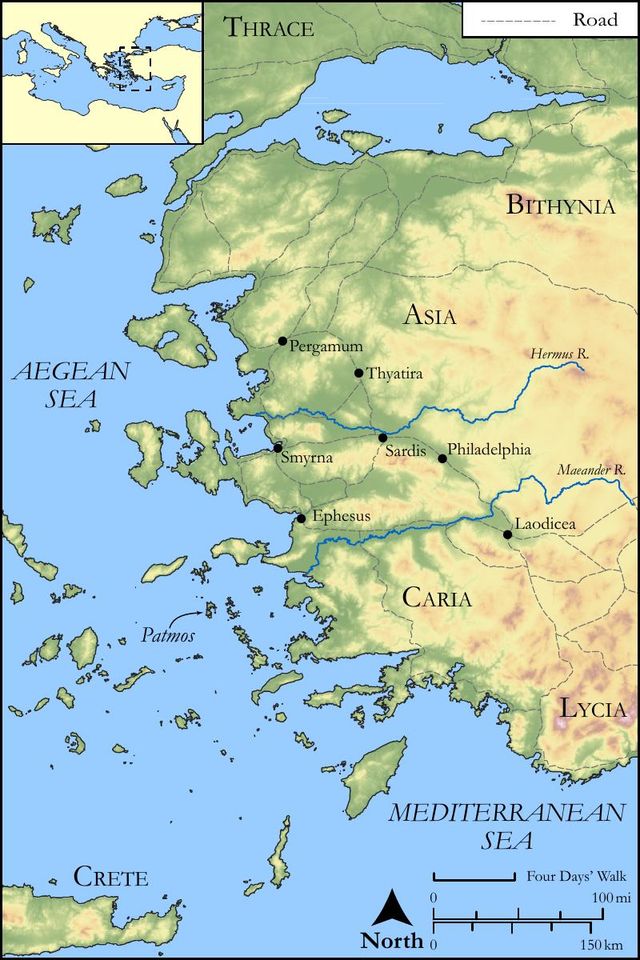
Ephesus was a prominent and wealthy port city, a major commercial and religious hub in the Roman Empire. It was home to the Temple of Artemis (Diana), making it a center of pagan worship and occult practices. The city's bustling atmosphere and diverse population presented both opportunities and challenges for the early Christian community. The Ephesian church had a rich history, having been ministered to by significant figures like Paul (Acts 19), Apollos, Priscilla and Aquila (Acts 18), and later Timothy and the Apostle John. This long history of robust teaching and spiritual activity might have led to an emphasis on doctrinal correctness and outward works, potentially at the expense of the initial fervent love that characterized the early days of their faith. The constant battle against paganism and emerging heresies could have also hardened their hearts, shifting their focus from loving devotion to vigilant defense.
Key Themes
ShowHideRevelation 2:4 contributes significantly to several overarching themes within the book and broader New Testament theology. Firstly, it highlights the theme of Divine Scrutiny and Intimate Knowledge, demonstrating that Christ, who walks among the lampstands (Revelation 1:13), possesses perfect insight into the true spiritual condition of His churches, seeing beyond outward appearances. Secondly, it underscores the Primacy of Love in Christian Faith, asserting that even exemplary works, doctrinal purity, and endurance are insufficient if the foundational love for God and others has diminished. This resonates with Jesus' teaching on the greatest commandment to love God with all one's heart, soul, and mind (Matthew 22:37). Finally, the verse introduces the theme of Spiritual Decline and the Call to Repentance, serving as a warning that even a strong church can drift into a state of spiritual apathy, necessitating a call to remember, repent, and return to their "first works" (Revelation 2:5).
Exposition and Analysis
ShowHideKey Word Analysis
ShowHideThis conjunction, often translated as "but," "howbeit," or "notwithstanding," introduces a strong contrast or opposition. In Revelation 2:4, it sharply pivots from the preceding commendations to a severe indictment. It signals that despite all the positive attributes, there is a critical, overriding issue that Jesus has "against" the Ephesian church, indicating that their virtues, while real, do not negate or compensate for this fundamental flaw.
This verb carries the sense of "to send forth," "to abandon," "to forsake," or "to let go." It implies a deliberate act or a gradual but definite departure from a previous state. It suggests that the Ephesians did not merely lose their first love passively, but actively moved away from it, perhaps by prioritizing other things (like their works or doctrinal vigilance) over their initial fervent devotion to Christ. The word implies a conscious choice or a sustained neglect that resulted in a separation from their original spiritual passion.
This term refers to a distinctive, unconditional, self-sacrificial love, characteristic of God Himself. Unlike other Greek words for love (e.g., philia for brotherly affection, eros for passionate desire), agápē denotes a volitional, benevolent affection that seeks the highest good of the beloved. In the context of "first love," it signifies the initial, pure, and fervent devotion to Christ that characterized their conversion and early walk, a love that is foundational to all true Christian life and service.
Verse Breakdown
ShowHide"Nevertheless I have [somewhat] against thee"
This opening clause, introduced by the strong adversative "nevertheless," immediately shifts the tone from praise to serious critique. The phrase "I have against thee" (ἔχω κατὰ σοῦ, echō kata sou) signifies a charge or an accusation. It reveals Christ's deep knowledge and judicial authority over His churches, indicating that He sees beyond outward appearances and identifies the underlying spiritual condition. This is not a casual observation but a divine indictment, signaling a matter of grave concern that requires immediate attention.
"because thou hast left thy first love"
This clause reveals the specific and critical accusation. The conjunction "because" (ὅτι, hóti) provides the reason for Christ's displeasure. The action of "leaving" (ἀφῆκες, aphēkes) implies a departure or abandonment. "Thy first love" (τὴν ἀγάπην σου τὴν πρώτην, tēn agapēn sou tēn prōtēn) refers to the initial, fervent, and primary devotion to Christ that characterized their early faith. This "first love" is not merely an emotional feeling but a deep, prioritized commitment of the will and affections to God. The charge indicates that despite their commendable works and doctrinal purity, their fundamental relationship with Christ had cooled, and their primary affection had shifted or diminished.
Literary Devices
ShowHideRevelation 2:4 employs several potent literary devices. The most prominent is Juxtaposition, as the verse immediately follows a lengthy commendation of the Ephesian church's virtues (Revelation 2:2-3). The sharp contrast introduced by "Nevertheless" creates a powerful rhetorical effect, highlighting the unexpected and severe nature of the rebuke. The phrase "first love" functions as a Metaphor, representing the initial, fervent, and foundational devotion to Christ that often characterizes new believers or a church in its nascent stages. It is a spiritual state of heart, not merely an emotional feeling, implying prioritization and passionate commitment. Furthermore, the statement "thou hast left thy first love" can be seen as a form of Personification, attributing the human action of "leaving" to the collective body of the church, emphasizing their corporate responsibility for this spiritual decline. The entire verse is also a direct Divine Rebuke, delivered by Christ Himself, underscoring His authority and unwavering commitment to the spiritual health and purity of His church.
Theological and Thematic Connections
ShowHideRevelation 2:4 stands as a profound theological statement on the nature of authentic Christian faith and service. It underscores that while good works, doctrinal orthodoxy, and perseverance are vital, they are ultimately insufficient if they do not flow from, and are sustained by, a deep and abiding love for God. The "first love" represents the foundational relationship with Christ, which, when diminished, renders even the most commendable actions hollow in the eyes of the Lord. This verse teaches that spiritual vitality is not merely about what one does or believes, but fundamentally about whom one loves and prioritizes. It serves as a timeless warning that zeal for truth or activity can paradoxically overshadow the very source of that truth and power—a passionate devotion to Jesus Christ.
Reflection and Application
ShowHideRevelation 2:4 is a piercing mirror for every believer and every church, urging profound self-examination. It challenges us to look beyond our outward performance, our theological precision, and our diligent service, and to honestly assess the state of our hearts. Are we so engrossed in the "doing" of ministry, the defense of doctrine, or the battle against sin that we have neglected the intimate, passionate, and prioritized relationship with Jesus Christ Himself? This verse reminds us that Christian service, however commendable, can become mere duty or even self-righteousness if it is not fueled by a vibrant, first-love affection for God. Maintaining this "first love" requires intentionality: regular, heartfelt communion with God through prayer and His Word, a conscious effort to prioritize His presence above all activities, and a willingness to confess and repent of any spiritual apathy or misplaced affections. It calls us to remember the joy and fervor of our initial encounter with Christ and to actively seek to rekindle that foundational devotion, ensuring that our love for Him remains the wellspring of all we are and all we do.
Questions for Reflection
ShowHideFAQ
ShowHideWhat does "first love" specifically refer to in Revelation 2:4?
ShowHideIn Revelation 2:4, "first love" (Greek: agápē prōtē) refers to the initial, fervent, and foundational devotion and affection that characterized the Ephesian church's relationship with Jesus Christ. It's not merely a sentimental feeling but a deep, prioritized commitment of the heart, mind, and will to God that should underpin all Christian life and service. It signifies the fresh, passionate zeal and singular focus on Christ that often marks the early stages of faith, before routine, challenges, or even good works can inadvertently displace Him from the preeminent position in one's affections. It implies a love that is primary, superior, and foundational, much like the greatest commandment to love God with all one's being (Matthew 22:37).
How can a church or individual lose its "first love" while still being active and doctrinally sound, as the Ephesians were?
ShowHideThe Ephesian church's situation illustrates a dangerous paradox: it is possible to be outwardly diligent, doctrinally pure, and even endure hardship for the faith, yet inwardly lose one's primary devotion to Christ. This can happen when:
The danger is that the outward form of godliness remains, but the inner power and passion, rooted in love, diminish, leading to spiritual barrenness despite apparent fruitfulness.
Is it possible to regain one's "first love" after it has been lost or diminished?
ShowHideAbsolutely. Jesus' very purpose in rebuking the Ephesian church in Revelation 2:4 is to call them to repentance and restoration. In the very next verse, He provides a clear pathway back: "Remember therefore from whence thou art fallen, and repent, and do the first works" (Revelation 2:5). This three-fold command implies:
This process demonstrates that regaining "first love" is not merely waiting for a feeling, but an active, Spirit-empowered choice to re-prioritize Christ and engage in the disciplines that foster intimacy with Him.
Christ-Centered Fulfillment
ShowHideRevelation 2:4, while a sobering warning, ultimately points to the profound reality of Christ's own "first love" for humanity, which serves as both the standard and the source for our own. Jesus, the one who rebukes the Ephesians, is Himself the embodiment of perfect, unwavering agápē love. His entire earthly ministry, culminating in His sacrificial death on the cross, is the ultimate demonstration of a love that never "leaves" or diminishes (John 15:13). He loved us "while we were yet sinners," proving His love for us (Romans 5:8). The call for the Ephesians to return to their "first love" is, in essence, a call to reflect the love of Christ that was first poured into their hearts through the Holy Spirit (Romans 5:5). Our ability to love God and others is always a response to His prior, perfect love for us (1 John 4:19). Therefore, regaining a lost "first love" is not a matter of self-effort but a renewed surrender to the transforming power of Christ's indwelling Spirit, allowing Him to rekindle that initial passion and re-center our affections on Him, the faithful Bridegroom who never abandons His bride (Ephesians 5:25-27). The warning in Revelation 2:4 thus underscores our continuous need for Christ's grace to sustain our love and to restore us when we falter, ensuring that our relationship with Him remains vibrant and primary.