


Nehemiah 4:9
Bible text: King James Version (1769 Blayney text) · Public domain
Bible text: Berean Standard Bible · Public domain
Bible text: American Standard Version (1901) · Public domain
Bible text: World English Bible, Messianic edition · Public domain
Bible text: Geneva Bible (1599) · Public domain
Bible text: Young's Literal Translation · Public domain
- וַנִּתְפַּלֵּלva·nit·pa·Leland we prayedH6419Conj-w ¦ V-Hithpael-ConsecImperf-1cpVerb Hithpael Consecutive Imperfect 1st Plural common genderוַandנִּתְפַּלֵּלwe prayed
- אֶל'eltoH413PrepPreposition
- אֱלֹהֵינוּ'e·lo·Hei·nuour GodH430N-mpc ¦ 1cpNoun Plural Masculine ConstructאֱלֹהֵיGodנוּour
- וַנַּעֲמִידva·na·'a·Midand we stationedH5975Conj-w ¦ V-Hiphil-ConsecImperf-1cpVerb Hiphil Consecutive Imperfect 1st Plural common genderוַandנַּעֲמִידwe stationed
- מִשְׁמָרmish·Mara guardH4929N-msNoun Singular Masculine Absolute
- עֲלֵיהֶם'a·lei·Hemon themH5921Prep ¦ 3mpPrepositionעֲלֵיonהֶםthem
- יוֹמָםyo·Mamby dayH3119AdvAdverb
- וָלַיְלָהva·Lay·lahand nightH3915Conj-w ¦ N-msNoun Singular Masculine Absoluteוָandלַיְלָהnight
- מִפְּנֵיהֶםmi·pe·nei·Hem<from> because of themH6440Prep-m ¦ N-mpc ¦ 3mpNoun Plural Masculine Constructמִ<from>פְּנֵיbecause ofהֶםthem
English is a literal word-by-word gloss of the Hebrew, not the KJV's wording. Why?
This is the original text the KJV's translators worked from — each Hebrew word with its own literal English meaning in this verse, prepared by scholars at Tyndale House, Cambridge. The KJV translates whole sentences, not word by word, so its wording differs: one Hebrew word can become several English words, and the KJV may choose “the LORD” where the gloss reads “Yahweh”. Both are faithful — they answer different questions. For the KJV's own rendering, switch to the KJV text.
Details
See on the biblical-era map
Study this verse
Public-domain commentary
Matthew Henry
From his Commentary on the Whole Bible. Henry comments on passages, not single verses — this entry covers Nehemiah 4:7–15. His three-level outline is real structure in the source text, so it is rendered as structure.
We have here,
I.The conspiracy which the Jews' enemies formed against them, to stay the building by slaying the builders.
The conspirators were not only Sanballat and Tobiah, but other neighbouring people whom they had drawn into the plot. They flattered themselves with a fancy that the work would soon stand still of itself; but, when they heard that it went on a prospered, they were angry at the Jews for being so hasty to push the work forward and angry at themselves for being so slow in opposing it (Neh 4:7): They were very wroth. Cursed be their anger, for it was fierce, and their wrath, for it was cruel. Nothing would serve but they would fight against Jerusalem, Neh 4:8. Why, what quarrel had they with the Jews? Had they done them any wrong? Or did they design them any? No, they lived peaceably by them; but it was merely out of envy and malice; they hated the Jews' piety, and were therefore vexed at their prosperity and sought their ruin. Observe,
1.How unanimous they were: They conspired all of them together, though of different interests among themselves, yet one in their opposition to the work of God.
2.How close they were; they said, "They shall not know, neither see, till we have them at our mercy." Thus they took crafty counsel, and digged deep to hide it from the Lord, and promised themselves security and success from the secresy of their management.
3.How cruel they were: We will come and slay them. If nothing less than the murder of the workmen will put a stop to the work, they will not stick at that; nay, it is their blood they thirst for, and they are glad of any pretence to glut themselves with it.
4.What the design was and how confident they were of success: it was to cause the work to cease (Neh 4:11), and this they were confident that they should effect. The hindering of good work is that which bad men aim at and promise themselves; but good work is God's work, and it shall prosper.
II.The discouragements which the builders themselves laboured under.
At the very time when the adversaries said, Let us cause the work to cease, Judah said, "Let us even let it fall, for we are not able to go forward with it," Neh 4:10. They represent the labourers as tired, and the remaining difficulties, even of that first part of their work, the removing of the rubbish, as insuperable, and therefore they think it advisable to desist for the present. Can Judah, that warlike valiant tribe, sneak thus? Active leading men have many times as much ado to grapple with the fears of their friends as with the terrors of their enemies.
III.The information that was brought to Nehemiah of the enemies' designs, Neh 4:12.
There were Jews that dwelt by them, in the country, who, though they had not zeal enough to bring them to Jerusalem to help their brethren in building the wall, yet, having by their situation opportunity to discover the enemies' motions, had so much honesty and affection to the cause as to give intelligence of them; nay, that their intelligence might be the more credited, they came themselves to give it, and they said it ten times, repeating it as men in earnest, and under a concern, and the report was confirmed by many witnesses. The intelligence they gave is expressed abruptly, and finds work for the critics to make out the sense of it, which perhaps is designed to intimate that they gave this intelligence as men out of breath and in confusion, whose very looks would make up the deficiencies of their words. I think it may be read, without supplying any thing: "Whatever place you turn to, they are against us, so that you have need to be upon your guard on all sides," Note, God has many ways of bringing to light, and so bringing to nought, the devices and designs of his and his church's enemies. Even the cold and feeble Jews that contentedly dwell by them shall be made to serve as spies upon them; nay, rather than fail, a bird of the air shall carry their voice.
IV.The pious and prudent methods which Nehemiah, hereupon, took to baffle the design, and to secure his work and workmen.
1.It is said (Neh 4:14) he looked.
(1.)He looked up, engaged God for him, and put himself and his cause under the divine protection (Neh 4:9): We made our prayer unto our God. That was the way of this good man, and should be our way; all his cares, all his griefs, all his fears, he spread before God, and thereby made himself easy. This was the first thing he did; before he used any means, he made his prayer to God, for with him we must always begin.
(2.)He looked about him. Having prayed, he set a watch against them. The instructions Christ has given us in our spiritual warfare agree with this example, Mat 26:41. Watch and pray. If we think to secure ourselves by prayer only, without watchfulness, we are slothful and tempt God; if by watchfulness, without prayer, we are proud and slight God; and, either way, we forfeit his protection.
2.Observe,
(1.)How he posted the guards, Neh 4:13. In the lower places he set them behind the wall, that they might annoy the enemy over it, as a breast-work; but in the higher places, where the wall was raised to its full height, he set them upon it, that from the top of it they might throw down stones or darts upon the heads of the assailants: he set them after their families, that mutual relation might engage them to mutual assistance.
(2.)How he animated and encouraged the people, Neh 4:14. He observed even the nobles and rulers themselves, as well as the rest of the people, to be in a great consternation upon the intelligence that was brought them, and ready to conclude that they were all undone, by which their hands were weakened both for work and war, and therefore, he endeavours to silence their fears. "Come," says he, "be not afraid of them, but behave yourselves valiantly, considering, [1.] Whom you fight under. You cannot have a better captain: Remember the Lord, who is great and terrible; you think your enemies great and terrible, but what are they in comparison with God, especially in opposition to him? He is great above them to control them, and will be terrible to them when he comes to reckon with them." Those that with an eye of faith see the church's God to be great and terrible will see the church's enemies to be mean and despicable. The reigning fear of God is the best antidote against the ensnaring fear of man. He that is afraid of a man that shall die forgets the Lord his Maker, Isa 51:12, Isa 51:13. [2.] "Whom you fight for. You cannot have a better cause; you fight for your brethren (Psa 122:8), your sons, and your daughters. All that is dear to you in their world lies at stake; therefore behave yourselves valiantly."
V.The happy disappointment which this gave to the enemies, Neh 4:15.
When they found that their design was discovered, and that the Jews were upon their guard, they concluded that it was to no purpose to attempt any thing, but that God had brought their counsel to nought. They knew they could not gain their point but by surprise, and, if their plot was known, it was quashed. The Jews hereupon returned every one to his work, with so much the more cheerfulness because they saw plainly that God owned it and owned them in the doing of it. Note, God's care of our safety should engage and encourage us to go on with vigour in our duty. As soon as ever a danger is over let us return to our work, and trust God another time.
Historical interpretation
Historical reception
1 surviving comment on this verse from the historical church.
And we prayed to our God, etc. This is the only refuge against all the enemies of the Church, namely prayer to God, and the industry of teachers who meditating day and night on his law, fortify the hearts of the faithful against the snares of the devil and his soldiers by preaching, consoling, and exhorting them.
Continue studying Nehemiah 4:9 across the web’s major study libraries — every link below opens this exact verse, chapter, or book on the destination site.
Read & Compare
 BibleGatewayThis verse in more than 200 translations and 70 languages.
 Bible.comThe YouVersion reader — hundreds of translations, reading plans, and highlights.
 ESV.orgCrossway's official English Standard Version reader.
 NET BibleThe NET translation with 60,000+ translators' notes on every rendering decision.
 STEP BibleTyndale House's free study tool — original text, vocabulary, and scholarly resources.
 BibliaLogos Bible Software's free web reader.
 USCCBThe New American Bible (Revised Edition) with the U.S. bishops' study notes.
Commentaries
 BibleHub CommentariesDozens of classic commentaries on this verse, gathered on one page.
 StudyLightMore than 100 commentary sets — the largest collection on the web.
 BibleRefPlain-English commentary on what this verse means, verse by verse.
 Enduring WordDavid Guzik's free commentary on this chapter, widely used by Bible teachers.
 Bible Study ToolsVerse commentary alongside Greek and Hebrew study aids.
Original Language & Research
- BibleHub InterlinearThe verse word by word — original language, transliteration, and English.
- BibleHub LexiconEvery word's original-language definition and Strong's entry.
 Blue Letter BibleDeep-study tools — Strong's numbers, concordance, and word studies.
 SefariaThe Hebrew text with Rashi and centuries of Jewish commentary.
Sermons, Hymns & Audio


TrulyRandomVerse is not affiliated with these sites and doesn’t control their content. They’re linked because they’re genuinely useful.
Summary
Nehemiah 4:9 vividly portrays the strategic and spiritual resilience of the Jewish exiles under Nehemiah's leadership during the rebuilding of Jerusalem's walls. Faced with escalating threats and conspiracies from their adversaries, the people adopted a dual, integrated approach: fervent, communal prayer to God combined with diligent, round-the-clock vigilance. This verse encapsulates a foundational biblical principle, illustrating that genuine faith is active, not passive, seamlessly blending profound reliance on divine sovereignty with responsible human effort in the face of daunting opposition.
Context
ShowHideLiterary Context
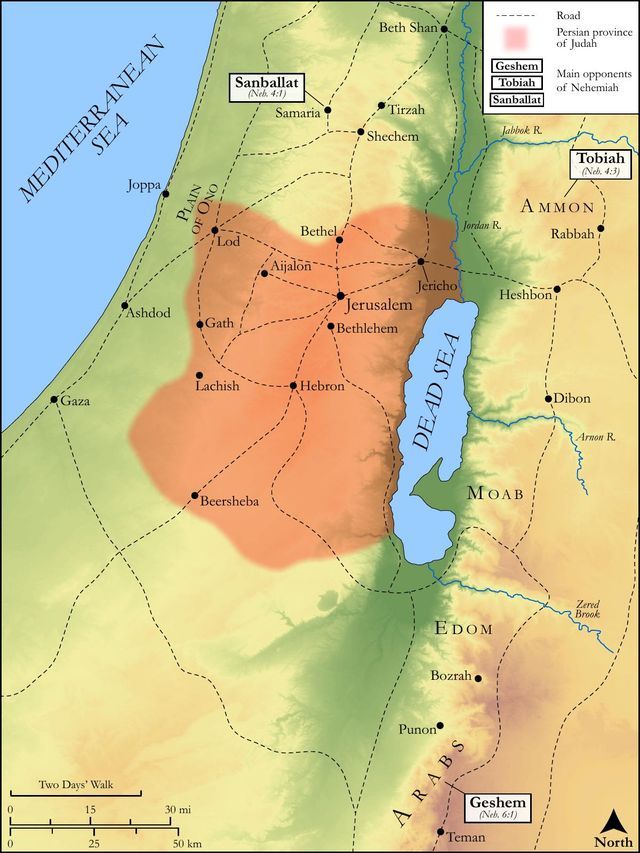
Nehemiah 4:9 is a pivotal response within the unfolding narrative of Jerusalem's restoration. The preceding chapters establish Nehemiah's burden for the ruined city and his divinely appointed mission to rebuild its walls, detailed in Nehemiah 1 through Nehemiah 3. By chapter 4, the work is progressing, but so is the opposition. Initial ridicule from Sanballat, Tobiah, and Geshem (e.g., Nehemiah 4:1-3) intensifies into a concerted conspiracy to attack the builders and sow discord (e.g., Nehemiah 4:7-8). Nehemiah 4:9 serves as the immediate, decisive, and divinely inspired counter-measure to this heightened physical threat. It marks a crucial shift from enduring taunts to actively preparing for defense, setting the stage for Nehemiah's subsequent organization of the workforce into armed builders and vigilant watchmen (e.g., Nehemiah 4:16-18), thereby ensuring the continuation of the sacred work.
Historical & Cultural Context
The post-exilic period was a precarious time for the returning Jewish community in Judah. Jerusalem, once a glorious capital, lay largely in ruins, a stark reminder of their national humiliation and vulnerability. The surrounding peoples—specifically the Samaritans (led by Sanballat), Ammonites (Tobiah), and Arabs (Geshem)—viewed the re-establishment of a strong, independent Jewish presence in Jerusalem as a direct threat to their regional power and influence. Rebuilding the city walls was not merely a civil engineering project; it was a profound declaration of restored national identity, sovereignty, and divine favor, making it an inherently provocative act to their jealous neighbors. The methods of opposition, ranging from psychological warfare (mockery) to armed conspiracy, were common in the ancient Near East, where control over strategic cities like Jerusalem was paramount. The necessity for constant vigilance, "day and night," was a grim reality, reflecting the very real and immediate danger of surprise raids or ambushes from these hostile factions.
Key Themes
ShowHideThis verse powerfully encapsulates several overarching themes central to the book of Nehemiah and broader biblical theology. Foremost is the theme of Faith and Action, demonstrating that genuine faith is not passive but actively engages with reality, combining spiritual reliance with practical diligence. The people's "prayer unto our God" highlights their profound Dependence on God and His sovereignty, acknowledging Him as their ultimate protector and provider, a theme echoed throughout the Old Testament (e.g., Psalm 121:1-2). Simultaneously, "set a watch against them day and night" emphasizes Prudence and Vigilance, underscoring the human responsibility to exercise wisdom, foresight, and diligence in the face of threats, aligning with the biblical call to "be sober-minded; be watchful" (e.g., 1 Peter 5:8). The unwavering commitment to continue the work despite opposition also showcases the theme of Perseverance Amidst Adversity, a testament to the enduring spirit of God's people in fulfilling His purposes, even when faced with overwhelming odds (e.g., Galatians 6:9).
Exposition and Analysis
ShowHideKey Word Analysis
ShowHideThis primitive root means "to judge" (officially or mentally), but by extension, "to intercede" or "to pray." It signifies a direct, earnest communication with God, often involving supplication or entreaty. In this context, it is not a casual request but a heartfelt, active turning to the divine, acknowledging God's ultimate authority and power to intervene. It represents the foundational act of seeking divine wisdom and strength before engaging in human effort.
This primitive root means "to stand" in various relations, including to establish, appoint, place, or cause to stand. When combined with "watch," it denotes the deliberate and intentional act of establishing a guard or stationing personnel. It implies active deployment and organization of resources, reflecting a responsible and proactive approach to security. This is not a passive waiting but a purposeful arrangement for defense.
Derived from the root "to guard" (שָׁמַר), this noun refers to a guard (the person, the post, or the prison). It signifies vigilance, diligence, and the act of keeping watch. In Nehemiah 4:9, it emphasizes the continuous, unceasing nature of the protective measure, indicating a sustained commitment to safeguarding the work and the community from potential harm, highlighting the severity of the threat and their preparedness.
Verse Breakdown
ShowHide"Nevertheless we made our prayer unto our God"
This opening clause immediately establishes the people's primary and foundational response to the escalating threats. The conjunction "Nevertheless" (אַךְ, ʾakh) serves as a strong contrast, indicating that despite the fear, the conspiracy, and the mockery, their first and most resolute action was to turn to God in prayer. This underscores their unwavering faith and profound recognition of God's ultimate sovereignty over their circumstances. It was a communal act, "we made our prayer," signifying a unified spiritual front and collective dependence.
"and set a watch against them day and night"
This second clause describes the complementary, practical action taken by the community. It demonstrates that their faith was not passive or presumptuous but active and responsible. Having engaged in fervent prayer, they then took diligent human precautions. "Set a watch" implies the organization of guards and the maintenance of constant vigilance. The phrase "day and night" emphasizes the continuous, unceasing nature of this protective measure, reflecting the severity of the threat and their unwavering commitment to preparedness. This illustrates a balanced approach of divine reliance and human responsibility.
"because of them"
This concise concluding phrase succinctly states the direct reason for both their prayer and their vigilance. "Them" refers to the specific adversaries—Sanballat, Tobiah, Geshem, and their allies—who were actively conspiring to attack and hinder the rebuilding work. It clarifies that their dual actions were a direct, necessary, and pragmatic response to a very real and present danger, underscoring the wisdom behind their integrated strategy.
Literary Devices
ShowHideNehemiah 4:9 masterfully employs Juxtaposition and Merism to convey its profound message. The most prominent device is Juxtaposition, placing "prayer unto our God" directly alongside "set a watch against them day and night." This immediate pairing powerfully highlights the complementary and inseparable nature of spiritual dependence and practical diligence, emphasizing that one does not negate the other but rather enhances it. This creates a powerful tension and balance, underscoring the holistic approach required in the face of adversity. Furthermore, the phrase "day and night" functions as a Merism, a figure of speech where two contrasting parts represent a whole, signifying continuous, unceasing vigilance. This rhetorical choice underscores the intensity and unwavering commitment required in the face of persistent opposition, reflecting the constant, pervasive threat faced by the builders.
Theological and Thematic Connections
ShowHideNehemiah 4:9 provides a timeless theological paradigm for navigating life's challenges: the dynamic interplay between divine sovereignty and human responsibility. It refutes the notion that prayer is a substitute for action, or that human effort negates the need for divine intervention. Instead, it presents a holistic model where profound trust in God fuels diligent human effort, and human effort is consecrated by prayer. This "pray and work" (or ora et labora) principle is a cornerstone of biblical wisdom, teaching that faith is active and demonstrates itself through obedience and prudent action. The people understood that while God was their ultimate protector, they were not to be reckless or passive; rather, they were to be good stewards of the resources and common sense He had given them, acting wisely in the face of danger. This balance is crucial for spiritual maturity and effective ministry, reminding believers that God often works through the diligent hands and watchful eyes of His people.
Reflection and Application
ShowHideNehemiah 4:9 offers profound practical wisdom for believers navigating the complexities of modern life, especially when facing opposition, discouragement, or demanding tasks. It calls us to cultivate a robust, active faith that is neither presumptuous nor paralyzed by fear. Our first impulse in any challenge should be to "make our prayer unto our God," acknowledging His supremacy, seeking His wisdom, and entrusting our burdens to His care. This act of prayer is not a passive resignation but an active engagement with the Creator of the universe, aligning our will with His and drawing upon His infinite strength. Yet, having prayed, we are simultaneously called to "set a watch"—to exercise wisdom, diligence, and prudence in our actions. This means using the gifts, resources, and common sense God has given us to work responsibly, plan strategically, and guard against potential pitfalls. Whether it's a personal struggle, a family challenge, a professional endeavor, or a ministry task, the Nehemiah model reminds us that true spiritual resilience comes from this integrated approach: praying fervently as if everything depends on God, and working diligently as if everything depends on us. It is in this holy tension that God's power is most fully displayed through our obedient efforts.
Questions for Reflection
ShowHideFAQ
ShowHideWhat does "Nevertheless we made our prayer unto our God, and set a watch against them day and night, because of them" mean in simple terms?
ShowHideIn simple terms, this verse means that when the people of Jerusalem were rebuilding their city walls and faced threats from enemies, they did two things simultaneously: First, they prayed earnestly to God for help and protection. Second, they also took practical steps to defend themselves by setting up guards to watch for their enemies constantly, day and night. It's a powerful example of trusting God completely while also taking responsible human action. They didn't just pray and do nothing, nor did they just rely on their own strength; they combined faith with vigilance.
Why was it important for them to do both pray and set a watch? Didn't God protect them?
ShowHideYes, God was indeed their ultimate protector, as seen throughout the book of Nehemiah and in passages like Psalm 121:7-8. However, biblical faith often calls for active participation and wise stewardship of the abilities and resources God provides. The act of "setting a watch" demonstrated their prudence, diligence, and responsibility. It wasn't a lack of faith in God's protection, but rather an expression of active faith that understood God often works through human means. It also showed their enemies that they were not naive or easily intimidated. This dual approach is a recurring biblical principle, emphasizing that divine sovereignty does not negate human responsibility, and human effort is most effective when consecrated by prayer and reliance on God (e.g., Proverbs 21:31).
How does this verse apply to modern-day challenges, especially spiritual warfare?
ShowHideNehemiah 4:9 offers a crucial blueprint for modern believers facing various challenges, including spiritual warfare. Just as the physical walls of Jerusalem were under attack, our spiritual lives, families, churches, and ministries often face opposition (e.g., Ephesians 6:12). The verse teaches us to first engage in fervent prayer, recognizing that our ultimate victory comes from God (e.g., 2 Corinthians 10:4). Simultaneously, we must "set a watch" by being spiritually vigilant, discerning, and prepared. This includes putting on the full armor of God (e.g., Ephesians 6:13-18), guarding our hearts and minds, and actively engaging in spiritual disciplines. It means not being passive but proactively living out our faith with wisdom and discernment in a world that often opposes God's purposes.
Christ-Centered Fulfillment
ShowHideNehemiah 4:9, with its powerful depiction of prayer combined with vigilance, finds profound Christ-centered fulfillment in the person and ministry of Jesus, and subsequently in the life of the Church. Jesus Himself perfectly embodied this synergy of divine reliance and human action. In the Garden of Gethsemane, facing the ultimate opposition of sin and death, He "made his prayer unto our God" with intense fervor, even to the point of sweating blood (e.g., Luke 22:44). Yet, even as He prayed, He also demonstrated vigilance, urging His disciples to "watch and pray" (e.g., Matthew 26:41), recognizing the spiritual dangers they faced. His entire earthly ministry was a testament to this principle: utterly dependent on the Father for power and guidance (e.g., John 5:19), yet actively engaging the world, healing the sick, teaching the multitudes, and confronting evil. The church, as the body of Christ, is called to live by this same principle. We are to be a praying people, recognizing that "apart from me you can do nothing" (e.g., John 15:5), while simultaneously being vigilant, actively proclaiming the Gospel, serving the needy, and standing firm against the schemes of the enemy (e.g., 1 Peter 5:8-9). The rebuilding of Jerusalem's walls foreshadows the building of Christ's church, a spiritual edifice that advances not by human might alone, but by a dynamic fusion of divine power invoked through prayer and faithful, vigilant human obedience, ultimately secured by the finished work of the Lamb of God who has already overcome the world (e.g., John 16:33).