


Judges 20:9
Bible text: King James Version (1769 Blayney text) · Public domain
Bible text: Berean Standard Bible · Public domain
Bible text: American Standard Version (1901) · Public domain
Bible text: World English Bible, Messianic edition · Public domain
Bible text: Geneva Bible (1599) · Public domain
Bible text: Young's Literal Translation · Public domain
- וְעַתָּהve·'a·Tahand nowH6258Conj-w ¦ AdvAdverbוְandעַתָּהnow
- זֶהzehthisH2088PrtParticle Demonstrative
- הַדָּבָרha·da·Var[is] the thingH1697Art ¦ N-msNoun Singular Masculine Absoluteהַ[is] theדָּבָרthing
- אֲשֶׁר'a·SherwhichH834RelParticle Relative
- נַעֲשֶׂהna·'a·Sehwe will doH6213V-Qal-Imperf-1cpVerb Qal Imperfect 1st Plural common gender
- לַגִּבְעָהla·giv·'Ahto <the> GibeahH1390Prep-l ¦ N-properNoun Proper Locationלַto <the>גִּבְעָהGibeah
- עָלֶיהָ'a·Lei·haon itH5921Prep ¦ 3fsPreposition Definiteעָלֶיonהָit
- בְּגוֹרָלbe·go·Ralby lotH1486Prep-b ¦ N-msNoun Singular Masculine Absoluteבְּbyגוֹרָלlot
English is a literal word-by-word gloss of the Hebrew, not the KJV's wording. Why?
This is the original text the KJV's translators worked from — each Hebrew word with its own literal English meaning in this verse, prepared by scholars at Tyndale House, Cambridge. The KJV translates whole sentences, not word by word, so its wording differs: one Hebrew word can become several English words, and the KJV may choose “the LORD” where the gloss reads “Yahweh”. Both are faithful — they answer different questions. For the KJV's own rendering, switch to the KJV text.
Details
See on the biblical-era maps
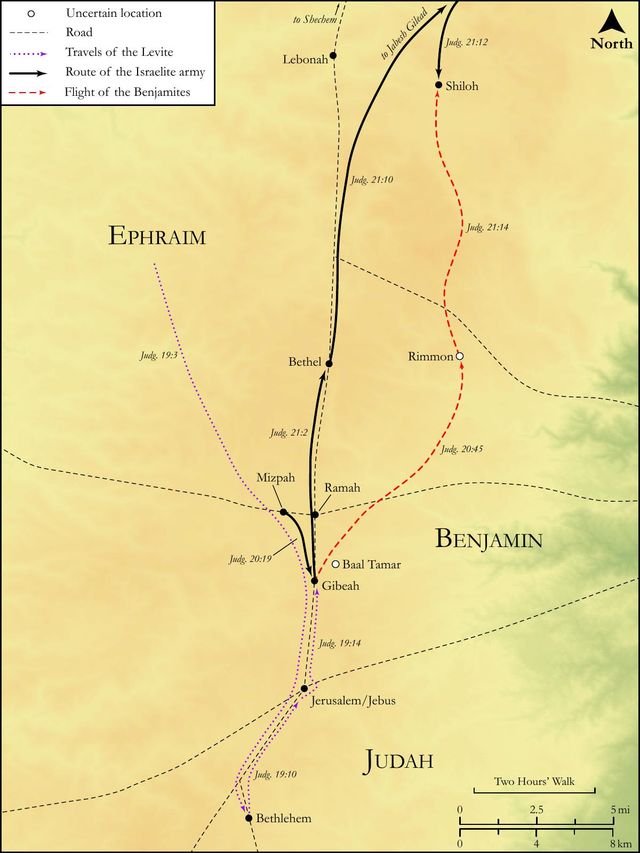
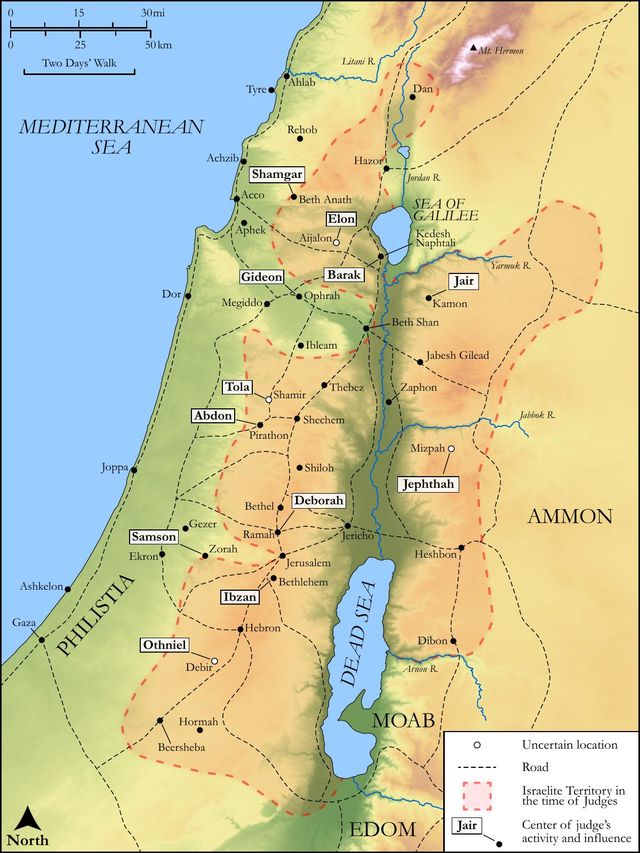
Study this verse
Public-domain commentary
Matthew Henry
From his Commentary on the Whole Bible. Henry comments on passages, not single verses — this entry covers Judges 20:1–11. His two-level outline is real structure in the source text, so it is rendered as structure.
Here is, I. A general meeting of all the congregation of Israel to examine the matter concerning the Levite's concubine, and to consider what was to be done upon it, Jdg 20:1, Jdg 20:2. It does not appear that they were summoned by the authority of any one common head, but they came together by the consent and agreement, as it were, of one common heart, fired with a holy zeal for the honour of God and Israel. 1. The place of their meeting was Mizpeh; they gathered together unto the Lord there, for Mizpeh was so very near to Shiloh that their encampment might very well be supposed to reach from Mizpeh to Shiloh. Shiloh was a small town, and therefore, when there was a general meeting of the people to represent themselves before God, they chose Mizpeh for their head-quarters, which was the next adjoining city of note, perhaps because they were not willing to give that trouble to Shiloh which so great an assembly would occasion, it being the resident of the priests that attended the tabernacle. 2. The persons that met were all Israel, from Dan (the city very lately so called, Jdg 18:29) in the north to Beersheba in the south, with the land of Gilead (that is, the tribes on the other side Jordan), all as one man, so unanimous were they in their concern for the public good. Here was an assembly of the people of God, not a convocation of the Levites and priests, though a Levite was the person principally concerned in the cause, but an assembly of the people, to whom the Levite referred himself with an Appello populum - I appeal to the people. The people of God were 400,000 footmen that drew the sword, that is, were armed and disciplined, and fit for service, and some of them perhaps such as had known the wars of Canaan, Jdg 3:1. In this assembly of all Israel, the chief (or corners) of the people (for rulers are the corner-stones of the people, that keep all together) presented themselves as the representatives of the rest. They rendered themselves at their respective posts, at the head of the thousands and hundreds, the fifties and tens, over which they presided; for so much order and government, we may suppose, at least, they had among them, though they had no general or commander-in-chief. So that here was, (1.) A general congress of the states for counsel. The chief of the people presented themselves, to lead and direct in this affair. (2.) A general rendezvous of the militia for action, all that drew sword and were men of war (Jdg 20:17), not hirelings nor pressed men, but the best freeholders, that went at their own charge. Israel were above 600,000 when they came into Canaan, and we have reason to think they were at this time much increased, rather than diminished; but then all between twenty and sixty were military men, now we may suppose more than the one half exempted from bearing arms to cultivate the land; so that these were as the trained bands. The militia of the two tribes and a half were 40,000 (Jos 4:13), but the tribes were many more.
II.Notice given to the tribe of Benjamin of this meeting (Jdg 20:3):
They heard that the children of Israel had gone up to Mizpeh. Probably they had a legal summons sent them to appear with their brethren, that the cause might be fairly debated, before any resolutions were taken up upon it, and so the mischiefs that followed would have been happily prevented; but the notice they had of this meeting rather hardened and exasperated them than awakened them to think of the things that belonged to their peace and honour.
III.A solemn examination of the crime charged upon the men of Gibeah.
A very horrid representation of it had been made by the report of the messengers that were sent to call them together, but it was fit it should be more closely enquired into, because such things are often made worse than really they were; a committee therefore was appointed to examine the witnesses (upon oath, no doubt) and to report the matter. It is only the testimony of the Levite himself that is here recorded, but it is probable his servant, and the old man, were examined, and gave in their testimony, for that more than one were examined appears by the original (Jdg 20:3), which is, Tell you us; and the law was that none should be put to death, much less so many, upon the testimony of one witness only. The Levite gives a particular account of the matter: that he came into Gibeah only as a traveller to lodge there, not giving the least shadow of suspicion that he designed them any ill turn (Jdg 20:4), and that the men of Gibeah, even those that were of substance among them, that should have been a protection to the stranger within their gates, riotously set upon the house where he lodged, and thought to slay him; he could not, for shame relate the demand which they, without shame, made, Jdg 19:22. They declared their sin as Sodom, even the sin of Sodom, but his modesty would not suffer him to repeat it; it was sufficient to say they would have slain him, for he would rather have been slain than have submitted to their villany; and, if they had got him into their hands, they would have abused him to death, witness what they had done to his concubine: They have forced her that she is dead, Jdg 20:5. And, to excite in his countrymen an indignation at this wickedness, he had sent pieces of the mangled body to all the tribes, which had fetched them together to bear their testimony against the lewdness and folly committed in Israel, Jdg 20:6. All lewdness is folly, but especially lewdness in Israel. For those to defile their own bodies who have the honourable seal of the covenant in their flesh, for those to defy the divine vengeance to whom it is so clearly revealed from heaven - Nabal is their name, and folly is with them. He concludes his declaration with an appeal to the judgment of the court (Jdg 20:7): You are all children of Israel, and therefore you know law and judgment, Est 1:13. "You are a holy people to God, and have a dread of every thing which will dishonour God and defile the land; you are of the same community, members of the same body, and therefore likely to feel from the distempers of it; you are children of Israel, that ought to take particular care of the Levites, God's tribe, among you, and therefore give your advice and counsel what is to be done."
IV.The resolution they came to hereupon, which was that, being now together, they would not disperse till they had seen vengeance taken upon this wicked city, which was the reproach and scandal of their nation. Observe,
1.Their zeal against the lewdness that was committed. They would not return to their houses, how much soever their families and their affairs at home wanted them, till they had vindicated the honour of God and Israel, and recovered with their swords, if it could not be had otherwise, that satisfaction for the crime which the justice of the nation called for, Jdg 20:8. By this they showed themselves children of Israel indeed, that they preferred the public interest before their private concerns.
2.Their prudence in sending out a considerable body of their forces to fetch provisions for the rest, Jdg 20:9, Jdg 20:10. One of ten, and he chosen by lot, 40,000 in all, must go to their respective countries, whence they came, to fetch bread and other necessaries for the subsistence of this great army; for when they came from home they took with them provisions only for a journey to Mizpeh, not for an encampment (which might prove long) before Gibeah. This was to prevent their scattering to forage for themselves, for, if they had done this, it would have been hard to get them all together again, especially all in so good a mind. Note, When there appears in people a pious zeal for any good work it is best to strike while the iron is hot, for such zeal is apt to cool quickly if the prosecution of the work be delayed. Let it never be said that we left that good work to be done tomorrow which we could as well have done today.
3.Their unanimity in these counsels, and the execution of them. The resolution was voted, Nemine contradicente - Without a dissenting voice (Jdg 20:8); it was one and all; and, when it was put in execution, they were knit together as one man, Jdg 20:11. This was their glory and strength, that the several tribes had no separate interests when the common good was concerned.
Continue studying Judges 20:9 across the web’s major study libraries — every link below opens this exact verse, chapter, or book on the destination site.
Read & Compare
 BibleGatewayThis verse in more than 200 translations and 70 languages.
 Bible.comThe YouVersion reader — hundreds of translations, reading plans, and highlights.
 ESV.orgCrossway's official English Standard Version reader.
 NET BibleThe NET translation with 60,000+ translators' notes on every rendering decision.
 STEP BibleTyndale House's free study tool — original text, vocabulary, and scholarly resources.
 BibliaLogos Bible Software's free web reader.
 USCCBThe New American Bible (Revised Edition) with the U.S. bishops' study notes.
Commentaries
 BibleHub CommentariesDozens of classic commentaries on this verse, gathered on one page.
 StudyLightMore than 100 commentary sets — the largest collection on the web.
 BibleRefPlain-English commentary on what this verse means, verse by verse.
 Enduring WordDavid Guzik's free commentary on this chapter, widely used by Bible teachers.
 Bible Study ToolsVerse commentary alongside Greek and Hebrew study aids.
Original Language & Research
- BibleHub InterlinearThe verse word by word — original language, transliteration, and English.
- BibleHub LexiconEvery word's original-language definition and Strong's entry.
 Blue Letter BibleDeep-study tools — Strong's numbers, concordance, and word studies.
 SefariaThe Hebrew text with Rashi and centuries of Jewish commentary.
Sermons, Hymns & Audio


TrulyRandomVerse is not affiliated with these sites and doesn’t control their content. They’re linked because they’re genuinely useful.
Summary
Judges 20:9 captures a pivotal moment in the Israelite civil war, revealing the collective resolve of the eleven tribes after suffering two devastating defeats against Benjamin. Having renewed their consultation with Yahweh and humbled themselves through weeping, fasting, and offerings, the assembly determines a precise strategy for their third assault on Gibeah. Their decision to "go up by lot against it" signifies a profound commitment to seeking divine guidance and sanction for their military campaign, aiming to ensure justice for the heinous atrocity committed and to purge the deep-seated wickedness from their midst.
Context
ShowHideLiterary Context
Judges 20:9 is embedded within the tragic and climactic narrative of Judges 19-21, often considered an appendix to the Book of Judges. Chapter 19 vividly recounts the horrific rape and murder of the Levite's concubine in Gibeah, a Benjaminite city, and the Levite's shocking act of dismemberment to galvanize the other tribes. Chapter 20 opens with the united assembly of Israel (excluding Benjamin) at Mizpah, demanding justice. When Benjamin defiantly refuses to surrender the perpetrators and prepares for war, Israel consults the Lord at Bethel, asking who should lead the charge (Judges 20:18). Despite divine affirmation, the Israelites suffer two crushing defeats, losing tens of thousands of men (Judges 20:21-25). Deeply humbled by their losses, they return to Bethel, weeping, fasting, and offering burnt and peace offerings, desperately seeking renewed divine counsel (Judges 20:26-28). Judges 20:9 marks a crucial turning point after this third, more fervent consultation, indicating a divinely-sanctioned and strategically refined approach to their third, and ultimately successful, assault.
Historical & Cultural Context
The era of the Judges (roughly 14th-11th century BCE) was characterized by a profound lack of centralized authority and moral decay, famously encapsulated by the refrain, "everyone did what was right in his own eyes" (Judges 17:6; Judges 21:25). This period was marked by cycles of apostasy, foreign oppression, and temporary deliverance by divinely raised judges. The incident in Gibeah tragically illustrates the extent of moral depravity that had permeated even within an Israelite tribe. Culturally, the practice of "casting lots" (Hebrew: gôrāl) was a widely accepted and legitimate method in ancient Israel for discerning God's will, making impartial decisions, or allocating resources. This practice is seen in the division of the land of Canaan among the tribes (Joshua 18:10), or even in selecting individuals for specific roles, such as Saul's selection as king (1 Samuel 10:19-21). Its application here underscores the Israelites' desperate desire for divine sanction and precise guidance in a conflict of immense national and moral significance, even amidst their human anger and sorrow.
Key Themes
ShowHideThis verse profoundly contributes to several key themes within the Book of Judges and the broader biblical narrative. Firstly, it highlights the theme of Collective Justice and Corporate Responsibility. The unified response of the eleven tribes demonstrates a communal commitment to uphold the covenantal law and punish heinous wickedness within the Israelite community, particularly grave sexual sins and violence (Deuteronomy 13:5). Secondly, the decision to "go up by lot" emphasizes the theme of Divine Guidance and Sovereignty. Despite their human failures and initial defeats, the Israelites continually sought God's direction, believing that casting lots could reveal His will, even in military strategy. This reflects a recognition, however flawed, that ultimate authority and success rested with Yahweh. Lastly, it underscores the theme of Moral Decay and the Need for a King. The shocking depravity in Gibeah and the ensuing civil war among the tribes serve as a stark illustration of the consequences when there is no righteous leadership, reinforcing the book's overarching message about the desperate need for a king who would rule according to God's ways, bringing order and justice to Israel (Judges 17:6).
Exposition and Analysis
ShowHideKey Word Analysis
ShowHideThis word signifies "a word," but by implication, it extends to "a matter," "a thing," "an affair," or "a decree." In this context, "this thing" (וְזֶה הַדָּבָר, vəzeh ha-dāvār) refers to the specific, determined course of action or plan that the Israelites have collectively decided upon. It emphasizes that their resolution is not merely an idea but a concrete, actionable decision, signaling a shift from deliberation and lament to a firm commitment to execute justice.
This primitive root means "to do or make" in the broadest sense and widest application, encompassing actions like accomplishing, performing, executing, or carrying out. Here, "which we will do" (נַעֲשֶׂה, naʻăśeh) underscores the active and intentional nature of their plan. It highlights their resolve to take decisive action against Gibeah, transforming their outrage and grief into a military campaign aimed at purging the evil from Israel.
This term primarily refers to a pebble or small stone used for casting lots, and by extension, the outcome determined by such a cast. Figuratively, it can also mean a portion or destiny as if determined by lot. The phrase "by lot" (בַּגּוֹרָל, ba-gôrāl) in this verse signifies that the Israelites were not merely devising a human military strategy but were seeking divine direction for how their attack against Gibeah should be organized. This practice implies a belief that the outcome of the lot would reveal God's specific will for their campaign, thereby legitimizing their actions as divinely sanctioned.
Verse Breakdown
ShowHide"But now this [shall be] the thing which we will do to Gibeah;"
This opening clause marks a critical shift in the Israelite strategy after their initial, devastating defeats. The emphatic "But now this [shall be] the thing" (וְזֶה הַדָּבָר, vəzeh ha-dāvār) conveys a firm, collective decision and a determined course of action. It highlights their unwavering resolve to confront Gibeah and hold the Benjamites accountable for the atrocity, signaling a move from lament and repeated consultation to a concrete plan of attack. The naming of "Gibeah" specifically targets the epicenter of the wickedness they seek to purge.
"[we will go up] by lot against it;"
This second clause specifies the method by which they intend to execute their plan. The decision to "go up by lot" reveals their continued reliance on divine guidance, even in military tactics. This was not a random gamble but a sacred act aimed at ensuring their actions aligned with God's will, particularly after their previous failures had demonstrated their need for divine intervention. It suggests that the specific details of the assault—perhaps the order of attack, the allocation of troops, or the strategic approach—would be determined by casting lots, thereby submitting their military campaign to God's sovereign direction.
Literary Devices
ShowHideJudges 20:9 employs several significant literary devices that enrich its meaning and underscore the narrative's tragic depth. Irony is prominent, as the Israelites, who have repeatedly fallen into cycles of sin and chaos throughout the Book of Judges, now seek divine guidance through casting lots to execute justice. Yet, their subsequent actions lead to the near annihilation of an entire tribe, demonstrating the tragic consequences of human zeal, even when ostensibly divinely sanctioned, without perfect wisdom and mercy. There is also Foreshadowing, as the decision to "go up by lot" hints at the meticulous, almost ritualistic, approach they will take in the ensuing battle, which ironically leads to a brutal civil war and further moral compromises in the subsequent chapters (e.g., the desperate measures to secure wives for the surviving Benjamites). The act of casting lots itself serves as powerful Symbolism, representing the Israelites' persistent, albeit often flawed, attempt to involve God in their affairs and to discern His will in a period marked by profound spiritual confusion and a desperate lack of clear, righteous leadership.
Theological and Thematic Connections
ShowHideJudges 20:9 underscores the complex interplay between divine sovereignty and human responsibility, especially in the pursuit of justice. While the Israelites sought God's guidance through lots, their zeal, fueled by righteous anger, ultimately led to a disproportionate and devastating outcome, nearly eradicating the tribe of Benjamin. This highlights the theological principle that even divinely sanctioned actions require wisdom, mercy, and proportionality, and that human instruments of justice can easily overstep their bounds. The narrative serves as a stark reminder of the dangers of a society where moral decay is rampant and where, in the absence of a righteous king, "everyone did what was right in his own eyes," leading to cycles of violence and compromise. It implicitly points to the need for a perfect judge and king who can administer justice with perfect wisdom and mercy, a role that no human leader in the period of Judges could fulfill.
Reflection and Application
ShowHideJudges 20:9 invites us to reflect deeply on the nature of justice, divine guidance, and corporate responsibility within a community of faith. While we no longer cast literal lots for strategic decisions, the underlying principle of seeking God's wisdom and will in all significant matters remains paramount for believers today. This passage challenges us to examine our motivations when pursuing justice: Is it truly for God's glory and the good of His kingdom, or is it tainted by human anger, vengeance, or self-righteousness? The tragic outcome of the conflict with Benjamin serves as a sobering reminder that even righteous indignation, if unchecked by God's wisdom and mercy, can lead to devastating consequences. It calls us to pray for discernment, to act with humility, and to remember that true justice is ultimately found in God's character and His redemptive plan, not solely in human retribution. As followers of Christ, we are called to be instruments of God's justice, but always tempered by His grace and love, seeking reconciliation where possible and upholding truth with compassion, reflecting the character of the One who is both just and the justifier.
Questions for Reflection
ShowHideFAQ
ShowHideWhy did the Israelites cast lots instead of just directly attacking Gibeah?
ShowHideThe decision to "go up by lot" was a deeply significant act for the Israelites, especially after their initial, humiliating defeats. It wasn't a sign of indecision but a deliberate attempt to seek and confirm divine approval and direction for their military campaign. In ancient Israel, casting lots (Hebrew: gôrāl) was a recognized, sacred method for discerning God's will, making impartial decisions, or allocating responsibilities. Examples include dividing the land of Canaan (Joshua 18:10), selecting a king (1 Samuel 10:19-21), or identifying a culprit (Joshua 7:16-18). By casting lots, the Israelites were submitting their strategy to God's sovereignty, hoping to ensure their actions aligned with His divine plan and to gain His favor for success, particularly after their previous failures had shown them their own inadequacy without Him.
Christ-Centered Fulfillment
ShowHideThe tragic narrative of Judges 20:9 and the ensuing civil war among the tribes of Israel powerfully underscores the book's concluding refrain: "In those days there was no king in Israel; everyone did what was right in his own eyes" (Judges 21:25). This chaotic pursuit of justice, even when seeking divine guidance through lots, highlights humanity's desperate need for a true and righteous King. The flawed attempts at justice by the Israelite confederacy, which led to the near-annihilation of Benjamin, stand in stark contrast to the perfect justice and mercy embodied in Jesus Christ. He is the ultimate Judge who will execute perfect justice, not through human vengeance or the casting of lots for military strategy, but through His righteous reign. He is the Lamb of God who takes away the sin of the world (John 1:29), offering a perfect atonement that the violent retribution of Judges could never achieve. While lots were cast for Christ's garments at the cross (John 19:24), this act, ironically, fulfilled prophecy and demonstrated God's sovereign control even over the evil actions of humanity, ultimately leading to the salvation of all who believe. Christ's kingdom brings true order, peace, and justice, fulfilling the longing for a righteous ruler that the era of the Judges so desperately lacked, and offering a perfect example of how divine will is perfectly accomplished through His life, death, and resurrection, rather than through fallible human attempts at discerning God's will.