


Job 38:24
Bible text: King James Version (1769 Blayney text) · Public domain
Bible text: Berean Standard Bible · Public domain
Bible text: American Standard Version (1901) · Public domain
Bible text: World English Bible, Messianic edition · Public domain
Bible text: Geneva Bible (1599) · Public domain
Bible text: Young's Literal Translation · Public domain
- אֵי'eiwhere?H335InterrogParticle Interrogative
- זֶהzehthisH2088PrtParticle Demonstrative
- הַדֶּרֶךְHa·de·rekh[is] the wayH1870Art ¦ N-csNoun Singular common gender Absoluteהַ[is] theדֶּרֶךְway
- יֵחָלֶקye·Cha·lek[where] it is dividedH2505V-Niphal-Imperf-3msVerb Niphal Imperfect 3rd Singular Masculine
- אוֹר'orlightH216N-fsNoun Singular Feminine Absolute
- יָפֵץya·Fetz[where] it scattersH6327V-Hiphil-Imperf-3msVerb Hiphil Imperfect 3rd Singular Masculine
- קָדִיםka·Dim[the] east windH6921N-msNoun Singular Masculine Absolute
- עֲלֵי'a·leioverH5921PrepPreposition
- אָרֶץ'A·retz[the] earthH776N-fsNoun Singular Feminine Absolute
English is a literal word-by-word gloss of the Hebrew, not the KJV's wording. Why?
This is the original text the KJV's translators worked from — each Hebrew word with its own literal English meaning in this verse, prepared by scholars at Tyndale House, Cambridge. The KJV translates whole sentences, not word by word, so its wording differs: one Hebrew word can become several English words, and the KJV may choose “the LORD” where the gloss reads “Yahweh”. Both are faithful — they answer different questions. For the KJV's own rendering, switch to the KJV text.
Details
See on the biblical-era map
Study this verse
Public-domain commentary
Matthew Henry
From his Commentary on the Whole Bible. Henry comments on passages, not single verses — this entry covers Job 38:12–24. His two-level outline is real structure in the source text, so it is rendered as structure.
The Lord here proceeds to ask Job many puzzling questions, to convince him of his ignorance, and so to shame him for his folly in prescribing to God. If we will but try ourselves with such interrogatories as these, we shall soon be brought to own that what we know is nothing in comparison with what we know not. Job is here challenged to give an account of six things: -
I.Of the springs of the morning, the day-spring from on high, Job 38:12-15.
As there is no visible being of which we may be more firmly assured that it is, so there is none which we are more puzzled in describing, nor more doubtful in determining what it is, than the light. We welcome the morning, and are glad of the day-spring; but,
1.It is not commanded since our days, but what it is it was long before we were born, so that it was neither made by us nor designed primarily for us, but we take it as we find it and as the many generations had it that went before us. The day-spring knew its place before we knew ours, for we are but of yesterday.
2.It was not we, it was not any man that commanded the morning-light at first, or appointed the place of its springing up and shining forth, or the time of it. The constant and regular succession of day and night was no contrivance of ours; it is the glory of God that it shows, and his handy work, not ours, Psa 19:1, Psa 19:2.
3.It is quite out of our power to alter this course: "Hast thou countermanded the morning since thy days? Hast thou at any time raised the morning light sooner than its appointed time, to serve thy purpose when thou hast waited for the morning, or ordered the day-spring for thy convenience to any other place than its own? No, never. Why then wilt thou pretend to direct the divine counsels, or expect to have the methods of Providence altered in favour of thee?" We may as soon break the covenant of the day and of the night as any part of God's covenant with his people, and particularly this, I will chasten them with the rod of men.
4.It is God that has appointed the day-spring to visit the earth, and diffuses the morning light through the air, which receives it as readily as the clay does the seal (Job 38:14), immediately admitting the impressions of it, so as of a sudden to be all over enlightened by it, as the seal stamps its image on the wax; and they stand as a garment, or as if they were clothed with a garment. The earth puts on a new face every morning, and dresses itself as we do, puts on light as a garment, and is then to be seen.
5.This is made a terror to evil-doers. Nothing is more comfortable to mankind than the light of the morning; it is pleasant to the eyes, it is serviceable to life and the business of it, and the favour of it is universally extended, for it takes hold of the ends of the earth (Job 38:13), and we should dwell, in our hymns to the light, on its advantages to the earth. But God here observes how unwelcome it is to those that do evil, and therefore hate the light. God makes the light a minister of his justice as well as of his mercy. It is designed to shake the wicked out of the earth, and for that purpose it takes hold of the ends of it, as we take hold of the ends of a garment to shake the dust and moths out of it. Job had observed what a terror the morning light is to criminals, because it discovers them (Job 24:13, etc.), and God here seconds the observation, and asks him whether the world was indebted to him for that kindness? No, the great Judge of the world sends forth the beams of the morning light as his messengers to detect criminals, that they may not only be defeated in their purposes and put to shame, but that they may be brought to condign punishment (Job 38:15), that their light may be withholden from them (that is, that they may lose their comfort, their confidence, their liberties, their lives) and that their high arm, which they have lifted up against God and man, may be broken, and they deprived of their power to do mischief. Whether what is here said of the morning light was designed to represent, as in a figure, the light of the gospel of Christ, and to give a type of it, I will not say; but I am sure it may serve to put us in mind of the encomiums given to the gospel just at the rising of its morning-star by Zecharias in his Benedictus (Luk 1:78, By the tender mercy of our God the day-spring from on high has visited us, to give light to those that sit in darkness, whose hearts are turned to it as clay to the seal, Co2 4:6), and by the virgin Mary in her Magnificat (Luk 1:51), showing that God, in his gospel, has shown strength with his arm, scattered the proud, and put down the mighty, by that light by which he designed to shake the wicked, to shake wickedness itself out of the earth, and break its high arm.
II.Of the springs of the sea (Job 38:16):
"Hast thou entered into them, or hast thou walked in the search of the depth? Knowest thou what lies in the bottom of the sea, the treasures there hidden in the sands? Or canst thou give an account of the rise and original of the waters of the sea? Vapours are continually exhaled out of the sea. Dost thou know how the recruits are raised by which it is continually supplied? Rivers are constantly poured into the sea. Dost thou know how they are continually discharged, so as not to overflow the earth? Art thou acquainted with the secret subterraneous passages by which the waters circulate?" God's way in the government of the world is said to be in the sea, and in the great waters (Psa 77:19), intimating that it is hidden from us and not to be pried into by us.
III.Of the gates of death: Have these been open to thee? Job 38:16. Death is a grand secret.
1.We know not beforehand when, and how, and by what means, we or others shall be brought to death, by what road we must go the way whence we shall not return, what disease or what disaster will be the door to let us into the house appointed for all living. Man knows not his time.
2.We cannot describe what death is, how the knot is untied between body and soul, nor how the spirit of a man goes upward (Ecc 3:21), to be we know not what and live we know not how, as Mr. Norris expresses; with what dreadful curiosity (says he) does the soul launch out into the vast ocean of eternity and resign to an untried abyss! Let us make it sure that the gates of heaven shall be opened to us on the other side death, and then we need not fear the opening of the gates of death, though it is a way we are to go but once.
3.We have no correspondence at all with separate souls, nor any acquaintance with their state. It is an unknown undiscovered region to which they are removed; we can neither hear from them nor send to them. While we are here, in a world of sense, we speak of the world of spirits as blind men do of colours, and when we remove thither we shall be amazed to find how much we are mistaken.
IV.Of the breadth of the earth (Job 38:18):
Hast thou perceived that? The knowledge of this might seem most level to him and within his reach; yet he is challenged to declare this if he can. We have our residence on the earth, God has given it to the children of men. But who ever surveyed it, or could give an account of the number of its acres? It is but a point to the universe? yet, small as it is, we cannot be exact in declaring the dimensions of it. Job had never sailed round the world, nor any before him; so little did men know the breadth of the earth that it was but a few ages ago that the vast continent of America was discovered, which had, time out of mind, lain hidden. The divine perfection is longer than the earth and broader than the sea; it is therefore presumption for us, who perceive not the breadth of the earth, to dive into the depth of God's counsels.
V.Of the place and way of light and darkness.
Of the day-spring he had spoken before (Job 38:12) and he returns to speak of it again (Job 38:19): Where is the way where light dwells? And again (Job 38:24): By what way is the light parted? He challenges him to describe,
1.How the light and darkness were at first made. When God, in the beginning, first spread darkness upon the face of the deep, and afterwards commanded the light to shine out of darkness, by that mighty word, Let there be light, was Job a witness to the order, to the operation? can he tell where the fountains of light and darkness are, and where those mighty princes keep their courts distance, while in one world they rule alternately? Though we long ever so much either for the shining forth of the morning or the shadows of the evening, we know not whither to send, or go, to fetch them, nor can tell the paths to the house thereof, Job 38:20. We were not then born, nor is the number of our days so great that we can describe the birth of that first-born of the visible creation, Job 38:21. Shall we then undertake to discourse of God's counsels, which were from eternity, or to find out the paths to the house thereof, to solicit for the alteration of them? God glories in it that he forms the light and creates the darkness; and if we must take those as we find them, take those as they come, and quarrel with neither, but make the best of both, then we must, in like manner, accommodate ourselves to the peace and the evil which God likewise created. Isa 45:7.
2.How they still keep their turns interchangeably. It is God that makes the outgoings of the morning and of the evening to rejoice (Psa 65:8); for it is his order, and no order of ours, that is executed by the outgoings of the morning light and the darkness of the night. We cannot so much as tell whence they come nor whither they go (Job 38:24): By what way is the light parted in the morning, when, in an instant, it shoots itself into all the parts of the air above the horizon, as if the morning light flew upon the wings of an east wind, so swiftly, so strongly, is it carried, scattering the darkness of the night, as the east wind does the clouds? Hence we read of the wings of the morning (Psa 139:9), on which the light is conveyed to the uttermost parts of the sea, and scattered like an east wind upon the earth. It is a marvellous change that passes over us every morning by the return of the light and every evening by the return of the darkness; but we expect them, and so they are no surprise nor uneasiness to us. If we would, in like manner, reckon upon changes in our outward condition, we should neither in the brightest noon expect perpetual day nor in the darkest midnight despair of the return of the morning. God has set the one over against the other, like the day and night; and so must we, Ecc 7:14.
VI.Of the treasures of the snow and hail (Job 38:22, Job 38:23):
"Hast thou entered into these and taken a view of them?" In the clouds the snow and hail are generated, and thence they come in such abundance that one would think there were treasures of them laid up in store there, whereas indeed they are produced extempore - suddenly, as I may say, and pro re nata - for the occasion. Sometimes they come so opportunely, to serve the purposes of Providence, in God's fighting for his people and against his and their enemies, that one would think they were laid up as magazines, or stores of arms, ammunition, and provisions, against the time of trouble, the day of battle and war, when God will either contend with the world in general (as in the deluge, when the windows of heaven were opened, and the waters fetched out of these treasures to drown a wicked world, that waged war with Heaven) or with some particular persons or parties, as when God out of these treasures fetched great hail-stones wherewith to fight against the Canaanites, Jos 10:11. See what folly it is to strive against God, who is thus prepared for battle and war, and how much it is our interest to make our peace with him and to keep ourselves in his love. God can fight as effectually with snow and hail, if he please, as with thunder and lightning or the sword of an angel!
Historical interpretation
Two Centuries of Reception
2 surviving comments on this verse. Each one is dated, so this reads as a timeline rather than a list.
Select a marker to jump to its quote. Markers stagger vertically where authors wrote within a few decades of each other.
Obviously this does not mean that there exist such storehouses, but he simply shows that these elements are at his complete disposal when he wants, as if he took them from his own reserves. “And is there a store of them for you against the time of your enemies, for the day of wars and battles?” You certainly understand that he wants to emphasize their opportunity, the fact that they come at the right moment and never at random. Then he equally speaks about all the rest, that is, about rain, hail and, on the other hand, about the Notus.
40. For He in truth is the way, Who says, I am the Way, the Truth, and the Life. [John 14, 6] The light is, therefore, scattered by this way, because all the Gentile world is enlightened by His presence. But He rightly said, Is scattered, because the light of preaching was not contracted or confined, but shone forth with its brightness far and wide by the voices of the Apostles. But because the power of love glows within, when the light of conversion has been received, in order that either our past sins may be anxiously lamented, or future blessings be most ardently sought for, it is suitably added, The heat is divided over the earth.
41. For when the light is spread abroad the heat is divided over the earth; because when righteousness is openly preached, the anxious desire of the heart to seek God is spread forth in the practice of virtues; so that one person shines forth in the word of wisdom, another in the word of knowledge; one is mighty in the grace of healing, another in the working of mighty deeds; and that thus, while they severally receive unequally the gifts of the Spirit, they are all necessarily united to each other, and unanimously inflamed. But after the light is said to be spread abroad, it can readily be understood that persecution is designated by ‘heat:’ because as the light of preaching shone brightly, so the heat of persecution immediately blazed forth from the hearts of the unbelievers. For, that persecution is described by ‘heat,’ the discourse of the Lord bears witness, speaking of the seeds which had been cast on the rocky ground, When the sun arose they were all scorched, and because they had not root, they withered away. [Matt. 13, 6] And when He expounded it a little after, He called ‘heat,’ persecution. The heat therefore is divided over the earth, when the light is spread abroad, because, as the life of the faithful became bright, the cruelty of the faithless was kindled. For the heat was divided, when persecution was raging, now at Jerusalem, now at Damascus, and now in other countries far away. For it is written, At that time there arose a great persecution in the Church, which was at Jerusalem, and they were all scattered abroad throughout the regions of Judaea and Samaria. [Acts 8, 1] And it is written again; Saul, yet breathing out threatenings and slaughter against the disciples of the Lord, went unto the high priest, and desired of him letters for him to take to Damascus to the synagogues, that if he had found any of this way, men and women, he might bring them bound to Jerusalem. [Acts 9, 1. 2.] Because then persecution had increased, now here, now there, they who had known the light of truth, were panting, as it were, under the burning of the divided heat.
42. But because we have heard blessed Job questioned in the former words, respecting the secret judgment; it now behoves us to examine more accurately this which is said of the scattered light, or divided heat. For he is still examined with lofty questioning, in order that he may at least learn that he is ignorant, and that it may be said to him, By what way is the light spread, the heat divided over the earth? For what is designated by the word ‘light’ but righteousness? Of which it is written; The people which was sitting in darkness, saw a great light. [Is. 9, 2] But every thing which is scattered, is thrown, not continuously, but with a kind of intermission. And light is therefore said to be ‘scattered,’ because, though we already behold some things as they really are, yet some things we see not, as they are to be seen. For scattered light had possessed the heart of Peter, who had shone forth with such great brightness of faith, and of miracles, and yet, while he was imposing the weight of circumcision on the converted Gentiles, he knew not what to say aright. [Gal. 2, 11-14] Light, therefore, is ‘scattered’ in this life, because it is not continuously possessed, to the understanding of every thing. For whilst we comprehend one thing as it is, and are ignorant of another, we both see as it were partially in scattered light, and remain partially in darkness. But our light will then no longer be scattered, when our mind, caught up entirely to God, will shine forth.
43. And because it is not known in what ways this light is insinuated into the heart of man, it is rightly said in a question; By what way is the light scattered? As if it were openly said; Tell Me, in what order I pour My righteousness into the secret recesses of the hearts, when I am not seen, even in My approach, and yet I invisibly change the visible doings of men, when I irradiate one and the same mind, at one time with this, and at another with that virtue, and yet I permit it, through scattered light, still to remain, in a measure, in the darkness of temptation. Let ignorant man be asked, by what way the light is scattered. As if it were openly said, While I soften the hard hearts, bend the rigid, smooth the rough, warm the cold, strengthen the weak, establish the wandering, confirm the wavering, come, if thou canst, incorporeally, and behold, on what minds I shed this light. For all these things we behold when done; for we know not how they are wrought within. The Truth shows in the Gospel, that this way of light is invisible to us, saying; The wind bloweth where it listeth, and thou hearest the sound thereof, and knowest not whence it cometh, and whither it goeth. [John 3, 8]
44. But because, when the light is scattered, temptations presently spring up from the hidden adversary against the enlightened mind, it is rightly subjoined; The heat is divided over the earth. For the crafty foe strives to inflame with unlawful desires the minds of those whom he sees shining forth with the light of righteousness; so that they frequently feel themselves more assaulted with temptations, than at the time when they beheld not the rays of inward light. Whence also the Israelites, after they had been called, complain against Moses and Aaron of their increasing labour, saying; Let the Lord see and judge, because ye have made our savour to stink in the sight of Pharaoh and his servants, and have given him a sword to slay us. [Exod. 5, 21] For when they wished to depart from Egypt, Pharaoh had taken away the straw, and yet required works of the same amount. The mind, therefore, secretly murmurs, as it were, against the law, after the knowledge of which it endures sharper stings of temptations, and when it beholds its labours increasing, because it is displeasing to its adversary, it grieves that it stinks, as it were, in the eyes of Pharaoh. Heat, therefore, follows after light; because after the illumination of the heavenly gift, the contest of temptation is increased.
45. But the heat is rightly said also to be ‘divided: doubtless, because separate persons are not assailed by all vices, but by certain ones which are near, and placed close to them. For the ancient enemy first beholds the character [‘conspersionem’] of each person, and then applies the snares of temptations. For one person is of a cheerful, another of a morose, another of a timid, another of a proud disposition. Our secret adversary, in order then to catch us easily, prepares deceptions closely connected with our several characters. For because pleasure borders on mirth, he holds out lust as a bait to cheerful dispositions. And because moroseness easily slides into anger, he offers the cup of discord for the morose. Because the timid dread punishments, he threatens terrors to the fearful. And because he beholds the proud elated with praises, he draws them on to whatever he pleases, by flattering applause. He lays snares therefore against men one by one, by vices adapted to them. For he would not easily lead them captive, if he were either to offer bribes to the lustful, or bodily pleasures to the covetous, or if he were to assail the greedy by the pride of abstinence, or the abstinent by gluttonousness, or if he were to seek to seize the gentle by eagerness for the contest, or the angry by the dread of fear. Because then, when in the heat of temptation, he craftily lurks in ambush against each one by himself, and secretly lays the snares which are akin to their habits, it is rightly said; The heat is divided over the earth.
46. But when it is first stated, By what way the light is scattered: and is there immediately subjoined, The heat is divided over the earth, it is doubtless indicated that the heat is also divided by the same way, by which the light is scattered. For when the lofty and incomprehensible grace of the Holy Spirit irradiates our minds with its light, it also so disposes and modifies the temptations of the adversary, that either they do not come upon us many together, or else that those only which can be endured, assail the mind already illuminated by God; so that they do not burn us with the fire of their full strength, when they torture us with the heat of their touch. As Paul bears witness, who says, But God is faithful, Who will not suffer you to be tempted above that ye are able, but will with the temptation also make a way to escape, that ye may be able to bear it. [1 Cor. 10, 13] This heat then our crafty supplanter divides in one way, and our merciful Creator in another. The one divides, in order thereby to slay more speedily; the other, to make it more tolerable. And, because, when we are harassed with temptation, we are not only instructed with the Spirit of God within, but are also assisted with the words of preachers without, after the divided heat
Continue studying Job 38:24 across the web’s major study libraries — every link below opens this exact verse, chapter, or book on the destination site.
Read & Compare
 BibleGatewayThis verse in more than 200 translations and 70 languages.
 Bible.comThe YouVersion reader — hundreds of translations, reading plans, and highlights.
 ESV.orgCrossway's official English Standard Version reader.
 NET BibleThe NET translation with 60,000+ translators' notes on every rendering decision.
 STEP BibleTyndale House's free study tool — original text, vocabulary, and scholarly resources.
 BibliaLogos Bible Software's free web reader.
 USCCBThe New American Bible (Revised Edition) with the U.S. bishops' study notes.
Commentaries
 BibleHub CommentariesDozens of classic commentaries on this verse, gathered on one page.
 StudyLightMore than 100 commentary sets — the largest collection on the web.
 BibleRefPlain-English commentary on what this verse means, verse by verse.
 Enduring WordDavid Guzik's free commentary on this chapter, widely used by Bible teachers.
 Bible Study ToolsVerse commentary alongside Greek and Hebrew study aids.
Original Language & Research
- BibleHub InterlinearThe verse word by word — original language, transliteration, and English.
- BibleHub LexiconEvery word's original-language definition and Strong's entry.
 Blue Letter BibleDeep-study tools — Strong's numbers, concordance, and word studies.
 SefariaThe Hebrew text with Rashi and centuries of Jewish commentary.
Sermons, Hymns & Audio


TrulyRandomVerse is not affiliated with these sites and doesn’t control their content. They’re linked because they’re genuinely useful.
Summary
Job 38:24 presents a profound rhetorical question from God to Job, emerging from the whirlwind, which challenges the limits of human understanding regarding the natural world. This verse masterfully highlights God's absolute sovereignty and meticulous control over the fundamental forces of creation—specifically, the distribution of light and the direction of the powerful east wind. It serves to humble Job, vividly illustrating the infinite chasm between finite human comprehension and boundless divine wisdom, thereby underscoring God's unchallengeable authority over all creation.
Context
ShowHideLiterary Context
Job 38:24 is situated within the majestic opening of God's first discourse to Job, which begins in Job 38:1. After thirty-seven chapters of Job's anguished laments and the often-misguided theological debates with his three friends, God finally breaks His silence. His address is not a direct explanation for Job's suffering, but rather an overwhelming assertion of His infinite wisdom, power, and sovereign orchestration of all creation. Through a relentless series of unanswerable rhetorical questions, God systematically challenges Job's limited human perspective, inviting him to contemplate the vastness and intricate complexity of creation that only God fully comprehends and controls. This particular verse, focusing on the mysterious "parting" of light and the "scattering" of the formidable east wind, serves as a powerful illustration of God's absolute mastery over phenomena that are both commonplace and utterly beyond human manipulation or even full comprehension, thereby preparing Job for a posture of profound humility and unwavering trust.
Historical & Cultural Context
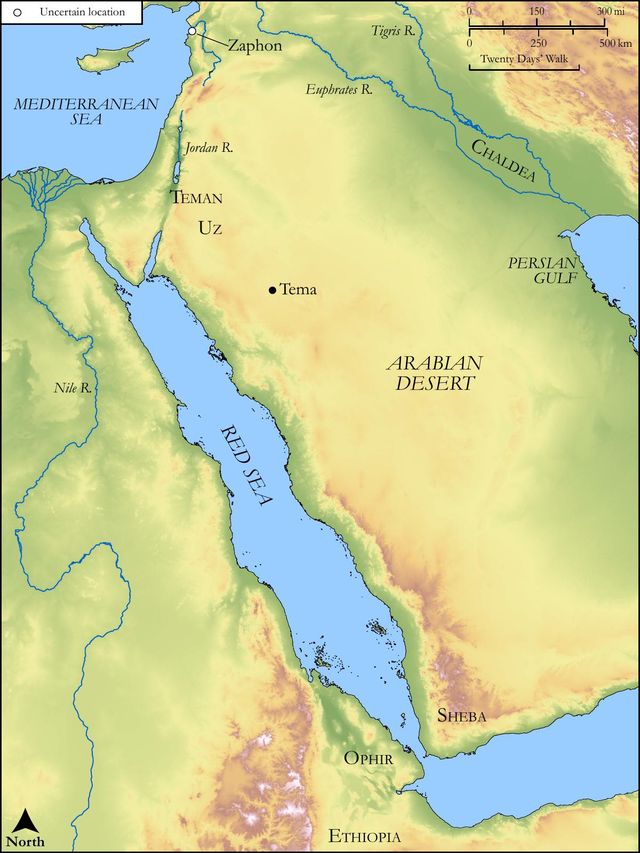
Among the men of the east, natural phenomena such as light, darkness, wind, and storms were not merely scientific occurrences but were often perceived as direct manifestations or instruments of divine power, sometimes even deified by the nations round about. The "east wind" (Hebrew: qâdîym) held particular and often ominous significance. Originating from the vast Arabian Desert, it was frequently associated with intense heat, pervasive dryness, and destructive power, capable of bringing severe drought, scorching vegetation, or even devastating locust plagues, as vividly depicted in Exodus 10:13. It was thus often linked with divine judgment or overwhelming, uncontrollable forces. For God to claim precise control over the "parting" of light (whether referring to the dawn, the flash of lightning, or the general distribution of daylight) and the "scattering" of the formidable east wind, He was asserting His unique, absolute, and unchallengeable dominion over the most potent, mysterious, and often feared aspects of the natural world. This claim would have resonated deeply and powerfully with an ancient audience intimately familiar with the raw, untamed power of these elements.
Key Themes
ShowHideThis verse powerfully reinforces several major themes woven throughout the book of Job and the broader biblical narrative. Firstly, it emphatically underscores Divine Sovereignty and Power. God's ability to "part the light" and "scatter the east wind" demonstrates His absolute control over the fundamental elements of creation, revealing a mastery over the forces of the heavens and the weather that is infinitely beyond human capability. This reinforces the central biblical truth of God's unmatched authority over all things, a theme beautifully echoed in passages like Psalm 135:7. Secondly, the rhetorical question "By what way...?" highlights Human Ignorance and Humility. God's direct challenge to Job (and, by extension, all humanity) to explain these intricate processes underscores our inherent inability to fully understand or control the natural world. It is a profound call to humility, recognizing that even the most intelligent human cannot unravel the mysteries of creation, let alone direct them. This prepares Job to accept God's wisdom, even when His ways seem inscrutable or mysterious, a truth eloquently articulated in Isaiah 55:9. Finally, the precise "parting" of light and "scattering" of the east wind point to the Order and Wisdom of Creation. These are not chaotic or random occurrences but are part of a divinely ordered and meticulously maintained system. This intricate design testifies to an intelligent, all-wise, and purposeful Creator whose wisdom is embedded in every aspect of creation, a truth celebrated in texts like Proverbs 8:22-31.
Exposition and Analysis
ShowHideKey Word Analysis
ShowHideThis term refers to a road or path, but figuratively, it denotes a course of life, a mode of action, or a specific manner. In Job 38:24, "by what way" questions not just the method but the very path or means by which light is distributed and the east wind scattered. It implies an orderly, directed process, challenging Job to explain the divine wisdom and intricate mechanisms behind these natural phenomena, which are utterly beyond human understanding or control.
This fundamental term signifies physical illumination, encompassing daylight, the sun, or even lightning. Biblically, ʼôwr often carries profound symbolic weight, representing life, truth, knowledge, divine presence, and order, standing in stark contrast to darkness, which symbolizes chaos, ignorance, and evil. Here, God's control over its "parting" signifies His foundational role in establishing and maintaining the very conditions for life and visibility on earth, whether through the daily cycle or specific manifestations like lightning.
This verb means "to be smooth," and by implication (as smooth stones were used for lots), "to apportion," "to divide," or "to separate." In this context, it speaks to the precise, intentional, and controlled division or distribution of light. This is not a random or chaotic dispersion but an ordered, deliberate act of divine governance. It suggests God's active involvement in the daily cycle of day and night, or the specific, directed manifestation of light, such as the path of lightning across the sky.
This primitive root means "to dash in pieces," "to disperse," or "to spread abroad." When applied to the east wind, it implies not merely its general movement but its powerful, widespread, and often chaotic distribution across the land. God's question underscores His unique ability to direct, unleash, and control even such a formidable and seemingly uncontrollable force, demonstrating His comprehensive sovereignty over all meteorological events and their impact on the earth.
As noted in the context, the qâdîym was a significant and often formidable wind in Israel. It typically blew from the east or southeast, bringing hot, dry air from the desert, often associated with drought, scorching heat, and destructive storms. Its mention here emphasizes God's control not just over benign natural forces, but also over those perceived as powerful, unpredictable, and potentially destructive. His ability to "scatter" or direct it highlights His absolute dominion even over the most challenging elements of nature.
Verse Breakdown
ShowHide"By what way is the light parted"
This opening rhetorical question immediately challenges Job's (and humanity's) understanding of a fundamental process of creation. It asks not merely how light is divided or distributed, but by what way—implying the underlying mechanism, the divine wisdom, and the intricate paths or channels through which this occurs. It points to the mysterious, yet ordered, process by which light spreads across the earth, whether the daily sunrise, the dispersion of daylight, or the specific trajectory of lightning. The implied answer is that only God knows and controls this "way," revealing the limitations of human knowledge in the face of divine orchestration.
"[which] scattereth the east wind upon the earth?"
This second rhetorical question extends the challenge to another powerful natural phenomenon. The "east wind" (qâdîym) was known for its destructive potential and unpredictable nature. To "scatter" implies not just its general movement but its powerful, widespread, and often chaotic distribution across the land. God's question underscores His unique ability to direct, unleash, and control even such a formidable and seemingly uncontrollable force, demonstrating His comprehensive sovereignty over all meteorological events and their profound impact on the earth. This pairing of light and wind emphasizes God's dominion over both the life-giving and potentially destructive aspects of creation.
Literary Devices
ShowHideJob 38:24 is rich in literary artistry, primarily employing the Rhetorical Question. God's entire discourse in Job 38 and Job 39 is structured as a relentless series of unanswerable questions designed not to elicit information from Job, but rather to expose his limited knowledge, humble him, and compel him to acknowledge divine omnipotence and omniscience. This particular verse uses two such questions in quick succession, driving home the point that Job cannot explain even the most basic and pervasive natural phenomena. There is also an element of subtle Personification in the way light is "parted" and the east wind "scattered," as if they are entities subject to direct divine command and precise orchestration, rather than merely impersonal forces. Furthermore, the pairing of "light" and "east wind" can be seen as a form of Merism, a literary device where two contrasting or representative elements are used to signify the totality of a concept. Here, it signifies the entirety of natural phenomena—from the gentle, life-giving light to the fierce, destructive wind—all under God's comprehensive and meticulous control.
Theological and Thematic Connections
ShowHideJob 38:24 profoundly articulates the Creator's absolute and unchallengeable sovereignty over His creation. It asserts that the intricate order and powerful forces of the natural world are neither random nor subject to human understanding or control, but are meticulously governed by God's infinite wisdom and omnipotent power. This verse compels us to acknowledge the vast chasm between human finitude and divine infinitude, fostering a posture of profound humility and reverent awe before the One who orchestrates every detail of creation. It reminds us that even in the face of life's inexplicable sufferings or the grand mysteries of the universe, our trust must ultimately rest in the God who commands light and wind, knowing that His ways are higher than our ways and His thoughts deeper than our thoughts.
Reflection and Application
ShowHideJob 38:24 calls us to a profound posture of humility and worship before the Creator. In a world that often seeks to demystify, control, and explain everything through human reason and scientific advancement, this verse serves as a timeless reminder that there are realms of existence and divine operation that remain utterly beyond our grasp. When we gaze upon the sunrise, feel the wind, or witness the power of a storm, we are invited not merely to observe natural phenomena, but to encounter the living God who orchestrates them with unfathomable wisdom and power. This realization should cultivate deep trust, especially when we face circumstances in our own lives that are inexplicable, painful, or seemingly chaotic. Just as Job learned to trust God's sovereignty even when he couldn't understand His ways, we too are called to rest in the assurance that the God who meticulously parts the light and directs the mighty east wind is also intimately involved in the details of our lives, working all things according to His perfect, though often mysterious, plan. Our peace is found not in comprehending every "way" of God, but in faithfully submitting to the One who knows all ways and holds all things in His hand.
Questions for Reflection
ShowHideFAQ
ShowHideWhat is the significance of the "east wind" in the Bible?
ShowHideThe "east wind" (Hebrew: qâdîym) holds significant biblical and cultural meaning, particularly in Israel. Originating from the vast Arabian Desert, it was notorious for being hot, dry, and often destructive. It frequently brought drought, withered crops, or carried devastating insect plagues, such as the locusts in Exodus 10:13. In some contexts, it was associated with scorching heat (Jonah 4:8) or even divine judgment (Ezekiel 27:26). Therefore, God's ability to "scatter" or direct the east wind in Job 38:24 powerfully emphasizes His absolute command over even the most formidable and potentially destructive natural forces, highlighting His comprehensive sovereignty over all creation.
Christ-Centered Fulfillment
ShowHideWhile Job 38:24 speaks powerfully of God the Father's sovereign control over creation, its ultimate fulfillment and clearest revelation are found in the person and work of Jesus Christ. The New Testament reveals that Jesus is the very Word (Logos) through whom all things were created, and by whom all things hold together (John 1:3; Colossians 1:16-17). The divine wisdom and power that "part the light" and "scatter the east wind" are perfectly embodied in Him. We see Christ's direct control over these very elements in His earthly ministry: He commands the winds and the waves, and they obey Him, demonstrating His divine authority over nature, echoing the Creator's power in Job (Mark 4:39). The "unsearchable ways" of God, which humble Job, are made knowable and accessible in Christ, who is the "light of the world" (John 8:12) and the ultimate revelation of God's wisdom and power for salvation (1 Corinthians 1:24). Thus, the profound awe inspired by God's majestic control over creation in Job finds its most profound and accessible object of worship in the person of Jesus Christ, through whom we can truly know and approach the God who orchestrates all things.