


Matthew 24:27
Bible text: King James Version (1769 Blayney text) · Public domain
Bible text: King James Version with Strong's numbers · Public domain
Bible text: Berean Standard Bible · Public domain
Bible text: American Standard Version (1901) · Public domain
Bible text: World English Bible, Messianic edition · Public domain
Bible text: Geneva Bible (1599) · Public domain
Bible text: Young's Literal Translation · Public domain
- ὥσπερhōsperJust asG5618CONJConjunction
- γὰρgarforG1063CONJConjunction
- ἡhētheG3588T-NSFDefinite article Nominative Singular Feminine
- ἀστραπὴastrapēlightningG796N-NSFNoun Nominative Singular Feminine
- ἐξέρχεταιexerchetaicomes forthG1831V-PNI-3SVerb Present Middle Or Passive Deponent Indicative 3rd Singular
- ἀπὸapofrom [the]G575PREPPreposition
- ἀνατολῶνanatolōneastG395N-GPFNoun Genitive Plural Feminine
- καὶkaiandG2532CONJConjunction
- φαίνεταιphainetaishinesG5316V-PEI-3SVerb Present Middle Or Passive Indicative 3rd Singular
- ἕωςhe'ōsuntil [the]G2193PREPPreposition
- δυσμῶνdusmōnwestG1424N-GPFNoun Genitive Plural Feminine
- οὕτωςhoutōssoG3779ADVAdverb
- ἔσταιestaiwill beG1510V-FDI-3SVerb Future Middle Deponent Indicative 3rd Singular
- καὶkaialsoG2532CONJConjunction
- ἡhētheG3588T-NSFDefinite article Nominative Singular Feminine
- παρουσίαparousiacomingG3952N-NSFNoun Nominative Singular Feminine
- τοῦtouof theG3588T-GSMDefinite article Genitive Singular Masculine
- υἱοῦhuiouSonG5207N-GSM-TNoun Genitive Singular Masculine Title
- τοῦtou<the>G3588T-GSMDefinite article Genitive Singular Masculine
- ἀνθρώπουanthrōpouof ManG444N-GSM-TNoun Genitive Singular Masculine Title
English is a literal word-by-word gloss of the Greek, not the KJV's wording. Why?
This is the original text the KJV's translators worked from — each Greek word with its own literal English meaning in this verse, prepared by scholars at Tyndale House, Cambridge. The KJV translates whole sentences, not word by word, so its wording differs: one Greek word can become several English words, and the KJV may choose “charity” where the gloss reads “love”. Both are faithful — they answer different questions. For the KJV's own rendering, switch to the KJV text.
Details
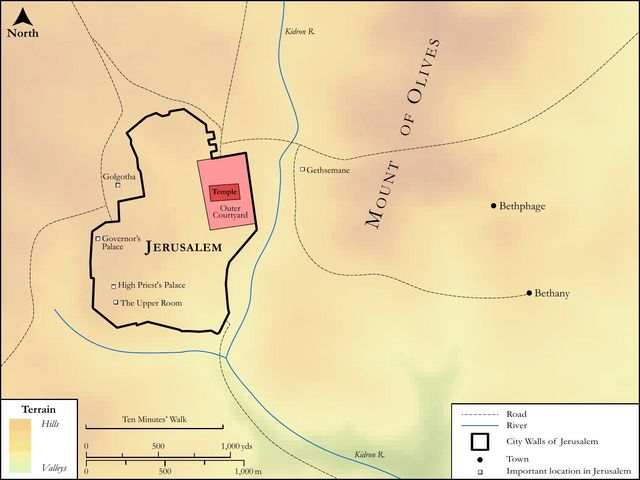
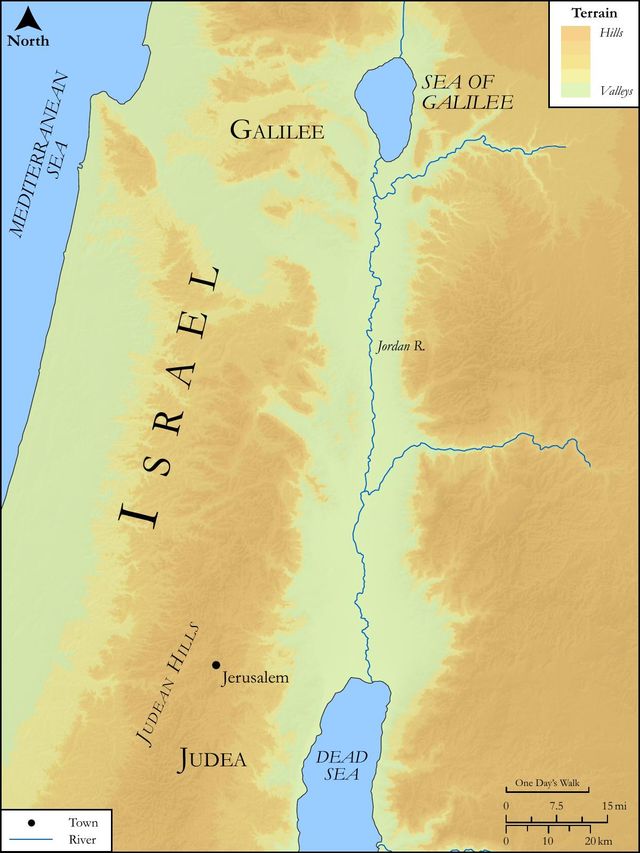
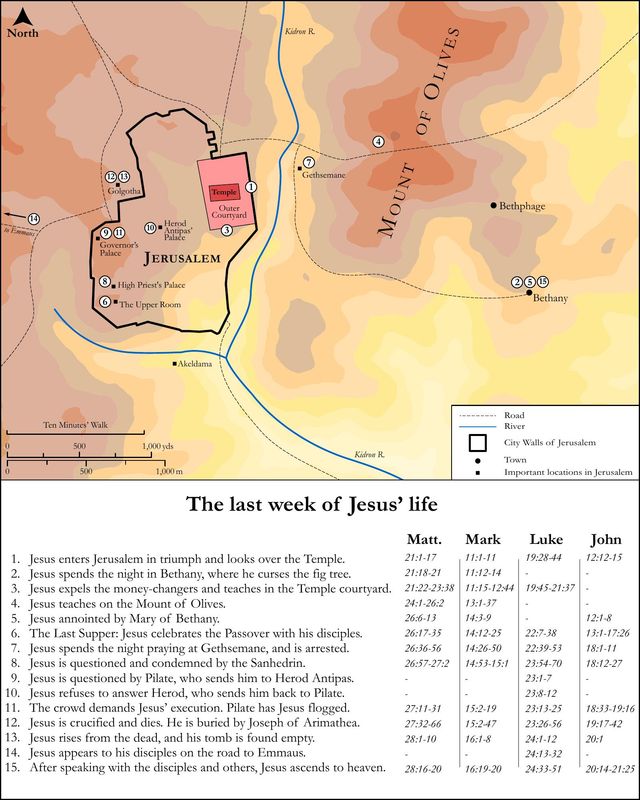
See on the biblical-era maps
Study this verse
Historical interpretation
Eight Centuries of Reception
13 surviving comments on this verse. Each one is dated, so this reads as a timeline rather than a list.
Select a marker to jump to its quote. Markers stagger vertically where authors wrote within a few decades of each other.
Watch for your life's sake. Let not your lamps be quenched, nor your loins unloosed; but be ye ready, for ye know not the hour in which our Lord cometh. But often shall ye come together, seeking the things which are befitting to your souls: for the whole time of your faith will not profit you, if ye be not made perfect in the last time. For in the last days false prophets and corrupters shall be multiplied, and the sheep shall be turned into wolves, and love shall be turned into hate; for when lawlessness increaseth, they shall hate and persecute and betray one another, and then shall appear the world-deceiver as Son of God, and shall do signs and wonders, and the earth shall be delivered into his hands, and he shall do iniquitous things which have never yet come to pass since the beginning. Then shall the creation of men come into the fire of trial, and many shall be made to stumble and shall perish; but they that endure in their faith shall be saved from under the curse itself. And then shall appear the signs of the truth; first, the sign of an out-spreading in heaven; then the sign of the sound of the trumpet; and the third, the resurrection of the dead; yet not of all, but as it is said: The Lord shall come and all His saints with Him. Then shall the world see the Lord coming upon the clouds of heaven.
Christ is shown to be the Word and Truth and Wisdom of God from the very first creature of the world to the last of the writings of the apostles (that is, from Genesis through the apostolic books of the Bible). No Scripture written after these is to be believed in the same way. Because “the law and the prophets prophesied until the coming of John,” the law and the prophets represent the lightning or radiance of truth which “comes from the East and shines as far as the West.” The East represents the law, and the West represents the “end of the law,” which is marked by “the coming of John.” The church alone has neither removed one word from this radiance nor added any prophecy of its own. If we were to consider carefully why the Evangelist does not use the singular here but writes of a plurality shining “from the Easts to the Wests,” we would see that the law and the prophets are one thing and Jesus Christ himself is yet another reality which extends from East to West, appearing to the apostle Paul “last of all, as to one untimely born.”
Or, when they allege secret and before unpublished Scriptures, in proof of their lie, they seem to say, Lo, the word of truth is in the desert. But when they produce canonical Scripture in which all Christians agree, they seem to say, Lo, the word of truth is in the chambers. Or wishing to point out such discourses as are altogether without Scripture, He said, If they shall say to you, Lo, he is in the secret chambers, believe it not. Truth is like the lightning that cometh out of the east, and shineth even unto the west. Or this may mean, that truth can be supported out of every passage of Scripture. The lightning of truth comes out of the east, that is, from the first beginnings of Christ, and shines throughout even to His passion, which is His setting; or from the very beginning of creation, to the last Scripture of the Apostles. Or, the east is the Law, the west is the end of the Law, and of John's prophecy. The Church alone neither takes away word or meaning from this lightning, nor adds aught to its prophecy. Or He means that we should give no heed to those who say, Lo, here is Christ, but show Him not in the Church, in which alone is the coming or the Son of Man, who said, Lo, I am with you always, even to the end of the world. (Mat. 28:20.)
For it is much the same with lightning. Lightning is figuratively compared with truth. It is likened to the coming of the Son of man, which is explained in every Scripture, whether it concerns the law, prophecy, the gospel or apostolic testimony. It flashes out from the east, the region of principalities and spiritual powers, and shines all the way to the west, the realm of darkness and Satan, in the time of the Passion. Note that if the law is rising in the east, the end of the law is setting in the west. But from Jesus Christ to Paul is a rising and setting. He was revealed to Paul last of all as “to one abnormally born.”
Notwithstanding, by reason of the great tribulation in which men shall be cast, false prophets promising to show aid present from Christ, will falsely affirm that Christ is present in divers places, that they may draw into the service of Antichrist men discouraged and distracted.
The false prophets, of whom He had spoken above, shall say of Christ one while, Lo, He is in the desert, in order that they may cause men to wander astray; another while, Lo, He is in the secret chambers, that they may enthral men under the dominion of Antichrist. But the Lord declares Himself to be neither lurking in a remote corner, nor shut up to be visited singly, but that He shall be exhibited to the view of all, and in every place, As the lightning cometh out of the east, and shineth even unto the west, so shall the coming of the Son of Man be.
That we might not be ignorant of the place in which He should come, He adds this, Wheresoever the carcase, &c. He calls the Saints eagles, from the spiritual flight of their bodies, and shows that their gathering shall be to the place of His passion, the Angels guiding them thither; and rightly should we look for His coming in glory there, where He wrought for us eternal glory by the suffering of His bodily humiliation.
For in the last days false prophets shall be multiplied, and such as corrupt the word; and the sheep shall be changed into wolves, and love into hatred: for through the abounding of iniquity the love of many shall wax cold. For men shall hate, and persecute, and betray one another. And then shall appear the deceiver of the world, the enemy of the truth, the prince of lies, [2 Thessalonians 2:3-12] whom the Lord Jesus "shall destroy with the spirit of His mouth, who takes away the wicked with His lips; and many shall be offended at Him. But they that endure to the end, the same shall be saved. And then shall appear the sign of the Son of man in heaven;" [Isaiah 11:4; Matthew 24:1-51] and afterwards shall be the voice of a trumpet by the archangel; and in that interval shall be the revival of those that were asleep. And then shall the Lord come, and all His saints with Him, with a great concussion above the clouds, with the angels of His power, [Matthew 16:27] in the throne of His kingdom, to condemn the devil, the deceiver of the world, and to render to every one according to his deeds. "Then shall the wicked go away into everlasting punishment, but the righteous shall go into life eternal," [Matthew 25:46] to inherit those things "which eye has not seen, nor ear heard, nor have entered into the heart of man, such things as God has prepared for them that love Him;" [1 Corinthians 2:9] and they shall rejoice in the kingdom of God, which is in Christ Jesus.
"Then, if any man shall say unto you, Lo, here is Christ, or there; believe it not: for there shall arise false Christs, and false prophets, and shall show signs and wonders, so as to deceive, if possible, the very elect. Behold, I have told you before. Wherefore if they shall say unto you, Behold, He is in the desert, go not forth: behold, He is in the secret chambers, believe it not. For as the lightning cometh out of the east, and shineth even unto the west, so shall also the coming of the Son of Man be. For wheresoever the carcase is, there shall the eagles be gathered together."
Having finished what concerned Jerusalem, He passes on to His own coming, and tells the signs of it, not for their use only, but for us also, and for all that shall come after us.
"Then." When? Here, as I have often said, the word, "then," relates not to the connection in order of time with the things before mentioned. At least, when He was minded to express the connection of time, He added, "Immediately after the tribulation of those days," but here not so, but, "then," not meaning what should follow straightway after these things, but what should be in the time, when these things were to be done, of which He was about to speak.
Awhile He secures them by the place, mentioning the distinguishing marks of His second coming, and the indications of the deceivers. For not, as when at His former coming He appeared in Bethlehem, and in a small corner of the world, and no one knew Him at the beginning, so doth He say it shall be then too; but openly and with all circumstance, and so as not to need one to tell these things. And this is no small sign that He will not come secretly.
But mark how here He saith nothing of war (for He is interpreting the doctrine concerning His advent), but of them that attempt to deceive. For some in the days of the apostles deceived the multitude, "for they shall come," saith He, "and shall deceive many;" and others shall do so before His second coming, who shall also be more grievous than the former. "For they shall show," He saith, "signs and wonders, so as to deceive if possible the very elect:" here He is speaking of Antichrist, and indicates that some also shall minister to him. Of him Paul too speaks on this wise. Having called him "man of sin," and "son of perdition," He added, "Whose coming is after the working of Satan, with all power and signs and lying wonders; and with all deceivableness of unrighteousness in them that perish."
And see how He secures them; "Go not forth into the deserts, enter not into the secret chambers." He did not say, "Go, and do not believe;" but, "Go not forth, neither depart thither." For great then will be the deceiving, because that even deceiving miracles are wrought.
Having told them how Antichrist cometh, as, for instance, that it will be in a place; He saith how Himself also cometh. How then doth He Himself come? "As the lightning cometh out of the east, and shineth even unto the west, so shall also the coming of the Son of Man be. For wheresoever the carcase is, there also will the eagles be gathered together."
How then shineth the lightning? It needs not one to talk of it, it needs not a herald, but even to them that sit in houses, and to them in chambers it shows itself in an instant of time throughout the whole world. So shall that coming be, showing itself at once everywhere by reason of the shining forth of His glory. But He mentions also another sign, "where the carcase is, there also shall the eagles be;" meaning the multitude of the angels, of the martyrs, of all the saints.
When the Lord had finished all that related to Jerusalem, He came in the rest to His own coming, and gives them signs thereof, useful not for them only, but for us and for all who shall be after us. As above, the Evangelist said, In those days came John the Baptist, (Mat. 3:1.) not implying immediately after what had gone before, but thirty years after; so here, when He says Then, He passes over the whole interval of time between the taking of Jerusalem and the beginnings of the consummation of the world. Among the signs which He gives of His second coming He certifies them concerning the place, and the deceivers. For it shall not be then as at His former coming, when He appeared in Bethlehem, in a corner of the world, unknown of any; but He shall come openly so as not to need any to announce His approach, wherefore, If any man shall say unto you, Lo, here is Christ, or there, believe not.
He speaks here of Antichrist, and of certain his ministers, whom He calls false Christs and false prophets, such as were many in the time of the Apostles; but before Christ's second coming there shall come others more bitter than the former, And they shall show great signs and wonders. (cf. 2 Thes. 2:8.)
As He had above described in what guise Antichrist should come, so here He describes how He Himself shall come. For as the lightning needeth none to herald or announce it, but is in an instant of time visible throughout the whole world, even to those that are sitting in their chambers, so the coming of Christ shall be seen every where at once, because of the brightness of His glory. Another sign He adds of His coming, Wheresoever the body is, thither will the eagles be gathered together. The eagles denote the company of the Angels, Martyrs, and Saints.
(Verse 27.) For as the lightning comes from the east and shines even to the west, so shall also the coming of the Son of man be. Do not go out, do not believe that the Son of man is in the deserts of the nations or in the inner chambers of heretics; but rather that from the east even unto the west, his faith may shine forth in the Catholic Churches. It must also be said that the second coming of the Savior will not be in humility as before, but in glory to be shown. It is foolish, therefore, to seek him in a small or hidden place, who is the light of the whole world.
Wherein He shows that His second coming shall be not in lowliness as His first, but in glory; and therefore it is folly to seek in places little and obscure for Him who is the Light of the whole world. (John 8:12.)
By an instance from nature, which we daily see, we are instructed in a sacrament of Christ. Eagles and vultures are said to scent dead bodies even beyond sea, and to flock to feed upon them. If then birds, not having the gift of reason, by instinct alone find out where lays a dead body, separated by so great space of country, how much more ought the whole multitude of believers to hasten to Christ, whose lightning goeth forth out of the east, and shines even to the west? We may understand by the carcase here, or corpse, which in the Latin is more expressively 'cadaver,' an allusion to the passion of Christ's death.
They are called eagles whose youth is renewed as the eagle's, and who take to themselves wings that they may come to Christ's passion. (Ps. 103:5. Is. 40:31.)
Or otherwise; This may be understood of the false prophets. At the time of the Jewish captivity, there were many leaders who declared themselves to be Christs, (Joseph B.J. v. 1) so that while the Romans were actually besieging them, there were three factions within. But it is better taken as we expounded it above, of the end of the world. Thirdly, it may be understood of the warfare of the heretics against the Church, and of those Antichrists, who under pretext of false science, fight against Christ.
If then any one assert to you that Christ tarries in the desert of the Gentiles, or in the teaching of the Philosophers, or in the secret chambers of the heretics, who promise the hidden things of God, believe Him not, but believe that the Catholic Faith shines from east to west in the Churches.
Or by this, in the desert, or in the secret chambers, He means that in times of persecution and distress, the false Prophets always find place for deceiving.
We are invited to flock to Christ's passion wheresoever in Scripture it is read of, that through it we may be able to come to God's word.
(Lib. 83 Quæst. q. 79.) Here the Lord forewarns us that even wicked men shall do some miracles which the saints cannot do, yet are they not therefore to be thought to have a higher place in the sight of God. For the Egyptian magi were not more acceptable to God than the people of Israel, because they could do what the Israelites could not; yet did Moses, by the power of God, work greater things. This gift is not bestowed on all the saints, lest the weak should be led astray by a most destructive error, supposing such powers to be higher gifts than those works of righteousness by which eternal life is secured. And though magi do the same miracles that the saints do, yet are they done with a different end, and through a different authority; for the one do them seeking the glory of God, the others seeking their own glory; these do them by some special compact or privilege granted to the Powers, within their sphere, those by the public dispensation and the command of Him to whom all creation is subject. For it is one thing for the owner of a horse to be compelled to give it up to a soldier, another for him to hand it over to a purchaser, or to give or lend it to a friend; and as those evil soldiers, who are condemned by the imperial discipline, employ the imperial ensigns to terrify the owners of any property, and to extort from them what is not required by the public service; so some evil Christians, by means of the name of Christ, or by words or sacraments Christian, compel somewhat from the Powers; yet these, when thus at the bidding of evil men, they depart from their purpose, they depart in order to deceive men in whose wanderings they rejoice. It is one way then in which magi, another in which good Christians, another in which bad Christians, work miracles; the magi by a private compact, good Christians by the public righteousness, evil Christians by the signs of public righteousness. And we ought not to wonder at this when we believe not unreasonably that all that we see happen is wrought by the agency of the inferior powers of this air.
(de Trin. iii. 8.) Yet are we not therefore to think that this visible material world attends the nod of the disobedient angels, but rather the power is given them of God. Nor are we to suppose that such evil angels have creative power, but by their spirituality they know the seeds of things which are hidden from us, and these they secretly scatter by suitable adaptations of the elements, and so they give occasion both to the whole being, and the more rapid increase of substances. For so there are many men who know what sort of creatures use to be generated out of certain herbs, meats, juices and humours, bruised and mingled together in a certain fashion; save only that it is harder for men to do these things, inasmuch as they lack that subtlety of sense, and penetrativeness of body in their limbs dull and of earthly mould.
(Quæst. Ev. i. 38.) By the east and west, He signifies the whole world, throughout which the Church should be. In the same way as He said below, Hereafter shall ye see the Son of Man coming in the clouds of heaven, (Mat. 26:64.) so now He likens His coming to lightning, which uses to flash out of the clouds. When then the authority of the Church is set up clear and manifest throughout the whole world, He suitably warns His disciples that they should not believe schismatics and heretics. Each schism and heresy holds its own place, either occupying some important position in the earth, or ensnaring men's curiosity in obscure and remote conventicles. Lo, here is Christ, or lo, there, refers to some district or province of the earth; the secret chambers, or the desert, signify the obscure and lurking conventicles of heretics.
(Mor. xv. 61.) When then Antichrist shall have wrought wonderful prodigies before the eyes of the carnal, he shall draw men after him, all such as delight in present goods, surrendering themselves irrevocably to his sway, Insomuch that if it were possible the very elect should be led astray.
(Hom. in Ev. xxxv. i.) Or, because the heart of the elect is assailed with fearful thoughts, yet their faithfulness is not shaken, the Lord comprehends both under the same sentence, for to waver in thought is to err. He adds, If it were possible, because it is not possible that the elect should be taken in error
And as darts, when foreseen, are less likely to hit, He adds, Lo, I have told you. Our Lord announces the woes which are to precede the destruction of the world, that when they come they may alarm the less from having been foreknown.
(Mor. xxxi. 53.) We may understand this, Wheresoever the carcase is, as meaning, I who incarnate sit on the throne of heaven, as soon as I shall have loosed the souls of the elect from the flesh, will exalt them to heavenly places.
He says not this because it is possible for the divine election to be defeated, but because they, who to men's judgment seemed elect, shall be led into error.
Continue studying Matthew 24:27 across the web’s major study libraries — every link below opens this exact verse, chapter, or book on the destination site.
Read & Compare
 BibleGatewayThis verse in more than 200 translations and 70 languages.
 Bible.comThe YouVersion reader — hundreds of translations, reading plans, and highlights.
 ESV.orgCrossway's official English Standard Version reader.
 NET BibleThe NET translation with 60,000+ translators' notes on every rendering decision.
 STEP BibleTyndale House's free study tool — original text, vocabulary, and scholarly resources.
 BibliaLogos Bible Software's free web reader.
 USCCBThe New American Bible (Revised Edition) with the U.S. bishops' study notes.
Commentaries
 BibleHub CommentariesDozens of classic commentaries on this verse, gathered on one page.
 StudyLightMore than 100 commentary sets — the largest collection on the web.
 BibleRefPlain-English commentary on what this verse means, verse by verse.
 Enduring WordDavid Guzik's free commentary on this chapter, widely used by Bible teachers.
 Bible Study ToolsVerse commentary alongside Greek and Hebrew study aids.
Original Language & Research
- BibleHub InterlinearThe verse word by word — original language, transliteration, and English.
- BibleHub LexiconEvery word's original-language definition and Strong's entry.
 Blue Letter BibleDeep-study tools — Strong's numbers, concordance, and word studies.
 CNTR CollationThe earliest Greek manuscripts of this verse, collated letter by letter.
Sermons, Hymns & Audio


TrulyRandomVerse is not affiliated with these sites and doesn’t control their content. They’re linked because they’re genuinely useful.
Summary
Matthew 24:27, a pivotal declaration within Jesus' Olivet Discourse, vividly portrays the unmistakable and universally visible nature of His Second Coming. Through the striking analogy of lightning, Jesus counters prevailing deceptions regarding a secret or localized return, assuring His disciples that His advent will be a sudden, glorious, and undeniable global event, manifest to all. This verse serves as both a warning against false messianic claims and a profound assurance of the authentic, sovereign return of the Son of Man.
Context
ShowHideLiterary Context
This verse is embedded within Jesus' extensive prophetic discourse on the Mount of Olives, recorded in Matthew 24, Mark 13, and Luke 21. The disciples had initiated this discussion by asking about the destruction of the Temple and the signs of Jesus' "coming" (parousia) and the "end of the age" (Matthew 24:3). Immediately preceding Matthew 24:27, Jesus issues stern warnings against false Christs and false prophets who will attempt to deceive people by claiming His presence in remote or hidden places (Matthew 24:23-26). Verse 27 directly refutes these deceptions by emphasizing the sheer, undeniable visibility and suddenness of His true return, making it impossible to miss or misinterpret.
Historical & Cultural Context
First-century Judea was a hotbed of messianic expectation, often fueled by political oppression and a longing for liberation. Many false messiahs had emerged, and more were anticipated, promising deliverance or claiming secret divine revelations. The Jewish people were familiar with prophetic imagery, including divine manifestations often accompanied by natural phenomena like lightning or thunder, signifying God's power and presence (e.g., Exodus 19:16). The geographical reference to "east" and "west" would have been readily understood as encompassing the entire known world, emphasizing universality. The concept of a sudden, decisive divine intervention was also deeply ingrained in their eschatological hopes, often associated with a day of judgment or the establishment of God's kingdom.
Key Themes
ShowHideMatthew 24:27 contributes significantly to several overarching themes in the Olivet Discourse and Matthew's Gospel. Firstly, it reinforces the theme of Jesus' divine authority and sovereignty as the Son of Man, whose return will be an undeniable event over all the earth, not a clandestine one. Secondly, it underscores the importance of discernment and vigilance, warning against the pervasive nature of deception in the last days and urging believers to not be led astray by sensational claims. Thirdly, it highlights the universal scope of God's redemptive plan and judgment, as Christ's return will be witnessed by "every eye" (Revelation 1:7). Finally, the analogy of lightning emphasizes the suddenness and unexpectedness of the parousia, calling for continuous spiritual preparedness rather than attempts to predict or pinpoint the exact timing, a point Jesus reiterates in Matthew 24:36.
Exposition and Analysis
ShowHideKey Word Analysis
ShowHideDenoting a flash of light, brightness, or brilliance. In this context, it perfectly captures the sudden, intense, and widespread illumination that accompanies a lightning strike. It signifies an event that is instantaneous, powerful, and impossible to ignore, illuminating the entire sky from one horizon to the other.
Meaning "a being near," "advent," or "presence." In the New Testament, parousía frequently refers to the official arrival or presence of a dignitary, king, or general. It implies not merely a sudden appearance but a definitive, authoritative, and public manifestation of Christ's regal presence, often associated with His return to punish Jerusalem or, more broadly, to establish His final kingdom and judge the wicked.
(huiós, "son") and G444 (ánthrōpos, "human being" or "man"). This is Jesus' preferred self-designation, rooted in Daniel 7:13-14, where a "son of man" figure comes with the clouds of heaven to receive everlasting dominion, glory, and a kingdom. It combines both His humanity and His divine, authoritative role as the eschatological judge and ruler, emphasizing His unique identity as the one who will return in power and great glory.
Verse Breakdown
ShowHide"For as the lightning cometh out of the east, and shineth even unto the west;"
This clause sets up the profound simile, drawing on a common, undeniable natural phenomenon. Lightning, by its very nature, is a sudden, brilliant flash that originates from one point (often perceived as "out of the east" where storms frequently gather and move) and illuminates the entire expanse of the sky, "shining even unto the west." It is universally visible across a vast region, requiring no announcement or pointer. The imagery conveys instantaneousness, immense power, and undeniable visibility.
"so shall also the coming of the Son of man be."
This clause directly applies the lightning analogy to the Second Coming of Jesus. Just as lightning is globally visible and sudden, so too will be the parousía of the Son of Man. This refutes any notion of a secret, localized, or gradual return. It emphasizes that Christ's return will be a public event, witnessed by all humanity, leaving no room for doubt or deception. His arrival will be a definitive, authoritative manifestation of His glorious presence, marking the culmination of history and the establishment of His eternal reign.
Literary Devices
ShowHideMatthew 24:27 primarily employs a powerful Simile (or Analogy), comparing the coming of the Son of Man to the visible and sudden nature of lightning. This simile is highly effective because lightning is a universally understood phenomenon, immediately conveying the qualities of speed, brilliance, and widespread visibility. The use of Hyperbole is also present in the implied scope of "east... unto the west," suggesting a global, all-encompassing visibility that transcends geographical limitations. Furthermore, there is Symbolism in the lightning itself, which often symbolizes divine power, judgment, and the sudden manifestation of God's presence in biblical literature (e.g., Psalm 77:18). The phrase "Son of Man" is also a significant Title with rich theological implications, connecting Jesus to the eschatological figure in Daniel's prophecy, emphasizing His authority and future reign.
Theological and Thematic Connections
ShowHideMatthew 24:27 is a cornerstone passage for understanding the nature of Christ's Second Coming, emphasizing its universal visibility and suddenness as a direct counter to any deceptive claims of a secret or hidden return. Theologically, it underscores the sovereign power and majesty of Jesus, who will return not as a humble servant, but as the glorious Son of Man, the rightful King and Judge. This public and undeniable advent will mark the climax of redemptive history, bringing about the final judgment and the full establishment of God's eternal kingdom. The verse also highlights the importance of vigilance and spiritual readiness, as the timing of this glorious event will be unexpected, much like a flash of lightning.
Reflection and Application
ShowHideMatthew 24:27 offers profound comfort and a clear call to action for believers today. In a world often filled with sensational prophecies, conspiracy theories, and various claims about the end times, Jesus' words provide a firm anchor. We are reassured that His return will not be a secret event that we might miss, nor will it require special discernment or a journey to a specific location. Instead, it will be a globally witnessed, unmistakable, and glorious manifestation of His power and authority. This truth liberates us from anxiety about being deceived by false messiahs or secret rapture teachings. Practically, this verse calls us to live lives of constant spiritual readiness and faithfulness, rather than obsessing over signs or dates. Our focus should be on living out the Great Commission, loving God and neighbor, and growing in Christlikeness, knowing that when He comes, it will be undeniably clear to all. We are to be found faithfully serving, watching, and waiting with eager anticipation for the glorious appearing of our Lord.
Questions for Reflection
ShowHideFAQ
ShowHideDoes this verse contradict the idea of a "secret rapture" where believers are taken away before the world sees Christ?
ShowHideYes, Matthew 24:27, along with other New Testament passages, strongly contradicts the notion of a secret rapture. Jesus explicitly states that His coming will be as universally visible and unmistakable as lightning flashing across the sky from east to west. This imagery leaves no room for a hidden or secretive event witnessed only by a select few. Other passages like Revelation 1:7 state, "Behold, he cometh with clouds; and every eye shall see him." Similarly, 1 Thessalonians 4:16-17 describes the Lord's descent with a "shout," "voice of the archangel," and "trump of God," indicating a public and audible event, not a silent, unseen one. The "rapture" (the catching up of believers) described in 1 Thessalonians is part of this glorious, visible return, not a separate, secret event preceding it.
Christ-Centered Fulfillment
ShowHideMatthew 24:27 finds its ultimate Christ-centered fulfillment in the person and work of Jesus, who is the promised Son of Man, the Messiah whose first coming inaugurated God's kingdom and whose second coming will bring it to glorious consummation. The "coming of the Son of Man" is not merely an event but the very manifestation of Christ's kingly reign and judicial authority. His first advent, though humble and often unrecognized by the world, laid the foundation for salvation through His atoning death and resurrection (Philippians 2:6-8). His second advent, described here with the grandeur of lightning flashing from the east to the west, will be the public vindication of His claims and the glorious unveiling of His full power as the King of kings and Lord of lords (Revelation 19:11-16). Just as lightning reveals the vastness of the sky, so Christ's return will reveal His universal dominion, bringing judgment to His enemies and eternal redemption to His elect (Matthew 25:31-46). This visible and sudden return assures believers that the one who died for them will return to gather them to Himself forever, completing the work of salvation and establishing His eternal kingdom in unparalleled glory (John 14:3).