


Job 28:28
Bible text: King James Version (1769 Blayney text) · Public domain
Bible text: Berean Standard Bible · Public domain
Bible text: American Standard Version (1901) · Public domain
Bible text: World English Bible, Messianic edition · Public domain
Bible text: Geneva Bible (1599) · Public domain
Bible text: Young's Literal Translation · Public domain
- וַיֹּאמֶרvai·Yo·merand he saidH559Conj-w ¦ V-Qal-ConsecImperf-3msVerb Qal Consecutive Imperfect 3rd Singular Masculineוַandיֹּאמֶרhe said
- לָאָדָםla·'a·Damto <the> humankindH120Prep-l ¦ N-msNoun Singular Masculine Absoluteלָto <the>אָדָםhumankind
- הֵןhenhere!H2005PrtParticle Interjection
- יִרְאַתyir·'At[the] fear ofH3374N-fscNoun Singular Feminine Construct
- אֲדֹנָי'A·do·nai[the] LordH136N-properNoun Proper Title
- הִיאhi'thatH1931Pro-3fsPronoun Personal 3rd Singular Feminine
- חָכְמָהchokh·mah[is] wisdomH2451N-fsNoun Singular Feminine Absolute
- וְסוּרve·Surand to turnH5493Conj-w ¦ V-Qal-InfVerb Qal Infinitive Constructוְandסוּרto turn
- מֵרָעme·Ra'from evilH7451Prep-m ¦ Adj-msAdjective Singular Masculine Absoluteמֵfromרָעevil
- בִּינָהbi·Nah[is] understandingH998N-fsNoun Singular Feminine Absolute
English is a literal word-by-word gloss of the Hebrew, not the KJV's wording. Why?
This is the original text the KJV's translators worked from — each Hebrew word with its own literal English meaning in this verse, prepared by scholars at Tyndale House, Cambridge. The KJV translates whole sentences, not word by word, so its wording differs: one Hebrew word can become several English words, and the KJV may choose “the LORD” where the gloss reads “Yahweh”. Both are faithful — they answer different questions. For the KJV's own rendering, switch to the KJV text.
Details
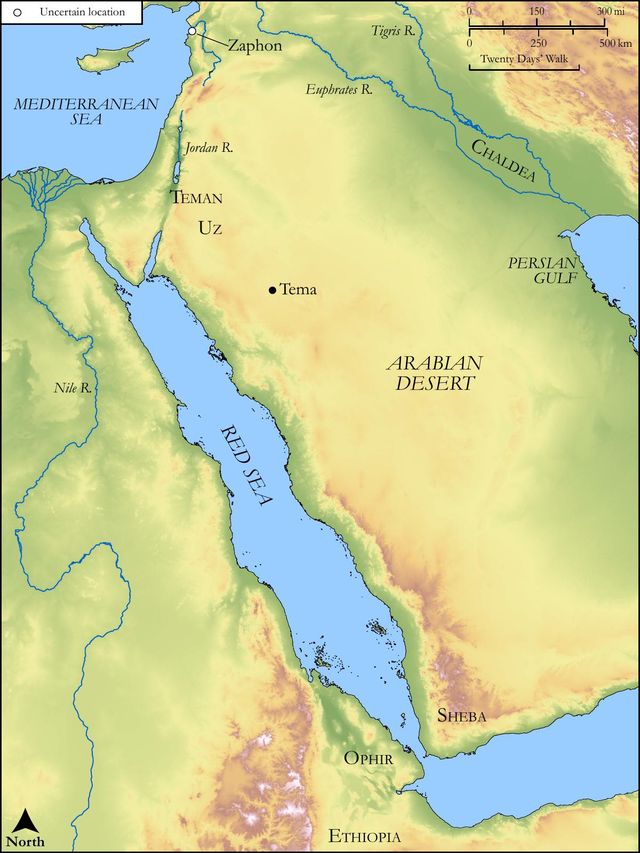
See on the biblical-era map
Study this verse
Public-domain commentary
Matthew Henry
From his Commentary on the Whole Bible. Henry comments on passages, not single verses — this entry covers Job 28:20–28. His four-level outline is real structure in the source text, so it is rendered as structure.
The question which Job had asked (Job 28:12) he asks again here; for it is too worthy, too weighty, to be let fall, until we speed in the enquiry. Concerning this we must seek till we find, till we get some satisfactory account of it. By a diligent prosecution of this enquiry he brings it, at length, to this issue, that there is a twofold wisdom, one hidden in God, which is secret and belongs not to us, the other made known by him and revealed to man, which belongs to us and to our children.
I.The knowledge of God's secret will, the will of his providence, is out of our reach, and what God has reserved to himself.
It belongs to the Lord our God. To know the particulars of what God will do hereafter, and the reasons of what he is doing now, is the knowledge Job first speaks of.
1.This knowledge is hidden from us. It is high, we cannot attain unto it (Job 28:21, Job 28:22): It is hid from the eyes of all living, even of philosophers, politicians, and saints; it is kept close from the fowls of the air; though they fly high and in the open firmament of heaven, though they seem somewhat nearer that upper world where the source of this wisdom is, though their eyes behold afar off (Job 39:29), yet they cannot penetrate into the counsels of God. No, man is wiser than the fowls of heaven, and yet comes short of this wisdom. Even those who, in their speculations, soar highest, and think themselves, like the fowls of the air, above the heads of other people, yet cannot pretend to this knowledge. Job and his friends had been arguing about the methods and reasons of the dispensations of Providence in the government of the world. "What fools are we" (says Job) "to fight in the dark thus, to dispute about that which we do not understand!" The line and plummet of human reason can never fathom the abyss of the divine counsels. Who can undertake to give the rationale of Providence, or account for the maxims, measure, and methods of God's government, those arcana imperii - cabinet counsels of divine wisdom? Let us then be content not to know the future events of the Providence until time discover them (Act 1:7) and not to know the secret reasons of Providence until eternity discover them. God is now a God that hideth himself (Isa 45:15); clouds and darkness are round about him. Though this wisdom be hidden from all living, yet destruction and death say, We have heard the fame of it. Though they cannot give an account of themselves (for there is no wisdom, nor device, nor knowledge at all in the grave, much less this), yet there is a world on the other side death and the grave, on which those dark regions border, and to which we must pass through them, and there we shall see clearly what we are now in the dark about. "Have a little patience," says Death to the inquisitive soul: "I will fetch thee shortly to a place where even this wisdom will be found." When the mystery of God shall be finished it will be laid open, and we shall know as we are known; when the veil of flesh is rent, and the interposing clouds are scattered, we shall know what God does, though we know not now, Joh 13:7.
2.This knowledge is hidden in God, as the apostle speaks, Eph 3:9. Known unto God are all his works, though they are not known to us, Act 15:18. There are good reasons for what he does, though we cannot assign them (Job 28:23): God understands the way thereof. Men sometimes do they know not what, but God never does. Men do what they did not design to do; new occurrences put them upon new counsels, and oblige them to take new measures. But God does all according to the purpose which he purposed in himself, and which he never alters. Men sometimes do that which they cannot give a good reason for, but in every will of God there is a counsel: he knows both what he does and why he does it, the whole series of events and the order and place of every occurrence. This knowledge he has in perfection, but keeps to himself. Two reasons are here given why God must needs understand his own way, and he only: -
(1.)Because all events are now directed by an all-seeing and almighty Providence, Job 28:24, Job 28:25. He that governs the world is,
[1.]Omniscient; for he looks to the ends of the earth, both in place and time; distant ages, distant regions, are under his view. We do not understand our own way, much less can we understand God's way, because we are short-sighted. How little do we know of what is doing in the world, much less of what will be done? But the eyes of the Lord are in every place; nay, they run to and fro through the earth. Nothing is, or can be, hidden from him; and therefore the reasons why some wicked people prosper remarkably and others are remarkably punished in this world, which are secret to us, are known to him. One day's events, and one man's affairs, have such a reference to, and such a dependence upon, another's, that he only to whom all events and all affairs are naked and open, and who sees the whole at one entire and certain view, is a competent Judge of every part.
[2.]He is omnipotent. He can do every thing, and is very exact in all he does. For proof of this Job mentions the winds and waters, Job 28:25. What is lighter than the wind? Yet God hath ways of poising it. He knows how to make the weight for the winds, which he brings out of his treasuries (Psa 135:7), keeping a very particular account of what he draws out, as men do of what they pay out of their treasuries, not at random, as men bring out their trash. Nothing sensible is to us more unaccountable than the wind. We hear the sound of it, yet cannot tell whence it comes, nor whither it goes; but God gives it out by weight, wisely ordering both from what point it shall blow and with what strength. The waters of the sea, and the rain-waters, he both weighs and measures, allotting the proportion of every tide and every shower. A great and constant communication there is between clouds and seas, the waters above the firmament and those under it. Vapours go up, rains come down, air is condensed into water, water rarefied into air; but the great God keeps an exact account of all the stock with which this trade is carried on for the public benefit and sees that none of it be lost. Now if, in these things, Providence be so exact, much more in dispensing frowns and favours, rewards and punishments, to the children of men, according to the rules of equity.
(2.)Because all events were from eternity designed and determined by an infallible prescience and immutable decree, Job 28:26, Job 28:27. When he settled the course of nature he foreordained all the operations of his government.
[1.]He settled the course of nature. Job mentions particularly a decree for the rain and a way for the thunder and lightening. The general manner and method, and the particular uses and tendencies, of these strange performances, both their causes and their effects, were appointed by the divine purpose; hence God is said to prepare lightnings for the rain, Psa 135:7; Jer 10:13.
[2.]When he did that he laid all the measures of his providence, and drew an exact scheme of the whole work from first to last. Then, from eternity, did he see in himself, and declare to himself, the plan of his proceedings. Then he prepared it, fixed it, and established it, set every thing in readiness for all his works, so that, when any thing was to be done, nothing was to seek, nor could any thing unforeseen occur, to put it either out of its method or out of its time; for all was ordered as exactly as if he had studied it and searched it out, so that, whatever he does, nothing can be put to it nor taken from it, and therefore it shall be for ever, Ecc 3:14. Some make Job to speak of wisdom here as a person, and translate it, Then he saw her and showed her, etc., and then it is parallel with that of Solomon concerning the essential wisdom of the Father, the eternal Word, Pro 8:22, etc. Before the earth was, then was I by him, Joh 1:1, Joh 1:2.
II.The knowledge of God's revealed will, the will of his precept, and this is within our reach; it is level to our capacity, and will do us good (Job 28:28): Unto man he said, Behold, the fear of the Lord that is wisdom. Let it not be said that when God concealed his counsels from man, and forbade him that tree of knowledge, it was because he grudged him any thing that would contribute to his real bliss and satisfaction; no, he let him know as much as he was concerned to know in order to his duty and happiness; he shall be entrusted with as much of his sovereign mind as is needful and fit for a subject, but he must not think himself fit to be a privy-counsellor. He said to Adam (so some), to the first man, in the day in which he was created; he told him plainly it was not for him to amuse himself with over-curious searches into the mysteries of creation, nor to pretend to solve all the phenomena of nature; he would find it neither possible nor profitable to do so. No less wisdom (says archbishop Tillotson) than that which made the world can thoroughly understand the philosophy of it. But let him look upon this as his wisdom, to fear the Lord and to depart from evil; let him learn that, and he is learned enough; let this knowledge serve his turn. When God forbade man the tree of knowledge he allowed him the tree of life, and this is that tree, Pro 3:18. We cannot attain true wisdom but by divine revelation. The Lord giveth wisdom, Pro 2:6. Now the matter of that is not found in the secrets of nature or providence, but in the rules for our own practice. Unto man he said, not, "Go up to heaven, to fetch happiness thence;" or, "Go down to the deep, to draw it up thence." No, the word is nigh thee, Deu 30:14. He hath shown thee, O man! not what is great, but what is good, not what the Lord thy God designs to do with thee, but what he requires of thee, Mic 6:8. Unto you, O men! I call, Pro 8:4. Lord, what is man that he should be thus minded, thus visited! Behold, mark, take notice of this; he that has ears let him hear what the God of heaven says to the children of men: The fear of the Lord, that is the wisdom. Here is,
1.The description of true religion, pure religion, and undefiled; it is to fear the Lord and depart from evil, which agrees with God's character of Job, Job 1:1. The fear of the Lord is the spring and summary of all religion. There is a slavish fear of God, springing from hard thoughts of him, which is contrary to religion, Mat 25:24. There is a selfish fear of God springing from dreadful thoughts of him, which may be a good step towards religion, Act 9:5. But there is a filial fear of God, springing from great and high thoughts of him, which is the life and soul of all religion. And, wherever this reigns in the heart, it will appear by a constant care to depart from evil, Pro 16:6. This is essential to religion. We must first cease to do evil, or we shall never learn to do well. Virtus est vitium fugere - Even in our flight from vice some virtue lies.
2.The commendation of religion: it is wisdom and understanding. To be truly religious is to be truly wise. As the wisdom of God appears in the institution of religion, so the wisdom of man appears in the institution of religion, so the wisdom of man appears in the practice and observance of it. It is understanding, for it is the best knowledge of truth; it is wisdom, for it is the best management of our affairs. Nothing more surely guides our way and gains our end than being religious.
Historical interpretation
Two Centuries of Reception
2 surviving comments on this verse. Each one is dated, so this reads as a timeline rather than a list.
Select a marker to jump to its quote. Markers stagger vertically where authors wrote within a few decades of each other.
Nothing has more value than that art, nothing is more powerful than that wisdom. “The fear of the Lord, that is the beginning of wisdom, and all those who practice it have good understanding.” That is the greatest of all goods. Supreme wisdom is to worship God, not to take trouble to make useless notices, and especially to enquire about events. Do not believe that you may find a different wisdom.
14. As though it were spoken in plain speech; ‘Man, turn back to thine own self; sift thoroughly the secrets of thine own heart. If thou findest out that thou dost fear God, surely it is plain that of this Wisdom thou art full. Which same if thou art not able to learn what in herself She is, meanwhile thou henceforth findest what She is in thyself. For She that is feared in herself by the Angels, in thee is called ‘the fear of the Lord.’ Because it is certain that thou possessest Her, if it is not uncertain that thou dost fear God.’ Hence also it is said by the Psalmist; The beginning of Wisdom is the fear of the Lord, [Ps. 111, 10] because She then begins to penetrate the heart, when She disturbs it by the dread of the final Judgment. Therefore the Word of God draws Itself in to our littleness; just as a father, when he speaks to his little child, in order that he may be able to be understood by him, talks stammeringly of his own accord. For because we are unable to penetrate the nature of Wisdom, what She is in herself, by the condescension of God, we have heard what She is in us, when it is said, Behold, the fear of the Lord, that is Wisdom. But because he really understands the force of Divine fear, who keeps himself from all bad practices, it is rightly subjoined; And, to depart from evil is understanding. So then the things that come after, that they are full of the spirit of prophecy, the words of the sacred history themselves bear testimony.
Continue studying Job 28:28 across the web’s major study libraries — every link below opens this exact verse, chapter, or book on the destination site.
Read & Compare
 BibleGatewayThis verse in more than 200 translations and 70 languages.
 Bible.comThe YouVersion reader — hundreds of translations, reading plans, and highlights.
 ESV.orgCrossway's official English Standard Version reader.
 NET BibleThe NET translation with 60,000+ translators' notes on every rendering decision.
 STEP BibleTyndale House's free study tool — original text, vocabulary, and scholarly resources.
 BibliaLogos Bible Software's free web reader.
 USCCBThe New American Bible (Revised Edition) with the U.S. bishops' study notes.
Commentaries
 BibleHub CommentariesDozens of classic commentaries on this verse, gathered on one page.
 StudyLightMore than 100 commentary sets — the largest collection on the web.
 BibleRefPlain-English commentary on what this verse means, verse by verse.
 Enduring WordDavid Guzik's free commentary on this chapter, widely used by Bible teachers.
 Bible Study ToolsVerse commentary alongside Greek and Hebrew study aids.
Original Language & Research
- BibleHub InterlinearThe verse word by word — original language, transliteration, and English.
- BibleHub LexiconEvery word's original-language definition and Strong's entry.
 Blue Letter BibleDeep-study tools — Strong's numbers, concordance, and word studies.
 SefariaThe Hebrew text with Rashi and centuries of Jewish commentary.
Sermons, Hymns & Audio


TrulyRandomVerse is not affiliated with these sites and doesn’t control their content. They’re linked because they’re genuinely useful.
Summary
Job 28:28 serves as the profound climax of a poetic interlude, a "Hymn to Wisdom," within the larger narrative of Job. Following a detailed exploration of humanity's impressive capacity to extract earthly treasures and uncover the secrets of the natural world, this verse pivots to declare that true wisdom is not found through human ingenuity or exploration. Instead, it is a divine revelation, succinctly defined as the reverential fear of the Lord and the practical commitment to depart from evil, thereby establishing the ultimate source and expression of genuine understanding.
Context
ShowHideLiterary Context
Chapter 28 stands as a magnificent, self-contained poem, distinct from the ongoing dialogues between Job and his friends. It functions as a theological soliloquy, a "Hymn to Wisdom," that interrupts the cycle of speeches and elevates the discussion beyond Job's personal suffering or his friends' flawed theological arguments. The chapter meticulously details humanity's remarkable ability to mine the earth for its hidden riches—silver, gold, precious stones, and even the paths of subterranean rivers—demonstrating human mastery over the physical world. Yet, it powerfully contrasts this human ingenuity with the utter inaccessibility of true wisdom, whose path and source remain hidden from all living creatures, even the keenest birds of prey. Only God, who established the natural order and weighed the winds, fully comprehends and knows the way to wisdom, for He saw its foundation and determined its measure. Thus, Job 28:28 acts as the culminating declaration, a divine pronouncement that reveals where true wisdom ultimately resides, shifting the focus from the elusive search in creation to the revealed truth from the Creator.
Historical & Cultural Context
The Book of Job is a masterpiece of the wisdom books, set in the land of Uz among the men of the east. Unlike other wisdom traditions that might emphasize practical skills or ethical conduct for societal success, Job delves into profound theological questions about suffering, divine justice, and the nature of wisdom itself. In ancient Israel, "wisdom" (Hebrew: chokmah) was not merely intellectual knowledge but a practical skill for living a flourishing, righteous life in accordance with God's established order. The cultural backdrop of the time valued both human ingenuity (as seen in mining and craftsmanship) and a deep reverence for the divine. Job 28:28 directly challenges the human-centric pursuit of knowledge by asserting that ultimate wisdom is not a discovery but a revelation, aligning with a broader biblical understanding that true insight originates from God, not from human effort or natural exploration. This emphasis on divine revelation as the source of wisdom distinguishes biblical wisdom from purely humanistic philosophical traditions.
Key Themes
ShowHideJob 28:28 encapsulates several pivotal themes central to the Book of Job and biblical wisdom literature. Primarily, it underscores The Source of True Wisdom, unequivocally stating that genuine wisdom does not come from human intellect, earthly exploration, or material wealth, but is revealed by God and rooted in one's relationship with Him. This contrasts sharply with the human quest for hidden treasures described earlier in the chapter. Secondly, it highlights The Fear of the Lord as the foundational principle of wisdom. This concept, often misunderstood as mere terror, signifies a profound, reverential awe, respect, and humble submission to God's sovereignty, holiness, and majesty. It implies acknowledging His authority and living in accordance with His revealed will, as echoed in other wisdom texts like Proverbs 9:10. Thirdly, the verse links understanding not just to intellectual comprehension but to Moral Action and Discernment. To "depart from evil" signifies a practical, ethical application of wisdom—a turning away from sin and a commitment to righteousness. This demonstrates that true understanding (Hebrew: binah) is not merely theoretical but is lived out through obedience and a transformed life, a theme also found in Proverbs 3:7. Finally, the phrase "And unto man he said" emphasizes Divine Revelation, making it clear that this ultimate truth about wisdom is not something humanity discovers on its own but is a direct pronouncement from the Creator, a gift rather than an achievement.
Exposition and Analysis
ShowHideKey Word Analysis
ShowHideThis term, derived from H3374, carries a much richer meaning than simple terror or dread. In biblical wisdom literature, yirʼâh denotes a profound reverence, awe, and respect that leads to worship, obedience, and moral discernment. It is a posture of humble submission before the almighty and holy God, acknowledging His supreme authority, power, and wisdom. This "fear" is not paralyzing but liberating, fostering a life lived in harmony with divine truth and leading to genuine insight and righteous conduct. It is the proper response of finite humanity to an infinite Creator.
chokmâh refers to more than mere intellectual knowledge or cleverness. In the Old Testament, it encompasses practical skill, discernment, and moral insight. It is the ability to live skillfully and righteously in God's world, applying divine principles to everyday life. It encompasses prudence, sound judgment, and the capacity to make wise choices that align with God's will. In Job 28:28, chokmâh is presented not as something man can acquire through exploration, but as a quality revealed by God, intrinsically linked to a right relationship with Him.
Derived from H998, this term complements chokmâh and refers to discernment, insight, and the ability to distinguish between right and wrong, good and evil. While chokmâh might be the broader concept of skillful living, bîynâh is the practical application of that wisdom, manifesting in one's choices and actions. It implies the capacity to grasp the underlying principles and implications of truth, leading to a life characterized by moral integrity and sound judgment. It is the practical outworking of the fear of the Lord.
Verse Breakdown
ShowHide"And unto man he said,"
This opening clause is profoundly significant. It emphasizes that the wisdom articulated here is not a human discovery, a philosophical conclusion, or a secret unearthed from the earth, but a direct, authoritative declaration from God Himself. The "he" refers to God, the only one who truly knows the path to wisdom, as established throughout the preceding verses of Job 28. This phrase underscores the divine origin and revealed nature of true wisdom, setting it apart from all human endeavors.
"Behold, the fear of the Lord, that [is] wisdom;"
The interjection "Behold" (Hebrew: hinneh) draws immediate attention to a crucial truth. This is the core revelation: true wisdom is fundamentally defined by "the fear of the Lord." As explored in "Key Word Analysis," this "fear" is not terror but a deep, reverential awe, respect, and humble submission to God's sovereignty and holiness. It is the foundational principle for a life lived in harmony with divine truth, acknowledging God's rightful place as Creator and Sustainer. This fear leads to a moral posture that aligns one's life with God's will, which is the essence of biblical wisdom.
"and to depart from evil [is] understanding."
This second clause functions in parallel structure with the first, providing a practical, ethical dimension to wisdom. "To depart from evil" signifies a conscious, volitional turning away from sin, wickedness, and anything that is contrary to God's character and commands. This is not merely an intellectual exercise but a moral commitment and a lifestyle of obedience. This active turning from evil is equated with "understanding" (bîynâh), demonstrating that true insight is not just theoretical knowledge but is demonstrated and proven through righteous actions and a transformed life. It is the practical outworking of the fear of the Lord in daily conduct.
Literary Devices
ShowHideJob 28:28, as the capstone of the "Hymn to Wisdom," masterfully employs several literary devices to convey its profound message. The most prominent is Parallelism, specifically synonymous parallelism, where the second line reinforces and elaborates on the first: "the fear of the Lord, that is wisdom; and to depart from evil is understanding." This structure not only creates a rhythmic and memorable statement but also equates wisdom with the fear of God and understanding with departing from evil, showing them as two sides of the same divine truth. There is also a strong element of Contrast throughout the entire chapter, culminating in this verse. The chapter first details humanity's impressive ability to find earthly treasures, contrasting this with the elusive nature of true wisdom. Verse 28 then provides the ultimate contrast: while man can uncover the earth's secrets, true wisdom is not found but revealed by God. The phrase "And unto man he said" functions as a Divine Pronouncement or Revelation, lending ultimate authority and weight to the definition of wisdom that follows. Finally, the Personification of wisdom throughout Job 28 (where wisdom's path is hidden, its dwelling place unknown, and only God knows its way) is resolved in this verse by its practical definition, making an abstract concept tangible and actionable for humanity.
Theological and Thematic Connections
ShowHideJob 28:28 stands as a pivotal theological statement, not only within the Book of Job but across the entire biblical canon. It distills the essence of biblical wisdom, asserting that true understanding is not an intellectual achievement or the result of human exploration, but a divine revelation rooted in a right relationship with God. This verse challenges any anthropocentric view of knowledge, redirecting humanity's gaze from self-reliance to humble dependence on the Creator. It fundamentally links piety with practicality, demonstrating that genuine wisdom is not merely theoretical but profoundly ethical, manifesting in a life characterized by reverent awe for God and a deliberate turning away from evil. This truth resonates deeply with the broader biblical narrative, which consistently portrays God as the sole source of ultimate truth and life-giving wisdom, accessible through faith and obedience.
Reflection and Application
ShowHideJob 28:28 offers timeless and profoundly practical guidance for believers today, redirecting our pursuit of wisdom from worldly sources to its divine origin. In an age saturated with information and human-centric philosophies, this verse serves as a powerful corrective, reminding us that ultimate truth and discernment do not stem from human intellect, scientific advancement, or material acquisition, but from a humble, reverent relationship with God. To "fear the Lord" means to acknowledge His supreme authority, holiness, and majesty, allowing this awe to shape our worldview and priorities. This reverential fear naturally leads to a desire to "depart from evil," translating spiritual understanding into ethical action. True wisdom, therefore, is not merely knowing what is right, but actively choosing righteousness and turning away from sin in every sphere of life. It calls for a transformed heart that seeks to live in alignment with God's character and commands, demonstrating that genuine understanding is manifested not just in our beliefs, but in our daily choices and conduct. This verse urges us to prioritize God above all else, recognizing that only in Him can we find the wisdom necessary to navigate life skillfully and righteously.
Questions for Reflection
ShowHideFAQ
ShowHideHow does Job 28:28 relate to Job's suffering and the overall message of the book?
ShowHideJob 28:28 serves as a profound theological interlude that transcends Job's immediate suffering and the flawed arguments of his friends. While Job and his friends grapple with the problem of suffering and the justice of God, Chapter 28 shifts the focus to the ultimate question of wisdom's source. The chapter demonstrates that human beings, despite their ingenuity in extracting earthly treasures, cannot discover true wisdom on their own. This sets the stage for Job 28:28, which reveals that wisdom is not found through human effort but is a divine revelation. For Job, this means that while he may not understand the reasons for his suffering (a mystery that remains largely veiled), he can still find ultimate wisdom and understanding in a reverent relationship with God and a commitment to righteousness, regardless of his circumstances. It points to the idea that true wisdom lies in trusting God's sovereignty and character, even when His ways are inscrutable, rather than demanding answers or justifying oneself. Ultimately, it prepares the reader for God's direct intervention in Job 38-41, where God's unsearchable wisdom in creation is displayed, reinforcing that human understanding is limited and true wisdom belongs to Him.
Christ-Centered Fulfillment
ShowHideJob 28:28, while a profound Old Testament declaration, finds its ultimate and most complete fulfillment in the person and work of Jesus Christ. The "fear of the Lord," which is wisdom, culminates in a reverent and worshipful relationship with God, a relationship made possible and perfect through Christ. Jesus Himself is presented as the very embodiment of divine wisdom; 1 Corinthians 1:30 declares that Christ "has become for us wisdom from God—that is, our righteousness, holiness and redemption." In Him, all the treasures of wisdom and knowledge are hidden (Colossians 2:3). Furthermore, "to depart from evil," which is understanding, is perfectly exemplified by Christ, who lived a sinless life and offered Himself as the ultimate sacrifice for sin, enabling us to truly depart from evil's dominion. Through faith in Him, believers are granted a new nature and the power of the Holy Spirit to walk in righteousness. The "understanding" that comes from departing from evil is empowered by our union with Christ, who not only shows us the way but is the Way, the Truth, and the Life (John 14:6). Thus, the wisdom and understanding sought in Job 28:28 are fully revealed and made accessible through the person and saving work of Jesus, the very wisdom of God incarnate.