


Exodus 25:2
Bible text: King James Version (1769 Blayney text) · Public domain
Bible text: Berean Standard Bible · Public domain
Bible text: American Standard Version (1901) · Public domain
Bible text: World English Bible, Messianic edition · Public domain
Bible text: Geneva Bible (1599) · Public domain
Bible text: Young's Literal Translation · Public domain
- דַּבֵּרda·BerspeakH1696V-Piel-Imp-2msVerb Piel Imperative 2nd Singular Masculine
- אֶל'eltoH413PrepPreposition
- בְּנֵיbe·Nei[the] people ofH1121N-mpcNoun Plural Masculine Construct
- יִשְׂרָאֵלYis·ra·'ElIsraelH3478N-properNoun Proper Location
- וְיִקְחוּve·yik·chuso they may takeH3947Conj-w ¦ V-Qal-ConjImperf-3mpVerb Qal Conjunction+Imperfect 3rd Plural Masculineוְsoיִקְחוּthey may take
- לִיlifor <the> mePrep-l ¦ 1csSuffix Personal 1st Singular common genderלִfor <the>יme
- תְּרוּמָהte·ru·Maha contributionH8641N-fsNoun Singular Feminine Absolute
- מֵאֵתme·'Etfrom withH854Prep-m ¦ PrepPrepositionמֵfromאֵתwith
- כָּלkoleveryH3605N-mscNoun Singular Masculine Construct
- אִישׁ'ishpersonH376N-msNoun Singular Masculine Absolute
- אֲשֶׁר'a·SherwhomH834RelParticle Relative
- יִדְּבֶנּוּyi·de·Ve·nuit will impel himH5068V-Qal-Imperf-3ms ¦ 3msVerb Qal Imperfect 3rd Singular Masculineיִדְּבֶit will impelנּוּhim
- לִבּוֹli·Bohis heartH3820N-msc ¦ 3msNoun Singular Masculine Constructלִבּheartוֹhis
- תִּקְחוּtik·Chuyou will takeH3947V-Qal-Imperf-2mpVerb Qal Imperfect 2nd Plural Masculine
- אֶת'et<obj.>H853DirObjMParticle Object Indicator
- תְּרוּמָתִיte·ru·ma·Timy contributionH8641N-fsc ¦ 1csNoun Singular Feminine Constructתְּרוּמָתִcontributionיmy
English is a literal word-by-word gloss of the Hebrew, not the KJV's wording. Why?
This is the original text the KJV's translators worked from — each Hebrew word with its own literal English meaning in this verse, prepared by scholars at Tyndale House, Cambridge. The KJV translates whole sentences, not word by word, so its wording differs: one Hebrew word can become several English words, and the KJV may choose “the LORD” where the gloss reads “Yahweh”. Both are faithful — they answer different questions. For the KJV's own rendering, switch to the KJV text.
Details
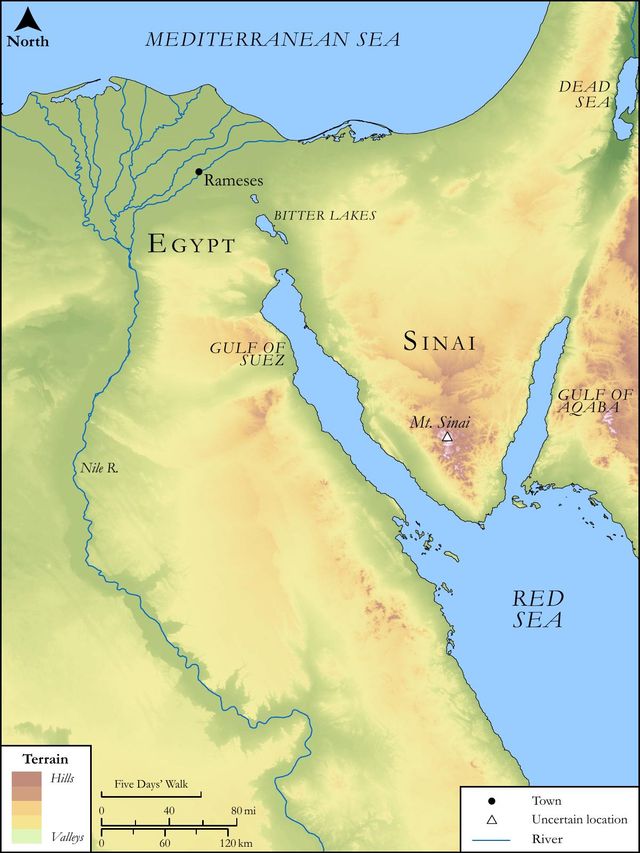
See on the biblical-era maps

Study this verse
Public-domain commentary
Matthew Henry
From his Commentary on the Whole Bible. Henry comments on passages, not single verses — this entry covers Exodus 25:1–9. His four-level outline is real structure in the source text, so it is rendered as structure.
We may suppose that when Moses went into the midst of the cloud, and abode there so long, where the holy angels attended the shechinah, or divine Majesty, he saw and heard very glorious things relating to the upper world, but they were things which it was not lawful nor possible to utter; and therefore, in the records he kept of the transactions there, he says nothing to satisfy the curiosity of those who would intrude into the things which they have not seen, but writes that only which he was to speak to the children of Israel. For the scripture is designed to direct us in our duty, not to fill our heads with speculations, nor to please our fancies.
In these verses God tells Moses his intention in general, that the children of Israel should build him a sanctuary, for he designed to dwell among them (Exo 25:8); and some think that, though there were altars and groves used for religious worship before this, yet there never was any house, or temple, built for sacred uses in any nation before this tabernacle was erected by Moses, and that all the temples which were afterwards so much celebrated among the heathen took rise from this and pattern by it. God had chosen the people of Israel to be a peculiar people to himself (above all people), among whom divine revelation, and a religion according to it, should be lodged and established: he himself would be their King. As their King, he had already given them laws for the government of themselves, and their dealings one with another, with some general rules for religious worship, according to the light of reason and the law of nature, in the ten commandments and the following comments upon them. But this was not thought sufficient to distinguish them from other nations, or to answer to the extent of that covenant which God would make with them to be their God; and therefore,
I.He orders a royal palace to be set up among them for himself, here called a sanctuary, or holy place, or habitation, of which it is said (Jer 17:12), A glorious high throne from the beginning is the place of our sanctuary. This sanctuary is to be considered,
1.As ceremonial, consonant to the to the other institutions of that dispensation, which consisted in carnal ordinances (Heb 9:10); hence it is called a worldly sanctuary, Heb 9:1. God in it kept his court, as Israel's King.
(1.)There he manifested his presence among them, and it was intended for a sign or token of his presence, that, while they had that in the midst of them, they might never again ask, Is the Lord among us or not? And, because in the wilderness they dwelt in tents, even this royal palace was ordered to be a tabernacle too, that it might move with them, and might be an instance of the condescension of the divine favour.
(2.)There he ordered his subjects to attend him with their homage and tribute. Thither they must come to consult his oracles, thither they must bring their sacrifices, and there all Israel must meet, to pay their joint respects to the God of Israel.
2.As typical; the holy places made with hands were the figures of the true, Heb 9:24. The gospel church is the true tabernacle, which the Lord hath pitched, and not man, Heb 8:2. The body of Christ, in and by which he made atonement, was the greater and more perfect tabernacle, Heb 9:11. The Word was made flesh, and dwelt among us, as in a tabernacle.
II.When Moses was to erect this palace, it was requisite that he should first be instructed where he must have the materials, and where he must have the model; for he could neither contrive it by his own ingenuity nor build it at his own charge; he is therefore directed here concerning both.
1.The people must furnish him with the materials, not by a tax imposed upon them, but by a voluntary contribution. This is the first thing concerning which orders are here given.
(1.)Speak unto the children of Israel that they bring me an offering; and there was all the reason in the world that they should, for (Exo 25:1),
[1.]It was God himself that had not only enlarged them, but enriched them with the spoils of the Egyptians. He had instructed them to borrow, and he had inclined the Egyptians to lend, so that from him they had their wealth, and therefore it was fit they should devote it to him and use it for him, and thus make a grateful acknowledgement of the favours they had received. Note, First, The best use we can make of our worldly wealth is to honour God with it in works of piety and charity. Secondly, When we have been blessed with some remarkable success in our affairs, and have had, as we say, a good turn, it may be justly expected that we should do something more than ordinary for the glory of God, consecrating our gain, in some reasonable proportion of it, to the Lord of the whole earth, Mic 4:13.
[2.]The sanctuary that was to be built was intended for their benefit and comfort, and therefore they must be at the expense of it. They had been unworthy of the privilege if they had grudged at the charge. They might well afford to offer liberally for the honour of God, while they lived at free quarters, having food for themselves and their families rained upon them daily from heaven. We also must own that we have our all from God's bounty, and therefore ought to use all for his glory. Since we live upon him, we must live to him.
(2.)This offering must be given willingly, and with the heart, that is, [1.] It was not prescribed to them what or how much they must give, but it was left to their generosity, that they might show their good-will to the house of God and the offices thereof, and might do it with a holy emulation, the zeal of a few provoking many, Co2 9:2. We should ask, not only, "What must we do?" but, "What may we do for God?" [2.] Whatever they gave, they must give it cheerfully, not grudgingly and with reluctance, for God loves a cheerful giver, Co2 9:7. What is laid out in the service of God we must reckon well bestowed.
(3.)The particulars are here mentioned which they must offer (Exo 25:3-7), all of them things that there would be occasion for in the tabernacle, or the service of it. Some observe that here was gold, silver, and brass, provided, but no iron; that is the military metal, and this was to be a house of peace. Every thing that was provided was very rich and fine, and the best of the sort; for God, who is the best, should have the best.
2.God himself would furnish him with the model: According to all that I show thee, Exo 25:9. God showed him an exact plan of it, in miniature, which he must conform to in all points. Thus Ezekiel saw in vision the form of the house and the fashion thereof, Eze 43:11. Note, Whatsoever is done in God's service must be done by his direction, and not otherwise. Yet God did not only show him the model, but gave him also particular directions how to frame the tabernacle according to that model, in all the parts of it, which he goes over distinctly in this and the following chapters. When Moses, in the beginning of Genesis, was to describe the creation of the world, though it is such a stately and curious fabric and made up of such a variety and vast number of particulars, yet he gave a very short and general account of it, and nothing compared with what the wisdom of this world would have desired and expected from one that wrote by divine revelation; but, when he comes to describe the tabernacle, he does it with the greatest niceness and accuracy imaginable. He that gave us no account of the lines and circles of the globe, the diameter of the earth, or the height and magnitude of the stars, has told us particularly the measure of every board and curtain of the tabernacle; for God's church and instituted religion are more precious to him and more considerable than all the rest of the world. And the scriptures were written, not to describe to us the works of nature, a general view of which is sufficient to lead us to the knowledge and service of the Creator, but to acquaint us with the methods of grace, and those things which are purely matters of divine revelation. The blessedness of the future state is more fully represented under the notion of a new Jerusalem than under the notion of new heavens and a new earth.
Historical interpretation
Historical reception
1 surviving comment on this verse from the historical church.
Firstfruits: Offerings of some of the best and choicest of their goods.
Continue studying Exodus 25:2 across the web’s major study libraries — every link below opens this exact verse, chapter, or book on the destination site.
Read & Compare
 BibleGatewayThis verse in more than 200 translations and 70 languages.
 Bible.comThe YouVersion reader — hundreds of translations, reading plans, and highlights.
 ESV.orgCrossway's official English Standard Version reader.
 NET BibleThe NET translation with 60,000+ translators' notes on every rendering decision.
 STEP BibleTyndale House's free study tool — original text, vocabulary, and scholarly resources.
 BibliaLogos Bible Software's free web reader.
 USCCBThe New American Bible (Revised Edition) with the U.S. bishops' study notes.
Commentaries
 BibleHub CommentariesDozens of classic commentaries on this verse, gathered on one page.
 StudyLightMore than 100 commentary sets — the largest collection on the web.
 BibleRefPlain-English commentary on what this verse means, verse by verse.
 Enduring WordDavid Guzik's free commentary on this chapter, widely used by Bible teachers.
 Bible Study ToolsVerse commentary alongside Greek and Hebrew study aids.
Original Language & Research
- BibleHub InterlinearThe verse word by word — original language, transliteration, and English.
- BibleHub LexiconEvery word's original-language definition and Strong's entry.
 Blue Letter BibleDeep-study tools — Strong's numbers, concordance, and word studies.
 SefariaThe Hebrew text with Rashi and centuries of Jewish commentary.
Sermons, Hymns & Audio


TrulyRandomVerse is not affiliated with these sites and doesn’t control their content. They’re linked because they’re genuinely useful.
Summary
Exodus 25:2 introduces God's foundational directive for the construction of the Tabernacle, the sacred dwelling place where His presence would uniquely reside among the Israelites. This pivotal verse establishes the divine principle that all contributions for this holy endeavor must originate from a heart that is genuinely willing and freely given, thereby setting the spiritual precedent for all acts of worship and service to God, emphasizing the profound importance of internal disposition over mere external compliance.
Context
ShowHideLiterary Context
Exodus 25:2 marks a significant shift in the narrative of Exodus, transitioning from the establishment of the Mosaic Covenant at Mount Sinai (chapters 19-24) to the detailed instructions for building the Tabernacle (chapters 25-31). Having delivered His people from bondage and formally entered into a covenant relationship with them, God now provides the means for His intimate presence to dwell among them. This verse, preceding the elaborate architectural blueprints and material specifications, strategically places the emphasis on the spirit of giving. It underscores that the internal disposition of the people was paramount to God, serving as the spiritual foundation upon which the physical structure was to be built. The subsequent chapters detail the intricate design of the sanctuary, its furnishings, and the priestly vestments, all made possible by the freewill offerings initiated by this command.
Historical & Cultural Context
The Israelites had just been liberated from centuries of forced labor and oppressive rule in Egypt. God's command for voluntary offerings stands in stark contrast to their recent past of involuntary servitude, highlighting His desire for a relationship founded on love, free will, and willing obedience, rather than coercion or obligation. As a newly formed nation embarking on a nomadic journey through the wilderness, a portable sanctuary was essential for God's manifest presence to accompany them. While the nations believed their gods dwelt among them, Yahweh's unique requirement for a sanctuary built by freewill offerings distinguished Him from pagan deities often appeased by obligatory tribute or forced labor. This directive prepared a redeemed people for a life centered on worship and communion with their God, whose presence would be housed in a structure built by their collective, heartfelt devotion, as detailed in Exodus 25 and subsequent chapters.
Key Themes
ShowHideThis verse introduces several crucial themes that resonate throughout the Old and New Testaments. Foremost is the theme of Divine Presence, as God seeks to dwell among His people, moving from the mountain of revelation to a portable sanctuary. Closely linked is the theme of Covenant Relationship, where God's desire for an intimate relationship is expressed through His dwelling among them, and their response of willing obedience and generosity. The verse also highlights the Holiness of God and the sacred nature of worship, emphasizing that the manner of giving is as important as the gift itself. It introduces the foundational principle of Heartfelt Offering, underscoring that God values the internal disposition—love, joy, and willingness—over the material value of the contribution. This theme of the heart's centrality in worship and obedience is a recurring motif, as seen in passages like Deuteronomy 6:5 and Psalm 51:17.
Exposition and Analysis
ShowHideKey Word Analysis
ShowHideThis word (H8641) derives from the root רוּם, meaning "to lift up" or "to raise." It signifies "a present (as offered up), especially in sacrifice or as tribute; gift, heave offering (shoulder), oblation, offered(-ing)." In this context, tᵉrûwmâh broadly refers to the material contributions—gold, silver, bronze, fine linens, precious stones, and other valuable resources—that the Israelites were to "lift up" or set apart from their possessions and present to God for the construction of the Tabernacle and its sacred implements. The term underscores the act of dedicating a portion of one's wealth for a holy purpose, signifying a separation from common use to consecrated service.
The verb (H5068) is a primitive root meaning "to impel; hence, to volunteer (as a soldier), to present spontaneously; offer freely, be (give, make, offer self) willing(-ly)." This term describes an action that flows from an inner, uncoerced, and generous impulse. It denotes a spontaneous, cheerful, and noble spirit in giving, rather than an act performed out of obligation, compulsion, or external pressure. This is a crucial distinction, as it reveals God's preference for gifts motivated by genuine love and devotion, reflecting the heart's alignment with His purposes.
In biblical anthropology, the heart (H3820) is far more than just the seat of emotions. It encompasses "the feelings, the will and even the intellect; likewise for the centre of anything." It represents the totality of a person's inner being—their intellect, will, conscience, intentions, and moral character. Therefore, "willingly with his heart" signifies that the offering must originate from the deepest core of one's being, reflecting genuine conviction, pure motives, and a complete alignment of one's will with God's command. It is a gift given with full mental assent, emotional engagement, and moral integrity, demonstrating a holistic commitment.
Verse Breakdown
ShowHide"Speak unto the children of Israel,"
This opening phrase establishes the divine origin and authoritative nature of the command. God, through Moses, is directly addressing His chosen people, emphasizing the personal and covenantal relationship that underpins this instruction. It is a specific directive to those with whom He has entered into a special, redemptive relationship, underscoring their unique privilege and responsibility.
"that they bring me an offering:"
This is the core command—the people are to bring a "terumah," a contribution. The emphatic "me" highlights that the offering is for God's direct use and glory, specifically for the construction of His dwelling place among them. It is a call to active and tangible participation in God's redemptive plan, enabling the manifestation of His presence.
"of every man that giveth it willingly with his heart"
This clause sets the indispensable condition for the acceptability of the offering. The divine focus is not on the quantity or material value of the gift, but profoundly on the internal disposition of the giver. It must be a freewill offering, motivated by a genuine, sincere, and uncoerced desire from the innermost being, not by external pressure, social expectation, or a mere sense of duty. This principle elevates the motive and spirit of the giver above the material gift itself.
"ye shall take my offering."
This final clause instructs Moses and the leaders to accept only those offerings that meet the specified condition of being given "willingly with his heart." It implies a divine discernment process, ensuring that the contributions align with God's desire for heartfelt generosity. The repeated phrase "my offering" reiterates God's ownership and the sacred purpose of the contributions, reinforcing that the gifts are ultimately for His glory and the establishment of His manifest presence among His people.
Literary Devices
ShowHideExodus 25:2 is rich with literary devices that amplify its profound theological message. The most evident is Divine Command, clearly articulated through the imperative "Speak unto the children of Israel" and the subsequent instruction "that they bring me an offering," which immediately establishes God's absolute authority and initiative in orchestrating the Tabernacle's construction. This command is immediately qualified by a crucial Conditional Clause (though implicitly rather than explicitly stated with "if...then"), where the acceptability of the offering is contingent upon the giver's internal disposition: only from "every man that giveth it willingly with his heart" shall the offering be taken. This structure powerfully highlights the non-negotiable prerequisite of a pure motive. The phrase "willingly with his heart" employs a form of Emphasis through Pleonasm or Redundancy, where "willingly" (from nadav, signifying free will and spontaneity) is reinforced by "with his heart" (lev, the comprehensive seat of will, intellect, and emotion). This double emphasis ensures that the spiritual quality and authenticity of the giving are unmistakably clear and paramount. Furthermore, the repetition of "my offering" (first as a general instruction, then as the specific object to be taken) functions as a subtle Anaphora or Repetition, reinforcing God's ownership and the sacred, divinely purposed nature of the contributions. Finally, the use of "heart" to represent the entirety of a person's inner being—their intentions, will, and moral character—is a classic example of Metonymy, where a part (the physical organ) stands for the whole of one's inner self and motivations.
Theological and Thematic Connections
ShowHideExodus 25:2 lays a fundamental theological cornerstone for all acts of worship and service to God: the supreme importance of the heart's disposition. It teaches that God is not primarily interested in the outward act or the material gift itself, but in the love, devotion, and genuine willingness from which it springs. This principle reveals God's character as one who desires a relationship built on free will and sincere affection, not forced compliance. It underscores the truth that true generosity is an overflow of a heart transformed by grace and eager to participate in God's redemptive purposes. This initial command for the Tabernacle offerings sets a precedent for all future giving within the covenant, whether of resources, time, or talent, emphasizing that the spirit of the giver sanctifies the gift and determines its acceptability before God. It highlights that God seeks not merely our possessions, but our very selves, offered in love.
Reflection and Application
ShowHideThe timeless truth embedded in Exodus 25:2 profoundly challenges us to examine the wellspring of our actions, particularly in our service and giving to God and others. In a world often driven by external metrics, performance, and the appearance of piety, this verse redirects our focus to the internal posture of our hearts. It reminds us that God values authenticity, sincerity, and devotion above all else. Whether we are contributing financially to the church, volunteering our time in ministry, utilizing our spiritual gifts, or simply offering our daily praise and obedience, the fundamental question is not merely "What did I do?" but "How did I do it?" Did it flow from a heart overflowing with gratitude, love, and a genuine desire to honor God, or was it done out of obligation, a sense of duty, or for human recognition? This principle calls us to cultivate a spirit of joyful generosity, recognizing that everything we have is a gift from God. Our willing offerings, therefore, become a tangible and spiritual expression of our love for Him and our eager participation in His ongoing work in the world, transforming mundane acts into sacred worship.
Questions for Reflection
ShowHideFAQ
ShowHideWhy was voluntary giving so important for the Tabernacle's construction?
ShowHideVoluntary giving was crucial because God desired a dwelling place built not by forced labor or reluctant tribute, but by the free and loving devotion of His people. This principle underscored the nature of His covenant relationship with Israel, which was based on grace and willing obedience, not coercion. By requiring freewill offerings, God ensured that the Tabernacle would be a tangible expression of their love, gratitude, and commitment to Him, fostering a deeper sense of ownership and participation in His divine presence among them. It set a spiritual precedent that the motive behind an act of worship is as vital, if not more so, than the act itself. This is consistent with God's character, who seeks genuine relationship and heartfelt devotion, not mere compliance.
What does "with his heart" truly mean in a biblical sense, beyond just emotions?
ShowHideIn biblical thought, the "heart" (Hebrew: lev) is the comprehensive center of a person's inner being. It encompasses not only emotions but also intellect, will, conscience, intentions, and moral character. Therefore, "with his heart" signifies that the offering must originate from the deepest, most authentic part of one's being. It means giving with full mental assent (understanding), volitional desire (will), and pure moral integrity (conscience). It's a holistic giving that involves one's entire inner self, ensuring that the act is not superficial or performative but flows from genuine conviction and devotion. This profound understanding of the heart is echoed throughout Scripture, as seen in Proverbs 4:23.
Is the principle of voluntary, heartfelt giving still applicable to believers today?
ShowHideAbsolutely. The principle of voluntary, heartfelt giving established in Exodus 25:2 remains profoundly relevant for believers today. The New Testament consistently affirms this truth, emphasizing that God values the attitude of the giver above the size of the gift. For example, 2 Corinthians 9:7 explicitly states, "Every man according as he purposeth in his heart, so let him give; not grudgingly, or of necessity: for God loveth a cheerful giver." This applies not only to financial contributions but to all forms of service, time, and talent offered to God and His kingdom. Our giving should be an overflow of our love and gratitude for Christ's ultimate sacrifice, a willing response to His grace, and a joyful participation in His ongoing work in the world, recognizing that we are called to be living sacrifices (Romans 12:1).
Christ-Centered Fulfillment
ShowHideExodus 25:2, with its emphasis on a willing heart for the construction of God's dwelling, finds its ultimate and most profound fulfillment in the person and work of Jesus Christ. He is the true and perfect "offering" given "willingly with His heart," not merely of material possessions, but of His very life. As the Lamb of God, who takes away the sin of the world, Jesus' sacrifice on the cross was the ultimate freewill offering, motivated by perfect love and absolute obedience to the Father's will (John 10:18). Furthermore, Christ Himself is the ultimate "Tabernacle" or "Temple" where God dwells among humanity. John 1:14 declares that "the Word was made flesh, and dwelt among us," using the Greek word eskēnōsen, meaning "tabernacled" or "pitched His tent." In Him, God's presence is not confined to a physical structure built by human hands, but is fully embodied in a person. Through His perfect, willing sacrifice, Christ not only provides access to God but also transforms believers into living temples, where the Holy Spirit now dwells (1 Corinthians 6:19). Thus, the principle of a willing heart for God's dwelling is perfectly exemplified and eternally secured in Christ, who both gave Himself willingly and became the dwelling place of God, enabling us, by His Spirit, to offer ourselves as living sacrifices, holy and acceptable to God, which is our spiritual worship (Romans 12:1).