


Exodus 25:3
Bible text: King James Version (1769 Blayney text) · Public domain
Bible text: Berean Standard Bible · Public domain
Bible text: American Standard Version (1901) · Public domain
Bible text: World English Bible, Messianic edition · Public domain
Bible text: Geneva Bible (1599) · Public domain
Bible text: Young's Literal Translation · Public domain
- וְזֹאתve·zoTand thisH2063Conj-w ¦ PrtParticle Demonstrativeוְandזֹאתthis
- הַתְּרוּמָהha·te·ru·Mah[is] the contributionH8641Art ¦ N-fsNoun Singular Feminine Absoluteהַ[is] theתְּרוּמָהcontribution
- אֲשֶׁר'a·SherwhichH834RelParticle Relative
- תִּקְחוּtik·Chuyou will takeH3947V-Qal-Imperf-2mpVerb Qal Imperfect 2nd Plural Masculine
- מֵאִתָּםme·'i·Tamfrom with <the> themH854Prep-m ¦ Prep ¦ 3mpPreposition Definiteמֵfromאִתָּwith <the>םthem
- זָהָבza·HavgoldH2091N-msNoun Singular Masculine Absolute
- וָכֶסֶףva·Khe·sefand silverH3701Conj-w ¦ N-msNoun Singular Masculine Absoluteוָandכֶסֶףsilver
- וּנְחֹשֶׁתu·ne·Cho·shetand bronzeH5178Conj-w ¦ N-fsNoun Singular Feminine Absoluteוּandנְחֹשֶׁתbronze
English is a literal word-by-word gloss of the Hebrew, not the KJV's wording. Why?
This is the original text the KJV's translators worked from — each Hebrew word with its own literal English meaning in this verse, prepared by scholars at Tyndale House, Cambridge. The KJV translates whole sentences, not word by word, so its wording differs: one Hebrew word can become several English words, and the KJV may choose “the LORD” where the gloss reads “Yahweh”. Both are faithful — they answer different questions. For the KJV's own rendering, switch to the KJV text.
Details
See on the biblical-era maps

Study this verse
Public-domain commentary
Matthew Henry
From his Commentary on the Whole Bible. Henry comments on passages, not single verses — this entry covers Exodus 25:1–9. His four-level outline is real structure in the source text, so it is rendered as structure.
We may suppose that when Moses went into the midst of the cloud, and abode there so long, where the holy angels attended the shechinah, or divine Majesty, he saw and heard very glorious things relating to the upper world, but they were things which it was not lawful nor possible to utter; and therefore, in the records he kept of the transactions there, he says nothing to satisfy the curiosity of those who would intrude into the things which they have not seen, but writes that only which he was to speak to the children of Israel. For the scripture is designed to direct us in our duty, not to fill our heads with speculations, nor to please our fancies.
In these verses God tells Moses his intention in general, that the children of Israel should build him a sanctuary, for he designed to dwell among them (Exo 25:8); and some think that, though there were altars and groves used for religious worship before this, yet there never was any house, or temple, built for sacred uses in any nation before this tabernacle was erected by Moses, and that all the temples which were afterwards so much celebrated among the heathen took rise from this and pattern by it. God had chosen the people of Israel to be a peculiar people to himself (above all people), among whom divine revelation, and a religion according to it, should be lodged and established: he himself would be their King. As their King, he had already given them laws for the government of themselves, and their dealings one with another, with some general rules for religious worship, according to the light of reason and the law of nature, in the ten commandments and the following comments upon them. But this was not thought sufficient to distinguish them from other nations, or to answer to the extent of that covenant which God would make with them to be their God; and therefore,
I.He orders a royal palace to be set up among them for himself, here called a sanctuary, or holy place, or habitation, of which it is said (Jer 17:12), A glorious high throne from the beginning is the place of our sanctuary. This sanctuary is to be considered,
1.As ceremonial, consonant to the to the other institutions of that dispensation, which consisted in carnal ordinances (Heb 9:10); hence it is called a worldly sanctuary, Heb 9:1. God in it kept his court, as Israel's King.
(1.)There he manifested his presence among them, and it was intended for a sign or token of his presence, that, while they had that in the midst of them, they might never again ask, Is the Lord among us or not? And, because in the wilderness they dwelt in tents, even this royal palace was ordered to be a tabernacle too, that it might move with them, and might be an instance of the condescension of the divine favour.
(2.)There he ordered his subjects to attend him with their homage and tribute. Thither they must come to consult his oracles, thither they must bring their sacrifices, and there all Israel must meet, to pay their joint respects to the God of Israel.
2.As typical; the holy places made with hands were the figures of the true, Heb 9:24. The gospel church is the true tabernacle, which the Lord hath pitched, and not man, Heb 8:2. The body of Christ, in and by which he made atonement, was the greater and more perfect tabernacle, Heb 9:11. The Word was made flesh, and dwelt among us, as in a tabernacle.
II.When Moses was to erect this palace, it was requisite that he should first be instructed where he must have the materials, and where he must have the model; for he could neither contrive it by his own ingenuity nor build it at his own charge; he is therefore directed here concerning both.
1.The people must furnish him with the materials, not by a tax imposed upon them, but by a voluntary contribution. This is the first thing concerning which orders are here given.
(1.)Speak unto the children of Israel that they bring me an offering; and there was all the reason in the world that they should, for (Exo 25:1),
[1.]It was God himself that had not only enlarged them, but enriched them with the spoils of the Egyptians. He had instructed them to borrow, and he had inclined the Egyptians to lend, so that from him they had their wealth, and therefore it was fit they should devote it to him and use it for him, and thus make a grateful acknowledgement of the favours they had received. Note, First, The best use we can make of our worldly wealth is to honour God with it in works of piety and charity. Secondly, When we have been blessed with some remarkable success in our affairs, and have had, as we say, a good turn, it may be justly expected that we should do something more than ordinary for the glory of God, consecrating our gain, in some reasonable proportion of it, to the Lord of the whole earth, Mic 4:13.
[2.]The sanctuary that was to be built was intended for their benefit and comfort, and therefore they must be at the expense of it. They had been unworthy of the privilege if they had grudged at the charge. They might well afford to offer liberally for the honour of God, while they lived at free quarters, having food for themselves and their families rained upon them daily from heaven. We also must own that we have our all from God's bounty, and therefore ought to use all for his glory. Since we live upon him, we must live to him.
(2.)This offering must be given willingly, and with the heart, that is, [1.] It was not prescribed to them what or how much they must give, but it was left to their generosity, that they might show their good-will to the house of God and the offices thereof, and might do it with a holy emulation, the zeal of a few provoking many, Co2 9:2. We should ask, not only, "What must we do?" but, "What may we do for God?" [2.] Whatever they gave, they must give it cheerfully, not grudgingly and with reluctance, for God loves a cheerful giver, Co2 9:7. What is laid out in the service of God we must reckon well bestowed.
(3.)The particulars are here mentioned which they must offer (Exo 25:3-7), all of them things that there would be occasion for in the tabernacle, or the service of it. Some observe that here was gold, silver, and brass, provided, but no iron; that is the military metal, and this was to be a house of peace. Every thing that was provided was very rich and fine, and the best of the sort; for God, who is the best, should have the best.
2.God himself would furnish him with the model: According to all that I show thee, Exo 25:9. God showed him an exact plan of it, in miniature, which he must conform to in all points. Thus Ezekiel saw in vision the form of the house and the fashion thereof, Eze 43:11. Note, Whatsoever is done in God's service must be done by his direction, and not otherwise. Yet God did not only show him the model, but gave him also particular directions how to frame the tabernacle according to that model, in all the parts of it, which he goes over distinctly in this and the following chapters. When Moses, in the beginning of Genesis, was to describe the creation of the world, though it is such a stately and curious fabric and made up of such a variety and vast number of particulars, yet he gave a very short and general account of it, and nothing compared with what the wisdom of this world would have desired and expected from one that wrote by divine revelation; but, when he comes to describe the tabernacle, he does it with the greatest niceness and accuracy imaginable. He that gave us no account of the lines and circles of the globe, the diameter of the earth, or the height and magnitude of the stars, has told us particularly the measure of every board and curtain of the tabernacle; for God's church and instituted religion are more precious to him and more considerable than all the rest of the world. And the scriptures were written, not to describe to us the works of nature, a general view of which is sufficient to lead us to the knowledge and service of the Creator, but to acquaint us with the methods of grace, and those things which are purely matters of divine revelation. The blessedness of the future state is more fully represented under the notion of a new Jerusalem than under the notion of new heavens and a new earth.
Continue studying Exodus 25:3 across the web’s major study libraries — every link below opens this exact verse, chapter, or book on the destination site.
Read & Compare
 BibleGatewayThis verse in more than 200 translations and 70 languages.
 Bible.comThe YouVersion reader — hundreds of translations, reading plans, and highlights.
 ESV.orgCrossway's official English Standard Version reader.
 NET BibleThe NET translation with 60,000+ translators' notes on every rendering decision.
 STEP BibleTyndale House's free study tool — original text, vocabulary, and scholarly resources.
 BibliaLogos Bible Software's free web reader.
 USCCBThe New American Bible (Revised Edition) with the U.S. bishops' study notes.
Commentaries
 BibleHub CommentariesDozens of classic commentaries on this verse, gathered on one page.
 StudyLightMore than 100 commentary sets — the largest collection on the web.
 BibleRefPlain-English commentary on what this verse means, verse by verse.
 Enduring WordDavid Guzik's free commentary on this chapter, widely used by Bible teachers.
 Bible Study ToolsVerse commentary alongside Greek and Hebrew study aids.
Original Language & Research
- BibleHub InterlinearThe verse word by word — original language, transliteration, and English.
- BibleHub LexiconEvery word's original-language definition and Strong's entry.
 Blue Letter BibleDeep-study tools — Strong's numbers, concordance, and word studies.
 SefariaThe Hebrew text with Rashi and centuries of Jewish commentary.
Sermons, Hymns & Audio


TrulyRandomVerse is not affiliated with these sites and doesn’t control their content. They’re linked because they’re genuinely useful.
Summary
Exodus 25:3 initiates God's detailed blueprint for the Tabernacle, the portable sanctuary designed to embody His divine presence among the Israelites during their wilderness journey. This pivotal verse specifically enumerates the primary precious metals—gold, silver, and brass—that the community was to contribute as a sacred offering, laying the foundational material requirements for the construction of this holy dwelling place.
Context
ShowHideLiterary Context
Exodus 25:3 is strategically placed within the book of Exodus, immediately following the momentous giving of the Ten Commandments and the establishment of the Mosaic Covenant at Mount Sinai, detailed in Exodus 20-24. After the people's solemn affirmation of their commitment to the covenant, God summons Moses to the mountain to receive the "tables of stone, and a law, and commandments" (Exodus 24:12). Chapter 25 marks a profound thematic transition from legal statutes and covenant ratification to the intricate architectural and material specifications for the Tabernacle. The preceding verse, Exodus 25:2, issues the overarching command for the Israelites to bring a "heave offering" from those whose "heart stirreth him up," emphasizing the voluntary and heartfelt nature of the contribution. Verse 3 then commences the precise enumeration of the essential materials, a list that continues through Exodus 25:7, thereby setting the stage for the detailed construction narratives that unfold in subsequent chapters.
Historical & Cultural Context
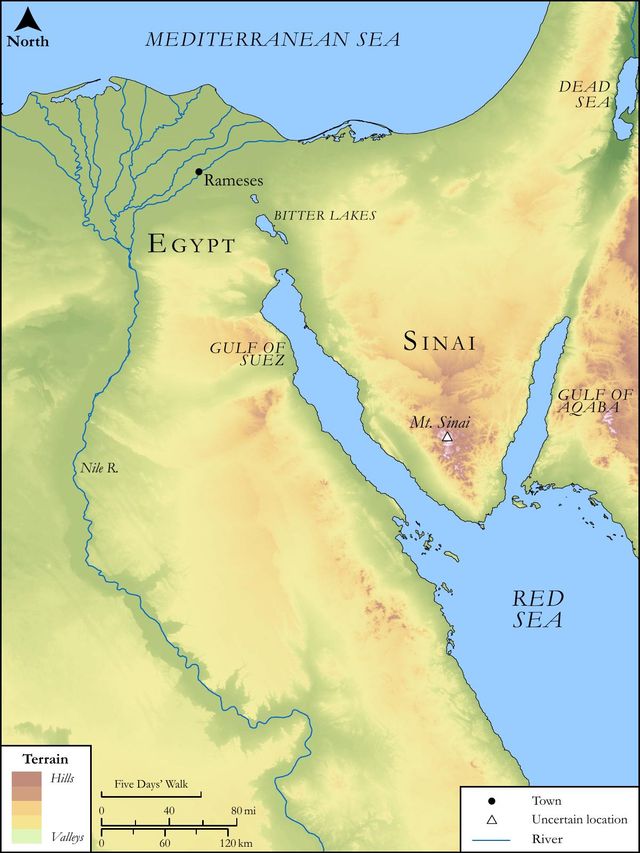
At this point in their history, the Israelites were a newly liberated people, having recently escaped centuries of bondage in Egypt. They were encamped at the base of Mount Sinai, a place where they had directly encountered God's awesome power and heard His voice, marking a formative period in their national and spiritual identity. Among the nations, temples and sanctuaries were commonly built by powerful kings or rulers to honor their gods; the Tabernacle was built at the LORD's command after the pattern shewed Moses in the mount, and it was distinctive in several crucial ways: its portability, reflecting Israel's nomadic existence in the wilderness, and its divinely revealed design, underscoring that God's dwelling among His people was not a human invention but a heavenly mandate. The specified materials—gold, silver, and brass—were highly valuable commodities. It is widely understood that these precious metals were part of the "spoils" or "plunder" the Israelites acquired from the Egyptians during their departure, as recorded in Exodus 12:35-36. This detail is profoundly significant, as it meant that the very wealth gained from their former oppressors was now to be consecrated and dedicated to the glory and service of the Lord, transforming instruments of oppression into tools for worship.
Key Themes
ShowHideExodus 25:3 contributes significantly to several overarching themes within the book of Exodus and the Pentateuch. Firstly, it highlights the theme of Divine Presence and Immanence, as the Tabernacle was designed to be the tangible manifestation of God dwelling among His people (Exodus 29:45-46). Secondly, it underscores the theme of Holiness and Separation, as the meticulous instructions and the precious materials emphasize the sacredness of God and the need for a consecrated space to approach Him. The Tabernacle served as a constant reminder of God's absolute purity and the distinction between the holy and the common. Thirdly, the verse points to Willing Obedience and Generosity, building on the command in Exodus 25:2. The call for valuable contributions from a "willing heart" establishes a pattern of worship that involves active, joyful participation and the offering of one's best to God. Finally, the specific materials themselves introduce the theme of Symbolism and Typology, where each element of the Tabernacle, including its components, served to teach profound theological truths about God's character, His plan of redemption, and the means by which sinful humanity could draw near to a holy God.
Exposition and Analysis
ShowHideKey Word Analysis
ShowHideFrom the root רוּם (rum), meaning "to lift up" or "to heave," this noun signifies a "heave offering," "contribution," or "present." It denotes something that is lifted up or set apart from the general mass and consecrated for a sacred purpose, whether for God directly or for His service. In the context of the Tabernacle, it emphasizes that these materials were not merely secular donations but consecrated gifts, elevated from common use to a holy purpose, symbolizing a direct act of worship, dedication, and tribute to the Lord.
This primitive root verb carries a wide range of meanings, including "to take," "to accept," "to receive," "to fetch," or "to acquire." In this context, "ye shall take" implies that Moses, or those designated by him, were to receive these offerings from the Israelite community. It highlights the process of collection and acceptance of the people's contributions, underscoring that while the giving was voluntary, the act of receiving and consecrating these materials was part of the divinely ordained process for building God's dwelling.
Derived from an unused root meaning "to shimmer," this noun refers to the precious metal gold. Figuratively, it can also describe something gold-colored or yellow. In Scripture, gold was recognized as the most precious and incorruptible metal, associated with royalty, divinity, purity, and supreme value. Its inclusion as the first material listed immediately conveys the immense worth and glory intended for God's dwelling place, signifying the divine nature and unparalleled splendor of the One who would reside within the Tabernacle.
Verse Breakdown
ShowHide"And this [is] the offering which ye shall take of them;"
This opening clause serves as a direct divine mandate, establishing the specific nature of the contributions required for the Tabernacle. The phrase "this is the offering" (literally, "this is the heave offering") clearly identifies the subsequent list as the precise, consecrated contribution God expects. The instruction "which ye shall take of them" indicates that Moses, or the appointed leaders, were to be the recipients of these materials from the Israelite community. This structure emphasizes the communal aspect of the giving and the divinely ordained process for collecting these sacred items, reinforcing the voluntary yet commanded nature of the contribution outlined in the preceding verse.
"gold, and silver, and brass,"
This tripartite enumeration precisely specifies the initial and most valuable metallic substances required for the Tabernacle's construction. The listing of these materials—gold, silver, and brass (or bronze)—is significant. These were the most precious, durable, and readily available metals for the Israelites at that time, indicating the immense worth, beauty, and permanence associated with God's dwelling place. Their order often reflects their decreasing value and, consequently, their typical placement within the Tabernacle: gold for the most sacred inner elements (e.g., the Ark of the Covenant), silver for structural components and redemptive purposes, and brass for the outer court fixtures (e.g., the altar of burnt offering), signifying a progressive movement from the most holy to the less holy, yet still consecrated, areas.
Literary Devices
ShowHideThe verse prominently employs Enumeration, directly listing the specific materials: "gold, and silver, and brass." This precise and concise listing underscores the meticulous nature of God's instructions, highlighting that every detail of the Tabernacle's construction was divinely ordained and of significant importance. Beyond mere listing, profound Symbolism is deeply embedded in each material. Gold universally represents divinity, purity, glory, and supreme value, making it fitting for the most sacred elements like the Ark of the Covenant and the Mercy Seat, signifying God's inherent holiness and majesty. Silver is consistently associated with redemption, atonement, and purification, notably used for the sockets supporting the Tabernacle's framework and as atonement money, symbolizing the foundation of God's presence being anchored in the concept of redemption. Brass (or bronze) symbolizes strength, judgment, and endurance, appropriately used for the altar of burnt offering and the laver, where purification and sacrifice occurred, reflecting the need for cleansing from sin and the enduring nature of divine justice. The very selection and arrangement of these materials, therefore, communicate profound theological truths about God's character, the nature of sin, and the means by which humanity can approach a holy God.
Theological and Thematic Connections
ShowHideExodus 25:3, while seemingly a simple inventory, is rich with theological significance, emphasizing God's meticulous sovereignty in dictating the terms of His worship and His profound desire for a holy dwelling among His people. It reveals that true devotion involves not only obedient adherence to divine commands but also a willing, heartfelt contribution of one's most valuable possessions for God's glory. The divinely specified materials foreshadow the holiness, glory, and redemptive purpose of the Tabernacle, where God's presence would be uniquely manifested and atonement made for sin. This divine specificity underscores that God alone prescribes the means of approaching Him, leaving no room for human innovation or preference in matters of sacred service, thereby establishing a pattern for all future worship.
Reflection and Application
ShowHideExodus 25:3 challenges us to reflect on the nature of our own contributions to God's work and kingdom today. Just as the Israelites were invited to bring their most precious metals, we are called to offer our very best—our time, unique talents, financial resources, and even our lives—not out of obligation or compulsion, but from a heart genuinely stirred by God's grace and love. The divine specificity in the Tabernacle's design reminds us that God has a precise purpose and a perfect plan for everything, including our offerings and our service. Our contributions, whether tangible or intangible, are not merely functional; they are profound acts of worship that enable the "spiritual Tabernacle" of the church to function effectively and flourish, thereby reflecting God's glory in a broken world. As New Testament believers, we are also profoundly understood as a temple of the Holy Spirit, called to honor God with all that we are and all that we possess, becoming living sacrifices that manifest His presence and character to a watching world.
Questions for Reflection
ShowHideFAQ
ShowHideWhy did God specify these particular materials—gold, silver, and brass—for the Tabernacle?
ShowHideGod specified these materials not arbitrarily, but for profound theological and practical reasons. Practically, they were durable, valuable, and beautiful, ensuring the longevity, reverence, and aesthetic glory of His dwelling place. Theologically, each material carried significant symbolic weight, serving as a visual sermon to the Israelites. Gold (Exodus 25:11-17), used for the most sacred elements like the Ark of the Covenant, represented God's divine glory, purity, and supreme value, signifying His inherent holiness. Silver (Exodus 26:19-32), often associated with redemption, was used for the sockets supporting the Tabernacle's framework, symbolizing the foundation of God's presence being anchored in atonement. It also notably served as the atonement money, a half-shekel tax for every Israelite, as seen in Exodus 30:13-16, emphasizing that all stood equal before God in their need for redemption. Brass (or bronze) (Exodus 27:1-8), used for the altar of burnt offering and the laver, symbolized strength, judgment against sin, and enduring purity, reflecting the necessity of sacrifice and purification to approach a holy God. Thus, the materials themselves were carefully chosen to teach the Israelites about God's character, His holiness, the gravity of sin, and the means by which sinful humanity could draw near to Him in a covenant relationship.
Christ-Centered Fulfillment
ShowHideExodus 25:3, with its precise enumeration of precious materials for God's earthly dwelling, finds its ultimate and glorious fulfillment in the person of Jesus Christ. The Tabernacle, meticulously designed to house God's tangible presence among His people, was fundamentally a shadow, a type, pointing to a greater spiritual reality to come. Jesus is the true and perfect "Tabernacle" or Temple, the ultimate dwelling place where God fully and perfectly tabernacles among humanity. As John 1:14 profoundly declares, "The Word became flesh and made his dwelling among us," literally, "tabernacled" among us, embodying God's presence in human form. The gold, symbolizing divinity, purity, and glory, points directly to Christ's inherent deity, His divine nature as the eternal Son of God, truly God with us (Matthew 1:23). The silver, consistently representing redemption and atonement, powerfully foreshadows Christ's sacrificial work on the cross, where He became the Lamb of God who takes away the sin of the world, offering His precious blood as the ultimate and unblemished price for our redemption (1 Peter 1:18-19). The brass (or bronze), signifying judgment, strength, and endurance, speaks to Christ's perfect endurance of God's righteous judgment for sin on our behalf and His enduring power to save, cleanse, and transform all who believe. Unlike the temporary and imperfect Tabernacle, Christ's indwelling is eternal, complete, and perfectly sufficient, making Him the perfect and final means by which we can approach a holy God, not through animal sacrifices and material offerings, but through His one, sufficient, and eternal sacrifice (Hebrews 9:11-12). He is the ultimate, willingly given offering, fully embodying the divine glory, redemptive power, and enduring strength promised in the Tabernacle's very components.