


Esther 4:5
Bible text: King James Version (1769 Blayney text) · Public domain
Bible text: King James Version with Strong's numbers · Public domain
Bible text: Berean Standard Bible · Public domain
Bible text: American Standard Version (1901) · Public domain
Bible text: World English Bible, Messianic edition · Public domain
Bible text: Geneva Bible (1599) · Public domain
Bible text: Young's Literal Translation · Public domain
- וַתִּקְרָאva·tik·Ra'and she summonedH7121Conj-w ¦ V-Qal-ConsecImperf-3fsVerb Qal Consecutive Imperfect 3rd Singular Feminineוַandתִּקְרָאshe summoned
- אֶסְתֵּר'es·TerEstherH635N-proper-fNoun Proper Feminine
- לַהֲתָךְla·ha·Takh<to> HathachH2047Prep-l ¦ N-proper-mNoun Proper Masculineלַ<to>הֲתָךְHathach
- מִסָּרִיסֵיmi·sa·ri·Seione of [the] eunuchs ofH5631Prep-m ¦ N-mpcNoun Plural Masculine Constructמִone ofסָּרִיסֵי[the] eunuchs of
- הַמֶּלֶךְha·Me·lekhthe kingH4428Art ¦ N-msNoun Singular Masculine Absoluteהַtheמֶּלֶךְking
- אֲשֶׁר'a·SherwhomH834RelParticle Relative
- הֶעֱמִידhe·'e·Midhe had made standH5975V-Hiphil-Perf-3msVerb Hiphil Perfect 3rd Singular Masculine
- לְפָנֶיהָle·fa·Nei·ha<to> her beforeH6440Prep-l ¦ N-mpc ¦ 3fsNoun Plural Masculine Constructלְ<to>פָנֶיbeforeהָher
- וַתְּצַוֵּהוּva·te·tza·Ve·huand she commanded himH6680Conj-w ¦ V-Piel-ConsecImperf-3fs ¦ 3msVerb Piel Consecutive Imperfect 3rd Singular Feminineוַandתְּצַוֵּshe commandedהוּhim
- עַל'alonH5921PrepPreposition
- מָרְדֳּכָיma·re·do·KhaiMordecaiH4782N-proper-mNoun Proper Masculine
- לָדַעַתla·Da·'atto knowH3045Prep-l ¦ V-Qal-InfVerb Qal Infinitive Constructלָtoדַעַתknow
- מַהmahwhat?H4100InterrogPronoun Interrogative
- זֶּהzeh[was] thisH2088PrtParticle Demonstrative
- וְעַלve·'aland concerningH5921Conj-w ¦ PrepPrepositionוְandעַלconcerning
- מַהmahwhat?H4100InterrogPronoun Interrogative
- זֶּהZeh[was] thisH2088PrtParticle Demonstrative
English is a literal word-by-word gloss of the Hebrew, not the KJV's wording. Why?
This is the original text the KJV's translators worked from — each Hebrew word with its own literal English meaning in this verse, prepared by scholars at Tyndale House, Cambridge. The KJV translates whole sentences, not word by word, so its wording differs: one Hebrew word can become several English words, and the KJV may choose “the LORD” where the gloss reads “Yahweh”. Both are faithful — they answer different questions. For the KJV's own rendering, switch to the KJV text.
Details
See on the biblical-era maps
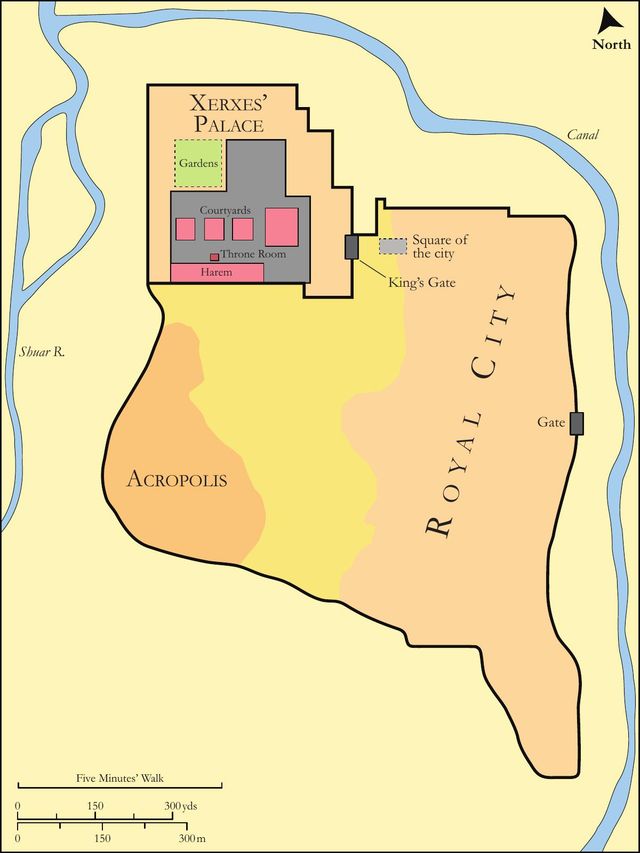
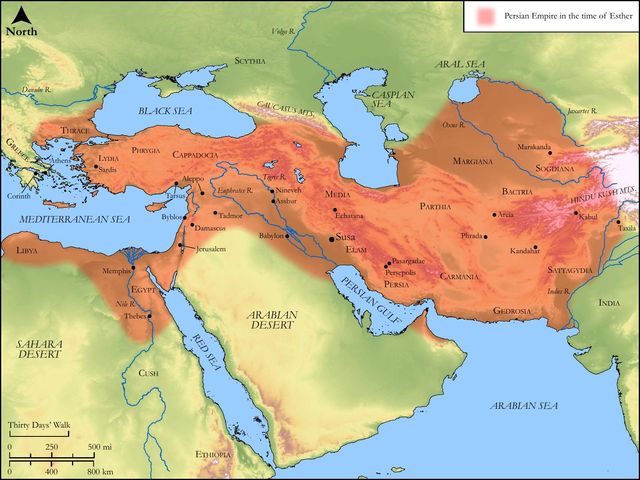
Study this verse
Public-domain commentary
Matthew Henry
From his Commentary on the Whole Bible. Henry comments on passages, not single verses — this entry covers Esther 4:5–17. His three-level outline is real structure in the source text, so it is rendered as structure.
So strictly did the laws of Persia confine the wives, especially the king's wives, that it was not possible for Mordecai to have a conference with Esther about this important affair, but divers messages are here carried between them by Hatach, whom the king had appointed to attend her, and it seems he was one she could confide in.
I.She sent to Mordecai to know more particularly and fully what the trouble was which he was now lamenting (Est 4:5) and why it was that he would not put off his sackcloth. To enquire thus after news, that we may know the better how to direct our griefs and joys, our prayers and praises, well becomes all that love Sion. If we must weep with those that weep, we must know why they weep.
II.Mordecai sent her an authentic account of the whole matter, with a charge to her to intercede with the king in this matter:
Mordecai told him all that had happened unto him (Est 4:7), what a pique Haman had against him for now bowing to him, and by what arts he had procured this edict; he sent her also a true copy of the edict, that she might see what imminent danger she and her people were in, and charged her, if she had any respect for him or any kindness for the Jewish nation, that she should appear now on their behalf, rectify the misinformations with which the king was imposed upon, and set the matter in a true light, not doubting but that then he would vacate the decree.
III.She sent her case to Mordecai, that she could not, without peril of her life, address the king, and that therefore he put a great hardship upon her in urging her to it. Gladly would she wait, gladly would she stoop, to do the Jews a kindness; but, if she must run the hazard of being put to death as a malefactor, she might well say, I pray thee have me excused, and find out some other intercessor.
1.The law was express, and all knew it, that whosoever came to the king uncalled should be put to death, unless he was pleased to hold out the golden sceptre to them, and it was extremely doubtful whether she should find him in so good a humour, Est 4:11. This law was made, not so much in prudence, for the greater safety of the king's person, as in pride, that being seldom seen, and not without great difficulty, he might be adored as a little god. A foolish law it was; for,
(1.)It made the kings themselves unhappy, confining them to their retirements for fear they should be seen. This made the royal palace little better than a royal prison, and the kings themselves could not but become morose, and perhaps melancholy, and so a terror to others and a burden to themselves. Many have their lives made miserable by their own haughtiness and ill nature.
(2.)It was bad for the subjects; for what good had they of a king that they might never have liberty to apply to for the redress of grievances and appeal to from the inferior judges? It is not thus in the court of the King of kings; to the footstool of his throne of grace we may at any time come boldly, and may be sure of an answer of peace to the prayer of faith. We are welcome, not only into the inner court, but even into the holiest, through the blood of Jesus.
(3.)It was particularly very uncomfortable for their wives (for there was not a proviso in the law to except them), who were bone of their bone and flesh of their flesh. But perhaps it was wickedly intended as much against them as any other, that the kings might the more freely enjoy their concubines, and Esther knew it. Miserable was the kingdom when the princes framed their laws to serve their lusts.
2.Her case was at present very discouraging. Providence so ordered it that, just at this juncture, she was under a cloud, and the king's affections cooled towards her, for she had been kept from his presence thirty days, that her faith and courage might be the more tried, and that God's goodness in the favour she now found with the king notwithstanding might shine the brighter. It is probable that Haman endeavoured by women, as well as wine, to divert the king from thinking of what he had done, and then Esther was neglected, from whom no doubt he did what he could to alienate the king, knowing her to be averse to him.
IV.Mordecai still insisted upon it that, whatever hazard she might run, she must apply to the king in this great affair, Est 4:13, Est 4:14.
No excuse will serve, but she must appear an advocate in this cause; he suggested to her,
1.That it was her own cause, for that the decree to destroy all the Jews did not except here: "Think not therefore that thou shalt escape in the king's house, that the palace will be thy protection, and the crown save thy head: no, thou art a Jewess, and, if the rest be cut off, thou wilt be cut off too." It was certainly her wisdom rather to expose herself to a conditional death from her husband than to a certain death from her enemy.
2.That it was a cause which, one way or other, would certainly be carried, and which therefore she might safely venture in. "If thou shouldst decline the service, enlargement and deliverance will arise to the Jews from another place." This was the language of a strong faith, which staggered not at the promise when the danger was most threatening, but against hope believed in hope. Instruments may fail, but God's covenant will not.
3.That if she deserted her friends now, through cowardice and unbelief, she would have reason to fear that some judgment from heaven would be the ruin of her and her family: "Thou and thy father's house shall be destroyed, when the rest of the families of the Jews shall be preserved." He that by sinful shifts will save his life, and cannot find in his heart to trust God with it in the way of duty, shall lose it in the way of sin.
4.That divine Providence had an eye to this in bringing her to be queen: "Who knows whether thou hast come to the kingdom for such a time as this?" and therefore, (1.) "Thou art bound in gratitude to do this service for God and his church, else thou dost not answer the end of thy elevation." (2.) "Thou needest not fear miscarrying in the enterprise; if God designed thee for it, he will bear thee out and give thee success." Now, [1.] It appeared, by the event, that she did come to the kingdom that she might be an instrument of the Jews' deliverance, so that Mordecai was right in the conjecture. Because the Lord loved his people, therefore he made Esther queen. There is a wise counsel and design in all the providences of God, which is unknown to us till it is accomplished, but it will prove, in the issue, that they are all intended for, and centre in, the good of the church. [2.] The probability of this was a good reason why she should now bestir herself, and do her utmost for her people. We should every one of us consider for what end God has put us in the place where we are, and study to answer that end; and, when any particular opportunity of serving God and our generation offers itself, we must take care that we do not let it slip; for we were entrusted with it that we might improve it. These things Mordecai urges to Esther; and some of the Jewish writers, who are fruitful in invention, add another thing which had happened to him (v. 7) which he desired she might be told, "that going home, the night before, in great heaviness, upon the notice of Haman's plot, he met three Jewish children coming from school, of whom he enquired what they had learned that day; one of them told him his lesson was, Pro 3:25, Pro 3:26, Be not afraid of sudden fear; the second told him his was, Isa 8:10, Take counsel together, and it shall come to nought; the third told him his was Isa 46:4, I have made, and I will bear, even I will carry and will deliver you. 'O the goodness of God,' says Mordecai, 'who out of the mouth of babes and sucklings ordains strength!"'
V.Esther hereupon resolved, whatever it might cost her, to apply to the king, but not till she and her friends had first applied to God.
Let them first by fasting and prayer obtain God's favour, and then she should hope to find favour with the king, Est 4:15, Est 4:16. She speaks here,
1.With the piety and devotion that became an Israelite. She had here eye up unto God, in whose hands the hearts of kings are, and on whom she depended to incline this king's heart towards her. She went in peril of her life, but would think herself safe, and would be easy, when she had committed the keeping of her soul to God and had put herself under his protection. She believed that God's favour was to be obtained by prayer, that his people are a praying people, and he a prayer-hearing God. She knew it was the practice of good people, in extraordinary cases, to join fasting with prayer, and many of them to join together in both. She therefore,
(1.)Desired that Mordecai would direct the Jews that were in Shushan to sanctify a fast and call a solemn assembly, to meet in the respective synagogues to which they belonged, and to pray for her, and to keep a solemn fast, abstaining from all set meals and all pleasant food for three days, and as much as possible from all food, in token of their humiliation for sin and in a sense of their unworthiness of God's mercy. Those know not how to value the divine favours who grudge thus much labour and self-denial in the pursuit of it.
(2.)She promised that she and her family would sanctify this fast in her apartment of the palace, for she might not come to their assemblies; her maids were either Jewesses or so far proselytes that they joined with her in her fasting and praying. Here is a good example of a mistress praying with her maids, and it is worthy to be imitated. Observe also, Those who are confined to privacy may join their prayers with those of the solemn assemblies of God's people; those that are absent in body may be present in spirit. Those who desire, and have, the prayers of others for them, must not think that this will excuse them from praying for themselves.
2.With the courage and resolution that became a queen. "When we have sought God in this matter, I will go unto the king to intercede for my people. I know it is not according to the king's law, but it is according to God's law; and therefore, whatever comes of it, I will venture, and not count my life dear to me, so that I may serve God and his church, and, if I perish, I perish. I cannot lose my life in a better cause. Better do my duty and die for my people than shrink from my duty and die with them." She reasons as the lepers (Kg2 7:4): "If I sit still, I die; if I venture, I may live, and be the life of my people: if the worst come to the worst," as we say, "I shall but die." Nothing venture, nothing win. She said not this in despair or passion, but in a holy resolution to do her duty and trust God with the issue; welcome his holy will. In the apocryphal part of this book (ch. 13 and 14) we have Mordecai's prayer and Esther's upon this occasion, and both of them very particular and pertinent. In the sequel of the story we shall find that God said not to this seed of Jacob, Seek you me in vain.
Historical interpretation
Three Centuries of Reception
2 surviving comments on this verse. Each one is dated, so this reads as a timeline rather than a list.
Select a marker to jump to its quote. Markers stagger vertically where authors wrote within a few decades of each other.
Many women, fortified by the grace of God, have accomplished many heroic actions. The blessed Judith, when the city was besieged, asked permission of the elders to be allowed to go into the foreigners’ camp. By exposing herself to danger she went out for love of her country and of the people who were besieged, and the Lord delivered Holophernes into the hand of a woman. To no less danger did Esther, who was perfect in faith, expose herself, in order to save the twelve tribes of Israel that were to be destroyed. For by fasting and humiliation she begged the all-seeing Master of the ages, and he, seeing the meekness of her soul, rescued the people for whose sake she had faced danger.
Why did Queen Esther expose herself to death and not fear the wrath of a fierce king? Was it not to save her people from death, an act both seemly and virtuous? The king of Persia himself also, though fierce and proud, yet thought it seemly to show honor to the man who had given information about a plot that had been laid against himself, to save a free people from slavery, to snatch them from death and not to spare him who had pressed on such unseemly plans. So finally he handed over to the gallows the man who stood second to himself and whom he counted chief among all his friends, because he considered that he had dishonored him with his false counsels. For that commendable friendship that maintains virtue is to be preferred most certainly to wealth, or honors or power. It is not accustomed to be preferred to virtue indeed, but to follow after it. So it was with Jonathan, who for his affection’s sake avoided not his father’s displeasure or the danger to his own safety. So, too, it was with Ahimelech, who, to preserve the duties of hospitality, though he must endure death rather than betray his friends when fleeing.
Continue studying Esther 4:5 across the web’s major study libraries — every link below opens this exact verse, chapter, or book on the destination site.
Read & Compare
 BibleGatewayThis verse in more than 200 translations and 70 languages.
 Bible.comThe YouVersion reader — hundreds of translations, reading plans, and highlights.
 ESV.orgCrossway's official English Standard Version reader.
 NET BibleThe NET translation with 60,000+ translators' notes on every rendering decision.
 STEP BibleTyndale House's free study tool — original text, vocabulary, and scholarly resources.
 BibliaLogos Bible Software's free web reader.
 USCCBThe New American Bible (Revised Edition) with the U.S. bishops' study notes.
Commentaries
 BibleHub CommentariesDozens of classic commentaries on this verse, gathered on one page.
 StudyLightMore than 100 commentary sets — the largest collection on the web.
 BibleRefPlain-English commentary on what this verse means, verse by verse.
 Enduring WordDavid Guzik's free commentary on this chapter, widely used by Bible teachers.
 Bible Study ToolsVerse commentary alongside Greek and Hebrew study aids.
Original Language & Research
- BibleHub InterlinearThe verse word by word — original language, transliteration, and English.
- BibleHub LexiconEvery word's original-language definition and Strong's entry.
 Blue Letter BibleDeep-study tools — Strong's numbers, concordance, and word studies.
 SefariaThe Hebrew text with Rashi and centuries of Jewish commentary.
Sermons, Hymns & Audio


TrulyRandomVerse is not affiliated with these sites and doesn’t control their content. They’re linked because they’re genuinely useful.
Summary
Esther 4:5 marks a pivotal moment in the book of Esther, as Queen Esther, deeply disturbed by reports of Mordecai's public mourning, takes her first decisive action to understand the unfolding crisis. From her isolated position within the royal palace, she dispatches Hatach, a trusted and specially appointed royal chamberlain, with a direct and authoritative command to Mordecai. Her precise instruction is to ascertain the exact nature and underlying reason for his alarming display of distress, thereby initiating the crucial chain of events that will ultimately unveil Haman's genocidal decree against the Jewish people.
Context
ShowHideLiterary Context
This verse immediately follows Mordecai's dramatic and visible expression of grief, where he dons sackcloth and ashes outside the king's gate in Susa, as detailed in Esther 4:1-3. Esther, initially unaware of the specific cause of his distress, only hears general reports and attempts to alleviate his discomfort by sending him clothing, which he pointedly refuses (Esther 4:4). Her act of summoning and dispatching Hatach in this verse signifies a critical shift from passive concern to active, strategic inquiry. It is the narrative's turning point, setting in motion the revelation of Haman's plot and transitioning the story from Mordecai's lament to Esther's eventual, courageous intervention on behalf of her people.
Historical & Cultural Context
The Persian court operated under extremely rigid protocols, strict hierarchies, and limited direct access, particularly for the queen. Queens often resided in relative seclusion within the inner palace, and direct interaction with commoners, especially those engaged in public mourning outside the king's gate, would have been highly irregular and improper. The use of a "chamberlain" (Hebrew: saris), often a eunuch, was a standard practice in the courts of the kings of that day. These officials were highly trusted, possessed access to various parts of the palace and beyond, and served as indispensable intermediaries for communication, especially in sensitive matters. Hatach's specific appointment "to attend upon her" underscores his unique role as Esther's personal and reliable conduit, essential for navigating the intricate complexities and stringent restrictions of the royal environment.
Key Themes
ShowHideEsther's action in Esther 4:5 illuminates several profound themes within the book. Firstly, Compassionate Inquiry and Empathy are evident in her immediate and persistent response to Mordecai's distress, showcasing her deep familial bond and personal concern despite her elevated status. Secondly, the necessity of Strategic Communication and Wisdom within the restrictive confines of the Persian court is highlighted, as Esther astutely employs a trusted intermediary rather than attempting a direct, impossible, and potentially perilous approach. This demonstrates her growing political acumen and reliance on indirect means, echoing the broader theme of God's hidden hand working through human strategy, as seen throughout the book of Esther. Thirdly, this verse serves as the critical catalyst for Unveiling the Existential Threat, initiating the process by which Esther transitions from ignorance to full awareness of the genocidal danger confronting her people, thereby setting the stage for her courageous intercession and the ultimate deliverance of Israel, a theme central to the entire narrative.
Exposition and Analysis
ShowHideKey Word Analysis
ShowHideThis name, likely of foreign (Persian) origin, identifies the specific royal chamberlain whom Esther summons. His designation as "one of the king's chamberlains, whom he had appointed to attend upon her" emphasizes his unique position of trust and access. He was not merely a general court servant but a personal attendant of the queen, making him the ideal, discreet, and reliable messenger for such a sensitive inquiry. His role is pivotal as the bridge between Esther's isolated world and Mordecai's public lament, facilitating the crucial flow of information.
While often translated as "eunuch," the term saris in the Old Testament can also refer more broadly to a high-ranking court official or minister, regardless of their physical state. In this context, it signifies Hatach's elevated and trusted position within the royal household. This status granted him the necessary authority and access to carry out the queen's command, even to someone like Mordecai who was outside the king's gate. These officials were indispensable for the functioning of the court and often wielded significant influence.
The phrase "gave him a commandment" is highly significant. It implies more than a casual request or an informal message; tsâvâh denotes a formal, authoritative instruction or injunction from the queen. This highlights Esther's queenly authority, even in a personal matter, and underscores the serious nature of her inquiry. It implies that Hatach was under royal obligation to execute her directive promptly and accurately, emphasizing the weight and urgency of her desire to understand Mordecai's distress.
Verse Breakdown
ShowHide"Then called Esther for Hatach"
This opening clause immediately establishes Esther's agency and initiative. Upon hearing of Mordecai's profound distress, her first active and strategic response is to summon her trusted attendant. This demonstrates her deep concern and her strategic thinking in utilizing established court channels to gather vital information.
"[one] of the king's chamberlains, whom he had appointed to attend upon her"
This parenthetical description provides crucial context regarding Hatach's identity and specific role. He is not merely any servant but a high-ranking official specifically designated by King Ahasuerus to serve Queen Esther. This appointment signifies his reliability, his intimate knowledge of court procedures, and his direct access to the queen, making him the perfect, secure intermediary for a discreet and important mission.
"and gave him a commandment to Mordecai"
This phrase emphasizes the formal and authoritative nature of Esther's instruction. It was a direct, queenly order to her trusted messenger, intended specifically for Mordecai. This highlights Esther's position of power and the seriousness with which she views Mordecai's situation, compelling her to act with the full weight of her royal authority.
"to know what it [was], and why it [was]."
This final clause precisely articulates the nature of Esther's inquiry. She desires not merely to confirm Mordecai's distress but to ascertain the specific "what" (the cause or nature of the problem) and the "why" (the underlying reason or motivation). This demonstrates her desire for comprehensive understanding, which is absolutely crucial for formulating any effective response, marking the transition from vague concern to a focused pursuit of critical information.
Literary Devices
ShowHideThe verse employs several literary devices that significantly enhance its meaning and narrative impact. Foreshadowing is prominent, as Esther's initial, seemingly small act of inquiry sets the stage for her later, more profound and courageous acts of intercession. Her active pursuit of information here hints at the decisive action she will take once the full genocidal threat is revealed. There is also an element of Dramatic Irony, as the queen, who holds a position of immense power and proximity to the king, is initially ignorant of the insidious plot unfolding against her own people, while a lower-ranking official like Mordecai is fully aware. This highlights the hidden and pervasive nature of Haman's scheme and the isolation inherent in the royal court. Furthermore, Hatach functions as a powerful Symbol of the necessary bridge between two otherwise separate worlds: the insulated, privileged royal palace and the vulnerable, threatened Jewish community outside. His role as a trusted messenger allows for the vital flow of information that will ultimately save a nation.
Theological and Thematic Connections
ShowHideEsther's decisive action in sending Hatach to inquire about Mordecai's distress underscores several profound biblical principles: the importance of seeking understanding before acting, and the necessity of compassionate engagement with the suffering of others. Her initial ignorance of the specific threat, despite her proximity to power, highlights the often-hidden nature of evil plots and the need for divine providence to bring truth to light. The narrative implicitly affirms that God works through human agents and their strategic actions, even in seemingly secular or politically charged contexts, to achieve His sovereign purposes. Esther's concern for Mordecai, her foster father, also reflects a deep sense of loyalty and familial love, serving as a model for how believers should respond to the distress of their community members. This moment is not just about gathering information; it's about the queen stepping into her role as a potential intercessor for her people, demonstrating the power of informed empathy.
Reflection and Application
ShowHideEsther's response in this verse provides a powerful and enduring model for believers navigating complex and challenging situations today. Instead of succumbing to panic, remaining passive in her ignorance, or reacting impulsively, she takes a proactive, measured, and strategic step to gain clarity. Her decision to "know what it was, and why it was" reminds us of the paramount importance of informed action in a world often saturated with rumors, misinformation, and overwhelming crises. The ability to discern truth and understand the root causes of distress is not merely an intellectual exercise but a vital prerequisite for effective intervention. Furthermore, Esther's willingness to leverage her available resources—Hatach, a trusted official—illustrates the wisdom of utilizing the means and relationships God has placed at our disposal to address challenges. Her empathy for Mordecai's suffering, even before knowing the full extent of the danger, calls us to be attentive and responsive to the pain of those around us, recognizing that our compassionate inquiry can be the essential first step toward significant intervention and lasting, redemptive change.
Questions for Reflection
ShowHideFAQ
ShowHideWho was Hatach and why was he chosen by Esther for this critical mission?
ShowHideHatach was "one of the king's chamberlains," a high-ranking and trusted official within the Persian royal court, specifically appointed by King Ahasuerus to attend upon Queen Esther. He was likely a eunuch, a common practice for officials serving in close proximity to royal women, ensuring discretion and loyalty. Esther chose him for this critical mission because of his unique and strategic position: he was personally assigned to her, ensuring his unwavering loyalty and reliability; he had privileged access to both the queen within the palace and Mordecai outside the king's gate; and his status as a royal official imbued his message with authority. He served as the ideal, secure, and discreet intermediary to bridge the gap between Esther's isolated royal world and Mordecai's public distress, enabling the vital flow of information that would ultimately save a nation.
Why didn't Queen Esther go herself to speak with Mordecai, given the urgency of the situation?
ShowHideDue to the extremely rigid and formal protocols of the Persian court, it would have been highly improper, if not outright impossible and perilous, for Queen Esther to directly leave the palace and engage with a commoner, especially one in public mourning outside the king's gate. Queens lived in a state of profound isolation and were bound by strict rules of conduct and access. Such an action would have constituted a grave breach of court etiquette, potentially jeopardizing her position, her life, and the very mission she sought to accomplish. Her strategic use of Hatach, a trusted and authorized royal intermediary, was the only permissible and prudent way for her to communicate with Mordecai and gather the necessary information while maintaining her royal dignity and adhering to court custom. This highlights the severe constraints under which she operated, making her eventual courage to approach the king unsummoned (Esther 4:16) even more remarkable.
Christ-Centered Fulfillment
ShowHideEsther's initial act of compassionate inquiry in Esther 4:5 serves as a profound, albeit faint, foreshadowing of Christ's ultimate role as the Great Intercessor and Revealer of truth. Just as Queen Esther, from her position of royalty and relative isolation, dispatches Hatach to uncover the hidden threat against her people, so too does Christ, from His heavenly throne, act on behalf of humanity. He is the ultimate "messenger" and the very Word of God made flesh, who came to reveal the true nature of the spiritual enemy and the depth of sin's decree against humanity (John 1:14; John 1:18). Esther's need for an intermediary like Hatach to bridge the gap between her world and Mordecai's points to the universal human need for a mediator to bridge the chasm between a holy God and sinful humanity. This role is perfectly and uniquely fulfilled by Jesus Christ, who is the "one mediator between God and mankind" (1 Timothy 2:5). Esther's compassionate concern for her people, which drives her to seek understanding and eventually act, finds its perfect and boundless expression in Christ's infinite love and self-sacrificial intercession, by which He "always lives to intercede" for us before the Father (Hebrews 7:25). The unfolding of the plot in Esther, initiated by this crucial verse, ultimately leads to the deliverance of a nation, mirroring the greater, eternal deliverance from sin and death achieved through Christ's redemptive work on the cross and His glorious resurrection (Romans 5:8-10).