


1 Chronicles 18:10
Bible text: King James Version (1769 Blayney text) · Public domain
Bible text: King James Version with Strong's numbers · Public domain
Bible text: Berean Standard Bible · Public domain
Bible text: American Standard Version (1901) · Public domain
Bible text: World English Bible, Messianic edition · Public domain
Bible text: Geneva Bible (1599) · Public domain
Bible text: Young's Literal Translation · Public domain
- וַיִּשְׁלַחvai·yish·Lachand he sentH7971Conj-w ¦ V-Qal-ConsecImperf-3msVerb Qal Consecutive Imperfect 3rd Singular Masculineוַandיִּשְׁלַחhe sent
- אֶת'et<obj.>H853DirObjMParticle Object Indicator
- הֲדוֹרָםha·do·romHadoramH1913N-proper-mNoun Proper Masculine
- בְּנוֹbe·Nohis sonH1121N-msc ¦ 3msNoun Singular Masculine Constructבְּנsonוֹhis
- אֶל'eltoH413PrepPreposition
- הַמֶּלֶךְha·Me·lekhthe kingH4428Art ¦ N-msNoun Singular Masculine Absoluteהַtheמֶּלֶךְking
- דָּוִידDa·vidDavidH1732N-proper-mNoun Proper Masculine
- לִשְׁאָלlish·'olto askH7592Prep-l ¦ V-Qal-InfVerb Qal Infinitive Constructלִtoשְׁאָלask
- לוֹloof himPrep-l ¦ 3msSuffix Personal 3rd Singular Masculineלofוֹhim
- לְשָׁלוֹםle·sha·Lomto welfareH7965Prep-l ¦ N-msNoun Singular Masculine Absoluteלְtoשָׁלוֹםwelfare
- וּלְבָרֲכוֹu·le·va·ra·Khoand to bless himH1288Conj-w ¦ Prep-l ¦ V-Piel-Inf ¦ 3msVerb Piel Infinitive Constructוּandלְtoבָרֲכblessוֹhim
- עַל'alonH5921PrepPreposition
- אֲשֶׁר'a·SherthatH834RelParticle Relative
- נִלְחַםnil·Chamhe had foughtH3898V-Niphal-Perf-3msVerb Niphal Perfect 3rd Singular Masculine
- בַּהֲדַדְעֶזֶרba·ha·dad·'E·zeragainst HadadezerH1928Prep-b ¦ N-proper-mNoun Proper MasculineבַּagainstהֲדַדְעֶזֶרHadadezer
- וַיַּכֵּהוּvai·ya·Ke·huand he had defeated himH5221Conj-w ¦ V-Hiphil-ConsecImperf-3ms ¦ 3msVerb Hiphil Consecutive Imperfect 3rd Singular Masculineוַandיַּכֵּhe had defeatedהוּhim
- כִּיkiforH3588PrtParticle Conditional
- אִישׁ'ish<the> man ofH376N-mscNoun Singular Masculine Construct
- מִלְחֲמוֹתmil·cha·Mot<the> wars ofH4421N-fpcNoun Plural Feminine Construct
- תֹּעוּTo·'uTouH8583N-proper-mNoun Proper Masculine
- הָיָהha·Yahhe wasH1961V-Qal-Perf-3msVerb Qal Perfect 3rd Singular Masculine
- הֲדַדְעָזֶרha·dad·'A·zerHadadezerH1928N-proper-mNoun Proper Masculine
- וְכֹלve·Kholand allH3605Conj-w ¦ N-mscNoun Singular Masculine Constructוְandכֹלall
- כְּלֵיke·Leiarticles ofH3627N-mpcNoun Plural Masculine Construct
- זָהָבza·HavgoldH2091N-msNoun Singular Masculine Absolute
- וָכֶסֶףva·Khe·sefand silverH3701Conj-w ¦ N-msNoun Singular Masculine Absoluteוָandכֶסֶףsilver
- וּנְחֹשֶׁתu·ne·Cho·shetand bronzeH5178Conj-w ¦ N-fsNoun Singular Feminine Absoluteוּandנְחֹשֶׁתbronze
English is a literal word-by-word gloss of the Hebrew, not the KJV's wording. Why?
This is the original text the KJV's translators worked from — each Hebrew word with its own literal English meaning in this verse, prepared by scholars at Tyndale House, Cambridge. The KJV translates whole sentences, not word by word, so its wording differs: one Hebrew word can become several English words, and the KJV may choose “the LORD” where the gloss reads “Yahweh”. Both are faithful — they answer different questions. For the KJV's own rendering, switch to the KJV text.
Details
See on the biblical-era map
Study this verse
Public-domain commentary
Matthew Henry
From his Commentary on the Whole Bible. Henry comments on passages, not single verses — this entry covers 1 Chronicles 18:9–17.
Here let us learn, 1. That it is our interest to make those our friends who have the presence of God with them. The king of Hamath, hearing of David's great success, sent to congratulate him and to court his favour with a noble present, Ch1 18:9, Ch1 18:10. It is in vain to contend with the Son of David. Kiss the Son, therefore, lest he be angry; let the kings and judges of the earth, and all inferior people too, be thus wise, thus instructed. The presents we are to bring him are not vessels of gold and silver, as here (those shall be welcomed to him who have no such presents to bring), but our hearts and sincere affections, our whole selves, we must present to him as living sacrifices. 2. That what God blesses us with we must honour him with. The presents of his friends, as well as the spoils of his enemies, David dedicated unto the Lord (Ch1 18:11), that is, he laid them up towards the building and enriching of the temple. That is most truly and most comfortably our own which we have consecrated unto the Lord, and which we use for his glory. Let our merchandise and our hire be holiness to the Lord, Isa 23:18. 3. That those who take God along with them whithersoever they go may expect to prosper, and be preserved, whithersoever they go. It was said before (Ch1 18:6) and here it is repeated (Ch1 18:13) that the Lord preserved David whithersoever he went. Those are always under the eye of God that have God always in their eye. 4. God gives men power, not that they may look great with it, but that they may do good with it. When David reigned over all Israel he executed judgment and justice among all his people, and so answered the end of his elevation. He was not so intent on his conquests abroad as to neglect the administration of justice at home. Herein he served the purposes of the kingdom of providence, and of that God who sits in the throne judging right; and he was an eminent type of the Messiah, the sceptre of whose kingdom is a right sceptre.
Continue studying 1 Chronicles 18:10 across the web’s major study libraries — every link below opens this exact verse, chapter, or book on the destination site.
Read & Compare
 BibleGatewayThis verse in more than 200 translations and 70 languages.
 Bible.comThe YouVersion reader — hundreds of translations, reading plans, and highlights.
 ESV.orgCrossway's official English Standard Version reader.
 NET BibleThe NET translation with 60,000+ translators' notes on every rendering decision.
 STEP BibleTyndale House's free study tool — original text, vocabulary, and scholarly resources.
 BibliaLogos Bible Software's free web reader.
 USCCBThe New American Bible (Revised Edition) with the U.S. bishops' study notes.
Commentaries
 BibleHub CommentariesDozens of classic commentaries on this verse, gathered on one page.
 StudyLightMore than 100 commentary sets — the largest collection on the web.
 BibleRefPlain-English commentary on what this verse means, verse by verse.
 Enduring WordDavid Guzik's free commentary on this chapter, widely used by Bible teachers.
 Bible Study ToolsVerse commentary alongside Greek and Hebrew study aids.
Original Language & Research
- BibleHub InterlinearThe verse word by word — original language, transliteration, and English.
- BibleHub LexiconEvery word's original-language definition and Strong's entry.
 Blue Letter BibleDeep-study tools — Strong's numbers, concordance, and word studies.
 SefariaThe Hebrew text with Rashi and centuries of Jewish commentary.
Sermons, Hymns & Audio


TrulyRandomVerse is not affiliated with these sites and doesn’t control their content. They’re linked because they’re genuinely useful.
Summary
1 Chronicles 18:10 records a significant diplomatic exchange where Tou, King of Hamath, sent his son Hadoram to King David of Israel. This mission was twofold: to inquire about David's well-being and to congratulate him on his decisive victory over Hadarezer, King of Zobah. The verse highlights Tou's strategic motivation, noting Hadarezer had been an enemy of Hamath, and details the valuable gifts of gold, silver, and brass vessels that accompanied Hadoram. This event underscores David's growing regional dominance, the divine favor upon his reign, and the influx of wealth into his kingdom, a direct consequence of his military successes.
Context
ShowHideLiterary Context
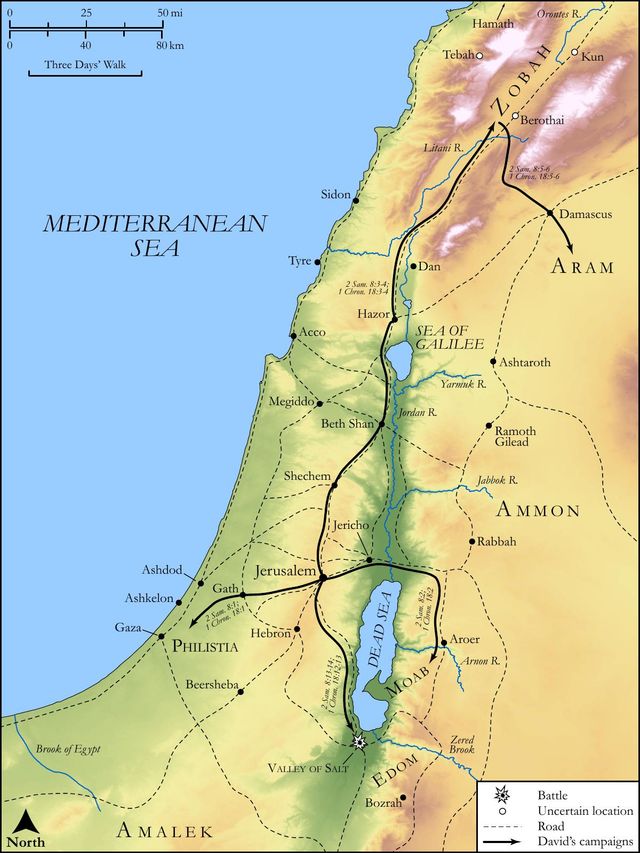
This verse is situated within a pivotal section of 1 Chronicles (chapters 18-20) that meticulously details David's military conquests and the subsequent expansion and consolidation of his kingdom. Specifically, 1 Chronicles 18 serves as a summary of David's major victories, beginning with the Philistines (1 Chronicles 18:1), then Moab (1 Chronicles 18:2), and most prominently, Hadarezer, King of Zobah (1 Chronicles 18:3-8). Verse 10 directly follows the account of Hadarezer's defeat, presenting a diplomatic consequence of David's military prowess. The narrative flow demonstrates how David's divinely-assisted victories (e.g., 1 Chronicles 18:6) led to regional recognition and the acquisition of vast resources, which are then explicitly stated in 1 Chronicles 18:11 to have been dedicated to the Lord for the future Temple.
Historical & Cultural Context
In David's day there were shifting alliances and power struggles among the city-states and kingdoms round about. Military victories often led to significant geopolitical realignments. Hamath, ruled by King Tou (also known as Toi in 2 Samuel 8:9-10), was an Aramean kingdom located north of Zobah, Hadarezer's kingdom. The parenthetical note in verse 10, "(for Hadarezer had war with Tou;)", is crucial, revealing a pre-existing state of conflict between Hamath and Zobah. David's defeat of Hadarezer was thus a strategic boon for Tou, eliminating a formidable regional rival and creating an opportunity for Hamath to secure its northern border by aligning with the ascendant power of Israel. Sending one's son as an envoy, as Tou did with Hadoram, was a high honor in diplomacy between kings, signifying the importance of the mission and the desire for a strong, lasting relationship, often implying a form of submission or alliance. The exchange of valuable "vessels of gold and silver and brass" was a common practice for tribute or diplomatic gifts, signifying respect, honor, and often submission to a more powerful sovereign.
Key Themes
ShowHideThis verse contributes to several significant themes within Chronicles. Firstly, it powerfully underscores the theme of Divine Sovereignty and Favor upon King David. His military successes are not merely human achievements but are consistently attributed to God's hand, leading to the expansion of Israel's influence and the accumulation of wealth. Tou's diplomatic overture is a direct consequence of God establishing David's kingdom. Secondly, the verse highlights International Recognition and the Expansion of David's Sphere of Influence. David's victories compelled even distant kings to acknowledge his power and seek his favor, demonstrating Israel's rising geopolitical prominence under his reign. Thirdly, it illustrates the pragmatic aspect of Strategic Diplomacy and Seeking Peace. Tou's actions were not simply congratulatory but a shrewd diplomatic maneuver to secure his kingdom's peace and potentially gain an ally against future threats, exemplifying the wisdom of seeking peace when it benefits one's people. Finally, the mention of "all manner of vessels of gold and silver and brass" points to the Accumulation of Wealth and Resources into David's kingdom, much of which, as detailed in 1 Chronicles 18:11, was dedicated for the future construction of the Temple, linking David's military and diplomatic success directly to God's ultimate redemptive purposes.
Exposition and Analysis
ShowHideKey Word Analysis
ShowHideThe word "son" (H1121, bên) refers to Hadoram, Tou's son, who was sent as an envoy. Among the kings of that day, sending one's own son as an ambassador was a gesture of profound respect, trust, and the highest level of diplomatic seriousness. It indicated that the sender considered the relationship of paramount importance, worthy of entrusting his own heir with the mission, often signaling a desire for a strong, lasting alliance or even submission to David.
The verb "to congratulate" (H1288, bârak) literally means "to bless" or "to kneel." In this context, it signifies an act of salutation, acknowledging and celebrating David's success and good fortune. It is an expression of respect and recognition for his achievements, effectively "blessing" or commending him for his victory over Hadarezer. This highlights the honor and deference shown to David by a foreign king, affirming his status as a divinely favored and powerful ruler.
The term "vessels" (H3627, kᵉlîy) is a broad Hebrew word for any prepared apparatus, implement, utensil, or container. Here, it specifically denotes valuable objects made of "gold," "silver," and "brass," indicating items of tribute or diplomatic gifts. These were not mere household items but significant treasures, reflecting the wealth and status of the giver and the honor bestowed upon the recipient. Their explicit mention underscores the material benefit and prestige accruing to David's kingdom, signifying the tangible results of his military and diplomatic ascendancy.
Verse Breakdown
ShowHide"He sent Hadoram his son to king David, to enquire of his welfare, and to congratulate him,"
This opening clause introduces the diplomatic initiative. Tou, the King of Hamath, dispatches his son, Hadoram, as a high-level envoy to King David. The dual purpose of the visit is immediately stated: "to enquire of his welfare" (a formal expression of goodwill, seeking to establish or confirm a state of peace and well-being) and "to congratulate him" (to acknowledge and celebrate David's recent military triumph). This sets the tone for a respectful and strategically motivated interaction from Tou's side.
"because he had fought against Hadarezer, and smitten him;"
This part provides the explicit catalyst for Tou's diplomatic gesture. David's recent and decisive victory over Hadarezer, King of Zobah, is the direct reason. The verb "smitten" (Hebrew: nakah) implies a crushing defeat, highlighting the magnitude of David's military prowess and the significant impact of this victory on regional politics. Tou recognized David as the new dominant power in the region, necessitating a swift and respectful response.
"(for Hadarezer had war with Tou;)"
This crucial parenthetical clause offers the underlying strategic motivation for Tou's actions. It reveals a pre-existing state of conflict between Hadarezer and Tou. David's victory effectively removed a common enemy for Hamath, turning a long-standing adversary into a strategic opportunity for peace and alliance with Israel. This demonstrates the geopolitical shrewdness behind Tou's seemingly benevolent act, securing his kingdom's peace and potentially gaining an ally.
"and [with him] all manner of vessels of gold and silver and brass."
This final clause details the valuable diplomatic gifts accompanying Hadoram. The "vessels" were not mere symbolic tokens but significant treasures made of highly prized materials: gold, silver, and brass. The phrase "all manner of" suggests a variety of such items, emphasizing the richness and generosity of the gift. These gifts served to solidify the diplomatic bond, express honor, and likely acted as a form of tribute or initial payment to the rising power of David's kingdom, further enhancing Israel's wealth and prestige.
Literary Devices
ShowHide1 Chronicles 18:10 employs several literary devices to enrich its narrative. The primary function of the verse within the broader chapter is as a Political Narrative, illustrating the far-reaching diplomatic consequences of David's military victories. The inclusion of the parenthetical clause, "(for Hadarezer had war with Tou;)", serves as a vital piece of Explanatory Parenthesis, providing the reader with crucial background information that clarifies Tou's motivations and the strategic significance of David's victory from Hamath's perspective. This device adds depth and context, transforming a simple congratulatory visit into a calculated geopolitical maneuver. Furthermore, the "vessels of gold and silver and brass" function as potent Symbolism, representing not only wealth and tribute but also the recognition, honor, and perhaps even the submission extended to David's burgeoning kingdom. They are tangible signs of David's established dominion and the material blessings that accompany God's favor upon his reign. The narrative also subtly uses Irony or Poetic Justice by showing how David's defeat of an enemy (Hadarezer) directly benefits another kingdom (Tou), turning a military conquest into a diplomatic opportunity for peace and alliance, demonstrating God's sovereign orchestration of events.
Theological and Thematic Connections
ShowHideThis verse powerfully illustrates how God's favor and blessing on His chosen servant, David, extended beyond military success to establish his kingdom's reputation and influence among nations. The tribute from Tou, King of Hamath, is a tangible manifestation of the Lord's promise to David that He would "cut off all your enemies from before you" (1 Chronicles 17:8). This diplomatic recognition underscores the divine hand in David's ascendancy, demonstrating that God orchestrates geopolitical events to fulfill His purposes, including the accumulation of resources that would eventually be dedicated to the building of His Temple. Tou's strategic response also highlights the wisdom of seeking peace and alliance with a divinely blessed power, reflecting a broader biblical principle of recognizing and aligning with God's work in the world.
Reflection and Application
ShowHide1 Chronicles 18:10 offers profound insights for contemporary believers, reminding us that when God blesses and empowers His people, the impact often extends far beyond our immediate sphere. David's faithfulness and God-given victories led to international recognition and the influx of resources, demonstrating how God can use our obedience and success to influence the world around us for His glory. This verse encourages us to consider the "ripple effects" of God's work in our lives – how our integrity, diligence, and God-given talents, when submitted to Him, can open doors for influence, peace, and the gathering of resources for God's kingdom purposes. It also underscores the importance of wise and peaceful diplomacy, even with those who may have been adversaries or strangers. Just as Tou recognized the strategic benefit of peace with David, we are called to be peacemakers and to seek harmonious relationships, recognizing that God can use such interactions to advance His kingdom and bring about unexpected blessings. Our "successes," when rooted in God's favor, are not merely for personal gain but are avenues through which God's light and influence can shine into the world, demonstrating His power and goodness to those who may not yet know Him.
Questions for Reflection
ShowHideFAQ
ShowHideWhy did Tou send his son, Hadoram, specifically, and not just an envoy?
ShowHideSending one's son as an envoy was a highly significant diplomatic gesture among the kings of that day, signifying the utmost level of respect, trust, and the seriousness of the mission. It indicated that Tou considered the relationship with David to be of paramount importance, worthy of entrusting his own heir with the task. This act would have been understood as a strong desire for a lasting and honorable relationship, potentially even an alliance, rather than a mere formal greeting. It elevated the diplomatic exchange from a routine matter to a personal and weighty commitment between the two royal houses, aiming to secure long-term peace and stability for Hamath by aligning with the ascendant power of David's kingdom.
What is the significance of the "vessels of gold and silver and brass"? Were they just gifts?
ShowHideThe "vessels of gold and silver and brass" were more than just polite gifts; they were a form of tribute, a tangible acknowledgment of David's superior power and Tou's desire to secure peaceful relations, perhaps even a relationship of submission. Among the kings of that day, such valuable gifts served multiple purposes: expressing honor and goodwill, cementing treaties, and often signifying submission or alliance with a stronger power. For Tou, these gifts served to mitigate any potential threat from David and to secure his kingdom's peace, especially given his prior conflict with Hadarezer, David's defeated enemy. Furthermore, for David, these gifts, along with other spoils of war, contributed to the vast wealth that he would later dedicate for the construction of the Lord's Temple, as explicitly stated in 1 Chronicles 18:11.
Christ-Centered Fulfillment
ShowHide1 Chronicles 18:10, in its depiction of David's kingdom receiving international recognition and tribute, beautifully foreshadows the ultimate, universal reign of Jesus Christ. David, as God's anointed king, established a kingdom of peace and expanded its borders through divine favor, receiving homage from foreign rulers. This earthly kingdom, however, was but a shadow of the eternal, spiritual kingdom of the Messiah. Just as kings brought gifts to David, the New Testament proclaims that all nations will ultimately come to acknowledge and worship Christ, bringing their glory and honor to Him. The prophet Isaiah envisioned a future where "the wealth of the nations shall come to you" (Isaiah 60:5), and kings would "bring you their tribute" (Isaiah 60:6). This finds its ultimate fulfillment in Christ, the true King of kings and Lord of lords, to whom "every knee should bow, in heaven and on earth and under the earth" (Philippians 2:10). The peace established by David through military victory points to the perfect and everlasting peace brought by the Prince of Peace, Jesus Christ, who achieved victory not through earthly conquest but through His sacrificial death and resurrection, overcoming sin and death itself. The wealth accumulated by David for the Temple prefigures the spiritual riches and the living stones that constitute the church, the spiritual temple built upon Christ, the chief cornerstone (Ephesians 2:20-22). Thus, Tou's tribute to David serves as a historical echo of the future universal homage paid to the Lord Jesus Christ, whose kingdom knows no end and whose peace transcends all understanding, drawing all peoples to Himself.