


Numbers 32:27
Bible text: King James Version (1769 Blayney text) · Public domain
Bible text: Berean Standard Bible · Public domain
Bible text: American Standard Version (1901) · Public domain
Bible text: World English Bible, Messianic edition · Public domain
Bible text: Geneva Bible (1599) · Public domain
Bible text: Young's Literal Translation · Public domain
- וַעֲבָדֶיךָva·'a·va·Dei·khaand your servantsH5650Conj-w ¦ N-mpc ¦ 2msNoun Plural Masculine Constructוַandעֲבָדֶיservantsךָyour
- יַעַבְרוּya·'av·Ruthey will pass overH5674V-Qal-Imperf-3mpVerb Qal Imperfect 3rd Plural Masculine
- כָּלkoleveryH3605N-mscNoun Singular Masculine Construct
- חֲלוּץcha·Lutzequipped [man] ofH2502V-Qal-PassPrtcpl-msVerb Qal Participle Passive Singular Masculine Construct
- צָבָאtza·Va'warH6635N-msNoun Singular Masculine Absolute
- לִפְנֵיlif·Nei<to> beforeH6440Prep-l ¦ N-mpcNoun Plural Masculine Constructלִ<to>פְנֵיbefore
- יְהוָהYah·wehYahwehH3068N-properNoun Proper Title
- לַמִּלְחָמָהla·mil·cha·Mahfor <the> battleH4421Prep-l ¦ N-fsNoun Singular Feminine Absoluteלַfor <the>מִּלְחָמָהbattle
- כַּאֲשֶׁרka·'a·Sherjust asH834Prep-k ¦ RelParticle Relativeכַּjustאֲשֶׁרas
- אֲדֹנִי'a·do·Nimy lordH113N-msc ¦ 1csNoun Singular Masculine Constructאֲדֹנִlordיmy
- דֹּבֵרdo·Ver[is] sayingH1696V-Qal-Prtcpl-msVerb Qal Participle Singular Masculine Absolute
English is a literal word-by-word gloss of the Hebrew, not the KJV's wording. Why?
This is the original text the KJV's translators worked from — each Hebrew word with its own literal English meaning in this verse, prepared by scholars at Tyndale House, Cambridge. The KJV translates whole sentences, not word by word, so its wording differs: one Hebrew word can become several English words, and the KJV may choose “the LORD” where the gloss reads “Yahweh”. Both are faithful — they answer different questions. For the KJV's own rendering, switch to the KJV text.
Details
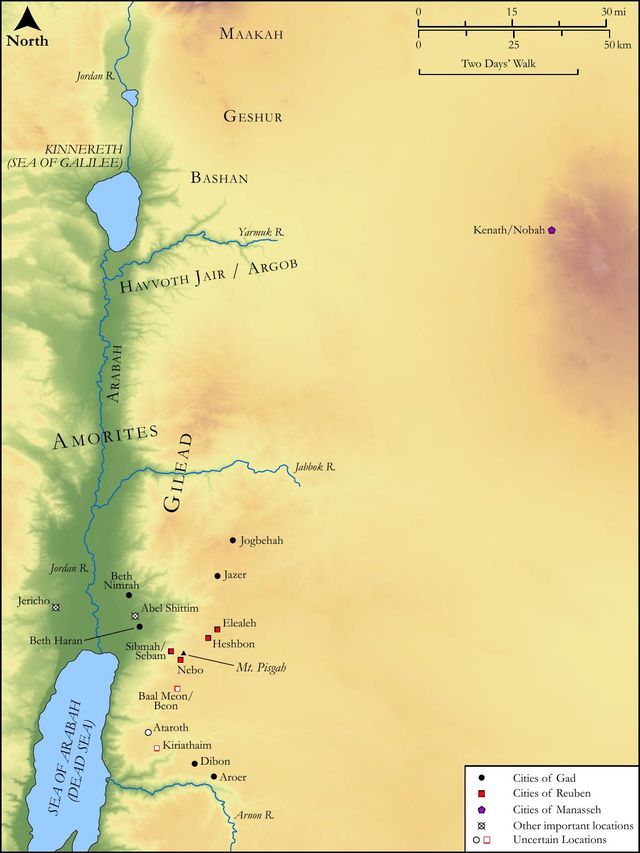
See on the biblical-era map
Study this verse
Continue studying Numbers 32:27 across the web’s major study libraries — every link below opens this exact verse, chapter, or book on the destination site.
Read & Compare
 BibleGatewayThis verse in more than 200 translations and 70 languages.
 Bible.comThe YouVersion reader — hundreds of translations, reading plans, and highlights.
 ESV.orgCrossway's official English Standard Version reader.
 NET BibleThe NET translation with 60,000+ translators' notes on every rendering decision.
 STEP BibleTyndale House's free study tool — original text, vocabulary, and scholarly resources.
 BibliaLogos Bible Software's free web reader.
 USCCBThe New American Bible (Revised Edition) with the U.S. bishops' study notes.
Commentaries
 BibleHub CommentariesDozens of classic commentaries on this verse, gathered on one page.
 StudyLightMore than 100 commentary sets — the largest collection on the web.
 BibleRefPlain-English commentary on what this verse means, verse by verse.
 Enduring WordDavid Guzik's free commentary on this chapter, widely used by Bible teachers.
 Bible Study ToolsVerse commentary alongside Greek and Hebrew study aids.
Original Language & Research
- BibleHub InterlinearThe verse word by word — original language, transliteration, and English.
- BibleHub LexiconEvery word's original-language definition and Strong's entry.
 Blue Letter BibleDeep-study tools — Strong's numbers, concordance, and word studies.
 SefariaThe Hebrew text with Rashi and centuries of Jewish commentary.
Sermons, Hymns & Audio


TrulyRandomVerse is not affiliated with these sites and doesn’t control their content. They’re linked because they’re genuinely useful.
Summary
Numbers 32:27 records the solemn and unequivocal pledge of the tribes of Reuben and Gad, along with the half-tribe of Manasseh, to Moses. This verse is their direct affirmation of commitment to fully participate in the conquest of Canaan, even after securing their desired inheritance on the eastern side of the Jordan River. It profoundly underscores their integrity, understanding of corporate responsibility, and unwavering willingness to engage in the divinely mandated mission of the entire Israelite nation before returning to their personal tribal lands.
Context
ShowHideLiterary Context
This verse is a pivotal moment in the negotiation between Moses and the Transjordanian tribes. Earlier in Numbers 32, Reuben and Gad, observing the fertile lands of Gilead and Jazer, requested to settle there rather than crossing into Canaan with the rest of Israel (Numbers 32:1-5). Moses initially reacted with severe disapproval, fearing their request would demoralize the other Israelites and lead to a repeat of the disastrous rebellion at Kadesh-Barnea (Numbers 32:6-15). To alleviate Moses' concerns, these tribes proposed a compromise: they would build fortified cities for their families and folds for their livestock, but then their fighting men would go "armed for war, before the LORD to battle" with the other tribes until the entire land of Canaan was subdued. Numbers 32:27 is their direct, verbal confirmation of this solemn commitment, ensuring their loyalty and active participation in the greater national mission before returning to their personal inheritance.
Historical & Cultural Context
The setting is the plains of Moab, on the eastern side of the Jordan River, where Israel is poised to enter the Promised Land after forty years of wilderness wandering. The conquest of Canaan was understood not merely as a military campaign but as a holy war, a divinely mandated act of judgment against the Canaanite nations and the fulfillment of God's covenant promise to Abraham (Genesis 15:16). Tribal identity and loyalty were paramount in ancient Israelite society, but this narrative emphasizes the crucial tension between individual tribal interests and the corporate responsibility of the entire nation. The concept of "passing over" the Jordan was deeply symbolic, representing the entry into their inheritance and the fulfillment of God's promise. The phrase "armed for war" reflects the military organization and readiness essential for such a significant undertaking in a hostile environment, where tribal solidarity was vital for survival and success.
Key Themes
ShowHideThis verse powerfully contributes to several overarching themes in Numbers and the Pentateuch. It highlights the theme of commitment and integrity, demonstrating the profound importance of keeping one's word and fulfilling solemn promises, especially those made in the sight of God and to the community. It underscores the principle of unity and corporate responsibility, where the well-being and success of the whole community take precedence over individual or tribal convenience. The tribes understood their part in the larger divine mission to conquer the promised land for all Israel, not just for themselves, reflecting the call for Israel to act as a unified people under God. Furthermore, the phrase "before the LORD to battle" signifies the divine mandate of the conquest, emphasizing that this was not merely a human military campaign but a holy war sanctioned, overseen, and led by God Himself, underscoring the theme of divine presence and leadership in Israel's endeavors, as seen in passages like Exodus 14:14 and Joshua 5:13-15.
Exposition and Analysis
ShowHideKey Word Analysis
ShowHideThis term (H5650), meaning "a servant; bondage, bondman, (bond-) servant, (man-) servant," is used by the Reubenites and Gadites to address Moses. It signifies humility, submission, and a willingness to obey his authority, which is understood as God's delegated authority. This usage underscores their commitment to Moses' leadership and, by extension, to the divine will he communicates, serving to reassure Moses of their loyalty and readiness to fulfill their part in the national enterprise.
This word (H2502), meaning "to pull off; hence (intensively) to strip, (reflex.) to depart; by implication, to deliver, equip (for fight); present, strengthen; arm (self), (go, ready) armed," conveys a sense of readiness, preparedness, and full engagement. When applied to soldiers, it implies being "stripped for battle" or fully equipped for military service. It indicates that these men would not merely be present but would be fully outfitted and prepared to fight, signifying their serious intent to contribute their full military strength to the conquest alongside the other tribes, not just a token force.
This term (H3068), derived from the root "to be," signifies "(the) self-Existent or Eternal; Jehovah, Jewish national name of God." The use of this sacred covenant name for God, often rendered as Yahweh, emphasizes the divine nature of the conquest and the solemnity of their pledge. Their commitment is not merely to Moses or the nation but is made directly "before the LORD," highlighting God's active presence, oversight, and ultimate authority in the entire undertaking.
Verse Breakdown
ShowHide"But thy servants will pass over"
This opening clause is the direct affirmation of the tribes' commitment. "Thy servants" (referring to Moses) establishes their subordinate and obedient posture, acknowledging his leadership. "Will pass over" explicitly states their intention to cross the Jordan River, signifying their active participation in the main body of Israel's conquest, rather than remaining behind in their chosen lands.
"every man armed for war"
This emphasizes the comprehensiveness and seriousness of their pledge. It's not just a few representatives, but "every man" capable of fighting, fully equipped and ready for battle. This detail directly addresses Moses' earlier fear that they would shirk their duty or weaken the resolve of the other tribes, assuring him of their full military contribution.
"before the LORD to battle"
This is the theological heart of the verse. It frames the entire military enterprise as one conducted under divine supervision and sanction. The battle is not merely for land or resources but is a holy war, fought with God's presence, for His purposes, and under His direct command. Their participation is thus elevated to an act of obedience and worship to God's will.
"as my lord saith"
This concluding phrase reinforces their submission and agreement to the terms Moses laid out. It signifies their acceptance of his conditions for their settlement east of the Jordan, confirming their integrity and commitment to the covenant community and to the authority that God had vested in Moses.
Literary Devices
ShowHideThe verse employs several literary devices to convey its profound meaning and the weight of the tribes' commitment. The most prominent is the use of a Pledge or Oath, where the tribes formally articulate their commitment, serving to reassure Moses and the rest of Israel. The phrase "before the LORD" functions as a powerful Theological Framing device, elevating the military action from a mere human endeavor to a divinely sanctioned and observed event. This also introduces a strong element of Divine Presence, reminding the audience that God is actively involved and watching over the actions of His people. The precise and declarative structure of the verse, with its clear statement of intent followed by the specific conditions, demonstrates Clarity and Precision in communication, leaving no room for ambiguity regarding their solemn promise.
Theological and Thematic Connections
ShowHideNumbers 32:27 serves as a powerful illustration of the interplay between individual tribal interests and the corporate responsibility of the nation of Israel under God's covenant. It underscores the importance of integrity in fulfilling one's word, particularly when a promise is made "before the LORD." The willingness of Reuben and Gad to prioritize the collective good of Israel's divinely mandated conquest before securing their personal inheritance highlights a foundational principle of covenant faithfulness: that personal gain should not undermine the unified mission of God's people. This commitment to fight alongside their brethren, even when their own immediate needs were met, reflects a deep understanding of their shared destiny and the sacred nature of their calling to obey God's command for the entire nation.
Reflection and Application
ShowHideNumbers 32:27 offers profound lessons for contemporary believers, challenging us to examine the integrity of our own commitments, particularly those made within the context of our faith and community. Are we willing to prioritize the collective mission of the church—the advancement of God's kingdom—even when our personal needs or desires might tempt us to withdraw or focus solely on ourselves? The tribes' willingness to go "armed for war, before the LORD to battle" reminds us that our spiritual lives are not passive; we are called to active participation in the spiritual warfare against sin and evil, always recognizing that we fight under God's authority and in His presence. This verse encourages a spirit of unity, self-sacrifice, and unwavering commitment to the greater good of the body of Christ, knowing that our individual contributions are vital for the success of the whole. It calls us to consider how our personal choices impact the broader community of faith and our shared witness to the world.
Questions for Reflection
ShowHideFAQ
ShowHideWhat was Moses' initial concern regarding the request of Reuben and Gad?
ShowHideMoses was initially concerned that the request of Reuben and Gad to settle east of the Jordan would discourage the rest of the Israelites from crossing into the Promised Land. He feared a repeat of the disastrous incident at Kadesh-Barnea, where the previous generation's lack of faith and refusal to enter Canaan led to forty years of wilderness wandering and divine judgment (Numbers 32:6-15). He worried that their desire for immediate settlement would undermine the national resolve and jeopardize God's plan for the conquest of the entire land He had promised.
Why was it so important for these tribes to participate in the conquest of Canaan, even if they settled elsewhere?
ShowHideIt was crucial for these tribes to participate because the conquest of Canaan was a unified, divinely mandated mission for all Israel. Their participation ensured tribal solidarity, demonstrated their commitment to the covenant, and prevented a dangerous division within the nation. It affirmed that their inheritance, though geographically distinct, was still part of the larger divine promise to Israel. Their pledge to go "armed for war, before the LORD to battle" underscored that the welfare and success of the entire community took precedence over individual tribal convenience, reflecting a corporate responsibility essential for the fulfillment of God's promises (Joshua 1:12-18). Their participation was an act of faithfulness, demonstrating that their personal blessings did not negate their national obligations.
Christ-Centered Fulfillment
ShowHideNumbers 32:27, with its emphasis on commitment, corporate responsibility, and fighting "before the LORD," finds its ultimate fulfillment and transformation in Christ. Jesus Christ is the quintessential "servant" of God, not merely pledging but perfectly embodying obedience to the Father's will, even to the point of death on a cross (Philippians 2:7-8). He "passed over" from glory to earth, and through His death and resurrection, He enables believers to "pass over" from death to life, securing an eternal inheritance not of land, but of spiritual blessings in the heavenly places (John 5:24; Ephesians 1:3). As the true Israel, Jesus fought the ultimate battle against sin, death, and the devil, not with physical weapons, but through His perfect obedience and atoning sacrifice, accomplishing a decisive victory "before the LORD" that disarmed the powers and authorities (Colossians 2:15). Believers, as members of His body, are called to be "armed for war" in a spiritual sense, putting on the full armor of God to stand firm against the schemes of the enemy (Ephesians 6:11-17), participating in the ongoing mission of the church under the leadership of Christ, our Lord, who has already secured the decisive victory and leads us in triumph (2 Corinthians 2:14). Our unity in Christ transcends tribal or national boundaries, binding us together in a common purpose to advance His kingdom "before the LORD" until His glorious return.