


Numbers 15:5
Bible text: King James Version (1769 Blayney text) · Public domain
Bible text: Berean Standard Bible · Public domain
Bible text: American Standard Version (1901) · Public domain
Bible text: World English Bible, Messianic edition · Public domain
Bible text: Geneva Bible (1599) · Public domain
Bible text: Young's Literal Translation · Public domain
- וְיַיִןve·Ya·yinand wineH3196Conj-w ¦ N-msNoun Singular Masculine Absoluteוְandיַיִןwine
- לַנֶּסֶךְla·Ne·sekhfor the drink offeringH5262Prep-l ¦ N-msNoun Singular Masculine Absoluteלַfor theנֶּסֶךְdrink offering
- רְבִיעִיתre·vi·'It<the> fourth ofH7243Adj-fscAdjective Numerical Position Singular Feminine Construct
- הַהִיןha·Hin<the> hinH1969Art ¦ N-msNoun Singular Masculine Absoluteהַ<the>הִיןhin
- תַּעֲשֶׂהta·'a·Sehyou will offerH6213V-Qal-Imperf-2msVerb Qal Imperfect 2nd Singular Masculine
- עַל'alwithH5921PrepPreposition
- הָעֹלָהha·'o·Lahthe burnt offeringH5930Art ¦ N-fsNoun Singular Feminine Absoluteהָtheעֹלָהburnt offering
- אוֹ'oorH176ConjConjunction
- לַזָּבַחla·Za·vachfor the sacrificeH2077Prep-l ¦ N-msNoun Singular Masculine Absoluteלַfor theזָּבַחsacrifice
- לַכֶּבֶשׂla·Ke·vesfor the lambH3532Prep-l ¦ N-msNoun Singular Masculine Absoluteלַfor theכֶּבֶשׂlamb
- הָאֶחָדha·'e·Chad<the> oneH259Art ¦ Adj-fsAdjective Numerical Singular Feminine Absoluteהָ<the>אֶחָדone
English is a literal word-by-word gloss of the Hebrew, not the KJV's wording. Why?
This is the original text the KJV's translators worked from — each Hebrew word with its own literal English meaning in this verse, prepared by scholars at Tyndale House, Cambridge. The KJV translates whole sentences, not word by word, so its wording differs: one Hebrew word can become several English words, and the KJV may choose “the LORD” where the gloss reads “Yahweh”. Both are faithful — they answer different questions. For the KJV's own rendering, switch to the KJV text.
Details
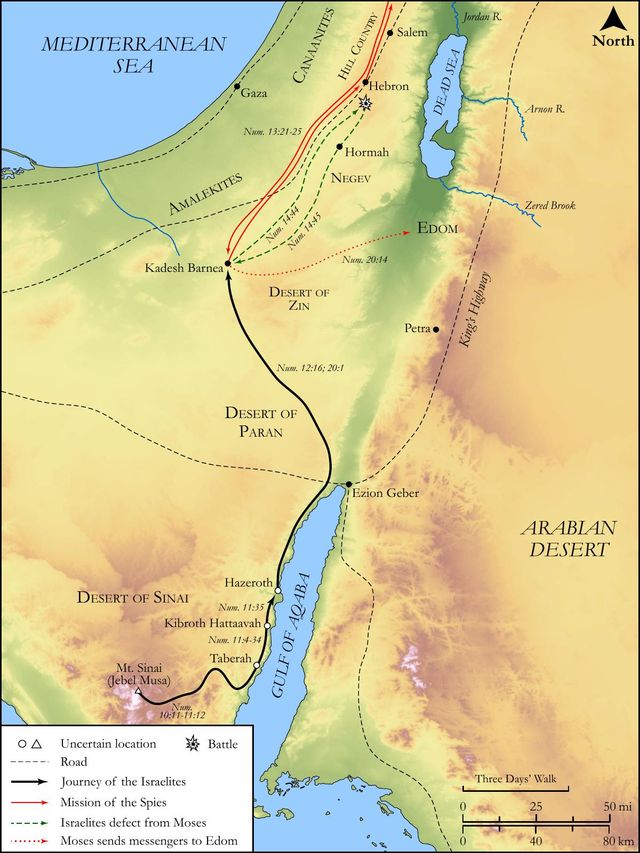
See on the biblical-era map
Study this verse
Public-domain commentary
Matthew Henry
From his Commentary on the Whole Bible. Henry comments on passages, not single verses — this entry covers Numbers 15:1–21. His two-level outline is real structure in the source text, so it is rendered as structure.
Here we have,
I.Full instructions given concerning the meat-offerings and drink-offerings, which were appendages to all the sacrifices of animals.
The beginning of this law is very encouraging: When you come into the land of your habitation which I give unto you, they you shall do so and so, Num 15:2. This was a plain intimation, not only that God was reconciled to them notwithstanding the sentence he had passed upon them, but that he would secure the promised land to their seed notwithstanding their proneness to rebel against him. They might think some time or other they should be guilty of a misdemeanour that would be fatal to them, and would exclude them for ever, as the last had done for one generation; but this intimates an assurance that they should be kept from provoking God to such a degree as would amount to a forfeiture; for this statute takes it for granted that there were some of them that should in due time come into Canaan. The meat-offerings were of two sorts; some were offered alone, and we have the law concerning those, Lev 2:1, etc. Others were added to the burnt-offerings and peace-offerings, and constantly attended them, and about these direction is here given. It was requisite, since the sacrifices of acknowledgment (specified in Lev 2:3) were intended as the food of God's table, that there should be a constant provision of bread, oil, and wine, whatever the flesh-meat was. The caterers or purveyors for Solomon's temple provided fine flour, Kg1 4:22. And it was fit that God should keep a good house, that his table should be furnished with bread as well as flesh, and that his cup should run over. In my Father's house there is bread enough. Now the intent of this law is to direct what proportion the meat-offering and drink-offering should bear to several sacrifices to which they were annexed. If the sacrifice was a lamb or a kid, then the meat-offering must be a tenth-deal of flour, that is, an omer, which contained about five pints; this must be mingled with oil, the fourth part of a hin (a hin contained about five quarts), and the drink-offering must be the same quantity of wine, about a quart and half a pint, Num 15:3-5. If it was a ram, the meat-offering was doubled, two tenth-deals of flour, about five quarts, and a third part of a hin of oil (which was to them as butter is to us) mingled with it; and the same quantity of wine for a drink-offering, Num 15:6, Num 15:7. If the sacrifice was a bullock, the meat-offering was to be trebled, three omers, with five pints of oil, and the same quantity of wine for a drink-offering, Num 15:8-10. And thus for each sacrifice, whether offered by a particular person or at the common charge. Note, Our religious services should be governed, as by other rules, so by the rule of proportion.
II.Natives and strangers are here set upon a level, in this as in other matters (Num 15:13-16):
"One law shall be for you and for the stranger that is proselyted to the Jewish religion." Now,
1.This was an invitation to the Gentiles to become proselytes, and to embrace the faith and worship of the true God. In civil things there was a difference between strangers and true-born Israelites, but not in the things of God; as you are, so shall the stranger be before the Lord, for with him there is no respect of persons. See Isa 56:3.
2.This was an obligation upon the Jews to be kind to strangers, and not to oppress them, because they saw them owned and accepted of God. Communion in religion is a great engagement to mutual affection, and should slay all enmities.
3.It was a mortification to the pride of the Jews, who are apt to be puffed up with their birthright privileges. "We are Abraham's seed." God let them know that the sons of the stranger were as welcome to him as the sons of Jacob; no man's birth or parentage shall turn either to his advantage or his prejudice in his acceptance with God. This likewise intimated that, as believing strangers should be accounted Israelites, so unbelieving Israelites should be accounted strangers.
4.It was a happy presage of the calling of the Gentiles, and of their admission into the church. If the law made so little difference between Jew and Gentile, much less would the gospel make, which broke down the partition-wall, and reconciled both to God in one sacrifice, without the observance of the legal ceremonies.
III.A law for the offering of the first of their dough unto the Lord.
This, as the former, goes upon the comfortable supposition of their having come into the promised land, Num 15:18. Now that they lived upon manna they needed not such an express acknowledgment of God's title to their daily bread, and their dependence upon him for it, the thing spoke for itself; but in Canaan, where they should eat the fruit of their own industry, God required that he should be owned as their landlord and their great benefactor. They must not only offer him the first-fruits and tenths of the corn in their fields (these had already been reserved); but when they had it in their houses, in their kneading trough, when it was almost ready to be set upon their tables, God must have a further tribute of acknowledgment, part of their dough (the Jews say a fortieth part, at least, of the whole lump) must be heaved or offered up to God (Num 15:20, Num 15:21), and the priest must have it for the use of his family. Thus they must own their dependence upon God for their daily bread, even when they had it in the house with them; they must then wait on God for the comfortable use of it; for we read of that which was brought home, and yet God did blow upon it, and it came to little, Hag 1:9. Christ has taught us to pray not, Give us this year our yearly harvest, but Give us this day our daily bread. God by this law said to the people, as the prophet long afterwards said to the widow of Sarepta (Kg1 17:13), Only make me thereof a little cake first. This offering was expressly kept up by the laws of Ezekiel's visionary temple, and it is a commandment with promise of family-mercies (Eze 44:30): You shall give unto the priest the first of your dough, that he may cause the blessing to rest in thy house; for, when God has had his dues out of our estates, we may expect the comfort of what falls to our share.
Continue studying Numbers 15:5 across the web’s major study libraries — every link below opens this exact verse, chapter, or book on the destination site.
Read & Compare
 BibleGatewayThis verse in more than 200 translations and 70 languages.
 Bible.comThe YouVersion reader — hundreds of translations, reading plans, and highlights.
 ESV.orgCrossway's official English Standard Version reader.
 NET BibleThe NET translation with 60,000+ translators' notes on every rendering decision.
 STEP BibleTyndale House's free study tool — original text, vocabulary, and scholarly resources.
 BibliaLogos Bible Software's free web reader.
 USCCBThe New American Bible (Revised Edition) with the U.S. bishops' study notes.
Commentaries
 BibleHub CommentariesDozens of classic commentaries on this verse, gathered on one page.
 StudyLightMore than 100 commentary sets — the largest collection on the web.
 BibleRefPlain-English commentary on what this verse means, verse by verse.
 Enduring WordDavid Guzik's free commentary on this chapter, widely used by Bible teachers.
 Bible Study ToolsVerse commentary alongside Greek and Hebrew study aids.
Original Language & Research
- BibleHub InterlinearThe verse word by word — original language, transliteration, and English.
- BibleHub LexiconEvery word's original-language definition and Strong's entry.
 Blue Letter BibleDeep-study tools — Strong's numbers, concordance, and word studies.
 SefariaThe Hebrew text with Rashi and centuries of Jewish commentary.
Sermons, Hymns & Audio


TrulyRandomVerse is not affiliated with these sites and doesn’t control their content. They’re linked because they’re genuinely useful.
Summary
Numbers 15:5 meticulously details a specific requirement within the Mosaic Law for the accompanying drink offering, prescribing that a "fourth part of an hin of wine" was to be prepared alongside a burnt offering or sacrifice involving one lamb. This seemingly precise instruction underscores God's demand for complete, intentional, and comprehensive worship, emphasizing the meticulous nature of the Tabernacle rituals and the Israelites' unwavering dedication to their covenant Lord, even in the smallest of details.
Context
ShowHideLiterary Context
Numbers 15:5 is embedded within a broader legislative section (Numbers 15:1-16) that supplements the existing laws concerning offerings. While earlier books like Leviticus established the fundamental animal sacrifices (burnt, peace, sin offerings), Numbers 15 expands upon these by specifying the exact accompanying grain offerings (meal offerings) and drink offerings (libations) that were to be presented with the primary animal sacrifices. This particular verse zeroes in on the precise quantity of wine required when the main sacrifice was a single lamb, highlighting the meticulous detail God expected in their worship. The introductory phrase, "When ye be come into the land of your habitations" Numbers 15:2, signals that these laws were not merely for their transient wilderness journey but were foundational for their settled life in Canaan, preparing them for a future of agricultural abundance and sustained, ordered worship. The inclusion of these detailed instructions after the rebellion of the spies (Numbers 13-14) also serves to re-establish God's covenant expectations and the path to holiness for a people who had faltered.
Historical & Cultural Context
The instructions in Numbers 15 were given to the Israelites during their prolonged wilderness wanderings, yet they possess a clear forward-looking dimension, anticipating their eventual entry into and settlement within the Promised Land. The "hin" as a liquid measure (approximately 1 gallon or 3.7 liters) reflects the practicalities of ancient Israelite life and their established system of weights and measures, ensuring consistency across generations. Drink offerings, or libations, were a practice of the patriarchs, as when Jacob "poured a drink offering" at Bethel, and of the nations, who poured out liquids (wine, oil, water) to their gods. However, Israel's practice was distinct and unique: it was exclusively for Yahweh, prescribed with divine precision, and integrated into a comprehensive system of worship centered on atonement, communion, and thanksgiving, sharply differentiating it from the often chaotic and idolatrous pagan rituals. The inclusion of wine as an offering also points to the agricultural nature of the land they were to inherit, where vineyards would flourish, symbolizing God's provision and the fruit of their labor being returned to Him in worship.
Key Themes
ShowHideThis verse, along with the broader chapter, contributes significantly to several overarching themes within Numbers and the Pentateuch. Firstly, it underscores Completeness and Precision in Worship, demonstrating that God's instructions were holistic, requiring not just the primary animal sacrifice but also specific accompanying elements like grain and wine. This teaches that true worship involves offering all that God requires, leaving no part incomplete, and highlights the profound importance of obedience and attention to divine detail. Secondly, the act of pouring out the drink offering symbolized Dedication and Consecration, representing a complete surrender and giving back to God from the fruit of the land, acknowledging His sovereign provision and ownership. Thirdly, the repeated emphasis on "When ye be come into the land" (e.g., Numbers 15:2) highlights the Anticipation of the Land and Covenant Faithfulness, indicating that these comprehensive offering laws were not merely for the wilderness but for their settled life in Canaan, where agricultural products like wine would be abundant, signifying God's faithfulness to His covenant promises and their ongoing responsibility to worship Him in the land He provided.
Exposition and Analysis
ShowHideKey Word Analysis
ShowHideThis term refers to a specific ancient Hebrew liquid measure, approximately equivalent to 1 gallon or 3.7 liters. The specification of "the fourth part of an hin" (roughly 1 quart or 0.95 liters) for a single lamb underscores the divine demand for precision and exactness in worship. It highlights that God's instructions were not arbitrary but meticulously detailed, requiring careful adherence from His people, thereby reflecting His own orderly and holy character.
Derived from a root meaning "to pour out," neçek denotes a libation, an act of pouring out liquid before the Lord. This offering was distinct from other sacrifices in that it involved no burning or consumption by priests, but was entirely poured out onto the altar or ground, signifying complete dedication and surrender to God. It was an act of worship that visually represented a complete giving over of a valuable commodity, acknowledging God as the ultimate source of all blessings.
A young male sheep, typically less than one year old, the lamb was a foundational and frequently used animal in Israelite sacrificial worship. Its significance spans from the pivotal Passover sacrifice (e.g., Exodus 12:3) to the daily burnt offerings (e.g., Numbers 28:3). The lamb often symbolized innocence, purity, and substitutionary atonement, making it a fitting animal for offerings that sought to draw near to a holy God and make expiation for sin.
Verse Breakdown
ShowHide"And the fourth [part] of an hin of wine"
This clause precisely quantifies the wine required for the drink offering. The exact measurement ("fourth part of an hin") demonstrates God's demand for meticulousness and order in worship, leaving no room for approximation or casualness. Wine, a product of the land and often symbolizing joy, blessing, and sustenance, here, in its act of being poured out, signifies a complete dedication of these blessings back to the Giver, acknowledging His sovereignty over all provision.
"for a drink offering shalt thou prepare"
This phrase emphasizes the active, intentional, and deliberate nature of the offering. It was not a casual act but a carefully prepared, conscious pouring out of a valuable substance. The verb "prepare" (Hebrew, ʻâsâh) implies making, doing, or performing with purposeful action, highlighting the responsibility, effort, and reverence involved in fulfilling God's commands for worship. It underscores that worship is an act of obedience.
"with the burnt offering or sacrifice, for one lamb"
This crucial detail clarifies that the drink offering was not a standalone ritual but an essential accompaniment. It was integral to, and inseparable from, the primary animal sacrifice, emphasizing the comprehensive nature of God's prescribed worship. The mention of "burnt offering" (Hebrew, ʻôlâh, signifying complete dedication as it was entirely consumed by fire) or a general "sacrifice" (Hebrew, zebach, often referring to a peace offering, which involved communion and fellowship) indicates its broad applicability to various types of animal sacrifices. The specific reference to "one lamb" highlights a common and foundational sacrificial unit, underscoring the routine and consistent nature of these comprehensive worship requirements for the individual or family.
Literary Devices
ShowHideNumbers 15:5, though a technical instruction, employs several significant literary devices. Precision is paramount, evident in the exact measurement ("fourth part of an hin") and the specific association with "one lamb." This meticulous detail underscores the divine order, the non-negotiable nature of God's commands, and the importance of exact obedience in worship. Symbolism is also profoundly at play: the wine, a product of the land and often associated with joy, abundance, and sustenance, becomes a powerful symbol of complete dedication and surrender when poured out before the Lord. The very act of "pouring out" itself is a potent visual Metaphor for giving one's all, holding nothing back, and acknowledging God's ultimate ownership. Furthermore, the verse is part of a larger Pattern of laws in Numbers 15, which systematically outlines the accompanying offerings for various animal sacrifices, reinforcing the comprehensive, integrated, and holistic nature of Israelite worship, creating a sense of divine completeness and thoroughness in God's instructions.
Theological and Thematic Connections
ShowHideNumbers 15:5 profoundly illustrates God's character as a God of order, holiness, and meticulous detail, who desires complete and intentional worship from His people. The requirement for a specific drink offering to accompany the animal sacrifices reveals that true devotion is not merely about the grand, primary act, but also about the seemingly smaller, accompanying elements that complete the offering. This holistic approach to worship teaches that every aspect of our lives, from the significant to the mundane, can and should be an act of dedication to God. The pouring out of wine, a valuable commodity, symbolized a complete surrender and acknowledgement of God's sovereignty and provision. This Old Testament practice foreshadows the New Testament understanding of spiritual sacrifice and the giving of oneself entirely to God, reflecting a life lived in full devotion, where believers are called to present their bodies as living sacrifices.
Reflection and Application
ShowHideWhile the specific ritual of offering wine as a drink offering is no longer practiced by believers today, the underlying principles of Numbers 15:5 remain profoundly relevant for contemporary Christian living and worship. This verse challenges us to consider the completeness, intentionality, and precision of our worship. God desires not just a portion of our lives, but our whole being—our time, talents, resources, and deepest affections—offered in dedication to Him. Just as the drink offering accompanied the primary animal sacrifice, our daily acts of obedience, service, and devotion should accompany and complete our declarations of faith and participation in corporate worship. The meticulousness of God's instructions reminds us that genuine worship is not haphazard or casual but thoughtful, prepared, and offered with reverence and a desire to please Him in every detail. It calls us to examine whether we are holding back any "part" of our lives from God or if we are truly pouring out our all in response to His immeasurable grace and redeeming love.
Questions for Reflection
ShowHideFAQ
ShowHideWhat is a "hin" and why is its precise measurement significant?
ShowHideA "hin" was an ancient Hebrew liquid measure, roughly equivalent to 1 gallon or 3.7 liters. Therefore, "the fourth part of an hin" would be approximately 1 quart or 0.95 liters. The precise measurement is highly significant because it underscores God's demand for exactness, order, and complete adherence in the worship prescribed for His people. It highlights that worship was not to be arbitrary or casual, but meticulously performed according to divine instruction, reflecting the holiness, sovereignty, and orderly character of God. This precision ensured uniformity across the generations and demonstrated the Israelites' obedience to every detail of the covenant, emphasizing that God's commands are to be taken seriously.
Were drink offerings common among the nations, and how did Israel's differ?
ShowHideYes, libations or drink offerings were common among the nations round about, where liquids like wine, oil, or water were poured out to honor or appease various deities, often for fertility, protection, or divination. However, Israel's drink offerings differed significantly in their purpose and recipient. Unlike pagan practices that often involved appeasing multiple, capricious gods or engaging in superstitious rituals, Israel's drink offerings were exclusively directed towards Yahweh, the one true God. They were part of a divinely ordained system of worship, prescribed with specific quantities and integrated with other sacrifices (like the burnt offering for one lamb in Numbers 15:5). This distinction emphasized the uniqueness of Israel's covenant relationship with God and the purity of their worship, set apart from the idolatrous and often immoral practices of surrounding nations.
Does this law apply to Christians today?
ShowHideThe literal application of the law in Numbers 15:5 does not apply to Christians today, as the Old Testament sacrificial system, with its rituals and animal offerings, was perfectly fulfilled in the person and work of Jesus Christ. He is the ultimate sacrifice for sin. However, the underlying principles remain vitally important and are spiritually applicable. The meticulousness and completeness of the Old Testament offerings teach us about God's desire for holistic, intentional, and dedicated worship. While we no longer offer physical wine, we are called to offer our lives as "living sacrifices" (Romans 12:1), pouring out our time, talents, resources, and affections in service to God. The principle of giving our best and holding nothing back, as symbolized by the poured-out drink offering, is a timeless spiritual truth for believers, reflecting a life of complete devotion to Christ.
Christ-Centered Fulfillment
ShowHideNumbers 15:5, with its precise instructions for the drink offering accompanying the lamb, finds its ultimate and perfect fulfillment in Jesus Christ. The "one lamb" for which the offering was prepared foreshadows the Lamb of God, who takes away the sin of the world!. Just as the drink offering was poured out in complete dedication, symbolizing a life given over, Christ's life was perfectly "poured out" in His atoning sacrifice on the cross. His blood, shed for the new covenant, is the ultimate "drink offering" that completely satisfies God's righteous demands and cleanses from all sin (Matthew 26:28). The meticulousness of the Old Testament laws, including the exact measurements and accompanying elements, underscores that salvation is not a casual matter but required a perfect, complete, and divinely orchestrated sacrifice. Christ, as our Great High Priest, perfectly fulfilled every requirement of the law, making one perfect sacrifice that forever perfected those who are being sanctified (Hebrews 10:14). Therefore, our worship now is not through physical rituals but through Him, offering a "sacrifice of praise" that flows from a heart made right by His finished work and empowered by the Spirit (Hebrews 13:15).