


Numbers 15:2
Bible text: King James Version (1769 Blayney text) · Public domain
Bible text: Berean Standard Bible · Public domain
Bible text: American Standard Version (1901) · Public domain
Bible text: World English Bible, Messianic edition · Public domain
Bible text: Geneva Bible (1599) · Public domain
Bible text: Young's Literal Translation · Public domain
- דַּבֵּרda·BerspeakH1696V-Piel-Imp-2msVerb Piel Imperative 2nd Singular Masculine
- אֶל'eltoH413PrepPreposition
- בְּנֵיbe·Nei[the] people ofH1121N-mpcNoun Plural Masculine Construct
- יִשְׂרָאֵלYis·ra·'ElIsraelH3478N-properNoun Proper Location
- וְאָמַרְתָּve·'a·mar·Taand you will sayH559Conj-w ¦ V-Qal-ConsecPerf-2msVerb Qal Consecutive Perfect 2nd Singular Masculineוְandאָמַרְתָּyou will say
- אֲלֵהֶם'a·le·Hemto themH413Prep ¦ 3mpPreposition Definiteאֲלֵtoהֶםthem
- כִּיkithatH3588PrtParticle Conditional
- תָבֹאוּta·Vo·'uyou will goH935V-Qal-Imperf-2mpVerb Qal Imperfect 2nd Plural Masculine
- אֶל'elintoH413PrepPreposition
- אֶרֶץ'e·retz[the] land ofH776N-fscNoun Singular Feminine Construct
- מוֹשְׁבֹתֵיכֶםmo·she·Vo·tei·Khemyour dwelling placesH4186N-fpc ¦ 2mpNoun Plural Feminine Constructמוֹשְׁבֹתֵיdwelling placesכֶםyour
- אֲשֶׁר'a·SherwhichH834RelParticle Relative
- אֲנִי'a·NiIH589Pro-1csPronoun Personal 1st Singular common gender
- נֹתֵןno·Ten[am] about to giveH5414V-Qal-Prtcpl-msVerb Qal Participle Singular Masculine Absolute
- לָכֶםla·Khemto <the> youPrep-l ¦ 2mpSuffix Personal 2nd Plural Masculineלָto <the>כֶםyou
English is a literal word-by-word gloss of the Hebrew, not the KJV's wording. Why?
This is the original text the KJV's translators worked from — each Hebrew word with its own literal English meaning in this verse, prepared by scholars at Tyndale House, Cambridge. The KJV translates whole sentences, not word by word, so its wording differs: one Hebrew word can become several English words, and the KJV may choose “the LORD” where the gloss reads “Yahweh”. Both are faithful — they answer different questions. For the KJV's own rendering, switch to the KJV text.
Details
See on the biblical-era map
Study this verse
Public-domain commentary
Matthew Henry
From his Commentary on the Whole Bible. Henry comments on passages, not single verses — this entry covers Numbers 15:1–21. His two-level outline is real structure in the source text, so it is rendered as structure.
Here we have,
I.Full instructions given concerning the meat-offerings and drink-offerings, which were appendages to all the sacrifices of animals.
The beginning of this law is very encouraging: When you come into the land of your habitation which I give unto you, they you shall do so and so, Num 15:2. This was a plain intimation, not only that God was reconciled to them notwithstanding the sentence he had passed upon them, but that he would secure the promised land to their seed notwithstanding their proneness to rebel against him. They might think some time or other they should be guilty of a misdemeanour that would be fatal to them, and would exclude them for ever, as the last had done for one generation; but this intimates an assurance that they should be kept from provoking God to such a degree as would amount to a forfeiture; for this statute takes it for granted that there were some of them that should in due time come into Canaan. The meat-offerings were of two sorts; some were offered alone, and we have the law concerning those, Lev 2:1, etc. Others were added to the burnt-offerings and peace-offerings, and constantly attended them, and about these direction is here given. It was requisite, since the sacrifices of acknowledgment (specified in Lev 2:3) were intended as the food of God's table, that there should be a constant provision of bread, oil, and wine, whatever the flesh-meat was. The caterers or purveyors for Solomon's temple provided fine flour, Kg1 4:22. And it was fit that God should keep a good house, that his table should be furnished with bread as well as flesh, and that his cup should run over. In my Father's house there is bread enough. Now the intent of this law is to direct what proportion the meat-offering and drink-offering should bear to several sacrifices to which they were annexed. If the sacrifice was a lamb or a kid, then the meat-offering must be a tenth-deal of flour, that is, an omer, which contained about five pints; this must be mingled with oil, the fourth part of a hin (a hin contained about five quarts), and the drink-offering must be the same quantity of wine, about a quart and half a pint, Num 15:3-5. If it was a ram, the meat-offering was doubled, two tenth-deals of flour, about five quarts, and a third part of a hin of oil (which was to them as butter is to us) mingled with it; and the same quantity of wine for a drink-offering, Num 15:6, Num 15:7. If the sacrifice was a bullock, the meat-offering was to be trebled, three omers, with five pints of oil, and the same quantity of wine for a drink-offering, Num 15:8-10. And thus for each sacrifice, whether offered by a particular person or at the common charge. Note, Our religious services should be governed, as by other rules, so by the rule of proportion.
II.Natives and strangers are here set upon a level, in this as in other matters (Num 15:13-16):
"One law shall be for you and for the stranger that is proselyted to the Jewish religion." Now,
1.This was an invitation to the Gentiles to become proselytes, and to embrace the faith and worship of the true God. In civil things there was a difference between strangers and true-born Israelites, but not in the things of God; as you are, so shall the stranger be before the Lord, for with him there is no respect of persons. See Isa 56:3.
2.This was an obligation upon the Jews to be kind to strangers, and not to oppress them, because they saw them owned and accepted of God. Communion in religion is a great engagement to mutual affection, and should slay all enmities.
3.It was a mortification to the pride of the Jews, who are apt to be puffed up with their birthright privileges. "We are Abraham's seed." God let them know that the sons of the stranger were as welcome to him as the sons of Jacob; no man's birth or parentage shall turn either to his advantage or his prejudice in his acceptance with God. This likewise intimated that, as believing strangers should be accounted Israelites, so unbelieving Israelites should be accounted strangers.
4.It was a happy presage of the calling of the Gentiles, and of their admission into the church. If the law made so little difference between Jew and Gentile, much less would the gospel make, which broke down the partition-wall, and reconciled both to God in one sacrifice, without the observance of the legal ceremonies.
III.A law for the offering of the first of their dough unto the Lord.
This, as the former, goes upon the comfortable supposition of their having come into the promised land, Num 15:18. Now that they lived upon manna they needed not such an express acknowledgment of God's title to their daily bread, and their dependence upon him for it, the thing spoke for itself; but in Canaan, where they should eat the fruit of their own industry, God required that he should be owned as their landlord and their great benefactor. They must not only offer him the first-fruits and tenths of the corn in their fields (these had already been reserved); but when they had it in their houses, in their kneading trough, when it was almost ready to be set upon their tables, God must have a further tribute of acknowledgment, part of their dough (the Jews say a fortieth part, at least, of the whole lump) must be heaved or offered up to God (Num 15:20, Num 15:21), and the priest must have it for the use of his family. Thus they must own their dependence upon God for their daily bread, even when they had it in the house with them; they must then wait on God for the comfortable use of it; for we read of that which was brought home, and yet God did blow upon it, and it came to little, Hag 1:9. Christ has taught us to pray not, Give us this year our yearly harvest, but Give us this day our daily bread. God by this law said to the people, as the prophet long afterwards said to the widow of Sarepta (Kg1 17:13), Only make me thereof a little cake first. This offering was expressly kept up by the laws of Ezekiel's visionary temple, and it is a commandment with promise of family-mercies (Eze 44:30): You shall give unto the priest the first of your dough, that he may cause the blessing to rest in thy house; for, when God has had his dues out of our estates, we may expect the comfort of what falls to our share.
Continue studying Numbers 15:2 across the web’s major study libraries — every link below opens this exact verse, chapter, or book on the destination site.
Read & Compare
 BibleGatewayThis verse in more than 200 translations and 70 languages.
 Bible.comThe YouVersion reader — hundreds of translations, reading plans, and highlights.
 ESV.orgCrossway's official English Standard Version reader.
 NET BibleThe NET translation with 60,000+ translators' notes on every rendering decision.
 STEP BibleTyndale House's free study tool — original text, vocabulary, and scholarly resources.
 BibliaLogos Bible Software's free web reader.
 USCCBThe New American Bible (Revised Edition) with the U.S. bishops' study notes.
Commentaries
 BibleHub CommentariesDozens of classic commentaries on this verse, gathered on one page.
 StudyLightMore than 100 commentary sets — the largest collection on the web.
 BibleRefPlain-English commentary on what this verse means, verse by verse.
 Enduring WordDavid Guzik's free commentary on this chapter, widely used by Bible teachers.
 Bible Study ToolsVerse commentary alongside Greek and Hebrew study aids.
Original Language & Research
- BibleHub InterlinearThe verse word by word — original language, transliteration, and English.
- BibleHub LexiconEvery word's original-language definition and Strong's entry.
 Blue Letter BibleDeep-study tools — Strong's numbers, concordance, and word studies.
 SefariaThe Hebrew text with Rashi and centuries of Jewish commentary.
Sermons, Hymns & Audio


TrulyRandomVerse is not affiliated with these sites and doesn’t control their content. They’re linked because they’re genuinely useful.
Summary
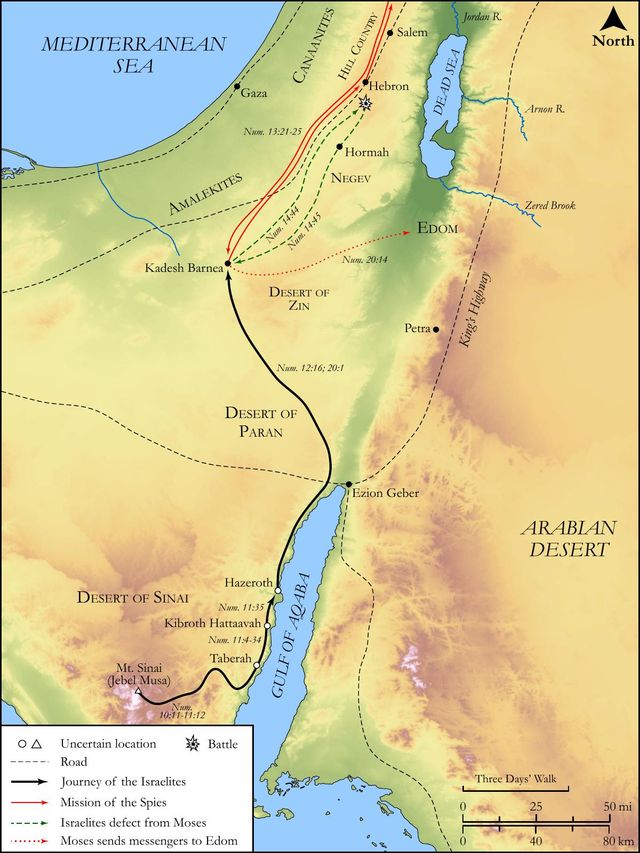
Numbers 15:2 inaugurates a crucial set of divine instructions for the Israelites, delivered while they were still in the wilderness, yet explicitly designed for their future life in the Promised Land. This verse, following the severe judgment and condemnation of the rebellious generation at Kadesh-Barnea, powerfully underscores God's unwavering faithfulness to His covenant promises, affirming His certain intention to bring the next generation into the land of their inheritance. It serves as a profound declaration of future hope, providing foundational principles for their worship, communal life, and ethical conduct once settled in the land God was graciously bestowing upon them.
Context
ShowHideLiterary Context
Numbers 15:2 marks a profound and hopeful turning point in the book of Numbers, immediately succeeding the devastating judgment pronounced in Numbers 14. After the generation of adults (twenty years and older) was condemned to perish in the wilderness for their profound unbelief and open rebellion at Kadesh-Barnea, chapter 15 opens with God giving detailed instructions for sacrifices, offerings, and various laws that would be observed after they entered and settled in the Promised Land. This forward-looking legislation, given amidst the grim reality of wilderness wanderings and impending deaths, serves as a powerful testament to God's enduring covenant faithfulness and His unyielding commitment to the new generation. It signals a definitive shift from the immediate consequences of rebellion to the long-term vision of a settled, worshipping community thriving in their promised inheritance, demonstrating God's redemptive purpose even in the midst of discipline.
Historical & Cultural Context
At the precise moment these words were spoken, the Israelites were a nomadic people, living in temporary tents and constantly on the move through the arid wilderness. Their existence was characterized by transient dwellings and an absolute reliance on divine provision for daily sustenance, a stark contrast to the settled life of agricultural societies. The phrase "When ye be come into the land of your habitations" directly contrasts this temporary, wilderness existence with a future state of settled, permanent dwelling. This implied a fundamental shift from a military encampment to an agricultural society, necessitating laws for land-based worship, harvest offerings, and communal life that were not applicable in the wilderness. The concept of "habitations" (Hebrew: moshvot) also suggests a return to a more stable, familial, and communal way of life, reminiscent of the patriarchal era before the Egyptian sojourn, but now under the direct covenant relationship with Yahweh, emphasizing the establishment of a national identity rooted in the land.
Key Themes
ShowHideNumbers 15:2 powerfully encapsulates several core themes central to the Pentateuch and the broader biblical narrative. Firstly, it highlights Divine Promise and Faithfulness, reiterating God's unwavering commitment to His covenant with Abraham, Isaac, and Jacob, despite Israel's repeated failures and the severe judgment in Numbers 14. The explicit declaration "which I give unto you" underscores God's sovereign initiative and absolute reliability in fulfilling His word, even when human faith falters. Secondly, it instills Future Hope and Preparation, providing a divine blueprint for the next generation's worship and communal life in a land they had not yet entered. These commands served as a tangible reminder that their wilderness journey was temporary and that a promised future awaited them, fostering an anticipatory faith. Finally, the verse subtly introduces the theme of God's Gift and Human Responsibility. The land is unequivocally presented as a gracious divine bestowal, emphasizing God's sovereignty and unmerited favor. However, the subsequent laws in the chapter imply that the continued enjoyment and prosperity within this gifted land would be inextricably linked to the Israelites' faithful obedience to God's statutes, particularly concerning worship and moral conduct, a principle reiterated throughout Deuteronomy.
Exposition and Analysis
ShowHideKey Word Analysis
ShowHideFrom the root yashav (H3427, to sit, dwell, inhabit), this plural noun (H4186) signifies settled dwelling places, permanent residences, or fixed abodes. It stands in stark contrast to the nomadic, temporary nature of their wilderness journey, emphasizing the stability, security, and permanence God intended for His people in the Promised Land. It speaks to a state of rest and established community life, indicating a cessation of their wanderings and the establishment of a national home.
This primitive root (H5414) denotes a unilateral act of bestowal, emphasizing the gratuitous nature of the land. It was not something Israel earned through merit, conquest, or even their obedience, but a sovereign gift from God, rooted in His covenant promises. This highlights God's grace and initiative in fulfilling His word, underscoring that the land was an unearned inheritance, a testament to His faithfulness rather than their worthiness.
Verse Breakdown
ShowHide"Speak unto the children of Israel, and say unto them"
This opening phrase establishes the divine origin and absolute authority of the commands that follow. It signifies a direct, authoritative revelation from God to Moses, intended for the entire community of Israel. This is not human legislation or a suggestion but a divine mandate, setting the tone for the seriousness, binding nature, and enduring relevance of the instructions that pertain to their future life in the land.
"When ye be come into the land of your habitations"
This clause sets a crucial temporal and geographical condition for the application of the subsequent laws. It clearly indicates that these instructions pertain to a future time when Israel would be settled in the Promised Land, not their current wilderness encampment. The phrase "land of your habitations" paints a vivid picture of permanence, stability, and an established community, contrasting sharply with their present nomadic existence and underscoring God's long-term plan for their flourishing.
"which I give unto you"
This powerful declaration underscores the divine initiative and the theological basis for Israel's claim to the land. It is not a land they will conquer by their own might alone, nor one they inherently deserve, but a gracious, unmerited gift from Yahweh. This phrase firmly roots their future possession in God's covenant faithfulness and His sovereign promise, particularly to Abraham, Isaac, and Jacob, emphasizing that their inheritance flows from divine grace, not human merit.
Literary Devices
ShowHideNumbers 15:2 employs several significant literary devices to convey its profound message. The most prominent is Anticipation or Foreshadowing, as the verse presents laws for a future reality—the settled life in the Promised Land—while the people are still enduring the harsh realities of the wilderness. This creates a powerful sense of divine purpose and instills forward-looking hope despite their current challenging circumstances. There is also clear Divine Speech or Direct Address, indicated by the imperative "Speak unto the children of Israel, and say unto them," which highlights God's direct involvement and supreme authority in providing these future-oriented instructions. Furthermore, the phrase "land of your habitations, which I give unto you" functions as Covenant Language, echoing the promises made to the patriarchs regarding the land, thereby reinforcing God's unwavering faithfulness to His covenant. Finally, the verse utilizes Implicit Contrast by juxtaposing Israel's temporary, nomadic wilderness existence with the future, permanent dwelling in the promised land, emphasizing the transformative and redemptive nature of God's plan for them.
Theological and Thematic Connections
ShowHideNumbers 15:2 serves as a profound theological anchor, reaffirming God's unwavering covenant faithfulness despite human failure. After the devastating judgment of the wilderness generation, this verse pivots to a future-oriented hope, demonstrating that God's ultimate plans for His people remain steadfast. It underscores that the Promised Land was always a gratuitous gift, not an earned reward, establishing a foundation of grace upon which all subsequent obedience and blessing would rest. This divine initiative in giving the land, coupled with the future-oriented commands, teaches that God's promises are secure and His purposes will prevail, even when His people are in a state of discipline or transition. It calls for a faith that looks beyond present circumstances to the certain fulfillment of God's word.
Reflection and Application
ShowHideNumbers 15:2 offers a potent message of hope and divine steadfastness for believers today. Just as God gave future-oriented commands to a generation still in the wilderness, we are reminded that God's plans for us are secure, even when our present circumstances are challenging, uncertain, or marked by past failures. This verse encourages us to cultivate a future-oriented faith, trusting in God's unwavering provision and faithfulness to bring us into the "land" or spiritual inheritance He has prepared. It prompts us to prepare ourselves for the responsibilities and blessings that await us, not by our own merit, but in joyful response to God's gracious gift. Our obedience, like Israel's, becomes a vital expression of our trust in His promises and our readiness to inhabit the spiritual realities He has for us, living with purpose and anticipation in the present.
Questions for Reflection
ShowHideFAQ
ShowHideWhy are these laws given while Israel is still in the wilderness?
ShowHideThese laws are given in the wilderness to powerfully demonstrate God's unwavering faithfulness to His covenant promises, particularly concerning the Promised Land, despite Israel's recent rebellion and the severe judgment pronounced in Numbers 14. By providing future-oriented instructions, God was reassuring the new generation that they would indeed enter the land. It served as a comprehensive blueprint for their worship and communal life once settled, emphasizing preparation and hope rather than despair. It also taught them that even in times of discipline and consequence, God's ultimate redemptive purposes for His people remain intact and will surely be fulfilled.
What is the significance of "the land of your habitations"?
ShowHideThe phrase "the land of your habitations" (Hebrew: 'eretz môwshâb) signifies a place of permanent, settled dwelling, security, and rest. It stands in stark contrast to Israel's nomadic, temporary existence in the wilderness, which was characterized by constant movement and lack of a fixed home. This emphasizes God's intention to provide His people with a stable, secure home where they could establish families, cultivate the land, and build a lasting community centered on His worship. It speaks to the fulfillment of the promise of a "rest" that God intended for His people, a place of peace and prosperity after their arduous journey, as detailed in Deuteronomy 12:9-10. This "habitation" was not merely physical but also represented the security and blessing found in God's covenant presence among His people.
Christ-Centered Fulfillment
ShowHideNumbers 15:2, with its declaration of a future "land of your habitations" as a divine, unearned gift, finds profound Christ-centered fulfillment in the New Testament. The physical Promised Land, a place of rest and inheritance for Israel, ultimately foreshadows the greater, eternal inheritance and spiritual rest found in Christ. Just as God promised a land to a people still wandering in the wilderness, so too does God promise an eternal dwelling and an imperishable inheritance to believers who are currently sojourners and exiles in this world (1 Peter 1:4). Jesus himself is our true "habitation" and "rest," fulfilling the deepest longing for a permanent dwelling place that the physical land could only symbolize (Hebrews 4:9-10). Through His perfect obedience, atoning sacrifice, and glorious resurrection, Christ has secured for us not merely a patch of earthly ground, but a spiritual kingdom and a heavenly citizenship (Philippians 3:20). The "children of Israel" who would inherit the land are now expanded to include all who are "in Christ," whether Jew or Gentile, becoming true heirs according to the promise of God's grace and co-heirs with Christ (Galatians 3:29). Thus, Numbers 15:2 points forward to the ultimate gift and dwelling place provided by God in His Son, Jesus, where true and lasting "habitation" and eternal rest are found for all who believe.