


Matthew 25:7
Bible text: King James Version (1769 Blayney text) · Public domain
Bible text: Berean Standard Bible · Public domain
Bible text: American Standard Version (1901) · Public domain
Bible text: World English Bible, Messianic edition · Public domain
Bible text: Geneva Bible (1599) · Public domain
Bible text: Young's Literal Translation · Public domain
- τότεtoteThenG5119ADVAdverb
- ἠγέρθησανēgerthēsanaroseG1453V-API-3PVerb Aorist Passive Indicative 3rd Plural
- πᾶσαιpasaiallG3956A-NPFAdjective Nominative Plural Feminine
- αἱhaitheG3588T-NPFDefinite article Nominative Plural Feminine
- παρθένοιparthenoivirginsG3933N-NPFNoun Nominative Plural Feminine
- ἐκεῖναιekeinaithoseG1565D-NPFDemonstrative pronoun Nominative Plural Feminine
- καὶkaiandG2532CONJConjunction
- ἐκόσμησανekosmēsantrimmedG2885V-AAI-3PVerb Aorist Active Indicative 3rd Plural
- τὰςtastheG3588T-APFDefinite article Accusative Plural Feminine
- λαμπάδαςlampadaslampsG2985N-APFNoun Accusative Plural Feminine
- ἑαυτῶνhe'autōntheir ownG1438F-3GPFReflexive pronoun Genitive 3rd Plural Feminine
English is a literal word-by-word gloss of the Greek, not the KJV's wording. Why?
This is the original text the KJV's translators worked from — each Greek word with its own literal English meaning in this verse, prepared by scholars at Tyndale House, Cambridge. The KJV translates whole sentences, not word by word, so its wording differs: one Greek word can become several English words, and the KJV may choose “charity” where the gloss reads “love”. Both are faithful — they answer different questions. For the KJV's own rendering, switch to the KJV text.
Details
See on the biblical-era maps

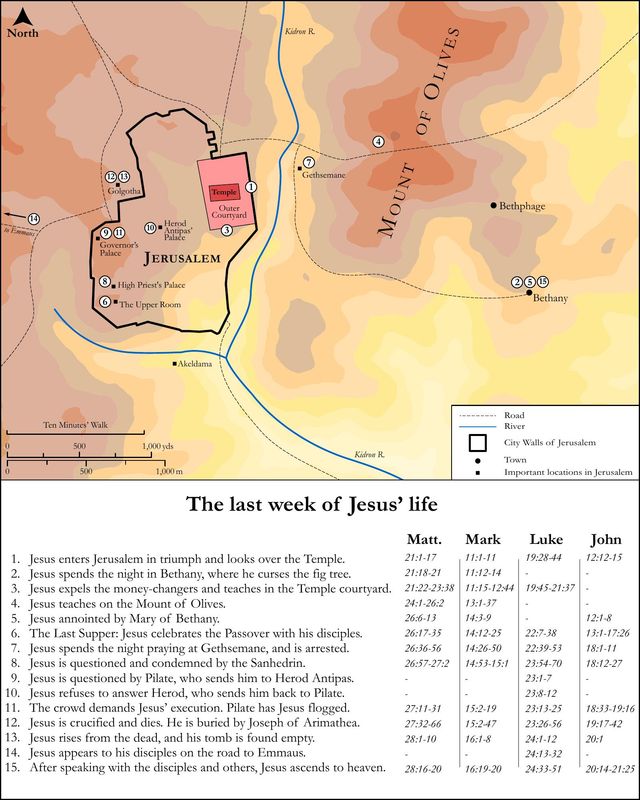
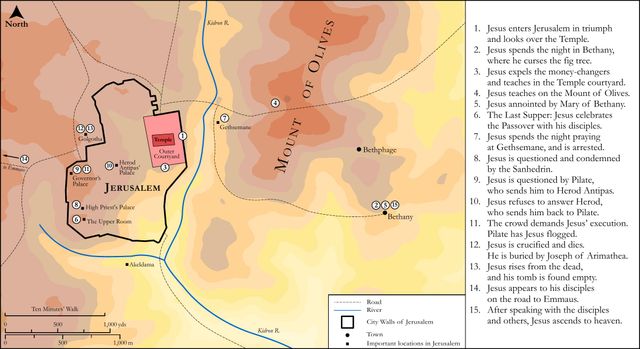
Study this verse
Historical interpretation
Ten Centuries of Reception
12 surviving comments on this verse. Each one is dated, so this reads as a timeline rather than a list.
Select a marker to jump to its quote. Markers stagger vertically where authors wrote within a few decades of each other.
Or, At midnight, that is, at the time of their most abandoned carelessness, there was a great cry, of the Angels, I suppose, desiring to arouse all men, those ministering spirits crying within in the senses of all that sleep, Behold, the bridegroom cometh, go ye out to meet him. All heard this summons, and arose, but all were not able to trim their lamps fitly. The lamps of the senses are trimmed by evangelical and right use of them; and they that use their senses amiss have their lamps untrimmed.
Then, because all this discourse is concerning the great day of the Lord, concerning which He had been speaking before.
Or, The bridegroom and the bride represent our Lord God in the body, for the flesh is the bride of the spirit. The lamps are the light of bright souls which shine forth in the sacrament of baptismb.
Or, The five wise and five foolish are an absolute distinction between believers and unbelievers.
The oil is the fruit of good works, the vessels are the human bodies in whose inward parts the treasure of a good conscience is to be laid up.
At the trumpet signal they go forth to meet the bridegroom alone, for then shall the two be one, that is, the flesh and God, when the lowliness of the flesh shall be transformed into spiritual glory.
Or, the trimming their lamps is the return of their souls into their bodies, and their light is the consciousness of good works that shines forth, which is contained in the vessels of the body.
They that sell are the poor, who, needing the alms of the faithful, made them that recompense which they desire, selling in return for the relief afforded to their wants, a consciousness of good works. This is the abundant fuel of an undying light which may be bought and stored up for the fruits of mercy.
The marriage is the putting on of immortality, and the joining together corruption and incorruption in a new union,
Yet though the season of repentance is now past, the foolish virgins come and beg that entrance may be granted to them.
These parables are like the former parable of the faithful servant, and of him that was ungrateful and devoured his Lord's goods. For there are four in all, in different ways admonishing us about the same things, I mean about diligence in almsgiving, and about helping our neighbor by all means which we are able to use, since it is not possible to be saved in another way. But there He speaks more generally of all assistance which should be rendered to one's neighbor; but as to the virgins, he speaketh particularly of mercifulness in alms, and more strongly than in the former parable. For there He punishes him that beats, and is drunken, and scatters and wastes his lord's goods, but here even him that doth not help, nor spends abundantly his goods upon the needy. For they had oil indeed, but not in abundance, wherefore also they are punished.
But wherefore doth He set forth this parable in the person of the virgins, and doth not merely suppose any person whatever? Great things had He spoken of virginity, saying, "There are eunuchs, who have made themselves eunuchs for the kingdom of Heaven's sake;" and, "He that is able to receive, let him receive it." He knew also that the generality of men would have a great opinion of it. For indeed the work is by nature great, and is shown so by this, that neither under the old dispensation was it fulfilled by these ancient and holy men, nor under the new was it brought under the compulsion of the law. For He did not command this, but left it to the choice of his hearers. Wherefore Paul also said "Now, concerning virgins I have no commandment of the Lord." "For though I praise him that attains thereto, yet I constrain not him that is not willing, neither do I make the thing an injunction." Since then the thing is both great in itself and hath great honor with the multitude, lest any one attaining to this should feel as though he had attained to all, and should be careless about the rest, He putteth forth this parable sufficient to persuade them, that virginity, though it should have everything else, if destitute of the good things arising out of almsgiving, is cast out with the harlots, and He sets the inhuman and merciless with them. And most reasonably, for the one was overcome by the love of carnal pleasure, but these of money. But the love of carnal pleasure and of money are not equal, but that of carnal pleasure is far keener and more tyrannical. And the weaker the antagonist, the less excusable are these that are overcome thereby. Therefore also He calls them foolish, for that having undergone the greater labor, they have betrayed all for want of the less. But by lamps here, He meaneth the gift itself of virginity, the purity of holiness; and by oil, humanity, almsgiving, succor to them that are in need.
"Then, while the bridegroom tarried, they all slumbered and slept." He shows that the time intervening will not be short, leading His disciples away from the expectation that His kingdom was quite immediately to appear. For this indeed they hoped, therefore He is continually holding them back from this hope. And at the same time He intimates this too, that death is a sleep. For they slept, He saith.
"And about midnight there was a cry made." Either He was continuing the parable, or again He shows that the resurrection will be at night. But the cry Paul also indicates, saying, "With a shout, with a voice of an archangel, with the last trump, He shall come down from Heaven." And what mean the trumpets, and what saith the cry? "The bridegroom cometh." When therefore they had trimmed their lamps, the foolish say unto the wise, "Give us of your oil." Again He calls them foolish, showing that nothing can be more foolish than they who are wealthy here, and depart naked thither, where most of all we have need of humanity, where we want much oil. But not in this respect only were they foolish, but also because they looked to receive it there, and sought it out of season; and yet nothing could be more humane than those virgins, who for this especially were approved. Neither do they seek for it all, for, "Give us," they say, "of your oil;" and the urgency of their need is indicated; "for our lamps," they say, "are going out." But even so they failed, and neither the humanity of those whom they asked, nor the easiness of their request, nor their necessity and want, made them obtain.
But what now do we learn from hence? That no man can protect us there, if we are betrayed by our works, not because he will not, but because he cannot. For these too take refuge in the impossibility. This the blessed Abraham also indicated, saying, "Between us and you there is a great gulf," so that not even when willing is it permitted them to pass it.
"But go to them that sell, and buy." And who are they that sell? The poor. And where are these? Here, and then should they have sought them, not at that time.
Seest thou what great profit arises to us from the poor? shouldest thou take them away, thou wouldest take away the great hope of our salvation. Wherefore here must we get together the oil, that it may be useful to us there, when the time calls us. For that is not the time of collecting it, but this. Spend not then your goods for nought in luxury and vainglory. For thou wilt have need of much oil there.
Having heard these things, those virgins went their way; but they profited nothing. And this He saith, either pursuing the parable, and working it up; or also by these things showing, that though we should become humane after our departure, we shall gain nothing from thence towards our escape. Therefore neither did their forwardness avail these virgins, because they went to them that sell not here, but there; nor the rich man, when he became so charitable, as even to be anxious about his relations. For he that was passing by him that was laid at the gate, is eager to rescue from perils and from hell them whom he did not so much as see, and entreats that some be sent to tell them these things. But nevertheless, he derived no benefit from thence, as neither did these virgins. For when they having heard these things went their way, the bridegroom came, and they that were ready went in with Him, but the others were shut out. After their many labors, after their innumerable toils, and that intolerable fight, and those trophies which they had set up over the madness of natural appetite, disgraced, and with their lamps gone out, they withdrew, bending down their faces to the earth. For nothing is more sullied than virginity not having mercy; so that even the multitude are wont to call the unmerciful dark. Where then was the profit of virginity, when they saw not the bridegroom? and not even when they had knocked did they obtain, but they heard that fearful saying, "Depart, I know you not." And when He hath said this, nothing else but hell is left, and that intolerable punishment; or rather, this word is more grievous even than hell. This word He speaks to them also that work iniquity.
"Watch therefore, for ye know not the day nor the hour." Seest thou how continually He adds this, showing how awful our ignorance concerning our departure hence? Where now are they, who throughout all their life are remiss, but when they are blamed by us, are saying, At the time of my death, I shall leave money to the poor. Let them listen to these words, and be amended. For indeed at that time many have failed of this, having been snatched away at once, and not permitted so much as to give charge to their relations touching what they wished to be done.
(Hom. lxxviii.) In the foregoing parable the Lord set forth the punishment of the man who beat, and was drunk, and wasted his Lord's goods; in this He declares his punishment who profits not, and does not prepare for himself abundantly the things of which he has need; for the foolish virgins had oil, but not enough.
And He employs the character virgins in this parable to show, that though virginity be a great thing, yet if it be not accompanied by works of mercy, it shall be cast out with the adulterers.
Or, The oil denotes charity, alms, and every aid rendered to the needy; the lamps denote the gifts of virginity; and He calls them foolish, because after having gone through the greater toil, they lost all for the sake of a less; for it is greater labour to overcome the desires of the flesh than of money.
Or otherwise; These virgins were foolish, not only because they departed hence, lacking store of mercy, but because they deemed to receive it from those of whom they importunately begged it. For though nothing could be more merciful than those wise virgins, who for this very mercifulness were approved, yet would they not grant the prayer of the foolish virgins. But the wise answered, saying, Not so, lest there be not enough for us and you; hence we lean that none of us shall be able in that day to stand forth as patron of those who are betrayed by their own works, not because he will not, but because he cannot.
You see then how great merchants the poor are to us; but the poor are not there, but here, and therefore we must store up oil here, that we may have it to use there when occasion shall require.
That, While they went to buy, shows that even, if we should become merciful after death, it will avail us nothing to escape punishment, as it was no profit to the rich man, that he became merciful and careful about those who belonged to him.
(Verse 7) Then all those virgins arose, and adorned their lamps. All the virgins arose, and each adorned their lamps, that is, their senses, in which they received the oil of knowledge, so that they may have the works of virtue, which would shine before the true judge.
This parable of the ten foolish and the ten wise virgins, some interpret literally of virgins, of whom there are according to the Apostle some who are virgins both in body and in thought, (1 Cor. 7.) others who have preserved indeed their bodies virgin, but have not the other deeds of virgins, or have only been preserved by the guardianship of parents, but have wedded in their hearts. But from what has gone before, I think the meaning to be different, and that the parable has reference not to virgins only, but to the whole human race.
For there are five senses which hasten towards heavenly things, and seek after things above. Of sight, hearing, and touch, it is specially said, That which we have heard, which we have seen with our eyes, and our hands have handled. (1 John 1:1.) Of taste, Taste and see that the Lord is good. (Ps. 34:8.) Of smell, Because of the savour of thy good ointments. (Sol. Song, 1:3.) There are also other five senses which gape after earthly husks.
The virgins that have oil are they who, besides their faith, have the ornament of good works; they that have not oil, are they that seem to confess with like faith, but neglect the works of virtue.
Or, They slumbered, i. e. they were dead. And then follows, And slept, because they were to be afterwards wakened. While the bridegroom tarried, shows that no little time intervened between the Lord's first and second coming.
The Jews have a tradition that Christ will come at midnight, in like manner as in that visitation of Egypt, when the Paschal feast is celebrated, and the destroyer comes, and the Lord passes over our dwellings, and the door posts of each man's countenance are hallowed by the blood of the Lamb. Hence, I suppose, has continued among us that apostolic tradition, that on the vigil of Easterc the people should not be dismissed before midnight, in expectation of Christ's coming; but when that hour has past over, they may celebrate the feast in security; whence also the Psalmist says, At midnight did I rise to praise thee. (Ps. 119:62.)
Suddenly thus, as on a stormy night, and when all think themselves secure, at the hour when sleep is the deepest, the coming of Christ shall be proclaimed by the shout of Angels, and the trumpets of the Powers that go before Him. This is meant when it says, Lo, the bridegroom cometh, go ye out to meet him.
Or, These virgins who complain that their lamps are gone out, show that they are partially alight, yet have they not an unfailing light, nor enduring works. Whoso then has a virgin soul, and is a lover of chastity, ought not to rest content with such virtues as quickly fade, and are withered away when the heat comes upon them, but should follow after perfect virtues, that he may have an enduring light.
For these wise virgins do not answer thus out of covetousness, but out of fear. Wherefore, each man shall receive the recompense of his own works, and the virtues of one cannot atone for the vices of another in the day of judgment. The wise admonish them not to go to meet the bridegroom without oil, Go ye rather to them that sell, and buy for yourselves.
And this oil is sold, and at a high cost, nor is it to be got without much toil; so that we understand it not of alms only, but of all virtues and counsels of the teachers.
But because the season for buying was now past, and the day of judgment was coming on, so that there was no room for penitence, they must not now lay up new works, but give an account of the old.
After the day of judgment, there is no more opportunity for good works, or for righteousness, and therefore it follows, And the door was shut.
Their worthy confession calling Him, Lord, Lord, is a mark of faith. But what avails it to confess with the mouth Him whom you deny with your works?
For the Lord knoweth them that are his, (2 Tim. 2:19.) and he that knoweth not shall not be known, and though they be virgins in purity of body, or in confession of the true faith, yet forasmuch as they have no oil, they are unknown by the bridegroom. When He adds, Watch therefore, because ye know not the day nor the hour, He means that all that has been said points to this, namely, that seeing we know not the day of judgment, we should be careful in providing the light of good works.
So their lamps began to fail, and the foolish plead with the five wise, “Give us of your oil, for our lamps are going out.” They sought for what they had been most prone to seek for, to shine, that is, with others’ oil, to walk after others’ praises.
Note then, beloved, that before those virgins slept, it is not said that their lamps were extinguished. The lamps of the wise virgins burned with an inward oil, with the assurance of a good conscience, with an inner glory, with an inmost charity. Yet the lamps of the foolish virgins were also still burning. In what way were they burning? They burned because there was no lack of praise among human onlookers. But after that they arose, that is, in the resurrection from the dead. They began to trim their lamps, that is, began to prepare to render to God an account of their works. And because there is then no human beholder to praise them, all persons are wholly employed in their own cause. There is no one then who is not thinking of self. Therefore there were none to sell them oil.
Of what cry are we speaking? That of which the apostle says, “In the twinkling of an eye, at the last trump? For the trumpet shall sound, and the dead shall be raised incorruptible, and we shall be changed”? And so when the cry was made at midnight, “Behold, the bridegroom comes!” what follows? “Then all those maidens arose.” But who are “all those” who arose? “The hour will come,” said the Lord himself, “when all that are in the graves shall hear his voice and shall come forth.” Therefore at the last trumpet they all arose. “When the foolish took their lamps, they took no oil with them; but the wise took flasks of oil with their lamps.”
(Lib. 83 Quæst. q. 59.) Or, The lamps which they carry in their hands are their works, of which it was said above, Let your works shine before men. (Mat. 5:16.)
(ubi sup.) Or, by the five virgins, is denoted a five-fold continence from the allurements of the flesh; for our appetite must be held from gratification of the eyes, ears, smell, taste, and touch. And as this continence may be done before God, to please Him in inward joy of the conscience, or before men only to gain applause of men, five are called wise, and five foolish. Both are virgins, because both these men exercise continence, though from different motives.
(ubi sup.) Or, The oil denotes joy, according to that, God hath anointed thee with the oil of gladness. (Ps. 45:7.) He then whose joy springs not from this that he is inwardly pleasing to God, has no oil with him; for they have no gladness in their continent lives, save in the praises of men. But the wise took oil with their lamps, that is, the gladness of good works, in their vessels, that is, they stored it in their heart and conscience, as the Apostle speaks, Let every man prove himself, and then shall he have rejoicing in himself, and not in another. (Gal. 6:4.)
(ubi sup.) For there die of both kinds of men in this interval of time before the resurrection of the dead, and the Lord's coming shall be.
(ubi sup.) Or, At midnight, that is, when none knew or looked for it.
(ubi sup.) Or, that the virgins go forth to meet the bridegroom alone, I think is to be understood that the virgins themselves constitute her who is called the bride; as we speak of the Christians flocking to the Church as children running to their mother, and yet this same mother consists only of the children who are gathered together. For now the Church is betrothed, and is to be led forth as a virgin to the marriage, which takes place then when all her mortal part having past away, she may be held in an eternal union.
(ubi sup.) They trimmed their lamps, that is, prepared to give an account of their deeds.
(ubi sup.) From habit, the mind seeks that which uses to give it pleasure. And these now seek from men, who see not the heart, witness to God, who sees the heart. But their lamps go out, because those, whose good works rest upon the testimony of others, when that is withdrawn, sink into nothing.
(ubi sup.) Or we may suppose it not meant as advice what they should do, but as an indirect allusion to their fault. For flatterers sell oil, who by praising things false, and things unknown, lead souls astray, recommending to them, as foolish, empty joys, and receiving in return some temporal benefit. Go ye rather to them that sell, and buy for yourselves, i. e. Let us now see what they can profit you who have used to sell you their praise. Lest there be not enough for us and you, because no man is profited in God's sight by the testimony of others, because God sees the heart, and each man is scarce able to give testimony concerning his own conscience.
(ubi sup.) Or otherwise; While they went to buy, that is, while they turned themselves to things without, and sought to find pleasure in things they had been accustomed to, because they knew not inward joys, came He that judges; and they that were ready, i. e. they whose conscience bore witness to them before God, went in with him to the wedding, i. e. to where the pure soul is united prolific to the pure and perfect word of God.
(ubi sup.) When they have been taken in who have been changed into angelic being (1 Cor. 15:51), all entrance into the kingdom of heaven is closed; after the judgment, there is no more place for prayers or merit.
(ubi sup.) It is not said that they bought any oil, and therefore we must suppose that all their delight in the praise of men being gone, they return in distress and affliction to implore God. But His severity, after judgment, is as great as His mercy was unspeakable before. But He answered and said, Verily I say unto you, I know you not; by that rule, namely, that the art of God, that is, His wisdom, does not admit that those should enter into His joy who have sought to do in any thing according to His commandments, not as before God, but that they may please men.
(ubi sup.) For indeed we know the day and the hour neither of that future time when the Bridegroom will come, nor of our own falling asleep each of us; if then we be prepared for this latter, we shall also be prepared when that voice shall sound, which shall arouse us all.
(Ep. 199. 45.) There have not been wanting those who would refer these ten virgins to that coming of Christ, which takes place now in the Church; but this is not to be hastily held out, lest any thing should occur contradictory of it.
(Hom. in Ev. xii. 1.) By the kingdom of heaven is meant the present Church, as in that, The Son of Man shall send forth his angels, and they shall gather out of his kingdom all things that offend. (Matt. 13:41.)
(ubi sup.) For in each of the five senses of the body `there is a double instrument, and the number five doubled makes ten. And because the company of the faithful is gathered out of both sexes, the Holy Church is described as being like to ten virgins, where as bad are mixed with good, and reprobate with elect, it is like a mixture of wise and foolish virgins.
(ubi sup.) It is to be observed, that all have lamps, but all have not oil.
(ubi sup.) To sleep is to die, to slumber before sleep is to faint from salvation before death, because, by the burden of sickness we come to the sleep of death.
(ubi sup.) Or, All the virgins arose, that is, both elect and reprobate are roused from the sleep of death; they trimmed their lamps, that is, they reckon up to themselves their works for which they look to receive eternal blessedness.
(ubi sup.) The lamps of the foolish virgins go out, because the works which appeared outwardly to men to be bright, are dimmed within at the coming of the Judge. That they then beg oil of the wise virgins, what is it but that at the coming of the Judge, when they find themselves empty within, they seek for witness from without? As though deceived by their own self-confidence, they say to their neighbours, Whereas ye see us rejected as living without works, do ye witness to our works that ye have seen.
(ap. Anselm.) Grief at their exclusion extorts from them a repetition of this title of Lord; they call not Him Father, whose mercy they despised in their lifetime.
Continue studying Matthew 25:7 across the web’s major study libraries — every link below opens this exact verse, chapter, or book on the destination site.
Read & Compare
 BibleGatewayThis verse in more than 200 translations and 70 languages.
 Bible.comThe YouVersion reader — hundreds of translations, reading plans, and highlights.
 ESV.orgCrossway's official English Standard Version reader.
 NET BibleThe NET translation with 60,000+ translators' notes on every rendering decision.
 STEP BibleTyndale House's free study tool — original text, vocabulary, and scholarly resources.
 BibliaLogos Bible Software's free web reader.
 USCCBThe New American Bible (Revised Edition) with the U.S. bishops' study notes.
Commentaries
 BibleHub CommentariesDozens of classic commentaries on this verse, gathered on one page.
 StudyLightMore than 100 commentary sets — the largest collection on the web.
 BibleRefPlain-English commentary on what this verse means, verse by verse.
 Enduring WordDavid Guzik's free commentary on this chapter, widely used by Bible teachers.
 Bible Study ToolsVerse commentary alongside Greek and Hebrew study aids.
Original Language & Research
- BibleHub InterlinearThe verse word by word — original language, transliteration, and English.
- BibleHub LexiconEvery word's original-language definition and Strong's entry.
 Blue Letter BibleDeep-study tools — Strong's numbers, concordance, and word studies.
 CNTR CollationThe earliest Greek manuscripts of this verse, collated letter by letter.
Sermons, Hymns & Audio


TrulyRandomVerse is not affiliated with these sites and doesn’t control their content. They’re linked because they’re genuinely useful.
Summary
Matthew 25:7 captures a pivotal moment in the Parable of the Ten Virgins, as all ten virgins, both wise and foolish, are roused from their slumber by the sudden announcement of the bridegroom's arrival. This verse vividly portrays their immediate, collective action to prepare their lamps, setting the stage for the crucial distinction that will soon emerge between the prepared and the unprepared. It underscores the urgency and personal responsibility inherent in anticipating a significant, yet unannounced, event.
Context
ShowHideLiterary Context
This verse is situated within the broader narrative of the Parable of the Ten Virgins, which itself forms a crucial part of Jesus' Olivet Discourse (Matthew 24-25). This discourse is a comprehensive teaching on the end times, the destruction of the temple, and the Second Coming of Christ. Following warnings about the unexpected nature of the Lord's return in Matthew 24:44, the parable of the virgins serves as an illustrative allegory emphasizing the necessity of constant vigilance and readiness. Matthew 25:7 specifically describes the initial, universal response to the bridegroom's cry, preceding the revelation of the foolish virgins' lack of preparation.
Historical & Cultural Context
The parable draws heavily on ancient Jewish wedding customs. Typically, a bridegroom would leave his home at night, accompanied by friends, to fetch his bride from her home. From there, a torchlit procession would lead them back to the bridegroom's house for the wedding feast. Attendants, often young women or "virgins," would wait at the bride's home or along the procession route, carrying lamps or torches to light the way. The "delay" mentioned in Matthew 25:5 reflects the unpredictable timing of the bridegroom's arrival, which could extend late into the night. The lamps would have been small, open-flame oil lamps, requiring regular trimming of the wick and replenishment of oil to maintain a steady flame. This cultural backdrop is essential for understanding the significance of "trimming their lamps" as a practical act of preparation.
Key Themes
ShowHideMatthew 25:7 contributes to several key themes within the parable and the broader Olivet Discourse. Firstly, it highlights the theme of Urgency and Awakening, as the sudden cry prompts an immediate, universal response from all virgins, underscoring the unexpected and demanding nature of the Lord's return. Secondly, it introduces the theme of Preparation and Vigilance, symbolized by the act of "trimming their lamps." This act signifies the active, ongoing spiritual readiness required of believers, as opposed to passive waiting. The parable consistently emphasizes the need for believers to be prepared for the unknown time of the Lord's return, a theme echoed in passages like Mark 13:33. Finally, the verse subtly sets up the theme of Personal Responsibility, as each virgin attends to her own lamp, foreshadowing the individual accountability for one's spiritual state.
Exposition and Analysis
ShowHideKey Word Analysis
ShowHideThis verb signifies a waking or rousing, whether literally from sleep or figuratively from inactivity or obscurity. In this context, it denotes a sudden, decisive action of standing up and becoming active, implying a shift from a state of rest or slumber to one of alert readiness. The virgins were not merely awakened but "arose," indicating an immediate physical response to the call.
While often translated simply as "trimmed," kosméō carries a richer meaning of putting something in proper order, adorning, or making ready. In the context of lamps, it implies more than just cutting the wick; it involves cleaning the lamp, adjusting the wick for optimal burning, and ensuring the oil supply is adequate to produce a clear, sustained light. It speaks to diligent and thorough preparation.
This refers to a "lamp" or "flambeau," a portable light source typically fueled by olive oil. These lamps were essential for navigating in the darkness and for the torchlit procession of a wedding. Symbolically, they represent the outward manifestation of one's readiness or spiritual condition, the light that is meant to shine.
Verse Breakdown
ShowHide"Then all those virgins arose"
This clause emphasizes the universal and immediate response to the bridegroom's cry. "Then" (G5119, tóte) points to the specific moment of the announcement, indicating a sudden shift in the narrative. "All those virgins" (G3956, pâs G1565, ekeînos G3933, parthénos) highlights that both the wise and the foolish initially reacted in the same way, rising from their slumber. This initial, shared action underscores the outward appearance of readiness that all possessed.
"and trimmed their lamps"
This second clause describes the specific action taken by the virgins. The conjunction "and" (G2532, kaí) links the act of rising with the act of preparation. "Trimmed" (G2885, kosméō) implies a careful, purposeful act of making their lamps ready to shine brightly. "Their lamps" (G846, autós G2985, lampás) signifies that each virgin attended to her own lamp, emphasizing the personal nature of this preparation. This act of trimming was crucial for ensuring the lamps could provide light for the procession.
Literary Devices
ShowHideThe verse employs several significant literary devices. Symbolism is paramount, with the "virgins" representing believers or those who await Christ's return, and the "lamps" symbolizing their spiritual readiness, faith, or good works that bear witness to their inner state. The act of "trimming their lamps" functions as a metaphor for active spiritual maintenance and preparation, such as prayer, study of God's Word, and obedience, ensuring one's faith is vibrant and ready to be manifested. The suddenness implied by "Then" (G5119, tóte) and the immediate action of "arose" (G1453, egeírō) creates a sense of urgency and immediacy, reflecting the unexpected nature of the eschatological event the parable foreshadows.
Theological and Thematic Connections
ShowHideMatthew 25:7 serves as a powerful theological statement about the nature of spiritual readiness. It underscores that while the call to action may be universal, the capacity to respond effectively is not. The initial, shared act of rising and trimming lamps highlights an outward conformity, but the subsequent narrative reveals a deeper, internal distinction. Theologically, this verse points to the necessity of active, ongoing spiritual preparation that goes beyond mere profession or initial commitment. It implies that true readiness involves a continuous replenishment of spiritual resources, symbolized by the oil, which is not explicitly mentioned in this verse but is central to the parable's unfolding. This readiness is not a one-time event but a sustained posture of vigilance and diligence, anticipating the Lord's return.
Reflection and Application
ShowHideMatthew 25:7 is a profound call to spiritual awakening and diligent preparation for every believer. The sudden cry that roused "all those virgins" serves as a vivid reminder that the Lord's return, or our personal encounter with Him, will be unexpected and demand an immediate response. We are not merely called to wait passively, but to actively "trim our lamps," ensuring our spiritual lives are in order and ready to shine. This involves a continuous process of self-examination, addressing any areas of spiritual neglect, and intentionally cultivating practices that fuel our faith. Just as the virgins needed their lamps to light the way, we need our spiritual light to guide us and bear witness in the darkness, prepared to meet our Bridegroom at any moment.
Questions for Reflection
ShowHideFAQ
ShowHideWhat is the symbolic meaning of the virgins "trimming their lamps" in Matthew 25:7?
ShowHideThe act of "trimming their lamps" symbolizes the active and diligent spiritual preparation required of believers in anticipation of Christ's return. In the context of ancient oil lamps, trimming the wick and ensuring adequate oil supply was essential for the lamp to burn brightly and continuously. Spiritually, it represents the ongoing maintenance of one's faith through practices like prayer, studying God's Word, obedience, and living a life that reflects Christ's light. It signifies a readiness that is not merely passive waiting, but active engagement with one's spiritual condition.
Why did "all" the virgins arise and trim their lamps, even the foolish ones?
ShowHideThe fact that "all" the virgins arose and trimmed their lamps highlights that initial appearances can be deceiving. Outwardly, both the wise and foolish virgins seemed prepared and shared in the same immediate response to the bridegroom's cry. This emphasizes that a superficial or temporary show of readiness is insufficient. While they all possessed lamps and performed the initial act of trimming, the crucial distinction, revealed in the subsequent verses, was the presence or absence of sufficient oil—symbolizing a deeper, internal spiritual reality that could not be faked or borrowed. This underscores the parable's message that true readiness involves more than just outward conformity; it requires an inner, sustained spiritual vitality.
Christ-Centered Fulfillment
ShowHideMatthew 25:7, within the Parable of the Ten Virgins, finds its Christ-centered fulfillment in the person and work of Jesus as the awaited Bridegroom. The "sudden cry" that rouses the virgins foreshadows the glorious and unexpected return of Christ, as described in passages like 1 Thessalonians 4:16. The virgins' act of "trimming their lamps" points to the essential spiritual readiness that is only truly possible through a living relationship with Christ. He is the source of the "oil"—the Holy Spirit—that empowers believers to live lives of vigilance and holiness (Romans 8:9). The parable ultimately calls the church, the Bride of Christ, to be prepared and adorned for His coming, not with self-righteous works, but with a faith made active through love and sustained by the indwelling Spirit, reflecting the light of the world, Jesus Christ. Our readiness is not based on our own merit but on our union with Him, who is our life and our hope of glory (Colossians 3:4).