


Luke 11:31
Bible text: King James Version (1769 Blayney text) · Public domain
Bible text: King James Version with Strong's numbers · Public domain
Bible text: Berean Standard Bible · Public domain
Bible text: American Standard Version (1901) · Public domain
Bible text: World English Bible, Messianic edition · Public domain
Bible text: Geneva Bible (1599) · Public domain
Bible text: Young's Literal Translation · Public domain
- βασίλισσαbasilissa[The] QueenG938N-NSFNoun Nominative Singular Feminine
- νότουnotouof [the] SouthG3558N-GSMNoun Genitive Singular Masculine
- ἐγερθήσεταιegerthēsetaiwill rise upG1453V-FPI-3SVerb Future Passive Indicative 3rd Singular
- ἐνeninG1722PREPPreposition
- τῇtēatheG3588T-DSFDefinite article Dative Singular Feminine
- κρίσειkriseijudgmentG2920N-DSFNoun Dative Singular Feminine
- μετὰmetawithG3326PREPPreposition
- τῶνtōntheG3588T-GPMDefinite article Genitive Plural Masculine
- ἀνδρῶνandrōnmenG435N-GPMNoun Genitive Plural Masculine
- τῆςtēsof theG3588T-GSFDefinite article Genitive Singular Feminine
- γενεᾶςgeneasgenerationG1074N-GSFNoun Genitive Singular Feminine
- ταύτηςtautēsthisG3778D-GSFDemonstrative pronoun Genitive Singular Feminine
- καὶkaiandG2532CONJConjunction
- κατακρινεῖkatakrineiwill condemnG2632V-FAI-3SVerb Future Active Indicative 3rd Singular
- αὐτούς·autousthemG846P-APMPersonal pronoun Accusative Plural Masculine
- ὅτιhotiForG3754CONJConjunction
- ἦλθενēlthenshe cameG2064V-2AAI-3SVerb 2nd Aorist Active Indicative 3rd Singular
- ἐκekfromG1537PREPPreposition
- τῶνtōntheG3588T-GPNDefinite article Genitive Plural Neuter
- περάτωνperatōnendsG4009N-GPNNoun Genitive Plural Neuter
- τῆςtēsof theG3588T-GSFDefinite article Genitive Singular Feminine
- γῆςgēsearthG1093N-GSFNoun Genitive Singular Feminine
- ἀκοῦσαιakousaito hearG191V-AANVerb Aorist Active Infinitive
- τὴνtēntheG3588T-ASFDefinite article Accusative Singular Feminine
- σοφίανsophianwisdomG4678N-ASFNoun Accusative Singular Feminine
- ΣολομῶνοςSolomōnosof SolomonG4672N-GSM-PNoun Genitive Singular Masculine Individual
- καὶkaiandG2532CONJConjunction
- ἰδοὺidoubeholdG2400INJInterjection
- πλεῖονpleiongreaterG4119A-NSN-CAdjective Nominative Singular Neuter Comparative
- ΣολομῶνοςSolomōnosthan SolomonG4672N-GSM-PNoun Genitive Singular Masculine Individual
- ὧδεhōdehereG5602ADVAdverb
English is a literal word-by-word gloss of the Greek, not the KJV's wording. Why?
This is the original text the KJV's translators worked from — each Greek word with its own literal English meaning in this verse, prepared by scholars at Tyndale House, Cambridge. The KJV translates whole sentences, not word by word, so its wording differs: one Greek word can become several English words, and the KJV may choose “charity” where the gloss reads “love”. Both are faithful — they answer different questions. For the KJV's own rendering, switch to the KJV text.
Details
See on the biblical-era maps

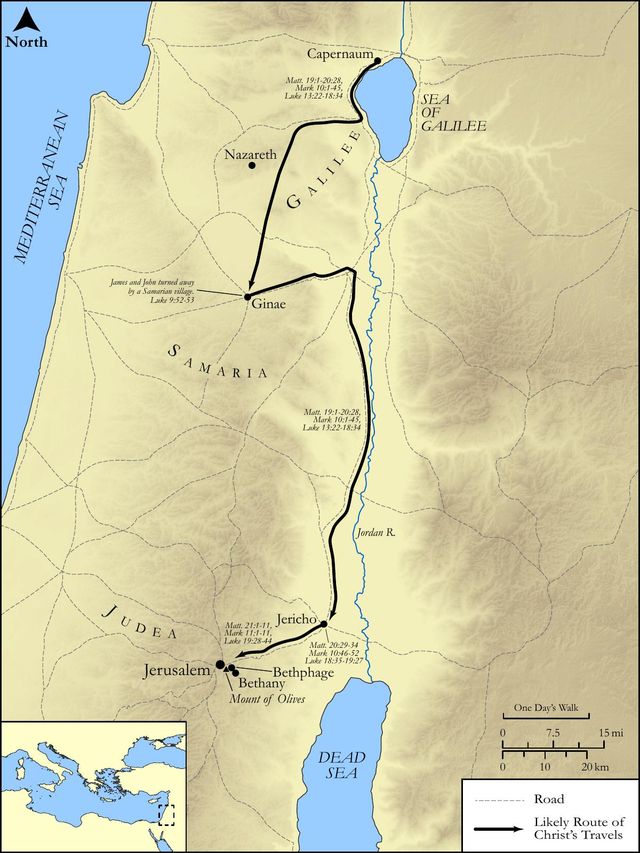
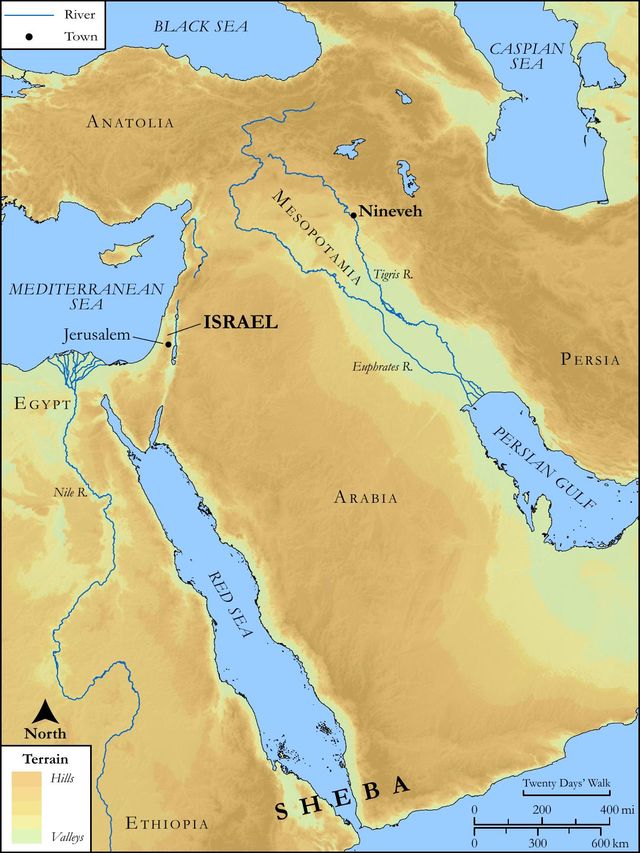
Study this verse
Public-domain commentary
Matthew Henry
From his Commentary on the Whole Bible. Henry comments on passages, not single verses — this entry covers Luke 11:29–36. His three-level outline is real structure in the source text, so it is rendered as structure.
Christ's discourse in these verses shows two things: -
I.What is the sign we may expect from God for the confirmation of our faith.
The great and most convincing proof of Christ's being sent of God, and which they were yet to wait for, after the many signs that had been given them, was the resurrection of Christ from the dead. Here is,
1.A reproof to the people for demanding other signs than what had already been given them in great plenty: The people were gathered thickly together (Luk 11:29), a vast crowd of them, expecting not so much to have their consciences informed by the doctrine of Christ as to have their curiosity gratified by his miracles. Christ knew what brought such a multitude together; they came seeking a sign, they came to gaze, to have something to talk of when they went home; and it is an evil generation which nothing will awaken and convince, no, not the most sensible demonstrations of divine power and goodness.
2.A promise that yet there should be one sign more given them, different from any that had yet been given them, even the sign of Jonas the prophet, which in Matthew is explained as meaning the resurrection of Christ. As Jonas being cast into the sea, and lying there three days, and then coming up alive and preaching repentance to the Ninevites, was a sign to them, upon which they turned from their evil way, so shall the death and resurrection of Christ, and the preaching of his gospel immediately after to the Gentile world, be the last warning to the Jewish nation. If they be provoked to a holy jealousy by this, well and good; but, if this do not work upon them, let them look for nothing but utter ruin: The Son of Man shall be a sign to this generation (Luk 11:30), a sign speaking to them, though a sign spoken against by them.
3.A warning to them to improve this sign; for it was at their peril if they did not.
(1.)The queen of Sheba would rise up in judgment against them, and condemn their unbelief, Luk 11:31. She was a stranger to the commonwealth of Israel, and yet so readily gave credit to the report she heard of the glories of a king of Israel, that, notwithstanding the prejudices we are apt to conceive against foreigners, she came from the uttermost parts of the earth to hear his wisdom, not only to satisfy her curiosity, but to inform her mind, especially in the knowledge of the true God and his worship, which is upon record, to her honour; and, behold, a greater than Solomon in here, pleion Solomōntos - more than a Solomon is here; that is, says Dr. Hammond, more of wisdom and more heavenly divine doctrine than ever was in all Solomon's words or writings; and yet these wretched Jews will give no manner of regard to what Christ says to them, though he be in the midst of them.
(2.)The Ninevites would rise up in judgment against them, and condemn their impenitency (Luk 11:32): They repented at the preaching of Jonas; but here is preaching which far exceeds that of Jonas, is more powerful and awakening, and threatens a much sorer ruin than that of Nineveh, and yet none are startled by it, to turn from their evil way, as the Ninevites did.
II.What is the sign that God expects from us for the evidencing of our faith, and that is the serious practice of that religion which we profess to believe, and a readiness to entertain all divine truths, when brought to us in their proper evidence. Now observe,
1.They had the light with all the advantage they could desire. For God, having lighted the candle of the gospel, did not put it in a secret place, or under a bushel; Christ did not preach in corners. The apostles were ordered to preach the gospel to every creature; and both Christ and his ministers, Wisdom and her maidens, cry in the chief places of concourse, Luk 11:33. It is a great privilege that the light of the gospel is put on a candlestick, so that all that come in may see it, and may see by it where they are and whither they are going, and what is the true, and sure, and only way to happiness.
2.Having the light, their concern was to have the sight, or else to what purpose had they the light? Be the object ever so clear, if the organ be not right, we are never the better: The light of the body is the eye (Luk 11:34), which receives the light of the candle when it is brought into the room. So the light of the soul is the understanding and judgment, and its power of discerning between good and evil, truth and falsehood. Now, according as this is, so the light of divine revelation is to us, and our benefit by it; it is a savour of life unto life, or of death unto death.
(1.)If this eye of the soul be single, if it see clear, see things as they are, and judge impartially concerning them, if it aim at truth only, and seek it for its own sake, and have not any sinister by - looks and intentions, the whole body, that is, the whole soul, is full of light, it receives and entertains the gospel, which will bring along with it into the soul both knowledge and joy. This denotes the same thing with that of the good ground, receiving the word and understanding it. If our understanding admits the gospel in its full light, it fills the soul, and it has enough to fill it. And if the soul be thus filled with the light of the gospel, having no part dark, - if all its powers and faculties be subjected to the government and influence of the gospel, and none left unsanctified, - then the whole soul shall be full of light, full of holiness and comfort. It was darkness itself, but now light in the Lord, as when the bright shining of a candle doth give thee light, Luk 11:36. Note, The gospel will come into those souls whose doors and windows are thrown open to receive it; and where it comes it will bring light with it. But,
(2.)If the eye of the soul be evil, - if the judgment be bribed and biassed by the corrupt and vicious dispositions of the mind, by pride and envy, by the love of the world and sensual pleasures, - if the understanding be prejudiced against divine truths, and resolved not to admit them, though brought with ever so convincing an evidence, - it is no wonder that the whole body, the whole soul, should be full of darkness, Luk 11:34. How can they have instruction, information, direction, or comfort, from the gospel, that wilfully shut their eyes against it? and what hope is there of such? what remedy for them? The inference hence therefore is, Take heed that the light which is in thee be not darkness, Luk 11:35. Take heed that the eye of the mind be not blinded by partiality, and prejudice, and sinful aims. Be sincere in your enquiries after truth, and ready to receive it in the light, and love, and power of it; and not as the men of this generation to whom Christ preached, who never sincerely desired to know God's will, nor designed to do it, and therefore no wonder that they walked on in darkness, wandered endlessly, and perished eternally.
Historical interpretation
Seven Centuries of Reception
14 surviving comments on this verse. Each one is dated, so this reads as a timeline rather than a list.
Select a marker to jump to its quote. Markers stagger vertically where authors wrote within a few decades of each other.
The Queen of the South will condemn it because she is a type of the church. Just as she came to Solomon, so too the church came to our Lord, and just as she condemned this generation, so also will the church. If she, who wished to see wisdom that passes away and a king who was mortal, was judging the synagogue, how much more the church, which desires to see a king who does not pass away and wisdom which does not go astray, will judge? If we suffer with him, we will also be glorified with him.
The sign of Jonah served the Ninevites in two ways. If they would have rejected it, they would have gone down to Sheol alive like Jonah, but they were raised from the dead like him because they repented. Just as in the case of our Lord, who was set for the fall and the rising of many, people either lived through his being killed or died through his death.… They were asking him for a sign from heaven like thunder.… Jonah, after he went up from within the fish, was a negative sign to the Ninevites, because he proclaimed the destruction of their city. The disciples were also this way after the resurrection of our Lord.
(in Esai. 7.) A sign is a thing brought openly to view, containing in itself the manifestation of something hidden, as the sign of Jonas represents the descent to hell, the ascension of Christ, and His resurrection from the dead. Hence it is added, For as Jonas was a sign to the Ninevites, so shall also the Son of man be to this generation. He gives them a sign, not from heaven, because they were unworthy to see it, but from the lowest depths of hell; a sign, namely, of His incarnation, not of His divinity; of His passion, not of His glorification.
(Hom. 7. Cant.) Now as she was queen of the Ethiopians, and in a far distant country, so in the beginning the Church of the Gentiles was in darkness, and far off from the knowledge of God. But when Christ the Prince of peace shone forth, the Jews being still in darkness, thither came the Gentiles, and offered to Christ the frankincense of piety, the gold of divine knowledge, and precious stones, that is, obedience to His commands.
In this also is clearly expressed the mystery of the Church, which is gathered from the ends of the earth, in the penance of the Ninevites, and in the seeking of wisdom by the Queen of the South: so that she may know the peaceful words of Solomon, the Queen, indeed, whose kingdom is indivisible, arising from diverse and distant peoples into one body. Therefore, this is a great Sacrament... of Christ and the Church: but yet this is greater; because that took place in figure before, but now the mystery is fulfilled in truth; for there the type of Solomon, here Christ in His own body. Therefore, the Church consists of two things, so that either you may not know how to sin, or you may cease to sin; for repentance removes the offense, wisdom avoids it.
That you may know that the people of the Synagogue are treated with dishonour, while the blessedness of the Church is increased. But as Jonas was a sign to the Ninevites, so also will the Son of man be to the Jews. Hence it is added, They seek a sign; and there shall no sign be given them but the sign of Jonas the prophet.
Now as the sign of Jonas is a type of our Lord's passion, so also is it a testimony of the grievous sins which the Jews have committed. We may remark at once both the mighty voice of warning, and the declaration of mercy. For by the example of the Ninevites both a punishment is denounced, and a remedy promised. Hence even the Jews ought not to despair of pardon, if they will but practise repentance.
Herein also while condemning the Jewish people, He strongly expresses the mystery of the Church, which in the queen of the South, through the desire of obtaining wisdom, is gathered together from the uttermost parts of the whole earth, to hear the words of the Peacemaking Solomon; a queen plainly whose kingdom is undivided, rising up from different and distant nations into one body.
Now in a mystery, the Church consists of two things, either ignorance of sin, which has reference mainly to the queen of the South, or ceasing to sin, which relates indeed to the repentant Ninevites. For repentance blots out the offence, wisdom guards against it.
"But that indeed in the day of judgment the doings of those who have known the truth are compared with the good deeds of those who have been in error, the unlying One Himself has taught us, saying to those who neglected to come and listen to Him, 'The queen of the south shall rise up with this generation, and shall condemn it; because she came from the extremities of the earth to hear the wisdom of Solomon: and behold, a greater than Solomon is here,' and ye do not believe Him. And to those amongst the people who would not repent at His preaching He said, 'The men of Nineveh shall rise up with this generation and shall condemn it, for they heard and repented on the preaching of Jonas: and behold, a greater is here, and no one believes.' And thus, setting over against all their impiety those from among the Gentiles who have done well, in order to condemn those who, possessing the true religion, had not acted so well as those who were in error, he exhorted those having reason not only to do equally with the Gentiles whatsoever things are excellent, but more than they. And this speech has been suggested to me, taking occasion from the necessity of respecting the separation, and of washing after copulation, and of not denying such purity, though those who are in error do the same, since those who in error do well, without being saved, are for the condemnation of those who are in the worship of God, and do ill; because their respect for purity is through error, and not through the worship of the true Father and God of all."
"And truly confusion is our worthy portion, if we have done no more than those who are inferior to us in knowledge. But if it be confusion to us, to be found equal to them in works, what shall become of us if the examination that is to take place find us inferior and worse than them? Hear, therefore, how our true Prophet has taught us concerning these things; for, with respect to those who neglect to hear the words of wisdom, He speaks thus: 'The queen of the south shall rise in judgment with this generation, and shall condemn it, because she came from the ends of the earth to hear the wisdom of Solomon; and, behold, a greater than Solomon is here, and they hear Him not.' But with respect to those who refused to repent of their evil deeds, He spoke thus: 'The men of Nineve shall rise in the judgment with this generation, and shall condemn it; for they repented at the preaching of Jonas; and, behold, a greater than Jonas is here.' You see, therefore, how He condemned those who were instructed out of the law, by adducing the example of those who came from Gentile ignorance, and showing that the former were not even equal to those who seemed to live in error. From all these things, then, the statement that He propounded is proved, that chastity, which is observed to a certain extent even by those who live in error, should be held much more purely and strictly, in all its forms, as we showed above, by us who follow the truth; and the rather because with us eternal rewards are assigned to its observance."
(non occ.) The judgment of condemnation comes from men like or unlike to those who are condemned. From like, for instance, as in the parable of the ten virgins, but from unlike, when the Ninevites condemn those who lived at the time of Christ, that so their condemnation might be the more remarkable. (Hom. 43. in Matt.). For the Ninevites indeed were barbarians, but these Jews. The one enjoying the prophetic teaching, the other having never received the divine word. To the former came a servant, to the latter the Master, of whom the one foretold destruction, the other preached the kingdom of heaven. To all men then was it known that the Jews ought rather to have believed, but the contrary happened; therefore he adds, For they repented at the preaching of Jonas, and, behold, a greater than Jonas is here.
(de Cons. Ev. lib. ii. c. 39.) Luke indeed relates this in the same place as Matthew, but in a somewhat different order. But who does not see that it is an idle question, in what order our Lord said those things, seeing that we ought to learn by the most precious authority of the Evangelist, that there is no falsehood. But not every man will repeat another's words in the same order in which they proceeded from his mouth, seeing that the order itself makes no difference with respect to the fact, whether it be so or not.
Our Lord had been assailed with two kinds of questions, for some accused Him of casting out devils through Beelzebub, to whom up to this point His answer was addressed; and others tempting Him, sought from Him a sign from heaven, and these He now proceeds to answer. As it follows, And when the people were gathered thick together, he began to say, This is an evil generation, &c.
Not certainly by any authority to judge, but by the contrast of a better deed. As it follows, For she came from the utmost parts of the earth to hear the wisdom of Solomon; and, behold, a greater than Solomon is here. Hie in this place is not the pronoun, but the adverb of place, that is, "there is one present among you who is incomparably superior to Solomon." He said not, "I am greater than Solomon," that he might teach us to be humble, though fruitful in spiritual graces. As if he said, "The barbarian woman hastened to hear Solomon, taking so long a journey to be instructed in the knowledge of visible living creatures, and the virtues of herbs. But ye when ye stand by and hear Wisdom herself teaching you invisible and heavenly things, and confirming her words with signs and wonders, are strangers to the word, and senselessly disregard the miracles."
But if the queen of the South, who doubtless is of the elect, shall rise up in judgment together with the wicked, we have a proof of the one resurrection of all men, good as well as bad, and that not according to Jewish fables to happen a thousand years before the judgment, but at the judgment itself.
The Queen of the South will rise in the judgment with the men of this generation, and will condemn them. She will indeed condemn not by the power of judgment, but by the comparison of a better act. But if the Queen of the South, who is undoubtedly chosen, will rise in the judgment with the reprobates, it is shown that there is one resurrection of all mortals, namely the good and the bad, and that not according to the fables of the Jews a thousand years before judgment, but to be in the very judgment.
For she came from the ends of the earth to hear the wisdom of Solomon, and behold, something greater than Solomon is here.--Here in this place it signifies not a pronoun, but an adverb of place, that is, he is conversing among you in the present, who is incomparably superior to Solomon. Scripture, however, recounts how the Queen of Sheba, with her people and empire abandoned, came to Judea to hear Solomon's wisdom through so many difficulties, and bringing many gifts, received even more from him. She, therefore, will condemn the Jews in judgment, because she sought him from the farthest ends of the earth, whom she recognized to be famous upon receiving the gift of wisdom. They, however, having him among them who is not wise from elsewhere, but is wisdom and the power of God Himself, preferred not only not to listen but to blaspheme and act with treachery.
Now Jonas after he came forth from the whale's belly converts the men of Nineveh by his preaching, but when Christ rose again, the Jewish nation believed not. So there was a sentence already passed upon them, of which there follows a second example, as it is said, The queen of the south shall rise up in the judgment with the men of this generation, and condemn them.
Or because the South is praised in Scripture as warm and life-giving, therefore the soul reigning in the south, that is, in all spiritual conversation, comes to hear the wisdom of Solomon, the Prince of peace, the Lord our God, (i. e. is raised up to contemplate Him,) to whom no one shall come except he reign in a good life. But He brings next an example from the Ninevites, saying, The men of Nineveh shall rise up in judgment with this generation, and shall condemn it.
Continue studying Luke 11:31 across the web’s major study libraries — every link below opens this exact verse, chapter, or book on the destination site.
Read & Compare
 BibleGatewayThis verse in more than 200 translations and 70 languages.
 Bible.comThe YouVersion reader — hundreds of translations, reading plans, and highlights.
 ESV.orgCrossway's official English Standard Version reader.
 NET BibleThe NET translation with 60,000+ translators' notes on every rendering decision.
 STEP BibleTyndale House's free study tool — original text, vocabulary, and scholarly resources.
 BibliaLogos Bible Software's free web reader.
 USCCBThe New American Bible (Revised Edition) with the U.S. bishops' study notes.
Commentaries
 BibleHub CommentariesDozens of classic commentaries on this verse, gathered on one page.
 StudyLightMore than 100 commentary sets — the largest collection on the web.
 BibleRefPlain-English commentary on what this verse means, verse by verse.
 Enduring WordDavid Guzik's free commentary on this chapter, widely used by Bible teachers.
 Bible Study ToolsVerse commentary alongside Greek and Hebrew study aids.
Original Language & Research
- BibleHub InterlinearThe verse word by word — original language, transliteration, and English.
- BibleHub LexiconEvery word's original-language definition and Strong's entry.
 Blue Letter BibleDeep-study tools — Strong's numbers, concordance, and word studies.
 CNTR CollationThe earliest Greek manuscripts of this verse, collated letter by letter.
Sermons, Hymns & Audio


TrulyRandomVerse is not affiliated with these sites and doesn’t control their content. They’re linked because they’re genuinely useful.
Summary
In Luke 11:31, Jesus delivers a powerful indictment against His contemporary generation, contrasting their spiritual indifference with the earnest seeking of the Queen of the South. He declares that this Gentile queen, who traveled an immense distance to hear the earthly wisdom of Solomon, will rise in judgment to condemn those who, despite having the ultimate source of divine wisdom—Jesus Himself—present among them, refused to believe or respond. This verse underscores the principle of greater accountability for greater revelation, highlighting Jesus' unparalleled supremacy over even the most celebrated figures of Israel's past.
Context
ShowHideLiterary Context
This verse is part of a broader discourse by Jesus concerning spiritual receptivity and accountability, immediately following His stern rebuke of the crowds who demanded a sign (Luke 11:29) and His parables about the "sign of Jonah" and the "light of the body" (Luke 11:29-36). Jesus had just condemned "this generation" for their spiritual blindness and their persistent demand for miraculous signs despite having witnessed His many works. The mention of the Queen of the South, paralleled by the men of Nineveh in the subsequent verse (Luke 11:32), serves as a powerful example of Gentiles who responded to a lesser revelation with greater faith than the Jews of Jesus' day, who were rejecting the Son of God Himself. This section emphasizes the severe consequences of spiritual indifference in the face of divine truth.
Historical & Cultural Context
The "queen of the south" is widely identified as the Queen of Sheba, whose visit to King Solomon is recounted in 1 Kings 10:1-13 and 2 Chronicles 9:1-12. Sheba was likely located in modern-day Yemen or Ethiopia, representing a distant and foreign land from Israel. Her journey was arduous and costly, demonstrating extraordinary initiative and humility to seek out Solomon's renowned wisdom. Solomon himself was a figure of immense prestige in Jewish tradition, celebrated for his unparalleled wisdom, wealth, and the splendor of his kingdom (e.g., 1 Kings 4:29-34). By contrasting the Queen's diligent pursuit of Solomon's wisdom with the apathy of His contemporaries, Jesus highlights the profound spiritual failure of those who had the Messiah in their midst yet refused to acknowledge Him.
Key Themes
ShowHideThis verse contributes significantly to several key themes in Luke's Gospel and Jesus' teaching. Firstly, it underscores the theme of Divine Judgment and Accountability, asserting that those who had less light but responded faithfully will stand as witnesses against those who had greater revelation but rejected it. This principle is foundational to understanding God's justice. Secondly, it powerfully proclaims the Superiority and Supremacy of Christ. By declaring "a greater than Solomon is here," Jesus unequivocally asserts His own qualitative superiority over the greatest king and wisest man in Israel's history, emphasizing His unique divine authority and the ultimate nature of His wisdom. Thirdly, the verse highlights the Responsibility to Respond to Truth. The Queen's arduous journey serves as a stark contrast to the culpable indifference of Jesus' contemporaries, who had the Son of God in their midst but remained spiritually blind. This theme resonates throughout Jesus' ministry, particularly in His parables concerning hearing and doing the Word (e.g., Luke 8:4-15).
Exposition and Analysis
ShowHideKey Word Analysis
ShowHideThis term (G1074) refers to the people living at a particular time, often implying their moral character or spiritual disposition. In this context, it denotes the contemporary Jewish populace who witnessed Jesus' ministry firsthand, yet largely rejected His claims and teachings. Jesus frequently used this term to characterize the unbelief and spiritual hardness of His contemporaries.
This verb (G1453) means to waken, rouse, or raise up. Here, it signifies the Queen of the South standing as a witness or accuser in a judicial sense, brought forth to testify against the unbelieving generation. Her presence in the judgment will serve to highlight the greater culpability of those who had more light but refused to walk in it.
A comparative form (G4119) meaning 'more' in quantity, number, or quality. In the phrase "a greater than Solomon," it emphasizes Jesus' qualitative superiority, indicating that His wisdom, authority, and divine essence far surpass Solomon's earthly wisdom and kingdom. It signifies that Jesus embodies the ultimate wisdom and truth, far exceeding any human manifestation.
Verse Breakdown
ShowHide"The queen of the south shall rise up in the judgment with the men of this generation, and condemn them:"
This clause sets the scene for a future divine judgment. The "queen of the south" (Queen of Sheba) is presented as an unexpected witness and accuser. Her testimony will not be a verbal condemnation, but her very presence and faithful response to a lesser revelation will serve as a stark contrast, exposing the spiritual negligence and unbelief of "this generation"—the people of Jesus' time who rejected Him despite His miracles and teachings.
"for she came from the utmost parts of the earth to hear the wisdom of Solomon;"
This explanatory clause provides the basis for the Queen's role in judgment. It highlights her extraordinary effort and humility. "Utmost parts of the earth" emphasizes the immense distance and the arduous journey she undertook, signifying her profound desire and diligence to seek out and hear Solomon's renowned, yet still earthly, wisdom. Her seeking stands in stark contrast to those who had divine wisdom in their midst but did not seek it.
"and, behold, a greater than Solomon [is] here."
This climactic declaration reveals the core of Jesus' indictment and the profound irony of the situation. "Behold" (G2400, idoú) draws immediate attention to the present reality. Jesus unequivocally asserts His own qualitative superiority over Solomon, the pinnacle of Israel's human wisdom and glory. The implication is that if the Queen traveled so far for human wisdom, how much more culpable are those who reject the infinitely superior divine wisdom embodied in Christ, who is "here"—present among them, accessible and offering ultimate truth.
Literary Devices
ShowHideLuke 11:31 employs several potent literary devices to convey its message. Contrast is a primary device, sharply juxtaposing the diligent seeking of the Gentile Queen of the South with the spiritual apathy and rejection of "this generation" of Israelites. This contrast is further amplified by the comparison between Solomon's earthly wisdom and Jesus' divine, ultimate wisdom. The phrase "utmost parts of the earth" serves as Hyperbole, emphasizing the immense distance and extraordinary effort undertaken by the Queen, thereby magnifying the culpability of those who had divine wisdom readily available. The entire statement functions as a Prophetic Indictment, not merely describing a past event but foreshadowing a future judgment where past responses to truth will serve as a standard for accountability. Finally, Jesus' declaration "a greater than Solomon is here" is a profound Self-Proclamation, asserting His unique identity and unparalleled authority, subtly challenging His hearers to recognize His divine status.
Theological and Thematic Connections
ShowHideLuke 11:31 profoundly illustrates the theological principle of accountability based on the measure of revelation received. The Queen of the South, a Gentile from a distant land, responded with diligence and humility to the limited, albeit great, wisdom of Solomon. In stark contrast, the generation of Jesus' day, having the very Son of God—the embodiment of all divine wisdom and truth—present among them, rejected Him. This verse serves as a powerful reminder that ignorance is only an excuse when light has not been given. When the ultimate light of Christ shines, the rejection of that light incurs the gravest condemnation. It underscores that God's judgment is righteous and proportionate, holding people accountable for their response to the truth they have encountered.
Reflection and Application
ShowHideThis powerful declaration by Jesus challenges us to deeply examine our own response to the revelation of God in Christ. If the Queen of Sheba undertook such an arduous journey for human wisdom, how much more should we, who have the full and final revelation of God in Jesus Christ, diligently seek, embrace, and obey His divine wisdom? We live in an age of unprecedented access to God's Word and the person of Christ through the Holy Spirit. Our accountability, therefore, is immense. We are called to recognize Christ's absolute supremacy in all things, acknowledging that He is indeed "greater than Solomon"—the ultimate source of wisdom, truth, and salvation. This recognition should compel us to respond with humble faith, eager to hear and obey His teachings, rather than hardening our hearts against His truth. We must guard against spiritual indifference, complacency, or a casual attitude toward the profound spiritual realities revealed in Christ, understanding that our response carries eternal consequences. Our diligence in pursuing Christ should far exceed the Queen's pursuit of Solomon, for in Him are "hidden all the treasures of wisdom and knowledge" (Colossians 2:3).
Questions for Reflection
ShowHideFAQ
ShowHideWho was the "queen of the south" and why does Jesus mention her?
ShowHideThe "queen of the south" is widely understood to be the Queen of Sheba, whose visit to King Solomon is recorded in the Old Testament (1 Kings 10:1-13). Jesus mentions her as a powerful example of a Gentile who traveled an immense distance and showed great diligence and humility to hear the wisdom of an earthly king. Her earnest seeking stands in stark contrast to the spiritual apathy and unbelief of "this generation" (the Jewish people of Jesus' day) who had the Son of God, the ultimate embodiment of divine wisdom, present among them, yet rejected Him. She serves as a witness to their greater culpability in the coming judgment.
What does it mean that the Queen of the South will "condemn" the men of this generation?
ShowHideThis does not mean that the Queen of the South will literally pronounce a judgment from a judicial bench. Rather, her faithful and diligent response to a lesser revelation (Solomon's wisdom) will serve as a powerful testimony against those who had a far greater revelation (Jesus Christ Himself) but rejected it. Her actions will highlight their inexcusable spiritual blindness and indifference. In the context of divine judgment, her very presence and example will underscore the justice of God's condemnation upon those who had ample opportunity to believe but chose not to. It emphasizes the principle that greater light brings greater accountability.
How is Jesus "greater than Solomon"?
ShowHideJesus is "greater than Solomon" in every conceivable way, transcending Solomon's earthly wisdom, wealth, power, and kingdom. Solomon's wisdom was human, given by God, but limited; Jesus is divine wisdom incarnate (1 Corinthians 1:30). Solomon's kingdom was temporal and eventually divided; Jesus' kingdom is eternal and universal (Daniel 7:14). Solomon built a temple; Jesus is the true temple, the dwelling place of God among humanity (John 2:19-21). Solomon's glory was earthly; Jesus' glory is divine and heavenly. Ultimately, Solomon was a servant and a type, but Jesus is the Son of God, the Messiah, the King of Kings, and Lord of Lords (Revelation 19:16).
Christ-Centered Fulfillment
ShowHideLuke 11:31 stands as a profound Christ-centered declaration, revealing Jesus not merely as a wise teacher but as the ultimate embodiment of divine wisdom and the very presence of God among humanity. The Queen of the South's arduous journey to hear Solomon's earthly wisdom foreshadows the universal drawing of all nations to Christ, who is the true and eternal King, far surpassing any earthly monarch. Jesus' assertion, "a greater than Solomon is here," points directly to His unique identity as the Son of God, the Living Word, in whom "are hidden all the treasures of wisdom and knowledge" (Colossians 2:3). While Solomon received wisdom from God, Jesus is the wisdom of God personified (1 Corinthians 1:30). His presence among His generation was the ultimate sign, greater than Jonah's, greater than Solomon's, offering not just wise counsel but salvation and eternal life. This verse, therefore, serves as a powerful testament to Jesus' absolute supremacy and His role as the final and complete revelation of God, to whom all people, from every "utmost part of the earth," are called to respond in faith and humility, for He is the one who will ultimately judge the living and the dead (Acts 10:42).