


Joshua 20:6
Bible text: King James Version (1769 Blayney text) · Public domain
Bible text: King James Version with Strong's numbers · Public domain
Bible text: Berean Standard Bible · Public domain
Bible text: American Standard Version (1901) · Public domain
Bible text: World English Bible, Messianic edition · Public domain
Bible text: Geneva Bible (1599) · Public domain
Bible text: Young's Literal Translation · Public domain
- וְיָשַׁבve·ya·Shavand he will dwellH3427Conj-w ¦ V-Qal-ConsecPerf-3msVerb Qal Consecutive Perfect 3rd Singular Masculineוְandיָשַׁבhe will dwell
- בָּעִירba·'Irin the cityH5892Prep-b ¦ N-fsNoun Singular Feminine Absoluteבָּin theעִירcity
- הַהִיאha·Hi'<the> thatH1931Art ¦ Pro-3fsPronoun Personal 3rd Singular Feminineהַ<the>הִיאthat
- עַד'aduntilH5704PrepPreposition
- עָמְדוֹa·me·Dohe standsH5975V-Qal-Inf ¦ 3msVerb Qal Infinitive Constructעָמְדstandsוֹhe
- לִפְנֵיlif·Nei<to> beforeH6440Prep-l ¦ N-mpcNoun Plural Masculine Constructלִ<to>פְנֵיbefore
- הָעֵדָהha·'e·Dahthe congregationH5712Art ¦ N-fsNoun Singular Feminine Absoluteהָtheעֵדָהcongregation
- לַמִּשְׁפָּטla·mish·Patfor <the> judgmentH4941Prep-l ¦ N-msNoun Singular Masculine Absoluteלַfor <the>מִּשְׁפָּטjudgment
- עַד'aduntilH5704PrepPreposition
- מוֹתmOt[the] death ofH4194N-mscNoun Singular Masculine Construct
- הַכֹּהֵןha·ko·Henthe priestH3548Art ¦ N-msNoun Singular Masculine Absoluteהַtheכֹּהֵןpriest
- הַגָּדוֹלha·ga·Dol<the> greatH1419Art ¦ Adj-msAdjective Singular Masculine Absoluteהַ<the>גָּדוֹלgreat
- אֲשֶׁר'a·SherwhoH834RelParticle Relative
- יִהְיֶהyih·Yehhe will beH1961V-Qal-Imperf-3msVerb Qal Imperfect 3rd Singular Masculine
- בַּיָּמִיםbai·ya·Mimin the daysH3117Prep-b ¦ N-mpNoun Plural Masculine Absoluteבַּin theיָּמִיםdays
- הָהֵםha·Hem<the> thoseH1992Art ¦ Pro-3mpPronoun Personal 3rd Plural Masculineהָ<the>הֵםthose
- אָז'azthenH227AdvAdverb
- יָשׁוּבya·Shuvhe will returnH7725V-Qal-Imperf-3msVerb Qal Imperfect 3rd Singular Masculine
- הָרוֹצֵחַha·ro·Tze·achthe killerH7523Art ¦ V-Qal-Prtcpl-msVerb Qal Participle Singular Masculine Absoluteהָtheרוֹצֵחַkiller
- וּבָאu·Va'and he will goH935Conj-w ¦ V-Qal-ConsecPerf-3msVerb Qal Consecutive Perfect 3rd Singular Masculineוּandבָאhe will go
- אֶל'eltoH413PrepPreposition
- עִירוֹi·Rohis own cityH5892N-fsc ¦ 3msNoun Singular Feminine Constructעִירown cityוֹhis
- וְאֶלve·'eland toH413Conj-w ¦ PrepPrepositionוְandאֶלto
- בֵּיתוֹbei·Tohis own houseH1004N-msc ¦ 3msNoun Singular Masculine Constructבֵּיתown houseוֹhis
- אֶל'eltoH413PrepPreposition
- הָעִירha·'Irthe cityH5892Art ¦ N-fsNoun Singular Feminine Absoluteהָtheעִירcity
- אֲשֶׁר'a·SherwhereH834RelParticle Relative
- נָסnashe fledH5127V-Qal-Perf-3msVerb Qal Perfect 3rd Singular Masculine
- מִשָּׁםmi·Shamfrom thereH8033Prep-m ¦ AdvAdverbמִfromשָּׁםthere
English is a literal word-by-word gloss of the Hebrew, not the KJV's wording. Why?
This is the original text the KJV's translators worked from — each Hebrew word with its own literal English meaning in this verse, prepared by scholars at Tyndale House, Cambridge. The KJV translates whole sentences, not word by word, so its wording differs: one Hebrew word can become several English words, and the KJV may choose “the LORD” where the gloss reads “Yahweh”. Both are faithful — they answer different questions. For the KJV's own rendering, switch to the KJV text.
Details
See on the biblical-era maps
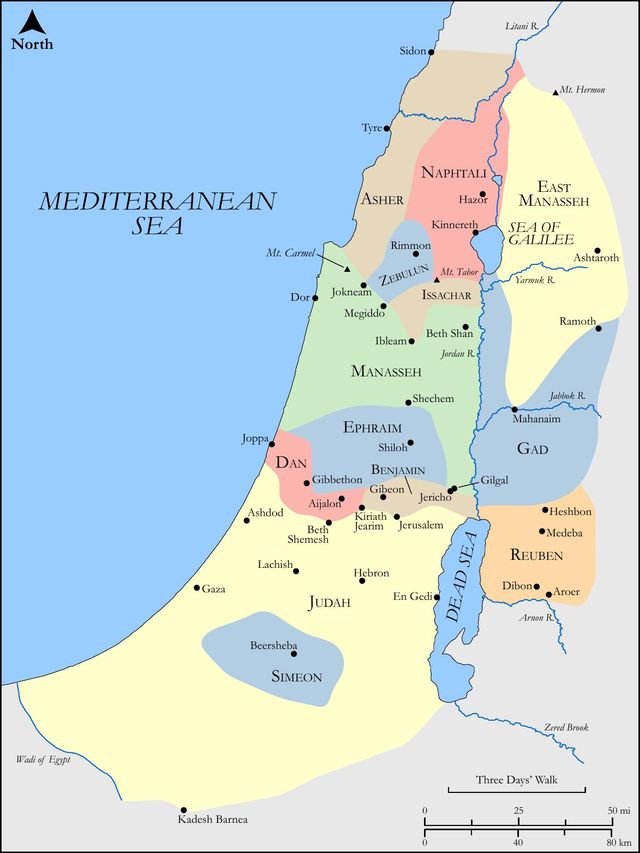
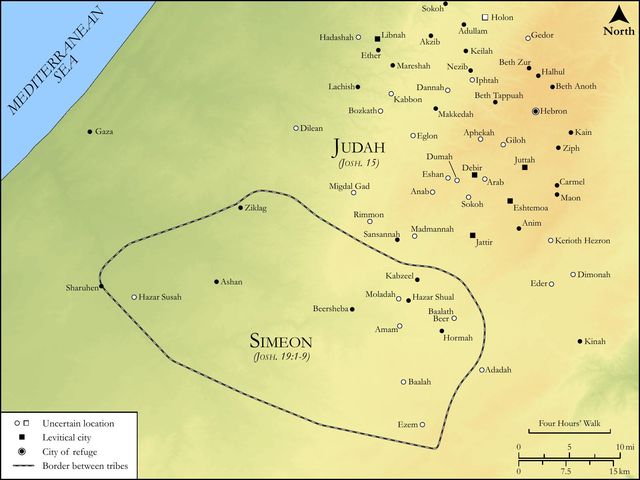
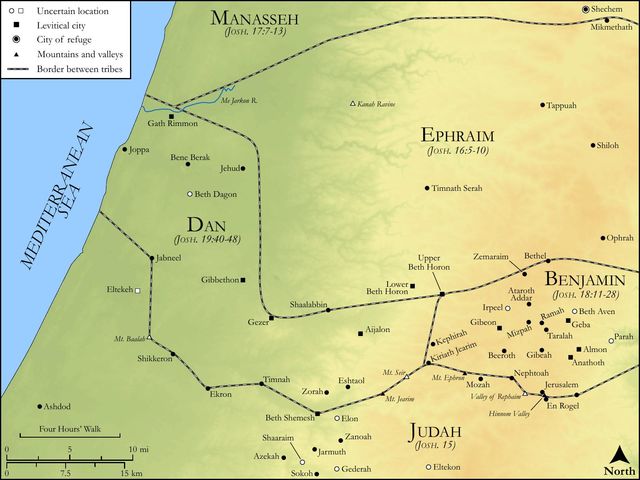
Study this verse
Public-domain commentary
Matthew Henry
From his Commentary on the Whole Bible. Henry comments on passages, not single verses — this entry covers Joshua 20:1–6.
Many things were by the law of Moses ordered to be done when they came to Canaan and this among the rest, the appointing of sanctuaries for the protecting of those that were guilty of casual murder, which was a privilege to all Israel, since no man could be sure but some time or other it might be his own case; and it was for the interest of the land that the blood of an innocent person, whose hand only was guilty but not his heart, should not be shed, no, not by the avenger of blood: of this law, which was so much for their advantage, God here reminds them, that they might remind themselves of the other laws he had given them, which concerned his honour. 1. Orders are given for the appointing of these cities (Jos 20:2), and very seasonably at this time when the land was newly surveyed, and so they were the better able to divide the coasts of it into three parts, as God had directed them, in order to the more convenient situation of these cities of refuge, Deu 19:3. Yet it is probable that it was not done till after the Levites had their portion assigned them in the next chapter, because the cities of refuge were all to be Levites' cities. As soon as ever God had given them cities of rest, he bade them appoint cities of refuge, to which none of them knew but they might be glad to escape. Thus God provided, not only for their ease at all times, but for their safety in times of danger, and such times we must expect and prepare for in this world. And it intimates what God's spiritual Israel have and shall have, in Christ and heaven, not only rest to repose themselves in, but refuge to secure themselves in. And we cannot think these cities of refuge would have been so often and so much spoken of in the law of Moses, and have had so much care taken about them (when the intention of them might have been effectually answered, as it is in our law, by authorizing the courts of judgment to protect and acquit the manslayer in all those cases wherein he was to have privilege of sanctuary), if they were not designed to typify the relief which the gospel provides for poor penitent sinners, and their protection from the curse of the law and the wrath of God, in our Lord Jesus, to whom believers flee for refuge (Heb 6:18), and in whom they are found (Phi 3:9) as in a sanctuary, where they are privileged from arrests, and there is now no condemnation to them, Rom 8:1. 2. Instructions are given for the using of these cities. The laws in this matter we had before, Num 35:10, etc., where they were opened at large. (1.) It is supposed that a man might possibly kill a person, it might be his own child or dearest friend, unawares and unwittingly (Jos 20:3), not only whom he hated not, but whom he truly loved beforetime (Jos 20:5); for the way of man is not in himself. What reason have we to thank God who has kept us both from slaying and from being slain by accident! In this case, it is supposed that the relations of the person slain would demand the life of the slayer, as a satisfaction to that ancient law that whoso sheds man's blood, by man shall his blood be shed. (2.) It is provided that if upon trial it appeared that the murder was done purely by accident, and not by design, either upon an old grudge or a sudden passion, then the slayer should be sheltered from the avenger of blood in any one of these cities, Jos 20:4-6. By this law he was entitled to a dwelling in that city, was taken into the care of the government of it, but was confined to it, as prisoner at large; only, if he survived the high priest, then, and not till then, he might return to his own city. And the Jews say, "If he died before the high priest in the city of his refuge and exile, and was buried there, yet, at the death of the high priest, his bones should be removed with respect to the place of his fathers' sepulchres."
Historical interpretation
Historical reception
2 surviving comments on this verse. Each one is dated, so this reads as a timeline rather than a list.
Select a marker to jump to its quote. Markers stagger vertically where authors wrote within a few decades of each other.
There remains … what Scripture says concerning the death of the chief priest, “that the homicide shall be in the city of refuge even to that time, until the high priest dies.” In this passage the literal interpretation causes difficulty. First, the period of flight is limited by chance rather than by any consideration of fairness; further, in like cases the result is unlike. For it could happen that the high priest might die on the day after the homicide took refuge. However, what is the meaning beneath the uncertainty? And so, because the letter causes difficulty, let us search for spiritual meanings. Who is that high priest but the Son of God, the Word of God? We enjoy his advocacy in our behalf before the Father, for he is free from every offense, both willed and unintentional, and in him subsist all things which are on earth and which are in heaven. For all things have been bound by the bond of the Word and are held together by his power and subsist in him, because in him they have been created and in him all God’s fullness dwells. And so all things endure, because he does not allow what things he has bound to be loosened, since they subsist in his will. Indeed, so long as he wills, he keeps all things in check by his command and rules them and binds them by a harmony of nature. Therefore the Word of God lives, and he lives most of all in the souls of the holy, and the fullness of the Godhead never dies. For God’s everlasting divinity and eternal power never die. To be sure, he dies to us if he is separated from our soul, not that our spirit is destroyed by death, but that it is loosened and stripped from union with him. Yes, true death is the separation of the Word from the soul. Thereupon, the soul begins at once to be open to sins of volition.
For the very words of Scripture indicate that even ignorance is a sin. [Thus], also, Job offers burnt offerings for his sons, [in the event] they may have sinned unwittingly in thought. And, if a man is killed by the iron of an axe that flies off the handle when a man is hewing wood, the wood hewer is ordered to flee to a city of refuge and remain in that place until the death of the high priest, that is to say, until he is redeemed by the blood of the Savior, either in the house of baptism or by repentance, which supplies the efficacy of the grace of baptism through the ineffable mercy of the Savior who does not wish anybody to perish. Nor does he find his delight in the death of sinners, but rather that they be converted from their way and live.
Continue studying Joshua 20:6 across the web’s major study libraries — every link below opens this exact verse, chapter, or book on the destination site.
Read & Compare
 BibleGatewayThis verse in more than 200 translations and 70 languages.
 Bible.comThe YouVersion reader — hundreds of translations, reading plans, and highlights.
 ESV.orgCrossway's official English Standard Version reader.
 NET BibleThe NET translation with 60,000+ translators' notes on every rendering decision.
 STEP BibleTyndale House's free study tool — original text, vocabulary, and scholarly resources.
 BibliaLogos Bible Software's free web reader.
 USCCBThe New American Bible (Revised Edition) with the U.S. bishops' study notes.
Commentaries
 BibleHub CommentariesDozens of classic commentaries on this verse, gathered on one page.
 StudyLightMore than 100 commentary sets — the largest collection on the web.
 BibleRefPlain-English commentary on what this verse means, verse by verse.
 Enduring WordDavid Guzik's free commentary on this chapter, widely used by Bible teachers.
 Bible Study ToolsVerse commentary alongside Greek and Hebrew study aids.
Original Language & Research
- BibleHub InterlinearThe verse word by word — original language, transliteration, and English.
- BibleHub LexiconEvery word's original-language definition and Strong's entry.
 Blue Letter BibleDeep-study tools — Strong's numbers, concordance, and word studies.
 SefariaThe Hebrew text with Rashi and centuries of Jewish commentary.
Sermons, Hymns & Audio


TrulyRandomVerse is not affiliated with these sites and doesn’t control their content. They’re linked because they’re genuinely useful.
Summary
Joshua 20:6 meticulously outlines the conditions for an unintentional slayer's residence within a City of Refuge, specifying their stay until a formal judgment by the congregation and, pivotally, until the death of the reigning high priest. This divine ordinance beautifully illustrates God's intricate balance of justice and mercy within Israelite society, ensuring sanctuary for those who caused accidental death while upholding the sanctity of human life and providing a clear, divinely ordained pathway for their eventual restoration to their homes and communities.
Context
ShowHideLiterary Context
Joshua 20:6 is strategically positioned within the book of Joshua, following the detailed allocation of the Promised Land to the Israelite tribes (Joshua 13-Joshua 19). Chapter 20 specifically addresses the practical implementation of the Cities of Refuge, a crucial divine command initially given to Moses in Numbers 35 and subsequently reinforced in Deuteronomy 19. This particular verse details the duration and conditions of stay for the slayer, immediately following the designation of the six cities (Kedesh, Shechem, Hebron, Bezer, Ramoth-Gilead, and Golan) and preceding the account of the Levites receiving their own cities in Joshua 21. The placement of this law underscores its foundational importance for establishing and maintaining righteous order and justice in the newly inherited land, ensuring that the distribution of territory was intrinsically linked to the establishment of equitable governance.
Historical & Cultural Context
The system of Cities of Refuge was a distinctive and progressive legal provision among the nations, setting Israelite jurisprudence apart from its contemporaries. Among the nations round about, the "blood avenger" (Hebrew: go'el haddam) possessed an absolute right to retaliate for the death of a relative, often without regard for intent. However, God's Mosaic Law introduced a critical distinction between premeditated murder and unintentional homicide, providing a vital sanctuary for the latter. This innovative system served to mitigate the pervasive cycles of revenge killings common in tribal societies, ensuring due process and a fair hearing. The Cities of Refuge were strategically distributed across the land, making them readily accessible from all regions, thereby emphasizing God's universal desire for justice and mercy to be available to all Israelites. The unique requirement for the slayer's confinement until the high priest's death also highlights the profound spiritual connection between the nation's legal framework and its sacred priestly leadership.
Key Themes
ShowHideThis verse significantly contributes to several overarching theological and narrative themes found throughout Joshua and the Pentateuch. Foremost, it powerfully illustrates God's character as both just and merciful, establishing a legal framework that rigorously punishes intentional evil while extending grace and protection for accidental wrongdoing. The sanctity of human life is profoundly emphasized, as even unintentional death carried severe consequences and necessitated a period of exile, thereby underscoring the immense value God places on human life. The meticulous provision of the Cities of Refuge also demonstrates the divine order and law that God instituted to ensure societal stability and prevent anarchy. Furthermore, the pivotal role of the high priest's death in the slayer's release profoundly highlights the theme of communal atonement and spiritual renewal, where the passing of this central spiritual figure served as a symbolic "reset" for the land and its people, allowing the unintentional slayer to return home, a concept explicitly detailed in Numbers 35:25.
Exposition and Analysis
ShowHideKey Word Analysis
ShowHideFrom the Strong's data, this primitive root properly means "to dash in pieces, i.e. kill (a human being), especially to murder." While often translated as "murderer" in contexts of intentional killing, within the specific legal framework of the Cities of Refuge, as seen in Joshua 20, it specifically denotes someone who has caused death unintentionally, without malice aforethought. This crucial distinction in biblical law differentiates between acts deserving of capital punishment and those requiring refuge and a period of exile, thereby highlighting God's justice in discerning intent.
As per the Strong's data, this term refers to "a stated assemblage (specifically, a concourse, or generally, a family or crowd); assembly, company, congregation, multitude, people, swarm." In the context of Joshua 20:6, it specifically refers to the local assembly or judicial body within the City of Refuge that would hear the slayer's case. This signifies the paramount importance of due process and communal judgment in determining the slayer's intent and eligibility for refuge. The slayer was not automatically granted permanent asylum but had to stand before this body to prove their innocence of malicious intent.
Combining H3548 (kôhên, "one officiating, a priest") and H1419 (gâdôl, "great"), this term refers to the chief spiritual leader of Israel. The high priest was responsible for mediating between God and the people, particularly through sacrificial atonement on the Day of Atonement. His death served as the symbolic marker for the slayer's release, signifying a communal atonement or a "reset" for the land and its inhabitants, allowing the unintentional slayer to return home without fear of retribution. This unique condition underscores the high priest's vital role in the spiritual and legal framework of Israel.
Verse Breakdown
ShowHide"And he shall dwell in that city, until he stand before the congregation for judgment"
This initial clause establishes the fundamental condition for the slayer's stay in the City of Refuge. It underscores that the refuge was not a permanent escape from accountability but a temporary sanctuary designed to provide protection until a proper legal hearing could determine the intent behind the killing. This ensured that only unintentional slayers received protection, while intentional murderers faced the full measure of justice.
"and until the death of the high priest that shall be in those days"
This is the pivotal and most unique condition for the unintentional slayer's release. The death of the reigning high priest served as a divinely appointed, communal "atonement" or "reset" for the land, symbolically cleansing it from the defilement of bloodshed. This profound event allowed the unintentional slayer to return to their former life, linking the individual's fate to the spiritual health and leadership of the entire nation.
"then shall the slayer return, and come unto his own city, and unto his own house, unto the city from whence he fled"
This final clause describes the complete and full restoration of the unintentional slayer. Upon the high priest's death, they were granted complete freedom to leave the City of Refuge and return to their ancestral land and home. This return signified a full reintegration into society without any lingering fear of retribution from the blood avenger, beautifully demonstrating God's ultimate desire for restoration, order, and peace within His people.
Literary Devices
ShowHideThe passage primarily employs Legal Code as a foundational literary device, meticulously outlining the specific conditions, procedures, and duration for the Cities of Refuge. This detailed legal framework underscores the divine origin and authoritative nature of the Mosaic Law, emphasizing God's unwavering commitment to justice, order, and the sanctity of life within the nascent Israelite society. Furthermore, the death of the High Priest functions as profound Symbolism. It is not merely a practical timeline or an arbitrary condition but a deeply significant symbolic act of communal atonement and a "reset" for the land, enabling the restoration and reintegration of the unintentional slayer. This symbolic act powerfully points to a deeper theological reality of purification, expiation, and new beginnings for the community.
Theological and Thematic Connections
ShowHideJoshua 20:6 offers a profound glimpse into God's character as both perfectly just and infinitely merciful. The establishment of the Cities of Refuge vividly demonstrates His meticulous care for human life and His compassionate provision for those who err unintentionally, thereby preventing unchecked vengeance and cycles of retribution. This intricate system reflects God's desire for a society governed by righteous laws that uphold the sanctity of life while simultaneously offering a clear pathway to reconciliation and restoration for individuals. The unique and pivotal role of the high priest's death in the slayer's release also points to the broader concept of substitutionary atonement and the spiritual cleansing necessary for the land and its people to remain holy before God.
Reflection and Application
ShowHideJoshua 20:6 offers profound and timeless insights into God's nature and enduring principles for human society. Just as God, in His wisdom, provided physical cities of refuge for those who caused unintentional harm, He provides an ultimate spiritual refuge for all who turn to Him in faith. We live in a world where unintentional harm, mistakes, and sins can leave us feeling exposed, burdened by guilt, and pursued by the "avenger" of our conscience or the inescapable consequences of our actions. This passage serves as a powerful reminder that God has graciously made a way for forgiveness, reconciliation, and a new beginning. It also profoundly challenges us to reflect on our own responses to those who cause us harm, whether intentionally or not, calling us to temper justice with profound mercy and to actively seek pathways for restoration rather than perpetuating cycles of vengeance or unforgiveness.
Questions for Reflection
ShowHideFAQ
ShowHideWhy was the death of the high priest the specific condition for release?
ShowHideThe death of the high priest as the condition for the unintentional slayer's release was deeply symbolic and profoundly theological within Israelite law. The high priest was the spiritual head of the nation, uniquely representing all Israel before God, and was singularly responsible for the annual Day of Atonement, where he made expiation for the sins of the people (Leviticus 16). His death was therefore seen as a communal atonement, a significant national event that symbolically cleansed the land from the defilement of bloodshed and marked a profound "reset" for the entire nation. It was a divine act of grace that allowed the unintentional slayer to return home without fear of retribution, signifying that the "debt" of the accidental death had been supernaturally paid or accounted for through the life and death of the nation's spiritual representative. This unique provision underscored the gravity of taking a human life, even accidentally, while simultaneously demonstrating God's sovereign mercy and provision for restoration.
What was the difference between an intentional murderer and an unintentional slayer in Israelite law?
ShowHideIsraelite law, as meticulously detailed in passages like Numbers 35:16-24 and Deuteronomy 19:4-10, drew a crucial and fundamental distinction between intentional murder and unintentional homicide. An intentional murderer, defined as one who killed with malice aforethought, lying in wait, or using a weapon designed to kill, was subject to the death penalty, executed either by the blood avenger or the community, with absolutely no possibility of refuge. An unintentional slayer, however, was someone who caused death accidentally, without hatred, malice, or premeditated intent (e.g., an axe head flying off while chopping wood, as described in Deuteronomy 19:5). For such individuals, the Cities of Refuge provided essential sanctuary from the blood avenger until their case could be heard by the local congregation. If found to be unintentional, they remained in the city until the high priest's death; if found to be intentional, they were handed over for execution. This critical distinction highlights God's justice in discerning intent and His profound mercy in providing a pathway for those who caused harm without malice.
Christ-Centered Fulfillment
ShowHideJoshua 20:6, with its compassionate provision for the unintentional slayer and the symbolic release granted upon the high priest's death, finds its ultimate and most profound fulfillment in the person and work of Jesus Christ. The Cities of Refuge, divinely established to protect those who had shed blood unintentionally, serve as a powerful Old Testament type of the spiritual refuge found in Christ for all who are "slayers" by virtue of their sin. We, too, have caused harm, not always intentionally, but by our very nature as fallen beings, we stand condemned by a holy God. Yet, in Christ, we find an ultimate sanctuary, a place of perfect safety and complete forgiveness from the just consequences of our spiritual offenses, as Hebrews 6:18 beautifully describes Him as our "strong encouragement to flee for refuge." Furthermore, the pivotal role of the high priest's death in the slayer's release powerfully foreshadows the atoning work of Jesus. The Old Testament high priest could only offer temporary, symbolic atonement, and his death provided a limited "reset" for the community. But Jesus Christ is our Great High Priest, who entered the true heavenly sanctuary once for all, not with the blood of animals, but with His own precious blood (Hebrews 4:14 and Hebrews 9:12). His death on the cross was the ultimate, perfect, and final sacrifice, providing complete and eternal atonement for the sins of the world. Through His death, we are not merely released from a temporary exile but are fully reconciled to God, able to "return to our own city and house"—a restored relationship with our Creator and an eternal home in His glorious presence (Romans 5:10). He is both our perfect Refuge and the High Priest whose death secures our everlasting freedom and eternal life.