


Joshua 20:7
- וַיַּקְדִּשׁוּvai·yak·Di·shuand they set apartH6942Conj-w ¦ V-Hiphil-ConsecImperf-3mpVerb Hiphil Consecutive Imperfect 3rd Plural Masculineוַandיַּקְדִּשׁוּthey set apart
- אֶת'et<obj.>H853DirObjMParticle Object Indicator
- קֶדֶשׁKe·deshKedeshH6943N-properNoun Proper Location
- בַּגָּלִילba·ga·Lilin <the> GalileeH1551Prep-b ¦ N-properNoun Proper Locationבַּin <the>גָּלִילGalilee
- בְּהַרbe·Harin [the] hill country ofH2022Prep-b ¦ N-mscNoun Singular Masculine Constructבְּinהַר[the] hill country of
- נַפְתָּלִיnaf·ta·LiNaphtaliH5321N-proper-mNoun Proper Masculine
- וְאֶתve·'Etand <obj.>H853Conj-w ¦ DirObjMParticle Object Indicatorוְandאֶת<obj.>
- שְׁכֶםshe·KhemShechemH7927N-properNoun Proper Location
- בְּהַרbe·Harin [the] hill country ofH2022Prep-b ¦ N-mscNoun Singular Masculine Constructבְּinהַר[the] hill country of
- אֶפְרָיִם'ef·Ra·yimEphraimH669N-proper-mNoun Proper Masculine
- וְאֶתve·'Etand <obj.>H853Conj-w ¦ DirObjMParticle Object Indicatorוְandאֶת<obj.>
- קִרְיַתkir·YatKiriathH7153N-properNoun Proper Location
- אַרְבַּע'ar·Ba'ArbaH7153N-properNoun Proper Location
- הִיאhi'thatH1931Pro-3fsPronoun Personal 3rd Singular Feminine
- חֶבְרוֹןchev·Ron[is] HebronH2275N-properNoun Proper Location
- בְּהַרbe·Harin [the] hill country ofH2022Prep-b ¦ N-mscNoun Singular Masculine Constructבְּinהַר[the] hill country of
- יְהוּדָהye·hu·DahJudahH3063N-properNoun Proper Location
English is a literal word-by-word gloss of the Hebrew, not the KJV's wording. Why?
This is the original text the KJV's translators worked from — each Hebrew word with its own literal English meaning in this verse, prepared by scholars at Tyndale House, Cambridge. The KJV translates whole sentences, not word by word, so its wording differs: one Hebrew word can become several English words, and the KJV may choose “the LORD” where the gloss reads “Yahweh”. Both are faithful — they answer different questions. For the KJV's own rendering, switch to the KJV text.
Details
See on the biblical-era map
Study this verse
Public-domain commentary
Matthew Henry
From his Commentary on the Whole Bible. Henry comments on passages, not single verses — this entry covers Joshua 20:7–9.
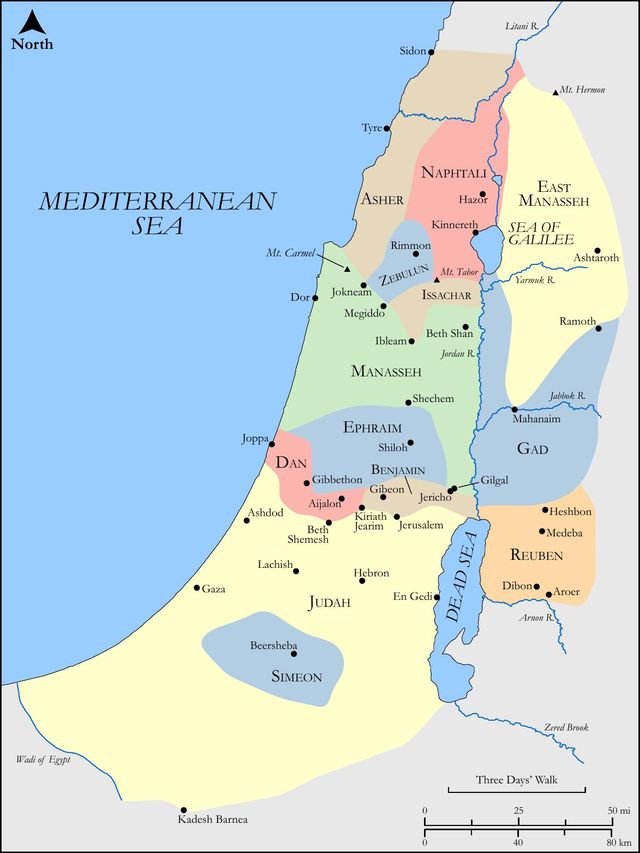
We have here the nomination of the cities of refuge in the land of Canaan, which was made by the advice and authority of Joshua and the princes (Jos 19:7); and upon occasion of the mention of this is repeated the nomination of the other three in the lot of the other two tribes and a half, which was made by Moses (Deu 4:43), but (as bishop Patrick thinks) they had not the privilege till now. 1. They are said to sanctify these cities, that is the original word for appointed, Jos 19:7. Not that any ceremony was used to signify the consecration of them, only they did by a public act of court solemnly declare them cities of refuge, and as such sacred to the honour of God, as the protector of exposed innocency. If they were sanctuaries, it was proper to say they were sanctified. Christ, our refuge, was sanctified by his Father; nay, for our sakes he sanctified himself, Joh 17:19. 2. These cities (as those also on the other side Jordan) stood in the three several parts of the country, so conveniently that a man might (they say) in half a day reach some one of them from any corner of the country. Kedesh was in Naphtali, the most northern tribe, Hebron in Judah, the most southern, and Shechem in Ephraim, which lay in the middle, about equally distant from the other two. God is a refuge at hand. 3. They were all Levites' cities, which put an honour upon God's tribe, making them judges in those cases wherein divine Providence was so nearly concerned, and protectors to oppressed innocency. It was also a kindness to the poor refugee, that when he might not go up to the house of the Lord, nor tread his courts, yet he had the servants of God's house with him, to instruct him, and pray for him, and help to make up the want of public ordinances. If he must be confined, it shall be to a Levite-city, where he may, if he will, improve his time. 4. These cities were upon hills to be seen afar off, for a city on a hill cannot be hid; and this would both direct and encourage the poor distressed man that was making that way; and, though therefore his way at last was up-hill, yet this would comfort him, that he would be in his place of safety quickly, and if he could but get into the suburbs of the city he was well enough off. 5. Some observe a significancy in the names of these cities with application to Christ our refuge. I delight not in quibbling upon names, yet am willing to take notice of these. Kedesh signifies holy, and our refuge is the holy Jesus. Shechem, a shoulder, and the government is upon his shoulder. Hebron, fellowship, and believers are called into the fellowship of Christ Jesus our Lord. Bezer, a fortification, for he is a strong-hold to all those that trust in him. Ramoth, high or exalted, for him hath God exalted with his own right hand. Golan, joy or exultation, for in him all the saints are justified, and shall glory. Lastly, Besides all these, the horns of the altar, wherever it was, were a refuge to those who took hold of them, if the crime were such as that sanctuary allowed. This is implied in that law (Exo 21:14), that a wilful murderer shall be taken from God's altar to be put to death. And we find the altar used for this purpose. Kg1 1:50; Kg1 2:28. Christ is our altar, who not only sanctifies the gift, but protects the giver.
Continue studying Joshua 20:7 across the web’s major study libraries — every link below opens this exact verse, chapter, or book on the destination site.
Read & Compare
 BibleGatewayThis verse in more than 200 translations and 70 languages.
 Bible.comThe YouVersion reader — hundreds of translations, reading plans, and highlights.
 ESV.orgCrossway's official English Standard Version reader.
 NET BibleThe NET translation with 60,000+ translators' notes on every rendering decision.
 STEP BibleTyndale House's free study tool — original text, vocabulary, and scholarly resources.
 BibliaLogos Bible Software's free web reader.
 USCCBThe New American Bible (Revised Edition) with the U.S. bishops' study notes.
Commentaries
 BibleHub CommentariesDozens of classic commentaries on this verse, gathered on one page.
 StudyLightMore than 100 commentary sets — the largest collection on the web.
 BibleRefPlain-English commentary on what this verse means, verse by verse.
 Enduring WordDavid Guzik's free commentary on this chapter, widely used by Bible teachers.
 Bible Study ToolsVerse commentary alongside Greek and Hebrew study aids.
Original Language & Research
- BibleHub InterlinearThe verse word by word — original language, transliteration, and English.
- BibleHub LexiconEvery word's original-language definition and Strong's entry.
 Blue Letter BibleDeep-study tools — Strong's numbers, concordance, and word studies.
 SefariaThe Hebrew text with Rashi and centuries of Jewish commentary.
Sermons, Hymns & Audio


TrulyRandomVerse is not affiliated with these sites and doesn’t control their content. They’re linked because they’re genuinely useful.
Summary
Joshua 20:7 precisely details the designation of the initial three cities of refuge on the western side of the Jordan River: Kedesh in the territory of Naphtali, Shechem in Ephraim, and Kirjatharba, also known as Hebron, in Judah. These cities were strategically chosen by the Israelite leaders under divine command to serve as sanctuaries for individuals who had unintentionally caused the death of another, providing them a safe haven from the "avenger of blood" and ensuring a fair legal process, thereby upholding justice while preventing cycles of retaliatory violence within the nascent Israelite society.
Context
ShowHideLiterary Context
Joshua 20:7 is an integral part of a brief but crucial chapter entirely dedicated to the establishment of the cities of refuge. This chapter immediately follows the extensive and detailed account of the division of the land among the twelve Israelite tribes in Joshua 13-19, signifying that the establishment of a just legal framework was as vital as the territorial allocation. The specific naming of these three western cities, followed by the designation of the three eastern cities in Joshua 20:8, underscores the completion of this essential aspect of Israel's legal and social infrastructure, fulfilling a divine mandate before Joshua's final exhortations to the nation.
Historical & Cultural Context
In the ancient Near East, the practice of blood vengeance (or lex talionis) was a deeply ingrained custom, where a close relative of a murdered person was obligated to avenge the death. This often led to uncontrolled and escalating cycles of violence. God's institution of cities of refuge, first commanded through Moses in Numbers 35 and Deuteronomy 19, provided a unique and merciful alternative for cases of unintentional killing. This system set Israel apart from surrounding cultures, demonstrating a divine legal framework that balanced the sanctity of human life with compassion for human error, ensuring due process and distinguishing between premeditated murder and accidental death, thereby preventing arbitrary retribution.
Key Themes
ShowHideThe designation of the cities of refuge in Joshua 20 powerfully illustrates several core theological and narrative themes. Firstly, it showcases God's Divine Justice and Mercy, providing a pathway for those guilty of unintentional homicide to escape immediate retribution and receive a fair hearing, thus preventing unjust executions while still upholding the sanctity of human life. Secondly, it emphasizes Order and Law in Israel, demonstrating God's meticulous care for the social and legal structure of the nation, establishing a system that promoted peace, stability, and adherence to covenantal principles. Finally, the strategic geographical placement of these cities, ensuring accessibility from any tribal territory, as detailed in Deuteronomy 19:3, highlights the Accessibility of God's Provision and Protection for all His people.
Exposition and Analysis
ShowHideKey Word Analysis
ShowHideA primitive root; to be (causatively, make, pronounce or observe as) clean (ceremonially or morally); appoint, bid, consecrate, dedicate, defile, hallow, (be, keep) holy(-er, place), keep, prepare, proclaim, purify, sanctify(-ied one, self), [idiom] wholly. The use of this verb, often translated "sanctified" or "made holy," is highly significant. It implies that the designation of these cities was not merely a practical administrative act but a sacred one, setting them apart for a divine purpose. They were consecrated spaces where God's justice and mercy would be uniquely manifested.
From קָדַשׁ; a sanctum; Kedesh, the name of four places in Palestine; Kedesh. The name of this city itself, meaning "holy" or "sanctuary," directly reflects its divinely ordained function. Its very name would have communicated its purpose as a set-apart place where divine law and protection would be upheld, reinforcing the sacred nature of the refuge it offered.
From חֶבֶר; seat of association; Chebron, a place in Palestine, also the name of two Israelites; Hebron. This ancient city, originally known as Kirjatharba, carried a name that resonated with community, covenant, and "association." Its inclusion as a city of refuge, a place where individuals would "associate" with a new community for protection and await due process, adds a layer of symbolic depth to its practical purpose, linking it to the foundational covenants of Israel.
Verse Breakdown
ShowHide"And they appointed Kedesh in Galilee in mount Naphtali"
The "they" refers to the leaders of Israel, specifically Joshua and the tribal heads, acting in obedience to the Lord's command (as per Numbers 35:9-15 and Joshua 20:1-6). Kedesh, located in the northern tribal territory of Naphtali, was the first designated city on the western side of the Jordan, ensuring an accessible point of refuge for the northern tribes. Its location in "Galilee" (meaning "circle" or "district") denotes its regional placement.
"and Shechem in mount Ephraim"
Shechem, situated centrally within the mountainous territory of Ephraim, served as the central city of refuge. Its historical significance—as a place of Abraham's first altar, Jacob's settlement, and the site of covenant renewal under Joshua (Joshua 24)—made it a well-known and easily accessible landmark for the central tribes. Its strategic position facilitated access for a large portion of the population.
"and Kirjatharba, which [is] Hebron, in the mountain of Judah."
Kirjatharba was the older, Canaanite name for Hebron, which became the southernmost city of refuge on the western side. Located in the mountainous region of Judah, Hebron was an ancient and prominent city, deeply significant in Israel's patriarchal history, notably as the burial place of Abraham, Isaac, and Jacob (Genesis 23:19). Its inclusion ensured refuge for the southern tribes, completing the geographical spread of these havens across the land.
Literary Devices
ShowHideJoshua 20:7 primarily employs Geographical Enumeration and Strategic Naming. The precise listing of three distinct cities—Kedesh, Shechem, and Kirjatharba (Hebron)—along with their respective tribal and geographical locations, serves to emphasize the concrete and meticulous implementation of God's command and the thoroughness of the provision. This detailed Enumeration reinforces the accessibility and equitable distribution of these havens across the land, demonstrating God's meticulous care for all His people. Furthermore, the Strategic Naming of Kedesh ("holy" or "sanctuary") subtly reinforces the sacred and protective nature of these designated places, even as the ancient names of Shechem and Hebron connect this new legal structure to the deep historical and covenantal roots of Israel, grounding the divine provision in the nation's heritage.
Theological and Thematic Connections
ShowHideThe establishment of the cities of refuge in Joshua 20:7 is a profound theological statement about the multifaceted character of God. It reveals a God who is not only perfectly just, demanding accountability for the taking of human life and upholding the sanctity of life, but also infinitely merciful, providing a structured way for the innocent or unintentional offender to find protection and a fair trial. This divinely ordained system prevented chaos and cycles of revenge, establishing a framework for ordered justice that distinguished Israel from surrounding nations. It underscored the sanctity of human life while simultaneously demonstrating compassion for human fallibility, reflecting God's desire for redemption and due process over arbitrary vengeance, ultimately showcasing His sovereign ordering of society for the well-being of His covenant people.
Reflection and Application
ShowHideWhile the physical cities of refuge no longer stand, the enduring principles they embody remain profoundly relevant for believers today. They serve as a powerful historical testament to God's unwavering commitment to both justice and mercy, demonstrating His provision for those in need of sanctuary. In a world still grappling with injustice, violence, and the often-devastating consequences of human error, the cities of refuge remind us that God provides a place of safety. Spiritually, this narrative calls us to recognize our own need for refuge from the just consequences of our sin and to find that ultimate sanctuary in God's gracious provision through Christ. This passage encourages us to seek fairness, extend mercy, and uphold justice in our communities and personal interactions, while always remembering that our truest safety and hope are found in the divine haven that God Himself provides.
Questions for Reflection
ShowHideFAQ
ShowHideWhat was the primary purpose of the cities of refuge as established in Joshua 20:7 and related passages?
ShowHideThe primary purpose of the cities of refuge was to provide a sanctuary for individuals who had unintentionally caused the death of another person, known as a "manslayer." This system protected them from the immediate and often violent retribution of the "avenger of blood" (a close relative of the deceased who had the right to exact vengeance). By fleeing to a city of refuge, the manslayer could receive a fair trial before the elders, distinguishing between intentional murder (which required capital punishment) and accidental death. This ensured due process and prevented uncontrolled cycles of retaliatory violence, demonstrating God's balance of justice and mercy, as commanded in passages like Numbers 35:9-34.
How many cities of refuge were there in total, and why were they strategically placed?
ShowHideThere were a total of six cities of refuge. Joshua 20:7 names the first three on the west side of the Jordan River: Kedesh in Galilee (Mount Naphtali), Shechem in Mount Ephraim, and Kirjatharba (Hebron) in the mountain of Judah. Joshua 20:8 names the remaining three on the east side: Bezer in the wilderness (Reuben), Ramoth in Gilead (Gad), and Golan in Bashan (Manasseh). They were strategically placed to ensure that a city of refuge was reasonably accessible from any point within the Israelite territories, regardless of tribal affiliation. This geographical distribution emphasized God's desire for all His people to have access to His provision and protection, as highlighted in Deuteronomy 19:3, which commanded the Israelites to prepare the way for these cities.
How does the concept of cities of refuge relate to modern justice systems?
ShowHideWhile modern justice systems do not have direct equivalents to the cities of refuge, the underlying principles resonate deeply. The system in Israel emphasized due process, distinguishing between intent (premeditated murder vs. accidental death), and providing a legal framework to prevent arbitrary, extra-legal vengeance. This aligns with modern legal concepts such as the presumption of innocence, the right to a fair trial, and the distinction between various degrees of homicide (e.g., murder, manslaughter, justifiable homicide). The cities of refuge were a divine provision for a structured, merciful, and just legal system, contrasting sharply with the often chaotic and vengeful practices common in the ancient world and laying foundational principles for equitable jurisprudence.
Christ-Centered Fulfillment
ShowHideThe cities of refuge in the Old Testament, as meticulously detailed in Joshua 20:7, serve as a profound and tangible foreshadowing of the ultimate refuge found in Jesus Christ. Just as the manslayer fled to a designated city for protection from the avenger of blood, so too does humanity, inherently guilty of sin, find eternal refuge from divine judgment in Christ. He is not merely a temporary haven but the eternal sanctuary, the Lamb of God who takes away the sin of the world. Through His perfect life, atoning sacrifice on the cross, and victorious resurrection, Jesus provides the ultimate escape from the just consequences of sin, offering forgiveness, reconciliation, and eternal life to all who "flee for refuge to lay hold upon the hope set before us" in Him (Hebrews 6:18). He is our compassionate advocate with the Father (1 John 2:1), our great high priest who sympathizes with our weaknesses (Hebrews 4:15), and the one in whom there is "no condemnation" for those who are in Him (Romans 8:1). The accessibility of the ancient cities, strategically placed across the land for all tribes, mirrors the universal accessibility of Christ's salvation, freely available to all who turn to Him in faith, regardless of their background or past.