


Joshua 20:8
Bible text: King James Version (1769 Blayney text) · Public domain
Bible text: King James Version with Strong's numbers · Public domain
Bible text: Berean Standard Bible · Public domain
Bible text: American Standard Version (1901) · Public domain
Bible text: World English Bible, Messianic edition · Public domain
Bible text: Geneva Bible (1599) · Public domain
Bible text: Young's Literal Translation · Public domain
- וּמֵעֵבֶרu·me·'E·verand from [the] other sideH5676Conj-w ¦ Prep-m ¦ N-mscNoun Singular Masculine Constructוּandמֵfromעֵבֶר[the] other side
- לְיַרְדֵּןle·yar·Denof [the] JordanH3383Prep-l ¦ N-properNoun Proper Locationלְofיַרְדֵּן[the] Jordan
- יְרִיחוֹye·ri·Choof JerichoH3405N-properNoun Proper Location
- מִזְרָחָהmiz·Ra·chaheast -wardH4217N-ms ¦ SfxNoun Singular Masculine Absoluteמִזְרָחָeastה-ward
- נָתְנוּna·te·Nuthey assignedH5414V-Qal-Perf-3cpVerb Qal Perfect 3rd Plural common gender
- אֶת'et<obj.>H853DirObjMParticle Object Indicator
- בֶּצֶרBe·tzerBezerH1221N-properNoun Proper Location
- בַּמִּדְבָּרba·mid·Barin the wildernessH4057Prep-b ¦ N-msNoun Singular Masculine Absoluteבַּin theמִּדְבָּרwilderness
- בַּמִּישֹׁרba·mi·Shorin the plainH4334Prep-b ¦ N-msNoun Singular Masculine Absoluteבַּin theמִּישֹׁרplain
- מִמַּטֵּהmi·ma·Tehfrom [the] tribe ofH4294Prep-m ¦ N-mscNoun Singular Masculine Constructמִfromמַּטֵּה[the] tribe of
- רְאוּבֵןre·'u·VenReubenH7205N-proper-mNoun Proper Masculine
- וְאֶתve·'Etand <obj.>H853Conj-w ¦ DirObjMParticle Object Indicatorוְandאֶת<obj.>
- רָאמֹתra·MotRamothH7216N-properNoun Proper Location
- בַּגִּלְעָדba·gil·'Adin <the> GileadH1568Prep-b ¦ N-properNoun Proper Locationבַּin <the>גִּלְעָדGilead
- מִמַּטֵּהmi·ma·tehfrom [the] tribe ofH4294Prep-m ¦ N-mscNoun Singular Masculine Constructמִfromמַּטֵּה[the] tribe of
- גָדGadGadH1410N-proper-mNoun Proper Masculine
- וְאֶתve·'Etand <obj.>H853Conj-w ¦ DirObjMParticle Object Indicatorוְandאֶת<obj.>
- גּוֹלָןga·lonGolanH1474N-properNoun Proper Location
- בַּבָּשָׁןba·ba·Shanin <the> BashanH1316Prep-b ¦ N-properNoun Proper Locationבַּin <the>בָּשָׁןBashan
- מִמַּטֵּהmi·ma·Tehfrom [the] tribe ofH4294Prep-m ¦ N-mscNoun Singular Masculine Constructמִfromמַּטֵּה[the] tribe of
- מְנַשֶּׁהme·na·ShehManassehH4519N-proper-mNoun Proper Masculine
English is a literal word-by-word gloss of the Hebrew, not the KJV's wording. Why?
This is the original text the KJV's translators worked from — each Hebrew word with its own literal English meaning in this verse, prepared by scholars at Tyndale House, Cambridge. The KJV translates whole sentences, not word by word, so its wording differs: one Hebrew word can become several English words, and the KJV may choose “the LORD” where the gloss reads “Yahweh”. Both are faithful — they answer different questions. For the KJV's own rendering, switch to the KJV text.
Details
See on the biblical-era maps
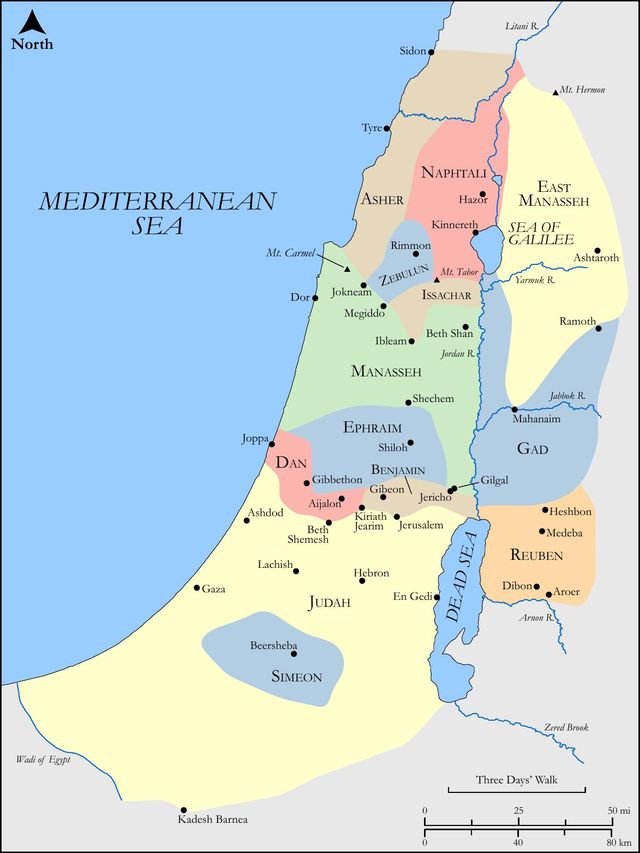
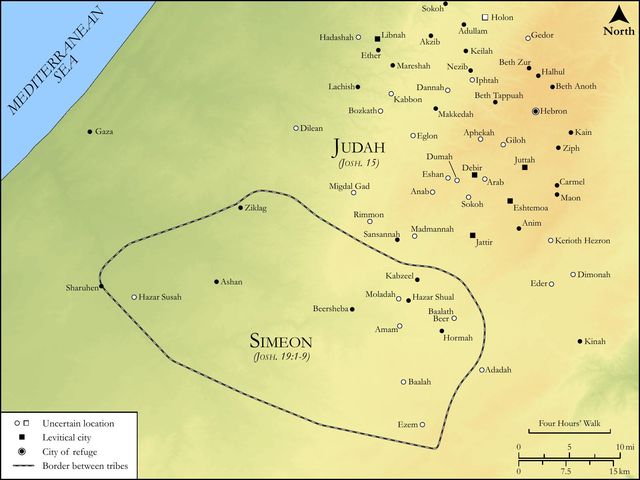
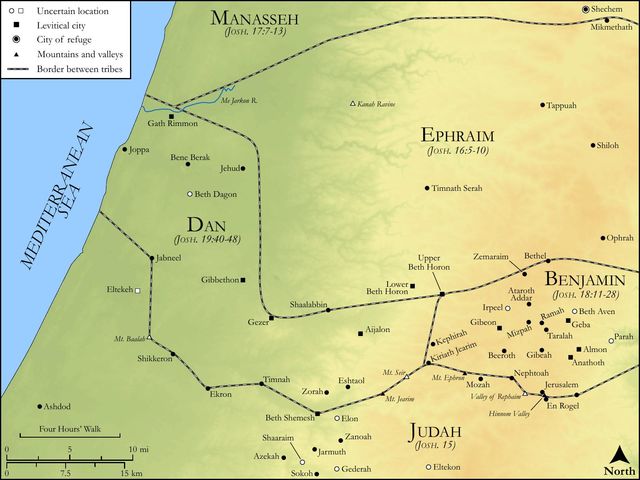
Study this verse
Public-domain commentary
Matthew Henry
From his Commentary on the Whole Bible. Henry comments on passages, not single verses — this entry covers Joshua 20:7–9.
We have here the nomination of the cities of refuge in the land of Canaan, which was made by the advice and authority of Joshua and the princes (Jos 19:7); and upon occasion of the mention of this is repeated the nomination of the other three in the lot of the other two tribes and a half, which was made by Moses (Deu 4:43), but (as bishop Patrick thinks) they had not the privilege till now. 1. They are said to sanctify these cities, that is the original word for appointed, Jos 19:7. Not that any ceremony was used to signify the consecration of them, only they did by a public act of court solemnly declare them cities of refuge, and as such sacred to the honour of God, as the protector of exposed innocency. If they were sanctuaries, it was proper to say they were sanctified. Christ, our refuge, was sanctified by his Father; nay, for our sakes he sanctified himself, Joh 17:19. 2. These cities (as those also on the other side Jordan) stood in the three several parts of the country, so conveniently that a man might (they say) in half a day reach some one of them from any corner of the country. Kedesh was in Naphtali, the most northern tribe, Hebron in Judah, the most southern, and Shechem in Ephraim, which lay in the middle, about equally distant from the other two. God is a refuge at hand. 3. They were all Levites' cities, which put an honour upon God's tribe, making them judges in those cases wherein divine Providence was so nearly concerned, and protectors to oppressed innocency. It was also a kindness to the poor refugee, that when he might not go up to the house of the Lord, nor tread his courts, yet he had the servants of God's house with him, to instruct him, and pray for him, and help to make up the want of public ordinances. If he must be confined, it shall be to a Levite-city, where he may, if he will, improve his time. 4. These cities were upon hills to be seen afar off, for a city on a hill cannot be hid; and this would both direct and encourage the poor distressed man that was making that way; and, though therefore his way at last was up-hill, yet this would comfort him, that he would be in his place of safety quickly, and if he could but get into the suburbs of the city he was well enough off. 5. Some observe a significancy in the names of these cities with application to Christ our refuge. I delight not in quibbling upon names, yet am willing to take notice of these. Kedesh signifies holy, and our refuge is the holy Jesus. Shechem, a shoulder, and the government is upon his shoulder. Hebron, fellowship, and believers are called into the fellowship of Christ Jesus our Lord. Bezer, a fortification, for he is a strong-hold to all those that trust in him. Ramoth, high or exalted, for him hath God exalted with his own right hand. Golan, joy or exultation, for in him all the saints are justified, and shall glory. Lastly, Besides all these, the horns of the altar, wherever it was, were a refuge to those who took hold of them, if the crime were such as that sanctuary allowed. This is implied in that law (Exo 21:14), that a wilful murderer shall be taken from God's altar to be put to death. And we find the altar used for this purpose. Kg1 1:50; Kg1 2:28. Christ is our altar, who not only sanctifies the gift, but protects the giver.
Continue studying Joshua 20:8 across the web’s major study libraries — every link below opens this exact verse, chapter, or book on the destination site.
Read & Compare
 BibleGatewayThis verse in more than 200 translations and 70 languages.
 Bible.comThe YouVersion reader — hundreds of translations, reading plans, and highlights.
 ESV.orgCrossway's official English Standard Version reader.
 NET BibleThe NET translation with 60,000+ translators' notes on every rendering decision.
 STEP BibleTyndale House's free study tool — original text, vocabulary, and scholarly resources.
 BibliaLogos Bible Software's free web reader.
 USCCBThe New American Bible (Revised Edition) with the U.S. bishops' study notes.
Commentaries
 BibleHub CommentariesDozens of classic commentaries on this verse, gathered on one page.
 StudyLightMore than 100 commentary sets — the largest collection on the web.
 BibleRefPlain-English commentary on what this verse means, verse by verse.
 Enduring WordDavid Guzik's free commentary on this chapter, widely used by Bible teachers.
 Bible Study ToolsVerse commentary alongside Greek and Hebrew study aids.
Original Language & Research
- BibleHub InterlinearThe verse word by word — original language, transliteration, and English.
- BibleHub LexiconEvery word's original-language definition and Strong's entry.
 Blue Letter BibleDeep-study tools — Strong's numbers, concordance, and word studies.
 SefariaThe Hebrew text with Rashi and centuries of Jewish commentary.
Sermons, Hymns & Audio


TrulyRandomVerse is not affiliated with these sites and doesn’t control their content. They’re linked because they’re genuinely useful.
Summary
Joshua 20:8 meticulously records the final designation of the three Cities of Refuge located on the eastern side of the Jordan River, completing the divinely mandated network of sanctuaries. This verse specifically names Bezer in the tribal territory of Reuben, Ramoth in Gilead for the tribe of Gad, and Golan in Bashan for the half-tribe of Manasseh, thereby fulfilling God's ancient command to Moses. These cities were crucial provisions designed to offer a just and merciful haven for those who had committed unintentional manslaughter, preventing the unchecked practice of blood vengeance and ensuring due process within Israelite society as they settled into the Promised Land.
Context
ShowHideLiterary Context
Joshua 20:8 is strategically positioned within the book of Joshua, following the successful conclusion of the conquest of Canaan and the detailed allocation of land among the twelve tribes of Israel (Joshua 13-19). Chapter 20 specifically addresses the establishment of the Cities of Refuge, a critical legal and administrative provision first outlined in the Mosaic Law. Verse 8 serves as the culmination of this designation, completing the list of these vital cities by naming the three located "on the other side Jordan by Jericho eastward." This complements the three cities previously designated on the western side of the Jordan in Joshua 20:7. The meticulous recording of these cities underscores the Israelites' faithfulness in executing God's commands and the establishment of a comprehensive, just legal system as they transitioned from a nomadic, conquering force to a settled nation. The subsequent chapter, Joshua 21, further details the provision of cities for the Levites, reinforcing the theme of orderly societal and religious infrastructure development.
Historical & Cultural Context
The concept of Cities of Refuge was a unique and divinely inspired legal innovation in Israel, designed to temper the pervasive practice of blood vengeance. In many cultures of the time, the "avenger of blood" (Hebrew: go'el haddam) possessed an unchallengeable right, and even a sacred duty, to kill anyone who had caused the death of a family member, regardless of intent. God's law, given through Moses (e.g., Numbers 35:9-34 and Deuteronomy 19:1-13), introduced a crucial distinction between premeditated murder and accidental killing. The Cities of Refuge provided a necessary sanctuary for the unintentional slayer, protecting them from immediate retribution until a fair trial could be conducted at the city gate. If found innocent of intentional murder, the individual was required to remain within the city until the death of the reigning high priest, after which they could return to their ancestral inheritance. The strategic placement of these six cities—three on each side of the Jordan—ensured accessibility for all Israelites, emphasizing that divine justice and mercy were available throughout the breadth of the land.
Key Themes
ShowHideThe establishment of the Cities of Refuge, as meticulously detailed in Joshua 20, powerfully illustrates several core theological and narrative themes. Firstly, it highlights Divine Justice and Mercy, showcasing God's perfectly balanced character that both upholds the sanctity of human life (demanding accountability for death) and provides a merciful provision to prevent unchecked vengeance and ensure due process. Secondly, it underscores Order and Administration within the nascent Israelite nation. The precise designation and strategic placement of these cities, encompassing both the eastern and western banks of the Jordan, reflect God's desire for an orderly society governed by His laws, meticulously implemented by Joshua and the tribal leaders. Thirdly, this act signifies the Fulfillment of God's Word. The establishment of these cities was a direct command given centuries earlier to Moses, and their designation by Joshua demonstrates the faithfulness of the Israelites in carrying out divine instructions, thereby reinforcing the covenant relationship. Finally, the theme of Accessibility is paramount; the strategic locations ensured that these sanctuaries were within reasonable reach for all inhabitants, emphasizing that divine protection and legal recourse were available to anyone in need across the breadth of the land.
Exposition and Analysis
ShowHideKey Word Analysis
ShowHideMeaning "an inaccessible spot" or "gold ore." As a City of Refuge, its name suggests a place of secure protection or a strong, fortified location. Its placement "in the wilderness upon the plain" indicates its accessibility within the tribal territory of Reuben, serving the southernmost tribes east of the Jordan.
Meaning "heights." Ramoth in Gilead was known for its elevated position. The name itself implies a place of prominence or a high vantage point, underscoring the strategic distribution of the cities across varied terrains to ensure widespread accessibility for the central Transjordan tribes, particularly Gad.
Possibly meaning "captive" or "circuit." Located in Bashan, a famously fertile and productive region, Golan's role as a City of Refuge would have made it a significant point of reference and sanctuary in the northernmost Transjordan, serving the half-tribe of Manasseh.
Verse Breakdown
ShowHide"And on the other side Jordan by Jericho eastward"
This initial phrase precisely locates the geographical area where these three Cities of Refuge are situated. "The other side Jordan" refers to the Transjordan region, the eastern bank of the Jordan River, clearly distinguishing them from the cities designated on the western side (Canaan proper). "By Jericho eastward" provides a specific, well-known reference point, indicating the general vicinity from which these eastern territories extended. This detail underscores the comprehensive nature of the allocation, covering both major geographical divisions of the Promised Land.
"they assigned Bezer in the wilderness upon the plain out of the tribe of Reuben"
This clause identifies the first of the three eastern Cities of Refuge. The phrase "they assigned" (KJV: "they appointed") refers to the leaders of Israel, primarily Joshua and Eleazar, acting under direct divine instruction and authority. Bezer, described as being "in the wilderness upon the plain," was allocated to the tribe of Reuben, whose inheritance lay in the southern part of the Transjordan. This strategic placement ensured a readily accessible refuge for the southernmost tribes east of the Jordan.
"and Ramoth in Gilead out of the tribe of Gad"
The second city named is Ramoth, situated in the significant region of Gilead. This city was designated for the tribe of Gad, whose territory was located north of Reuben's, occupying the central part of the Transjordan. Ramoth's location provided a vital central refuge for the tribes in that region, particularly Gad and the eastern half-tribe of Manasseh.
"and Golan in Bashan out of the tribe of Manasseh"
The final city listed for the eastern side of the Jordan is Golan, located in the famously fertile and productive region of Bashan. This city was assigned to the half-tribe of Manasseh, whose inheritance extended into the northernmost part of the Transjordan. Golan's inclusion completed the network of refuge cities, ensuring that all tribes on the eastern bank had fair access to a designated sanctuary, fulfilling the divine mandate for comprehensive coverage.
Literary Devices
ShowHideJoshua 20:8 primarily employs Enumeration and Geographical Specificity as its key literary devices. The verse presents a clear, concise list of the three eastern Cities of Refuge, along with their precise locations and the tribes to which they were assigned. This Enumeration serves to document the meticulous fulfillment of God's command and the orderly administration of the land, providing a definitive record of the completion of this crucial task. The pervasive use of Geographical Specificity ("on the other side Jordan by Jericho eastward," "in the wilderness upon the plain," "in Gilead," "in Bashan") grounds the narrative firmly in a tangible reality, reinforcing the historical accuracy and the practical, systematic implementation of the divine law. This precision underscores the strategic planning involved in making these cities accessible to all who might need them, reflecting the divine wisdom behind their establishment. Furthermore, the verse functions as a key component within a broader Fulfillment Narrative, demonstrating the completion of a long-standing divine mandate given to Moses, thereby affirming God's faithfulness and the obedience of His people.
Theological and Thematic Connections
ShowHideJoshua 20:8, by completing the list of Cities of Refuge, solidifies a profound theological statement about God's character and His design for a just and merciful human society. It demonstrates an unwavering divine commitment to both justice and mercy, establishing a legal framework that meticulously distinguishes between intentional malice and accidental harm. This system was divinely instituted to prevent the destructive cycle of retaliatory violence while simultaneously upholding the sanctity of human life and the imperative for accountability. The Cities of Refuge were tangible, physical manifestations of God's provision for protection and due process, ensuring that even in a fallen world, a pathway to safety and fair judgment existed. They underscored the principle that God's law is not merely punitive but profoundly redemptive, offering a place of sanctuary for those in distress, provided they actively sought it and faithfully abided by its terms.
Reflection and Application
ShowHideThe meticulous establishment of the Cities of Refuge, as detailed in Joshua 20:8, offers profound and enduring lessons for contemporary believers. It serves as a powerful reminder that God is a God of both perfect justice and boundless mercy. In a world often characterized by swift judgment, unforgiving retribution, and the perpetuation of cycles of harm, the divine provision for accidental offenders stands as a compelling model for our own interactions and the structures we build within our communities. We are called to cultivate environments that seek to understand intent, extend grace, and provide pathways for restoration, rather than merely perpetuating cycles of blame and retaliation. Furthermore, the necessity of actively fleeing to the City of Refuge for safety serves as a profound spiritual metaphor: just as the manslayer had to recognize their perilous need and make a deliberate, urgent effort to reach the sanctuary, so too must we, recognizing our spiritual vulnerability and the pervasive reality of sin, actively flee to God for refuge. This act of seeking refuge is not passive but requires intentional repentance, humble faith, and a committed pursuit of His presence, finding our ultimate safety, peace, and restitution in His divine provisions.
Questions for Reflection
ShowHideFAQ
ShowHideWhat was the primary purpose of the Cities of Refuge?
ShowHideThe primary purpose of the Cities of Refuge was to provide a divinely ordained sanctuary for individuals who had accidentally killed someone, protecting them from the immediate vengeance of the "avenger of blood" (the victim's closest male relative). This system, mandated by God in the Mosaic Law (e.g., Numbers 35:9-34), ensured that accidental killings were clearly distinguished from premeditated murder, thereby allowing for a fair legal process and preventing unchecked blood feuds from escalating. The unintentional slayer could remain safely within the city until the death of the reigning high priest, after which they were free to return to their home and inheritance.
Why were three cities designated on each side of the Jordan River?
ShowHideThree cities were designated on each side of the Jordan River (making a total of six) to ensure that a City of Refuge was reasonably and readily accessible from any point within the Israelite territory. The Jordan River served as a significant geographical barrier, and having cities strategically placed on both the eastern and western banks (as detailed in Joshua 20:7-8) ensured that anyone in need of refuge could quickly reach a sanctuary, regardless of their location. This comprehensive distribution underscored the universal availability of God's provision for justice and mercy throughout the land.
Christ-Centered Fulfillment
ShowHideThe Cities of Refuge, meticulously established in Joshua 20:8 and throughout the land of Israel, serve as a profound Old Testament type pointing directly and powerfully to Jesus Christ as our ultimate and eternal sanctuary. Just as the manslayer, though guilty of unintended death, had to flee to a designated city for protection from the avenger of blood, so too do we, as sinners, stand in desperate need of refuge from the just consequences of our sin and the righteous judgment to come. Christ is our true and perfect City of Refuge, providing complete, secure, and eternal protection for all who flee to Him in faith. He is the Lamb of God who takes away the sin of the world, offering not merely a temporary reprieve but eternal salvation, complete forgiveness, and full reconciliation with God. Unlike the earthly cities of refuge, which required the high priest's death for the slayer's release, Christ, our eternal and perfect High Priest (Hebrews 4:14), died once for all, securing our permanent freedom from sin's penalty and granting us unhindered access to God's boundless grace (Hebrews 9:11-14). In Him, we find not just a place of safety, but new life, an unshakable hope, and a divine stronghold to which we can always resort, knowing that in Him, there is no condemnation for those who are in Christ Jesus (Romans 8:1).