


Joshua 20:5
Bible text: King James Version (1769 Blayney text) · Public domain
Bible text: King James Version with Strong's numbers · Public domain
Bible text: Berean Standard Bible · Public domain
Bible text: American Standard Version (1901) · Public domain
Bible text: World English Bible, Messianic edition · Public domain
Bible text: Geneva Bible (1599) · Public domain
Bible text: Young's Literal Translation · Public domain
- וְכִיve·Khiand ifH3588Conj-w ¦ PrtParticle Conditionalוְandכִיif
- יִרְדֹּףyir·Dofhe will pursueH7291V-Qal-Imperf-3msVerb Qal Imperfect 3rd Singular Masculine
- גֹּאֵלgo·'El[the] avenger ofH1350V-Qal-Prtcpl-msVerb Qal Participle Singular Masculine Construct
- הַדָּםha·Dam<the> bloodH1818Art ¦ N-msNoun Singular Masculine Absoluteהַ<the>דָּםblood
- אַחֲרָיו'a·cha·Ravafter himH310Adj-mpc ¦ 3msAdjective Numerical Plural Masculine Constructאַחֲרָיafterוhim
- וְלֹאve·lo'and notH3808Conj-w ¦ NegParticle Negativeוְandלֹאnot
- יַסְגִּרוּyas·Gi·ruthey will deliver upH5462V-Hiphil-Imperf-3mpVerb Hiphil Imperfect 3rd Plural Masculine
- אֶת'et<obj.>H853DirObjMParticle Object Indicator
- הָרֹצֵחַha·ro·Tze·achthe killerH7523Art ¦ V-Qal-Prtcpl-msVerb Qal Participle Singular Masculine Absoluteהָtheרֹצֵחַkiller
- בְּיָדוֹbe·ya·Doin his handH3027Prep-b ¦ N-csc ¦ 3msNoun Singular common gender Constructבְּinיָדhandוֹhis
- כִּיkiforH3588PrtParticle Conditional
- בִבְלִיviv·liwith notH1097Prep-b ¦ N-mscNoun Singular Masculine Constructבִwithבְלִיnot
- דַעַתda·'atknowledgeH1847N-fsNoun Singular Feminine Absolute
- הִכָּהhi·Kahhe struckH5221V-Hiphil-Perf-3msVerb Hiphil Perfect 3rd Singular Masculine
- אֶת'et<obj.>H853DirObjMParticle Object Indicator
- רֵעֵהוּre·'E·huhis neighborH7453N-msc ¦ 3msNoun Singular Masculine Constructרֵעֵneighborהוּhis
- וְלֹאve·lo'and notH3808Conj-w ¦ NegParticle Negativeוְandלֹאnot
- שֹׂנֵאso·Ne'[was] hatingH8130V-Qal-Prtcpl-msVerb Qal Participle Singular Masculine Absolute
- הוּאhu'heH1931Pro-3msPronoun Personal 3rd Singular Masculine
- לוֹlo<to> <the> himPrep-l ¦ 3msSuffix Personal 3rd Singular Masculineל<to> <the>וֹhim
- מִתְּמוֹלmi·te·Molfrom yesterdayH8543Prep-m ¦ N-msNoun Singular Masculine Absoluteמִfromתְּמוֹלyesterday
- שִׁלְשׁוֹםshil·Shom[the] third dayH8032N-msNoun Singular Masculine Absolute
English is a literal word-by-word gloss of the Hebrew, not the KJV's wording. Why?
This is the original text the KJV's translators worked from — each Hebrew word with its own literal English meaning in this verse, prepared by scholars at Tyndale House, Cambridge. The KJV translates whole sentences, not word by word, so its wording differs: one Hebrew word can become several English words, and the KJV may choose “the LORD” where the gloss reads “Yahweh”. Both are faithful — they answer different questions. For the KJV's own rendering, switch to the KJV text.
Details
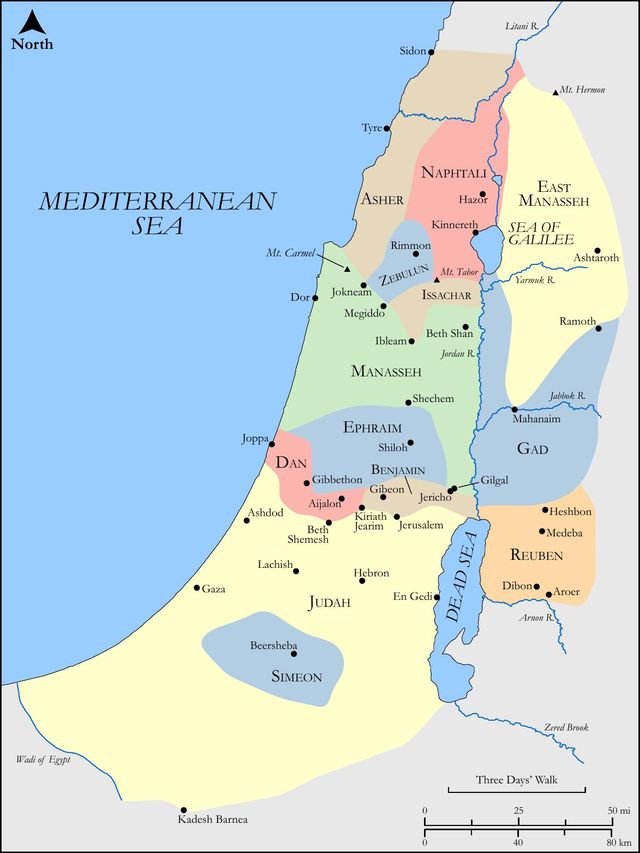
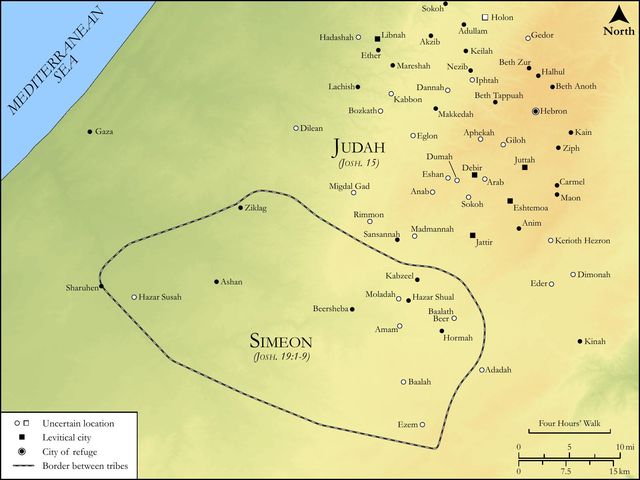
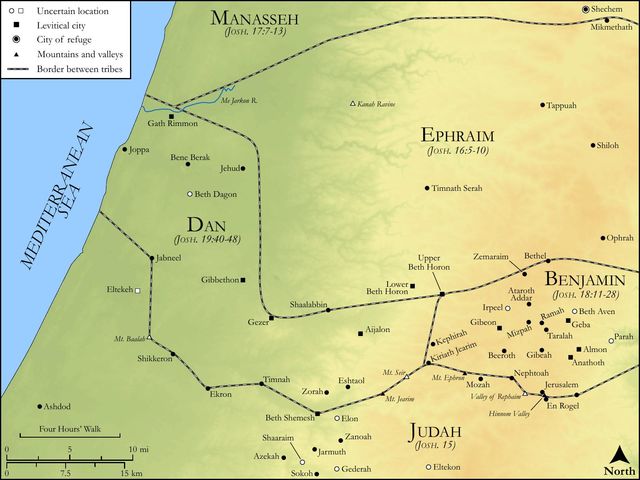
See on the biblical-era maps
Study this verse
Public-domain commentary
Matthew Henry
From his Commentary on the Whole Bible. Henry comments on passages, not single verses — this entry covers Joshua 20:1–6.
Many things were by the law of Moses ordered to be done when they came to Canaan and this among the rest, the appointing of sanctuaries for the protecting of those that were guilty of casual murder, which was a privilege to all Israel, since no man could be sure but some time or other it might be his own case; and it was for the interest of the land that the blood of an innocent person, whose hand only was guilty but not his heart, should not be shed, no, not by the avenger of blood: of this law, which was so much for their advantage, God here reminds them, that they might remind themselves of the other laws he had given them, which concerned his honour. 1. Orders are given for the appointing of these cities (Jos 20:2), and very seasonably at this time when the land was newly surveyed, and so they were the better able to divide the coasts of it into three parts, as God had directed them, in order to the more convenient situation of these cities of refuge, Deu 19:3. Yet it is probable that it was not done till after the Levites had their portion assigned them in the next chapter, because the cities of refuge were all to be Levites' cities. As soon as ever God had given them cities of rest, he bade them appoint cities of refuge, to which none of them knew but they might be glad to escape. Thus God provided, not only for their ease at all times, but for their safety in times of danger, and such times we must expect and prepare for in this world. And it intimates what God's spiritual Israel have and shall have, in Christ and heaven, not only rest to repose themselves in, but refuge to secure themselves in. And we cannot think these cities of refuge would have been so often and so much spoken of in the law of Moses, and have had so much care taken about them (when the intention of them might have been effectually answered, as it is in our law, by authorizing the courts of judgment to protect and acquit the manslayer in all those cases wherein he was to have privilege of sanctuary), if they were not designed to typify the relief which the gospel provides for poor penitent sinners, and their protection from the curse of the law and the wrath of God, in our Lord Jesus, to whom believers flee for refuge (Heb 6:18), and in whom they are found (Phi 3:9) as in a sanctuary, where they are privileged from arrests, and there is now no condemnation to them, Rom 8:1. 2. Instructions are given for the using of these cities. The laws in this matter we had before, Num 35:10, etc., where they were opened at large. (1.) It is supposed that a man might possibly kill a person, it might be his own child or dearest friend, unawares and unwittingly (Jos 20:3), not only whom he hated not, but whom he truly loved beforetime (Jos 20:5); for the way of man is not in himself. What reason have we to thank God who has kept us both from slaying and from being slain by accident! In this case, it is supposed that the relations of the person slain would demand the life of the slayer, as a satisfaction to that ancient law that whoso sheds man's blood, by man shall his blood be shed. (2.) It is provided that if upon trial it appeared that the murder was done purely by accident, and not by design, either upon an old grudge or a sudden passion, then the slayer should be sheltered from the avenger of blood in any one of these cities, Jos 20:4-6. By this law he was entitled to a dwelling in that city, was taken into the care of the government of it, but was confined to it, as prisoner at large; only, if he survived the high priest, then, and not till then, he might return to his own city. And the Jews say, "If he died before the high priest in the city of his refuge and exile, and was buried there, yet, at the death of the high priest, his bones should be removed with respect to the place of his fathers' sepulchres."
Continue studying Joshua 20:5 across the web’s major study libraries — every link below opens this exact verse, chapter, or book on the destination site.
Read & Compare
 BibleGatewayThis verse in more than 200 translations and 70 languages.
 Bible.comThe YouVersion reader — hundreds of translations, reading plans, and highlights.
 ESV.orgCrossway's official English Standard Version reader.
 NET BibleThe NET translation with 60,000+ translators' notes on every rendering decision.
 STEP BibleTyndale House's free study tool — original text, vocabulary, and scholarly resources.
 BibliaLogos Bible Software's free web reader.
 USCCBThe New American Bible (Revised Edition) with the U.S. bishops' study notes.
Commentaries
 BibleHub CommentariesDozens of classic commentaries on this verse, gathered on one page.
 StudyLightMore than 100 commentary sets — the largest collection on the web.
 BibleRefPlain-English commentary on what this verse means, verse by verse.
 Enduring WordDavid Guzik's free commentary on this chapter, widely used by Bible teachers.
 Bible Study ToolsVerse commentary alongside Greek and Hebrew study aids.
Original Language & Research
- BibleHub InterlinearThe verse word by word — original language, transliteration, and English.
- BibleHub LexiconEvery word's original-language definition and Strong's entry.
 Blue Letter BibleDeep-study tools — Strong's numbers, concordance, and word studies.
 SefariaThe Hebrew text with Rashi and centuries of Jewish commentary.
Sermons, Hymns & Audio


TrulyRandomVerse is not affiliated with these sites and doesn’t control their content. They’re linked because they’re genuinely useful.
Summary
Joshua 20:5 is a pivotal verse within the Mosaic Law, meticulously detailing the divine provision of Cities of Refuge in ancient Israel. This verse precisely outlines the crucial protection afforded to an individual who has unintentionally caused the death of another, ensuring they are not summarily executed by the "avenger of blood." It profoundly underscores God's meticulous design for a justice system that carefully distinguishes between premeditated murder and accidental homicide, thereby tempering the pursuit of justice with a profound demonstration of mercy, due process, and the sanctity of life within the community.
Context
ShowHideLiterary Context
Joshua 20:5 is strategically placed within Joshua chapter 20, which records the establishment and designation of the six Cities of Refuge across the newly acquired land of Canaan. This act directly fulfills a divine mandate given by God through Moses in earlier Pentateuchal books, notably Numbers 35:9-34 and Deuteronomy 19:1-13. The chapter's immediate placement after the detailed division of the land among the Israelite tribes (chapters Joshua 13 through Joshua 19) signifies the practical implementation of God's covenant laws as Israel transitions from a nomadic, conquering force to a settled, ordered society. It highlights the importance of divine statutes in establishing societal stability and ensuring equitable justice within their inheritance.
Historical & Cultural Context
Among the nations, and particularly within Israelite society, the custom of blood vengeance was a deeply entrenched practice. A "go'el haddam," or "avenger of blood," was typically a close male relative of the deceased who bore the legal and social obligation to avenge the death of his kin. In the absence of a centralized police force or formal prison system, this custom served as a primary deterrent against murder. However, it also carried the significant risk of escalating into destructive and prolonged blood feuds, threatening communal peace and order. The Cities of Refuge, therefore, represented a unique divine innovation designed to regulate and temper this ancient practice. They provided a structured legal process, offering a sanctuary where the slayer could receive a fair hearing before the elders of the city, thereby distinguishing between intentional murder (which warranted execution) and unintentional homicide (which merited refuge), ensuring justice was applied judiciously.
Key Themes
ShowHideJoshua 20:5 profoundly contributes to several key themes woven throughout the Old Testament and beyond. Foremost is the theme of Justice Tempered with Mercy, showcasing God's character as both righteous in demanding accountability for bloodshed and compassionate in providing a way for unintentional offenders to find safety and due process. This verse highlights the Importance of Intent, establishing a critical legal distinction between malicious acts and accidental harm—a principle foundational to many modern legal systems and a reflection of God's perfect understanding of the human heart. Furthermore, the Cities of Refuge embody the theme of Order and Due Process, preventing arbitrary vengeance and ensuring that cases were judged by established legal procedures rather than immediate, emotional retribution. Finally, the system upholds the Sanctity of Life, demonstrating that while refuge was granted, the life taken was still highly valued, as evidenced by the slayer's confinement until the death of the high priest, as stipulated in Numbers 35:25. This temporary confinement underscored the gravity of taking a human life, even accidentally.
Exposition and Analysis
ShowHideKey Word Analysis
ShowHideThis primitive root means "to redeem" according to the Oriental law of kinship. It signifies the role of the "next of kin" who has the right and responsibility to act on behalf of a relative. This could involve redeeming property, marrying a childless widow, or, as in this context, avenging a wrong, specifically bloodshed. The "avenger of blood" (Hebrew: go'el haddam) was the designated family member whose duty it was to pursue and execute the killer of his relative, ensuring that the shedding of innocent blood did not go unpunished and defile the land (Numbers 35:33).
This phrase combines two Hebrew words to convey the idea of an act committed "without knowledge" or "unawares." H1097 (bᵉlîy) properly means "failure" or "nothing," and is often used with a preposition to mean "without," "not yet," or "ignorantly." H1847 (daʻath) means "knowledge" or "understanding." Together, they emphatically describe an action that was accidental, unintentional, and devoid of any malicious forethought. This legal distinction was crucial in Mosaic Law, differentiating between sins committed inadvertently and those committed defiantly or "with a high hand" (Numbers 15:27-31).
This idiomatic expression literally translates to "he was not hating him from yesterday and the day before yesterday." H8130 (sânêʼ) means "to hate." H8543 (tᵉmôwl) means "yesterday" or "a time since," and H8032 (shilshôwm) means "day before yesterday" or "time past." The combination emphasizes the complete absence of any prior animosity, malice, or long-standing feud between the slayer and the deceased. This criterion served as a critical safeguard against feigned unintentionality, ensuring that only genuinely accidental killings, devoid of any underlying ill-will or premeditation, qualified for sanctuary in the Cities of Refuge. It underscores the paramount importance of intent in Israelite jurisprudence.
Verse Breakdown
ShowHide"And if the avenger of blood pursue after him,"
This clause establishes the immediate threat and the legal reality of the situation. It acknowledges the legitimate right and determined pursuit of the "go'el haddam," who is compelled by kinship obligations to seek retribution for the spilled blood of his relative. This highlights the urgency for the slayer to reach a City of Refuge and the necessity of a designated sanctuary to mediate this pursuit.
"then they shall not deliver the slayer up into his hand;"
This is the core protective injunction of the verse, outlining the duty of the authorities within the City of Refuge. "They" refers to the elders or leaders of the city, who, upon the slayer's arrival and presentation of his case at the city gate, were obligated to grant him asylum. This command ensured that the slayer would not be summarily executed by the avenger, but rather would receive due process, preventing the cycle of uncontrolled, immediate vengeance.
"because he smote his neighbour unwittingly, and hated him not beforetime."
This final clause provides the explicit legal justification for granting refuge. It reiterates the two critical conditions for sanctuary: first, the act was accidental, without conscious intent to kill ("unwittingly" or "by error"); second, there was no prior malice, animosity, or pre-existing feud between the slayer and the deceased ("hated him not beforetime"). These criteria were essential for distinguishing manslaughter from murder, ensuring that the Cities of Refuge served their intended purpose for the truly unintentional offender, upholding God's standard of justice.
Literary Devices
ShowHideThe passage in Joshua 20:5, and indeed the entire chapter detailing the Cities of Refuge, is characterized by precise Legal Language, reflecting its nature as a divine statute and a foundational element of Israelite jurisprudence. The specific conditions for refuge—"unwittingly" and "hated him not beforetime"—are characteristic of legal codes, aiming for clarity and unambiguous application. There is a clear Contrast established between intentional murder, which is punishable by death, and unintentional homicide, which merits refuge. This crucial distinction is central to the justice system outlined by God. The narrative also employs Repetition and Emphasis on the lack of malice or prior hatred, reinforcing the critical nature of intent in determining culpability. Furthermore, the very establishment of these cities serves as a powerful Symbolism of God's ordered justice, His provision of a safe haven for the vulnerable, and His compassionate nature, pointing to deeper theological truths about refuge and redemption.
Theological and Thematic Connections
ShowHideJoshua 20:5 provides profound insight into the character of God, revealing Him as a God of both perfect justice and boundless mercy. The meticulous distinction between intentional and unintentional acts showcases His commitment to a nuanced and equitable legal system, one that values human life immensely while also understanding human fallibility. This divine provision of sanctuary underscores the principle that not all bloodshed is equal in its moral culpability, and that intent is a critical factor in determining guilt and appropriate consequence. It teaches us that true justice is not merely punitive but also redemptive, offering a path for those who err unintentionally to find protection and a chance for restoration within the community. The Cities of Refuge, therefore, stand as a testament to God's desire for an ordered society governed by His righteous and compassionate laws, preventing chaos and promoting a just peace that reflects His own divine attributes.
Reflection and Application
ShowHideJoshua 20:5, though rooted in an ancient legal system, offers timeless principles for believers today, compelling us to reflect on the nature of justice and mercy in our own lives and communities. Just as God meticulously distinguished between intentional and unintentional acts, we are called to exercise discernment and compassion, avoiding hasty judgments and seeking to understand the full context and intent behind others' actions. This verse reminds us that true justice is not merely about punishment but about restoration and the preservation of life where possible. It encourages us to create "cities of refuge" in our own spheres of influence—places of safety, grace, and due process for those who have erred unintentionally, fostering environments where forgiveness and reconciliation can flourish. Ultimately, it directs our gaze to the ultimate Refuge, Christ, who offers sanctuary for all who flee to Him from the consequences of sin, whether intentional or not, providing a perfect balance of divine justice and boundless grace.
Questions for Reflection
ShowHideFAQ
ShowHideWhat was the role of the "avenger of blood" in ancient Israel?
ShowHideThe "avenger of blood" (Hebrew: go'el haddam) was typically the closest male relative of a person who had been killed. In ancient Israelite society, this kinsman had the legal and social right, and often the moral obligation, to pursue and execute the killer to avenge the death of his relative. This system was part of the broader concept of the go'el or kinsman-redeemer, who acted on behalf of his family in matters of property, liberty, and justice. While this custom served to ensure accountability for bloodshed, it also carried the risk of escalating blood feuds. The Cities of Refuge were therefore established by divine command to regulate this practice, providing a safe haven for those who committed unintentional homicide and ensuring a fair hearing before the community elders, as detailed in Numbers 35.
How did the Cities of Refuge prevent uncontrolled blood feuds?
ShowHideThe Cities of Refuge were a divinely ordained mechanism to prevent the uncontrolled escalation of blood feuds by providing a structured legal process for cases of homicide. When an individual unintentionally killed someone, they could flee to one of these designated cities. Upon arrival, they would present their case to the elders at the city gate, explaining the circumstances of the death. If it was determined that the killing was indeed unintentional and without prior malice, the elders would grant them asylum, preventing the "avenger of blood" from immediately executing retribution. The slayer would then remain confined within the city until the death of the reigning high priest, at which point they were free to return to their own land without fear of vengeance (Numbers 35:25-28). This system ensured that justice was served with discernment, distinguishing between murder and manslaughter, and upholding the sanctity of life while maintaining societal order and preventing cycles of retaliatory violence.
Christ-Centered Fulfillment
ShowHideThe Cities of Refuge, as exemplified in Joshua 20:5, serve as a profound Old Testament type pointing to the ultimate spiritual refuge found in Jesus Christ. Just as the physical cities provided a safe haven for those who unintentionally shed blood, Christ offers a perfect and eternal sanctuary for all who have sinned, whether intentionally or unintentionally, and who flee to Him for salvation. He is our true "Kinsman-Redeemer" (Go'el), not merely avenging blood, but shedding His own precious blood to redeem us from the curse and penalty of sin (Galatians 3:13). The death of the high priest, which allowed the slayer to return home freely, powerfully foreshadows the death of Christ, our Great High Priest (Hebrews 4:14), whose once-for-all sacrifice atones for all sin, granting us true freedom and access to God's presence (Hebrews 9:11-14). In Christ, we find not just temporary protection from an earthly avenger, but eternal forgiveness and reconciliation with God, a spiritual haven where divine justice is fully satisfied and divine mercy is abundantly poured out for all who "flee for refuge to lay hold upon the hope set before us" in Him (Hebrews 6:18).