


Isaiah 44:15
Bible text: King James Version (1769 Blayney text) · Public domain
Bible text: King James Version with Strong's numbers · Public domain
Bible text: Berean Standard Bible · Public domain
Bible text: American Standard Version (1901) · Public domain
Bible text: World English Bible, Messianic edition · Public domain
Bible text: Geneva Bible (1599) · Public domain
Bible text: Young's Literal Translation · Public domain
- וְהָיָהve·ha·Yahand it belongsH1961Conj-w ¦ V-Qal-ConsecPerf-3msVerb Qal Consecutive Perfect 3rd Singular Masculineוְandהָיָהit belongs
- לְאָדָםle·'a·Damto anyoneH120Prep-l ¦ N-msNoun Singular Masculine Absoluteלְtoאָדָםanyone
- לְבָעֵרle·va·'Erto burnH1197Prep-l ¦ V-Piel-InfVerb Piel Infinitive Constructלְtoבָעֵרburn
- וַיִּקַּחvai·yi·Kachand he tookH3947Conj-w ¦ V-Qal-ConsecImperf-3msVerb Qal Consecutive Imperfect 3rd Singular Masculineוַandיִּקַּחhe took
- מֵהֶםme·Hemsome of themPrep-m ¦ 3mpSuffix Personal 3rd Plural Masculineמֵsome ofהֶםthem
- וַיָּחָםvai·Ya·chomand he became warmH2552Conj-w ¦ V-Qal-ConsecImperf-3msVerb Qal Consecutive Imperfect 3rd Singular Masculineוַandיָּחָםhe became warm
- אַף'afalsoH637PrtParticle Interjection
- יַשִּׂיקya·Sikhe kindles a fireH5400V-Hiphil-Imperf-3msVerb Hiphil Imperfect 3rd Singular Masculine
- וְאָפָהve·'A·fahand he bakesH644Conj-w ¦ V-Qal-ConsecPerf-3msVerb Qal Consecutive Perfect 3rd Singular Masculineוְandאָפָהhe bakes
- לָחֶםLa·chembreadH3899N-msNoun Singular Masculine Absolute
- אַף'afalsoH637PrtParticle Interjection
- יִפְעַלyif·'alhe makesH6466V-Qal-Imperf-3msVerb Qal Imperfect 3rd Singular Masculine
- אֵל'ela godH410N-msNoun Singular Masculine Absolute
- וַיִּשְׁתָּחוּvai·yish·Ta·chuand he bowed downH7812Conj-w ¦ V-Hishtaphel-ConsecImperf-3msVerb Hishtaphel Consecutive Imperfect 3rd Singular Masculineוַandיִּשְׁתָּחוּhe bowed down
- עָשָׂהוּ'a·Sa·huhe makes itH6213V-Qal-Perf-3ms ¦ 3msVerb Qal Perfect 3rd Singular Masculineעָשָׂhe makesהוּit
- פֶסֶלFe·selan idolH6459N-msNoun Singular Masculine Absolute
- וַיִּסְגָּדvai·yis·godand he prostrated himselfH5456Conj-w ¦ V-Qal-ConsecImperf-3msVerb Qal Consecutive Imperfect 3rd Singular Masculineוַandיִּסְגָּדhe prostrated himself
- לָמוֹla·moto itPrep-l ¦ 3mpSuffix Personal 3rd Plural Masculineלָtoמוֹit
English is a literal word-by-word gloss of the Hebrew, not the KJV's wording. Why?
This is the original text the KJV's translators worked from — each Hebrew word with its own literal English meaning in this verse, prepared by scholars at Tyndale House, Cambridge. The KJV translates whole sentences, not word by word, so its wording differs: one Hebrew word can become several English words, and the KJV may choose “the LORD” where the gloss reads “Yahweh”. Both are faithful — they answer different questions. For the KJV's own rendering, switch to the KJV text.
Details
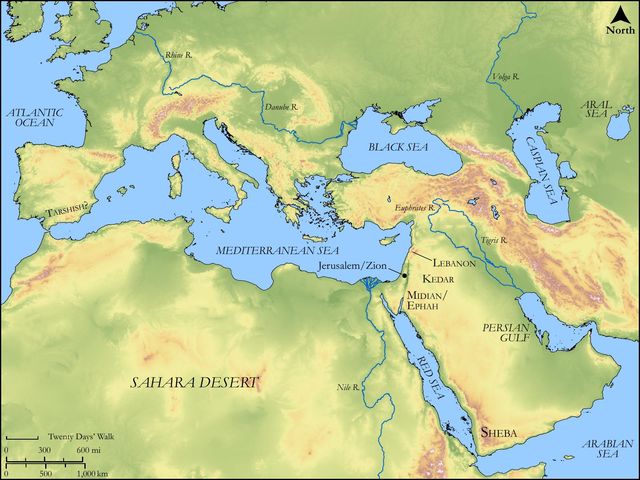
See on the biblical-era map
Study this verse
Public-domain commentary
Matthew Henry
From his Commentary on the Whole Bible. Henry comments on passages, not single verses — this entry covers Isaiah 44:9–20. His four-level outline is real structure in the source text, so it is rendered as structure.
Often before, God, by the prophet, had mentioned the folly and strange sottishness of idolaters; but here he enlarges upon that head, and very fully and particularly exposes them to contempt and ridicule. This discourse is intended, 1. To arm the people of Israel against the strong temptation they would be in to worship idols when they were captives in Babylon, in compliance with the custom of the country (they being far from the city of their own solemnities) and to humour those who were now their lords and masters. 2. To cure them of their inclination to idolatry, which was the sin that did most easily beset them and to reform them from which they were sent into Babylon. As the rod of God is of use to enforce the word, so the word of God is of use to explain the rod, that the voice of both together may be heard and answered. 3. To furnish them with something to say to their Chaldean task-masters. When they insulted over them, when they asked, Where is your God? they might hence ask them, What are your gods? 4. To take off their fear of the gods of their enemies, and to encourage their hope in their own God that he would certainly appear against those who set up such scandalous competitors as these with him for the throne.
Now here, for the conviction of idolaters, we have,
I.A challenge given to them to clear themselves, if they can, from the imputation of the most shameful folly and senselessness imaginable, Isa 44:9-11. They set their wits on work to contrive, and their hands on work to frame, graven images, and they call them their delectable things; extremely fond they are of them, and mighty things they expect from them. Note, Through the corruption of men's nature, those things that should be detestable to them are desirable and delectable; but those are far gone in a distemper to whom that which is the food and fuel of it is most agreeable. Now,
1.We tell them that those that do so are all vanity; they deceive themselves and one another, and put a great cheat upon those for whom they make these images.
2.We tell them that their delectable things shall not profit them, nor make them any return for the pleasure they take in them; they can neither supply them with good nor protect them from evil. The graven images are profitable for nothing at all, nor will they ever get any thing by the devoirs they pay to them.
3.We appeal to themselves whether it be not a silly sottish thing to expect any good from gods of their own making: They are their own witnesses, witnesses against themselves, if they would but give their own consciences leave to deal faithfully with them, that they are blind and ignorant in doing thus. They see not nor know, and let them own it, that they may be ashamed. If men would but be true to their own convictions, ordinarily we might be sure of their conversion, particularly idolaters; for who has formed a god? Who but a mad-man, or one out of his wits, would think of forming a god, of making that which, if he make it a god, he must suppose to be his maker?
4.We challenge them to plead their own cause with any confidence or assurance. If any one has the front to say that he has formed a god, when all his fellows come together to declare what each of them has done towards the making of this god, they will all be ashamed of the cheat they have put upon themselves, and laugh in their sleeves at those whom they have imposed upon; for the workmen that formed this god are of men, weak and impotent, and therefore cannot possibly make a being that shall be omnipotent, nor can they without blushing pretend to do so. Let them all be gathered together, as Demetrius and the craftsmen were, to support their sinking trade; let them stand up to plead their own cause, and make the best they can of it, with hand joined in hand; yet they shall fear to undertake it when it comes to the setting to, as conscious to themselves of the weakness and badness of their cause, and they shall be ashamed of it, not only when they appear singly, but when by appearing together they hope to keep one another in countenance. Note, Idolatry and impiety are things which men may justly both tremble and blush to appear in the defence of.
II.A particular narrative of the whole proceeding in making a god; and there needs no more to expose it than to describe it and tell the story of it.
1.The persons employed about it are handicraft tradesmen, the meanest of them, the very same that you would employ in making the common utensils of your husbandry, a cart or a plough. You must have a smith, a blacksmith, who with the tongs works in the coals; and it is hard work, for he works with the strength of his arms, till he is hungry and his strength fails, so eager is he, and so hasty are those who set him at the work to get it despatched. He cannot allow himself time to eat or drink, for he drinks no water, and therefore is faint, Isa 44:12. Perhaps it was a piece of superstition among them for the workman not to eat or drink while he was making a god. The plates with which the smith was to cover the image, or whatever iron-work was to be done about it, he fashioned with hammers, and made it all very exact, according to the model given him. Then comes the carpenter, and he takes as much care and pains about the timber-work, Isa 44:13. He brings his box of tools, for he has occasion for them all: He stretches out his rule upon the piece of wood, marks it with a line, where it must be sawed or cut of; he fits it, or polishes it, with planes, the greater first and then the less; he marks out with the compasses what must be the size and shape of it; and it is just what he pleases.
2.The form in which it is made is that of a man, a poor, weak, dying creature; but it is the noblest form and figure that he is acquainted with, and, being his own, he has a peculiar fondness for it and is willing to put all the reputation he can upon it. He makes it according to the beauty of a man, in comely proportion, with those limbs and lineaments that are the beauty of a man, but are altogether unfit to represent the beauty of the Lord. God put a great honour upon man when, in respect of the powers and faculties of his souls, he made him after the image of God; but man does a great dishonour to God when he makes him, in respect of bodily parts and members, after the image of man. Nor will it at all atone for the affront so far to compliment his god as to take the fairest of the children of men for his original whence to take his copy, and to give him all the beauty of a man that he can think of; for all the beauty of the body of a man, when pretended to be put upon him who is an infinite Spirit, is a deformity and diminution to him. And, when the goodly piece is finished, it must remain in the house, in the temple or shrine prepared for it, or perhaps in the dwelling house if it be one of the lares or penates - the household gods.
3.The matter of which it is mostly made is sorry stuff to make a god of; it is the stock of a tree.
(1.)The tree itself was fetched out of the forest, where it grew among other trees, of no more virtue or value than its neighbours. It was a cedar, it may be, or a cypress, or an oak, Isa 44:14. Perhaps he had an eye upon it some time before for this use, and strengthened it for himself, used some art or other to make it stronger and better-grown than other trees were. Or, as some read it, which hath strengthened or lifted up itself among the trees of the forest, the tallest and strongest he can pick out. Or, it may be, it pleases his fancy better to take an ash, which is of a quicker growth, and which was of his own planting for this use, and which has been nourished with rain from heaven. See what a fallacy he puts upon himself, in making that his refuge which was of his own planting, and which he not only gave the form to, but prepared the matter for; and what an affront he puts upon the God of heaven in setting up that a rival with him which was nourished by his rain, that rain which falls upon the just and unjust.
(2.)The boughs of this tree were good for nothing but for fuel; to that use were they put, and so were the chips that were cut off from it in the working of it; they are for a man to burn, Isa 44:15, Isa 44:16. To show that that tree has no innate virtue in it for its own protection, it is as capable of being burnt as any other tree; and, to show that he who chose it had no more antecedent value for it than for any other tree, he makes no difficulty of throwing part of it into the fire as common rubbish, asking no question for conscience' sake.
[1.]It serves him for his parlour-fire: He will take thereof and warm himself (Isa 44:15), and he finds the comfort of it, and is so far from having any regret in his mind for it that he saith, Aha! I am warm; I have seen the fire; and certainly that part of the tree which served him for fuel, the use for which God and nature designed it, does him a much greater kindness and yields him more satisfaction than ever that will which he makes a god of.
[2.]It serves him for his kitchen-fire: He eats flesh with it, that is, he dresses the flesh with it which he is to eat; he roasteth roast, and is satisfied that he has not done amiss to put it to this use. Nay,
[3.]It serves him to heat the oven with, in which we use that fuel which is of least value: He kindles it and bakes bread with the heat of it, and none charges him with doing wrong.
(3.)Yet, after all, the stock or body of the tree shall serve to make a god of, when it might as well have served to make a bench, as one of themselves, even a poet of their own, upbraids them, Horat. Sat. 1.8:
Olim truncus eram ficulnus, inutile lignum,
Quum faber, incertus scamnum faceretne Priapum,
Maluit esse deum; deus inde ego -
In days of yore our godship stood
A very worthless log of wood,
The joiner, doubting or to shape us
Into a stool or a Priapus,
At length resolved, for reasons wise,
Into a god to bid me rise.
- Francis
And another of them threatens the idol to whom he had committed the custody of his woods that, if he did not preserve them to be fuel for his fire, he should himself be made use of for that purpose:
Furaces moneo manus repellas,
Et silvam domini focis reserves,
Si defecerit haec, et ipse lignum es.
Drive the plunderers away, and preserve the wood
for thy master's hearth, or thou thyself shalt
be converted into fuel.
- Martial
When the besotted idolater has thus served the meanest purposes with part of his tree, and the rest has had time to season (he makes that a god in his imagination while that is in the doing, and worships it): He makes it a graven image, and falls down thereto (Isa 44:15), that is (Isa 44:17), The residue thereof he makes a god, even his graven image, according to his fancy and intention; he falls down to it, and worships it, gives divine honours to it, prostrates himself before it in the most humble reverent posture, as a servant, as a suppliant; he prays to it, as having a dependence upon it, and great expectations from it; he saith, Deliver me, for thou art my god. There where he pays his homage and allegiance he justly looks for protection and deliverance. What a strange infatuation is this, to expect help from gods that cannot help themselves! But it is this praying to them that makes them gods, not what the smith or the carpenter did to them. What we place our confidence in for deliverance that we make a god of.
Qui fingit sacros, auro vel marmore, vultus
Non facit ille deos; qui rogat, ille facit.
He who supplicates the figure, whether it be
of gold or of marble, makes it a god, and not
he who merely constructs it.
- Martial
III.Here is judgment given upon this whole matter, Isa 44:18-20.
In short, it is the effect and evidence of the greatest stupidity and sottishness that one could ever imagine rational beings to be guilty of, and shows that man has become worse than the beasts that perish; for they act according to the dictates of sense, but man acts not according to the dictates of reason (Isa 44:18): They have not known nor understood common sense; men that act rationally in other things in this act most absurdly. Though they have some knowledge and understanding, yet they are strangers to, nay, they are rebels against the great law of consideration (Isa 44:12): None considers in his heart, nor has so much application of mind as to reason thus with himself, which one would think he might easily do, though there were none to reason with him: "I have burnt part of this tree in the fire, for baking and roasting; and now shall I make the residue thereof an abomination?" (that is, an idol, for that is an abomination to God and all wise and good men); "shall I ungratefully choose to do, or presumptuously dare to do, what the Lord hates? shall I be such a fool as to fall down to the stock of a tree - a senseless, lifeless, helpless thing? shall I so far disparage myself, and make myself like that I bow down to?" A growing tree may be a beautiful stately thing, but the stock of a tree has lost its glory, and he has lost his that gives glory to it. Upon the whole, the sad character given of these idolaters is,
1.That they put a cheat upon themselves (Isa 44:20): They feed on ashes; they feed themselves with hopes of advantage by worshipping these idols, but they will be disappointed as much as a man that would expect nourishment by feeding on ashes. Feeding on ashes is an evidence of a depraved appetite and a distempered body; and it is a sign that the soul is overpowered by very bad habits when men, in their worship, go no further than the sight of their eyes will carry them. They are wretchedly deluded, and it is their own fault: A deceived heart of their own, more than the deceiving tongue of others, has turned them aside from the faith and worship of the living God to dumb idols. They are drawn away of their own lusts and enticed. The apostasy of sinners from God is owing entirely to themselves and to the evil heart of unbelief that is in their own bosom. A revolting and rebellious heart is a deceived heart.
2.That they wilfully persist in their self-delusion and will not be undeceived. There is none of them that can be persuaded so far to suspect himself as to say, Is there not a lie in my right hand? and so to think of delivering his soul. Note,
(1.)Idolaters have a lie in their right hand; for an idol is a lie, is not what it pretends, performs not what it promises, and it is a teacher of lies, Hab 2:18.
(2.)It highly concerns those that are secure in an evil way seriously to consider whether there be not a lie in their right hand. Is not that a lie which with complacency we hold fast as our chief good? Are our hearts set upon the wealth of the world and the pleasures of sense? They will certainly prove a lie in our right hand. And is not that a lie which with confidence we hold fast by, as the ground on which we build our hopes for heaven? If we trust to our external professions and performances, as if those would save us, we deceive ourselves with a lie in our right hand, with a house built on the sand.
(3.)Self-suspicion is the first step towards self-deliverance. We cannot be faithful to ourselves unless we are jealous of ourselves. He that would deliver his soul must begin with putting this question to his own conscience. Is there not a lie in my right hand?
(4.)Those that are given up to believe in a lie are under the power of strong delusions, which it is hard to get clear of, Th2 2:11.
Historical interpretation
Three Centuries of Reception
4 surviving comments on this verse. Each one is dated, so this reads as a timeline rather than a list.
Select a marker to jump to its quote. Markers stagger vertically where authors wrote within a few decades of each other.
And neither do we honour with many sacrifices and garlands of flowers such deities as men have formed and set in shrines and called gods; since we see that these are soulless and dead, and have not the form of God (for we do not consider that God has such a form as some say that they imitate to His honour), but have the names and forms of those wicked demons which have appeared. For why need we tell you who already know, into what forms the craftsmen, carving and cutting, casting and hammering, fashion the materials? And often out of vessels of dishonour, by merely changing the form, and making an image of the requisite shape, they make what they call a god; which we consider not only senseless, but to be even insulting to God, who, having ineffable glory and form, thus gets His name attached to things that are corruptible, and require constant service.
What do you think of them, and what is the nature of those who make gods from inanimate statues? For it is easy to see in the latter that they are works of artisans, prepared by axes and drills and such tools, the invention of skillful and industrious people, who through a need of food have found an instrument of leisurely falsehood. What do you think of the nature of God and about whether God needs our sacrifices and whether God is weak, as if according to Symmachus he is hungry and weak and feeble and cannot even drink water. The statement that God cannot drink water implies that he desperately needs liquid, while in fact God shares in no such thing, as though he were a dumb creature.
(Verse 6 and following) This is what the Lord, the king of Israel and his redeemer, the Lord of hosts, says: I am the first and I am the last, and there is no God besides me. Who is like me? Let him call and declare, and lay out the order for me, since I established the ancient people: what is coming and what will happen, let them declare to them. Do not be afraid, nor be troubled: from that time I have made you hear and announced it; you are my witnesses. Is there any God besides me, and a creator whom I do not know? All the idols of the nations are worthless, and the things they love do not profit them. They themselves are witnesses to their own worthlessness, for they do not see or understand, so that they may be put to shame. Who formed a god or cast an idol that is profitable for nothing? Look, all his companions shall be put to shame; the craftsmen are mere men. Let them all assemble, let them stand forth. They shall be terrified; they shall be put to shame together. The blacksmith takes a tool and works it with the coals; he fashions it with hammers and works it with his strong arm. He will be hungry and will become weak, he will not drink water, and he will grow weary. The carpenter extends the rule (or the form), he shapes it on the plane, he forms it with angles, and rounds it off with a compass. And he makes an image of a man, like a handsome man dwelling in a house. He cuts down cedars, he takes an oak, and a tree that stood among the woods. He plants a pine, which the rain nourishes, and it becomes fuel for men. He takes from them, and warms himself; he kindles it, and bakes bread. But the rest of it he made into a god and worshipped; he made an idol and bowed down to it. He burned half of it in the fire and cooked meat on it; he roasted a stew and ate it, and then he was satisfied. He warmed himself and said, 'Ah! I am warm; I see the fire.' The rest of the wood he made into a god, his idol. He bows down to it and worships; he prays to it and says, 'Save me, for you are my god.' They do not know, nor do they understand; for their eyes are too dim to see, and their hearts too dull to perceive. They do not recognize in their mind, nor do they know, nor do they feel to say: I burnt its middle with fire, and I baked bread on its coals. I cooked meat, and I ate, and from the rest of it I will make an idol, I will prostrate before the trunk of a tree, a part of it is ashes: the foolish heart worshipped it: and it did not save its soul, nor will it say: perhaps there is a lie in my right hand. After the preaching of the Apostles, the calling of the Gentiles, the coming of the Savior, and the outpouring of the Holy Spirit, which he promised to give to all who believe, when another will say, I belong to the Lord: another will call himself in the name of Jacob: another will write with his own hand that he belongs to the Lord, and when he has arisen from the unbelieving crowd of the Gentiles, he will be likened to Israel, so that having abandoned idols, he may be a worshipper of one God: it begins another section, which we have presented in its entirety, so as not to divide the unity of its meaning. And because the Septuagint in this chapter, with the exception of a few words, does not differ from the Hebrew, we are satisfied with our edition, by understanding which, the others will be understood as well. And this is a discourse against the idolaters of that time, to whom the prophet Isaiah proclaimed the coming things for the people, and he reproves those who, despising the religion of Almighty God, incline to wooden idols and worship the works of their own hands. Let us therefore run through each point. Thus says the Lord, the king of Israel, who is to be believed in me, and his redeemer, who will receive the coming of my Son: The Lord of hosts and virtues, and Almighty. For in Hebrew, it means Sabaoth (). I am the first and the last, I am Α and Ω; and there is no God without me, for the child whom I have chosen is God in me. Of whom I said above: Behold my child, whom I have chosen: my chosen one, whom my soul has received: he will bring judgment to the nations: and in his name the nations will hope. He does not say that he alone exists, but that apart from his own virtue and wisdom there is no external God, and condemns the belief in many gods and images: Who, he says, is like me? Let him call those things which are not as though they were, and explain the order of my creation, which I have balanced with reason, since I made man upon the earth. And not only do I desire this, but I also seek knowledge of the future. Therefore, you, Israel, of whom I am both king and redeemer, do not fear the images that you have learned are nothing on Mount Sinai. Is there perhaps another Creator, whom I do not know? Or is there another world beyond this one, which reveals the power of an unknown God? And not only the things that are made, but also those who make them, will be considered worthless. And when the time of vengeance comes, they will not be able to free themselves from the works of their own hands, which blind and senseless artisans confuse. For who can believe that God is formed by an axe, file, drill, or hammer? And are there statues made of thorns; or do the plumb-line, plow, and corner-squares, and the compass suddenly rise up into gods? Especially since the poverty of the artist is shown by hunger and thirst. For a wooden statue is made, representing human form, and the more beautiful it is, the narrower is the God thought to be. It is placed in a shrine, and is enclosed in eternal prison, which grew for a long time in the woods, and depending on the variety of trees, was either a cedar or an oak or a pine. And in a wondrous manner, its segments and scratches are thrown into the hearth, so that they may warm the artisan of God and cook different dishes. But the other part is fashioned into a god, so that, with the work complete, the creator may adore it and seek assistance from his own creation. Yet he does not understand or consider, indeed, he does not even look upon it with the eyes of the flesh or the mind, that it cannot be God, whose part has been consumed by fire, nor can the divine majesty be made by the hand of man. Moreover, the prophetic language is more fully covered with ridicule, which is easily understood and does not require a verbose, rather superfluous commentary. This is what Horace also writes about in his Satire, mocking the idols of the nations (Satire VIII, Book I).
Once I was a fig tree trunk, useless wood: When a craftsman was unsure whether to make a bench or Priapus. He preferred it to be a god: I became a god, the greatest fear of thieves and birds. . . . . . . . . . . . . Whatever is said about idols can also be applied to the leaders of heresies, who create images of their doctrines and lies with cunning hearts and worship things that they know are made by themselves. And their own error is not enough for them, unless they deceive even the simplest of their followers with their worship. Those who think that gain is godliness and devour the homes of widows (I Tim. VI), taking advantage of the ignorance of the common people, in this way, with dialectic art, as if with an axe and drill, they shape their own god, and they forge with a hammer, and they gild with the elegance of rhetorical language: of whom their god is their belly, and their glory is in their shame (Philipp. III).
The prophet proceeds to teach that the Creator gave the forests and woods on the mountains to supply food and fuel and for the sake of human bodies. They, however, take a holm oak, an oak or a cedar that God has planted and watered by providing rain for the benefit of human bodies and use these trees to create gods.
Continue studying Isaiah 44:15 across the web’s major study libraries — every link below opens this exact verse, chapter, or book on the destination site.
Read & Compare
 BibleGatewayThis verse in more than 200 translations and 70 languages.
 Bible.comThe YouVersion reader — hundreds of translations, reading plans, and highlights.
 ESV.orgCrossway's official English Standard Version reader.
 NET BibleThe NET translation with 60,000+ translators' notes on every rendering decision.
 STEP BibleTyndale House's free study tool — original text, vocabulary, and scholarly resources.
 BibliaLogos Bible Software's free web reader.
 USCCBThe New American Bible (Revised Edition) with the U.S. bishops' study notes.
Commentaries
 BibleHub CommentariesDozens of classic commentaries on this verse, gathered on one page.
 StudyLightMore than 100 commentary sets — the largest collection on the web.
 BibleRefPlain-English commentary on what this verse means, verse by verse.
 Enduring WordDavid Guzik's free commentary on this chapter, widely used by Bible teachers.
 Bible Study ToolsVerse commentary alongside Greek and Hebrew study aids.
Original Language & Research
- BibleHub InterlinearThe verse word by word — original language, transliteration, and English.
- BibleHub LexiconEvery word's original-language definition and Strong's entry.
 Blue Letter BibleDeep-study tools — Strong's numbers, concordance, and word studies.
 SefariaThe Hebrew text with Rashi and centuries of Jewish commentary.
Sermons, Hymns & Audio


TrulyRandomVerse is not affiliated with these sites and doesn’t control their content. They’re linked because they’re genuinely useful.
Summary
Isaiah 44:15 delivers a profound and cutting indictment against the spiritual absurdity and utter futility of idolatry. Through a masterful use of satire and vivid imagery, the prophet Isaiah exposes the inherent contradiction of human beings who take a single tree, use part of it for mundane, life-sustaining purposes like fuel for warmth and baking bread, and then, with another portion of the very same tree, fashion an object of worship, bowing down to it as if it were a god. This passage powerfully underscores the incomparable sovereignty and self-existent nature of the one true God, starkly contrasting His eternal power and life-giving essence with the lifeless, man-made nature of idols, thereby challenging the profound spiritual blindness and self-deception of those who place their trust in created things rather than the Creator.
Context
ShowHideLiterary Context
Isaiah 44:15 is strategically positioned within a larger, relentless prophetic discourse (Isaiah 44:9-20) that systematically satirizes and condemns the practice of idol worship. This section forms a crucial part of the "Book of Comfort" (Isaiah 40-55), a collection of prophecies primarily aimed at the exiled people of Judah, offering them divine assurance of God's unwavering faithfulness and future restoration, while simultaneously confronting their persistent tendencies toward idolatry. The verses immediately preceding Isaiah 44:15, particularly Isaiah 44:6 and Isaiah 44:8, emphatically declare God's unique identity as the "first and the last," the sole Creator, and the only Savior. This divine self-declaration sets the stage for the stark, almost comical, contrast with the utter impotence and foolishness of idols that follows. The passage culminates in the poignant declaration that such worship is a profound "delusion," a "deceived heart" leading one astray, unable to "deliver his soul" (Isaiah 44:20).
Historical & Cultural Context
The prophet Isaiah ministered during a tumultuous period in Israel's history (8th century BCE), when the nation was constantly exposed to and often succumbed to the pervasive polytheistic practices of the surrounding nations. These cultures worshipped numerous deities, often represented by physical idols crafted from wood, stone, or metal. Despite the explicit and foundational commands of the Mosaic Law against idolatry, such as those found in Exodus 20:3-5, the people of Israel frequently adopted these foreign religious customs. The historical context of the Babylonian exile, which Isaiah foresaw and addressed, would further immerse the Israelites in the elaborate and entrenched idolatry of Babylon, making Isaiah's message of God's sole sovereignty and the folly of idols particularly poignant and relevant to their future circumstances. The vivid description of using wood for both practical purposes (heating, cooking) and idol-making reflects common ancient practices where wood was a ubiquitous and essential resource for daily life, rendering the prophet's critique relatable, tangible, and devastatingly cutting.
Key Themes
ShowHideThe overarching theme of Isaiah 44:15 is the absurdity and profound folly of idolatry, which the prophet exposes with biting satire. Isaiah meticulously contrasts the living, sovereign, and incomparable God with lifeless, impotent objects fashioned by human hands, thereby emphasizing God's unique omnipotence and self-existence. The passage also powerfully highlights the theme of spiritual blindness and self-deception, as the idolater, despite their own agency in creating the object, fails to recognize the inherent contradiction in worshipping something they themselves made, from which they can derive no true sustenance, salvation, or divine intervention. This serves as a powerful and urgent call to exclusive worship of the one true God, who alone is worthy of devotion and uniquely capable of delivering His people from bondage and fulfilling His redemptive purposes, as seen in the broader context of God's steadfast love and plan for Israel outlined in passages like Isaiah 43:1-7.
Exposition and Analysis
ShowHideKey Word Analysis
ShowHideThis term refers to a human being, an individual, or the species of mankind. In this context, it pointedly highlights the human agency involved in the creation of the idol, underscoring the profound irony that the worshipper is the very maker of the object being worshipped. It emphasizes the creature worshipping the creation of his own hands, rather than the transcendent Creator from whom all life and sustenance flow.
This word fundamentally denotes strength or might, and while it can refer to the Almighty God, it is also used more broadly for any deity or idol. Here, it is employed ironically to describe the man-made object that is elevated to divine status, creating a stark contrast with the true, mighty, and living God. The application of this weighty term to a carved piece of wood underscores the profound spiritual delusion and misdirection of human worship.
A primitive root meaning "to depress" or "to prostrate oneself," especially in homage to royalty or, more significantly, to God. Its application here to the act of bowing down before a man-made idol vividly highlights the misdirection of true reverence, ultimate devotion, and humble submission. The physical act of prostration underscores the deep spiritual perversion of idolatry, where the creature offers ultimate homage to a lifeless, powerless object of its own making.
Verse Breakdown
ShowHide"Then shall it be for a man to burn: for he will take thereof, and warm himself;"
This opening clause immediately introduces the practical, mundane, and entirely utilitarian use of wood. A man takes a portion of a tree, processes it, and uses it as fuel for fire, demonstrating its simple utility for basic human needs like warmth and comfort. This sets the stage for the stark and absurd contrast that is about to be revealed.
"yea, he kindleth [it], and baketh bread;"
This continues and expands upon the theme of the wood's practical utility. The same wood, or another portion from the very same tree, is used to ignite a fire for cooking, specifically for baking bread—a fundamental act of sustenance essential for daily life. This emphasizes the vital and life-sustaining role of the wood in providing warmth, nourishment, and comfort.
"yea, he maketh a god, and worshippeth [it];"
Here, the profound irony, spiritual blindness, and sheer absurdity of idolatry are laid bare. After using parts of the tree for essential daily needs, the man takes yet another portion of the very same tree and fashions it into an object he designates as a "god." The act of "making" highlights the human origin and manufactured nature of the idol, while "worshippeth" signifies the misdirection of ultimate devotion, reverence, and spiritual allegiance.
"he maketh it a graven image, and falleth down thereto."
This final clause powerfully reiterates the human effort involved in creating the idol ("graven image," pesel, often carved from wood or stone) and the subsequent act of prostration ("falleth down thereto"). It underscores the complete spiritual blindness and self-deception, as the creator bows before his own creation, attributing divine power, efficacy, and authority to a lifeless, inert object that is utterly dependent on human hands for its very form and existence.
Literary Devices
ShowHideIsaiah employs several powerful literary devices to convey his scathing critique of idolatry and to underscore its inherent foolishness. The primary device is Irony, where the same piece of wood is simultaneously used for trivial, practical, and utterly mundane purposes (providing warmth, baking bread) and then elevated to the status of a divine being, an object of worship. This inherent and glaring contradiction exposes the profound absurdity and spiritual bankruptcy of idolatry. Closely related is Satire, as the prophet's tone is one of biting mockery and ridicule, designed to highlight the utter foolishness and self-deception of those who engage in such practices. There is also a strong element of Contrast, pitting the living, all-powerful, and self-existent God against the lifeless, impotent, and man-made idols fashioned by human hands. Finally, the passage utilizes Repetition of key actions like "maketh" and "falleth down," which serves to reinforce the active human agency in both the creation and the worship of the idol, further emphasizing the profound self-deception and misdirection of devotion involved.
Theological and Thematic Connections
ShowHideIsaiah 44:15 stands as a profound theological statement on the very nature of God and the inherent folly of false worship. It powerfully asserts the absolute uniqueness, self-existence, and sovereign transcendence of Yahweh, the God of Israel, by exposing the utter impotence, absurdity, and spiritual bankruptcy of idols. The passage unequivocally underscores that true divinity cannot be manufactured or brought into being by human hands; rather, it must be transcendent, self-existent, and the ultimate source of all creation and life. This scathing critique of idolatry is not merely confined to physical statues but extends broadly to anything that usurps God's rightful place in the human heart—any created thing, concept, or pursuit that becomes the ultimate object of trust, devotion, security, or identity. The prophet issues a timeless call to humanity to recognize the inherent contradiction in worshipping that which is dependent on human effort for its existence, rather than directing all worship and trust to the independent, all-sufficient, and all-sustaining Creator.
Reflection and Application
ShowHideWhile contemporary societies may not commonly engage in the carving of physical idols from wood, the enduring spiritual principle embedded in Isaiah 44:15 remains profoundly relevant and convicting. We are perpetually tempted to place our ultimate trust, devotion, hope, and security in created things rather than in the Creator. This pervasive tendency can manifest as the insidious worship of wealth, power, status, comfort, technology, personal achievements, physical appearance, or even human relationships. Anything that consumes our primary allegiance, provides our ultimate sense of security, or defines our deepest value and identity apart from God becomes a functional idol in our lives. This powerful verse calls us to a radical and honest self-examination: What do we truly "burn" for, dedicating our passion and energy? What do we "warm ourselves with," seeking comfort and security? What do we rely on for our "daily bread," both literally and figuratively, for sustenance and provision? And what do we ultimately "bow down to," giving our most precious time, energy, resources, and adoration? True spiritual freedom, flourishing, and abundant life come only from recognizing God as the sole source of all good things and directing our worship, trust, and devotion exclusively to Him, understanding that only He can truly satisfy, sustain, and save us.
Questions for Reflection
ShowHideFAQ
ShowHideWhat is the primary message of Isaiah 44:15?
ShowHideThe primary message of Isaiah 44:15 is a scathing and satirical critique of the absurdity and spiritual blindness inherent in idolatry. It vividly illustrates the profound contradiction of a person using the same material (wood) for mundane, life-sustaining purposes (like warmth and baking bread) while simultaneously transforming another portion of it into an object of worship. The verse highlights the utter impotence of man-made idols in stark contrast to the incomparable power, self-existence, and sovereignty of the one true God, emphasizing that anything created by human hands cannot be divine. It serves as a powerful call to recognize God's unique identity as the sole Creator and worthy object of worship, a theme articulated throughout Isaiah 44.
How does this verse apply to modern life, given that most people don't carve wooden idols today?
ShowHideWhile the literal carving of physical wooden idols may be less common in many modern societies, the spiritual principle of Isaiah 44:15 remains deeply relevant and profoundly applicable. Modern idolatry often takes more subtle, yet equally destructive, forms. An idol is anything that takes God's rightful place in our hearts, becoming the ultimate object of our trust, devotion, or source of security. This can include the relentless pursuit of wealth, power, status, comfort, technology, personal achievements, physical appearance, or even human relationships. If these things become the ultimate source of our security, identity, meaning, or happiness, we are effectively "bowing down" to them, just as the ancient idolater did. The verse challenges us to critically examine what we truly depend on, what we devote our primary energy and affection to, and what we believe will ultimately sustain us, reminding us that true fulfillment, lasting security, and salvation come only from the living God, not from anything we create, possess, or achieve, as warned in passages like 1 John 5:21.
Christ-Centered Fulfillment
ShowHideIsaiah 44:15, with its sharp and satirical critique of man-made idols, finds its ultimate fulfillment and profound resolution in the person and work of Jesus Christ. The passage powerfully exposes the inherent futility and spiritual bankruptcy of worshipping anything created, implicitly pointing to the desperate human need for a God who is not fashioned by human hands but who is Himself the eternal Creator. Jesus Christ is uniquely revealed as the visible image of the invisible God (Colossians 1:15), the very radiance of God's glory and the exact imprint of His divine nature (Hebrews 1:3). Unlike the lifeless idols that are deaf, blind, and utterly powerless to hear, see, or save, Christ is the living God who speaks with authority, acts with omnipotence, and delivers with unfailing grace. He is the one true object of worship, deserving of all adoration and devotion because He is not a creation, but the co-eternal Son who participated intimately in the act of creation itself (John 1:3). Through His atoning sacrifice on the cross and His glorious resurrection, Christ delivers us from the spiritual blindness and bondage of all forms of idolatry, whether overt or subtle, enabling us to turn from dead idols to serve the living and true God (1 Thessalonians 1:9-10). In Him, we find true warmth, ultimate sustenance, and the eternal bread of life (John 6:35), thereby fulfilling the very needs and desires that the ancient idolater vainly sought from a mere piece of wood.