


Genesis 30:10
- וַתֵּלֶדva·Te·ledand she boreH3205Conj-w ¦ V-Qal-ConsecImperf-3fsVerb Qal Consecutive Imperfect 3rd Singular Feminineוַandתֵּלֶדshe bore
- זִלְפָּהzil·PahZilpahH2153N-proper-fNoun Proper Feminine
- שִׁפְחַתshif·Chat[the] maidservant ofH8198N-fscNoun Singular Feminine Construct
- לֵאָהle·'AhLeahH3812N-proper-fNoun Proper Feminine
- לְיַעֲקֹבle·ya·'a·Koto JacobH3290Prep-l ¦ N-proper-mNoun Proper MasculineלְtoיַעֲקֹבJacob
- בֵּןBena sonH1121N-msNoun Singular Masculine Absolute
English is a literal word-by-word gloss of the Hebrew, not the KJV's wording. Why?
This is the original text the KJV's translators worked from — each Hebrew word with its own literal English meaning in this verse, prepared by scholars at Tyndale House, Cambridge. The KJV translates whole sentences, not word by word, so its wording differs: one Hebrew word can become several English words, and the KJV may choose “the LORD” where the gloss reads “Yahweh”. Both are faithful — they answer different questions. For the KJV's own rendering, switch to the KJV text.
Details
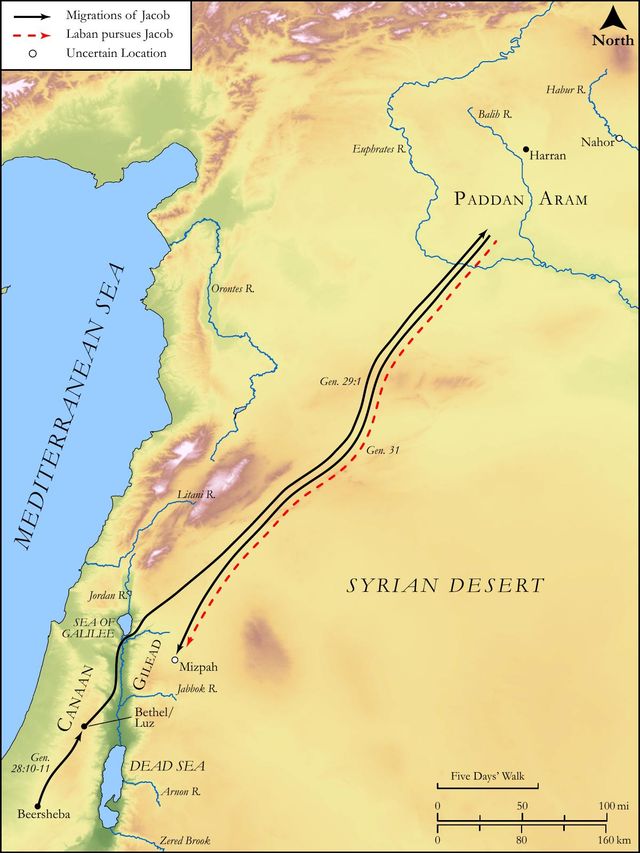
See on the biblical-era map


Study this verse
Public-domain commentary
Matthew Henry
From his Commentary on the Whole Bible. Henry comments on passages, not single verses — this entry covers Genesis 30:1–13. His four-level outline is real structure in the source text, so it is rendered as structure.
We have here the bad consequences of that strange marriage which Jacob made with the two sisters. Here is,
I.An unhappy disagreement between him and Rachel (Gen 30:1, Gen 30:2), occasioned, not so much by her own barrenness as by her sister's fruitfulness. Rebekah, the only wife of Isaac, was long childless, and yet we find no uneasiness between her and Isaac; but here, because Leah bears children, Rachel cannot live peaceably with Jacob.
1.Rachel frets. She envied her sister, Gen 30:1. Envy is grieving at the good of another, than which no sin is more offensive to God, nor more injurious to our neighbour and ourselves. She considered not that it was God that made the difference, and that though, in this single instance her sister was preferred before her, yet in other things she had the advantage. Let us carefully watch against all the risings and workings of this passion in our minds. Let not our eye be evil towards any of our fellow-servants because our master's is good. But this was not all; she said to Jacob, Give me children, or else I die. Note, We are very apt to err in our desires of temporal mercies, as Rachel here.
(1.)One child would not content her; but, because Leah has more than one, she must have more too: Give me children.
(2.)Her heart is inordinately set upon it, and, if she have not what she would have, she will throw away her life, and all the comforts of it. "Give them to me, or else I die," that is, "I shall fret myself to death; the want of this satisfaction will shorten my days." Some think she threatens Jacob to lay violent hands upon herself, if she could not obtain this mercy.
(3.)She did not apply to God by prayer, but to Jacob only, forgetting that children are a heritage of the Lord, Psa 127:3. We wrong both God and ourselves when our eye is more to men, the instruments of our crosses and comforts, than to God the author. Observe a difference between Rachel's asking for this mercy and Hannah's, Sa1 1:10, etc. Rachel envied; Hannah wept. Rachel must have children, and she died of the second; Hannah prayed for one child, and she had four more. Rachel is importunate and peremptory; Hannah is submissive and devout. If thou wilt give me a child, I will give him to the Lord. Let Hannah be imitated, and not Rachel; and let our desires be always under the direction and control of reason and religion.
2.Jacob chides, and most justly. He loved Rachel, and therefore reproved her for what she said amiss, Gen 30:2. Note, Faithful reproofs and products and instances of true affection, Psa 141:5; Pro 27:5, Pro 27:6. Job reproved his wife when she spoke the language of the foolish women, Job 2:10. See Co1 7:16. He was angry, not at the person, but at the sin; he expressed himself so as to show this displeasure. Note, sometimes it is requisite that a reproof should be given warm, like a medical potion; not too hot, lest it scald the patient; yet not cold, lest it prove ineffectual. It was a very grave and pious reply which Jacob gave to Rachel's peevish demand: Am I in God's stead? The Chaldee paraphrases it well, Dost thou ask sons of me? Oughtest thou not to ask them from before the Lord? The Arabic reads it, "Am I above God? can I give thee that which God denies thee?" This was said like a plain man. Observe,
(1.)He acknowledges the hand of God in the affliction which he was a sharer with her in: He hath withheld the fruit of the womb. Note, Whatever we want, it is God that withholds it, a sovereign Lord, most wise, holy, and just, that may do what he will with his own, and is debtor to no man, that never did, nor ever can do, any wrong to any of his creatures. The keys of the clouds, of the heart, of the grave, and of the womb, are four keys which God had in his hand, and which (the rabbin say) he entrusts neither with angels nor seraphim. See Rev 3:7. Job 11:10; Job 12:14.
(2.)He acknowledges his own inability to alter what God had appointed: "Am I in God's stead? What! dost thou make a god of me?" Deos qui rogat ille facit - He to whom we offer supplications is to us a god. Note,
[1.]There is no creature that is, or can be, to us, in God's stead. God may be to us instead of any creature, as the sun instead of the moon and stars; but the moon and all the stars will not be to us instead of the sun. No creature's wisdom, power, and love, will be to us instead of God's.
[2.]It is therefore our sin and folly to place any creature in God's stead, and to place that confidence in any creature which is to be placed in God only.
II.An unhappy agreement between him and the two handmaids.
1.At the persuasion of Rachel, he took Bilhah her handmaid to wife, that, according to the usage of those times, his children by her might be adopted and owned as her mistress's children, Gen 30:3, etc. She would rather have children by reputation than none at all, children that she might fancy to be her own, and call her own, though they were not so. One would think her own sister's children were nearer akin to her than her maid's, and she might with more satisfaction have made them her own if she had so pleased; but (so natural is it for us all to be fond of power) children that she had a right to rule were more desirable to her than children that she had more reason to love; and, as an early instance of her dominion over the children born in her apartment, she takes a pleasure in giving them names that carry in them nothing but marks of emulation with her sister, as if she had overcome her, (1.) At law. She calls the first son of her handmaid Dan (judgement), saying, "God hath judged me" (Gen 30:6), that is, "given sentence in my favour." (2.) In battle. she calls the next Naphtali (wrestlings), saying, I have wrestled with my sister, and have prevailed (Gen 30:8); as if all Jacob's sons must be born men of contention. See what roots of bitterness envy and strife are, and what mischief they make among relations.
2.At the persuasion of Leah, he took Zilpah her handmaid to wife also, Gen 30:9. Rachel had done that absurd and preposterous thing of giving her maid to her husband, in emulation with Leah; and now Leah (because she missed one year in bearing children) does the same, to be even with her, or rather to keep before her. See the power of jealousy and rivalship, and admire the wisdom of the divine appointment, which unites one man and one woman only; for God hath called us to peace and purity, Co1 7:15. Two sons Zilpah bore to Jacob, whom Leah looked upon herself as entitled to, in token of which she called one Gad (Gen 30:11), promising herself a little troop of children; and children are the militia of a family, they fill the quiver, Psa 127:4, Psa 127:5. The other she called Asher (happy), thinking herself happy in him, and promising herself that her neighbours would think so too: The daughters will call me blessed, Gen 30:13. Note, It is an instance of the vanity of the world, and the foolishness bound up in our hearts, that most people value themselves and govern themselves more by reputation than either by reason or religion; they think themselves blessed if the daughters do but call them so. There was much amiss in the contest and competition between these two sisters, yet God brought good out of this evil; for, the time being now at hand when the seed of Abraham must begin to increase and multiply, thus Jacob's family was replenished with twelve sons, heads of the thousands of Israel, from whom the celebrated twelve tribes descended and were named.
Historical interpretation
Historical reception
1 surviving comment on this verse from the historical church.
(Verse 10 and 11.) And Zilpah, the maid of Leah, bore Jacob a son, and Leah said, 'In fortunate circumstances,' and she called his name Gad. Where we have placed ourselves, in fortunate circumstances, and in Greek it is said ἐν τύχῃ, which can be translated as 'event.' In Hebrew, it is Bagad (), which Aquila interprets as 'girdle' or 'belt.' But we can say 'in readiness.' For Ba can sound like the preposition 'in,' and gad means 'coming.' Therefore, from the event or readiness, the son of Zilpah, Gad, was called. Sequitur:
Continue studying Genesis 30:10 across the web’s major study libraries — every link below opens this exact verse, chapter, or book on the destination site.
Read & Compare
 BibleGatewayThis verse in more than 200 translations and 70 languages.
 Bible.comThe YouVersion reader — hundreds of translations, reading plans, and highlights.
 ESV.orgCrossway's official English Standard Version reader.
 NET BibleThe NET translation with 60,000+ translators' notes on every rendering decision.
 STEP BibleTyndale House's free study tool — original text, vocabulary, and scholarly resources.
 BibliaLogos Bible Software's free web reader.
 USCCBThe New American Bible (Revised Edition) with the U.S. bishops' study notes.
Commentaries
 BibleHub CommentariesDozens of classic commentaries on this verse, gathered on one page.
 StudyLightMore than 100 commentary sets — the largest collection on the web.
 BibleRefPlain-English commentary on what this verse means, verse by verse.
 Enduring WordDavid Guzik's free commentary on this chapter, widely used by Bible teachers.
 Bible Study ToolsVerse commentary alongside Greek and Hebrew study aids.
Original Language & Research
- BibleHub InterlinearThe verse word by word — original language, transliteration, and English.
- BibleHub LexiconEvery word's original-language definition and Strong's entry.
 Blue Letter BibleDeep-study tools — Strong's numbers, concordance, and word studies.
 SefariaThe Hebrew text with Rashi and centuries of Jewish commentary.
Sermons, Hymns & Audio


TrulyRandomVerse is not affiliated with these sites and doesn’t control their content. They’re linked because they’re genuinely useful.
Summary
Genesis 30:10 precisely records the birth of Jacob's seventh son, the first born to Zilpah, Leah's handmaid. This event is a pivotal moment within the intense domestic rivalry between Jacob's wives, Leah and Rachel, for progeny and influence. It marks another significant step in the providential formation of the twelve tribes of Israel, demonstrating God's sovereign hand at work even amidst complex human relationships and cultural practices.
Context
ShowHideLiterary Context
This verse is situated within a highly charged period of marital tension and competition between Jacob's wives, Leah and Rachel, primarily fueled by their fervent desire for children and Jacob's affection. Leah, though initially less loved by Jacob, was blessed by God with several sons, as detailed in Genesis 29:31-35. In stark contrast, Rachel remained barren, leading to her intense envy and distress, vividly expressed in Genesis 30:1. Following the ancient Near Eastern custom, Rachel gave her handmaid, Bilhah, to Jacob to bear children on her behalf, a practice previously seen with Sarah and Hagar in Genesis 16. After Bilhah bore Jacob two sons (Dan and Naphtali), Leah, perhaps sensing a pause in her own childbearing or seeking to increase her standing and secure more sons for Jacob, adopted the same strategy. Genesis 30:9 explicitly details Leah's decision to give Zilpah to Jacob, and Genesis 30:10 immediately records the successful outcome of that arrangement, leading to the birth of Jacob's seventh son, who would later be named Gad in Genesis 30:11.
Historical & Cultural Context
The practice of a primary wife giving her handmaid to her husband to bear children on her behalf was a well-established and legally recognized custom in the Ancient Near East. This arrangement, often termed "surrogacy" in modern parlance, was a societal solution to the paramount importance of progeny and lineage, particularly when the primary wife was barren or had ceased childbearing. Texts like the Code of Hammurabi corroborate the legal and social acceptance of such practices, where children born to handmaids were legally considered the offspring of the primary wife. This cultural norm underscores the immense value placed on descendants for family continuity, inheritance, and social status. The narrative also highlights the patriarchal structure of the society, where a woman's worth was often tied to her ability to bear children, intensifying the rivalry between Leah and Rachel.
Key Themes
ShowHideGenesis 30:10 contributes significantly to several overarching themes within the book of Genesis and the patriarchal narratives. The most prominent theme is the divine fulfillment of the covenant promise of numerous descendants to Abraham, Isaac, and Jacob, even amidst human imperfection and unconventional means. The intense family rivalry and competition for offspring between Leah and Rachel, extending to the use of their handmaids, vividly portrays the cultural importance of children and the lengths to which individuals would go to secure their lineage. This verse also underscores the theme of divine sovereignty, demonstrating that God's overarching plan for the formation of the twelve tribes of Israel continued to unfold, not despite, but often through the complex and sometimes ethically challenging human circumstances. The narrative subtly highlights God's ability to work through human weakness and sin (envy, manipulation, polygamy) to achieve His perfect will, a theme echoed throughout biblical history, from Joseph's story in Genesis to the broader narrative of Israel's formation.
Exposition and Analysis
ShowHideGenesis 30:10 simply states, "And Zilpah Leah's maid bare Jacob a son." This concise declaration marks a significant moment in the unfolding patriarchal narrative, specifically the birth of Jacob's seventh son, who would later be named Gad.
Key Word Analysis
ShowHideFrom an unused root apparently meaning "to trickle, as myrrh," suggesting "fragrant dropping." Zilpah is identified as Leah's maid, highlighting her status as a bondwoman. Her name's potential meaning, while not directly elucidated in the text, subtly connects to the idea of a "dropping" or "contribution" to Jacob's lineage, underscoring her role in expanding the family, albeit through the handmaid system.
A feminine term derived from a root meaning "to spread out (as a family)." This word refers to a female slave or handmaid, specifically one who is a member of the household. In the context of the Ancient Near East, a "maid" or "bondwoman" was a legal entity who could be given to a husband by his wife to bear children on her behalf, with those children legally considered the progeny of the wife. This term emphasizes Zilpah's legal status and her instrumental role within the patriarchal household structure.
A primitive root meaning "to bear young" or "to beget." This verb is central to the narrative of Genesis, repeatedly emphasizing the theme of procreation and the fulfillment of God's covenant promises regarding descendants. In this context, it signifies the successful delivery of a child, directly linking Zilpah to the act of bringing forth a new member of Jacob's burgeoning family and, by extension, a future progenitor of one of the twelve tribes of Israel.
Verse Breakdown
ShowHide"And Zilpah Leah's maid"
This clause identifies the subject of the action. Zilpah is not merely an anonymous figure but is specifically designated as "Leah's maid," immediately placing her within the context of the intense rivalry between Leah and Rachel. Her status as a "maid" (or handmaid/slave) is crucial, as it explains the cultural mechanism through which this birth occurs. Leah, seeing Rachel's success with Bilhah and perhaps experiencing a pause in her own childbearing, employs the same strategy to increase her "sons" through her bondwoman, thereby enhancing her standing and perceived favor within Jacob's household.
"bare Jacob a son"
This clause states the direct and significant outcome. The verb "bare" (from yâlad) highlights the act of childbirth, the ultimate goal of the wives' competition. The phrase "Jacob a son" emphasizes that this child is legally and genealogically Jacob's, destined to be part of the lineage that will form the nation of Israel. This simple declaration signifies the expansion of Jacob's family, adding another male heir to the growing number of future tribal patriarchs, regardless of the complex human circumstances surrounding his conception and birth.
Literary Devices
ShowHideThe narrative of Genesis 30:10, while seemingly straightforward, employs several subtle literary devices. The most prominent is Repetition, as this event mirrors Rachel's earlier action of giving her handmaid Bilhah to Jacob in Genesis 30:3-5. This repetition underscores the intense and escalating rivalry between the sisters, highlighting their desperate desire for children and their willingness to employ culturally accepted means to achieve it. There is also an element of Irony present: despite the human schemes, competition, and imperfect family dynamics (polygamy, envy, manipulation), God's overarching plan for the formation of the twelve tribes continues to unfold. The human efforts, driven by self-interest, inadvertently serve God's divine purpose. Furthermore, each birth, including Zilpah's son, serves as Foreshadowing for the future formation of the nation of Israel, with each son representing a progenitor of one of the twelve tribes. The simple, declarative sentence structure of the verse itself contributes to its directness, emphasizing the factual nature of the event within the larger, divinely orchestrated narrative.
Theological and Thematic Connections
ShowHideGenesis 30:10 offers profound theological insights into God's character and His interaction with humanity. The narrative affirms God's sovereign hand guiding events even amidst human rivalry, jealousy, and the implementation of cultural practices like surrogacy. God's plan for the twelve tribes was not derailed but rather advanced through these intricate family dynamics, demonstrating His ability to work through imperfect human circumstances to achieve His perfect will. Each birth, including Zilpah's son, contributed to the growing number of Jacob's descendants, directly fulfilling God's covenant promise to Abraham and Isaac that their offspring would be numerous and form a great nation. Moreover, the use of Zilpah, a handmaid of lower social status, in the lineage of Israel, demonstrates God's inclusive nature and His ability to work through all people, regardless of their social standing, to accomplish His divine will. This story highlights the stark contrast between human imperfection and divine perfection, teaching that human sin or flaws do not thwart God's ultimate, unwavering purpose.
Reflection and Application
ShowHideGenesis 30:10 provides a window into the deeply personal and culturally significant desire for children in ancient times, while also serving as a profound reminder of God's unwavering sovereignty. For us today, this verse offers assurance that God's purposes are not contingent upon our perfect circumstances or flawless execution of His will. He can and does work through the messy realities of human relationships, competition, and even culturally accepted practices that might seem unconventional to us. The story of Zilpah's son reminds us that God remains in control, orchestrating events for His ultimate glory and the advancement of His redemptive plan, even when our lives feel chaotic or driven by human ambition. It encourages us to trust that God is always at work, even in the background of our personal rivalries and struggles, weaving together disparate threads to form a beautiful tapestry of His design. Our role is to remain faithful, knowing that His plans will ultimately prevail, often in ways we least expect.
Questions for Reflection
ShowHideFAQ
ShowHideWhat is the significance of a handmaid bearing a child in ancient Israelite society?
ShowHideIn ancient Israelite society and the broader Ancient Near East, a handmaid bearing a child for her mistress's husband was a legally recognized and culturally accepted practice, primarily employed when the primary wife was unable to conceive or had ceased bearing children. The children born to the handmaid were legally considered the children of the mistress, ensuring the continuation of the family line and the inheritance. This practice was a societal solution to the paramount importance of progeny and lineage, reflecting a deep cultural value placed on having descendants. Examples include Sarah giving Hagar to Abraham and Rachel giving Bilhah to Jacob. These children were fully integrated into the family, and their births were seen as legitimate extensions of the primary wife's lineage, contributing directly to the family's strength and future.
Christ-Centered Fulfillment
ShowHideThe birth of Gad, Zilpah's son, as recorded in Genesis 30:10, is another thread woven into the intricate tapestry of God's redemptive plan, which ultimately culminates in Christ. Each son born to Jacob, regardless of the mother or the complex circumstances, contributed to the formation of the twelve tribes of Israel, the very nation from which the Messiah would eventually descend. God's faithfulness in building this lineage, even through the complex and imperfect family dynamics of Jacob's household, underscores His unwavering commitment to His covenant promises. The inclusion of sons born from handmaids, like Gad and Asher, in the foundational twelve tribes, illustrates God's inclusive nature and His ability to work through diverse and sometimes unexpected means to bring about His ultimate salvation. This narrative foreshadows the broad and inclusive nature of the New Covenant, where salvation is not limited by lineage, social status, or human perfection, but is offered freely to all who believe in the Lamb of God, who takes away the sin of the world. The entire lineage, meticulously recorded in passages like Matthew 1:1-17, demonstrates that God sovereignly preserved and advanced the line of promise through every step of this unfolding history, ensuring the arrival of Jesus Christ, the Son of David, the Son of Abraham.