


Genesis 2:11
Bible text: King James Version (1769 Blayney text) · Public domain
Bible text: Berean Standard Bible · Public domain
Bible text: American Standard Version (1901) · Public domain
Bible text: World English Bible, Messianic edition · Public domain
Bible text: Geneva Bible (1599) · Public domain
Bible text: Young's Literal Translation · Public domain
- שֵׁםshem[the] name ofH8034N-mscNoun Singular Masculine Construct
- הָאֶחָדha·'e·Chadthe oneH259Art ¦ Adj-fsAdjective Numerical Singular Feminine Absoluteהָtheאֶחָדone
- פִּישׁוֹןpi·Shon[is] PishonH6376N-properNoun Proper Location
- הוּאhu'itH1931Pro-3msPronoun Personal 3rd Singular Masculine
- הַסֹּבֵבha·so·Vev[is] the [one which] goes aroundH5437Art ¦ V-Qal-Prtcpl-msVerb Qal Participle Singular Masculine Absoluteהַ[is] theסֹּבֵב[one which] goes around
- אֵת'et<obj.>H853DirObjMParticle Object Indicator
- כָּלkolallH3605N-mscNoun Singular Masculine Construct
- אֶרֶץ'E·retz[the] land ofH776N-fscNoun Singular Feminine Construct
- הַחֲוִילָהha·cha·vi·Lah<the> HavilahH2341Art ¦ N-properNoun Proper Locationהַ<the>חֲוִילָהHavilah
- אֲשֶׁר'a·SherwhereH834RelParticle Relative
- שָׁםsham[is] thereH8033AdvAdverb
- הַזָּהָבha·za·Hav<the> goldH2091Art ¦ N-msNoun Singular Masculine Absoluteהַ<the>זָּהָבgold
English is a literal word-by-word gloss of the Hebrew, not the KJV's wording. Why?
This is the original text the KJV's translators worked from — each Hebrew word with its own literal English meaning in this verse, prepared by scholars at Tyndale House, Cambridge. The KJV translates whole sentences, not word by word, so its wording differs: one Hebrew word can become several English words, and the KJV may choose “the LORD” where the gloss reads “Yahweh”. Both are faithful — they answer different questions. For the KJV's own rendering, switch to the KJV text.
Details
See on the biblical-era maps


Study this verse
Public-domain commentary
Matthew Henry
From his Commentary on the Whole Bible. Henry comments on passages, not single verses — this entry covers Genesis 2:8–15. His four-level outline is real structure in the source text, so it is rendered as structure.
Man consisting of body and soul, a body made out of the earth and a rational immortal soul the breath of heaven, we have, in these verses, the provision that was made for the happiness of both; he that made him took care to make him happy, if he could but have kept himself so and known when he was well off. That part of man by which he is allied to the world of sense was made happy; for he was put in the paradise of God: that part by which he is allied to the world of spirits was well provided for; for he was taken into covenant with God. Lord, what is man that he should be thus dignified - man that is a worm! Here we have,
I.A description of the garden of Eden, which was intended for the mansion and demesne of this great lord, the palace of this prince.
The inspired penman, in this history, writing for the Jews first, and calculating his narratives for the infant state of the church, describes things by their outward sensible appearances, and leaves us, by further discoveries of the divine light, to be led into the understanding of the mysteries couched under them. Spiritual things were strong meat, which they could not yet bear; but he writes to them as unto carnal, Co1 3:1. Therefore he does not so much insist upon the happiness of Adam's mind as upon that of his outward state. The Mosaic history, as well as the Mosaic law, has rather the patterns of heavenly things than the heavenly things themselves, Heb 9:23. Observe,
1.The place appointed for Adam's residence was a garden; not an ivory house nor a palace overlaid with gold, but a garden, furnished and adorned by nature, not by art. What little reason have men to be proud of stately and magnificent buildings, when it was the happiness of man in innocency that he needed none! As clothes came in with sin, so did houses. The heaven was the roof of Adam's house, and never was any roof so curiously ceiled and painted. The earth was his floor, and never was any floor so richly inlaid. The shadow of the trees was his retirement; under them were his dining-rooms, his lodging-rooms, and never were any rooms so finely hung as these: Solomon's, in all their glory, were not arrayed like them. The better we can accommodate ourselves to plain things, and the less we indulge ourselves with those artificial delights which have been invented to gratify men's pride and luxury, the nearer we approach to a state of innocency. Nature is content with a little and that which is most natural, grace with less, but lust with nothing.
2.The contrivance and furniture of this garden were the immediate work of God's wisdom and power. The Lord God planted this garden, that is, he had planted it - upon the third day, when the fruits of the earth were made. We may well suppose to have been the most accomplished place for pleasure and delight that ever the sun saw, when the all-sufficient God himself designed it to be the present happiness of his beloved creature, man, in innocency, and a type and a figure of the happiness of the chosen remnant in glory. No delights can be agreeable nor satisfying to a soul but those that God himself has provided and appointed for it; no true paradise, but of God's planting. The light of our own fires, and the sparks of our own kindling, will soon leave us in the dark, Isa 50:11. The whole earth was now a paradise compared with what it is since the fall and since the flood; the finest gardens in the world are a wilderness compared with what the whole face of the ground was before it was cursed for man's sake: yet that was not enough; God planted a garden for Adam. God's chosen ones shall have distinguishing favours shown them.
3.The situation of this garden was extremely sweet. It was in Eden, which signifies delight and pleasure. The place is here particularly pointed out by such marks and bounds as were sufficient, I suppose, when Moses wrote, to specify the place to those who knew that country; but now, it seems, the curious cannot satisfy themselves concerning it. Let it be our care to make sure a place in the heavenly paradise, and then we need not perplex ourselves with a search after the place of the earthly paradise. It is certain that, wherever it was, it had all desirable conveniences, and (which never any house nor garden on earth was) without any convenience. Beautiful for situation, the joy and the glory of the whole earth, was this garden: doubtless it was earth in its highest perfection.
4.The trees with which this garden was planted.
(1.)It had all the best and choicest trees in common with the rest of the ground. It was beautiful and adorned with every tree that, for its height or breadth, its make or colour, its leaf or flower, was pleasant to the sight and charmed the eye; it was replenished and enriched with every tree that yielded fruit grateful to the taste and useful to the body, and so good for food. God, as a tender Father, consulted not only Adam's profit, but his pleasure; for there is a pleasure consistent with innocency, nay, there is a true and transcendent pleasure in innocency. God delights in the prosperity of his servants, and would have them easy; it is owing to themselves if they be uneasy. When Providence puts us into an Eden of plenty and pleasure, we ought to serve him with joyfulness and gladness of heart, in the abundance of the good things he gives us. But,
(2.)It had two extraordinary trees peculiar to itself; on earth there were not their like.
[1.]There was the tree of life in the midst of the garden, which was not so much a memorandum to him of the fountain and author of his life, nor perhaps any natural means to preserve or prolong life; but it was chiefly intended to be a sign and seal to Adam, assuring him of the continuance of life and happiness, even to immortality and everlasting bliss, through the grace and favour of his Maker, upon condition of his perseverance in this state of innocency and obedience. Of this he might eat and live. Christ is now to us the tree of life (Rev 2:7; Rev 22:2), and the bread of life, Joh 6:48, Joh 6:53.
[2.]There was the tree of the knowledge of good and evil, so called, not because it had any virtue in it to beget or increase useful knowledge (surely then it would not have been forbidden), but, First, Because there was an express positive revelation of the will of God concerning this tree, so that by it he might know moral good and evil. What is good? It is good not to eat of this tree. What is evil? It is evil to eat of this tree. The distinction between all other moral good and evil was written in the heart of man by nature; but this, which resulted from a positive law, was written upon this tree. Secondly, Because, in the event, it proved to give Adam an experimental knowledge of good by the loss of it and of evil by the sense of it. As the covenant of grace has in it, not only Believe and be saved, but also, Believe not and be damned (Mar 16:16), so the covenant of innocency had in it, not only "Do this and live," which was sealed and confirmed by the tree of life, but, "Fail and die," which Adam was assured of by this other tree: "Touch it at your peril;" so that, in these two trees, God set before him good and evil, the blessing and the curse, Deu 30:19. These two trees were as two sacraments.
5.The rivers with which this garden was watered, Gen 2:10-14. These four rivers (or one river branched into four streams) contributed much both to the pleasantness and the fruitfulness of this garden. The land of Sodom is said to be well watered every where, as the garden of the Lord, Gen 13:10. Observe, That which God plants he will take care to keep watered. The trees of righteousness are set by the rivers, Psa 1:3. In the heavenly paradise there is a river infinitely surpassing these; for it is a river of the water of life, not coming out of Eden, as this, but proceeding out of the throne of God and of the Lamb (Rev 22:1), a river that makes glad the city of our God, Psa 46:4. Hiddekel and Euphrates are rivers of Babylon, which we read of elsewhere. By these the captive Jews sat down and wept, when they remembered Sion (Psa 137:1); but methinks they had much more reason to weep (and so have we) at the remembrance of Eden. Adam's paradise was their prison; such wretched work has sin made. Of the land of Havilah it is said (Gen 2:12), The gold of that land is good, and there is bdellium and the onyx-stone: surely this is mentioned that the wealth of which the land of Havilah boasted might be as foil to that which was the glory of the land of Eden. Havilah had gold, and spices, and precious stones; but Eden had that which was infinitely better, the tree of life, and communion with God. So we may say of the Africans and Indians: "They have the gold, but we have the gospel. The gold of their land is good, but the riches of ours are infinitely better."
II.The placing of man in this paradise of delight, Gen 2:15, where observe,
1.How God put him in possession of it: The Lord God took the man, and put him into the garden of Eden; so Gen 2:8, Gen 2:15. Note here,
(1.)Man was made out of paradise; for, after God had formed him, he put him into the garden: he was made of common clay, not of paradise-dust. He lived out of Eden before he lived in it, that he might see that all the comforts of his paradise-state were owing to God's free grace. He could not plead a tenant-right to the garden, for he was not born upon the premises, nor had any thing but what he received; all boasting was hereby for ever excluded.
(2.)The same God that was the author of his being was the author of his bliss; the same hand that made him a living soul planted the tree of life for him, and settled him by it. He that made us is alone able to make us happy; he that is the former of our bodies and the Father of our spirits, he, and none but he, can effectually provide for the felicity of both.
(3.)It adds much to the comfort of any condition if we have plainly seen God going before us and putting us into it. If we have not forced providence, but followed it, and taken the hints of direction it has given us, we may hope to find a paradise where otherwise we could not have expected it. See Psa 47:4.
2.How God appointed him business and employment. He put him there, not like Leviathan into the waters, to play therein, but to dress the garden and to keep it. Paradise itself was not a place of exemption from work. Note, here,
(1.)We were none of us sent into the world to be idle. He that made us these souls and bodies has given us something to work with; and he that gave us this earth for our habitation has made us something to work on. If a high extraction, or a great estate, or a large dominion, or perfect innocency, or a genius for pure contemplation, or a small family, could have given a man a writ of ease, Adam would not have been set to work; but he that gave us being has given us business, to serve him and our generation, and to work out our salvation: if we do not mind our business, we are unworthy of our being and maintenance.
(2.)Secular employments will vary well consist with a state of innocency and a life of communion with God. The sons and heirs of heaven, while they are here in this world, have something to do about this earth, which must have its share of their time and thoughts; and, if they do it with an eye to God, they are as truly serving him in it as when they are upon their knees.
(3.)The husbandman's calling is an ancient and honourable calling; it was needful even in paradise. The garden of Eden, though it needed not to be weeded (for thorns and thistles were not yet a nuisance), yet must be dressed and kept. Nature, even in its primitive state, left room for the improvements of art and industry. It was a calling fit for a state of innocency, making provision for life, not for lust, and giving man an opportunity of admiring the Creator and acknowledging his providence: while his hands were about his trees, his heart might be with his God.
(4.)There is a true pleasure in the business which God calls us to, and employs us in. Adam's work was so far from being an allay that it was an addition to the pleasures of paradise; he could not have been happy if he had been idle: it is still a law, He that will not work has no right to eat, Th2 3:10; Pro 27:23.
III.The command which God gave to man in innocency, and the covenant he then took him into.
Hitherto we have seen God as man's powerful Creator and his bountiful Benefactor; now he appears as his Ruler and Lawgiver. God put him into the garden of Eden, not to live there as he might list, but to be under government. As we are not allowed to be idle in this world, and to do nothing, so we are not allowed to be wilful, and do what we please. When God had given man a dominion over the creatures, he would let him know that still he himself was under the government of his Creator.
Historical interpretation
Five Centuries of Reception
9 surviving comments on this verse. Each one is dated, so this reads as a timeline rather than a list.
Select a marker to jump to its quote. Markers stagger vertically where authors wrote within a few decades of each other.
The Church, setting forth the likeness of paradise, includes within her walls fruit-bearing trees, whereof that which does not bring forth good fruit is cut off and is cast into the fire. These trees she waters with four rivers, that is, with the four Gospels, wherewith, by a celestial inundation, she bestows the grace of saving baptism. Can any one water from the Church's fountains who is not within the Church? Can one impart those wholesome and saving draughts of paradise to any one if he is perverted, and of himself condemned, and banished outside the fountains of paradise, and has dried up and failed with the dryness of an eternal thirst?
Moses turned to write about the river that flowed out from paradise and that, once outside of it, divided into four distinct sources, saying, “A river flowed out of Eden to water paradise.” Here too Moses calls the delightful land of paradise Eden. If that river had indeed watered paradise, it would not have divided into the four rivers outside it. I would suggest that it was perhaps due to convention that it is said “to water,” since the spiritual trees of paradise had no need of water. But if someone should say that because they are spiritual, they drink from the blessed and spiritual waters there, I would not quarrel over this. The four rivers that flowed from that river were not similar in taste to the headspring. For if the waters of our lands vary, all being placed under the sentence of a curse, how much more distinct should the taste of the blessed land of Eden be from the taste of that land that had been placed under the curse of the Just One due to Adam’s transgression of the commandment? The four rivers, then, are these: the Pishon, which is the Danube; the Gihon, which is the Nile; and then the Tigris and the Euphrates, between which we dwell. Although the places from which they flow are known, the source of the spring is not known. Because paradise is set on a great height, the rivers are swallowed up again, and they go down to the sea as if through a tall water duct, and so they pass through the earth that is under the sea into this land. The earth then spits out each one of them: the Danube, which is the Pishon, in the west; the Gihon in the south; and the Euphrates and the Tigris in the north.
“The river,” we are told, “is separated into four branches.” The name of one is Pishon, which encircles all the land of Hevila, where there is gold. And the gold of that land is good; bdellium and onyx are there. The name of the second river is Gihon. This river encircles all the land of Ethiopia. The name of the third river is Tigris, which river flows by the Assyrians. And the fourth river is the Euphrates. There are, therefore, four rivers. Pishon—so called by the Hebrews but named Ganges by the Greeks—flows in the direction of India. Gihon is the river Nile, which flows around the land of Egypt or Ethiopia. The land enclosed by the Tigris and Euphrates rivers is called Mesopotamia because it lives between these two rivers. This name conveys its location even to far-distant peoples and besides expresses popular belief. But how is the fount called the Wisdom of God? That this is a fount the Gospel tells us in the words “If anyone thirst, let him come to me and drink.” Wisdom is a fount according to the prophet: “Come and eat my bread and drink the wine which I have mingled for you.” As Wisdom is the fountain of life, it is also the fountain of spiritual grace. It is also the fountain of other virtues that guide us to the course of eternal life. Therefore, the stream that irrigates paradise rises from the soul when well tilled, not from the soul that lies uncultivated. The results from it are fruit trees of diverse virtues. There are four principal trees that constitute the divisions of Wisdom. These are the well-known four principal virtues: prudence, temperance, fortitude and justice. The wise men of this world have adopted this division from us and transferred it to their writings. Hence, Wisdom acts as the source from which these four rivers take their rise, producing streams that are composed of these virtues.Pishon, therefore, stands for prudence. Hence it has pure gold, brilliant rubies and topaz stones. We often refer to wise discoveries as gold, as the Lord says, speaking through the prophet: “I gave to them gold and silver.” Daniel says of the wise: “If you sleep among the midst of the lots, you shall be as the wings of the dove covered with silver and the hinder parts of her back like to gold.” In this way one who puts his trust in the aid of the Old and New Testament can by resourceful inquiry attain the inmost secrets of the Wisdom of God. Here, therefore, is found pure gold, not the metal that is melted, which belongs to this earth and is subject to corruption. In this land, we are told, there is found the brilliant ruby stone in which there exists the vital spark of our souls. Here, too, is the topaz stone that by the nature of its color reveals an effect of greenness and vitality. Plants that are alive give forth green sprouts, while those that are dead are sapless and dry. The earth grows green when it is in bloom. The seeds, too, sprout forth green shoots in their periods of growth. The river Pishon is rightfully given first place. The Hebrews call it Pheoyson, which means “change of mouth,” because it flows even through Lydia and not merely around one nation, for Wisdom, which is of benefit to all men, is productive and useful. Hence, if a person were to leave paradise, this river of Wisdom would be the first object he would meet. Thus he may not become inert and arid and his return to paradise may be facilitated. Many men resort to this river, which is considered to have marvelous beauty and fecundity. Accordingly it is regarded as a figure of Wisdom, which confers manifold fruits in the coming of the Lord of salvation. It flows to the very ends of the earth, because by Wisdom all have been redeemed. Thus it is written: “Their sound has gone forth into all the earth and their words unto the end of the world.”
The second river is Gihon, by which, when they were sojourning in Egypt, was laid down the law of the Israelites that they should depart from Egypt, and having girded their loins they should as a sign of temperance partake of a lamb. It is fitting that the chaste and the sanctified should celebrate the Pasch of the Lord. For that reason, the observance of the law was first carried out beside that river, the name of which signifies an opening of the earth. Therefore, just as an opening absorbs the earth and whatever defilements and refuse there may be in it, in like manner chastity tends to consume all the passions of the body. Appropriately, then, the observance of the established law first took place there, because carnal sin is absorbed by the law. And so Gihon, which is a figure of chastity, is said to surround the land of Ethiopia in order to wash away our lowly bodies and quench the fires of our vile flesh. The meaning of Ethiopia in Latin is “holy and vile.” What is more lowly, what is more like Ethiopia, than our bodies, blackened, too, by the darkness of sin?
The third river is the Tigris, which flows by the Assyrian land. To this river the deceiver Israel was dragged as a prisoner. This river is the swiftest of all rivers. The Assyrians dwell by it, guarding its course—for this is the meaning of its name. Hence those who by their fortitude hold in check the guileful vices of the body and direct themselves to higher things are thought to have something in common with this river. For that same reason fortitude emanates from that source in paradise. Fortitude in its rapid course tosses aside everything standing in its path and like this river is not hindered by any material obstacle.
The fourth river is the Euphrates, which means in Latin “fecundity and abundance of fruits.” It presents a symbol of justice, the nourishment of every soul. No virtue produces more abundant benefits than equity or justice, which is more concerned with others than with itself, neglecting its own advantages and preferring the common good. Many derive Euphrates from the Greek apo tou euphrainesthai, that is, from a “feeling of gladness,” because the human race rejoices in nothing more than it does in justice and equity. The question as to why, although the location itself of other rivers is reported, we have no description of the regions through which the river Euphrates flows calls for an answer. The waters of this river are considered to have a vital quality that fosters growth and increase. Wherefore the wise men among the Hebrews and the Assyrians called this river Auxen [“increase”] in contradistinction to the water of other rivers. The opposition has been well established between wisdom and malice, fortitude and irascibility, temperance, and other vices. Justice, on the other hand, is the most important as it represents the concord of all the other virtues. Hence it is not known from the places from which it flows, that is to say, it is not known in part. Justice is not divisible into parts. It is, as it were, the mother of all virtues. In these four rivers are symbolized therefore the four principal virtues.
Perhaps, however, those people who like to talk from their own wisdom do not concede again that these rivers are rivers or these waters really waters but propound some different interpretation to people ready to lend them their ears. Let us, however, I beg you, not be convinced by them but block our ears against them; let us instead place our credence in sacred Scripture and heed what is told us there.
Awe-inspiring, in truth, are the mysteries of the church. Awesome truth is its altar. A fountain sprang up out of paradise, sending forth not only visible streams but also spiritual streams arising as a fountain from this high tableland. Alongside this fountain there have grown, not willows without fruit but abundant trees reaching to heaven itself, with fruit ever in season and remaining still incorrupt. If someone is intensely hot, let him come to this fountain and cool down this feverish heat. It dispels parching heat and gently cools all things that are very hot—not only those literally inflamed by the sun’s heat but also those set on fire by sin’s burning arrows. It does so because it takes its beginning from above and has its source from there, and from there it is fed. Many are the streams of this fountain, streams that the Paraclete sends forth; and the Son becomes its custodian, not keeping its channel open with a mattock but by making our hearts receptive.
(Verse 11.) The name of one is Phison. They believe this to be the river Ganges in India.
(Verse 12.) Where (or There) is the carbuncle and the green stone. Some have translated carbuncle as βδέλλιον and the green stone as ὄνυχα.
This is the one which encircles the whole land of Havilah. This is the region of India, deriving its name from being settled after the flood by Havilah, son of Joktan, who was the son of Eber the patriarch of the Hebrews, whom Josephus also reports with his brothers possessed the land from the river Cephen and the region of India to the place called Hieria.
Which then is divided into four heads: the name of the first is Pishon. It is established, according to the most certain authorities, that the sources of all these rivers, which are said to go out from paradise, are known in our land. The source of the Pishon, which is now called the Ganges, is indeed in the places of the Caucasus mountains; but the Nile, which the Scripture, as we have said, names Gihon, now far from Mount Atlas, which is the furthest end of Africa to the west. Furthermore, the Tigris and Euphrates from Armenia, from where it is believed that the place of paradise itself is most distant from human knowledge, and from there the four parts of the waters are divided; but those rivers, whose sources are said to be known, are somewhere beneath the earth and after passing through extended regions erupt in other places, where they are reputed to be known in their sources. For who is unaware that some waters are accustomed to do this? But it is known there where they do not run under the earth for long. Finally, historians report that the same rivers Tigris, Euphrates, and Nile are taken up in many places of the earth, and after some interval reemerging, continue their usual course; which is also believed to be done by the Lord as a sign of that course by which they come to us from paradise through the more hidden channels and longer veins of the earth. Now Phison is interpreted as change of mouth, and rightly, because indeed it shows another appearance for our benefit, that is, much more humble than it has in paradise.
Then there is the ocean that encircles the entire earth like a sort of river and to which it seems to me that Scripture referred when it said that “a river flowed out of paradise.” It has sweet potable water and supplies the seas, but because the water remains stagnant in the seas for a long time it becomes brackish. The sun and the waterspouts are constantly drawing up the less dense water, and from this the clouds are formed and the rain comes, the water becoming sweet by filtration. This ocean is divided into four heads, of four rivers. The name of the first is Pishon; this is the Ganges of India. The name of the second is Gehon; this is the Nile, which comes down from Ethiopia into Egypt. The name of the third is Tigris, and of the fourth, Euphrates.
Continue studying Genesis 2:11 across the web’s major study libraries — every link below opens this exact verse, chapter, or book on the destination site.
Read & Compare
 BibleGatewayThis verse in more than 200 translations and 70 languages.
 Bible.comThe YouVersion reader — hundreds of translations, reading plans, and highlights.
 ESV.orgCrossway's official English Standard Version reader.
 NET BibleThe NET translation with 60,000+ translators' notes on every rendering decision.
 STEP BibleTyndale House's free study tool — original text, vocabulary, and scholarly resources.
 BibliaLogos Bible Software's free web reader.
 USCCBThe New American Bible (Revised Edition) with the U.S. bishops' study notes.
Commentaries
 BibleHub CommentariesDozens of classic commentaries on this verse, gathered on one page.
 StudyLightMore than 100 commentary sets — the largest collection on the web.
 BibleRefPlain-English commentary on what this verse means, verse by verse.
 Enduring WordDavid Guzik's free commentary on this chapter, widely used by Bible teachers.
 Bible Study ToolsVerse commentary alongside Greek and Hebrew study aids.
Original Language & Research
- BibleHub InterlinearThe verse word by word — original language, transliteration, and English.
- BibleHub LexiconEvery word's original-language definition and Strong's entry.
 Blue Letter BibleDeep-study tools — Strong's numbers, concordance, and word studies.
 SefariaThe Hebrew text with Rashi and centuries of Jewish commentary.
Sermons, Hymns & Audio


TrulyRandomVerse is not affiliated with these sites and doesn’t control their content. They’re linked because they’re genuinely useful.
Summary
The Pison, identified as the first of the four rivers flowing from the single stream originating in Eden, specifically describes the Pison as encircling the entire land of Havilah, a region notably characterized by the presence of gold. This detail underscores the lavish abundance, inherent perfection, and meticulous design of God's original creation, showcasing a world where even its natural resources eloquently testify to divine glory and generous provision before the fall.
Context
ShowHideLiterary Context
Genesis 2:11 is situated within the detailed account of creation in Genesis 2, which complements the broader overview of Genesis 1. Following the formation of humanity and the planting of the Garden of Eden, Genesis 2:10 describes a single river flowing out of Eden that then divides into four headwaters. Verses 11-14 proceed to name and briefly characterize each of these four rivers (Pison, Gihon, Hiddekel/Tigris, and Euphrates), providing geographical markers that ground the Edenic narrative in a tangible, albeit ancient, landscape. The Pison is presented first, immediately establishing a picture of the created world's inherent richness.
Historical & Cultural Context
Throughout the lands named in Genesis, rivers were valued as sources of life, fertility, and prosperity. Major civilizations flourished along great rivers like the Nile, Tigris, and Euphrates. The description of Eden as the source of four rivers would have immediately conveyed an image of unparalleled abundance and vitality to the original audience. The mention of specific lands like Havilah, known for precious commodities such as gold, bdellium, and onyx (as mentioned in Genesis 2:12), served to anchor the narrative in a perceived geographical reality, even if the precise modern locations of these regions remain debated. This detail would have reinforced the historicity and tangible nature of God's original creation for ancient readers.
Key Themes
ShowHideGenesis 2:11 contributes significantly to several overarching themes in Genesis. Firstly, it highlights God's Abundant Provision, demonstrating His boundless generosity in supplying all that is needed for life and flourishing in the created order. The presence of gold and other precious stones within the earth itself speaks to the inherent value and richness of His design. Secondly, it reinforces the theme of Creation's Perfection and Goodness, echoing the declaration in Genesis 1:31 that everything God made was "very good." The pristine nature of the Pison and the preciousness of Havilah's resources symbolize an unblemished world, untouched by sin. Finally, the detailed geographical descriptions contribute to the theme of Divine Order and Intentionality, illustrating God's meticulous design and purposeful arrangement of creation, where every element, from rivers to mineral deposits, has its place within His grand plan.
Exposition and Analysis
ShowHideKey Word Analysis
ShowHideFrom the root puwsh, meaning "dispersive." This name suggests a river that spreads out or overflows, implying a powerful, life-giving, and expansive flow. As the first river named, Pison signifies the abundant and vital nature of the life emanating from Eden, the very source of God's blessing and provision in the unfallen world.
A primitive root meaning "to revolve, surround, or border." This word indicates that the Pison river encircled or flowed around the entire land of Havilah. The use of "compasseth" emphasizes a complete and defined geographical scope, highlighting the order, intentionality, and comprehensive nature of God's design. It suggests a world meticulously structured and bounded, reflecting divine precision rather than chaos.
Probably from chuwl, meaning "circular." Havilah is identified as an eastern region, renowned in biblical texts for its valuable resources. Its mention grounds the Edenic narrative in a tangible, albeit now lost, geography, asserting the historicity of the creation account. It is presented as a real, richly endowed territory within the created order, known for its precious commodities.
From an unused root meaning "to shimmer." This refers to the precious metal, often figuratively used for something gold-colored. Universally recognized for its purity, beauty, and enduring value, gold here signifies the inherent preciousness, perfection, and unblemished quality of God's original creation. Its presence underscores the divine declaration in Genesis 1:31 that all God made was "very good," implying a world unstained by sin, where even the earth's minerals reflected divine glory and inherent worth.
Verse Breakdown
ShowHide"The name of the first [is] Pison:"
This clause introduces the first of the four rivers branching from the single river of Eden. The naming of the river underscores its distinct identity and importance within God's ordered creation. "Pison" itself suggests a river of abundant flow, setting a tone of richness and vitality for the Edenic landscape.
"that [is] it which compasseth the whole land of Havilah,"
This phrase describes the geographical reach of the Pison, indicating that it encircled or flowed around the entire region of Havilah. The detail "compasseth the whole" emphasizes the complete and defined scope of the river's influence, highlighting the meticulous and intentional design of God's creation, where boundaries and flows are precisely ordered.
"where [there is] gold;"
This final clause specifies a key characteristic of the land of Havilah: its abundance of gold. This is not merely a geographical marker but carries profound theological significance. Gold, a symbol of purity, value, and incorruptibility, signifies the inherent preciousness, perfection, and unblemished quality of God's original creation, echoing the divine declaration of its "very good" nature.
Literary Devices
ShowHideThe verse employs several literary devices to convey its meaning and significance. Description is primary, providing specific geographical details about the Pison river and the land of Havilah, which grounds the narrative in a sense of reality and tangibility. The mention of "gold" functions as powerful Symbolism, representing the inherent value, purity, and perfection of God's original creation. Gold, being incorruptible and precious, serves as a metaphor for the unblemished state of the world before the fall. The specific naming of the river and land also contributes to Verisimilitude, lending an air of historical accuracy and concrete detail to the ancient account, inviting the reader to perceive Eden not as a mythical realm but as a real place within God's meticulously designed world.
Theological and Thematic Connections
ShowHideGenesis 2:11 vividly portrays God's boundless generosity and the inherent perfection of His original creation. The Pison river, flowing through a land rich with gold, symbolizes the lavish provision and unblemished beauty that characterized the world before sin entered. This passage reminds us that God's design is one of abundance, order, and intrinsic value, where even the earth's resources reflect His glory. It sets a foundational truth about creation's original state, a state of pristine integrity and overflowing goodness, which serves as a benchmark for understanding the impact of the fall and the promise of future restoration.
Reflection and Application
ShowHideGenesis 2:11 offers a profound glimpse into the pristine beauty and abundant provision of God's original creation. This verse should inspire us to cultivate a deep appreciation for the natural world, recognizing its resources not as mere commodities for exploitation, but as sacred gifts from a generous Creator. It calls us to be responsible stewards of the earth, reflecting God's own care and order. Furthermore, contemplating the perfection of Eden, symbolized by the gold of Havilah, should stir within us a longing for the future new heavens and new earth. In that coming reality, God's abundant provision and unblemished glory will be fully restored and enjoyed, far surpassing the wonders of Eden, reminding us of the ultimate hope found in His redemptive plan.
Questions for Reflection
ShowHideFAQ
ShowHideWhy is the Pison river mentioned first among the four rivers?
ShowHideWhile the text of Genesis 2:11 does not explicitly state the reason for Pison's primary mention, its placement often suggests a narrative emphasis or prominence. Its immediate association with the land of Havilah, renowned for its gold and other precious resources (as further detailed in Genesis 2:12), serves to establish a picture of unparalleled abundance and inherent value right from the outset of the river descriptions. This highlights the lavishness and inherent perfection of God's original creation, setting a tone for the Edenic world as a place of rich provision and divine glory.
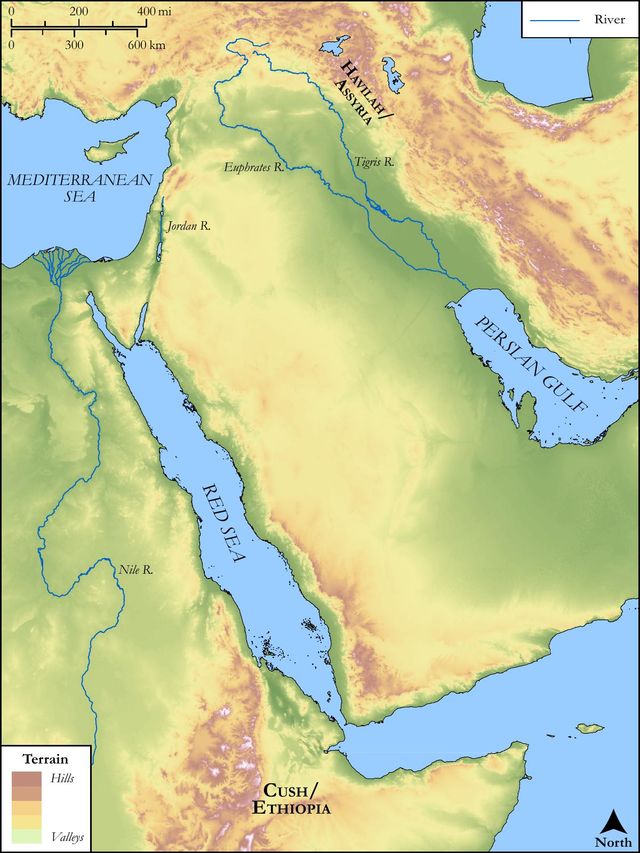
Where is the land of Havilah located today?
ShowHideThe precise modern location of the land of Havilah remains a subject of considerable scholarly debate and has not been definitively confirmed. Various theories have been proposed, often placing it in the Arabian Peninsula, northeastern Africa, or Mesopotamia, based on biblical descriptions of its resources (gold, bdellium, and onyx stone) and its proximity to other named regions. However, no conclusive archaeological or geographical consensus has been reached, underscoring the ancient and perhaps dramatically altered nature of the Edenic landscape. The ambiguity of its modern location does not diminish its significance as a real, richly endowed territory within the biblical narrative of creation.
Christ-Centered Fulfillment
ShowHideGenesis 2:11 presents a pristine vision of creation's perfection and God's abundant provision, vividly symbolized by the Pison river flowing through the gold-rich land of Havilah. This original state of unblemished beauty and limitless resources, tragically lost through humanity's fall into sin, finds its ultimate restoration and fulfillment in the person and work of Jesus Christ. He is the true source of "living water," as He declared to the Samaritan woman in John 4:10-14, offering spiritual life that flows eternally. Christ's redemptive work on the cross reverses the curse of sin, promising not merely a return to a physical Eden, but the inauguration of a new creation where the glory and abundance of God's presence are infinitely greater and eternal. The gold of Havilah, a symbol of purity and enduring value, powerfully prefigures the New Jerusalem, whose streets are described as "pure gold, like transparent glass" in Revelation 21:21. This imagery signifies the ultimate, incorruptible perfection, divine glory, and boundless provision fully realized in Christ's eternal kingdom, where God's people will dwell in unblemished fellowship with Him forever, surpassing even the splendor of Eden.