


Exodus 16:15
Bible text: King James Version (1769 Blayney text) · Public domain
Bible text: King James Version with Strong's numbers · Public domain
Bible text: Berean Standard Bible · Public domain
Bible text: American Standard Version (1901) · Public domain
Bible text: World English Bible, Messianic edition · Public domain
Bible text: Geneva Bible (1599) · Public domain
Bible text: Young's Literal Translation · Public domain
- וַיִּרְאוּvai·yir·'Uand they sawH7200Conj-w ¦ V-Qal-ConsecImperf-3mpVerb Qal Consecutive Imperfect 3rd Plural Masculineוַandיִּרְאוּthey saw
- בְנֵיve·nei[the] people ofH1121N-mpcNoun Plural Masculine Construct
- יִשְׂרָאֵלYis·ra·'ElIsraelH3478N-properNoun Proper Location
- וַיֹּאמְרוּvai·Yo·me·Ruand they saidH559Conj-w ¦ V-Qal-ConsecImperf-3mpVerb Qal Consecutive Imperfect 3rd Plural Masculineוַandיֹּאמְרוּthey said
- אִישׁ'isheachH376N-msNoun Singular Masculine Absolute
- אֶל'eltoH413PrepPreposition
- אָחִיו'a·Chivhis brotherH251N-msc ¦ 3msNoun Singular Masculine Constructאָחִיbrotherוhis
- מָןmanwhat?H4478InterrogPronoun Interrogative
- הוּאHu'[is] itH1931Pro-3msPronoun Personal 3rd Singular Masculine
- כִּיkiforH3588PrtParticle Conditional
- לֹאlo'notH3808NegParticle Negative
- יָדְעוּya·de·'Uthey knewH3045V-Qal-Perf-3cpVerb Qal Perfect 3rd Plural common gender
- מַהmahwhat?H4100InterrogPronoun Interrogative
- הוּאHu'[was] itH1931Pro-3msPronoun Personal 3rd Singular Masculine
- וַיֹּאמֶרvai·Yo·merand he saidH559Conj-w ¦ V-Qal-ConsecImperf-3msVerb Qal Consecutive Imperfect 3rd Singular Masculineוַandיֹּאמֶרhe said
- מֹשֶׁהmo·ShehMosesH4872N-proper-mNoun Proper Masculine
- אֲלֵהֶם'a·le·Hemto themH413Prep ¦ 3mpPreposition Definiteאֲלֵtoהֶםthem
- הוּאhu'itH1931Pro-3msPronoun Personal 3rd Singular Masculine
- הַלֶּחֶםha·Le·chem[is] the breadH3899Art ¦ N-msNoun Singular Masculine Absoluteהַ[is] theלֶּחֶםbread
- אֲשֶׁר'a·SherwhichH834RelParticle Relative
- נָתַןna·Tanhe has givenH5414V-Qal-Perf-3msVerb Qal Perfect 3rd Singular Masculine
- יְהוָהYah·wehYahwehH3068N-properNoun Proper Title
- לָכֶםla·Khemto <the> youPrep-l ¦ 2mpSuffix Personal 2nd Plural Masculineלָto <the>כֶםyou
- לְאָכְלָהle·'okh·Lahto foodH402Prep-l ¦ N-fsNoun Singular Feminine Absoluteלְtoאָכְלָהfood
English is a literal word-by-word gloss of the Hebrew, not the KJV's wording. Why?
This is the original text the KJV's translators worked from — each Hebrew word with its own literal English meaning in this verse, prepared by scholars at Tyndale House, Cambridge. The KJV translates whole sentences, not word by word, so its wording differs: one Hebrew word can become several English words, and the KJV may choose “the LORD” where the gloss reads “Yahweh”. Both are faithful — they answer different questions. For the KJV's own rendering, switch to the KJV text.
Details
See on the biblical-era maps

Study this verse
Public-domain commentary
Matthew Henry
From his Commentary on the Whole Bible. Henry comments on passages, not single verses — this entry covers Exodus 16:13–21. His four-level outline is real structure in the source text, so it is rendered as structure.
Now they begin to be provided for by the immediate hand of God.
I.He makes them a feast, at night, of delicate fowl, feathered fowl (Psa 78:27), therefore not locusts, as some think; quails, or pheasants, or some wild fowl, came up, and covered the camp, so tame that they might take up as many of them as they pleased. Note, God gives us of the good things of this life, not only for necessity, but for delight, that we may not only serve him, but serve him cheerfully.
II.Next morning he rained manna upon them, which was to be continued to them for their daily bread.
1.That which was provided for them was manna, which descended from the clouds, so that, in some sense, they might be said to live upon the air. It came down in dew that melted, and yet was itself of such a consistency as to serve for nourishing strengthening food, without any thing else. They called it manna, manhu, "What is this?" Either, "What a poor thing this is!" despising it: or, "What a strange thing this is!" admiring it: or, "It is a portion, no matter what it is; it is that which our God has allotted us, and we will take it and be thankful," Exo 16:14, Exo 16:15. It was pleasant food; the Jews say that it was palatable to all, however varied their tastes. It was wholesome food, light of digestion, and very necessary (Dr. Grew says) to cleanse them from disorders with which he thinks it probable that they were, in the time of their bondage, more or less infected, which disorders a luxurious diet would have made contagious. By this spare and plain diet we are all taught a lesson of temperance, and forbidden to desire dainties and varieties.
2.They were to gather it every morning (Exo 16:21), the portion of a day in his day, Exo 16:4. Thus they must live upon daily providence, as the fowls of the air, of which it is said, That which thou givest them they gather (Psa 104:28); not today for tomorrow: let the morrow take thought for the things of itself. To this daily raining and gathering of manna our Saviour seems to allude when he teaches us to pray, Give us this day our daily bread. We are hereby taught,
(1.)Prudence and diligence in providing food convenient for ourselves and our household. What God graciously gives we must industriously gather; with quietness working, and eating our own bread, not the bread either of idleness or deceit. God's bounty leaves room for man's duty; it did so even when manna was rained: they must not eat till they have gathered.
(2.)Contentment and satisfaction with a sufficiency. They must gather, every man according to his eating; enough is as good as a feast, and more than enough is as bad as a surfeit. Those that have most have, for themselves, but food, and raiment, and mirth; and those that have least generally have these: so that he who gathers much has nothing over, and he who gathers little has no lack. There is not so great a disproportion between one and another in the comforts and enjoyments of the things of this life as there is in the property and possession of the things themselves.
(3.)Dependence upon Providence: Let no man leave till morning (Exo 16:19), but let them learn to go to bed and sleep quietly, though they have not a bit of bread in their tent, nor in all their camp, trusting that God, with the following day, will bring them their daily bread." It was surer and safer in God's store-house than in their own, and would thence come to them sweeter and fresher. Read with this, Mat 6:25, Take no thought for your life, etc. See here the folly of hoarding. The manna that was laid up by some (who thought themselves wiser and better managers than their neighbours, and who would provide in case it should fail next day), putrefied, and bred worms, and became good for nothing. Note, That proves to be most wasted which is covetously and distrustfully spared. Those riches are corrupted, Jam 5:2, Jam 5:3. Let us set ourselves to think,
[1.]Of that great power of God which fed Israel in the wilderness, and made miracles their daily bread. What cannot this God do, who prepared a table in the wilderness, and furnished it richly even for those who questioned whether he could or no? Psa 78:19, Psa 78:20. Never was there such a market of provisions as this, where so many hundred thousand men were daily furnished, without money and without price. Never was there such an open house kept as God kept in the wilderness for forty years together, nor such free and plentiful entertainment given. The feast which Ahasuerus made, to show the riches of his kingdom, and the honour of his majesty, was nothing to this, Est 1:4. It is said (Exo 16:21), When the sun waxed hot, it melted; as if what was left were drawn up by the heat of the sun into the air to be the seed of the next day's harvest, and so from day to day.
[2.]Of that constant providence of God which gives food to all flesh, for his mercy endures for ever, Psa 136:25. He is a great house-keeper that provides for all the creatures. The same wisdom, power, and goodness that now brought food daily out of the clouds, are employed in the constant course of nature, bringing food yearly out of the earth, and giving us all things richly to enjoy.
Historical interpretation
Historical reception
3 surviving comments on this verse. Each one is dated, so this reads as a timeline rather than a list.
Select a marker to jump to its quote. Markers stagger vertically where authors wrote within a few decades of each other.
“This is the bread that God gave” to you “to eat.” Hear who this bread is: “The word,” Scripture says, “which God has ordained.” This then is the ordination of God; this food nourishes the soul of the wise. It illuminates and it sweetens, resplendent with the gleam of truth and soothing, as if with a honeycomb, by the sweetness of different virtues and the word of wisdom. For “good words are sweeter than a honeycomb,” as it is written in Proverbs.
That this is heavenly food is demonstrated by the person speaking: “I shall rain upon you bread from heaven.” Manna is a cause (aition),because God, who waters minds with the dew of wisdom, uses it as an instrument. And manna is a kind of matter (hyle), because souls that see it and taste it are delighted and ask whence it comes, manna which is more splendid that light and sweeter than honey. They can be answered with a chain of quotations from Scripture: “This is the bread that the Lord gave to you to eat,” and “This is the Word of God which God has established” or ordained. By this bread the souls of the prudent are fed and delighted, since it is fair and sweet, illuminating the souls of the hearers with the splendor of truth and drawing them on with the sweetness of the virtues.
Manna is interpreted as “What is this?” See whether the very power of the name does not provoke you to learn it, so that when you hear the law of God read in church you may always ask and say to the teachers: What is this? This it is that the manna indicates. Therefore if you want to eat the manna, that is, if you desire to receive the word of God, know that it is small and very fine like the seed of the coriander.
Continue studying Exodus 16:15 across the web’s major study libraries — every link below opens this exact verse, chapter, or book on the destination site.
Read & Compare
 BibleGatewayThis verse in more than 200 translations and 70 languages.
 Bible.comThe YouVersion reader — hundreds of translations, reading plans, and highlights.
 ESV.orgCrossway's official English Standard Version reader.
 NET BibleThe NET translation with 60,000+ translators' notes on every rendering decision.
 STEP BibleTyndale House's free study tool — original text, vocabulary, and scholarly resources.
 BibliaLogos Bible Software's free web reader.
 USCCBThe New American Bible (Revised Edition) with the U.S. bishops' study notes.
Commentaries
 BibleHub CommentariesDozens of classic commentaries on this verse, gathered on one page.
 StudyLightMore than 100 commentary sets — the largest collection on the web.
 BibleRefPlain-English commentary on what this verse means, verse by verse.
 Enduring WordDavid Guzik's free commentary on this chapter, widely used by Bible teachers.
 Bible Study ToolsVerse commentary alongside Greek and Hebrew study aids.
Original Language & Research
- BibleHub InterlinearThe verse word by word — original language, transliteration, and English.
- BibleHub LexiconEvery word's original-language definition and Strong's entry.
 Blue Letter BibleDeep-study tools — Strong's numbers, concordance, and word studies.
 SefariaThe Hebrew text with Rashi and centuries of Jewish commentary.
Sermons, Hymns & Audio


TrulyRandomVerse is not affiliated with these sites and doesn’t control their content. They’re linked because they’re genuinely useful.
Summary
Exodus 16:15 vividly portrays the Israelite community's initial encounter with the miraculous substance God provided for their sustenance in the wilderness. Bewildered by its appearance, they instinctively questioned its identity, giving rise to the name "manna." Moses, acting as God's mediator, then clarifies its divine origin, revealing it to be "the bread which the LORD hath given you to eat," thereby establishing it as a direct, supernatural provision for their physical needs and a tangible sign of God's unwavering faithfulness.
Context
ShowHideLiterary Context
This verse is strategically placed within the narrative of Israel's post-Exodus journey, specifically detailing God's provision in the desolate wilderness of Sin. Immediately preceding this event, the Israelites, despite having witnessed the awe-inspiring deliverance at the Red Sea (Exodus 14:21-31), quickly succumbed to grumbling and despair over the lack of food, longing for the perceived abundance of Egypt (Exodus 16:1-3). In response to their complaints, yet demonstrating His steadfast love, the Lord promised to "rain bread from heaven" and provide meat in the evening, establishing a pattern of daily collection and Sabbath rest (Exodus 16:4-5). Exodus 16:15 marks the dramatic fulfillment of this promise, following the appearance of quail in the evening and the mysterious, dew-covered substance on the ground in the morning, serving as a pivotal moment of divine intervention and instruction.
Historical & Cultural Context
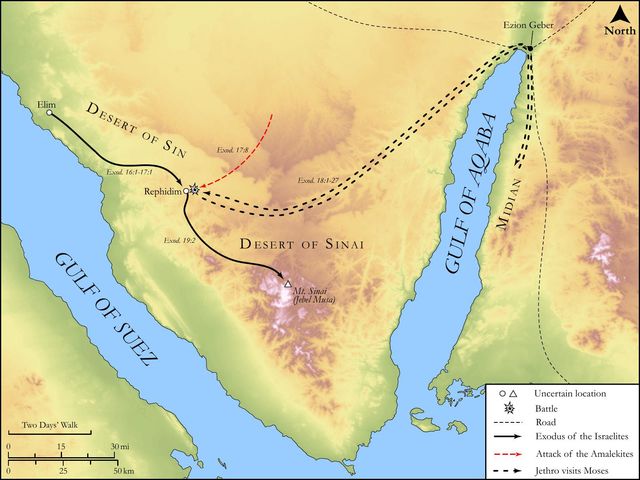
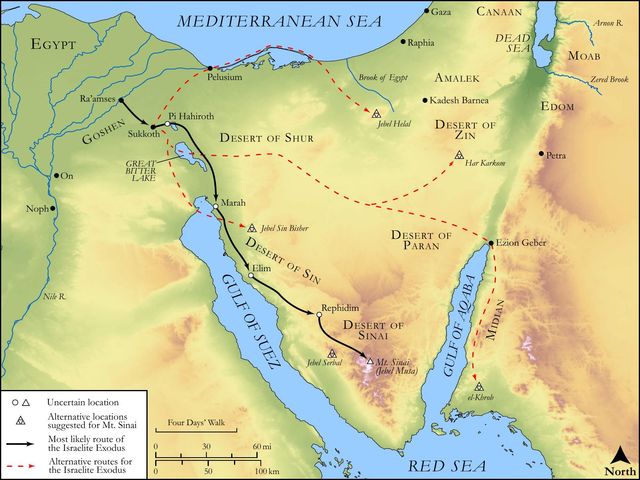
The wilderness of Sin, situated between Elim and Mount Sinai, was an intensely arid and barren region, inherently incapable of supporting the vast multitude of Israelites—estimated to be millions—who had recently departed Egypt. Their journey from a fertile, agriculturally rich land to a desolate desert presented an immediate and existential threat of starvation, making their complaints, while indicative of a lack of faith, understandable from a purely human perspective. However, their recent experience of God's miraculous power in Egypt and at the Red Sea should have fostered a deeper trust. The daily provision of manna was utterly unprecedented, distinguishing Israel's journey from any typical nomadic migration. This miraculous sustenance underscored their absolute dependence on Yahweh, highlighting His unique covenant relationship with His chosen people and His ability to transcend all natural limitations to sustain them. It was a profound lesson in divine sovereignty and human reliance.
Key Themes
ShowHideExodus 16:15 contributes significantly to several overarching themes within the book of Exodus and the broader Pentateuch. Primarily, it underscores the theme of Divine Provision and Sustenance, demonstrating God's faithful commitment to meet the physical needs of His people, even in the most challenging circumstances. This provision is not merely a practical act but a theological statement about God's character as a caring and covenant-keeping Lord. Secondly, the Israelites' bewildered reaction and Moses' explanation highlight the theme of Divine Revelation and Instruction. God reveals His power and purpose progressively, often through the mediation of Moses, guiding His people from ignorance to understanding. Finally, the daily nature of the manna collection and the subsequent commands regarding the Sabbath (Exodus 16:22-30) introduce the theme of Obedience and Trust, as God tests their willingness to follow His specific instructions, fostering a deeper reliance on Him rather than on their own efforts or anxieties.
Exposition and Analysis
ShowHideKey Word Analysis
ShowHide(bên), meaning "a son (as a builder of the family name), in the widest sense." In this context, "children of Israel" (H1121 bên H3478 Yisrâʼêl) refers to the entire collective body of the Israelite nation, emphasizing their identity as God's chosen offspring and inheritors of the covenant promises. It highlights their corporate experience of God's provision and their shared journey in the wilderness.
(mân), literally meaning "a whatness," or "what is it?" This word directly reflects the Israelites' bewildered question upon first seeing the mysterious substance. It encapsulates their utter unfamiliarity with this heavenly provision, underscoring its supernatural and unprecedented nature. The name itself serves as a perpetual reminder of its mysterious origin and God's unique intervention.
(yâdaʻ), meaning "to know (properly, to ascertain by seeing)." The phrase "wist not" (an archaic English term for "knew not") emphasizes the Israelites' complete ignorance and confusion regarding the substance they found. They had no prior knowledge or understanding of such a phenomenon, reinforcing the miraculous and unexpected nature of God's provision. Their lack of knowledge sets the stage for Moses' crucial explanation, which moves them from bewilderment to understanding its divine source.
Verse Breakdown
ShowHide"And when the children of Israel saw [it], they said one to another, It [is] manna:"
Upon waking to find the ground covered with a fine, flaky substance resembling dew, the Israelites were utterly perplexed. Their immediate, collective reaction was to question its identity, leading to the coining of the term "manna." This spontaneous naming, derived from the Hebrew question "What is it?", highlights their complete lack of familiarity with such a phenomenon, underscoring the unprecedented and miraculous nature of God's provision. Their bewilderment sets the stage for divine clarification.
"for they wist not what it [was]."
This explanatory clause directly clarifies why the Israelites called the substance "manna"—because they simply did not know what it was. It emphasizes their profound ignorance and the mysterious appearance of this substance, which defied any natural explanation or prior experience. This declaration of their confusion underscores the supernatural origin of the manna and prepares them to receive the authoritative revelation from Moses.
"And Moses said unto them, This [is] the bread which the LORD hath given you to eat."
Moses, as God's appointed mediator and prophet, provides the authoritative and divine explanation. He clarifies that this mysterious substance is not merely some unknown thing, but explicitly "the bread" provided directly by Yahweh (H3068 Yᵉhôvâh). This declaration transforms their confusion into understanding, revealing the divine source and purpose of the manna as a miraculous provision for their hunger, a direct answer to their complaints, and a tangible sign of God's faithfulness and power.
Literary Devices
ShowHideExodus 16:15 masterfully employs several literary devices to convey its profound theological message. Symbolism is central, as the manna itself becomes a powerful symbol of divine sustenance, God's active involvement in the daily lives of His people, and the need for constant dependence. Its unique properties—appearing daily, melting in the sun, and inability to be stored—symbolize the necessity of fresh, daily reliance on God's provision, both physically and spiritually. The narrative also features Revelation, as Moses serves as the divinely appointed interpreter, transforming the Israelites' bewildered question ("What is it?") into a clear statement of God's miraculous provision. This shift from human ignorance to divine clarity underscores God's initiative in revealing His will and care. Furthermore, there is a subtle yet profound Irony in the Israelites' naming of the substance. They call it "What is it?" out of confusion and lack of knowledge, yet this very name becomes a perpetual, enduring reminder of God's mysterious, miraculous, and utterly unique intervention, turning their question of bewilderment into a testament to divine power and faithfulness.
Theological and Thematic Connections
ShowHideExodus 16:15 is a foundational text for understanding God's character as a faithful provider and sustainer. The manna was far more than mere food; it was a daily, tangible demonstration of God's covenant loyalty and His intimate care for His people, even amidst their grumbling and faithlessness. It served as a profound pedagogical tool, teaching Israel vital lessons in dependence, obedience, and the absolute sufficiency of divine grace. This miraculous provision foreshadows God's ultimate provision for humanity's deepest spiritual hunger, preparing the way for a greater revelation of sustenance that transcends physical nourishment.
Reflection and Application
ShowHideExodus 16:15 offers timeless and profound lessons for believers today, serving as a powerful reminder of God's unwavering commitment to provide for our needs, both physical and spiritual. In a world that often encourages self-sufficiency, fosters anxiety about the future, and promotes the accumulation of resources, the story of the manna calls us to cultivate a radical posture of daily dependence on God. Just as the Israelites had to gather fresh manna each morning, trusting God for that day's sustenance, we are invited to trust God for our daily bread, recognizing His providential hand in every provision, whether it appears as a dramatic miracle or through mundane circumstances. This verse challenges us to look beyond our immediate circumstances and perceive God's active involvement, even when His methods are mysterious or unexpected. It encourages us to seek not only physical sustenance but, more importantly, the spiritual nourishment that truly satisfies the soul, found in His Word, His presence, and His Son.
Questions for Reflection
ShowHideFAQ
ShowHideWhat was the significance of the Israelites calling the substance "manna" if it meant "What is it?"
ShowHideThe significance of the Israelites calling the substance "manna" (מָן הוּא, mān hū') lies in their immediate, bewildered reaction to something utterly unknown and unprecedented. This name, literally translating to "What is it?", expresses their profound confusion and complete lack of understanding regarding the mysterious substance that appeared. Paradoxically, this name, born out of ignorance, became its enduring title, serving as a constant reminder of its supernatural origin. It highlights that this was not a natural phenomenon they could explain or categorize, but a direct, miraculous intervention from God. Moses' subsequent explanation in Exodus 16:15 then clarifies the mystery, revealing that this "What is it?" was, in fact, "the bread which the LORD hath given you to eat," thereby transforming their question of bewilderment into a powerful testament to divine provision and faithfulness.
Christ-Centered Fulfillment
ShowHideThe manna in Exodus 16:15 serves as a profound Old Testament type, pointing directly to Jesus Christ, the ultimate "Bread of Life." Just as the manna descended from heaven to sustain the physical lives of the Israelites in the desolate wilderness, Jesus Himself declared, "I am the bread of life; whoever comes to me shall not hunger, and whoever believes in me shall never thirst" (John 6:35). In a striking parallel, Jesus' audience in John 6 referenced the manna given to their ancestors, prompting Him to clarify that the true bread from heaven is not merely physical sustenance, but the One who gives life to the world (John 6:32-33). The manna, though miraculous, could only sustain physical life and could not prevent eventual death, but Christ, the living bread, offers eternal life to all who partake of Him by faith (John 6:49-51). Thus, Exodus 16:15 is not merely a historical account of ancient provision, but a powerful foreshadowing of God's ultimate and perfect provision for humanity's deepest spiritual hunger through the person and atoning work of His Son, Jesus Christ, who alone truly satisfies the soul.