


Exodus 16:31
Bible text: King James Version (1769 Blayney text) · Public domain
Bible text: King James Version with Strong's numbers · Public domain
Bible text: Berean Standard Bible · Public domain
Bible text: American Standard Version (1901) · Public domain
Bible text: World English Bible, Messianic edition · Public domain
Bible text: Geneva Bible (1599) · Public domain
Bible text: Young's Literal Translation · Public domain
- וַיִּקְרְאוּvai·yik·re·'Uand they calledH7121Conj-w ¦ V-Qal-ConsecImperf-3mpVerb Qal Consecutive Imperfect 3rd Plural Masculineוַandיִּקְרְאוּthey called
- בֵיתveit[the] household ofH1004N-mscNoun Singular Masculine Construct
- יִשְׂרָאֵלYis·ra·'ElIsraelH3478N-properNoun Proper Location
- אֶת'et<obj.>H853DirObjMParticle Object Indicator
- שְׁמוֹshe·Moits nameH8034N-msc ¦ 3msNoun Singular Masculine Constructשְׁמnameוֹits
- מָןManmannaH4478N-msNoun Singular Masculine Absolute
- וְהוּאve·Hu'and itH1931Conj-w ¦ Pro-3msPronoun Personal 3rd Singular Masculineוְandהוּאit
- כְּזֶרַעke·Ze·ra'[was] like [the] seed ofH2233Prep-k ¦ N-mscNoun Singular Masculine Constructכְּ[was] likeזֶרַע[the] seed of
- גַּדgadcorianderH1407N-msNoun Singular Masculine Absolute
- לָבָןla·VanwhiteH3836Adj-msAdjective Singular Masculine Absolute
- וְטַעְמוֹve·ta'·Moand its tasteH2940Conj-w ¦ N-msc ¦ 3msNoun Singular Masculine Constructוְandטַעְמtasteוֹits
- כְּצַפִּיחִתke·tza·pi·Chit[was] like a waferH6838Prep-k ¦ N-fsNoun Singular Feminine Absoluteכְּ[was] likeצַפִּיחִתa wafer
- בִּדְבָשׁbid·Vashwith honeyH1706Prep-b ¦ N-msNoun Singular Masculine Absoluteבִּwithדְבָשׁhoney
English is a literal word-by-word gloss of the Hebrew, not the KJV's wording. Why?
This is the original text the KJV's translators worked from — each Hebrew word with its own literal English meaning in this verse, prepared by scholars at Tyndale House, Cambridge. The KJV translates whole sentences, not word by word, so its wording differs: one Hebrew word can become several English words, and the KJV may choose “the LORD” where the gloss reads “Yahweh”. Both are faithful — they answer different questions. For the KJV's own rendering, switch to the KJV text.
Details
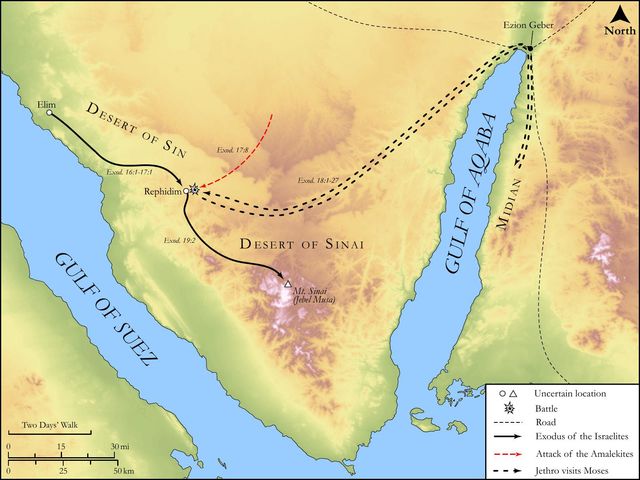
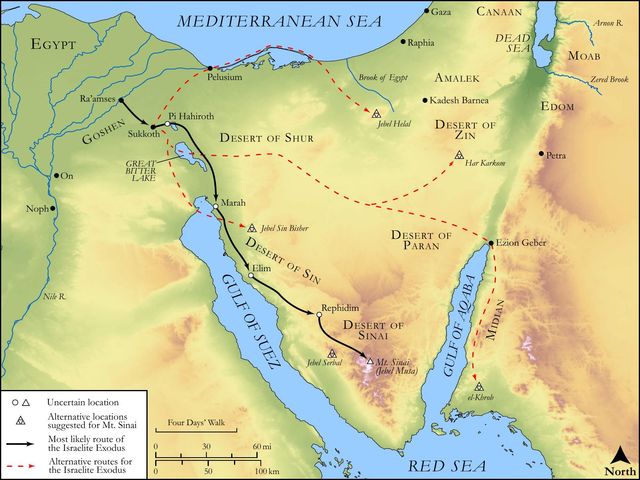
See on the biblical-era maps

Study this verse
Public-domain commentary
Matthew Henry
From his Commentary on the Whole Bible. Henry comments on passages, not single verses — this entry covers Exodus 16:22–31.
We have here, 1. A plain intimation of the observing of a seventh day sabbath, not only before the giving of the law upon Mount Sinai, but before the bringing of Israel out of Egypt, and therefore, from the beginning, Gen 2:3. If the sabbath had now been first instituted, how could Moses have understood what God said to him (Exo 16:5), concerning a double portion to be gathered on the sixth day, without making any express mention of the sabbath? And how could the people so readily take the hint (Exo 16:22), even to the surprise of the rulers, before Moses had declared that it was done with a regard to the sabbath, if they had not had some knowledge of the sabbath before? The setting apart of one day in seven for holy work, and, in order to that, for holy rest, was a divine appointment ever since God created man upon the earth, and the most ancient of positive laws. The way of sabbath-sanctification is the good old way. 2. The double provision which God made for the Israelites, and which they were to make for themselves, on the sixth day: God gave them on the sixth day the bread of two days, Exo 16:29. Appointing them to rest on the seventh day, he took care that they should be no losers by it; and none ever will be losers by serving God. On that day they were to fetch in enough for two days, and to prepare it, Exo 16:23. The law was very strict, that they must bake and seeth, the day before, and not on the sabbath day. This does not now make it unlawful for us to dress meat on the Lord's day, but directs us to contrive our family affairs so that they may hinder us as little as possible in the work of the sabbath. Works of necessity, no doubt, are to be done on that day; but it is desirable to have as little as may be to do of things necessary to the life that now is, that we may apply ourselves the more closely to the one thing needful. That which they kept of for their food on the sabbath day did not putrefy, Exo 16:24. When they kept it in opposition to a command (Exo 16:20) it stank; when they kept it in obedience to a command it was sweet and good; for every thing is sanctified by the word of God and prayer. 3. The intermission of the manna on the seventh day. God did not send it then, and therefore they must not expect it, nor go out to gather, Exo 16:25, Exo 16:26. This showed that it was not produced by natural causes, and that it was designed for a confirmation of the divine authority of the law which was to be given by Moses. Thus God took an effectual course to make them remember the sabbath day; they could not forget it, nor the day of preparation for it. Some, it seems, went out on the seventh day, expecting to find manna (Exo 16:27); but they found none, for those that will find must seek in the appointed time: seek the Lord while he may be found. God, upon this occasion, said to Moses, How long refuse you to keep my commandments? Exo 16:28. Why did he say this to Moses? He was not disobedient. No, but he was the ruler of a disobedient people, and God charges it upon him that he might the more warmly charge it upon them, and might take care that their disobedience should not be through any neglect or default of his. It was for going out to seek for manna on he seventh day that they were thus reproved. Note, (1.) Disobedience, even in a small matter, is very provoking. (2.) God is jealous for the honour of his sabbaths. If walking out on the sabbath to seek for food was thus reproved, walking out on that day purely to find our own pleasure cannot be justified.
Historical interpretation
Historical reception
1 surviving comment on this verse from the historical church.
The Word of God becomes all these things to each and every one according as the capacity or the desire of the participant requires. In just the same way the manna also, although it was one food, yielded its flavor to each person after his desire. So he does not offer himself only as bread to those who hunger and as wine to those who thirst, but he presents himself also as fragrant apples to those who crave delights.
Continue studying Exodus 16:31 across the web’s major study libraries — every link below opens this exact verse, chapter, or book on the destination site.
Read & Compare
 BibleGatewayThis verse in more than 200 translations and 70 languages.
 Bible.comThe YouVersion reader — hundreds of translations, reading plans, and highlights.
 ESV.orgCrossway's official English Standard Version reader.
 NET BibleThe NET translation with 60,000+ translators' notes on every rendering decision.
 STEP BibleTyndale House's free study tool — original text, vocabulary, and scholarly resources.
 BibliaLogos Bible Software's free web reader.
 USCCBThe New American Bible (Revised Edition) with the U.S. bishops' study notes.
Commentaries
 BibleHub CommentariesDozens of classic commentaries on this verse, gathered on one page.
 StudyLightMore than 100 commentary sets — the largest collection on the web.
 BibleRefPlain-English commentary on what this verse means, verse by verse.
 Enduring WordDavid Guzik's free commentary on this chapter, widely used by Bible teachers.
 Bible Study ToolsVerse commentary alongside Greek and Hebrew study aids.
Original Language & Research
- BibleHub InterlinearThe verse word by word — original language, transliteration, and English.
- BibleHub LexiconEvery word's original-language definition and Strong's entry.
 Blue Letter BibleDeep-study tools — Strong's numbers, concordance, and word studies.
 SefariaThe Hebrew text with Rashi and centuries of Jewish commentary.
Sermons, Hymns & Audio


TrulyRandomVerse is not affiliated with these sites and doesn’t control their content. They’re linked because they’re genuinely useful.
Summary
Exodus 16:31 provides a precise and evocative description of the Manna, the miraculous sustenance divinely provided for the Israelites during their forty years of wilderness wandering. This verse details its distinct appearance as "like coriander seed, white" and its delightful taste as "like wafers made with honey," thereby highlighting its unique, supernaturally ordained nature. It serves as a tangible testament to God's faithful, daily, and palatable provision that sustained an entire nation, underscoring His meticulous care for His covenant people.
Context
ShowHideLiterary Context
Exodus 16:31 is situated within the broader narrative of God's miraculous provision for Israel in the wilderness, immediately following their liberation from Egyptian bondage and the miraculous crossing of the Red Sea. The preceding verses in Exodus 16 detail the Israelites' initial grumbling against Moses and Aaron due to a lack of food (Exodus 16:2-3), prompting God's gracious promise to rain "bread from heaven" (Exodus 16:4). The chapter meticulously outlines the daily collection instructions, including the prohibition against hoarding (Exodus 16:19-20) and the provision of a double portion on the sixth day to honor the Sabbath (Exodus 16:22-26). Verse 31, therefore, serves as a culminating summary description of this miraculous food after the Israelites had become accustomed to its appearance and taste, preceding the command to store an omer of Manna as a perpetual reminder of God's enduring provision for future generations (Exodus 16:32-34).
Historical & Cultural Context
The Israelites' journey through the Sinai wilderness was a period of profound and absolute dependence on God, following their liberation from centuries of slavery in Egypt. The Sinai Peninsula was, and remains, a desolate and arid region, utterly incapable of sustaining a population estimated to be over two million people through natural agricultural means. Their complaints about hunger, while often accompanied by a lack of faith, were rooted in a legitimate existential concern within such a harsh environment. Among the nations round about, divine provision of food was a common motif, often seen as a powerful sign of a god's care and power over his people. However, the Manna was unique in its consistent, daily appearance, its specific collection rules, and its supernatural cessation only upon their entry into the fertile Promised Land (Joshua 5:12). This miraculous provision underscored God's direct, personal, and continuous involvement in the daily lives of His covenant people, demonstrating His unwavering faithfulness even amidst their repeated murmuring and faithlessness. It was a tangible, daily lesson in trusting God for their very survival, distinct from any known natural phenomenon or human agricultural effort, shaping their understanding of Yahweh as their sole provider.
Key Themes
ShowHideExodus 16:31 contributes significantly to several major theological and narrative themes within the book of Exodus and the broader Pentateuch. Foremost is the theme of Divine Provision and Sustenance, showcasing God's omnipotent ability and unwavering commitment to care for His people, even in the most inhospitable circumstances. The Manna vividly illustrates God's Covenant Faithfulness, demonstrating that He keeps His promises to Israel despite their unfaithfulness. It also highlights the theme of Human Dependence, as the daily collection of Manna taught Israel to rely on God day by day, rather than on their own strength, foresight, or the resources of the land. This daily rhythm of provision fostered a spiritual discipline of trust. Furthermore, the Manna serves as a powerful symbol of God's Holiness and Order, seen in the specific instructions for its collection, the Sabbath observance tied to it (Exodus 16:23), and the judgment for disobedience (Exodus 16:20). Ultimately, the Manna foreshadows later spiritual truths about true sustenance, pointing towards the ultimate "bread from heaven" (John 6:32).
Exposition and Analysis
ShowHideKey Word Analysis
ShowHideThis term (H4478) is described as "literally a whatness (so to speak), i.e. manna (so called from the question about it)." This etymology emphasizes the Israelites' initial bewilderment and question, "What is it?" upon first encountering the mysterious substance. The name itself, therefore, serves as a perpetual reminder of the food's unknown, supernatural origin, underscoring that it was an entirely new and unexpected provision directly from God.
The Hebrew word (H1407) refers specifically to "coriander seed (from its furrows)." This comparison provides a precise visual description of the Manna's physical appearance, indicating that it was small, round, and granular, much like a seed. The detail of its "white" color, mentioned alongside this comparison, further emphasizes its pure, pristine, and possibly luminous quality, contrasting sharply with the desolation of the desert environment.
This word (H1706) denotes "honey (from its stickiness); by analogy, syrup." The comparison to "wafers made with honey" describes the Manna's taste, indicating that it was sweet, pleasant, and highly palatable. This detail highlights God's abundant graciousness, providing not merely sustenance but a delightful and satisfying food, thereby dispelling any notion that His wilderness provision was a hardship or a meager ration.
Verse Breakdown
ShowHide"And the house of Israel called the name thereof Manna"
This clause signifies the communal and formal naming of the miraculous food by the entire Israelite community. It marks the transition from initial bewilderment to an accepted, collective recognition of this unique divine provision. The name "Manna" became the established term, signifying God's daily, supernatural sustenance in the wilderness, deeply embedded in their collective memory and identity.
"and it [was] like coriander seed, white;"
This provides the primary visual description of the Manna. Its resemblance to "coriander seed" emphasizes its small, granular, and easily dispersible nature, suggesting a widespread, abundant, yet humble appearance. The adjective "white" highlights its purity, cleanliness, and perhaps its ethereal, heavenly origin, distinguishing it from any ordinary, earthly food and underscoring its divine source.
"and the taste of it [was] like wafers [made] with honey."
This clause describes the sensory experience of eating the Manna, focusing on its flavor. The comparison to "wafers made with honey" indicates a sweet, pleasant, and satisfying taste. This detail underscores the goodness and generosity of God's provision, ensuring that His people were not only fed but also enjoyed the food provided, transforming a desolate wilderness into a place of divine abundance and delight.
Literary Devices
ShowHideExodus 16:31 primarily employs Simile to describe the Manna, making an unknown, miraculous substance comprehensible through comparisons to familiar objects. The phrases "like coriander seed" and "like wafers made with honey" directly liken the Manna's appearance and taste to known elements, enabling the reader to visualize and imagine its characteristics. These similes are crucial for conveying the Manna's small size, white color, and sweet flavor. Beyond mere description, the Manna functions as a powerful Symbolism. It symbolizes God's faithful and miraculous provision, His absolute sovereignty over creation, and His desire for His people's daily dependence. The Manna's purity ("white") and pleasant taste ("honey") further symbolize the inherent goodness, grace, and even delight found in God's divine care, transforming a barren landscape into a place where God's sustenance was both sufficient and profoundly satisfying.
Theological and Thematic Connections
ShowHideExodus 16:31 powerfully articulates God's meticulous, abundant, and gracious provision for His people. The Manna, described in such specific detail, serves as a tangible expression of God's covenant faithfulness, demonstrating His unwavering commitment to sustain Israel even amidst their wilderness trials and their persistent complaints. It underscores the theme of divine sovereignty over creation, as God supernaturally provides food where none naturally exists, showcasing His absolute ability to meet every need. Furthermore, the daily nature of the Manna fostered a profound dependence on God, teaching Israel to trust Him day by day for their very survival, rather than relying on their own strength or foresight. This miraculous provision became a foundational lesson in God's character as provider and sustainer, a theme echoed throughout Scripture, culminating in the New Testament's revelation of Christ as the ultimate spiritual sustenance.
Reflection and Application
ShowHideThe detailed description of Manna in Exodus 16:31 invites us to deeply reflect on the nature of God's provision in our own lives today. Just as God meticulously provided for Israel with food that was not only sufficient but also pleasant and delightful, He continues to meet our needs with a generosity that often surpasses mere necessity. This verse challenges us to cultivate a posture of daily dependence on God, trusting Him for our physical, emotional, and spiritual sustenance rather than succumbing to anxiety, self-reliance, or the pursuit of fleeting worldly security. It reminds us that God's provisions, though sometimes appearing small, humble, or unexpected like coriander seeds, are perfectly tailored to sustain us and often carry a sweetness that points to His loving, benevolent care. We are called to recognize and appreciate the "honey" in God's daily provisions, acknowledging His goodness even in the mundane, and to resist the temptation to hoard or worry, knowing that our Heavenly Father knows what we need before we even ask, and delights in providing for His children.
Questions for Reflection
ShowHideFAQ
ShowHideWhy was Manna called "Manna"?
ShowHideThe name "Manna" comes from the Hebrew phrase "man hu" (מָן הוּא), which literally means "What is it?" When the Israelites first saw the mysterious substance covering the ground, they were bewildered and asked this question (Exodus 16:15). The name stuck as a perpetual reminder of its miraculous and unknown origin, emphasizing that it was a unique, divine provision that defied natural explanation.
Did Manna have a specific nutritional value?
ShowHideWhile the Bible does not provide a scientific breakdown of Manna's nutritional content, its consistent provision for forty years to sustain an entire nation implies it was nutritionally complete and adequate for their needs. The biblical emphasis is on its miraculous origin and its role as a tangible sign of God's faithfulness and power, rather than its biological composition. It was "bread from heaven," a supernatural food designed by God to sustain His people in the wilderness (Psalm 78:24).
How long did the Manna last?
ShowHideThe Manna was provided daily for the Israelites for forty years, throughout their entire journey in the wilderness. Its provision ceased only when they entered the Promised Land and were able to eat the produce of the land of Canaan (Exodus 16:35 and Joshua 5:12). This cessation marked the end of their period of supernatural dependence for food and the beginning of their reliance on the land God had given them.
Christ-Centered Fulfillment
ShowHideThe Manna, so meticulously described in Exodus 16:31, serves as a profound type and foreshadowing of Jesus Christ, the ultimate "Bread of Life." While the Manna physically sustained Israel in the desolate wilderness, Jesus Himself drew a direct parallel, declaring that He is the true bread from heaven, offering not temporary physical sustenance but eternal spiritual life (John 6:35 and John 6:48). The Manna, despite its miraculous nature, was eaten by the fathers who eventually died (John 6:49), but Jesus promises that those who eat of Him will live forever (John 6:50-51). Just as the Manna was a daily, gracious provision from God to sustain His people, Christ is the continuous, sufficient, and delightful spiritual nourishment for believers, providing all that is needed for eternal life and daily strength. He is the "hidden manna" promised to those who overcome (Revelation 2:17), signifying the intimate and satisfying communion with Him that awaits the faithful. This profound connection reveals that God's provision in the wilderness was not merely about physical food, but about preparing His people for the ultimate, life-giving sustenance found only in His Son, who fully satisfies the deepest hunger of the human soul.