


Exodus 16:24
Bible text: King James Version (1769 Blayney text) · Public domain
Bible text: Berean Standard Bible · Public domain
Bible text: American Standard Version (1901) · Public domain
Bible text: World English Bible, Messianic edition · Public domain
Bible text: Geneva Bible (1599) · Public domain
Bible text: Young's Literal Translation · Public domain
- וַיַּנִּיחוּvai·ya·Ni·chuand they leftH5117Conj-w ¦ V-Hiphil-ConsecImperf-3mpVerb Hiphil Consecutive Imperfect 3rd Plural Masculineוַandיַּנִּיחוּthey left
- אֹתוֹ'o·To<obj.> itH853DirObjM ¦ 3msParticle Object Indicatorאֹת<obj.>וֹit
- עַד'aduntilH5704PrepPreposition
- הַבֹּקֶרha·Bo·kerthe morningH1242Art ¦ N-msNoun Singular Masculine Absoluteהַtheבֹּקֶרmorning
- כַּאֲשֶׁרka·'a·Sherjust asH834Prep-k ¦ RelParticle Relativeכַּjustאֲשֶׁרas
- צִוָּהtzi·Vahhe had commandedH6680V-Piel-Perf-3msVerb Piel Perfect 3rd Singular Masculine
- מֹשֶׁהmo·ShehMosesH4872N-proper-mNoun Proper Masculine
- וְלֹאve·Lo'and notH3808Conj-w ¦ NegParticle Negativeוְandלֹאnot
- הִבְאִישׁhiv·'Ishit stankH887V-Hiphil-Perf-3msVerb Hiphil Perfect 3rd Singular Masculine
- וְרִמָּהve·ri·Mahand a maggotH7415Conj-w ¦ N-fsNoun Singular Feminine Absoluteוְandרִמָּהa maggot
- לֹאlo'notH3808NegParticle Negative
- הָיְתָהHa·ye·tahit wasH1961V-Qal-Perf-3fsVerb Qal Perfect 3rd Singular Feminine
- בּוֹboin <the> itPrep-b ¦ 3msSuffix Personal 3rd Singular Masculineבּin <the>וֹit
English is a literal word-by-word gloss of the Hebrew, not the KJV's wording. Why?
This is the original text the KJV's translators worked from — each Hebrew word with its own literal English meaning in this verse, prepared by scholars at Tyndale House, Cambridge. The KJV translates whole sentences, not word by word, so its wording differs: one Hebrew word can become several English words, and the KJV may choose “the LORD” where the gloss reads “Yahweh”. Both are faithful — they answer different questions. For the KJV's own rendering, switch to the KJV text.
Details
See on the biblical-era maps

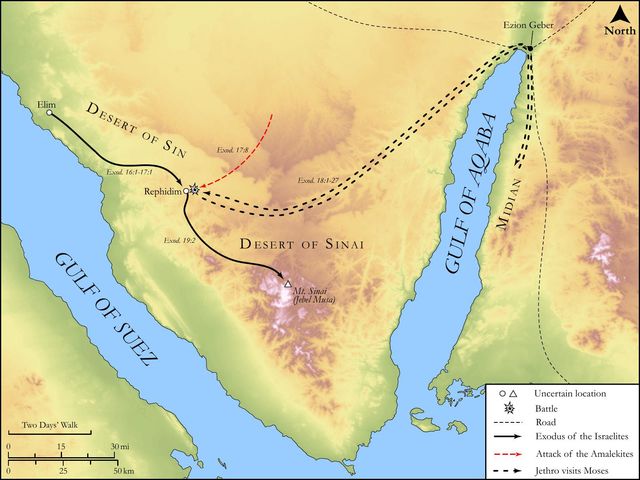
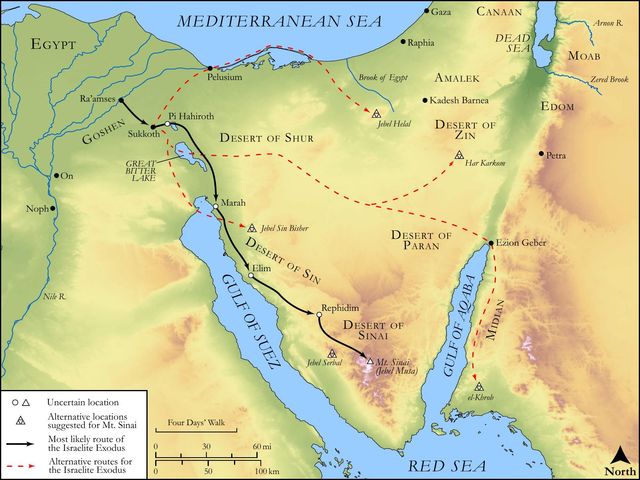
Study this verse
Public-domain commentary
Matthew Henry
From his Commentary on the Whole Bible. Henry comments on passages, not single verses — this entry covers Exodus 16:22–31.
We have here, 1. A plain intimation of the observing of a seventh day sabbath, not only before the giving of the law upon Mount Sinai, but before the bringing of Israel out of Egypt, and therefore, from the beginning, Gen 2:3. If the sabbath had now been first instituted, how could Moses have understood what God said to him (Exo 16:5), concerning a double portion to be gathered on the sixth day, without making any express mention of the sabbath? And how could the people so readily take the hint (Exo 16:22), even to the surprise of the rulers, before Moses had declared that it was done with a regard to the sabbath, if they had not had some knowledge of the sabbath before? The setting apart of one day in seven for holy work, and, in order to that, for holy rest, was a divine appointment ever since God created man upon the earth, and the most ancient of positive laws. The way of sabbath-sanctification is the good old way. 2. The double provision which God made for the Israelites, and which they were to make for themselves, on the sixth day: God gave them on the sixth day the bread of two days, Exo 16:29. Appointing them to rest on the seventh day, he took care that they should be no losers by it; and none ever will be losers by serving God. On that day they were to fetch in enough for two days, and to prepare it, Exo 16:23. The law was very strict, that they must bake and seeth, the day before, and not on the sabbath day. This does not now make it unlawful for us to dress meat on the Lord's day, but directs us to contrive our family affairs so that they may hinder us as little as possible in the work of the sabbath. Works of necessity, no doubt, are to be done on that day; but it is desirable to have as little as may be to do of things necessary to the life that now is, that we may apply ourselves the more closely to the one thing needful. That which they kept of for their food on the sabbath day did not putrefy, Exo 16:24. When they kept it in opposition to a command (Exo 16:20) it stank; when they kept it in obedience to a command it was sweet and good; for every thing is sanctified by the word of God and prayer. 3. The intermission of the manna on the seventh day. God did not send it then, and therefore they must not expect it, nor go out to gather, Exo 16:25, Exo 16:26. This showed that it was not produced by natural causes, and that it was designed for a confirmation of the divine authority of the law which was to be given by Moses. Thus God took an effectual course to make them remember the sabbath day; they could not forget it, nor the day of preparation for it. Some, it seems, went out on the seventh day, expecting to find manna (Exo 16:27); but they found none, for those that will find must seek in the appointed time: seek the Lord while he may be found. God, upon this occasion, said to Moses, How long refuse you to keep my commandments? Exo 16:28. Why did he say this to Moses? He was not disobedient. No, but he was the ruler of a disobedient people, and God charges it upon him that he might the more warmly charge it upon them, and might take care that their disobedience should not be through any neglect or default of his. It was for going out to seek for manna on he seventh day that they were thus reproved. Note, (1.) Disobedience, even in a small matter, is very provoking. (2.) God is jealous for the honour of his sabbaths. If walking out on the sabbath to seek for food was thus reproved, walking out on that day purely to find our own pleasure cannot be justified.
Continue studying Exodus 16:24 across the web’s major study libraries — every link below opens this exact verse, chapter, or book on the destination site.
Read & Compare
 BibleGatewayThis verse in more than 200 translations and 70 languages.
 Bible.comThe YouVersion reader — hundreds of translations, reading plans, and highlights.
 ESV.orgCrossway's official English Standard Version reader.
 NET BibleThe NET translation with 60,000+ translators' notes on every rendering decision.
 STEP BibleTyndale House's free study tool — original text, vocabulary, and scholarly resources.
 BibliaLogos Bible Software's free web reader.
 USCCBThe New American Bible (Revised Edition) with the U.S. bishops' study notes.
Commentaries
 BibleHub CommentariesDozens of classic commentaries on this verse, gathered on one page.
 StudyLightMore than 100 commentary sets — the largest collection on the web.
 BibleRefPlain-English commentary on what this verse means, verse by verse.
 Enduring WordDavid Guzik's free commentary on this chapter, widely used by Bible teachers.
 Bible Study ToolsVerse commentary alongside Greek and Hebrew study aids.
Original Language & Research
- BibleHub InterlinearThe verse word by word — original language, transliteration, and English.
- BibleHub LexiconEvery word's original-language definition and Strong's entry.
 Blue Letter BibleDeep-study tools — Strong's numbers, concordance, and word studies.
 SefariaThe Hebrew text with Rashi and centuries of Jewish commentary.
Sermons, Hymns & Audio


TrulyRandomVerse is not affiliated with these sites and doesn’t control their content. They’re linked because they’re genuinely useful.
Summary
Exodus 16:24 powerfully illustrates God's miraculous provision and His endorsement of the Sabbath principle. Following Moses' instruction to gather a double portion of manna on the sixth day, the Israelites observed that this portion, unlike manna collected on other days, remained perfectly preserved overnight. This supernatural preservation, marked by the absence of decay or infestation, served as a tangible sign of God's faithfulness to sustain His people even during their mandated day of rest, reinforcing their dependence on His daily care rather than their own efforts or anxieties.
Context
ShowHideLiterary Context
Exodus 16:24 is situated within the broader narrative of God's provision for Israel in the wilderness, immediately following their exodus from Egypt and their initial grumbling for food. The preceding verses, Exodus 16:1-15, detail the Israelites' complaints and God's gracious response by promising to "rain bread from heaven" (manna) and provide quail. Specific instructions were given regarding the daily collection of manna—an omer per person—and a strict prohibition against leaving any overnight, which resulted in spoiling and worms if disobeyed, as seen in Exodus 16:20. The unique instruction for the sixth day, to gather a double portion in preparation for the Sabbath, sets the stage for the miraculous preservation described in verse 24, underscoring the divine authority behind the Sabbath command itself. The passage culminates in the establishment of the Sabbath as a perpetual sign between God and Israel, detailed in Exodus 16:25-30.
Historical & Cultural Context
The Israelites, a vast multitude recently freed from slavery in Egypt, found themselves in a desolate wilderness with no natural means of sustenance. Their journey was one of complete dependence on God, a stark contrast to their previous lives in a fertile land. In that day, food preservation was a constant challenge, relying on methods like drying, salting, or fermentation. The rapid decay of food, especially in a warm climate, was a common experience. Against this backdrop, the manna's miraculous appearance and its specific, divinely ordained spoilage patterns—spoiling on any day if hoarded, but remaining fresh on the Sabbath—served as a powerful, daily object lesson. This daily miracle not only provided physical nourishment but also instilled critical spiritual lessons: trust in God's immediate provision, obedience to His commands, and the sanctity of the Sabbath. This pre-Sinai establishment of the Sabbath through practical experience prepared the people for its formal codification as one of the Ten Commandments in Exodus 20:8-11.
Key Themes
ShowHideExodus 16:24 significantly contributes to several overarching themes within the book of Exodus and the broader Pentateuch. Foremost is the theme of Divine Provision, showcasing God's unfailing commitment to sustain His people in impossible circumstances, demonstrating His sovereignty over creation and natural processes. It also highlights Obedience and Trust, as the Israelites' willingness to follow Moses' specific instructions regarding the manna, particularly the double portion for the Sabbath, was met with miraculous affirmation. This contrasts with their previous disobedience and grumbling. Furthermore, the verse underscores the Sanctity of the Sabbath, revealing God's intention to set apart a day for rest and worship, a principle established even before the giving of the Law at Sinai. The unique preservation of the manna on the sixth day for the seventh day of rest serves as a tangible sign of God's blessing on this divine rhythm, teaching Israel to cease from their labors and rely on His sustaining power.
Exposition and Analysis
ShowHideKey Word Analysis
ShowHideThis verb signifies to deposit, set down, or allow to stay. In this context, it refers to the Israelites' act of storing the manna overnight, specifically the double portion gathered on the sixth day. The significance lies in the contrast: while manna hoarded on other days would spoil, this portion, laid up according to Moses' command, was divinely preserved, highlighting the obedient act and God's unique blessing on the Sabbath provision.
From a primitive root meaning "to smell bad" or "to be offensive morally." In the context of food, it denotes putrefaction and foul odor, the natural consequence of decay. The explicit statement that the manna "did not stink" serves as a powerful testament to the supernatural intervention, as it defies the expected process of decomposition in a warm climate, signifying a direct suspension of natural law by divine power.
This noun refers to a maggot or grub, the larval stage of insects commonly found in decaying organic matter. Its presence is a definitive sign of spoilage and infestation. The declaration that "neither was there any worm therein" further emphasizes the complete and miraculous preservation of the manna, indicating not just a lack of putrefaction but also an absence of any biological activity that would typically accompany decay, thereby affirming the purity and divine nature of the provision.
Verse Breakdown
ShowHide"And they laid it up till the morning, as Moses bade:"
This clause underscores the Israelites' obedience to the specific, divinely-given command through Moses. On the sixth day, they were instructed to gather a double portion of manna—two omers per person—because the following day, the Sabbath, would be a day of rest with no manna provided. Their act of "laying it up" (storing it overnight) was a direct test of their faith and obedience, contrasting sharply with their previous attempts to hoard manna on other days, which resulted in spoilage.
"and it did not stink,"
This phrase reveals the miraculous nature of the event. Unlike the manna collected on the first five days, which would putrefy if kept overnight, the portion gathered on the sixth day for the Sabbath remained perfectly fresh. This supernatural preservation defied the natural laws of decay, serving as a tangible sign of God's power and His unique blessing upon the Sabbath day.
"neither was there any worm therein."
This further emphasizes the completeness of the miracle. The absence of maggots or other signs of infestation confirmed that the manna was not merely slow to decay but was entirely immune to the natural processes that would normally render it inedible. This specific detail reinforces the divine origin and purpose of the manna's preservation, validating God's provision for the Sabbath.
Literary Devices
ShowHideExodus 16:24 employs several literary devices to convey its profound theological message. Miracle is the most prominent device, as the manna's preservation defies natural laws, serving as a clear demonstration of God's direct intervention and power. This miraculous event functions as a Sign, pointing to God's faithfulness, His sovereignty over creation, and the divine endorsement of the Sabbath. The verse also utilizes Contrast, setting the perfectly preserved manna of the sixth day against the spoiled, worm-infested manna of previous days when instructions were disobeyed, as noted in Exodus 16:20. This contrast highlights the consequences of obedience versus disobedience and underscores the unique sanctity of the Sabbath. Furthermore, the manna itself functions as Symbolism, representing God's daily provision, His care for His people, and the spiritual sustenance He offers. The entire narrative of the manna, culminating in this verse, is a powerful example of Divine Pedagogy, where God teaches His people crucial lessons about trust, obedience, and the importance of rest through a tangible, repeated experience.
Theological and Thematic Connections
ShowHideExodus 16:24 stands as a profound testament to God's meticulous care for His people and His sovereign control over creation. It reinforces the themes of divine faithfulness, demonstrating that God is utterly reliable in His promises of provision, even when human resources are exhausted. The miraculous preservation of the manna directly validates the sanctity of the Sabbath, establishing it as a day of rest and trust in God's sustaining power, rather than human labor. This event taught Israel that true security comes not from hoarding or self-reliance, but from obediently trusting in God's daily and supernatural provision. It also foreshadows a deeper spiritual truth: that God provides not only for physical needs but also for spiritual sustenance, inviting His people into a rhythm of rest and reliance.
Reflection and Application
ShowHideExodus 16:24 offers timeless lessons for believers today, inviting us to cultivate a deeper trust in God's daily provision and to embrace the spiritual discipline of rest. In a world that often pressures us towards constant striving and accumulation, this passage reminds us that our security is found not in our own efforts or stockpiles, but in the unfailing faithfulness of God. Just as the Israelites learned to depend on God for their daily bread, we are called to release our anxieties about tomorrow and trust Him for our present needs. The miraculous preservation of the manna for the Sabbath also underscores the divine value of rest—not merely as a break from work, but as an act of worship and trust, acknowledging that God sustains us even when we cease our labor. This challenges us to intentionally set aside time for spiritual refreshment, worship, and communion with God, believing that He will provide for us as we honor His design for rest. Our obedience to God's commands, even when they seem counter-intuitive to worldly wisdom, opens the door for His supernatural blessings and a deeper experience of His sustaining presence in our lives.
Questions for Reflection
ShowHideFAQ
ShowHideWhy did the manna spoil on other days but not on the sixth day when laid up for the Sabbath?
ShowHideThe manna spoiled on other days if kept overnight, as seen in Exodus 16:20, as a direct test of Israel's obedience and trust. It taught them to rely on God's daily provision and not to hoard. However, the manna collected on the sixth day was miraculously preserved for the Sabbath, serving as a tangible sign from God that He would provide for His people even when they ceased their labor on the day of rest. This unique preservation was a divine endorsement of the Sabbath principle, demonstrating God's power to sustain them without their daily effort on that specific day.
What is the significance of the text explicitly stating that the manna "did not stink" and had "no worm therein"?
ShowHideThese specific details emphasize the supernatural nature of the preservation. "Stink" (Hebrew bâʼash) refers to the putrefaction and foul odor of decay, while "worm" (Hebrew rimmâh) refers to maggots, common in decaying food. By explicitly stating the absence of these natural signs of spoilage, the text highlights that the manna's preservation was not merely slow decay but a complete suspension of natural biological processes. It underscored God's precise and powerful control over creation, making the miracle undeniable and reinforcing the divine authority behind the Sabbath command.
How does this event relate to the broader concept of the Sabbath in the Bible?
ShowHideThis event is foundational to the practical understanding and observance of the Sabbath, even before its formal codification at Mount Sinai, as recorded in Exodus 20:8-11. The manna's unique behavior provided a daily, tangible lesson in Sabbath observance. It taught the Israelites to cease their labor, trust in God's provision, and recognize a day set apart for rest and worship. The double portion on the sixth day and the absence of manna on the seventh directly demonstrated God's intention for His people to rest and rely on Him, establishing a rhythm of work and rest that reflected His own creative pattern, as seen in Genesis 2:2-3.
Christ-Centered Fulfillment
ShowHideThe miraculous manna, miraculously preserved for the Sabbath, finds its ultimate and profound fulfillment in Jesus Christ. The manna in the wilderness was physical bread that sustained temporal life, yet those who ate it eventually died. Jesus, however, declares Himself to be the "true bread from heaven" in John 6:32, the "bread of life" who gives eternal life to those who believe in Him, as He states in John 6:35. Just as the manna was a daily provision that demonstrated God's faithfulness in sustaining His people in the wilderness, Christ is our ultimate and complete provision, satisfying our deepest spiritual hunger and thirst. The Sabbath, for which the manna was miraculously preserved, pointed to a greater rest—a spiritual rest found in Christ, who invites all who are weary and burdened to find "rest for their souls" in Him, as promised in Matthew 11:28-30. He is the one who perfectly fulfills the law, including the Sabbath, offering a rest from the striving of works-righteousness and the burden of sin. Through His finished work on the cross, He provides the ultimate, imperishable sustenance that never spoils and leads to everlasting life, embodying the divine faithfulness and provision foreshadowed by the preserved manna. This spiritual nourishment and rest in Christ are eternal, unlike the manna which was a temporary provision for a physical journey.