


Exodus 16:33
Bible text: King James Version (1769 Blayney text) · Public domain
Bible text: King James Version with Strong's numbers · Public domain
Bible text: Berean Standard Bible · Public domain
Bible text: American Standard Version (1901) · Public domain
Bible text: World English Bible, Messianic edition · Public domain
Bible text: Geneva Bible (1599) · Public domain
Bible text: Young's Literal Translation · Public domain
- וַיֹּאמֶרvai·Yo·merand he saidH559Conj-w ¦ V-Qal-ConsecImperf-3msVerb Qal Consecutive Imperfect 3rd Singular Masculineוַandיֹּאמֶרhe said
- מֹשֶׁהmo·ShehMosesH4872N-proper-mNoun Proper Masculine
- אֶל'eltoH413PrepPreposition
- אַהֲרֹן'a·ha·RonAaronH175N-proper-mNoun Proper Masculine
- קַחkachtakeH3947V-Qal-Imp-2msVerb Qal Imperative 2nd Singular Masculine
- צִנְצֶנֶתtzin·Tze·neta jarH6803N-fscNoun Singular Feminine Construct
- אַחַת'a·ChatoneH259Adj-fsAdjective Numerical Singular Feminine Absolute
- וְתֶןve·tenand putH5414Conj-w ¦ V-Qal-Imp-2msVerb Qal Imperative 2nd Singular Masculineוְandתֶןput
- שָׁמָּהSha·mahthere <towards>H8033Adv ¦ SfxAdverbשָׁמָּthereה<towards>
- מְלֹאme·lo'[the] fullness ofH4393N-mscNoun Singular Masculine Construct
- הָעֹמֶרha·'O·merthe omerH6016Art ¦ N-msNoun Singular Masculine Absoluteהָtheעֹמֶרomer
- מָןManmannaH4478N-msNoun Singular Masculine Absolute
- וְהַנַּחve·ha·Nachand depositH5117Conj-w ¦ V-Hiphil-Imp-2msVerb Hiphil Imperative 2nd Singular Masculineוְandהַנַּחdeposit
- אֹתוֹ'o·To<obj.> itH853DirObjM ¦ 3msParticle Object Indicatorאֹת<obj.>וֹit
- לִפְנֵיlif·Nei<to> beforeH6440Prep-l ¦ N-mpcNoun Plural Masculine Constructלִ<to>פְנֵיbefore
- יְהוָהYah·wehYahwehH3068N-properNoun Proper Title
- לְמִשְׁמֶרֶתle·mish·Me·retfor keepingH4931Prep-l ¦ N-fsNoun Singular Feminine Absoluteלְforמִשְׁמֶרֶתkeeping
- לְדֹרֹתֵיכֶםle·do·ro·tei·Khemto your generationsH1755Prep-l ¦ N-fpc ¦ 2mpNoun Plural Feminine Constructלְtoדֹרֹתֵיgenerationsכֶםyour
English is a literal word-by-word gloss of the Hebrew, not the KJV's wording. Why?
This is the original text the KJV's translators worked from — each Hebrew word with its own literal English meaning in this verse, prepared by scholars at Tyndale House, Cambridge. The KJV translates whole sentences, not word by word, so its wording differs: one Hebrew word can become several English words, and the KJV may choose “the LORD” where the gloss reads “Yahweh”. Both are faithful — they answer different questions. For the KJV's own rendering, switch to the KJV text.
Details
See on the biblical-era maps

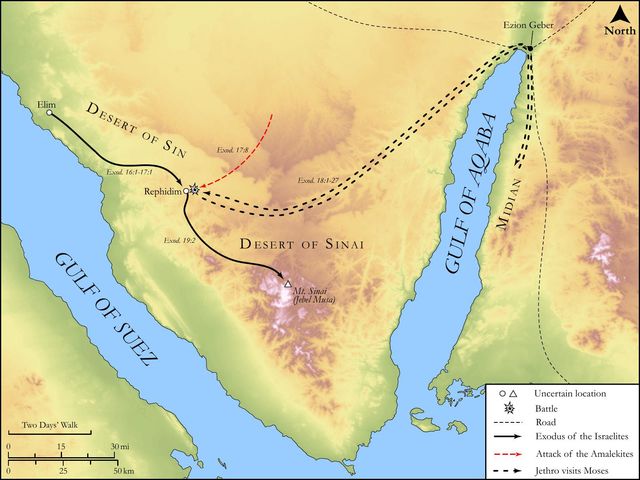
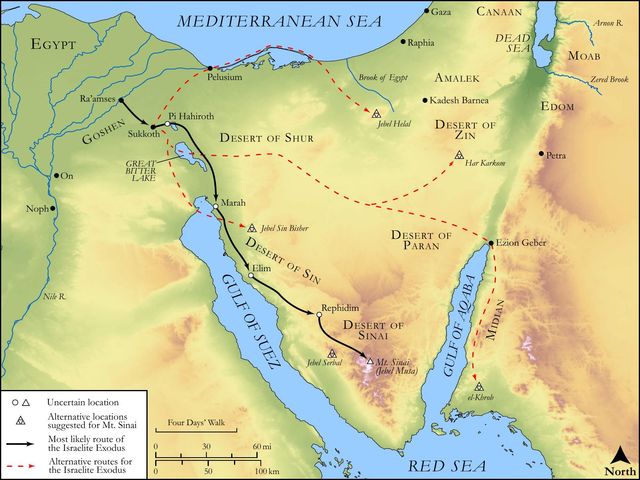
Study this verse
Public-domain commentary
Matthew Henry
From his Commentary on the Whole Bible. Henry comments on passages, not single verses — this entry covers Exodus 16:32–36.
God having provided manna to be his people's food in the wilderness, and to be to them a continual feast, we are here told, 1. How the memory of it was preserved. An omer of this manna was laid up in a golden pot, as we are told (Heb 9:4), and kept before the testimony, or the ark, when it was afterwards made, Exo 16:32-34. The preservation of this manna from waste and corruption was a standing miracle, and therefore the more proper memorial of this miraculous food. "Posterity shall see the bread," says God, "wherewith I have fed you in the wilderness," see what sort of food it was, and how much each man's daily proportion of it was, that it may appear they were neither kept to hard fare nor to short allowance, and then judge between God and Israel, whether they had any cause given them to murmur and find fault with their provisions, and whether they and their seed after them had not a great deal of reason gratefully to won God's goodness to them. Note, Eaten bread must not be forgotten. God's miracles and mercies are to be had in everlasting remembrance, for our encouragement to trust in him at all times. 2. How the mercy of it was continued as long as they had occasion for it. The manna never ceased till they came to the borders of Canaan, where there was bread enough and to spare, Exo 16:35. See how constant the care of Providence is; seedtime and harvest fail not, while the earth remains. Israel was very provoking in the wilderness, yet the manna never failed them: thus still God causes his rain to fall on the just and unjust. The manna is called spiritual meat (Co1 10:3), because it was typical of spiritual blessings in heavenly things. Christ himself is the true manna, the bread of life, of which this was a figure, Joh 6:49-51. The word of God is the manna by which our souls are nourished, Mat 4:4. The comforts of the Spirit are hidden manna, Rev 2:17. These come from heaven, as the manna did, and are the support and comfort of the divine life in the soul, while we are in the wilderness of this world. It is food for Israelites, for those only that follow the pillar of cloud and fire. It is to be gathered; Christ in the word is to be applied to the soul, and the means of grace are to be used. We must every one of us gather for ourselves, and gather in the morning of our opportunities, which if we let slip, it may be too late to gather. The manna they gathered must not be hoarded up, but eaten; those that have received Christ must by faith live upon him, and not receive his grace in vain. There was manna enough for all, enough for each, and none had too much; so in Christ there is a complete sufficiency, and no superfluity. But those that did eat manna hungered again, died at last, and with many of them God was not well-pleased; whereas those that feed on Christ by faith shall never hunger, and shall die no more, and with them God will be for ever well pleased. The Lord evermore give us this bread!
Continue studying Exodus 16:33 across the web’s major study libraries — every link below opens this exact verse, chapter, or book on the destination site.
Read & Compare
 BibleGatewayThis verse in more than 200 translations and 70 languages.
 Bible.comThe YouVersion reader — hundreds of translations, reading plans, and highlights.
 ESV.orgCrossway's official English Standard Version reader.
 NET BibleThe NET translation with 60,000+ translators' notes on every rendering decision.
 STEP BibleTyndale House's free study tool — original text, vocabulary, and scholarly resources.
 BibliaLogos Bible Software's free web reader.
 USCCBThe New American Bible (Revised Edition) with the U.S. bishops' study notes.
Commentaries
 BibleHub CommentariesDozens of classic commentaries on this verse, gathered on one page.
 StudyLightMore than 100 commentary sets — the largest collection on the web.
 BibleRefPlain-English commentary on what this verse means, verse by verse.
 Enduring WordDavid Guzik's free commentary on this chapter, widely used by Bible teachers.
 Bible Study ToolsVerse commentary alongside Greek and Hebrew study aids.
Original Language & Research
- BibleHub InterlinearThe verse word by word — original language, transliteration, and English.
- BibleHub LexiconEvery word's original-language definition and Strong's entry.
 Blue Letter BibleDeep-study tools — Strong's numbers, concordance, and word studies.
 SefariaThe Hebrew text with Rashi and centuries of Jewish commentary.
Sermons, Hymns & Audio


TrulyRandomVerse is not affiliated with these sites and doesn’t control their content. They’re linked because they’re genuinely useful.
Summary
Exodus 16:33 records a divine command delivered by Moses to Aaron, instructing him to preserve a specific quantity of manna in a pot and place it "before the LORD." This act served as a perpetual, tangible memorial of God's miraculous and faithful provision of sustenance for the Israelites during their forty-year wilderness journey, ensuring that future generations would bear witness to His divine care and remember their absolute dependence on His supernatural grace. It underscored the profound importance of remembering God's past works as a foundational anchor for present faith and future hope.
Context
ShowHideLiterary Context
This verse is situated at a critical juncture in the narrative of Israel's wilderness wanderings, immediately following God's initial, miraculous provision of manna and quail. The Israelites, having recently escaped Egyptian bondage, quickly succumbed to grumbling about a lack of food, expressing a desire to return to Egypt's perceived security, despite its slavery (Exodus 16:2-3). In response to their complaints, God promised to "rain bread from heaven" (Exodus 16:4), establishing precise instructions for its daily collection and a double portion on the sixth day for the Sabbath. Crucially, any manna kept overnight, except for the Sabbath portion, would spoil and breed worms (Exodus 16:19-20), highlighting its perishable nature and the need for daily dependence. It is against this backdrop of daily, miraculous, yet perishable provision that God commands the preservation of a single omer of manna, transforming a temporary sustenance into a permanent, sacred testimony. This act elevates the manna from mere food to a profound symbol of divine faithfulness.
Historical & Cultural Context
The Israelites were a nascent nation, having just experienced a dramatic liberation from centuries of slavery. Their journey through the harsh, desolate Wilderness of Sin presented an immediate and existential challenge to their survival, forcing absolute reliance on divine intervention. God's provision of manna, which continued for the entire forty years until they entered the Promised Land (Joshua 5:12), was not merely sustenance but a daily, tangible demonstration of His covenant faithfulness and His unique relationship with Israel. In Israel, the creation of memorials was a common practice to commemorate significant events, covenants, or divine interventions, often involving physical objects or structures, as with Laban and Jacob's heap of witness, called Galeed. The command to preserve the manna follows this practice but imbues it with unparalleled theological significance, transforming a common act into a sacred, enduring testimony to God's unique and miraculous relationship with His chosen people. This pot of manna would later find its place within the Ark of the Covenant (Hebrews 9:4), underscoring its profound spiritual importance as a perpetual witness to God's power and provision.
Key Themes
ShowHideExodus 16:33 powerfully contributes to several overarching themes within the book of Exodus and the Pentateuch. Foremost is the theme of Divine Provision and Faithfulness, demonstrating God's unwavering commitment to sustain His people even in the most impossible circumstances. The manna itself is a daily reminder of God's active presence and care, and its preservation solidifies this truth for future generations. Another key theme is Remembrance and Memorialization. God consistently commands Israel to remember His mighty acts (e.g., Deuteronomy 8:2), and the preserved manna serves as a concrete object lesson against forgetfulness, ensuring that the historical reality of God's supernatural intervention is passed down. This also ties into the theme of Intergenerational Instruction, as the memorial is explicitly "for your generations," emphasizing the importance of teaching and transmitting faith to subsequent generations. Finally, the placement "before the LORD" highlights the theme of Holiness and Consecration, transforming a mundane substance into a sacred artifact, set apart to bear witness to God's unique relationship with Israel and His holy presence among them in the Tabernacle.
Exposition and Analysis
ShowHideKey Word Analysis
ShowHideThis specific Hebrew word, appearing only once in the Old Testament, refers to a jar or vase, likely tapering at the top. Its singularity in the biblical lexicon suggests a unique or specially designated vessel for this sacred purpose. While Exodus does not specify its material, later tradition (e.g., Hebrews 9:4) identifies it as "golden," underscoring its preciousness and the sanctity of its contents. The choice of a distinct vessel emphasizes the deliberate, reverent, and set-apart nature of this memorial act, ensuring its preservation and distinction from common use.
Derived from the Hebrew question "man hu?" meaning "What is it?" (Exodus 16:15), this term refers to the miraculous bread that rained from heaven, serving as the sole sustenance for Israel in the wilderness. Its preservation as a physical object transforms it into a tangible, enduring witness to God's supernatural power and His intimate, daily involvement in the lives of His people, providing for their most basic needs in an otherwise impossible environment. It represents divine provision that defies natural explanation.
This noun, used in its plural form ("your generations"), emphasizes the long-term, perpetual, and intergenerational nature of the command. The primary purpose of the preserved manna was not merely for the immediate generation that witnessed the miracle but for all succeeding ages of Israel. It highlights the didactic intent of God's actions – that His mighty deeds should be remembered, taught, and passed down through the ages, ensuring a continuous legacy of faith, dependence, and remembrance of His unwavering faithfulness to His covenant people.
Verse Breakdown
ShowHide"And Moses said unto Aaron"
This opening clause establishes the divine authority and the chain of command. Moses, acting as God's chosen mediator and prophet, delivers this specific instruction to Aaron, the high priest. This indicates that the act of preserving the manna is not a human initiative but a direct divine mandate, signifying its sacred importance and the priestly responsibility associated with its custody. It underscores the necessity of obedience to God's revealed will.
"Take a pot, and put an omer full of manna therein"
This is a precise, actionable instruction detailing the specific vessel ("a pot") and the exact quantity ("an omer full") of manna to be preserved. An omer was the daily portion allotted to each Israelite (Exodus 16:16), making this preserved amount a perfect representation of God's consistent and sufficient daily provision for each individual. This act of collection and containment transforms a perishable, daily commodity into a permanent, sacred object, set apart for a specific purpose.
"and lay it up before the LORD"
This phrase designates the sacred location for the preserved manna. "Before the LORD" refers to the immediate presence of God, specifically within the Tabernacle, and later, as tradition confirms, inside the Ark of the Covenant. This placement signifies that the manna is not merely a historical artifact but a consecrated testimony, placed in the most holy space as a perpetual reminder of God's active presence, His miraculous provision, and His covenant relationship with His people. It underscores the reverent and worshipful nature of this memorial.
"to be kept for your generations"
This concluding clause articulates the overarching purpose of the memorial. The preserved manna was intended as an enduring witness and object lesson for all future generations of Israelites. Its purpose was didactic: to ensure that the miraculous provision of manna, and thus God's faithfulness, would not be forgotten. It served as a tangible object designed to foster faith, prevent spiritual amnesia, and remind successive generations of their unique history with a God who supernaturally sustains His people.
Literary Devices
ShowHideExodus 16:33 effectively employs several significant literary devices to convey its profound message. Symbolism is central, as the preserved manna transcends its physical reality as food; it becomes a powerful symbol of God's ongoing, miraculous provision, His covenant faithfulness, and His ability to sustain His people even in the most barren and impossible circumstances. The meticulous instruction to "lay it up before the LORD" imbues the manna with profound sacred significance, transforming it from a daily meal into a holy relic, a perpetual testament to God's active presence and care. The entire command is deeply didactic, designed explicitly "to be kept for your generations," serving as a timeless object lesson intended to teach future generations about God's power, His unwavering care, and their absolute dependence upon Him. Furthermore, the manna functions as a type or foreshadowing, subtly pointing forward to a greater, spiritual provision—the true Bread of Life. The precise details regarding the "pot" and "omer" also highlight a divine precision and order, emphasizing the exactness of God's commands and the importance of meticulous obedience in sacred matters.
Theological and Thematic Connections
ShowHideThe preservation of the manna in Exodus 16:33 is a profound theological statement about God's enduring faithfulness and His passionate desire for His people to remember His mighty works. It teaches that God's provision is not merely transactional but deeply relational, a tangible sign of His covenant love and unwavering care for His chosen people. This act establishes a vital principle of memorialization, where physical objects or rituals serve as spiritual anchors, preventing spiritual amnesia and fostering intergenerational faith. It underscores the fundamental truth that true life and sustenance, both physical and spiritual, come from God alone, not from human effort, ingenuity, or the natural produce of the land. The manna, a daily miracle that defied natural laws, became a permanent testimony to God's ability to sustain His people in impossible circumstances, reminding them that their ultimate dependence was, and always would be, on Him alone.
Reflection and Application
ShowHideExodus 16:33 calls us, as believers today, to cultivate a profound posture of intentional remembrance regarding God's faithfulness, both in our personal lives and within the grand narrative of salvation history. Just as the physical manna was preserved to perpetually remind Israel of God's daily, miraculous provision in the wilderness, we are encouraged to deliberately recall, meditate upon, and celebrate the myriad ways God has sustained us—physically, emotionally, and spiritually—throughout our own journeys. This act of remembering is far more than mere nostalgia; it is a vital spiritual discipline that fortifies our faith in the face of present challenges, future uncertainties, and moments of doubt. It grounds us in the immutable truth that the God who provided so miraculously in the past is the same omnipotent and loving God who provides today and will certainly provide tomorrow. Furthermore, this verse highlights our sacred responsibility to be faithful stewards of God's story, ensuring that the legacy of His wondrous works, His character, and His ongoing provision is accurately and passionately transmitted to the next generation, fostering a continuous chain of faith and absolute dependence upon Him.
Questions for Reflection
ShowHideFAQ
ShowHideWhy was the manna preserved, given that it typically spoiled if kept overnight?
ShowHideThe preservation of the manna in Exodus 16:33 was a unique, miraculous exception to the general rule that manna would spoil if kept overnight (Exodus 16:19-20). This specific command from God, delivered through Moses, was for a distinct and sacred purpose: to serve as a perpetual memorial for future generations. It was a divine act designed to ensure a tangible, enduring witness to God's miraculous provision in the wilderness, demonstrating His power to sustain His people supernaturally. Its preservation, defying its natural properties, underscored its sacred and symbolic significance as an irrefutable sign of God's covenant faithfulness and His ability to transcend natural limitations for His purposes.
Where was the pot of manna eventually placed, and what other items were with it?
ShowHideThe pot of manna was eventually placed inside the Ark of the Covenant, which resided in the Most Holy Place of the Tabernacle, and later the Temple. Hebrews 9:4 explicitly confirms that within the Ark were "the golden pot that had manna, and Aaron's rod that budded, and the tables of the covenant." These three items served as powerful, complementary testimonies to different aspects of God's relationship with Israel: the manna to His miraculous provision, Aaron's rod to His chosen priesthood, and the tablets of the covenant to His divine law. All were housed in the most sacred object representing God's holy presence among His people.
Christ-Centered Fulfillment
ShowHideExodus 16:33, with its command to preserve the manna, profoundly foreshadows the ultimate and eternal provision of God in Jesus Christ. The manna, the "bread from heaven" that miraculously sustained Israel's physical life in the wilderness for forty years, serves as a powerful type of Christ, who is the true "Bread of Life" that gives spiritual and eternal life to the world. Just as the manna was a daily, miraculous gift essential for physical survival, Jesus declares Himself to be the one who "came down from heaven, and gives life to the world" (John 6:33). The perishable manna, preserved as a memorial, points to the imperishable life offered through Christ's perfect sacrifice and resurrection. While those who ate the physical manna eventually died (John 6:49), Jesus promises that whoever "eats of this bread shall live for ever" (John 6:51). The preservation of the manna ensured that future generations would remember God's faithfulness and provision; similarly, the enduring truth of Christ's person and work ensures eternal remembrance and participation in God's ultimate, life-giving provision. He is the ultimate fulfillment of God's sustaining grace, the one who truly satisfies the deepest hunger of the human soul.