


Exodus 16:32
Bible text: King James Version (1769 Blayney text) · Public domain
Bible text: King James Version with Strong's numbers · Public domain
Bible text: Berean Standard Bible · Public domain
Bible text: American Standard Version (1901) · Public domain
Bible text: World English Bible, Messianic edition · Public domain
Bible text: Geneva Bible (1599) · Public domain
Bible text: Young's Literal Translation · Public domain
- וַיֹּאמֶרvai·Yo·merand he saidH559Conj-w ¦ V-Qal-ConsecImperf-3msVerb Qal Consecutive Imperfect 3rd Singular Masculineוַandיֹּאמֶרhe said
- מֹשֶׁהmo·ShehMosesH4872N-proper-mNoun Proper Masculine
- זֶהzehthisH2088PrtParticle Demonstrative
- הַדָּבָרha·da·Var[is] the wordH1697Art ¦ N-msNoun Singular Masculine Absoluteהַ[is] theדָּבָרword
- אֲשֶׁר'a·SherwhichH834RelParticle Relative
- צִוָּהtzi·Vahhe commandsH6680V-Piel-Perf-3msVerb Piel Perfect 3rd Singular Masculine
- יְהוָהYah·wehYahwehH3068N-properNoun Proper Title
- מְלֹאme·Lo'[the] fullness ofH4393N-mscNoun Singular Masculine Construct
- הָעֹמֶרha·'O·merthe omerH6016Art ¦ N-msNoun Singular Masculine Absoluteהָtheעֹמֶרomer
- מִמֶּנּוּmi·Me·nuof itH4480Prep ¦ 3msPreposition Definiteמִמֶּofנּוּit
- לְמִשְׁמֶרֶתle·mish·Me·ret[will be] for keepingH4931Prep-l ¦ N-fsNoun Singular Feminine Absoluteלְ[will be] forמִשְׁמֶרֶתkeeping
- לְדֹרֹתֵיכֶםle·do·ro·tei·Khemto your generationsH1755Prep-l ¦ N-fpc ¦ 2mpNoun Plural Feminine Constructלְtoדֹרֹתֵיgenerationsכֶםyour
- לְמַעַןle·Ma·'anso thatH4616PrtParticle Conditional
- יִרְאוּyir·'Uthey may seeH7200V-Qal-Imperf-3mpVerb Qal Imperfect 3rd Plural Masculine
- אֶת'et<obj.>H853DirObjMParticle Object Indicator
- הַלֶּחֶםha·Le·chemthe breadH3899Art ¦ N-msNoun Singular Masculine Absoluteהַtheלֶּחֶםbread
- אֲשֶׁר'a·SherwhichH834RelParticle Relative
- הֶאֱכַלְתִּיhe·'e·Khal·tiI caused to eatH398V-Hiphil-Perf-1csVerb Hiphil Perfect 1st Singular common gender
- אֶתְכֶם'et·Khem<obj.> youH853DirObjM ¦ 2mpParticle Object Indicatorאֶתְ<obj.>כֶםyou
- בַּמִּדְבָּרba·mid·Barin the wildernessH4057Prep-b ¦ N-msNoun Singular Masculine Absoluteבַּin theמִּדְבָּרwilderness
- בְּהוֹצִיאִיbe·ho·tzi·'Iwhen I brought outH3318Prep-b ¦ V-Hiphil-Inf ¦ 1csVerb Hiphil Infinitive Constructבְּwhenהוֹצִיאִbrought outיI
- אֶתְכֶם'et·Khem<obj.> youH853DirObjM ¦ 2mpParticle Object Indicatorאֶתְ<obj.>כֶםyou
- מֵאֶרֶץme·'E·retzfrom [the] land ofH776Prep-m ¦ N-fscNoun Singular Feminine Constructמֵfromאֶרֶץ[the] land of
- מִצְרָיִםmitz·Ra·yimEgyptH4714N-properNoun Proper Location
English is a literal word-by-word gloss of the Hebrew, not the KJV's wording. Why?
This is the original text the KJV's translators worked from — each Hebrew word with its own literal English meaning in this verse, prepared by scholars at Tyndale House, Cambridge. The KJV translates whole sentences, not word by word, so its wording differs: one Hebrew word can become several English words, and the KJV may choose “the LORD” where the gloss reads “Yahweh”. Both are faithful — they answer different questions. For the KJV's own rendering, switch to the KJV text.
Details
See on the biblical-era maps

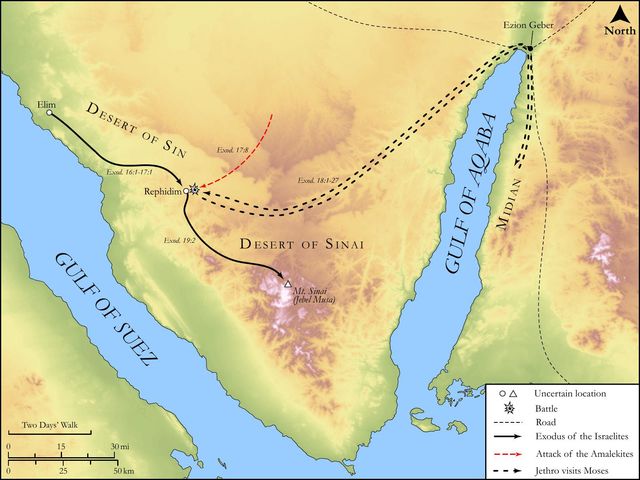
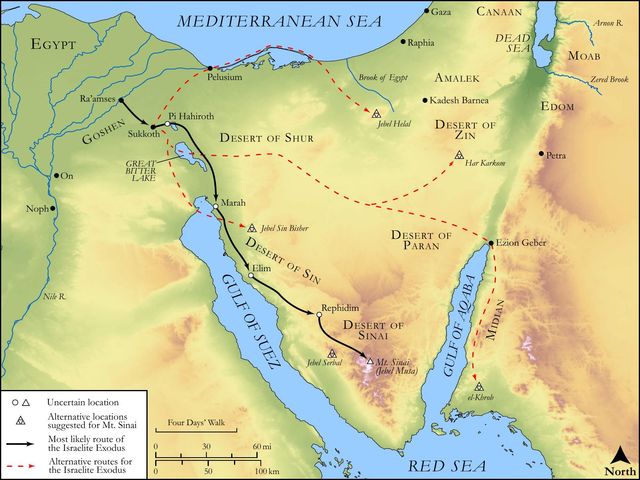
Study this verse
Public-domain commentary
Matthew Henry
From his Commentary on the Whole Bible. Henry comments on passages, not single verses — this entry covers Exodus 16:32–36.
God having provided manna to be his people's food in the wilderness, and to be to them a continual feast, we are here told, 1. How the memory of it was preserved. An omer of this manna was laid up in a golden pot, as we are told (Heb 9:4), and kept before the testimony, or the ark, when it was afterwards made, Exo 16:32-34. The preservation of this manna from waste and corruption was a standing miracle, and therefore the more proper memorial of this miraculous food. "Posterity shall see the bread," says God, "wherewith I have fed you in the wilderness," see what sort of food it was, and how much each man's daily proportion of it was, that it may appear they were neither kept to hard fare nor to short allowance, and then judge between God and Israel, whether they had any cause given them to murmur and find fault with their provisions, and whether they and their seed after them had not a great deal of reason gratefully to won God's goodness to them. Note, Eaten bread must not be forgotten. God's miracles and mercies are to be had in everlasting remembrance, for our encouragement to trust in him at all times. 2. How the mercy of it was continued as long as they had occasion for it. The manna never ceased till they came to the borders of Canaan, where there was bread enough and to spare, Exo 16:35. See how constant the care of Providence is; seedtime and harvest fail not, while the earth remains. Israel was very provoking in the wilderness, yet the manna never failed them: thus still God causes his rain to fall on the just and unjust. The manna is called spiritual meat (Co1 10:3), because it was typical of spiritual blessings in heavenly things. Christ himself is the true manna, the bread of life, of which this was a figure, Joh 6:49-51. The word of God is the manna by which our souls are nourished, Mat 4:4. The comforts of the Spirit are hidden manna, Rev 2:17. These come from heaven, as the manna did, and are the support and comfort of the divine life in the soul, while we are in the wilderness of this world. It is food for Israelites, for those only that follow the pillar of cloud and fire. It is to be gathered; Christ in the word is to be applied to the soul, and the means of grace are to be used. We must every one of us gather for ourselves, and gather in the morning of our opportunities, which if we let slip, it may be too late to gather. The manna they gathered must not be hoarded up, but eaten; those that have received Christ must by faith live upon him, and not receive his grace in vain. There was manna enough for all, enough for each, and none had too much; so in Christ there is a complete sufficiency, and no superfluity. But those that did eat manna hungered again, died at last, and with many of them God was not well-pleased; whereas those that feed on Christ by faith shall never hunger, and shall die no more, and with them God will be for ever well pleased. The Lord evermore give us this bread!
Continue studying Exodus 16:32 across the web’s major study libraries — every link below opens this exact verse, chapter, or book on the destination site.
Read & Compare
 BibleGatewayThis verse in more than 200 translations and 70 languages.
 Bible.comThe YouVersion reader — hundreds of translations, reading plans, and highlights.
 ESV.orgCrossway's official English Standard Version reader.
 NET BibleThe NET translation with 60,000+ translators' notes on every rendering decision.
 STEP BibleTyndale House's free study tool — original text, vocabulary, and scholarly resources.
 BibliaLogos Bible Software's free web reader.
 USCCBThe New American Bible (Revised Edition) with the U.S. bishops' study notes.
Commentaries
 BibleHub CommentariesDozens of classic commentaries on this verse, gathered on one page.
 StudyLightMore than 100 commentary sets — the largest collection on the web.
 BibleRefPlain-English commentary on what this verse means, verse by verse.
 Enduring WordDavid Guzik's free commentary on this chapter, widely used by Bible teachers.
 Bible Study ToolsVerse commentary alongside Greek and Hebrew study aids.
Original Language & Research
- BibleHub InterlinearThe verse word by word — original language, transliteration, and English.
- BibleHub LexiconEvery word's original-language definition and Strong's entry.
 Blue Letter BibleDeep-study tools — Strong's numbers, concordance, and word studies.
 SefariaThe Hebrew text with Rashi and centuries of Jewish commentary.
Sermons, Hymns & Audio


TrulyRandomVerse is not affiliated with these sites and doesn’t control their content. They’re linked because they’re genuinely useful.
Summary
Exodus 16:32 records a pivotal divine command given to Moses: to preserve an omer of manna for future generations. This instruction ensures a tangible, perpetual memorial of God's miraculous provision and sustaining faithfulness to the Israelites during their wilderness journey, serving as an enduring testament to His power and care in bringing them forth from Egyptian bondage and sustaining them in their new freedom. It highlights God's pedagogical intent, ensuring that the covenant community would continually remember His active involvement in their history.
Context
ShowHideLiterary Context
This verse is a direct divine command, mediated through Moses, following the miraculous initial provision of manna and quail in the wilderness of Sin. The narrative in Exodus 16 opens with the Israelites, recently delivered from Egyptian slavery, complaining bitterly about hunger, longing for the perceived abundance they had left behind (Exodus 16:3). In response to their murmuring, yet demonstrating His steadfast love and covenant faithfulness, God promised to rain down "bread from heaven" daily (Exodus 16:4). The command in verse 32, to preserve a portion of this miraculous sustenance, solidifies the manna's role not merely as temporary daily food but as a profound, enduring sign of God's active presence and provision throughout their generations. It transitions the manna from a transient necessity to a permanent, sacred memorial, preparing for its eventual placement within the Ark of the Covenant, as detailed later in Exodus 16:34.
Historical & Cultural Context
The setting is the vast and desolate wilderness, a region inherently incapable of sustaining such a large population (estimated at two million people). The Israelites, a newly liberated nation, were entirely dependent on divine provision. Their recent deliverance from centuries of Egyptian bondage was fresh in their minds, but so too were the immediate hardships and uncertainties of their journey. Among the peoples of that day, the provision of food, especially in miraculous ways, was often viewed as a definitive mark of a god's power, benevolence, and care for his people. For Israel, the manna was a unique, daily miracle that profoundly underscored Yahweh's distinct character as the covenant-keeping God who actively sustained His people in impossible circumstances. The command to preserve an omer of manna aligns with other divine instructions for memorializing key events, such as the Passover commemoration or the setting up of memorial stones (e.g., Joshua 4:6-7), ensuring that the lessons of God's faithfulness would not be forgotten by subsequent generations who had not personally experienced the wilderness journey.
Key Themes
ShowHideExodus 16:32 contributes significantly to several major theological and narrative themes within the book of Exodus and the broader Pentateuch. Foremost is the theme of Divine Provision, demonstrating God's absolute sovereignty and His compassionate care for His people, even when they are undeserving or complaining (Psalm 78:19-25). This verse also reinforces the theme of Covenant Faithfulness, as God consistently fulfills His promises to sustain Israel, even in the harsh wilderness, thereby demonstrating His unwavering commitment to the covenant established with Abraham and renewed at Sinai. The command to preserve the manna introduces the crucial theme of Remembrance and Pedagogy. It highlights God's desire for His mighty acts to be perpetually recalled and taught across generations, ensuring that the historical memory of His redemptive work and sustaining power is passed down, fostering a continuous legacy of faith and trust in Yahweh (Deuteronomy 6:6-7). Lastly, the manna serves as a tangible symbol of God's Presence, a daily reminder that He is actively with His people, guiding and sustaining them on their journey to the Promised Land.
Exposition and Analysis
ShowHideKey Word Analysis
ShowHideThis word signifies not merely an object but a "word," "matter," "deed," or "commandment." In this context, it emphasizes that Moses is relaying a specific, authoritative divine "command" or "matter" directly from the LORD. It underscores the weight and importance of the instruction that follows, indicating that this is a significant divine decree, not a casual suggestion.
This term denotes a "revolution of time," an "age," or a "generation." The plural form, as used in the verse, emphasizes the enduring, perpetual nature of this command. It signifies that the preserved manna was not just for the immediate descendants of the Exodus generation but for all future "posterity" of Israel. This highlights God's long-term commitment to His covenant people and His desire for His mighty acts to be remembered and taught across the expanse of time, fostering a continuous legacy of faith and obedience.
This primitive root means "to eat" or "to feed." In the context of "I have fed you," it underscores God's direct, personal, and active involvement as the Provider. It is not merely that food appeared, but that God Himself was the one who "consumed" or "fed" them, highlighting His intimate care and the supernatural nature of the sustenance. This emphasizes the divine agency behind the miraculous provision.
Verse Breakdown
ShowHide"And Moses said, This [is] the thing which the LORD commandeth"
This opening clause firmly establishes the divine origin and absolute authority of the instruction that follows. Moses acts as the faithful and indispensable mediator, transmitting God's direct and specific will to the people. It emphasizes that this is not a human suggestion or a practical recommendation, but a non-negotiable divine directive, underscoring the immense importance and sacred nature of the command to preserve the manna.
"Fill an omer of it to be kept for your generations"
This is the core command. An "omer" (a precise dry measure, equivalent to about 2.2 liters or 2 quarts) of manna is to be carefully set aside and preserved. The phrase "to be kept" (לְמִשְׁמֶרֶת, le-mishmeret, from H4931, "watch, custody, preservation") implies a sacred trust, something to be guarded and maintained as a perpetual, enduring memorial. The purpose is explicitly stated as being "for your generations," highlighting the forward-looking, didactic nature of the command, ensuring that the memory of God's miraculous provision would endure through time.
"that they may see the bread wherewith I have fed you in the wilderness"
This clause reveals the primary purpose and pedagogical intent of the preserved manna. It is to be a tangible, visible reminder ("that they may see," from H7200, râʼâh, meaning not just physical observation but also understanding, perceiving, and internalizing the truth) of God's past faithfulness. The emphasis is on "I have fed you," highlighting God as the active, personal, and sovereign provider. The "wilderness" context underscores the utterly miraculous nature of this sustenance, as it was a desolate place where no natural food source existed for such a multitude.
"when I brought you forth from the land of Egypt"
This final phrase powerfully connects the miraculous provision of manna directly to the foundational act of the Exodus. It links God's sustaining power in the wilderness to His mighty deliverance from slavery in Egypt (H4714, Mitsrayim). This frames the manna as an integral part of His comprehensive redemptive work, reminding Israel that the same God who delivered them from bondage also faithfully sustained them in their newfound freedom, reinforcing His holistic and unwavering care.
Literary Devices
ShowHideExodus 16:32 employs several significant literary devices to convey its profound message. Symbolism is paramount, as the manna itself becomes a powerful symbol of God's miraculous, daily provision, His covenant faithfulness, and His active presence among His people. The preserved omer of manna further symbolizes enduring remembrance and a tangible, physical link between generations and God's past, mighty acts. The phrase "bread wherewith I have fed you" uses Metonymy, where "bread" (a part) represents the entirety of God's sustenance, care, and miraculous provision for His people in the wilderness. The verse is inherently Didactic, explicitly intended to teach future generations about God's character and deeds, ensuring that the historical memory of divine intervention and faithfulness is not lost but actively perpetuated. Furthermore, the command for preservation serves as a Memorial, a physical object designed to evoke remembrance, perpetuate a sacred narrative, and serve as a witness to God's power. The direct address "I have fed you" exemplifies Divine Speech, emphasizing the personal, active, and intimate involvement of God Himself in the lives of His people.
Theological and Thematic Connections
ShowHideExodus 16:32 powerfully articulates the theological themes of divine provision, covenant faithfulness, and the imperative of remembrance. God's command to preserve the manna underscores His desire for His people to never forget His mighty acts of sustenance and deliverance. This tangible memorial was not merely an inert artifact but a dynamic pedagogical tool, designed to teach subsequent generations about Yahweh's character as the faithful Provider who sustains His people even in the most desolate circumstances. It reinforced the covenant relationship, demonstrating God's unwavering commitment to Israel even amidst their complaints and lack of faith. The later placement of this preserved manna in a golden pot within the Ark of the Covenant (Hebrews 9:4) further elevated its status as a sacred testament to God's miraculous care and a permanent fixture within the very heart of Israel's worship and national identity, serving as a perpetual witness to His power and faithfulness.
Reflection and Application
ShowHideExodus 16:32 serves as a profound reminder for believers today about the enduring importance of remembering God's past faithfulness and trusting in His ongoing provision. Just as the preserved manna was a tangible witness for ancient Israel, we are called to intentionally reflect on how God has met our needs, sustained us through difficulties, and delivered us from spiritual bondage. This verse encourages us to cultivate a posture of profound gratitude and steadfast reliance, recognizing that the God who miraculously provided in the barren wilderness is the same God who intimately cares for us in our present circumstances, no matter how challenging they may seem. It challenges us to actively recall and meditate on personal and corporate testimonies of God's goodness, allowing these memories to strengthen our faith and inspire trust when faced with new uncertainties or trials. Furthermore, it impresses upon us the sacred duty of passing on the stories of God's mighty acts and His character to future generations, ensuring that the legacy of His faithfulness continues to inspire faith and reliance on Him within our families, churches, and communities, preventing spiritual amnesia.
Questions for Reflection
ShowHideFAQ
ShowHideWhy was an omer of manna specifically commanded to be preserved?
ShowHideThe specification of an "omer" (a precise dry measure) was crucial for several reasons. Firstly, it ensured a consistent and measurable sample, preventing arbitrary amounts and highlighting the meticulous nature of God's commands. Secondly, an omer was the exact daily portion of manna for an individual (Exodus 16:16), making it a representative amount of God's daily, personal provision for each person. Thirdly, the precision underscored the specific and meticulous nature of God's instructions, emphasizing that this was not a casual suggestion but a divine command for a sacred, enduring memorial. This preserved omer was to be a perpetual, tangible witness to God's miraculous sustenance for all future generations of Israel, serving as a constant reminder of His faithfulness in the wilderness.
Where was this preserved omer of manna kept, and what was its significance?
ShowHideThe preserved omer of manna was initially placed "before the LORD" (Exodus 16:33), likely indicating its placement in the Tabernacle's most sacred area. Later, it was explicitly stated to be kept in a golden pot and placed inside the Ark of the Covenant, alongside Aaron's rod that budded and the tablets of the Law. Its placement within the Ark, the most sacred object in Israel representing God's throne and presence, profoundly elevated its significance as a permanent, sacred memorial. It symbolized God's miraculous provision, His covenant faithfulness, and His power to sustain His people, serving as a perpetual reminder of His active presence and care among them, central to their worship and national identity.
Did the preserved manna spoil, unlike the daily manna that could not be kept overnight?
ShowHideNo, the preserved omer of manna did not spoil, which itself was a further, distinct miracle. The daily manna, if kept overnight (except for the Sabbath preparation), would breed worms and stink (Exodus 16:19-20). However, the specific portion commanded to be kept "before the LORD" for generations was supernaturally preserved, demonstrating God's power to suspend natural laws for His divine purposes. This miraculous preservation underscored its unique status as a sacred, enduring memorial of His unwavering faithfulness and a testament to His power over creation.
Christ-Centered Fulfillment
ShowHideThe physical manna in the wilderness, and the command to preserve it, finds its ultimate and profound fulfillment in Jesus Christ. While the manna sustained Israel physically for a season, it was a profound type foreshadowing the true "bread from heaven" who gives eternal life. Jesus Himself draws this explicit parallel in John 6, declaring, "I am the bread of life; whoever comes to me shall not hunger, and whoever believes in me shall never thirst" (John 6:35). He contrasts the manna, which their fathers ate and died, with Himself, the living bread that grants eternal life to all who partake (John 6:49-51). The preserved omer of manna served as a tangible reminder of God's past provision, but Christ is the abiding, living provision for all generations. He is not merely a memorial of past sustenance but the ongoing, eternal sustenance for the soul, the Lamb of God who takes away the sin of the world (John 1:29). Just as the manna was a miraculous gift from God to sustain His people in the wilderness, so Jesus is the ultimate, supernatural gift from the Father, providing spiritual nourishment and eternal life to all who believe, transcending the temporary nature of earthly bread and fulfilling God's deepest desire to sustain His people forever, leading them to the true promised land of eternal life (John 6:58).