


Exodus 16:25
Bible text: King James Version (1769 Blayney text) · Public domain
Bible text: Berean Standard Bible · Public domain
Bible text: American Standard Version (1901) · Public domain
Bible text: World English Bible, Messianic edition · Public domain
Bible text: Geneva Bible (1599) · Public domain
Bible text: Young's Literal Translation · Public domain
- וַיֹּאמֶרvai·Yo·merand he saidH559Conj-w ¦ V-Qal-ConsecImperf-3msVerb Qal Consecutive Imperfect 3rd Singular Masculineוַandיֹּאמֶרhe said
- מֹשֶׁהmo·ShehMosesH4872N-proper-mNoun Proper Masculine
- אִכְלֻהוּ'ikh·Lu·hueat itH398V-Qal-Imp-2mp ¦ 3msVerb Qal Imperative 2nd Plural Masculineאִכְלֻeatהוּit
- הַיּוֹםhai·Yomthis dayH3117Art ¦ N-msNoun Singular Masculine Absoluteהַthisיּוֹםday
- כִּיkiforH3588PrtParticle Conditional
- שַׁבָּתsha·Bat[is] a sabbathH7676N-fsNoun Singular Feminine Absolute
- הַיּוֹםhai·Yomthis dayH3117Art ¦ N-msNoun Singular Masculine Absoluteהַthisיּוֹםday
- לַיהוָהla·Yah·wehto YahwehH3068Prep-l ¦ N-properNoun Proper TitleלַtoיהוָהYahweh
- הַיּוֹםhai·Yomthis dayH3117Art ¦ N-msNoun Singular Masculine Absoluteהַthisיּוֹםday
- לֹאlo'notH3808NegParticle Negative
- תִמְצָאֻהוּtim·tza·'U·huyou will find itH4672V-Qal-Imperf-2mp ¦ 3msVerb Qal Imperfect 2nd Plural Masculineתִמְצָאֻyou will findהוּit
- בַּשָּׂדֶהba·sa·Dehin the fieldH7704Prep-b ¦ N-msNoun Singular Masculine Absoluteבַּin theשָּׂדֶהfield
English is a literal word-by-word gloss of the Hebrew, not the KJV's wording. Why?
This is the original text the KJV's translators worked from — each Hebrew word with its own literal English meaning in this verse, prepared by scholars at Tyndale House, Cambridge. The KJV translates whole sentences, not word by word, so its wording differs: one Hebrew word can become several English words, and the KJV may choose “the LORD” where the gloss reads “Yahweh”. Both are faithful — they answer different questions. For the KJV's own rendering, switch to the KJV text.
Details
See on the biblical-era maps

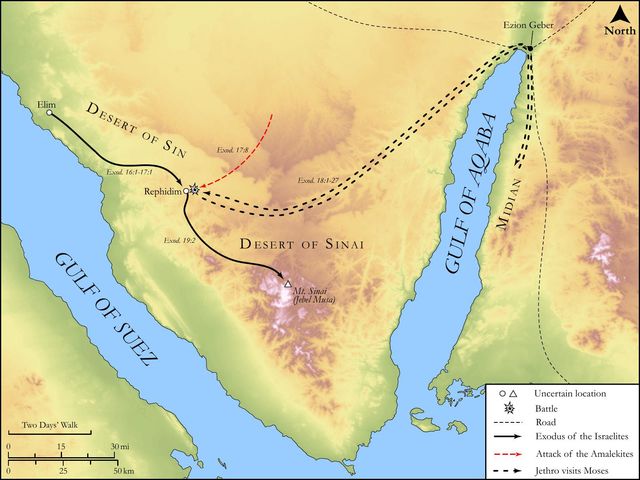
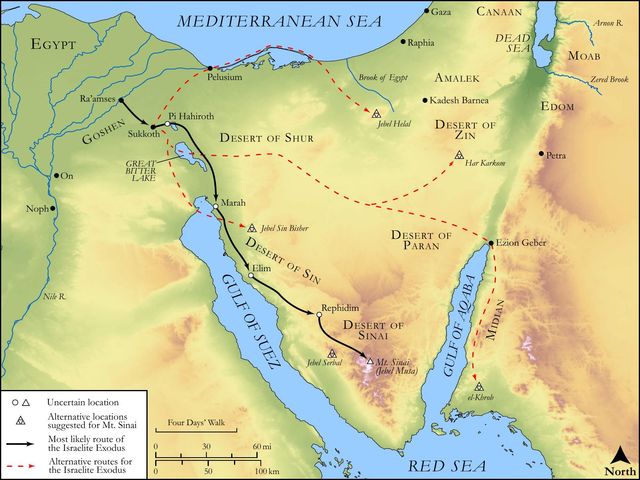
Study this verse
Public-domain commentary
Matthew Henry
From his Commentary on the Whole Bible. Henry comments on passages, not single verses — this entry covers Exodus 16:22–31.
We have here, 1. A plain intimation of the observing of a seventh day sabbath, not only before the giving of the law upon Mount Sinai, but before the bringing of Israel out of Egypt, and therefore, from the beginning, Gen 2:3. If the sabbath had now been first instituted, how could Moses have understood what God said to him (Exo 16:5), concerning a double portion to be gathered on the sixth day, without making any express mention of the sabbath? And how could the people so readily take the hint (Exo 16:22), even to the surprise of the rulers, before Moses had declared that it was done with a regard to the sabbath, if they had not had some knowledge of the sabbath before? The setting apart of one day in seven for holy work, and, in order to that, for holy rest, was a divine appointment ever since God created man upon the earth, and the most ancient of positive laws. The way of sabbath-sanctification is the good old way. 2. The double provision which God made for the Israelites, and which they were to make for themselves, on the sixth day: God gave them on the sixth day the bread of two days, Exo 16:29. Appointing them to rest on the seventh day, he took care that they should be no losers by it; and none ever will be losers by serving God. On that day they were to fetch in enough for two days, and to prepare it, Exo 16:23. The law was very strict, that they must bake and seeth, the day before, and not on the sabbath day. This does not now make it unlawful for us to dress meat on the Lord's day, but directs us to contrive our family affairs so that they may hinder us as little as possible in the work of the sabbath. Works of necessity, no doubt, are to be done on that day; but it is desirable to have as little as may be to do of things necessary to the life that now is, that we may apply ourselves the more closely to the one thing needful. That which they kept of for their food on the sabbath day did not putrefy, Exo 16:24. When they kept it in opposition to a command (Exo 16:20) it stank; when they kept it in obedience to a command it was sweet and good; for every thing is sanctified by the word of God and prayer. 3. The intermission of the manna on the seventh day. God did not send it then, and therefore they must not expect it, nor go out to gather, Exo 16:25, Exo 16:26. This showed that it was not produced by natural causes, and that it was designed for a confirmation of the divine authority of the law which was to be given by Moses. Thus God took an effectual course to make them remember the sabbath day; they could not forget it, nor the day of preparation for it. Some, it seems, went out on the seventh day, expecting to find manna (Exo 16:27); but they found none, for those that will find must seek in the appointed time: seek the Lord while he may be found. God, upon this occasion, said to Moses, How long refuse you to keep my commandments? Exo 16:28. Why did he say this to Moses? He was not disobedient. No, but he was the ruler of a disobedient people, and God charges it upon him that he might the more warmly charge it upon them, and might take care that their disobedience should not be through any neglect or default of his. It was for going out to seek for manna on he seventh day that they were thus reproved. Note, (1.) Disobedience, even in a small matter, is very provoking. (2.) God is jealous for the honour of his sabbaths. If walking out on the sabbath to seek for food was thus reproved, walking out on that day purely to find our own pleasure cannot be justified.
Continue studying Exodus 16:25 across the web’s major study libraries — every link below opens this exact verse, chapter, or book on the destination site.
Read & Compare
 BibleGatewayThis verse in more than 200 translations and 70 languages.
 Bible.comThe YouVersion reader — hundreds of translations, reading plans, and highlights.
 ESV.orgCrossway's official English Standard Version reader.
 NET BibleThe NET translation with 60,000+ translators' notes on every rendering decision.
 STEP BibleTyndale House's free study tool — original text, vocabulary, and scholarly resources.
 BibliaLogos Bible Software's free web reader.
 USCCBThe New American Bible (Revised Edition) with the U.S. bishops' study notes.
Commentaries
 BibleHub CommentariesDozens of classic commentaries on this verse, gathered on one page.
 StudyLightMore than 100 commentary sets — the largest collection on the web.
 BibleRefPlain-English commentary on what this verse means, verse by verse.
 Enduring WordDavid Guzik's free commentary on this chapter, widely used by Bible teachers.
 Bible Study ToolsVerse commentary alongside Greek and Hebrew study aids.
Original Language & Research
- BibleHub InterlinearThe verse word by word — original language, transliteration, and English.
- BibleHub LexiconEvery word's original-language definition and Strong's entry.
 Blue Letter BibleDeep-study tools — Strong's numbers, concordance, and word studies.
 SefariaThe Hebrew text with Rashi and centuries of Jewish commentary.
Sermons, Hymns & Audio


TrulyRandomVerse is not affiliated with these sites and doesn’t control their content. They’re linked because they’re genuinely useful.
Summary
Exodus 16:25 is a pivotal declaration by Moses, reinforcing God's specific instructions regarding the miraculous provision of manna and the sacred observance of the Sabbath day in the wilderness. This divine command underscores the Lord's sovereignty over time and sustenance, ensuring the Israelites understand that the seventh day is to be kept holy, free from the labor of gathering food, as God Himself would supernaturally cease the manna's appearance on that day, thereby teaching them profound lessons in dependence, obedience, and the sanctity of divine rest.
Context
ShowHideLiterary Context
Exodus 16:25 is situated within the broader narrative of God's faithful provision for the newly liberated Israelites in the wilderness. Following their departure from Egypt and the miraculous crossing of the Red Sea, the people quickly begin to grumble about a lack of food (Exodus 16:2-3). In response to their complaints, God promises to "rain bread from heaven" (Exodus 16:4), establishing precise daily gathering instructions and a unique provision for the sixth day—a double portion—to accommodate the Sabbath. This verse, therefore, serves as Moses' direct and emphatic reinforcement of these divine instructions on the very morning of the Sabbath, specifically addressing the fact that some had gone out to gather despite the prior warning (Exodus 16:27). It highlights the immediate implications of God's pattern and the non-negotiable sanctity of the day of rest, laying crucial groundwork for the formal giving of the Ten Commandments, which includes the Sabbath commandment, at Mount Sinai (Exodus 20:8-11).
Historical & Cultural Context
The Israelites, having endured centuries of brutal slavery under Pharaoh, had no concept of a regular day of rest. Their lives were defined by relentless toil and forced labor. God's provision of manna and the institution of the Sabbath were, therefore, not merely practical solutions for food and rest but foundational lessons in their new identity as a covenant people. This period in the wilderness was a transformative crucible, designed to re-educate them from a mindset of slave-driven labor and self-reliance to one of divine dependence and sacred rest. The daily manna taught them to trust in God's moment-by-moment provision, while the Sabbath taught them to cease from their own efforts and acknowledge God's absolute sovereignty over time and sustenance. This radical re-education was essential in preparing them for a life of covenant faithfulness and self-governance in the Promised Land, shifting their focus from human masters to the divine Master.
Key Themes
ShowHideThis verse powerfully contributes to several major theological and narrative themes within Exodus and the broader Pentateuch. Firstly, it underscores the theme of Divine Provision and Sustenance, demonstrating God's faithful and miraculous care for His people in the wilderness, providing for their physical needs in a way that demands daily reliance (Exodus 16:4). Secondly, it reinforces the theme of Obedience and Trust, as the Israelites are tested on their willingness to follow God's specific commands regarding the manna and the Sabbath, highlighting that their well-being is tied to their faithfulness. Thirdly, it establishes the profound theme of the Sanctity of the Sabbath, setting apart a day for rest and worship as a sign of God's covenant with His people and a reflection of His own creative rest (Genesis 2:2-3). This theme is later codified as the Fourth Commandment (Exodus 20:8-11).
Exposition and Analysis
ShowHideKey Word Analysis
ShowHideDerived from the verb "to cease" or "to rest," this term signifies a divinely appointed cessation from labor. It is not merely a day off but a sacred time set apart "unto the LORD" (H3068), echoing God's own rest after creation. In Exodus 16:25, its use emphasizes that the day's holiness and authority are derived from God's designation, not human choice or convenience. It represents a spiritual principle of trusting in God's provision rather than human toil.
This is the covenant name of God, Yahweh (from H1961, "to be"), signifying "the self-Existent or Eternal." Its use here emphasizes God's personal, relational, and authoritative nature. The Sabbath is "unto the LORD," meaning it is for His honor, His purposes, and His people's good, established by the very God who delivered them from bondage and now sustains them. It highlights His absolute sovereignty over time and provision, demanding recognition and obedience from His people.
This word, meaning "a day" (as the warm hours, or a space of time), is emphatically repeated three times in Exodus 16:25. This repetition serves to stress the immediate, present, and non-negotiable nature of the command. It is not a suggestion for the future, but a direct, urgent imperative for this specific Sabbath, reinforcing the divine pattern and the immediate consequences of disobedience. It underscores the urgency of obedience and the certainty of God's actions.
Verse Breakdown
ShowHide"And Moses said, Eat that to day;"
This opening clause presents Moses as God's authoritative messenger, delivering a direct and immediate command. The imperative "Eat that" refers to the double portion of manna miraculously gathered on the sixth day. This instruction signifies God's foresight and abundant provision, assuring the people that they already possess what they need for the day of rest, thereby removing any excuse for labor or anxiety. It is a command rooted in divine grace and forethought.
"for to day [is] a sabbath unto the LORD:"
This provides the divine rationale and theological foundation for the command. The Sabbath is not a human invention or a mere convenience; it is a sacred institution consecrated to Yahweh (H3068). This declaration elevates the day from a simple pause in activity to a holy time dedicated to acknowledging God's sovereignty, His miraculous provision, and the rhythm of rest He established from creation. It signifies a special relationship and dedication to God.
"to day ye shall not find it in the field."
This final clause reinforces the divine decree with a practical and undeniable consequence. God Himself would supernaturally cease the manna's appearance, making any attempt to gather on the Sabbath futile. This served as a tangible sign of God's absolute control over creation and a direct test of their obedience and trust. It demonstrates that the Sabbath was not merely a suggestion but an enforced divine pattern, designed to teach them complete reliance on His word.
Literary Devices
ShowHideThe verse employs several significant literary devices to convey its message with clarity and emphasis. The most prominent is Repetition of the phrase "to day" (Hebrew: hayyom), which appears three times within this short verse. This anaphora functions as an emphatic device, underscoring the immediacy, certainty, and divine imperative of the command for that specific Sabbath. This repetition creates a sense of urgency and highlights the critical nature of the instruction, leaving no room for misunderstanding or delay. The passage also demonstrates Divine Command/Instruction, with Moses acting as the direct conduit for God's will. This reinforces the absolute authority behind the Sabbath observance, presenting it not as a suggestion but as a non-negotiable decree from the ultimate sovereign. Furthermore, the manna itself serves as powerful Symbolism – it is not just physical food, but a tangible symbol of God's faithful, daily provision and His desire for His people to live in utter dependence upon Him. The Sabbath, in turn, symbolizes God's established order, His provision of rest, and His invitation to trust in His sufficiency rather than human striving, pointing to a deeper spiritual reality.
Theological and Thematic Connections
ShowHideExodus 16:25 profoundly illustrates God's meticulous care for His people, His absolute sovereignty over creation and time, and the foundational importance of obedience and trust within His covenant relationship. The miraculous provision of manna teaches Israel about daily dependence on God's sustaining grace, while the institution of the Sabbath teaches them about the divine rhythm of rest and the sanctity of time set apart for God's honor. This passage establishes a pattern of divine provision that meticulously accounts for sacred time, demonstrating God's desire for His people to live by faith, not by anxious striving or self-reliance. It highlights that true rest is found not merely in the absence of activity, but in the intentional cessation of self-effort and the acknowledgement of God as the ultimate provider and sustainer. It is a call to trust God's word completely, even when it defies human logic or perceived necessity.
Reflection and Application
ShowHideExodus 16:25 offers enduring and profound lessons for contemporary believers navigating the complexities of modern life. In a world that often glorifies relentless productivity, constant striving, and the pursuit of endless accumulation, this passage calls us back to a divine rhythm of work and rest, trust and dependence. It challenges our innate tendency to rely solely on our own efforts and resources, reminding us powerfully that God is our ultimate provider and sustainer. Just as the Israelites had to trust that the double portion of manna would suffice for two days and that God would sustain them without new manna on the Sabbath, so too are we called to trust God's faithful provision for every aspect of our lives, releasing the anxieties of tomorrow. The principle of the Sabbath, while not always observed in the same legalistic manner today, beckons us to intentionally set aside time for physical rest, spiritual refreshment, and focused worship. It is an act of profound faith to cease from our labors, to quiet our striving, and to acknowledge God as the sovereign sustainer of all things, allowing His grace to replenish and reorient us. This verse beautifully illustrates God's desire for His people to live in a rhythm of grace, sustained by His faithful hand and dependent on His unfailing word.
Questions for Reflection
ShowHideFAQ
ShowHideWhy did God stop the manna on the Sabbath?
ShowHideGod stopped the manna on the Sabbath for several crucial, interconnected reasons, primarily to teach the Israelites profound lessons in dependence, enforce the sanctity of the Sabbath, and demonstrate His absolute control over creation and time. By providing a double portion on the sixth day and then ceasing the manna's appearance on the seventh, God compelled them to trust in His miraculous provision and to observe the day He had specifically set apart for rest and worship. This was a direct test of their obedience, as explicitly stated in Exodus 16:4, to see whether they would faithfully follow His instructions regarding both the manna and the Sabbath. It powerfully reinforced that the Sabbath was not merely a suggestion but a divine command with tangible consequences for disobedience, designed to shape their character and faith.
Did the Israelites always obey this command?
ShowHideNo, the biblical text clearly indicates that not all the Israelites immediately obeyed this command, highlighting their ongoing struggle with faith and obedience. Exodus 16:27 explicitly states, "And it came to pass, that there went out some of the people on the seventh day for to gather, and they found none." This act of disobedience prompted Moses' strong reinforcement of the command in Exodus 16:28, where the LORD Himself rebukes them, asking, "How long refuse ye to keep my commandments and my laws?" This incident underscores the Israelites' persistent challenge in fully trusting God's word throughout their wilderness journey, and God's patient yet firm resolve in continually teaching and guiding them towards faithfulness.
Christ-Centered Fulfillment
ShowHideExodus 16:25, with its narrative of God's miraculous manna provision and the institution of the Sabbath, finds profound Christ-centered fulfillment in the person and redemptive work of Jesus Christ. The manna, literally "bread from heaven" that sustained Israel physically in the wilderness, serves as a powerful Old Testament type of Christ, who unequivocally declared Himself to be the true "bread of life" (John 6:35). Unlike the manna, which only sustained physical life for a day and could not prevent eventual death, Jesus offers spiritual sustenance that leads to eternal life, promising, "I am the living bread which came down from heaven: if any man eat of this bread, he shall live for ever" (John 6:51). He is the one who truly satisfies the deepest hunger of the human soul, providing spiritual nourishment that never perishes. Furthermore, Jesus is the "Lord of the Sabbath" (Mark 2:28), not to abolish its divine principle, but to reveal its true meaning and bring its ultimate fulfillment. He offers true rest to the weary and burdened, a rest from the striving of legalism and the crushing burden of sin (Matthew 11:28-30). Through His finished work on the cross, He provides the ultimate cessation from our futile human labors to earn salvation, inviting us into a permanent spiritual rest found in His perfect righteousness and complete atonement. Just as the manna ceased on the Sabbath, our striving for salvation ceases when we rest in Christ's complete and sufficient provision.