


Esther 6:13
Bible text: King James Version (1769 Blayney text) · Public domain
Bible text: King James Version with Strong's numbers · Public domain
Bible text: Berean Standard Bible · Public domain
Bible text: American Standard Version (1901) · Public domain
Bible text: World English Bible, Messianic edition · Public domain
Bible text: Geneva Bible (1599) · Public domain
Bible text: Young's Literal Translation · Public domain
- וַיְסַפֵּרvay·sa·Perand he recountedH5608Conj-w ¦ V-Piel-ConsecImperf-3msVerb Piel Consecutive Imperfect 3rd Singular Masculineוַandיְסַפֵּרhe recounted
- הָמָןha·ManHamanH2001N-proper-mNoun Proper Masculine
- לְזֶרֶשׁle·Ze·reshto ZereshH2238Prep-l ¦ N-proper-fNoun Proper FeminineלְtoזֶרֶשׁZeresh
- אִשְׁתּוֹ'ish·Tohis wifeH802N-fsc ¦ 3msNoun Singular Feminine Constructאִשְׁתּwifeוֹhis
- וּלְכָלu·le·kholand to allH3605Conj-w ¦ Prep-l ¦ N-mscNoun Singular Masculine Constructוּandלְtoכָלall
- אֹהֲבָיו'o·ha·Vavhis friendsH157V-Qal-Prtcpl-mp ¦ 3msVerb Qal Participle Plural Masculine Constructאֹהֲבָיfriendsוhis
- אֵת'et<obj.>H853DirObjMParticle Object Indicator
- כָּלkolallH3605N-msNoun Singular Masculine Absolute
- אֲשֶׁר'a·SherthatH834RelParticle Relative
- קָרָהוּka·Ra·huit had happened to himH7136V-Qal-Perf-3ms ¦ 3msVerb Qal Perfect 3rd Singular Masculineקָרָit had happened toהוּhim
- וַיֹּאמְרוּvai·Yo·me·ruand they saidH559Conj-w ¦ V-Qal-ConsecImperf-3mpVerb Qal Consecutive Imperfect 3rd Plural Masculineוַandיֹּאמְרוּthey said
- לוֹloto himPrep-l ¦ 3msSuffix Personal 3rd Singular Masculineלtoוֹhim
- חֲכָמָיוcha·kha·Mavhis wise [men]H2450Adj-mpc ¦ 3msAdjective Plural Masculine Constructחֲכָמָיwise [men]וhis
- וְזֶרֶשׁve·Ze·reshand ZereshH2238Conj-w ¦ N-proper-fNoun Proper FeminineוְandזֶרֶשׁZeresh
- אִשְׁתּוֹ'ish·Tohis wifeH802N-fsc ¦ 3msNoun Singular Feminine Constructאִשְׁתּwifeוֹhis
- אִם'imifH518PrtParticle Conditional
- מִזֶּרַעmi·Ze·ra'[is] one of [the] offspring ofH2233Prep-m ¦ N-mscNoun Singular Masculine Constructמִ[is] one ofזֶּרַע[the] offspring of
- הַיְּהוּדִיםhai·ye·hu·Dimthe JewsH3064Art ¦ N-mpNoun Gentilic Plural Masculine AbsoluteהַtheיְּהוּדִיםJews
- מָרְדֳּכַיma·re·do·KhaiMordecaiH4782N-proper-mNoun Proper Masculine
- אֲשֶׁר'a·SherwhomH834RelParticle Relative
- הַחִלּוֹתָha·chi·Lo·tayou have begunH2490V-Hiphil-Perf-2msVerb Hiphil Perfect 2nd Singular Masculine
- לִנְפֹּלlin·Polto fallH5307Prep-l ¦ V-Qal-InfVerb Qal Infinitive Constructלִtoנְפֹּלfall
- לְפָנָיוle·fa·Nav<to> before himH6440Prep-l ¦ N-mpc ¦ 3msNoun Plural Masculine Constructלְ<to>פָנָיbeforeוhim
- לֹאlo'notH3808NegParticle Negative
- תוּכַלtu·Khalyou will prevailH3201V-Qal-Imperf-2msVerb Qal Imperfect 2nd Singular Masculine
- לוֹloto himPrep-l ¦ 3msSuffix Personal 3rd Singular Masculineלtoוֹhim
- כִּיkiforH3588PrtParticle Conditional
- נָפוֹלna·Folcertainly <to fall>H5307V-Qal-InfAbsVerb Qal Infinitive Absolute
- תִּפּוֹלti·Polyou will fallH5307V-Qal-Imperf-2msVerb Qal Imperfect 2nd Singular Masculine
- לְפָנָיוle·fa·Nav<to> before himH6440Prep-l ¦ N-mpc ¦ 3msNoun Plural Masculine Constructלְ<to>פָנָיbeforeוhim
English is a literal word-by-word gloss of the Hebrew, not the KJV's wording. Why?
This is the original text the KJV's translators worked from — each Hebrew word with its own literal English meaning in this verse, prepared by scholars at Tyndale House, Cambridge. The KJV translates whole sentences, not word by word, so its wording differs: one Hebrew word can become several English words, and the KJV may choose “the LORD” where the gloss reads “Yahweh”. Both are faithful — they answer different questions. For the KJV's own rendering, switch to the KJV text.
Details
See on the biblical-era maps
Study this verse
Public-domain commentary
Matthew Henry
From his Commentary on the Whole Bible. Henry comments on passages, not single verses — this entry covers Esther 6:12–14.
We may here observe,
I.How little Mordecai was puffed up with his advancement.
he came again to the king's gate (Est 6:12); he returned to his place and the duty of it immediately, and minded his business as closely as he had done before. Honour is well bestowed on those that are not made proud and idle by it, and will not think themselves above their business.
II.How much Haman was cast down with his disappointment.
he could not bear it. To wait upon any man, especially Mordecai, and at this time, when he hoped to have seen him hanged, was enough to break such a proud heart as he had. He hasted to his house mourning, and having his head covered, as one that looked upon himself as sunk and in a manner condemned. What harm had it done him to stoop thus to Mordecai? Was he ever the worse for it? Was it not what he himself proposed to be done by one of the king's most noble princes? Why then should he grudge to do it himself? But that will break a proud man's heart which would not break a humble man's sleep.
III.How his doom was, out of this event, read to him by his wife and his friends:
"If Mordecai be, as they say he is, of the seed of the Jews, before whom thou hast begun to fall, though but in a point of honour, never expect to prevail against him; for thou shalt surely fall before him," Est 6:13. Miserable comforters were they all; they did not advise him to repent, and ask Mordecai's pardon for his bad design against him, but foretold his destiny as fatal and unavoidable. Two things they foresaw: - 1. That Haman would be disappointed in his enterprise against the Jews: "Thou shalt not prevail to root out that people. Heaven plainly fights against thee." 2. That he himself would be destroyed: Thou shalt surely fall before him. The contest between Michael and the dragon will not be a drawn battle; no, Haman must fall before Mordecai. Two things they grounded their prognostications upon: - (1.) This Mordecai was of the seed of the Jews; feeble Jews their enemies sometimes called them, but formidable Jews they sometimes found them. They are a holy seed, a praying seed, in covenant with God, and a seed that the Lord hath all along blessed, and therefore let not their enemies expect to triumph over them. (2.) Haman had begun to fall, and therefore he was certainly a gone man. It has been observed of great court-favourites that when once they have been frowned upon they have fallen utterly, as fast as they rose; it is true of the church's enemies that when God begins with them he will make an end. As for God his work is perfect.
IV.How seasonably he was now sent for to the banquet that Esther had prepared, Est 6:14.
He thought it seasonable, in hopes it would revive his drooping spirits and save his sinking honour. But really it was seasonable because, his spirits being broken by this sore disappointment, he might the more easily be run down by Esther's complaint against him. The wisdom of God is seen in timing the means of his church's deliverance so as to manifest his own glory.
Historical interpretation
Historical reception
2 surviving comments on this verse. Each one is dated, so this reads as a timeline rather than a list.
This is the change caused by the right hand of the Highest: the one who had just boasted about his power and was arrogant towards everyone else becomes viler and weaker than anyone else. When Mary the mother of our Lord considered the greatness of this divine ordering, she sang in her song of praise, “He has shown strength with his arm; he has scattered the proud in the thoughts of their hearts. He has brought down the powerful from their thrones, and lifted up the lowly; he has filled the hungry with good things and sent the rich away empty.” And through Isaiah it is said about this same power, “Shall not Lebanon be transformed into Carmel, and Carmel be regarded as a forest?”
This is the change in the right hand of the Most High, when someone who was only recently boasting that he had power over others, and was more arrogant than anyone, suddenly becomes more wretched than anyone else and weaker than all of them. It is the magnitude of this phenomenon that Mary, the mother of the Lord, has in mind when she says in her song in the Gospels: “He has made power in his arm, and scattered the arrogant with the thought of his heart. He has dislodged the powerful from their seats, and raised up the humble. He has sated the hungry with good things, and sent the rich away empty-handed” (Luke 1). We are told about this in Isaiah: “Lebanon will be turned into Carmel, and Carmel will be regarded as a forest” (Isaiah 29).
Here we see how the stubbornness of the Synagogue of the Jews was crushed, and the humility of the Church of the nations exalted; how the persecutors of the Christian faith, who once tore apart the flock of Christ like savage lions, have now been destroyed and reduced to nothing; and how those who proclaim Christ throughout the world have been raised up in a state of vigorous faith and exalted through the power of the virtues. The head has been turned into the tail and the tail into the head, because “Everyone who exalts himself will be brought low; and everyone who humbles himself will be exalted.”
Continue studying Esther 6:13 across the web’s major study libraries — every link below opens this exact verse, chapter, or book on the destination site.
Read & Compare
 BibleGatewayThis verse in more than 200 translations and 70 languages.
 Bible.comThe YouVersion reader — hundreds of translations, reading plans, and highlights.
 ESV.orgCrossway's official English Standard Version reader.
 NET BibleThe NET translation with 60,000+ translators' notes on every rendering decision.
 STEP BibleTyndale House's free study tool — original text, vocabulary, and scholarly resources.
 BibliaLogos Bible Software's free web reader.
 USCCBThe New American Bible (Revised Edition) with the U.S. bishops' study notes.
Commentaries
 BibleHub CommentariesDozens of classic commentaries on this verse, gathered on one page.
 StudyLightMore than 100 commentary sets — the largest collection on the web.
 BibleRefPlain-English commentary on what this verse means, verse by verse.
 Enduring WordDavid Guzik's free commentary on this chapter, widely used by Bible teachers.
 Bible Study ToolsVerse commentary alongside Greek and Hebrew study aids.
Original Language & Research
- BibleHub InterlinearThe verse word by word — original language, transliteration, and English.
- BibleHub LexiconEvery word's original-language definition and Strong's entry.
 Blue Letter BibleDeep-study tools — Strong's numbers, concordance, and word studies.
 SefariaThe Hebrew text with Rashi and centuries of Jewish commentary.
Sermons, Hymns & Audio


TrulyRandomVerse is not affiliated with these sites and doesn’t control their content. They’re linked because they’re genuinely useful.
Summary
This pivotal verse in the Book of Esther captures the dramatic and irreversible shift in fortune for Haman, the antagonist, immediately following his public humiliation. Having been compelled by King Ahasuerus to honor Mordecai, his sworn enemy, Haman returns home to recount the astonishing and deeply embarrassing events to his wife, Zeresh, and his closest advisors. Their collective response is a stark, chillingly accurate, and profoundly insightful prophecy of Haman's inevitable and complete downfall, emphasizing the unique and divinely protected status of the Jewish people.
Context
ShowHideLiterary Context
Esther 6:13 serves as the narrative climax of the dramatic reversal initiated in the preceding verses, marking the definitive turning point in the book's plot. Immediately prior, Haman, consumed by pride and expecting to receive royal honor, was instead commanded by King Ahasuerus to bestow the highest public honor upon Mordecai, the very man Haman despised and had plotted to hang on a gallows he constructed for that purpose (Esther 5:14). This public humiliation, a complete inversion of Haman's inflated pride and expectations, drives him home in despair. His recounting of these astonishing and unforeseen events to his wife and "wise men" sets the stage for their prophetic pronouncement, which solidifies the reader's understanding that Haman's downfall is not merely probable but divinely orchestrated and inevitable, confirming the futility of his genocidal plot against the Jewish people (Esther 3:6). The verse acts as a bridge, moving from Haman's personal disgrace to the broader implications for his anti-Jewish agenda.
Historical & Cultural Context
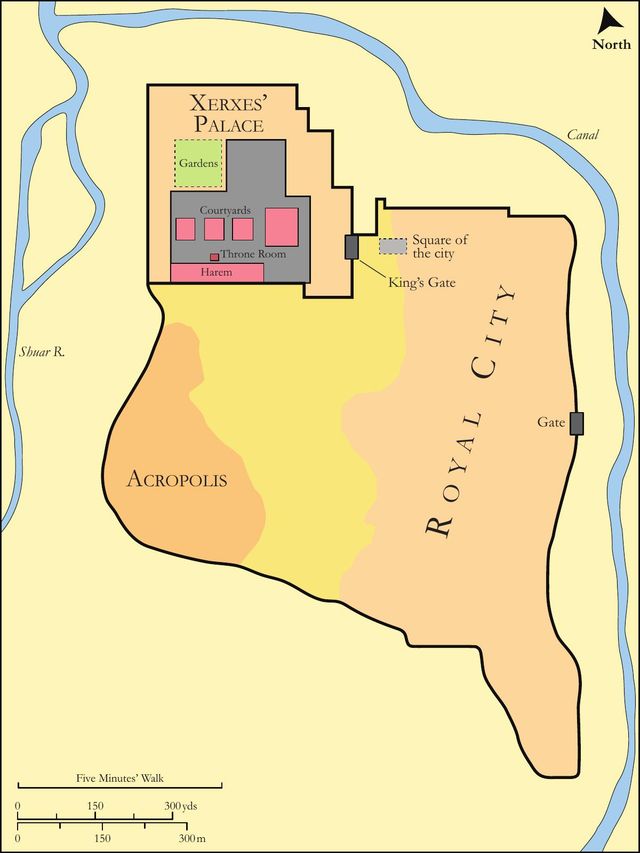
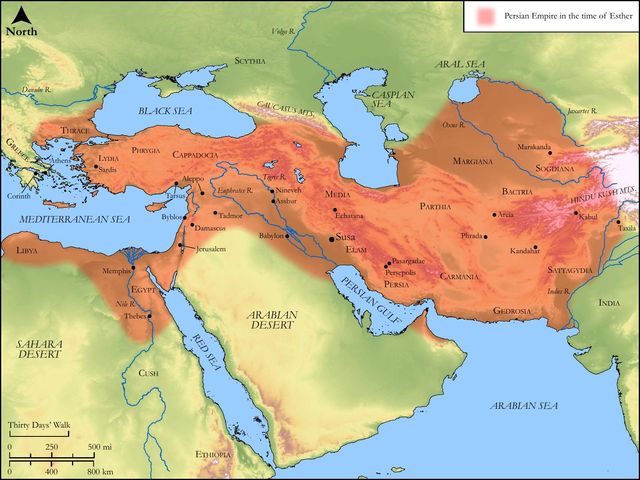
The events of the Book of Esther unfold in Susa, the capital of the Persian Empire, during the reign of Ahasuerus (commonly identified with Xerxes I, 486-465 BC). Persian society was highly stratified, with the king holding absolute power and his favored officials, like Haman, wielding immense influence. Public honor and humiliation were potent tools of social control and status, capable of elevating or destroying an individual's standing. The "wise men" and advisors mentioned in the text likely represent a class of astrologers, diviners, or counselors common in ancient Near Eastern courts, whose insights, though rooted in pagan beliefs, were often sought for interpreting omens or predicting outcomes. Their pronouncement regarding Mordecai's Jewish identity carries significant weight, as ancient cultures often attributed special favor or protection to peoples associated with powerful deities, even if they did not worship that deity themselves. The concept of "seed" (Hebrew: zera') was crucial in Jewish identity, signifying lineage, covenant, and destiny, a concept perhaps vaguely understood or intuitively grasped by Haman's pagan advisors, who recognized a unique, unassailable quality about Mordecai due to his heritage.
Key Themes
ShowHideThis verse powerfully contributes to several overarching themes within the Book of Esther. Firstly, it underscores the theme of Divine Providence and Reversal. Although God's name is conspicuously absent from the entire book, His unseen hand is undeniably orchestrating events. Haman's advisors, despite their pagan worldview, intuitively perceive an irresistible, supernatural force at play, recognizing that Mordecai's unexpected elevation and Haman's precipitous decline are part of an unalterable, divinely-guided plan. This echoes the broader biblical truth that God is sovereign over all circumstances, working all things according to His purpose (Ephesians 1:11). Secondly, the verse highlights The Downfall of Pride and Arrogance. Haman's character is consistently portrayed as consumed by immense pride and self-aggrandizement, vividly displayed in his boasting of his riches and power (Esther 5:11). The prophetic words of his advisors, "thou shalt not prevail against him, but shalt surely fall before him," serve as a direct fulfillment of the biblical principle that "Pride goeth before destruction, and an haughty spirit before a fall" (Proverbs 16:18). Finally, the phrase "If Mordecai be of the seed of the Jews" emphasizes The Unassailable Protection of God's Chosen People. Haman's confidantes, through a pagan lens, grasp the unique and formidable spiritual backing afforded to the Jewish people, God's covenant nation. To contend against a Jew, especially one seemingly favored by an unseen power, is to contend against an insurmountable force, leading to certain defeat for the adversary. This implicitly points to the covenant faithfulness of God to His people, even when they are in exile and seemingly abandoned.
Exposition and Analysis
ShowHideKey Word Analysis
ShowHideThis word (H2490) is translated as "begun" in the phrase "thou hast begun to fall." While châlal primarily means "to bore" or "to wound," it also carries the meaning "to begin" (as if by an 'opening wedge'). In this context, it signifies that Haman's downfall is not merely a future prediction but a process already set in motion. The public humiliation he just endured was the "opening wedge" of his irreversible demise, marking the initial breach in his power and prestige.
The phrase "seed of the Jews" (מִזֶּרַע הַיְּהוּדִים, miz-zera‘ ha-y'hûḏîm) is profoundly significant. Zeraʻ (H2233) literally means "seed, offspring, progeny," but figuratively refers to posterity or lineage, often carrying covenantal implications (e.g., the "seed of Abraham"). Here, Haman's advisors implicitly acknowledge that Mordecai's identity as a Jew is not merely ethnic but carries a powerful, perhaps even mystical or divine, protection and destiny that Haman cannot overcome. It suggests an awareness, however vague, of the unique status of the Jewish people as God's covenant nation, implying that to attack them is to attack a divinely favored people.
This verb (H5307) appears twice in the latter part of the verse, "begun to fall" and "shalt surely fall." Nâphal means "to fall, cast down, fail, perish." Its repetition here is not merely for emphasis but signifies an irreversible and complete collapse. The initial "begun to fall" indicates that Haman's decline is not a future event but a process already in motion, having commenced with his humiliation. The subsequent "shalt surely fall" (a strong Hebrew infinitive absolute construction) intensifies this, denoting the absolute certainty and totality of his impending ruin. It speaks to a divinely ordained collapse from which there is no recovery.
Verse Breakdown
ShowHide"And Haman told Zeresh his wife and all his friends every [thing] that had befallen him."
This opening clause vividly portrays Haman's utter despair and desperate need for counsel after his public humiliation. He rushes home, not to gloat as he had done previously (Esther 5:11), but to confess his unprecedented disgrace and the shocking reversal of his fortunes. The inclusion of "all his friends" alongside his wife Zeresh underscores his reliance on their collective wisdom and perhaps his desperate search for a solution or reassurance in the face of such an unexpected and devastating turn of events.
"Then said his wise men and Zeresh his wife unto him,"
The advisors and Zeresh are presented as a unified voice, lending greater authority and weight to their pronouncement. Their status as "wise men" (likely diviners, astrologers, or experienced counselors in the Persian court) suggests they possessed some form of insight into fate or supernatural forces, making their prophecy particularly ominous. Their combined wisdom confirms the gravity and inevitability of Haman's situation.
"If Mordecai [be] of the seed of the Jews, before whom thou hast begun to fall,"
This conditional clause is crucial, identifying Mordecai's Jewish identity as the critical, unchangeable factor determining Haman's fate. The phrase "begun to fall" highlights that Haman's decline is not a future event but a process already in motion, commencing with his forced honoring of Mordecai. This indicates an irreversible trajectory of doom; the die has been cast, and Haman is already on a path from which he cannot deviate.
"thou shalt not prevail against him, but shalt surely fall before him."
This powerful, unequivocal declaration seals Haman's fate. The double use of "fall" (with the second instance intensified by the Hebrew infinitive absolute) emphasizes the absolute certainty and totality of his defeat. It's not merely a setback or a temporary reversal, but a complete, irreversible collapse from which there is no recovery. The advisors recognize that contending with a Jew, especially one divinely favored, is a losing battle, implying an unseen, insurmountable force at work on Mordecai's behalf, guaranteeing Haman's ultimate destruction.
Literary Devices
ShowHideThe verse is rich in Irony, as Haman, who meticulously planned Mordecai's downfall and constructed a gallows specifically for him, now receives a chilling prophecy of his own inevitable collapse from his closest confidantes. The very people he trusts to offer comfort and solutions instead deliver a stark verdict of his doom, turning his own schemes back on him. There is also strong Foreshadowing at play; the advisors' words "thou shalt surely fall before him" directly anticipate Haman's ultimate demise on the very gallows he prepared for Mordecai (Esther 7:9-10). The repetition of the verb "fall" (Hebrew: naphal) serves as a powerful Anaphora and Emphasis, underscoring the certainty and totality of Haman's defeat. The phrase "seed of the Jews" functions as a form of Metonymy, representing not just Mordecai's ethnic background but the entire covenant people of Israel and, implicitly, the divine protection and destiny associated with them. This adds a profound layer of theological depth to what might otherwise appear as mere pagan superstition, suggesting an intuitive grasp of God's covenant faithfulness.
Theological and Thematic Connections
ShowHideEsther 6:13 profoundly illustrates the theological concept of divine sovereignty and the ultimate futility of human opposition to God's purposes. Even without explicit mention of God, the "wise men" and Zeresh intuitively grasp that Haman is contending against a force far greater than Mordecai himself—a force tied to Mordecai's identity as "of the seed of the Jews." This implicitly acknowledges the covenant faithfulness of God to His chosen people, a theme woven throughout biblical history. Haman's rapid and irreversible descent from the pinnacle of power to utter humiliation serves as a powerful testament to the biblical principle that God opposes the proud but gives grace to the humble. The verse confirms that no human scheme, however meticulously planned or powerfully executed, can ultimately thwart the divine will, especially when that will involves the protection and preservation of His covenant people. It is a testament to the unseen hand of God working behind the scenes to accomplish His redemptive plan, ensuring the survival of the lineage through which the Messiah would come.
Reflection and Application
ShowHideEsther 6:13 offers profound lessons for believers today, reminding us that even in the darkest moments, God's sovereign hand is at work, often unseen, orchestrating events for the good of His people and the fulfillment of His purposes. This passage encourages us to trust in divine providence even when circumstances seem chaotic or hopeless, knowing that no human power or malicious intent can ultimately thwart God's plans. It serves as a stark warning against the destructive nature of pride, hatred, and prejudice, demonstrating that those who plot evil against the innocent often find their own schemes turned back upon them, a principle of divine justice. Furthermore, for those who are "of the seed" through faith in Christ, this verse offers immense encouragement: just as Haman could not prevail against Mordecai, so too are God's spiritual children ultimately secure in His protection, even when faced with formidable opposition. Our ultimate victory is assured not by our strength, but by the unassailable power of God working on our behalf, ensuring that His purposes for us will prevail.
Questions for Reflection
ShowHideFAQ
ShowHideWhy do Haman's "wise men" and Zeresh seem to have such accurate prophetic insight?
ShowHideWhile the Book of Esther does not explicitly mention God, the "wise men" and Zeresh, though pagan, seem to possess an intuitive understanding of a higher, irresistible force at work. Their "wisdom" likely stemmed from a combination of keen observation, perhaps rudimentary forms of divination or astrology common in ancient courts, and a recognition of supernatural power. They perceive that Mordecai's Jewish identity signifies a unique, divinely-backed status that makes him an insurmountable opponent. Their prophecy is accurate not because they are prophets of God, but because they are unwittingly articulating God's sovereign plan, which is unfolding despite human intentions. This highlights God's ability to use even unexpected, pagan sources to confirm His will, demonstrating His ultimate control over all things, including the hearts of kings and their advisors (Proverbs 21:1).
What is the significance of the phrase "seed of the Jews"?
ShowHideThe phrase "seed of the Jews" (Hebrew: zera‘ ha-y'hûḏîm) is profoundly significant. "Seed" (zera‘) in biblical contexts often refers to lineage, progeny, or a chosen posterity with a special destiny, particularly in relation to God's covenant promises (e.g., the "seed of Abraham" in Genesis 12:7). By identifying Mordecai as "of the seed of the Jews," Haman's advisors are implicitly acknowledging that his identity is tied to a people with a unique, divinely protected status, a people whose existence is intertwined with God's redemptive plan. They recognize that to contend against Mordecai is not merely to contend against an individual, but against the collective destiny and spiritual backing of God's chosen nation. This elevates the conflict beyond a personal vendetta to a cosmic struggle, where divine favor is clearly on one side, ensuring the ultimate preservation of God's people.
Christ-Centered Fulfillment
ShowHideEsther 6:13, while rooted in the Old Testament narrative of Haman's downfall and Mordecai's rise, finds profound Christ-centered fulfillment in the ultimate triumph of God's chosen "seed" over the forces of evil. Just as Haman, the proud adversary, "began to fall" before Mordecai, the representative of God's people, so too did Satan, the ultimate accuser and enemy of humanity, begin his irreversible fall with the coming of Jesus Christ. The "seed of the Jews" finds its ultimate embodiment in Christ Himself, who is the promised "seed of the woman" (Genesis 3:15) who would crush the serpent's head. Haman's certain downfall foreshadows the decisive victory of Christ over sin, death, and the devil through His crucifixion and resurrection. Though the powers of darkness seemed to prevail at the cross, it was there that Jesus disarmed principalities and powers, triumphing over them in it (Colossians 2:15). The words "thou shalt not prevail against him, but shalt surely fall before him" echo the ultimate defeat of every enemy of God's people through Christ's finished work, ensuring that those who are "in Christ" are eternally secure and will ultimately share in His victory (Romans 8:37-39). The narrative of Esther, culminating in Haman's self-inflicted demise on the very gallows he prepared, points forward to the cross where the enemy's own schemes were turned against him, resulting in the salvation and exaltation of God's true "seed," the church, through Christ our Lord, who is now seated at God's right hand, far above all rule and authority (Ephesians 1:20-23).