


2 Samuel 21:17
Bible text: King James Version (1769 Blayney text) · Public domain
Bible text: King James Version with Strong's numbers · Public domain
Bible text: Berean Standard Bible · Public domain
Bible text: American Standard Version (1901) · Public domain
Bible text: World English Bible, Messianic edition · Public domain
Bible text: Geneva Bible (1599) · Public domain
Bible text: Young's Literal Translation · Public domain
- וַיַּעֲזָרvai·ya·'a·zorand he helpedH5826Conj-w ¦ V-Qal-ConsecImperf-3msVerb Qal Consecutive Imperfect 3rd Singular Masculineוַandיַּעֲזָרhe helped
- לוֹlo<to> <the> himPrep-l ¦ 3msSuffix Personal 3rd Singular Masculineל<to> <the>וֹhim
- אֲבִישַׁי'a·vi·ShaiAbishaiH52N-proper-mNoun Proper Masculine
- בֶּןben[the] son ofH1121N-mscNoun Singular Masculine Construct
- צְרוּיָהtze·ru·YahZeruiahH6870N-proper-fNoun Proper Feminine
- וַיַּךְvai·Yakhand he struckH5221Conj-w ¦ V-Hiphil-ConsecImperf-3msVerb Hiphil Consecutive Imperfect 3rd Singular Masculineוַandיַּךְhe struck
- אֶת'et<obj.>H853DirObjMParticle Object Indicator
- הַפְּלִשְׁתִּיha·pe·lish·Tithe PhilistineH6430Art ¦ N-msNoun Gentilic Singular Masculine AbsoluteהַtheפְּלִשְׁתִּיPhilistine
- וַיְמִיתֵהוּvay·mi·Te·huand he killed himH4191Conj-w ¦ V-Hiphil-ConsecImperf-3ms ¦ 3msVerb Hiphil Consecutive Imperfect 3rd Singular Masculineוַandיְמִיתֵhe killedהוּhim
- אָז'azthenH227AdvAdverb
- נִשְׁבְּעוּnish·be·'Uthey sworeH7650V-Niphal-Perf-3cpVerb Niphal Perfect 3rd Plural common gender
- אַנְשֵׁי'an·shei[the] men ofH582N-mpcNoun Plural Masculine Construct
- דָוִדda·VidDavidH1732N-proper-mNoun Proper Masculine
- לוֹloto <the> himPrep-l ¦ 3msSuffix Personal 3rd Singular Masculineלto <the>וֹhim
- לֵאמֹרle·Mor<to> sayingH559Prep-l ¦ V-Qal-InfVerb Qal Infinitive Constructלֵ<to>אמֹרsaying
- לֹאlo'notH3808NegParticle Negative
- תֵצֵאte·Tze'you will go outH3318V-Qal-Imperf-2msVerb Qal Imperfect 2nd Singular Masculine
- עוֹדodagainH5750Adj-msAdjective Numerical Singular Masculine Absolute
- אִתָּנוּ'i·Ta·nuwith usH854Prep ¦ 1cpPreposition Definiteאִתָּwithנוּus
- לַמִּלְחָמָהla·mil·cha·Mahfor <the> battleH4421Prep-l ¦ N-fsNoun Singular Feminine Absoluteלַfor <the>מִּלְחָמָהbattle
- וְלֹאve·Lo'and notH3808Conj-w ¦ NegParticle Negativeוְandלֹאnot
- תְכַבֶּהte·kha·Behyou will extinguishH3518V-Piel-Imperf-2msVerb Piel Imperfect 2nd Singular Masculine
- אֶת'et<obj.>H853DirObjMParticle Object Indicator
- נֵרner[the] lamp ofH5216N-mscNoun Singular Masculine Construct
- יִשְׂרָאֵלYis·ra·'ElIsraelH3478N-properNoun Proper Location
English is a literal word-by-word gloss of the Hebrew, not the KJV's wording. Why?
This is the original text the KJV's translators worked from — each Hebrew word with its own literal English meaning in this verse, prepared by scholars at Tyndale House, Cambridge. The KJV translates whole sentences, not word by word, so its wording differs: one Hebrew word can become several English words, and the KJV may choose “the LORD” where the gloss reads “Yahweh”. Both are faithful — they answer different questions. For the KJV's own rendering, switch to the KJV text.
Details
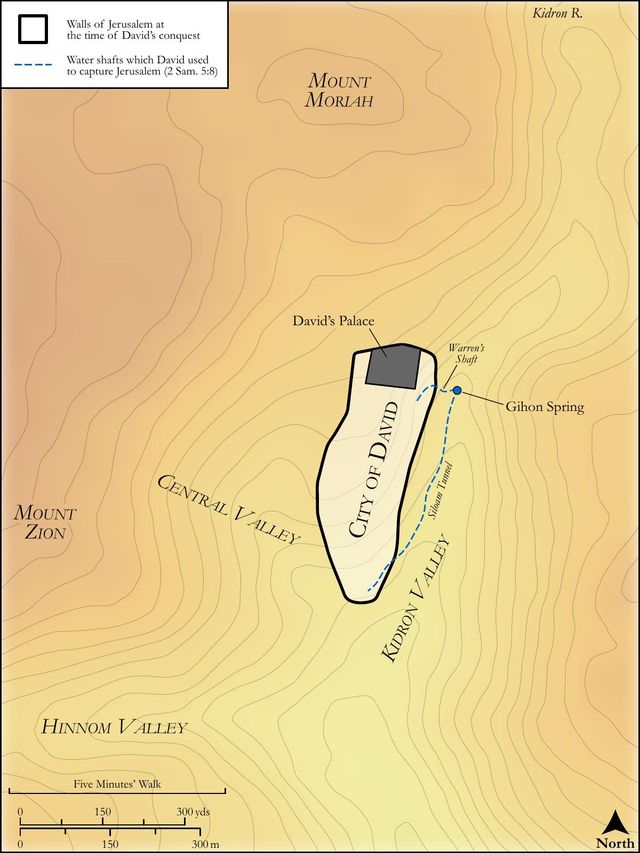
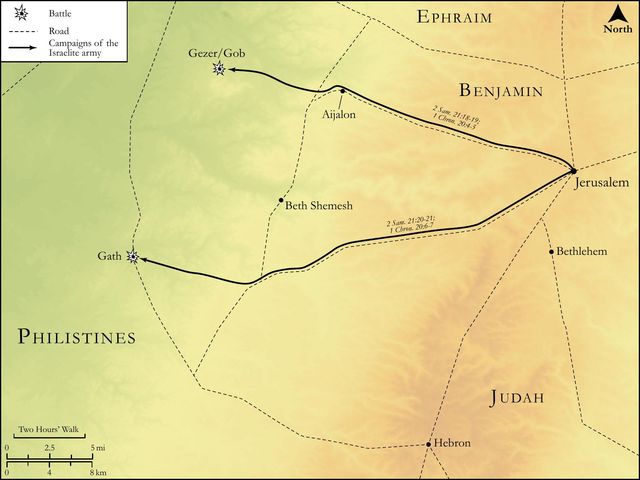
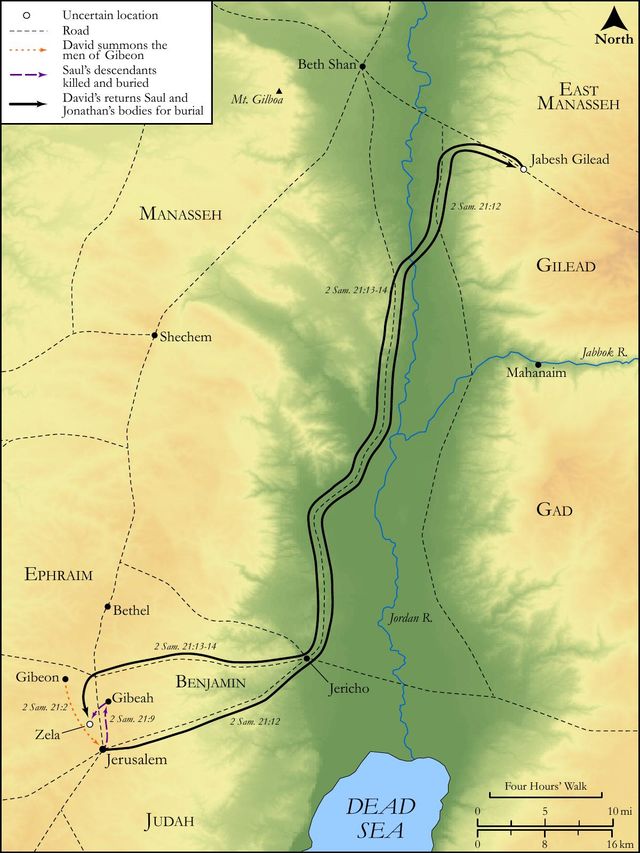
See on the biblical-era maps
Study this verse
Public-domain commentary
Matthew Henry
From his Commentary on the Whole Bible. Henry comments on passages, not single verses — this entry covers 2 Samuel 21:15–22. His three-level outline is real structure in the source text, so it is rendered as structure.
We have here the story of some conflicts with the Philistines, which happened, as it should seem, in the latter end of David's reign. Though he had so subdued them that they could not bring any great numbers into the field, yet as long as they had any giants among them to be their champions, they would never be quiet, but took all occasions to disturb the peace of Israel, to challenge them, or make incursions upon them.
I.David himself was engaged with one of the giants.
The Philistines began the war yet again, Sa2 21:15. The enemies of God's Israel are restless in their attempts against them. David, though old, desired not a writ of ease from the public service, but he went down in person to fight against the Philistines (Senescit, non segnescit - He grows old, but not indolent), a sign that he fought not for his own glory (at this age he was loaded with glory, and needed no more), but for the good of his kingdom. But in this engagement we find him,
1.In distress and danger. He thought he could bear the fatigues of war as well as he had done formerly; his will was good, and he hoped he could do as at other times. But he found himself deceived; age had cut his hair, and, after a little toil, he waxed faint. His body could not keep pace with his mind. The champion of the Philistines was soon aware of his advantage, perceived that David's strength failed him, and, being himself strong and well-armed, he thought to slay David; but God was not in his thoughts, and therefore in that very day they all perished. The enemies of God's people are often very strong, very subtle, and very sure of success, like Isbi-benob, but there is no strength, nor counsel, nor confidence against the Lord.
2.Wonderfully rescued by Abishai, who came seasonably in to his relief, Sa2 21:17. Herein we must own Abishai's courage and fidelity to his prince (to save whose life he bravely ventured his own), but much more the good providence of God, which brought him in to David's succour in the moment of his extremity. Such a cause and such a champion, though distressed, shall not be deserted. When Abishai succoured him, gave him a cordial, it may be, to relieve his fainting spirits, or appeared as his second, he (namely, David, so I understand it) smote the Philistine and killed him; for it is said (Sa2 21:22) that David had himself a hand in slaying the giants. David fainted, but he did not flee; though his strength failed him, he bravely kept his ground, and then God sent him this help in the time of need, which, though brought him by his junior and inferior, he thankfully accepted, and, with a little recruiting, gained his point, and came off a conqueror. Christ, in his agonies, was strengthened by an angel. In spiritual conflicts, even strong saints sometimes wax faint; then Satan attacks them furiously; but those that stand their ground and resist him shall be relieved, and made more than conquerors.
3.David's servants hereupon resolved that he should never expose himself thus any more. They had easily persuaded him not to fight against Absalom (Sa2 18:3), but against the Philistines he would go, till, having had this narrow escape, it was resolved in council, and confirmed with an oath, that the light of Israel (its guide and glory, so David was) should never be put again into such hazard of being blown out. The lives of those who are as valuable to their country as David was ought to be preserved with a double care, both by themselves and others.
II.The rest of the giants fell by the hand of David's servants.
1.Saph was slain by Sibbechai, one of David's worthies, Sa2 21:18; Ch1 11:29.
2.Another, who was brother to Goliath, was slain by Elhanan, who is mentioned Sa2 23:24.
3.Another, who was of very unusual bulk, who had more fingers and toes than other people (Sa2 21:20), and such an unparalleled insolence that, though he had seen the fall of other giants, yet he defied Israel, was slain by Jonathan the son of Shimea. Shimea had one son named Jonadab (Sa2 13:3), whom I should have taken for the same with this Jonathan, but that the former was noted for subtlety, the latter for bravery. These giants were probably the remains of the sons of Anak, who, though long feared, fell at last. Now observe,
(1.)It is folly for the strong man to glory in his strength. David's servants were no bigger nor stronger than other men; yet thus, by divine assistance, they mastered one giant after another. God chooses by the weak things to confound the mighty.
(2.)It is common for those to go down slain to the pit who have been the terror of the mighty in the land of the living, Eze 32:27.
(3.)The most powerful enemies are often reserved for the last conflict. David began his glory with the conquest of one giant, and here concludes it with the conquest of four. Death is a Christian's last enemy, and a son of Anak; but, through him that triumphed for us, we hope to be more than conquerors at last, even over that enemy.
Historical interpretation
Historical reception
2 surviving comments on this verse. Each one is dated, so this reads as a timeline rather than a list.
Select a marker to jump to its quote. Markers stagger vertically where authors wrote within a few decades of each other.
Entreat God—for this cause entreat him. It is in our behalf indeed that it is done, but it is wholly for your sakes. For we [spiritual leaders] are appointed for your advantage, and for your interests we are concerned.…For our enemy is violent. For each of you indeed anxiously thinks of his own interests, but we [think of] the concerns of all together. We stand in the part of the battle that is pressed on. The devil is more violently armed against us. For in wars too, the one who is on the opposite side endeavors before all others to overthrow the general. For this reason all his fellow combatants hasten there. For this reason there is much tumult, every one endeavoring to rescue him; they surround him with their shields, wishing to preserve his person. Hear what all the people say to David (I do not say this, as comparing myself to David, as I am not so mad, but because I wish to show the affection of the people for their ruler), “You shall go out no more; do not quench the lamp of Israel.” See how anxious they were to spare the old man. I am greatly in need of your prayers. Let no one, as I have said, from an excessive humility deprive me of this alliance and succor. If our part is well approved, your own also will be more honorable. If our teaching flows abundantly, the riches will redound to you.
At this point someone may say that the priests of God ought to flee from such threatening dangers in order to save themselves for the service of the church in more peaceful times. It is right for some to do this when others are not lacking to supply the ministry of the church, so that it is not wholly abandoned. This is what Athanasius did, as I said before; for the body of Catholic believers knew how necessary and how profitable it was for the church to retain in the flesh a man who had defended it by words and heart’s love against the Arian heretics. But when the danger is common to all and there is more reason to fear that the priest’s escape may be attributed to a dread of death rather than an intention of future help, and when he does more harm by the example of his flight than he would do good by his preservation, there is no justifiable reason for doing it. Finally, there was holy David, who did not trust himself to the dangers of battle lest the lamp of Israel, as it is there said, “should be put out”; but he did not take this course himself—he did it because his followers begged him to do it. Otherwise, he would have had many cowardly imitators who would believe that he acted thus at the bidding of his own fear, not for any motive of usefulness to others.
Continue studying 2 Samuel 21:17 across the web’s major study libraries — every link below opens this exact verse, chapter, or book on the destination site.
Read & Compare
 BibleGatewayThis verse in more than 200 translations and 70 languages.
 Bible.comThe YouVersion reader — hundreds of translations, reading plans, and highlights.
 ESV.orgCrossway's official English Standard Version reader.
 NET BibleThe NET translation with 60,000+ translators' notes on every rendering decision.
 STEP BibleTyndale House's free study tool — original text, vocabulary, and scholarly resources.
 BibliaLogos Bible Software's free web reader.
 USCCBThe New American Bible (Revised Edition) with the U.S. bishops' study notes.
Commentaries
 BibleHub CommentariesDozens of classic commentaries on this verse, gathered on one page.
 StudyLightMore than 100 commentary sets — the largest collection on the web.
 BibleRefPlain-English commentary on what this verse means, verse by verse.
 Enduring WordDavid Guzik's free commentary on this chapter, widely used by Bible teachers.
 Bible Study ToolsVerse commentary alongside Greek and Hebrew study aids.
Original Language & Research
- BibleHub InterlinearThe verse word by word — original language, transliteration, and English.
- BibleHub LexiconEvery word's original-language definition and Strong's entry.
 Blue Letter BibleDeep-study tools — Strong's numbers, concordance, and word studies.
 SefariaThe Hebrew text with Rashi and centuries of Jewish commentary.
Sermons, Hymns & Audio


TrulyRandomVerse is not affiliated with these sites and doesn’t control their content. They’re linked because they’re genuinely useful.
Summary
This pivotal verse recounts a critical moment in King David's later life when, weakened by age, he faced mortal danger in battle against a Philistine giant. His nephew, Abishai, heroically intervenes to save him, prompting David's loyal men to make him swear never again to join them in battle. Their declaration, "Thou shalt go no more out with us to battle, that thou quench not the light of Israel," underscores David's indispensable role as the nation's spiritual and political leader, whose life was seen as essential for Israel's well-being and divine blessing.
Context
ShowHideLiterary Context
This verse is situated within an appendix to the main narrative of David's reign (found primarily in 2 Samuel 1-20), which spans 2 Samuel 21-24. This appendix serves to collect various accounts that further illustrate David's character, the challenges of his kingdom, and God's faithfulness to his covenant promises. Specifically, 2 Samuel 21:15-22 details four encounters between David's mighty men and Philistine giants, intentionally echoing David's iconic victory over Goliath in 1 Samuel 17. Our verse, 2 Samuel 21:17, is the climax of the first of these encounters, where David himself is almost killed by Ishbi-Benob, a giant "whose spear weighed three hundred shekels of bronze" (2 Samuel 21:16). The narrative highlights David's vulnerability due to advancing age, contrasting sharply with his earlier youthful prowess, and profoundly emphasizes the loyalty and valor of his inner circle, particularly Abishai. This passage serves to remind the reader of David's humanity and dependence on others, even as it affirms his central, indispensable role in Israel's national and spiritual life.
Historical & Cultural Context
The battles described in 2 Samuel 21 occurred during David's later reign, a period characterized by ongoing skirmishes with the Philistines, who remained a significant and persistent threat to Israel's security despite David's earlier decisive victories. In Israel, the king was often expected to lead his armies into battle, symbolizing strength, courage, and divine favor, and often acting as a conduit for national prosperity, as the people had asked for a king who would "go out before us, and fight our battles." However, a king's advancing age could diminish his physical capacity, making such direct engagement perilous, as seen in David's near-fatal encounter. The concept of a king as the "light" or "lamp" of his people was a metaphor Scripture applies to David's house, for the LORD promised David "a light alway" before Him in Jerusalem, signifying his role as the source of guidance, prosperity, and national vitality. For Israel, this metaphor carried an even deeper theological weight, as David was not merely a secular ruler but God's anointed king, the recipient of the Davidic Covenant which promised an eternal dynasty. His life was therefore intrinsically linked to the nation's destiny and God's ongoing favor, making his preservation a matter of divine and national importance.
Key Themes
ShowHideSeveral significant themes emerge from this verse and its immediate context. Firstly, the theme of divine protection and human vulnerability is prominent, as David, despite being God's anointed, faces a life-threatening situation, requiring human intervention. This underscores that even great leaders are not immune to weakness or danger, and that God often works through human agents. Secondly, loyalty and selfless service are powerfully demonstrated by Abishai's courageous and swift act, highlighting the vital importance of faithful subordinates in supporting leadership. Abishai's readiness to risk his own life for David exemplifies the bond between the king and his mighty men. Thirdly, the declaration "that thou quench not the light of Israel" emphasizes the indispensability of godly leadership and the profound impact a leader's well-being has on the entire nation. David's life was seen as the very lamp of Israel, illuminating their path and ensuring their prosperity and covenantal standing. This theme connects to the broader narrative of God's covenant with David, where God promises to maintain a "lamp" for David's descendants, ensuring the continuity of his royal line, as seen in 1 Kings 11:36. Finally, the passage subtly introduces the theme of succession and continuity, as the men's concern for David's life implicitly acknowledges the need for the kingdom to endure beyond any single individual, even the beloved King David, pointing towards the future of the Davidic dynasty.
Exposition and Analysis
ShowHideKey Word Analysis
ShowHideThis verb (H5826) means "to surround, i.e., protect or aid; help, succour." In this context, it describes Abishai's immediate and effective intervention to save David. It implies not just passive assistance but active, decisive action in a moment of dire need, highlighting Abishai's courage, loyalty, and protective stance over the king. His act was a timely and life-saving rescue.
This verb (H3518) is a primitive root meaning "to expire or (causatively) to extinguish (fire, light, anger); go (put) out, quench." Metaphorically, it signifies the cessation of life, hope, or influence. In the phrase "quench not the light of Israel," it conveys the catastrophic consequence of David's death—the extinguishing of the nation's vitality, guidance, and divine blessing. It suggests a complete and irreversible cessation, emphasizing the finality and devastation of such a loss.
This noun (H5216) literally means "a lamp (i.e. the burner) or light (literally or figuratively); candle, lamp, light." In ancient Israel, a lamp symbolized life, prosperity, guidance, and the continuity of a family line or kingdom. For David, "the light of Israel" was a powerful metaphor for his indispensable role as the nation's spiritual, political, and covenantal head. His presence illuminated their path, provided stability, and ensured their well-being, much like a lamp dispels darkness and guides the way. This metaphor connects David's life directly to the nation's vitality and divine favor.
Verse Breakdown
ShowHide"But Abishai the son of Zeruiah succoured him, and smote the Philistine, and killed him."
This clause describes Abishai's heroic and decisive action. David, exhausted and in mortal peril from the giant Ishbi-Benob (mentioned in the preceding verse), is saved by his nephew, Abishai. Abishai, one of David's most formidable "mighty men" (2 Samuel 23:18), acts swiftly and effectively, striking down the Philistine giant who threatened David's life. This highlights Abishai's unwavering loyalty, courage, and military prowess, underscoring the critical role of faithful companions in supporting and preserving leadership.
"Then the men of David sware unto him, saying, Thou shalt go no more out with us to battle,"
Following David's near-death experience, his loyal men recognize the immense danger his continued participation in battle poses to the kingdom. They take an oath, a solemn and binding declaration, to prevent David from exposing himself to such risks again. This reflects their deep concern for his safety and their profound understanding of his irreplaceable value to the nation, recognizing that his physical strength was waning with age, making him vulnerable in direct combat. This collective decision underscores their protective love and strategic wisdom.
"that thou quench not the light of Israel."
This powerful concluding phrase explains the profound reason for the men's oath. David is identified as "the light of Israel," a profound metaphor signifying his indispensable role as the nation's leader, guide, and the embodiment of God's covenant presence among them. To "quench" this light would mean to extinguish the nation's hope, stability, and divine blessing, plunging them into chaos and spiritual darkness. His life was seen as essential for the well-being and continuity of the kingdom, making his preservation a matter of national security, spiritual vitality, and the ongoing fulfillment of God's promises to the Davidic line.
Literary Devices
ShowHideThe verse employs several significant literary devices to convey its profound message. Metaphor is central to the phrase "the light of Israel," which vividly portrays David's essential role as the source of guidance, vitality, and divine favor for the nation. This metaphor draws on the LORD's gift to David of "a lamp in Jerusalem," and is imbued with specific theological significance in the Israelite context, connecting David to God's covenant promises and his role as God's anointed. The narrative also uses foreshadowing by subtly hinting at David's mortality and the eventual need for succession, even as it emphasizes his current indispensability. The dramatic climax of Abishai's intervention, saving David at the critical moment, builds tension and then resolves it with a powerful declaration. Furthermore, the men's oath functions as a proleptic statement, looking ahead to the future and establishing a new policy for David's engagement in warfare, underscoring the gravity of the situation and the collective wisdom of his inner circle.
Theological and Thematic Connections
ShowHideThis verse profoundly illustrates the theological concept of God working through human instruments, even when those instruments are vulnerable. David, God's chosen king and the recipient of the eternal covenant, is not invulnerable but relies on the loyalty and strength of his men. The metaphor of David as "the light of Israel" elevates his role beyond mere political leadership to a spiritual one, signifying his embodiment of God's presence and blessing for the nation. His life was not merely his own, but intricately tied to the covenant promises and the well-being of God's people. This highlights the immense responsibility of leadership, particularly in a covenantal context, and the collective responsibility of the community to support and protect its spiritual guides. It also subtly points to the reality that even the greatest human leaders are finite and ultimately point to a greater, eternal "Light" who truly sustains all things.
Reflection and Application
ShowHideThe narrative of Abishai saving David, and the subsequent declaration by David's men, offers profound lessons for contemporary life and leadership. It reminds us that even the most gifted and anointed leaders are human, susceptible to weakness, and in need of support. No one is meant to lead in isolation; effective leadership thrives within a community of loyal and capable individuals who are willing to step into the gap during moments of vulnerability. This challenges us to be those "Abishais" in our families, churches, and workplaces—ready to support, protect, and serve those in authority, recognizing their value and the impact of their well-being on the collective. Furthermore, the concept of a leader as "the light" of their community calls us to consider the profound influence we wield, whether in formal leadership roles or in our spheres of influence. Our character, integrity, and commitment to God's ways can either illuminate or darken the path for those around us. It compels us to live lives that reflect God's light, recognizing that our actions have ripple effects far beyond ourselves, contributing to the spiritual and social health of our communities, and ultimately bringing glory to God.
Questions for Reflection
ShowHideFAQ
ShowHideWhy was David considered "the light of Israel"?
ShowHideDavid was considered "the light of Israel" because he was God's anointed king, the embodiment of the covenant God made with Israel, and the central figure through whom God's blessings flowed to the nation. In Israel, the king was often seen as the source of prosperity, guidance, and life for his people, much like a lamp provides light and warmth, for the LORD had given David "a lamp in Jerusalem." For Israel, this metaphor carried deep theological significance. David's reign brought stability, justice, and spiritual direction, fulfilling God's promises and leading the people in worship. His life was intrinsically linked to the nation's well-being and the continuity of God's covenant, as promised in 2 Samuel 7:16. To "quench" his light would mean to plunge the nation into darkness, signifying the loss of divine favor, guidance, and national identity, and potentially jeopardizing the very future of the Davidic dynasty.
Christ-Centered Fulfillment
ShowHideWhile David was indeed "the light of Israel," his vulnerability and eventual mortality in this account powerfully foreshadow the need for a greater, eternal light—the Lord Jesus Christ. David, though a great king and God's chosen vessel, was merely a lamp, a reflection of God's glory, and ultimately subject to human weakness, aging, and death. His men's desperate plea to preserve his life highlights the temporal nature of even the most indispensable human leadership. In stark contrast, Jesus is not merely "a light" but "the true light that gives light to everyone coming into the world" (John 1:9). He is the ultimate, unquenchable "light of the world" (John 8:12), whose life and death were not to be preserved by human oath, but were part of God's sovereign, redemptive plan. Unlike David, who needed saving from a giant, Jesus willingly laid down His life on the cross, conquering sin and death, and rising to offer eternal life and an everlasting kingdom. The "lamp" of David's lineage ultimately culminates in Christ, who is the promised Son of David (Matthew 1:1), the King whose reign will never end (Luke 1:32-33), and the One who truly illuminates the path to God, ensuring that His light will never be quenched (Revelation 21:23).