


2 Samuel 12:27
Bible text: King James Version (1769 Blayney text) · Public domain
Bible text: Berean Standard Bible · Public domain
Bible text: American Standard Version (1901) · Public domain
Bible text: World English Bible, Messianic edition · Public domain
Bible text: Geneva Bible (1599) · Public domain
Bible text: Young's Literal Translation · Public domain
- וַיִּשְׁלַחvai·yish·Lachand he sentH7971Conj-w ¦ V-Qal-ConsecImperf-3msVerb Qal Consecutive Imperfect 3rd Singular Masculineוַandיִּשְׁלַחhe sent
- יוֹאָבyo·'AvJoabH3097N-proper-mNoun Proper Masculine
- מַלְאָכִיםmal·'a·KhimmessengersH4397N-mpNoun Plural Masculine Absolute
- אֶל'eltoH413PrepPreposition
- דָּוִדda·VidDavidH1732N-proper-mNoun Proper Masculine
- וַיֹּאמֶרvai·Yo·merand he saidH559Conj-w ¦ V-Qal-ConsecImperf-3msVerb Qal Consecutive Imperfect 3rd Singular Masculineוַandיֹּאמֶרhe said
- נִלְחַמְתִּיnil·Cham·tiI have foughtH3898V-Niphal-Perf-1csVerb Niphal Perfect 1st Singular common gender
- בְרַבָּהve·ra·Bahagainst RabbahH7237Prep-b ¦ N-properNoun Proper LocationבְagainstרַבָּהRabbah
- גַּםgamalsoH1571AdvAdverb
- לָכַדְתִּיla·Khad·tiI have capturedH3920V-Qal-Perf-1csVerb Qal Perfect 1st Singular common gender
- אֶת'et<obj.>H853DirObjMParticle Object Indicator
- עִיר'ir[the] city ofH5892N-fscNoun Singular Feminine Construct
- הַמָּיִםha·Ma·yimthe watersH4325Art ¦ N-mpNoun Plural Masculine Absoluteהַtheמָּיִםwaters
English is a literal word-by-word gloss of the Hebrew, not the KJV's wording. Why?
This is the original text the KJV's translators worked from — each Hebrew word with its own literal English meaning in this verse, prepared by scholars at Tyndale House, Cambridge. The KJV translates whole sentences, not word by word, so its wording differs: one Hebrew word can become several English words, and the KJV may choose “the LORD” where the gloss reads “Yahweh”. Both are faithful — they answer different questions. For the KJV's own rendering, switch to the KJV text.
Details
See on the biblical-era maps

Study this verse
Public-domain commentary
Matthew Henry
From his Commentary on the Whole Bible. Henry comments on passages, not single verses — this entry covers 2 Samuel 12:26–31.
We have here an account of the conquest of Rabbah, and other cities of the Ammonites. Though this comes in here after the birth of David's child, yet it is most probable that it was effected a good while before, and soon after the death of Uriah, perhaps during the days of Bath-sheba's mourning for him. Observe, 1. That God was very gracious in giving David this great success against his enemies, notwithstanding the sin he had been guilty of just at that time when he was engaged in this war, and the wicked use he had made of the sword of the children of Ammon in the murder of Uriah. Justly might he have made that sword, thenceforward, a plague to David and his kingdom; yet he breaks it, and makes David's sword victorious, even before he repents, that this goodness of God might lead him to repentance. Good reason had David to own that God dealt not with him according to his sins, Psa 103:10. 2. That Joab acted very honestly and honourably; for when he had taken the city of waters, the royal city, where the palace was, and from which the rest of the city was supplied with water (and therefore, upon the cutting off of that, would be obliged speedily to surrender), he sent to David to come in person to complete this great action, that he might have the praise of it, Sa2 12:26-28. Herein he showed himself a faithful servant, that sought his master's honour, and his own only in subordination to his, and left an example to the servants of the Lord Jesus, in every thing they do, to consult his honour. Not unto us, but to thy name, give glory. 3. That David was both too haughty and too severe upon this occasion, and neither so humble nor so tender as he should have been. (1.) He seems to have been too fond of the crown of the king of Ammon, Sa2 12:30. Because it was of extraordinary value, by reason of the precious stones with which it was set, David would have it set upon his head, though it would have been better to have cast it at God's feet, and at this time to have put his own mouth in the dust, under guilt. The heart that is truly humbled for sin is dead to worldly glory and looks upon it with a holy contempt. (2.) He seems to have been too harsh with his prisoners of war, Sa2 12:31. Taking the city by storm, after it had obstinately held out against a long and expensive siege, if he had put all whom he found in arms to the sword in the heat of battle, it would have been severe enough; but to kill them afterwards in cold blood, and by cruel tortures, with saws and harrows, tearing them to pieces, did not become him who, when he entered upon the government, promised to sing of mercy as well as judgment, Psa 101:1. Had he made examples of those only who had abused his ambassadors, or advised or assisted in it, that being a violation of the law of nations, it might have been looked upon as a piece of necessary justice for terror to other nations; but to be thus severe with all the cities of the children of Ammon (that is, the garrisons or soldiers of the cities) was extremely rigorous, and a sign that David's heart was not yet made soft by repentance, else the bowels of his compassion would not have been thus shut up - a sign that he had not yet found mercy, else he would have been more ready to show mercy.
Historical interpretation
Historical reception
1 surviving comment on this verse from the historical church.
The city of waters: Rabbath the royal city of the Ammonites, was called the city of waters, from being encompassed with waters.
Continue studying 2 Samuel 12:27 across the web’s major study libraries — every link below opens this exact verse, chapter, or book on the destination site.
Read & Compare
 BibleGatewayThis verse in more than 200 translations and 70 languages.
 Bible.comThe YouVersion reader — hundreds of translations, reading plans, and highlights.
 ESV.orgCrossway's official English Standard Version reader.
 NET BibleThe NET translation with 60,000+ translators' notes on every rendering decision.
 STEP BibleTyndale House's free study tool — original text, vocabulary, and scholarly resources.
 BibliaLogos Bible Software's free web reader.
 USCCBThe New American Bible (Revised Edition) with the U.S. bishops' study notes.
Commentaries
 BibleHub CommentariesDozens of classic commentaries on this verse, gathered on one page.
 StudyLightMore than 100 commentary sets — the largest collection on the web.
 BibleRefPlain-English commentary on what this verse means, verse by verse.
 Enduring WordDavid Guzik's free commentary on this chapter, widely used by Bible teachers.
 Bible Study ToolsVerse commentary alongside Greek and Hebrew study aids.
Original Language & Research
- BibleHub InterlinearThe verse word by word — original language, transliteration, and English.
- BibleHub LexiconEvery word's original-language definition and Strong's entry.
 Blue Letter BibleDeep-study tools — Strong's numbers, concordance, and word studies.
 SefariaThe Hebrew text with Rashi and centuries of Jewish commentary.
Sermons, Hymns & Audio


TrulyRandomVerse is not affiliated with these sites and doesn’t control their content. They’re linked because they’re genuinely useful.
Summary
2 Samuel 12:27 marks a pivotal moment in the Ammonite war, as Joab, David's chief commander, sends an urgent message to the king. Having successfully captured the "city of waters"—the critical section of Rabbah controlling the Ammonite capital's vital water supply—Joab shrewdly invites David to personally lead the final assault. This strategic maneuver by Joab not only highlights his military genius and complex loyalty to David but also serves to restore the king's public standing and military glory at a time when his moral authority had been severely compromised by his recent sins. The verse thus encapsulates themes of military strategy, leadership, and the unfolding of divine purposes amidst human frailty.
Context
ShowHideLiterary Context
This verse is strategically placed within the narrative of David's reign, immediately following a period of profound moral failure and divine judgment. 2 Samuel 11 recounts David's adultery with Bathsheba and his calculated orchestration of Uriah's death. The subsequent chapter, 2 Samuel 12, details the prophet Nathan's powerful confrontation with David, culminating in a direct accusation and a prophecy of severe consequences for David's household, including the death of the child born to Bathsheba. The child's death has just occurred in 2 Samuel 12:18, making Joab's message in 2 Samuel 12:27 a strategic interlude. It shifts the focus from David's personal sin and grief back to his public role as king and military leader, offering an opportunity for him to reclaim glory and reassert his authority in the eyes of his people. The war itself had been ongoing since 2 Samuel 10, providing a backdrop of persistent conflict even amidst internal turmoil.
Historical & Cultural Context
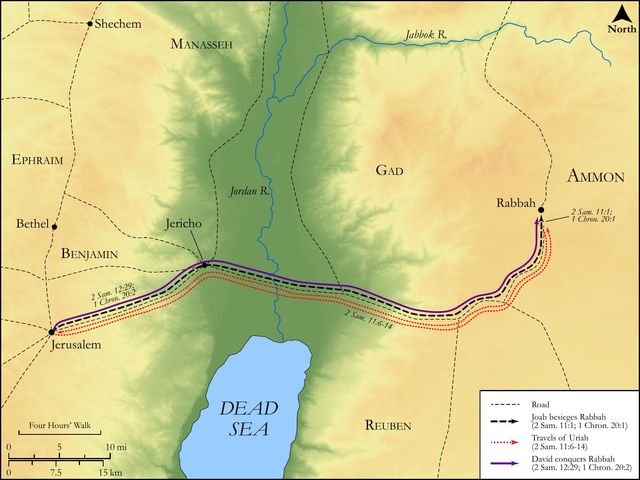
The war against the Ammonites was initiated by the Ammonite king Hanun's egregious insult to David's envoys, as detailed in 2 Samuel 10:1-5. Rabbah, the capital city of Ammon, was a formidable stronghold, likely fortified by both natural defenses and robust walls. Siege warfare in that day was a protracted and brutal affair, often involving attempts to starve the besieged city or, crucially, to cut off its water supply. The phrase "city of waters" (עִיר הַמַּיִם, 'Ir Hammayim) most likely refers to a lower section of Rabbah or a specific part of the city that controlled access to its primary water sources, such as a spring or the Jabbok River. Capturing this vital point would render the main citadel (the "royal city" mentioned in 2 Samuel 12:29) untenable, as its inhabitants would eventually succumb to thirst. Joab's military strategy here demonstrates a keen understanding of siege tactics and the critical importance of resources in warfare, while also revealing his political acumen in managing the king's public image.
Key Themes
ShowHideThis verse powerfully illustrates several enduring themes. Firstly, Strategic Leadership and Loyalty are paramount. Joab's decision to capture the essential water supply but then defer the final, glorious conquest to David showcases his military brilliance and his shrewd political understanding of how to bolster his king's position, especially given David's recent moral failings. This act of deference underscores the complex, often fraught, but ultimately loyal relationship between Joab and David, a dynamic that recurs throughout 2 Samuel. Secondly, the Indispensability of Critical Resources is highlighted by the focus on the "city of waters." This detail emphasizes how vital resources, particularly water, were in ancient warfare, and how controlling them could decisively determine the outcome of a siege. Finally, the verse subtly touches on Divine Sovereignty Amidst Human Imperfection. While David was suffering the immediate, painful consequences of his sin, the broader divine purposes for Israel and its leadership continued to advance. The successful progression of this war, despite David's personal turmoil, illustrates God's continued faithfulness to His covenant, even when His chosen leaders falter, demonstrating His ability to work through imperfect vessels to accomplish His will.
Exposition and Analysis
ShowHideKey Word Analysis
ShowHideFrom Yehovah and ʼâb, meaning "Jehovah-fathered." Joab was David's nephew and the commander of his army. His character is complex—fiercely loyal to David and Israel, yet often ruthless and politically ambitious. In this context, his action demonstrates a strategic military mind combined with a deep understanding of the political necessity of restoring David's public image.
A primitive root meaning "to feed on; figuratively, to consume; by implication, to battle (as destruction)." This word emphasizes the intensity and destructive nature of the prolonged siege against Rabbah. Joab's use of this word underscores the arduous effort and significant engagement required to bring the city to the brink of defeat.
A primitive root meaning "to catch (in a net, trap or pit); generally, to capture or occupy." This term signifies the successful, decisive seizure of a strategic point. Joab's declaration that he has "taken" the city of waters indicates a complete and irreversible control over that vital section, rendering the main city's resistance futile in the long term.
Verse Breakdown
ShowHide"And Joab sent messengers to David"
This opening phrase immediately establishes Joab's initiative and his pivotal role as David's chief military commander. The act of sending messengers, rather than simply reporting after the fact, indicates a deliberate, formal, and urgent communication, underscoring the gravity of the news and Joab's strategic intent to involve the king in the final stage of the conquest.
"and said, I have fought against Rabbah"
Joab's direct statement confirms his personal leadership and the significant effort and duration of the military campaign against the Ammonite capital. This phrase serves as a concise summary of the arduous siege, setting the stage for the crucial strategic update that follows and emphasizing that the war was nearing its decisive conclusion under his command.
"and have taken the city of waters"
This is the core declaration of the verse. Joab informs David that the most critical and vulnerable part of Rabbah—its primary water supply—has been successfully captured. This means that while the main citadel may still stand, it is now strategically compromised and its fall is inevitable due to the lack of water. This strategic capture is the key piece of information that enables Joab to offer David the opportunity to claim the final, glorious victory.
Literary Devices
ShowHideThe passage employs several potent literary devices. Irony is prominent, as the military triumph of the kingdom occurs precisely when King David is at his moral nadir, reeling from the consequences of his grievous sin with Bathsheba and Uriah. This stark juxtaposition highlights God's continued work through flawed human agents and the separation between personal sin and the broader divine plan for Israel. There is also an element of Foreshadowing in Joab's shrewd political maneuver. His ability to control the narrative and offer David the final glory hints at his significant power and influence, which will become a source of both stability and tension in later chapters of David's reign. The "city of waters" itself functions as a powerful Symbol, representing not just a physical location but the very lifeblood and vulnerability of the city. Its capture symbolizes the complete subjugation and impending defeat of the Ammonites, as without water, life cannot be sustained, and prolonged resistance is futile.
Theological and Thematic Connections
ShowHideThis verse, while appearing to be a straightforward military report, carries profound theological weight. It serves as a powerful testament to God's unwavering sovereignty over the affairs of nations and His steadfast faithfulness to His covenant promises, even when His chosen leaders are deeply flawed and facing the consequences of their sin. Despite David's grievous moral failures and the divine judgment he was experiencing, the war against the Ammonites, which was part of God's overarching plan to establish Israel's dominion and secure its borders, continued to progress towards victory. Joab's strategic act of deferring the final glory to David can be seen as an example of wise, kingdom-minded leadership that prioritizes the stability and public image of the monarchy, reflecting a divine principle of order and authority. It also subtly underscores the theme of human responsibility within divine providence; Joab acts with military skill and political savvy, yet the ultimate outcome is part of God's overarching plan for His people.
Reflection and Application
ShowHide2 Samuel 12:27 offers profound insights into the nature of leadership, strategic thinking, and the human condition. Joab's actions remind us of the importance of strategic foresight, not only in military contexts but in all areas of life and leadership. His willingness to empower David to claim the final victory, even when he had done the bulk of the arduous work, speaks to a mature understanding of team dynamics and the profound value of supporting the overall leader for the greater good of the organization or community. This principle of strategic deference can foster unity, strengthen authority, and ensure the stability of a collective endeavor, especially in times of crisis or public scrutiny. Furthermore, the narrative reminds us that even amidst personal failings, profound grief, and severe consequences, life's responsibilities and God's overarching purposes continue to unfold. David's kingdom did not collapse because of his sin; rather, the war continued, and victory was achieved, demonstrating resilience and the ongoing nature of God's work through imperfect vessels. It challenges us to consider our own "critical resources"—be they spiritual, emotional, relational, or physical—and how their protection or compromise can determine our success or failure in various endeavors, urging us to guard what is essential for sustained flourishing.
Questions for Reflection
ShowHideFAQ
ShowHideWhy did Joab send for David to take the city, rather than finishing the job himself?
ShowHideJoab's decision was a highly astute political and strategic move, demonstrating his deep understanding of David's position and the broader political landscape of the kingdom. By capturing the "city of waters," Joab had secured the decisive strategic point, making the fall of the main citadel inevitable due to the lack of a sustainable water supply. However, allowing David to lead the final assault meant that the king would receive the glory for the conquest of Rabbah. This was crucially important for David, whose public image and moral authority had been severely tarnished by his recent sins with Bathsheba and Uriah, and the subsequent death of his child (see 2 Samuel 12:18). Joab, though a powerful general and often ruthless, understood that the king's prestige and perceived success were vital for the stability and unity of the kingdom. This act of deference solidified David's leadership in the eyes of the people and helped restore his reputation, even as he was dealing with the profound personal consequences of his actions. It highlights Joab's complex loyalty to David and his dedication to the welfare of the kingdom.
What was the strategic significance of the "city of waters" in ancient warfare?
ShowHideIn ancient siege warfare, controlling the water supply was paramount to a city's survival and its ability to resist. Cities, especially heavily fortified capitals like Rabbah, relied on natural springs, wells, or access to rivers for their water. If the attacking army could capture or effectively cut off these essential sources, the besieged city would eventually succumb to thirst, making continued resistance impossible. The "city of waters" (עִיר הַמַּיִם, 'Ir Hammayim) in Rabbah likely referred to a lower part of the city or a specific, defensible area that contained or controlled the primary water sources accessible to the inhabitants. Its capture meant that the main citadel, though still defensible in terms of its walls, could not hold out indefinitely. This strategic move by Joab effectively sealed the fate of Rabbah, forcing its eventual surrender and underscoring the critical importance of vital resources in military campaigns of that era.
Christ-Centered Fulfillment
ShowHideThe narrative of Joab's strategic capture of the "city of waters" and his deferral of the final glory to David, while rooted in the historical context of Israel's monarchy, finds profound Christ-centered fulfillment. David, as king, served as a type of the ultimate King, Jesus Christ, albeit a deeply flawed one. Just as Joab, as David's loyal commander, secured the vital "city of waters" to ensure David's ultimate triumph over Rabbah, so too did Christ, our perfect General and King, secure the ultimate victory over sin, death, and the powers of darkness through His own sacrificial work on the cross. He did not merely capture a strategic point; He utterly disarmed the rulers and authorities, putting them to open shame by triumphing over them in the cross (see Colossians 2:15). Furthermore, the "city of waters" can be seen as a powerful foreshadowing of the "living water" that Christ offers. Just as the physical city could not survive without its water supply, humanity cannot truly live or flourish without the spiritual life and sustenance that Christ provides (see John 4:10-14 and John 7:37-38). Joab's act of allowing David to take the final glory, despite doing the hard work, beautifully points to Christ's ultimate and complete victory which He freely shares with His people, inviting them to participate in His triumph and reign with Him (see Revelation 3:21). The flawed kingship of David, needing Joab's strategic support to secure its public glory, ultimately points to the perfect, self-sufficient, and eternally victorious reign of the Lamb of God, who truly takes away the sin of the world and offers everlasting life to all who believe.